Results for “tribe”
Type a name: scientific, common, or one a species used to go by. Or narrow the catalogue with the filters.
Filters
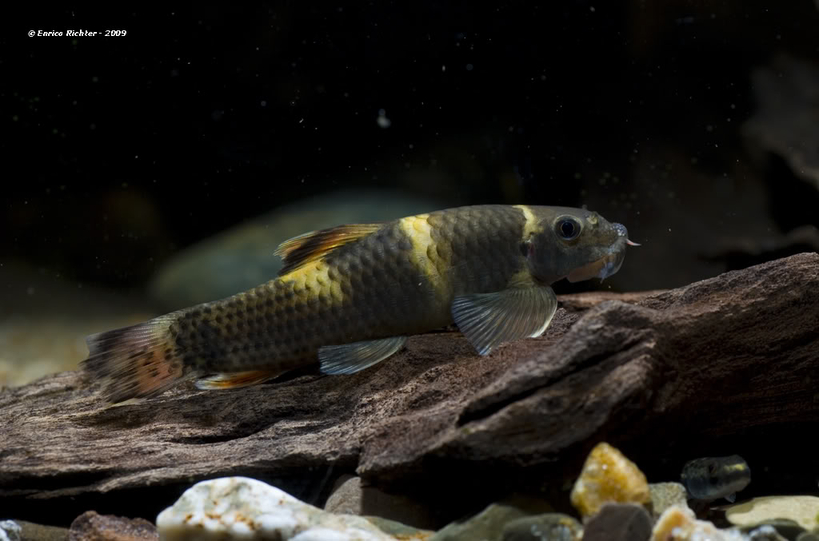
Garra flavatraPanda Garra
Kullander & Fang, 2004
Max length90mm SL3.5in SLTank90 × 30cm36 × 12inTemp22–27°C72–81°FpH6.5–7.5Garra species are usually included in the subfamily Labeoninae/Cyprininae (name varies with author) which by current thinking is further divided into several tribes and subtribes (Stiassny and Getahun, 2007). The putatively monophyletic subtribe Garraina comprises Garra plus numerous other genera including the well-known Crossocheilus and Epalzeorhynchos. Within this division their closest relatives are members of Discogobio, Discocheilus and Placocheilus (the lat...
Hemiancistrus guahiborumL106
authority not recorded
Max length150mm SL6in SLTank120 × 30cm48 × 12inTemp22–26°C72–79°FpH6.0–7.5This species was only described to science in 2005, the species name being taken from the name of a local tribe. It's also known as the spotted orange seam plec, due to its patterning. It's found living alongside other Loricariid species in nature, including Peckoltia and other Hemiancistrus species. There's ongoing discussion as to whether this species and the currently undescribed L122 are one and the same, as these two were apparently both included in the scientific description...
Polypterus weeksiiMottled Bichir
authority not recorded
Max length550mm SL22in SLTank150 × 60cm60 × 24inTempnot recordedpHnot recordedP. weeksii is one of the "upper-jawed" tribe of polypterids so named on account of the upper jaw being longer than or equal in length to the lower jaw. It is one of the rarer bichir species in the hobby. Like other bichirs it is an incredibly hardy, nocturnal species with very poor vision, relying on its excellent sense of smell to locate food. This species along with others of its genus are some of the last surviving relatives of very ancient species. Fossils of earlier relatives have...