Results for “tuberculate”
Type a name: scientific, common, or one a species used to go by. Or narrow the catalogue with the filters.
Filters
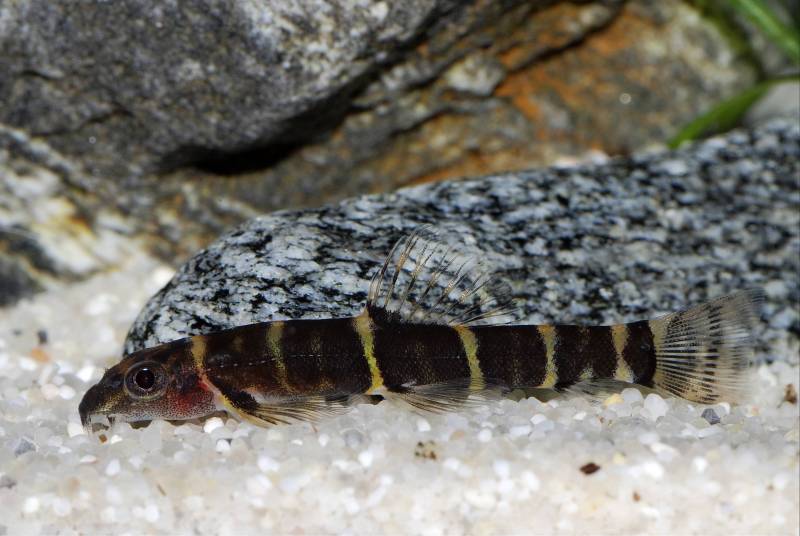
Barbucca diabolica
Roberts, 1989
Max length50mm SL2.0in SLTank60 × 30cm24 × 12inTemp20–25°C68–77°FpH5.5–7.5Barbucca spp. are uncommon in the aquarium trade but available periodically. There exist several undescribed species and it's possible that more than one has been exported, although to date only B. diabolica is officially recognised. Most of the fish we've seen possess red eyes (when viewed at certain angles), unique tuberculation and six dark body stripes as mentioned in Roberts' description although there are exceptio...
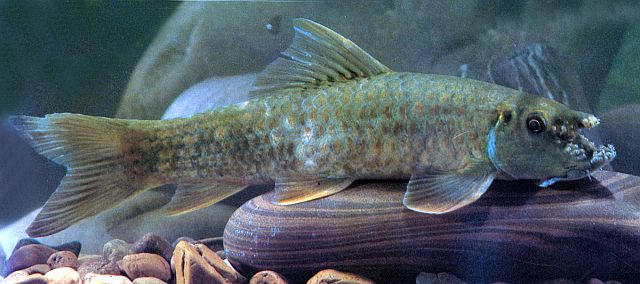
Garra orientalis
Nichols, 1925
Max length120mm SL5in SLTanknot recordedTempnot recordedpHnot recordedAmong other Garra species from Southeast Asia and China, G. orientalis is most similar to G. salweenica and G. fuliginosa in that all three possess a roughly triangular, trilobed proboscis on the snout, the anterior margin of which is densely tuberculated, and the inferior margin not in contact with the depressed rostral surface, i.e., the proboscis projects forwards.
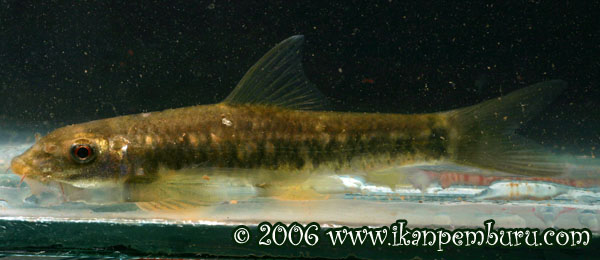
Garra qiaojiensis
Wu & Yao, 1977
Max length175mm SL7in SLTanknot recordedTempnot recordedpHnot recordedG. qiaojiensis can be differentiated from closely-related congeners by the configuration of its proboscis, which is quadrate (1.6-1.8 times wider than long), reflected downwards against the snout and heavily tuberculated anteriorly, and the relative size of its mental disc which measures 48.7-55.9 % HL.
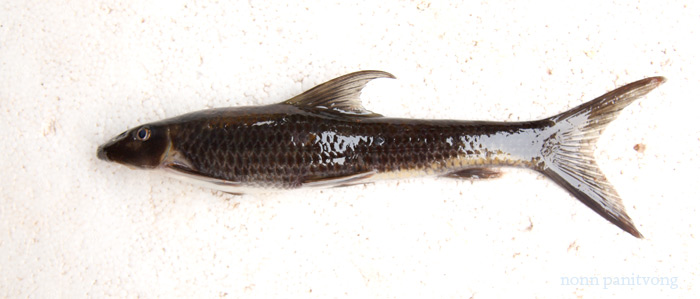
Garra theunensis
Kottelat, 1998
Max length300mm SL12in SLTanknot recordedTempnot recordedpHnot recordedThis species can be distinguished from congeners in Southeast Asia and China by the following combination of characters: plain brown body and fins, sometimes with 6-8 narrow, faintly distinct, longitudinal stripes; snout triangular in dorsal view, with small tubercules and without transverse groove...
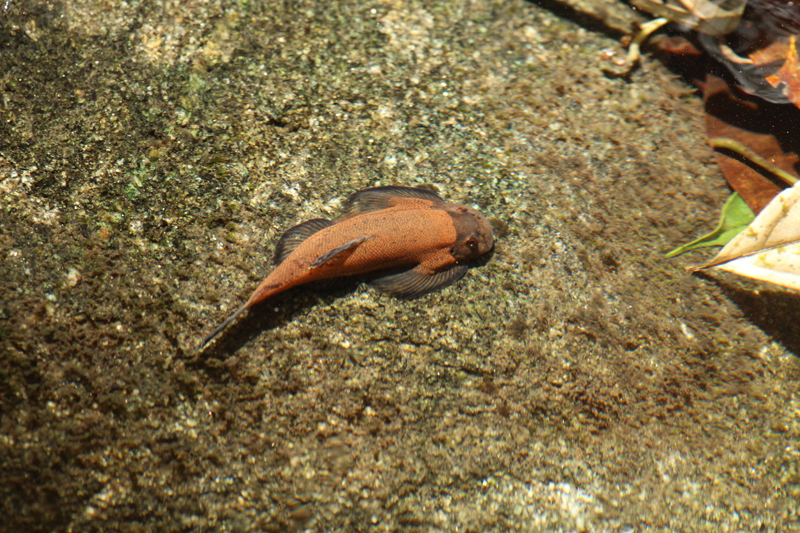
Gastromyzon lepidogaster
Roberts, 1982
Max length100mm SL3.9in SLTank120 × 30cm48 × 12inTemp18–24°C64–75°FpH6.0–8.5This species is variable in terms of colour. Large adults may be bright green, orange or barred but are apparently capable of changing from barred to plain in just a few seconds. These different forms have been recorded in the same natural habitats, and some individuals also possess prominent nuptial tubercules covering much of the body.
Rasbora lacrimulaRed Cherry Rasbora
authority not recorded
Max length31mm SL1.2in SLTank45 × 30cm18 × 12inTemp22.2–25.6°C72–78°FpHnot recordedThis species is also traded as 'Bornean redfin rasbora', 'sunshine rasbora' and 'dwarf volcano rasbora' and first appeared in the hobby during the latter part of 2010. It can be told apart from all other members of the genus by a combination of the following characters: possession of small tubercules on the dorsal surface, posterior to theand continuing onto the upper part of caudal fin, visible as an irregular 'crest' when a specimen is viewed laterally; ...