Results for “turbid”
Type a name: scientific, common, or one a species used to go by. Or narrow the catalogue with the filters.
Filters
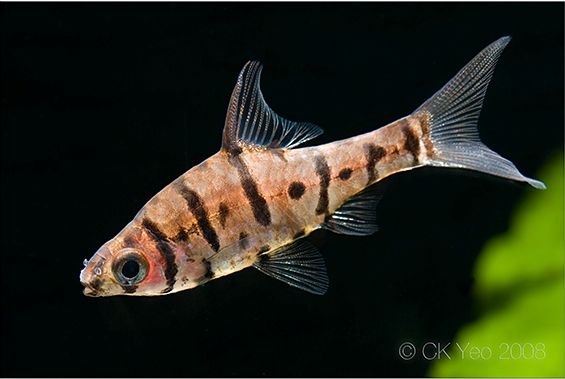
Eirmotus insignis
Tan & Kottelat, 2008
Max length36mm SL1.4in SLTank60 × 30cm24 × 12inTemp20–26°C68–79°FpH5.0–7.0Typically inhabits slow-moving, shallow, shady rainforest streams and swamps with dense submerged and marginal vegetation. The conditions are often rather turbid and the substrate composed of mud or fallen leaves, twigs and branches. Such environments characteristically contain soft, weakly acidic water and are often dimly-lit due to the rainforest canopy above. The fish are found sheltering among overhanging tree roots and aquatic vegetation.
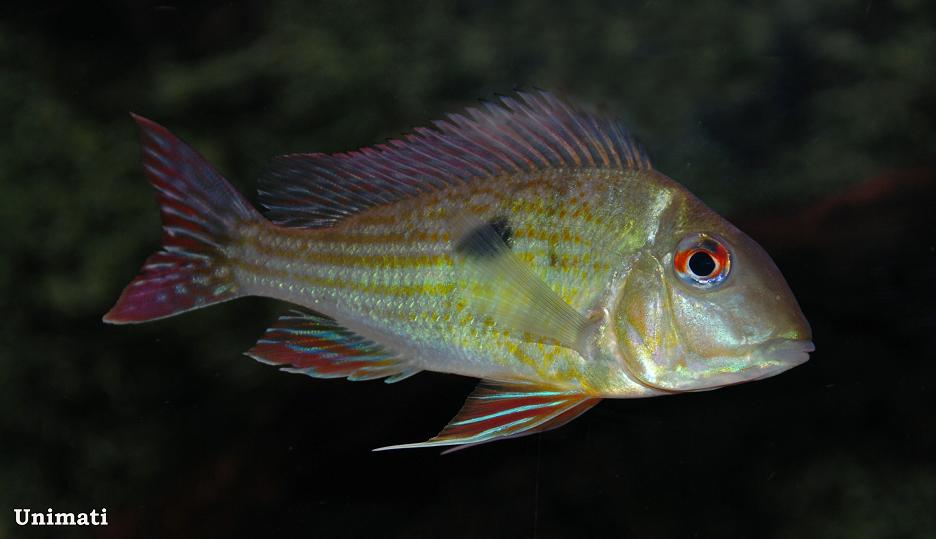
Geophagus abalios
López-Fernández & Taphorn, 2004
Max length200mm SL8in SLTank180 × 60cm72 × 24inTemp26–32°C79–90°FpH4.0–7.0It also occurs in the río Caura on the Guyana Shield plus the Ventauri and Mavaca drainages in the middle and upper Orinoco where it’s also known from some white water, referring to turbidity rather than turbulence, habitats. To the north its distribution appears limited by the Las Majaguas dam on the Río Cojedes, a tributary of the Apure where a probable introduced population inhabits the res...
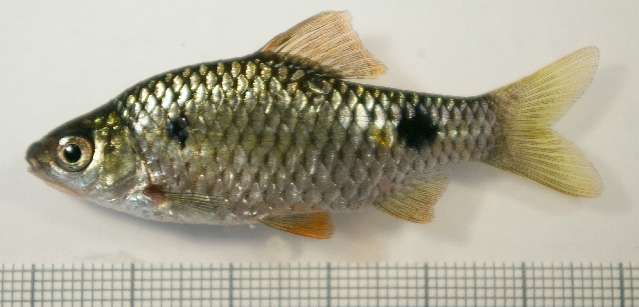
Pethia tictoTicto Barb
Hamilton, 1822
Max length65mm SL2.6in SLTank80 × 30cm31 × 12inTemp18–25°C64–77°FpH6.0–7.5Apparently most abundant in shallow streams and minor tributaries, sometimes at relatively high altitudes, and apparently shows a preference for substrates of mud or silt. Given the extent of its range it would seem sensible to assume that it inhabits various habitat-types which also vary in water depth, flow, and turbidity depending on the time of year.
Placidochromis milomoSuper VC 10 Hap
authority not recorded
Max length250mm SL10in SLTank120 × 45cm48 × 18inTemp24–28°C75–82°FpH7.6–8.8Wild caught specimens of this fish possess a truly amazing set of lips! They are massively enlarged and designed for scraping algae and invertebrates from rock surfaces. In nature, these actually develop in direct proportion to the amount of turbidity in a given locality. Fish inhabiting more turbulent waters have larger lips, as the algae in these areas is anchored to the rocks more firmly. In the aquarium, the lips usually recede or, in tank bred fish, do not develop at all, as they are not re...
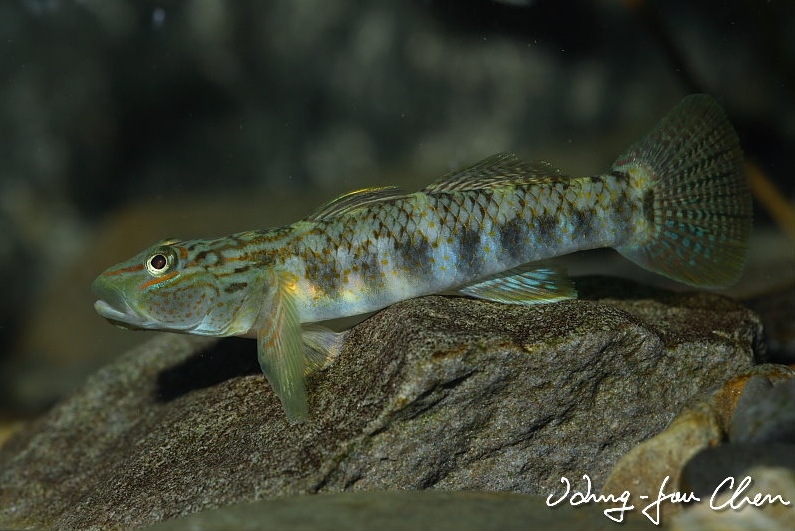
Rhinogobius lanyuensis
Chen, Miller & Fang, 1998
Max length67mm SL2.6in SLTank80 × 30cm31 × 12inTemp18–25°C64–77°FpH6.0–8.0Presumably inhabits small rivers, tributaries and streams with substrates of gravel, rocks, boulders, and exposed bedrock which undergo seasonal variations in water flow rate, depth and turbidity. Lanyu Island is volcanic, measures just 45 km² and has no major rivers or large settlements with a permanent human population of around 4000, although there is a large nuclear waste storage facility at its southern end.