Results for “congener”
Type a name: scientific, common, or one a species used to go by. Or narrow the catalogue with the filters.
Filters
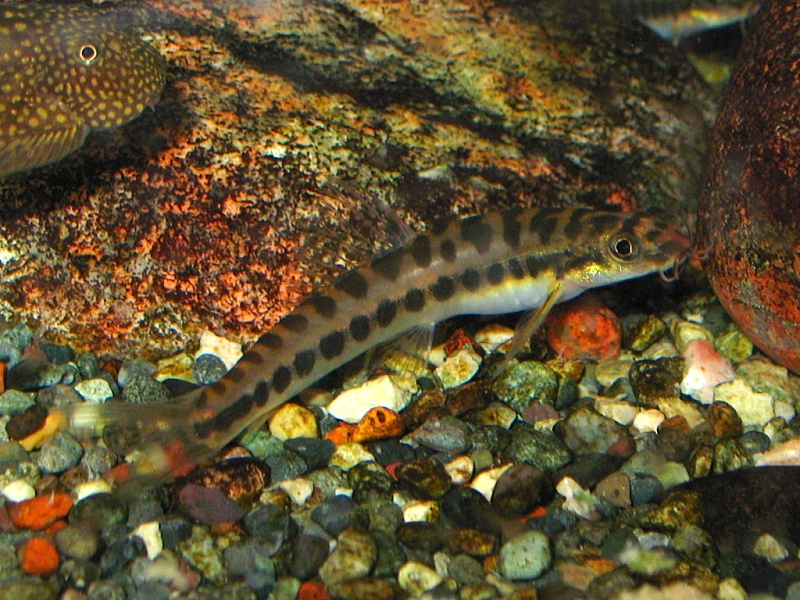
Nemacheilus masyaeArrow Loach
Smith, 1933
Max length70mm SL2.8in SLTank60 × 30cm24 × 12inTemp23–26°C73–79°FpH6.0–7.5This species was originally named Nemacheilus masyae but following ICZN rules the spelling was later corrected to N. masyai because it's named after a man. It can be distinguished from the majority of congeners by body patterning comprising 14-18 short, dark vertical bars on each flank, 12-17 saddle-like markings running along the dorsal surface, a dark spot on the caudal peduncle at the termination of the lateral line and a dark blotch in the lower half of the first few dorsal-fin rays.
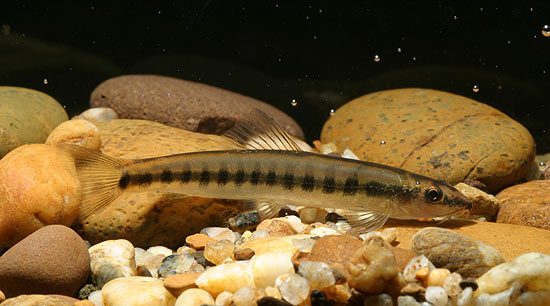
Nemacheilus ornatus
Kottelat, 1990
Max length45mm SL1.8in SLTank60 × 30cm24 × 12inTemp23–26°C73–79°FpH6.0–7.5This species is distinguished from similar-looking congeners such as N. longistriatus and N. ornatus by its unique colour pattern consisting of a black lateral body stripe with 9-16 vertically-orientated blotches extending along it both above and below, plus an irregular stripe running along the dorsal surface. The anterior lateral blotch is surrounded by lighter pigment, forming an ocellus similar to that seen in N. binotatus.
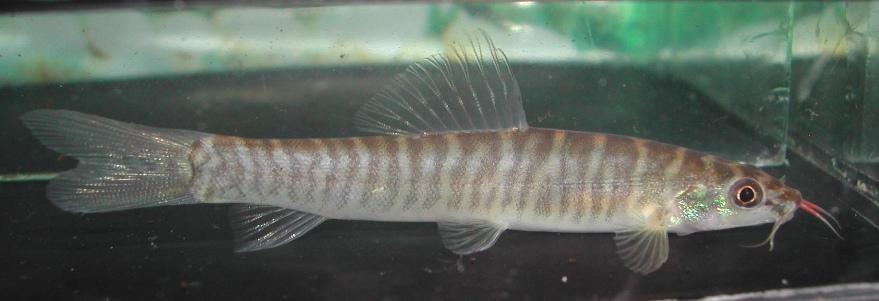
Nemacheilus platiceps
Kottelat, 1990
Max length61mm SL2.4in SLTank60 × 30cm24 × 12inTemp23–26°C73–79°FpH6.0–7.5This species is only traded occasionally. It's distinguished from congeners by a combination of characters including: 12-16 dark, irregular, vertical bars on body, usually split vertically; lips without furrows; inco...
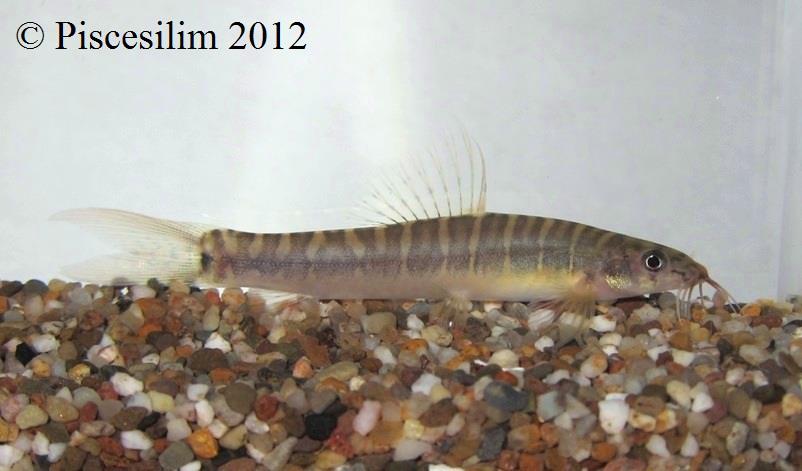
Nemacheilus selangoricus
Duncker, 1904
Max length60mm SL2.4in SLTank60 × 30cm24 × 12inTemp20–25°C68–77°FpH5.0–7.5N. selangoricus is most similar to N. spiniferus since it possesses acuminate scales above and below the lateral line on the caudal peduncle, a feature not shared with any other congener. It can however be distinguished by the following characters: presence of 8-12 very regular dark bars on flanks (vs. 10-13 irregularly-shaped bars in N. spiniferus), 3-5 times...
Nothobranchius foerschi
Wildekamp & Berkenkamp, 1979
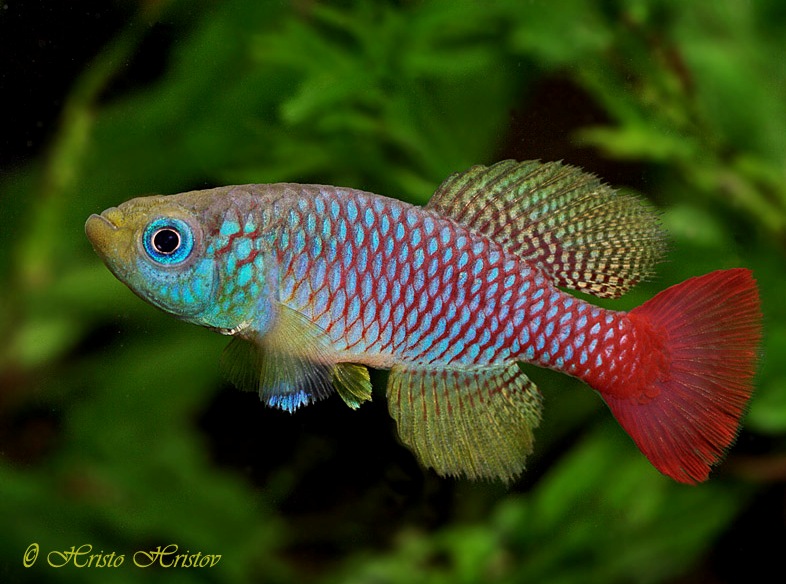
Max length♂ 55 · ♀ 40mm SL♂ 2.2 · ♀ 1.6in SLTank45 × 30cm18 × 12inTemp20–24°C68–75°FpH6.5–7.5Inhabits ephemeral, water-filled depressions, pools and swamps mostly located in lowland floodplains. Water levels in these seasonally-variable habitats typically decrease during the dry season and eventually become completely dessicated for several months each year. Near Bagamoyo it's been collected from pools of a flat, grassy floodplain alongside the congeners N. annectens, N. janpapi and N. melanospilus, while at Soga it occus together with N. janpapi and N. ocellatus. Most habitats appear to be heavily overgrown with terrestrial vegetation.
Opsarius barna
Hamilton, 1822
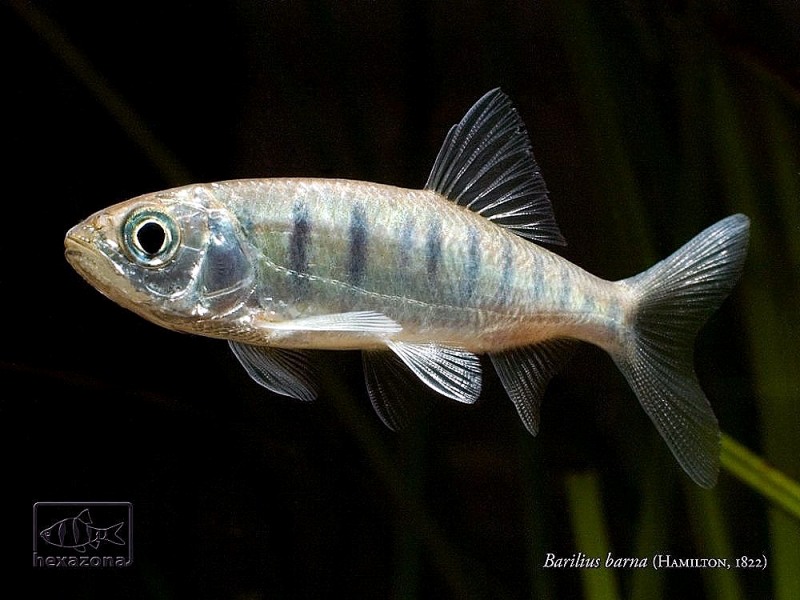
Max length130mm SL5in SLTank150 × 60cm60 × 24inTemp16–24°C61–75°FpH6.0–8.0This species occasionally appears in the ornamental trade, usually as 'striped hill trout' or 'banded hill trout'. It can be distinguished from congeners by the following combination of characters: lateral line complete with 40-42 scales; barbels absent; 10-13 anal-fin rays; body with 9-11 dark blue vertical bars; last dorsal-fin ray extending to caudal-fin base.
Opsarius caudiocellatus
Chu, 1984
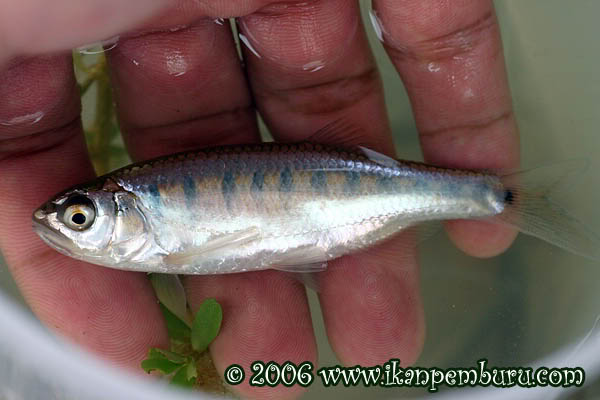
Max length86mm SL3.4in SLTank150 × 45cm60 × 18inTemp18–24°C64–75°FpH6.5–8.0This species may have appeared in the aquarium trade though probably not under the correct name. It can be told apart from similar-looking congeners by the following combination of characters: presence of a black round spot at the caudal base; dorsal-fin rays black with connecting membranes transparent; posterior dorsal-fin origin located midway between upper angle of gill aperture and caudal-fin base, or slightly closer to the latter.
Opsarius infrafasciatus
Fowler, 1934
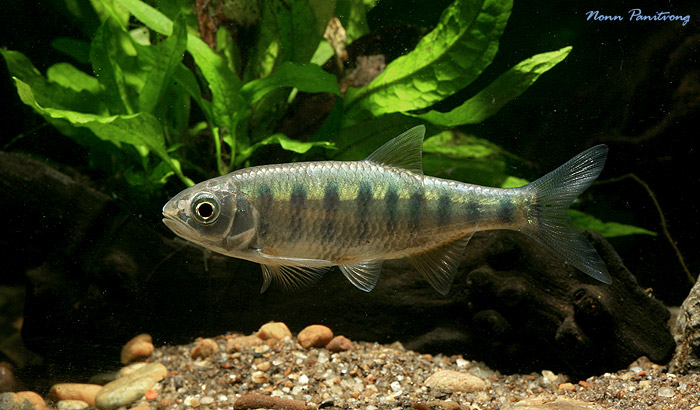
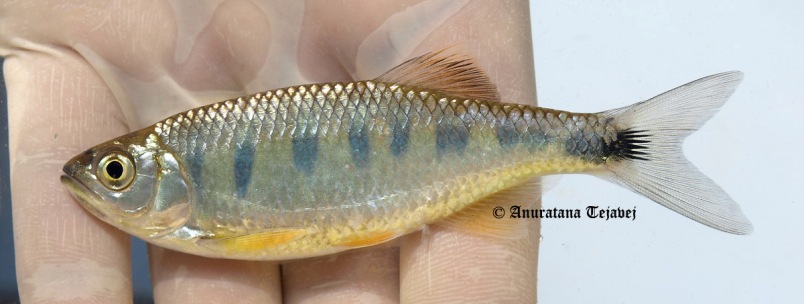
Max length100mm SL3.9in SLTank120 × 45cm48 × 18inTemp18–26°C64–79°FpH6.0–8.0This species has previously been considered synonymous with both O. ornatus and O. pulchellus but is currently considered to be distinct following (Tejavej, 2012). It can be distinguished from congeners by a combination of characters including: small caudal spot presen...
Opsarius signicaudus
Tejavej, 2012
Max length100mm SL3.9in SLTank120 × 45cm48 × 18inTemp18–26°C64–79°FpH6.0–8.0O. dogarsinghi and O. bernatziki are the only two Southeast Asian congeners to possess a large blotch at the caudal-fin base but in the former the blotch is vertically-orientated and hardly extends onto the fin itself (vs. laterally-elongate and extending onto the basal fin rays) and long (vs. short) barbels, while th...
Oreichthys crenuchoidesDrape Fin Barb
Schäfer, 2009
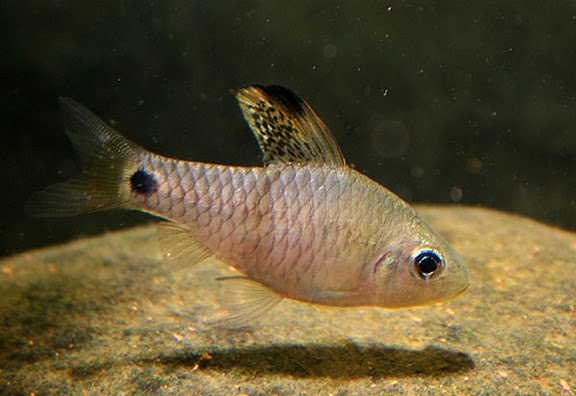
Max length45mm SL1.8in SLTank60 × 30cm24 × 12inTemp23–28°C73–82°FpH6.0–7.5This fish is sometimes traded as Oreichthys cosuatis, O. sp. 'high fin', O. 'umangii' (a nomen nudum that has only ever been applied to an image of a fish in the book 'Ornamental Aquarium Fish of India'; K. L.Tekriwal and A. A. Rao 1999), Puntius 'arunavii' or 'neon highfin barb'. It can be distinguished from congeners by the following combination of characters: absence of a dark marking in the anal-fin (vs. presence in other species); ½7½ scales scales between pelvic-fin origin and dorsal midline (vs. ½6½ in O. cosuatis and...
Oryzias mekongensisMekong Ricefish
Uwa & Magtoon, 1986
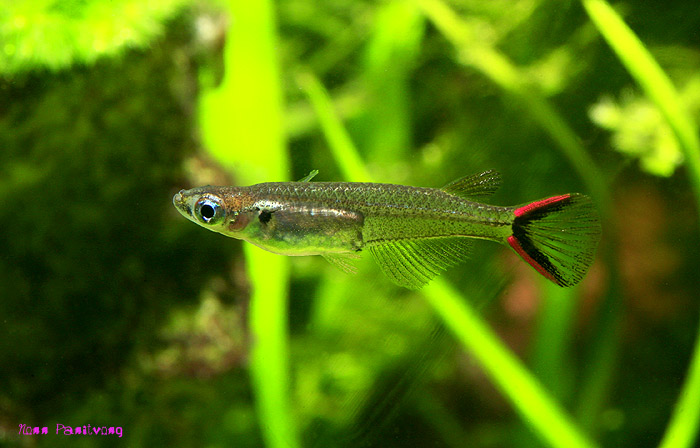
Max length21mm SL0.8in SLTank40 × 20cm16 × 8inTemp23–27°C73–81°FpH6.0–7.5It can be further distinguished from congeners by the following combination of characters: small adult size; bright orange-red marginal bands on caudal-fin lobes in males; caudal-fin rounded and elongate; 5-7 dorsal-fin rays; relatively few (13-18) anal-fin rays without bony contact organs, the last ray branched; 6-8 pectoral-fin rays. Members of the family Adrianichthyidae are...
Pachypanchax arnoulti
Loiselle, 2006
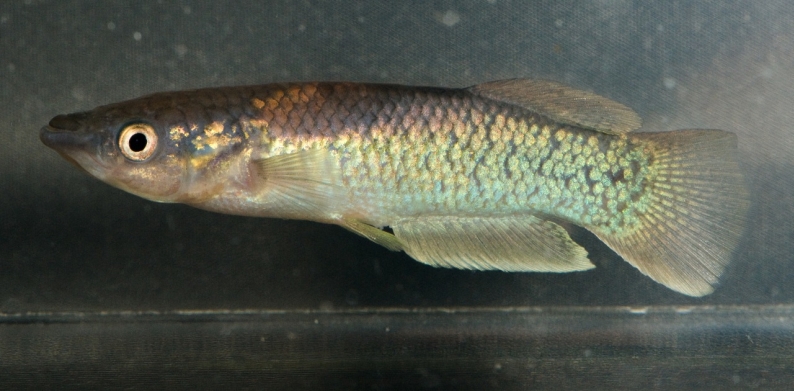
Max length80mm SL3.1in SLTank90 × 30cm36 × 12inTemp20–28°C68–82°FpH6.0–7.5P. arnoulti has been in the aquarium hobby for many years but was identified as the congener P. omalonotus prior to its description. It appears in the majority of older aquarium literature under that name and as a result a degree of hybridisation has undoubtedly occurred.
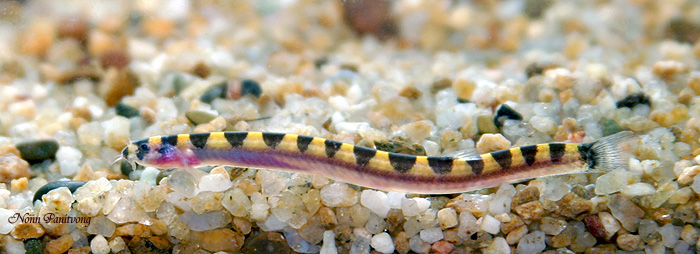
Pangio cuneovirgata
Raut, 1957
Max length40mm SL1.6in SLTank45 × 30cm18 × 12inTemp21–26°C70–79°FpH3.5–7.0Infrequently encountered in the aquarium trade, most often as bycatch among shipments of similar-looking congeners. It's included in the P. kuhlii group of closely-related species within the genus, and can be distinguished from other members by...
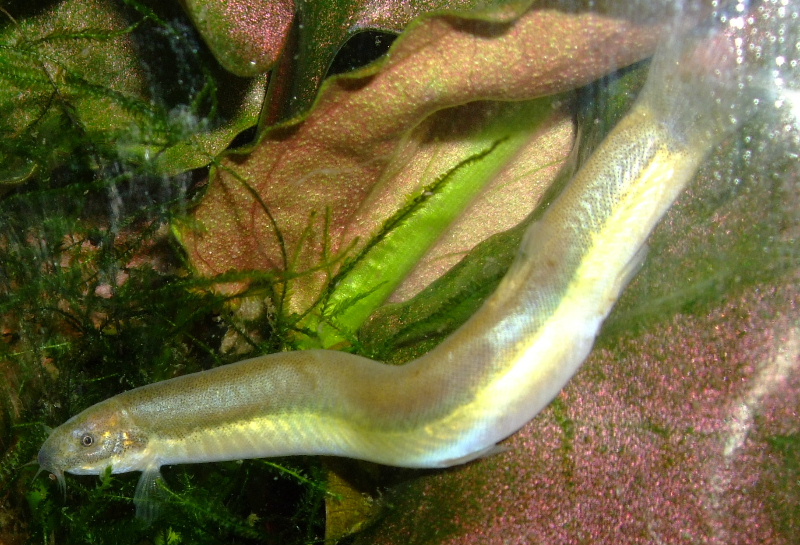
Pangio sp. 'PAN02'
authority not recorded
Max length50mm SL2.0in SLTank60 × 30cm24 × 12inTemp21–26°C70–79°FpH3.5–7.0The fish in our images don't correspond to any of the described members of the genus but can be assigned to the P. oblonga species group with a degree of certainty. It's apparently exported as a contaminant among shipments of a uniformly brown-coloured fish with unpublished genetic analyses suggesting the two might be variants of the same species (J. Bohlen, pers. comm.). Among congeners it may be related to P. alcoides Kottela...
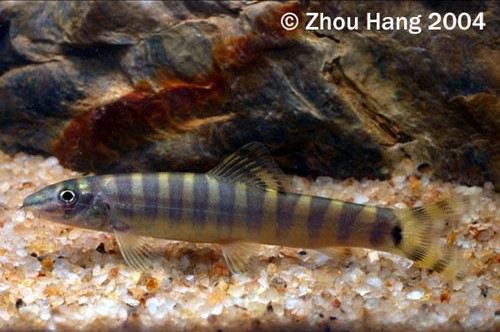
Parabotia lijiangensis
Chen, 1980
Max length83mm SL3.3in SLTank120 × 30cm48 × 12inTemp20–24°C68–75°FpH6.0–7.5It's told apart from congeners by a combination of characters as follows: large scales present on body and sides of head; caudal fin deeply forked with subequal lobes; 10-13 dark, vertical bars on the body; a dark, ocellated spot in the centre of the caudal-fin base; two bars on top of head, dorsal-fin with two rows of greyish spots; caudal-fin lobes with 3-4 dark bands on each; anal-fin with one indistinct band and another, more distinct, submarginal band; ventral fins with two indistinct bands.
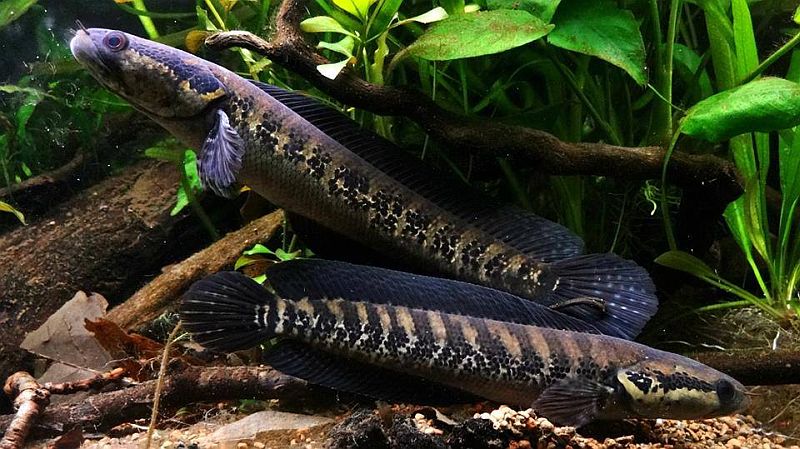
Parachanna africana
Steindachner, 1879
Max length300mm SL12in SLTank120 × 60cm48 × 24inTemp20–25°C68–77°FpH5.0–7.5Following Bonou and Teugels (1985), P. africana can be distinguished from congeners by the following combination of characters: colour pattern unique, comprising a series of 8-11 dark, chevron-shaped markings extending along the body posterior to the pectoral fins; 19-24 scales in the transverse series; lateral line complete with 73-83 pored scales; 45-48 dorsal-fin rays 45-48; 32-35 anal-fin rays.
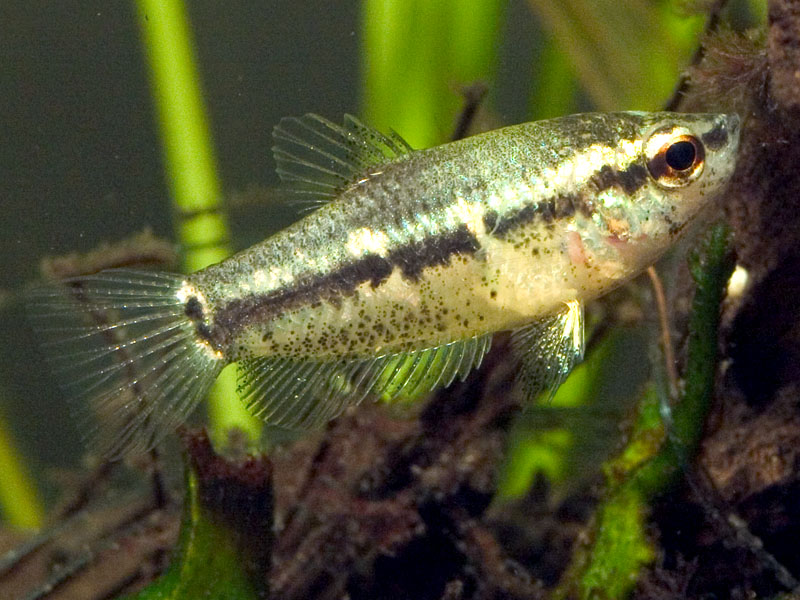
Parasphaerichthys lineatus
Britz & Kottelat, 2002
Max length19mm SL0.7in SLTank40 × 20cm16 × 8inTemp22–27°C72–81°FpH6.5–8.0This species is sometimes traded under the names 'mini chocolate gourami', 'Burmese chocolate gourami' or mislabelled as the congener P. ocellatus, these two currently comprising the only known members of the genus. P. lineatus can be told apart from P. ocellatus via the following combination of characters: smaller body size (maximum standard length 18.7 mm vs. 32.0 mm); absence of ocellus-type marking in middle of each flank (vs. presence); presence of dark, stripe (vs. abs...
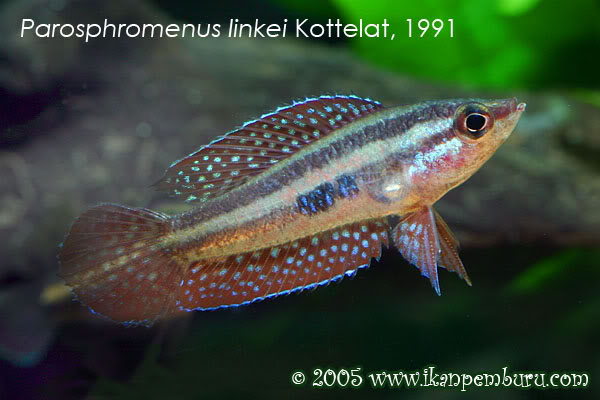
Parosphromenus linkei
Kottelat, 1991
Max length35mm SL1.4in SLTank40 × 20cm16 × 8inTemp22–28°C72–82°FpH3.0–6.5This species is said to be slightly easier to maintain than the majority of congeners and is therefore a recommended choice for those new to maintaining Parosphromenus spp. in the aquarium. It's occasionally available on a commercial basis and we've seen it traded as 'moonspot licorice gourami' in the past. There exist at least three colour forms on...
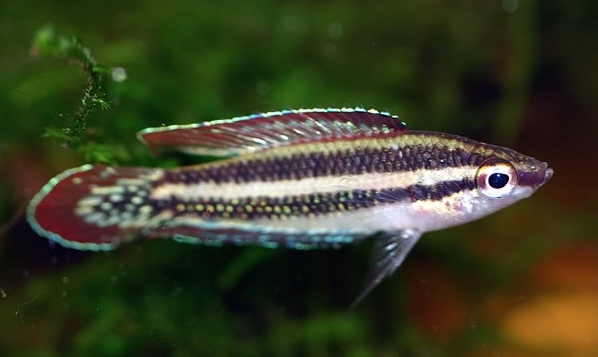
Parosphromenus quindecim
Kottelat & Ng, 2005
Max length40mm SL1.6in SLTank45 × 30cm18 × 12inTemp22–28°C72–82°FpH3.0–6.5This species has occasionally been traded on a commercial basis and was known as P. sp. 'Manis Mata' prior to description, with the latter apparently referring to a location some 100 km away from the type locality where the fish do not occur. It's said to be slightly easier to maintain than the majority of congeners and is therefore a recommended choice for those ne...
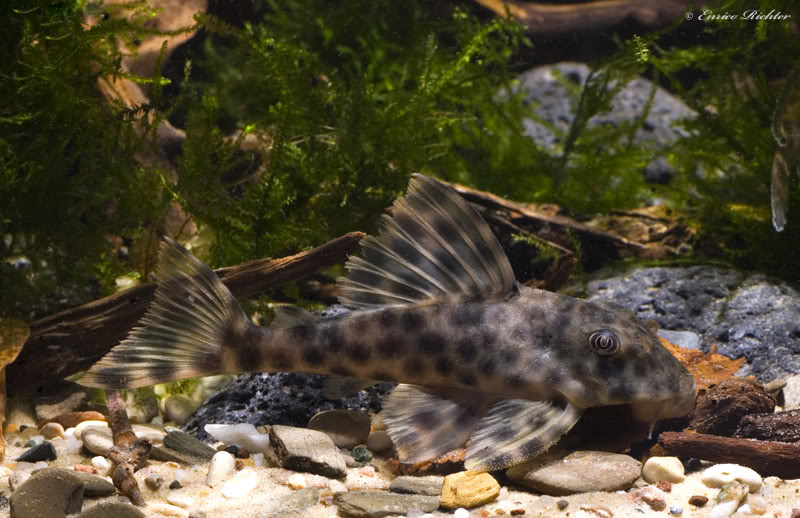
Peckoltia oligospilaL006
Günther, 1864
Max length100mm SL3.9in SLTank120 × 30cm48 × 12inTemp24–30°C75–86°FpH5.5–7.5This species can be distinguished from all congeners except P. bachi and some specimens of P. furcata by possessing only faint spots and saddles on the body. It can be told apart from P. bachi by possession of narrow (vs. wide) pelvic-fin spines, having the eyes positioned high (vs. low) on the head, and distinctly round (vs. appearing more as a mottling) spots on the body.