Nothobranchius foerschi
Last revised 2026Edit this page
On this page10 sections
Quick factsEdit
Difficulty5 of 8 measures
- Space
- medium tank
- Water
- needs a steady pH
- Temp
- needs a steady temperature
- Diet
- unknown
- Temperament
- unknown
- Social
- best in a pair
- Compatibility
- choose tankmates carefully
Other demands
Each of these can raise the rating on its own, whatever the measures above say.
- Hardiness
- unknown
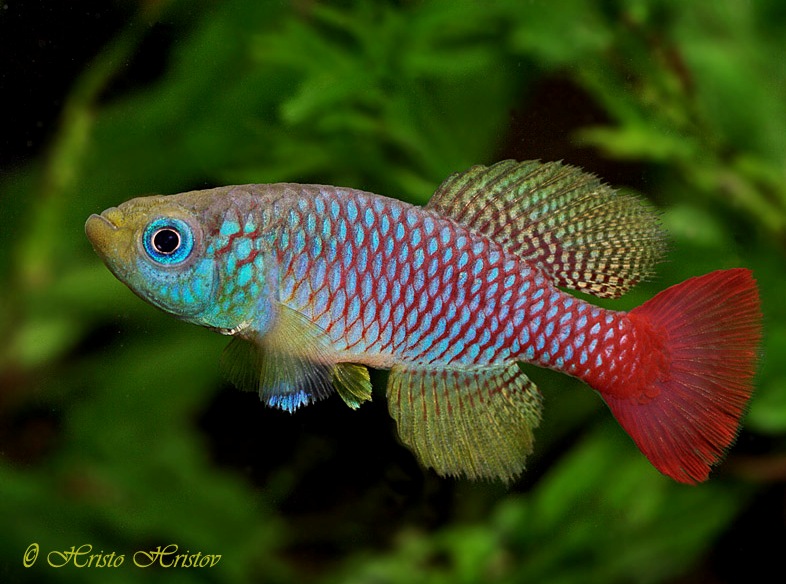
Nothobranchius foerschi is an annual killifish from eastern Tanzania that may be restricted to a small area of the Ruvu River catchment. All confirmed records come from the Ruvu and its delta, between Soga and the coast at Bagamoyo. It inhabits ephemeral pools and swamps on lowland floodplains, mostly heavily overgrown with terrestrial vegetation, and an aquarium strain appears more yellowish than the wild form.
Distribution
EditDescribed from Soga, a small settlement located west of Dar es Salaam city, eastern Tanzania, and may be restricted to a relatively small area within the Ruvu River catchment, between Soga and the coastal town of Bagamoyo. In 1891 it was also recorded in the Selous Game reserve, within the Rufiji River watershed, but this information has been called into question since the species has never been found there since and there exists no photographic evidence or preserved material from the Rufiji with all confirmed records pertaining to the Ruvu and its delta.
Habitat
Write a noteEditInhabits ephemeral, water-filled depressions, pools and swamps mostly located in lowland floodplains. Water levels in these seasonally-variable habitats typically decrease during the dry season and eventually become completely dessicated for several months each year. Near Bagamoyo it's been collected from pools of a flat, grassy floodplain alongside the congeners N. annectens, N. janpapi and N. melanospilus, while at Soga it occus together with N. janpapi and N. ocellatus. Most habitats appear to be heavily overgrown with terrestrial vegetation.
Aquarium size
Write a noteEditUnless isolated temporarily for spawning purposes even a single pair should be offered an aquarium with base dimensions of 45 ∗ 30 cm18 ∗ 12 in or more.
Maintenance
Write a noteEditThis species does not require peat although peat moss is often used as a spawning medium.
Water conditions
EditThese recommendations come from this profile’s own figures. They contain affiliate links, so we may earn a commission.
Diet
Write a noteEditA natural micropredator meaning small live or frozen foods such as Daphnia, Artemia and chopped bloodworm should form the basis of the diet.
Sexual dimorphism
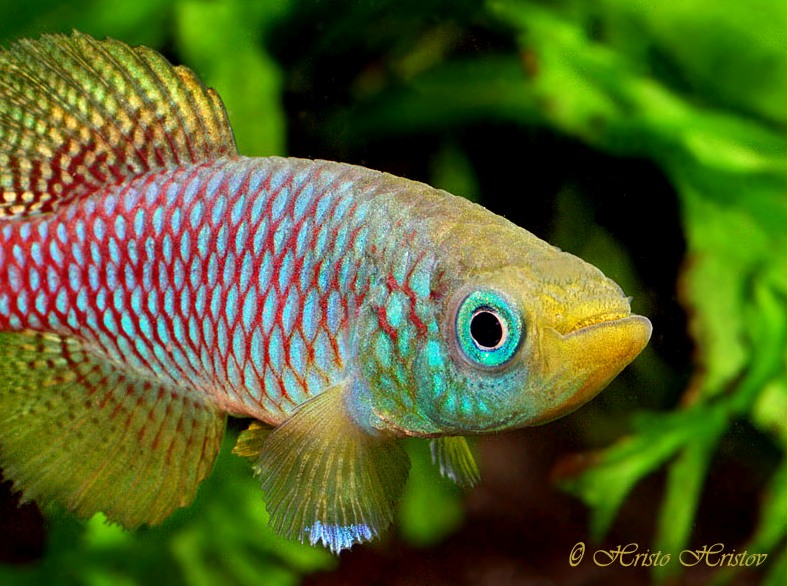
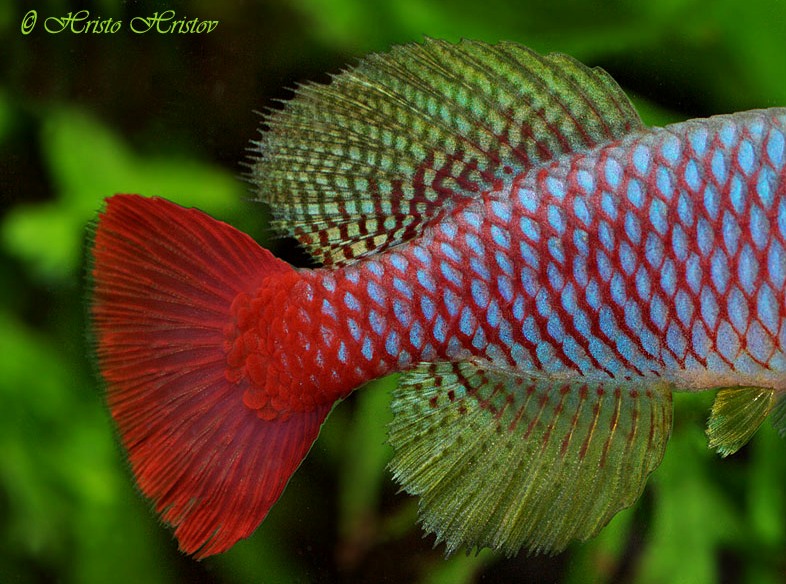
Write a noteEditMales grow larger and are far more colourful than females.
Reproduction
Write a noteEditWhen its natural habitats become dessicated during the dry season the adult fish die, leaving fertilised eggs encased within the substrate. These are resistant to dessication and remain there until the rains return some 5-6 months later at which point the fry hatch and grow very quickly with sexual maturity reached at around 3 weeks of age. Typical lifespan in the aquarium is 12-24 months and eggs should be stored at a temperature of 21.1 – 25 °C70 – 77 °F for around 3 months before being wetted. Some aquarists add a little marine salt to the water in order to reduce the risk of Oödinium, to which the fry are particularly susceptible.
Notes
EditWild collections are generally labelled with some form of code in order that they can be told apart, thus limiting the possibility of hybridisation, for example 'Ruvu River 'TZ 91-103' in which 'TZ' is 'Tanzania', '91' the year of collection (1991), and '103' collection locality. There also exists an aquarium strain which appears more yellowish than the wild form.
Species images · 3
These photographs are used with each photographer’s permission.
Send a photographDistribution
Profile completeness18 of 24
75% complete
Also missing: a common name, water condition notes, behaviour and compatibility, etymology.
Community
Questions about Nothobranchius foerschi?
Ask on Discord