Results for “population”
Type a name: scientific, common, or one a species used to go by. Or narrow the catalogue with the filters.
Filters
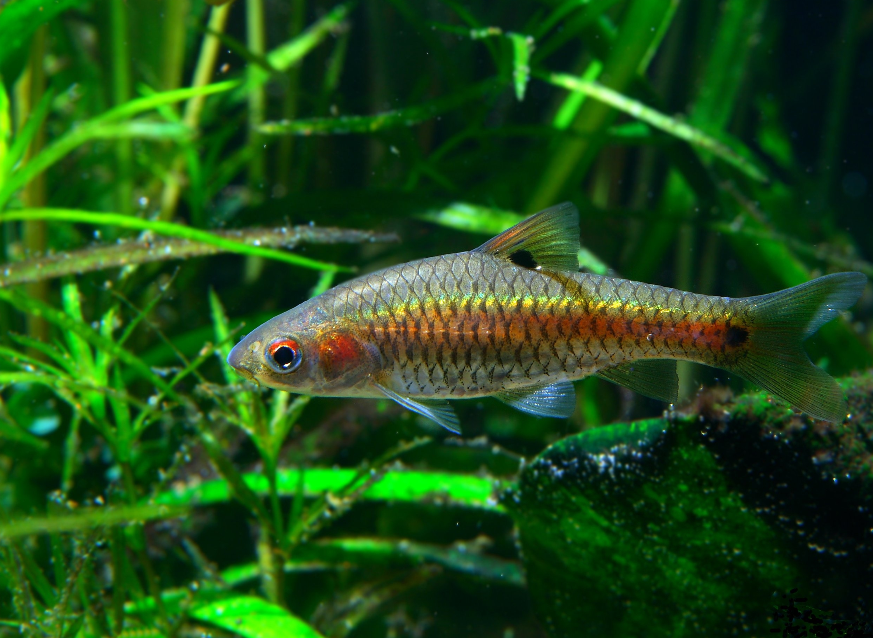
Puntius bimaculatusTwo-spotted Barb
Bleeker, 1863
Max length50mm SL2.0in SLTank60 × 30cm24 × 12inTemp18–24°C64–75°FpH6.0–7.5Generally very peaceful making it an ideal resident of the well-researched community tank. As it places no special demands in terms of water chemistry it can be combined with many of the most popular fish in the hobby including other small cyprinids as well as tetras, livebearers, rainbowfishes, anabantoids, catfishes and loaches. It's a schooling species by nature, and at least 6-10 specimens should be purchased. Maintaining it in such...
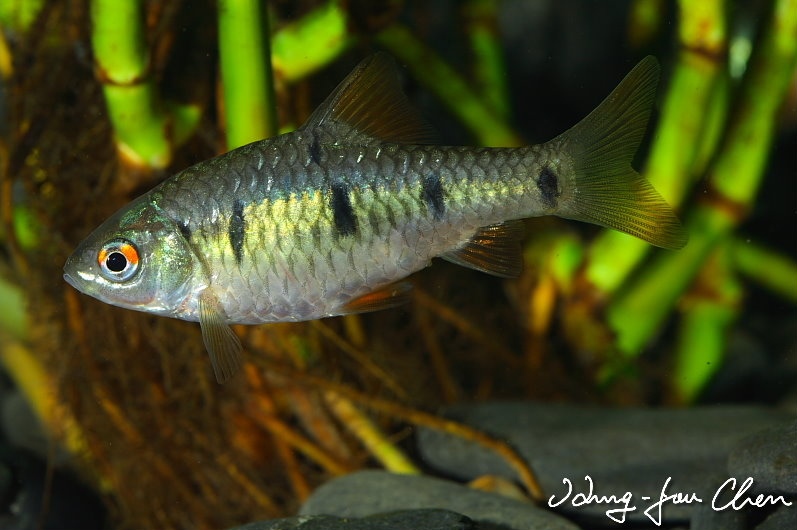
'Puntius' snyderi
Oshima, 1919
Max length75mm SL3.0in SLTank90 × 30cm36 × 12inTemp18–24°C64–75°FpH6.0–8.0This species is almost identical to the wild form of 'P.' semifasciolatus which is best known as the 'golden barb' in the aquarium hobby due to the popularity of a yellowish ornamental strain. The natural colour pattern is greenish in both species, however, and in terms of external characters they're only reliably distinguished by the fact that 'P.' semifasciolatus possesses a pair of prominent maxillary barbels wherea...
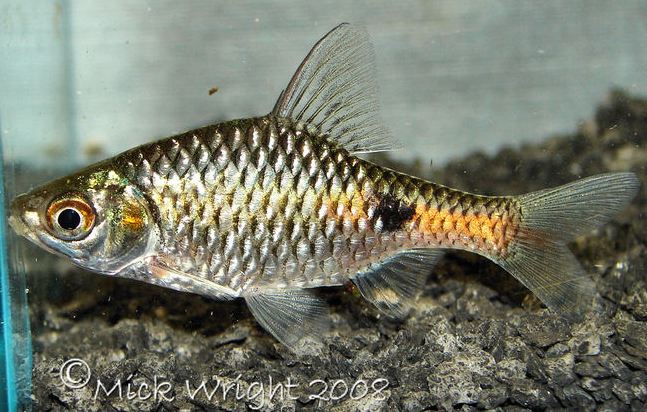
Puntius terioOnespot Barb
Hamilton, 1822
Max length90mm SL3.5in SLTank80 × 30cm31 × 12inTemp18–26°C64–79°FpH6.5–7.5This species is uncommon in the aquarium trade which is a little surprising given its huge natural range. Different populations can vary in colour pattern to an extent though all share the defining aspects given by Hamilton, comprising a diffuse yellow-golden marking on the operculum plus a dark spot on the caudal peduncle. The latter is usually surrounded by a variably-sized golden-yellow margin, and the dorsal-fin often contains irregular dark spots and streaks, these sometimes forming a longitudinal band.
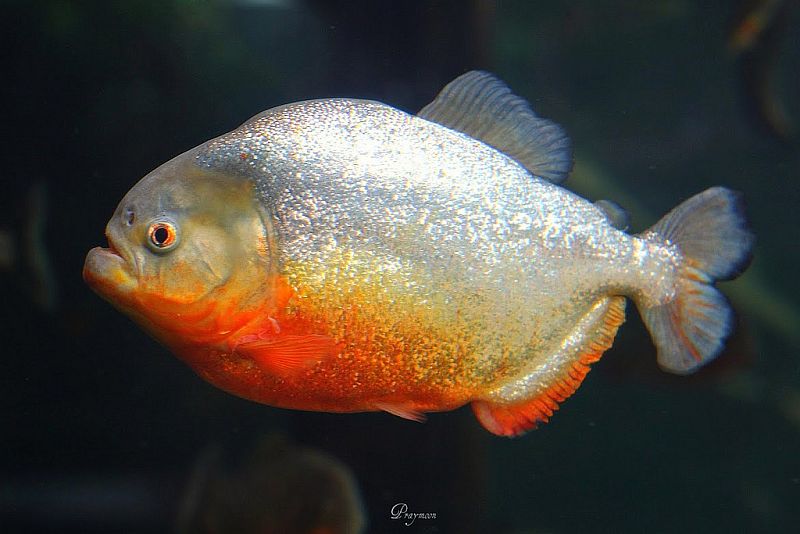
Pygocentrus nattereriRed Bellied Piranha
Kner, 1858
Max length350mm SL14in SLTank240 × 90cm96 × 36inTemp24–28°C75–82°FpH5.5–7.5Famed as a rapacious predator capable of rapidly stripping flesh from bone and a danger to any animal entering its native waters, P. nattereri is among the most notorious freshwater fishes in the world. As a result, displays featuring this “bloodthirsty” creature are found in most public aquaria, grisly Hollywood movies have been released, and the species has become popular in the aquarium trade. Little of this infamy is based on factual evidence, however.
Rasbora elegansElegant Rasbora
authority not recorded
Max length200mm SL8in SLTank120 × 45cm48 × 18inTemp22–25°C72–77°FpHnot recordedThis species is not especially popular in the hobby and is only infrequently seen on sale. It is clearly distinguishable from similar-looking members of the genus by lacking a dark stripe along the lateral line. Instead it possesses two spot-like markings on each flank, one below theorigin and lateral line and another at the caudal peduncle. The intensity of these can vary depending on the collection locality of the fish and they can be quite faint in some forms. There is also a third, smaller m...
Rasbora paviana
authority not recorded
Max length90mm SL3.5in SLTank120 × 30cm48 × 12inTemp22–26°C72–79°FpHnot recordedIn much of the literature this species is pictured with the invalid name R. paviei, due to an issue with spelling which was corrected by Kottelat (2005), and the common name 'sidestripe rasbora' although the latter has yet to find popularity in the aquarium hobby. There are a number of similar-looking species including R. sumatrana, R. hobelmani and R. laticlavia and it can be problematic to separate members of this 'group'. If the collection locality of the fish is known ide...
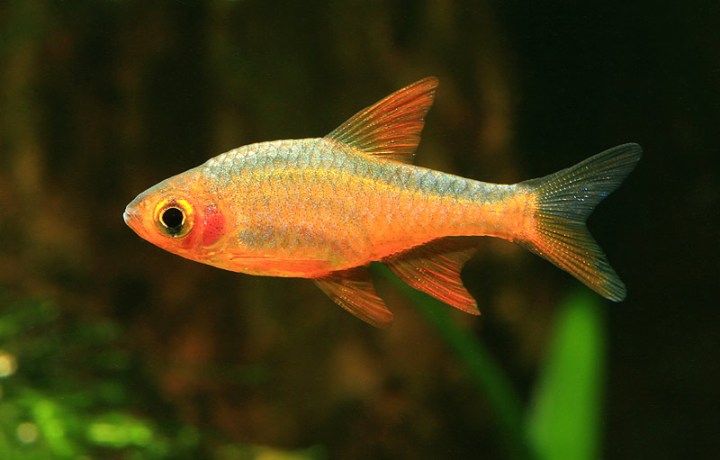
Rasboroides vateriflorisFire Rasbora
Deraniyagala, 1930
Max length40mm SL1.6in SLTank60 × 30cm24 × 12inTemp23–27°C73–81°FpH5.5–7.0These are still regarded as valid by some authorities although it's widely accepted that they represent variants of R. vaterifloris due to a lack of type material hindering conclusive study. Rasboroides nigromarginata (Meinken, 1956) has also been used to refer to a reddish form in which males differ from other populations in possessing dark fin margins, but the name is currently considered synonymous with R. vaterifloris by most sources despite the fish being rediscovered in 2010.
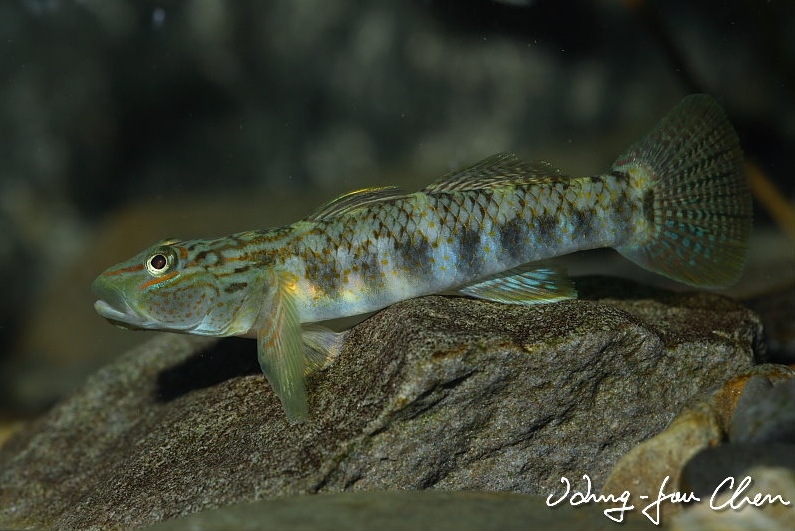
Rhinogobius lanyuensis
Chen, Miller & Fang, 1998
Max length67mm SL2.6in SLTank80 × 30cm31 × 12inTemp18–25°C64–77°FpH6.0–8.0Presumably inhabits small rivers, tributaries and streams with substrates of gravel, rocks, boulders, and exposed bedrock which undergo seasonal variations in water flow rate, depth and turbidity. Lanyu Island is volcanic, measures just 45 km² and has no major rivers or large settlements with a permanent human population of around 4000, although there is a large nuclear waste storage facility at its southern end.
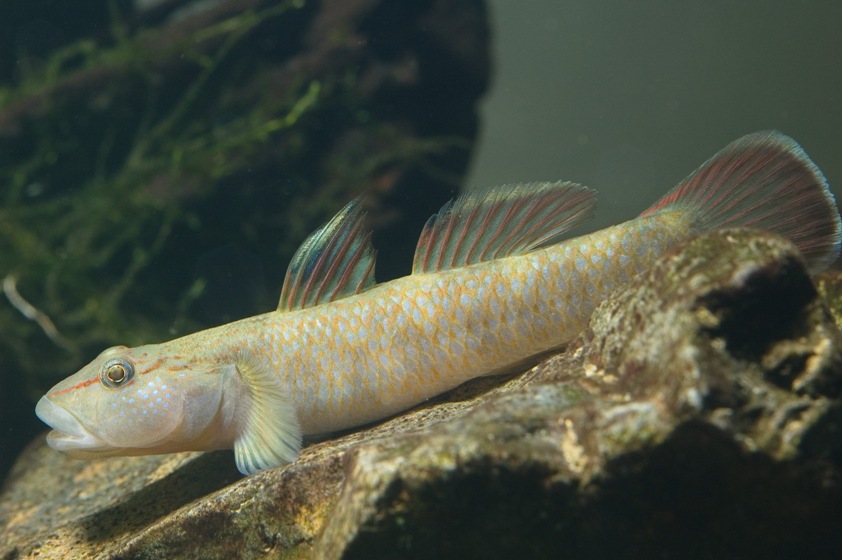
Rhinogobius sp. 'CO'
authority not recorded
Max lengthnot recordedTanknot recordedTempnot recordedpHnot recordedSome wild populations have evolved a complex amphidromous breeding strategy in which adults live and spawn in freshwater or brackish streams and the pelagic post-hatch larvae are washed downstream to the sea where the post-larval fry spend the first part of their life developing in estuarine nursery zones under brackish to full marine conditions. Once they reach a certain stage of development they begin to migrate upstream with some mov...
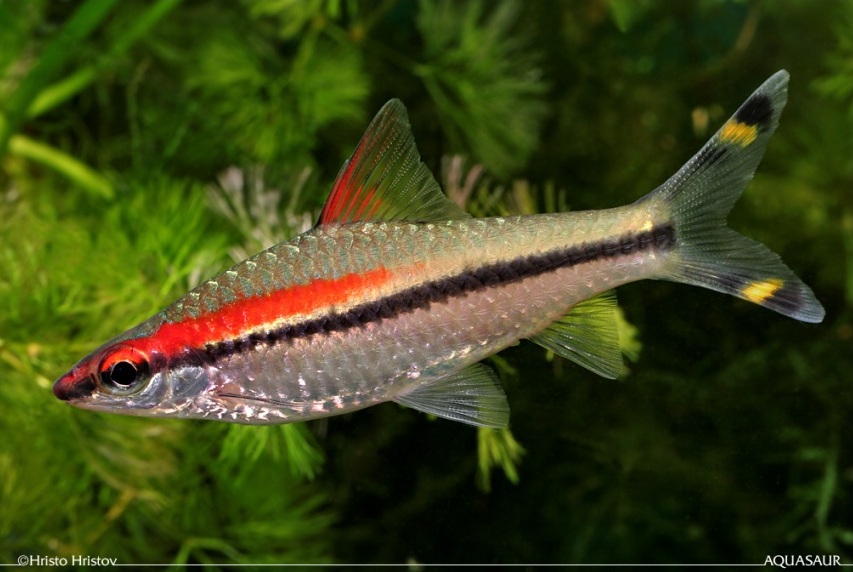
Sahyadria denisoniiRed-line Torpedo Barb
Day, 1865
Max length110mm SL4in SLTank120 × 45cm48 × 18inTemp15–25°C59–77°FpH6.5–7.8This species has become an extremely popular aquarium fish since it first appeared in the ornamental trade during the late 1990s, and it has been sold under various names including 'Denison's barb', 'denisoni barb', 'Denison's flying fox', 'rose line shark', 'bleeding-eye barb', 'red flash barb', and 'Indian flasher barb'. In India it is known locally as 'Miss Kerala' and 'Chorai Kanni' ( literally 'bleeding eyes').
Sarotherodon melanotheron melanotheronBlack Chin Tilapia
authority not recorded
Max length200mm SL8in SLTank120 × 38cm48 × 15inTemp23–28°C73–82°FpH7.0–8.0At present there are 5 sub-species, Sarotherodon melanotheron melanotheron, S. m. heudelotii, S. m. leonensis, S. m. nigripinnis and S. m. paludinosus. Confusingly, some of these are maternal mouthbrooders. It has been introduced into several countries for aquaculture purposes and thriving populations now exist in areas of Asia, Europe and the USA....
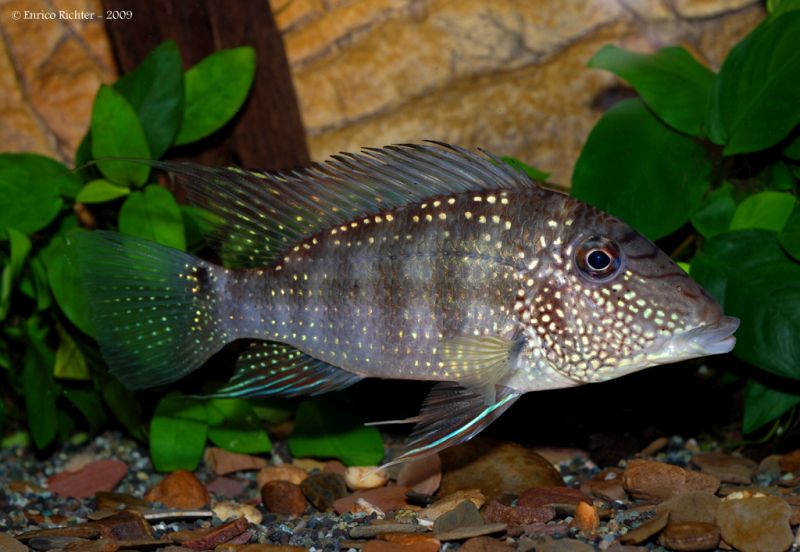
Satanoperca leucostictaWhitespot Eartheater
Müller & Troschel, 1849
Max length150mm SL6in SLTank180 × 60cm72 × 24inTemp20–28°C68–82°FpH5.5–7.5S. leucosticta is frequently available in the ornamental trade and farmed for the purpose in several countries. It is often confused with its congener S. jurupari in aquarium literature and on websites, but is easily recognised by presence (vs. absence) of prominent white spots or vermiform markings on the sides of the head. Although the presence of white spots on the head does not distinguish it from all known Satanoperca populations (see below), it can...
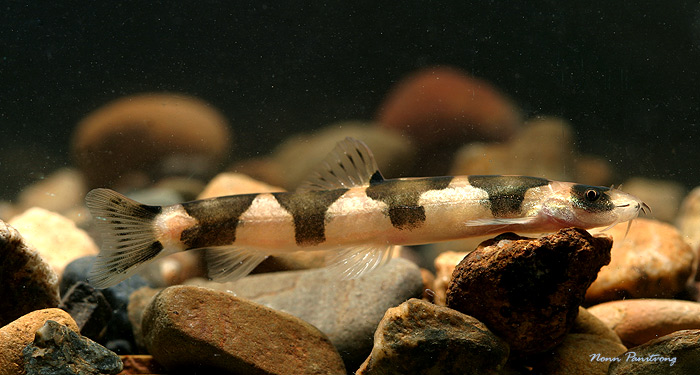
Schistura pridiiMini Dragon Loach
Vidthayanon, 2003
Max length40mm SL1.6in SLTank60 × 30cm24 × 12inTemp18–24°C64–75°FpH7.0–8.5Endemic to a handful of tributary streams within the upper Chao Phraya river system in northern Thailand. Six populations are known to date, with the majority lying inside the Doi Chiang Dao Wildlife Sanctuary. Some of its habitats are under threat by over-grazing, deforestation, deliberate forest fires, and collection for the aquarium trade.
Sciaenochromis fryeriElectric Blue Hap
authority not recorded
Max length200mm SL8in SLTank150 × 45cm60 × 18inTemp24–28°C75–82°FpH7.6–8.8This popular species was previously imported and classified as Sciaenochromis ahli, and is still named as such in much of the available literature. Many morphs exist, although males of all these exhibit the characteristic blue colouration, differing only in fin colouration and patterning. These should not be mixed in aquaria as they will hybridise. Extra care must be taken regarding tankmates, too, as male S. fryeri have been known to spawn with females of other genera, particularly Aulonoca...
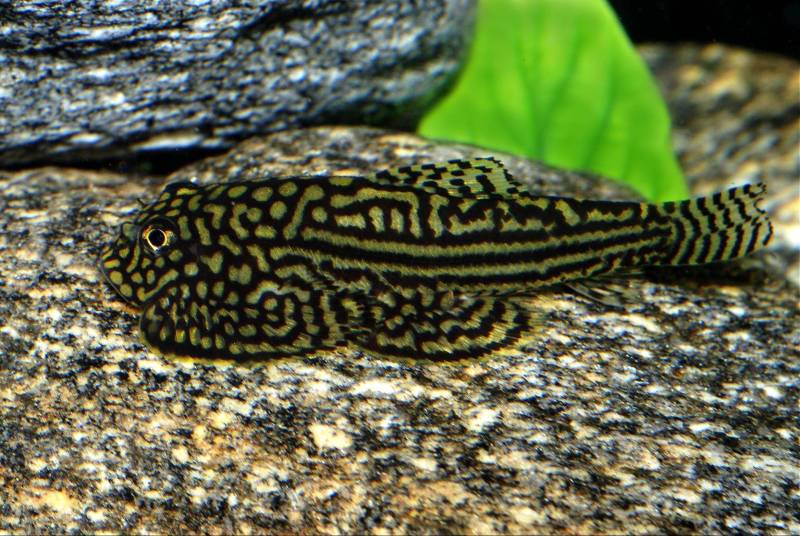
Sewellia lineolataTiger Hillstream Loach
Valenciennes, 1846
Max length65mm SL2.6in SLTank75 × 30cm30 × 12inTemp20–24°C68–75°FpH6.0–7.5S. lineolata was first recorded by Diard over 150 years prior to its 'rediscovery' in the early-1990s. It became available to the aquarium trade in the mid-2000s and swiftly established itself as one of the more popular balitorids in the hobby due to its attractive body markings and ease of breeding. It's also sold under the names 'reticulated hillstream loach', 'Vietnamese hillstream loach' and 'gold ring butterfly sucker'. It's difficult to...
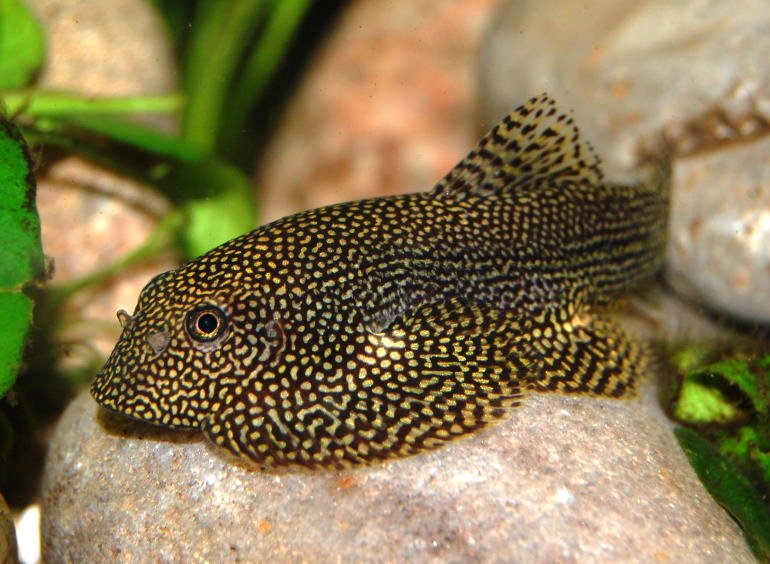
Sewellia sp. 'SEW01'Spotted Butterfly Loach
authority not recorded
Max length80mm SL3.1in SLTank90 × 30cm36 × 12inTemp20–24°C68–75°FpH6.0–7.5This is one of the more readily-available members of the genus and popularly referred to as S. sp. 'spotted' or S. sp. 'special'. It's superficially similar in appearance to S. albisuera but in that species body patterning consists of a network of irregular dark lines forming a complicated series of reticulations vs. many small, light spots on a dark background in S. sp. 'SEW01'. It's been suggested that these two may represent the same species but this...
Synodontis eupteraFeatherfin Synodontis
authority not recorded
Max length300mm SL12in SLTank120 × 30cm48 × 12inTemp22–27°C72–81°FpH6.0–7.5One of the most popular and commonly seen Synos in the hobby, S. eupterus is usually offered for sale as a small (1-3") juvenile with no information regarding its potential size. These young fish are often sold as Synodontis "Network" due to their attractive reticulated patterning. This patterning breaks up as the fish mature and adult specimens have a simple spotted colouration. The characteristic 'feathered' dorsal also develops with age, with the first few rays develo...
Synodontis greshoffi
authority not recorded
Max length200mm SL8in SLTank120 × 30cm48 × 12inTemp23–27°C73–81°FpH6.5–7.2An attractively patterned, infrequently imported Syno that deserves more popularity in the hobby. It is occasionally confused with S. schoutedeni, which it superficially resembles.
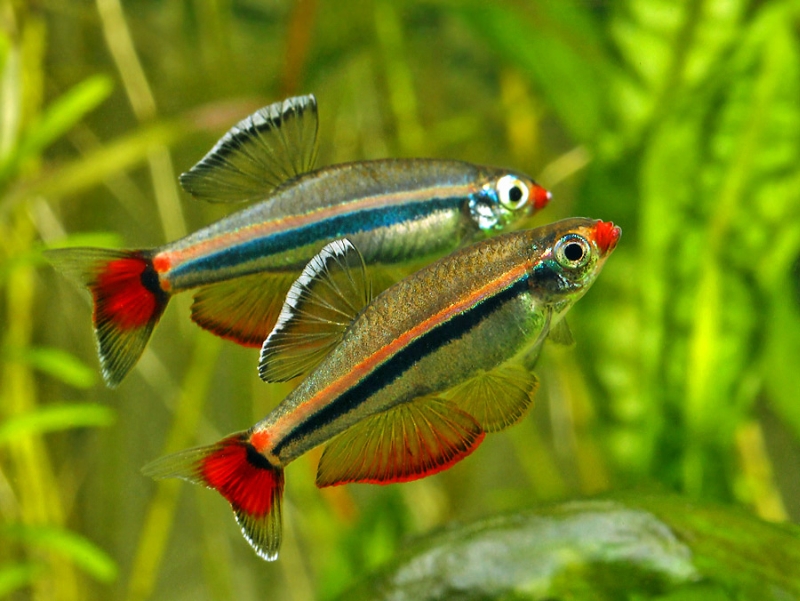
Tanichthys micagemmae
Freyhof & Herder, 2001
Max length30mm SL1.2in SLTank45 × 30cm18 × 12inTemp18–23°C64–73°FpH6.5–7.5This species only became available in the aquarium hobby during the early 21st century but has already achieved a measure of popularity since it's attractive, easy to maintain and usually quite cheaply-priced. You may see it on sale under various trade names including 'Vietnamese minnow', 'cardinal minnow', 'royal white cloud', 'dwarf cardinal' and others. We've obtained images of what is said to be a naturally-occurring form with extremely elong...
Thayeria boehlkeiFalse Penguin Tetra
authority not recorded
Max length36mm SL1.4in SLTank60 × 38cm24 × 15inTemp22–28°C72–82°FpHnot recordedThere are only three species in the genus Thayeria, of which T. boehlkei is by far the most popular in the hobby. Of its congeners, it was the type species T. obliqua that was originally given the common name of "penguin" fish or tetra, although T. boehlkei is usually sold under the same name (we've also seen it on sale as "hockeystick" tetra). The two are easy to tell apart, as in T. boehlkei the thick black stripe extending from the lower lobe of the travels laterally ...