Results for “species name”
Type a name: scientific, common, or one a species used to go by. Or narrow the catalogue with the filters.
Filters
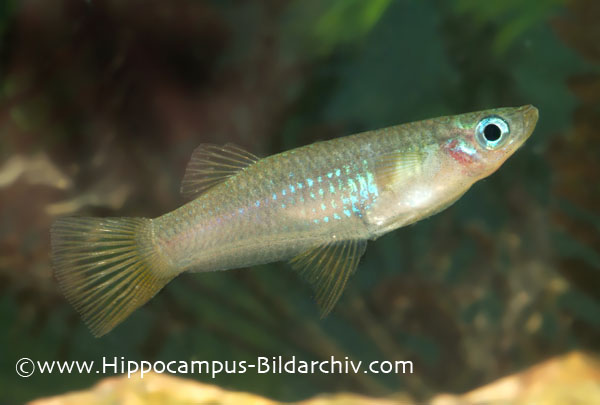
Alfaro cultratusKnife Livebearer
Regan, 1908
Max length75mm SL3.0in SLTanknot recordedTemp24–28°C75–82°FpH6.0–8.0This is an exceptionally hardy and adaptable species. It's not an especially common fish in stores, but is quite widely available in hobbyist circles. The common name arises from the row of modified, paired scales that form a keel running from the base of theto the caudal fin....
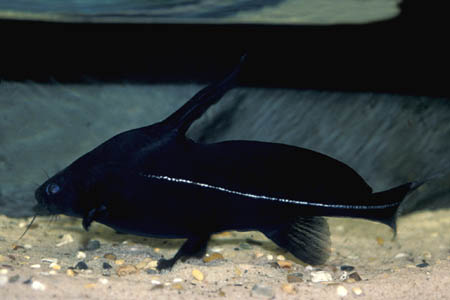
Bagrichthys macracanthusBlack Lancer
Bleeker, 1854
Max length230mm SL9in SLTank120 × 45cm48 × 18inTemp24–28°C75–82°FpH5.5–7.0The vernacular name 'lancer' is derived from the extended dorsal spine possessed by several members of the genus, which currently contains 7 species. Among them B. macracanthus is most similar to B. majusculus and B. vaillantii but can be told apart from the former by possession of shorter pectoral spines (13.3 - 16.2% SL vs. 15.8 - 20.7%), shorter adipose fin (46.0 - 58.0% SL vs. 38.8 - 45.8%), less deep caudal peduncle (7.1 - 7.5% SL vs. 5.6-7.0%) and larger adult size. From B. vaillantii it di...
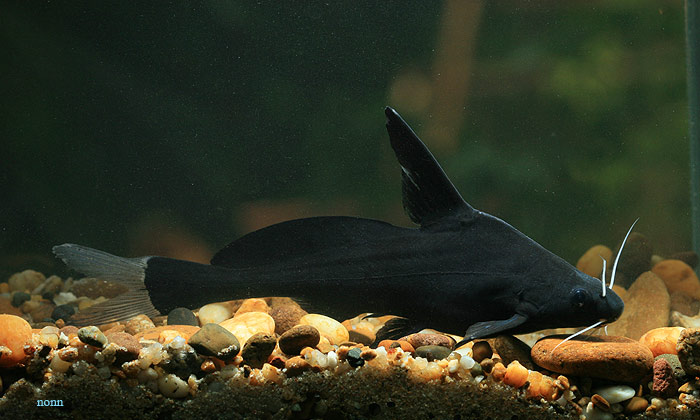
Bagrichthys majusculusWhite-Whisker Lancer
Ng, 2002
Max length177mm SL7in SLTank120 × 45cm48 × 18inTemp24–28°C75–82°FpH5.5–7.0The vernacular name 'lancer' is derived from the extended dorsal spine possessed by several members of the genus, which currently contains 7 species. Among them B. majusculus is most similar to B. macracanthus and B. vaillantii but can be told apart from both by possession of longer pectoral-fin spines (length 15.8 - 20.7 % SL vs. 11.5 - 16.2 %), from the former by possession of a larger adipose fi...
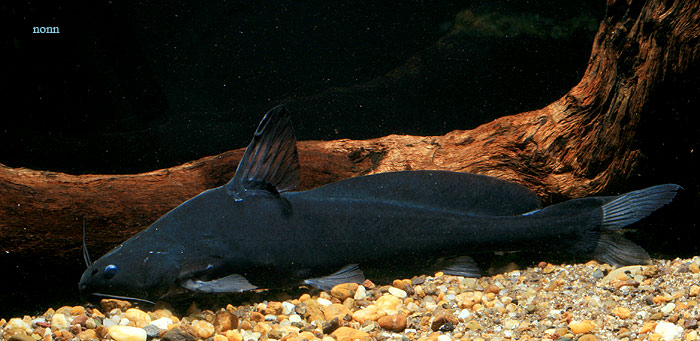
Bagrichthys obscurus
Ng, 1999
Max length249mm SL10in SLTank120 × 45cm48 × 18inTemp24–28°C75–82°FpH5.5–7.0The vernacular name 'lancer' is derived from the extended dorsal spine possessed by several members of the genus, which currently contains 7 species. B. obscurus is diagnosable from congerners by the following combination of characters: mouth opening relatively small and narrow; oral dentition significantly reduced; dorsal-fin spi...
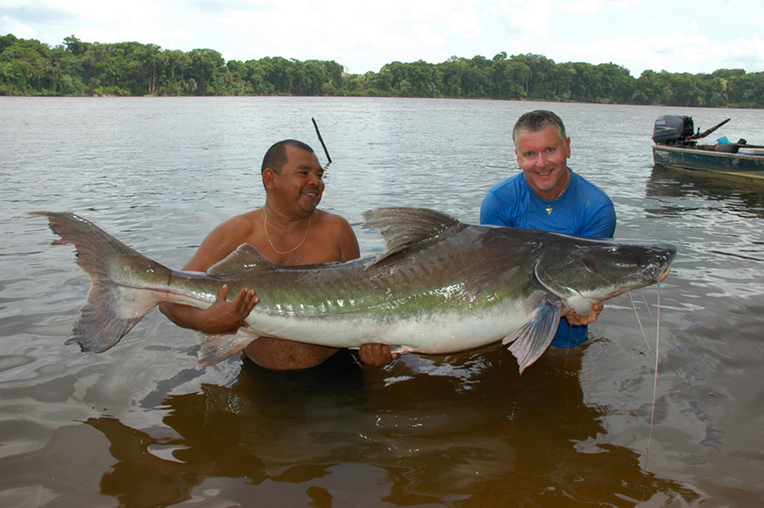
Brachyplatystoma filamentosumPiraíba
Lichtenstein, 1819
Max length2500mm SL98in SLTanknot recordedTemp22–28°C72–82°FpH6.0–8.0In the Amazon region it is only specimens larger than around 160 cm and werighing in excess of 50 kg that are referred to as 'Piraíba' with the name 'filhote' normally applied to smaller individuals. Other vernacular names include 'Salton catfish', 'Kumakuma'; and 'tiger antenna catfish'; with members of the genus often referred to collectively as 'goliath catfishes'.
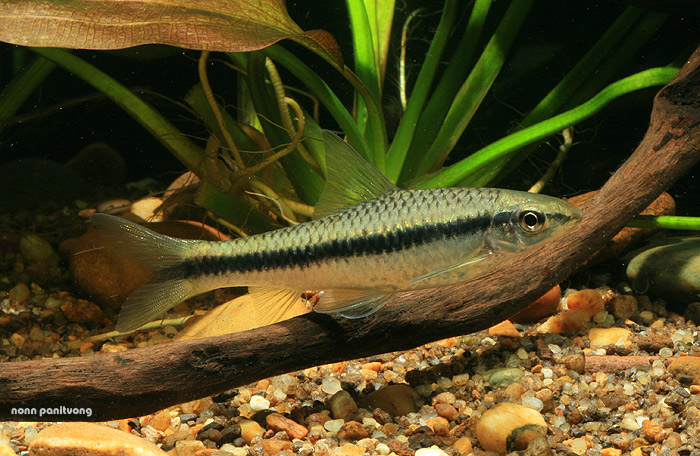
Crossocheilus atrilimesSiamese Algae Eater
Kottelat, 2000
Max length75mm SL3.0in SLTank120 × 30cm48 × 12inTemp20–26°C68–79°FpH6.0–7.5This species is among a handful of near-identical congeners that are traded as 'Siamese algae-eater' (often abbreviated to 'SAE'), 'Siamese flying fox' and 'Crossocheilus siamensis'. The latter name is not valid, however, and is a synonym of Epalzeorhynchos siamensis which is itself a synonym of Crossocheilus oblongus, a species described from Java. C. oblongus is currently accepted to...
Dekeyseria brachyuraButterfly Plec
authority not recorded
Max length140mm SL6in SLTank120 × 30cm48 × 12inTemp25–28°C77–82°FpH5.6–7.0Formerly known as Peckoltia pulcher, this species is also known as the pretty peckoltia, flounder plec (in reference to its flattened shape) or chameleon plec. This latter name is quite appropriate, as the fish will change colour depending on the colour of the substrate and other surfaces. It also has a distinctive night time colouration. It closely resembles the Rio Orinoco species L052 and these may turn out to be the same species, as the waters that they inhabit become connected during th...
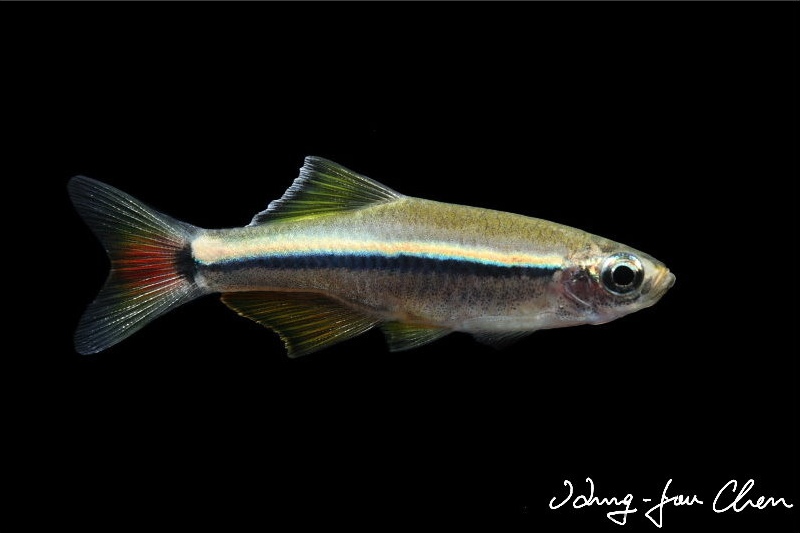
Tanichthys sp. 'Vietnam'
authority not recorded
Max length30mm SL1.2in SLTank45 × 30cm18 × 12inTemp18–25°C64–77°FpH6.0–7.5This fish was first collected in 2009 and limited numbers have been available in the aquarium trade. Though additional exports may be unlikely it's proven easy to breed in captivity and there's a fair chance it will become established in the hobby. It's sold under several names including T. sp. 'lemon' or 'yellow white cloud', and has also been misidentified as the congener T. thacbaensis, a valid species occurring much further north in Vietnam.
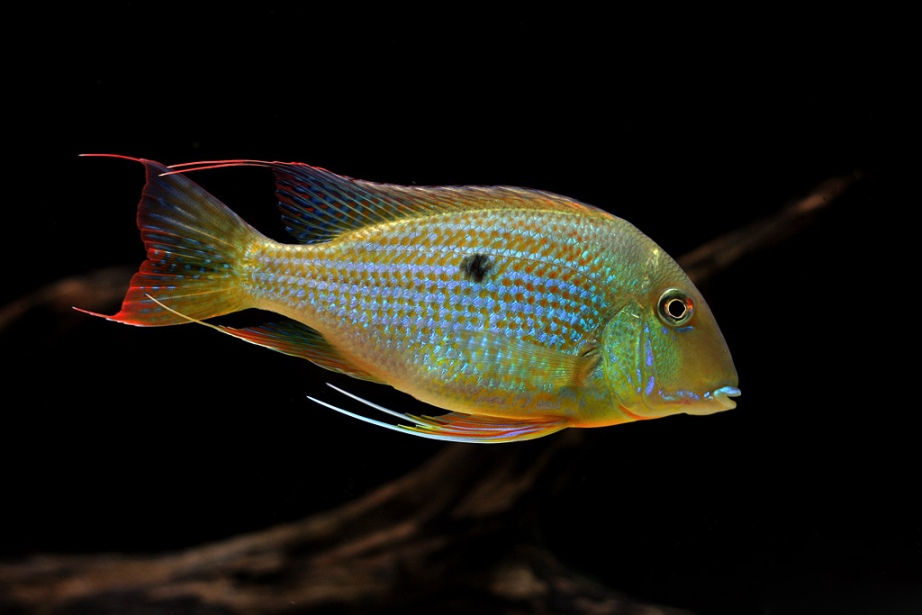
Geophagus neambi
Lucinda, Lucena & Assis, 2010
Max length200mm SL8in SLTank180 × 60cm72 × 24inTemp24–32°C75–90°FpH5.5–7.5This species was available in the hobby several years prior to being described, invariably traded as G. sp. aff. altifrons 'Tocantins', G. sp. 'Tocantins' or G. sp. 'rio Areoes'. The latter of these names refers to an Indian reserve named 'Areões' in the rio Das Mortes drainage, a tributary of the Araguaia which itself drains into the Tocantins, and the aquarium specimens in our images have been identified as G. neambi by Dr. Paulo Lucinda, co-describer of the species.
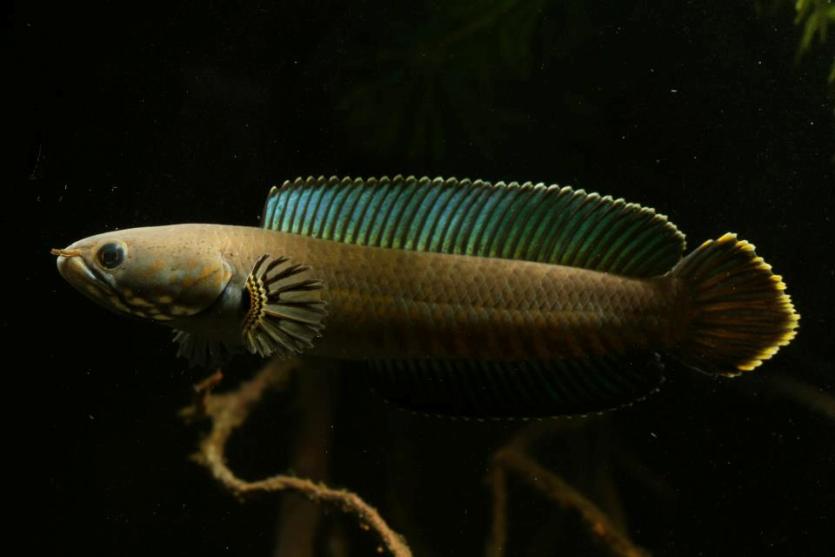
Channa andraoLal Cheng
Britz, 2013
Max length110mm SL4in SLTank80 × 30cm31 × 12inTemp14–28°C57–82°FpH6.0–8.0This species was available in the aquarium hobby for a number of years prior to description and continues to be traded under various names including C. sp. 'Lal Cheng', C. sp. 'Assam', C. sp. 'blue bleheri', C. sp. 'himalayanus', and C. sp. 'red'. The names of valid, but distinct, congeners such as C. amphibeus, C. bleheri or C. stewartii have also been misapplied to it.
Clarias batrachusWalking Catfish
authority not recorded
Max length1000mm SL39in SLTank210 × 120cm84 × 48inTemp20–26°C68–79°FpH5.5–8.0An incredibly hardy species, the walking catfish is tolerant of a very wide range of water chemistry and temperature. It can also survive in oxygen-depleted conditions due to its ability to breathe atmospheric air. In fact, it is thought that the fish can literally drown if deprived access to the water surface for long enough. The common name is derived from its natural ability to move across land using its stiff pectoral spines, provided it stays damp. It has special mucous-producing pores ...
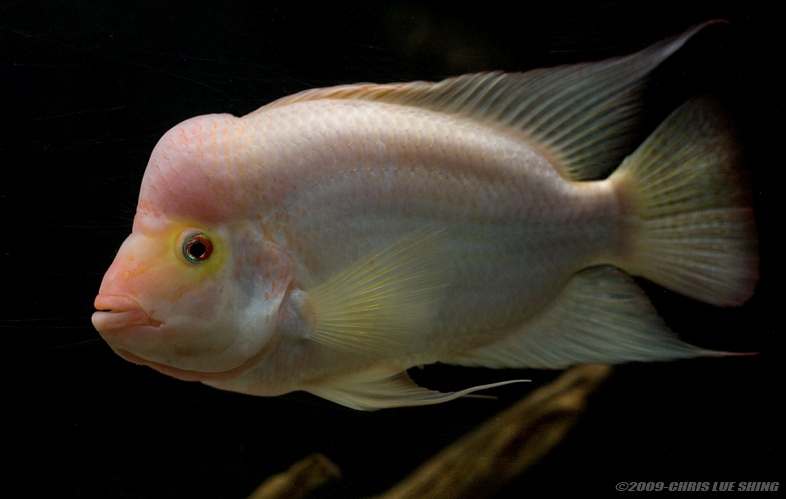
Amphilophus citrinellusMidas Cichlid
Günther, 1864
Max length350mm SL14in SLTanknot recordedTemp21–26°C70–79°FpH6.0–8.0Previously included as a member of the genus Cichlasoma, the midas cichlid is often confused with the red devil, A. labiatus. The two can be distinguished through differences in morphology. As suggested by its scientific name, A. labiatus often possesses characteristically large lips, although this is variable and should not be used as a defining indicator of species. More reliable differences include the bigger nuchal hump and more thick-set appearance in A. citrinellus. The midas exists in many n...
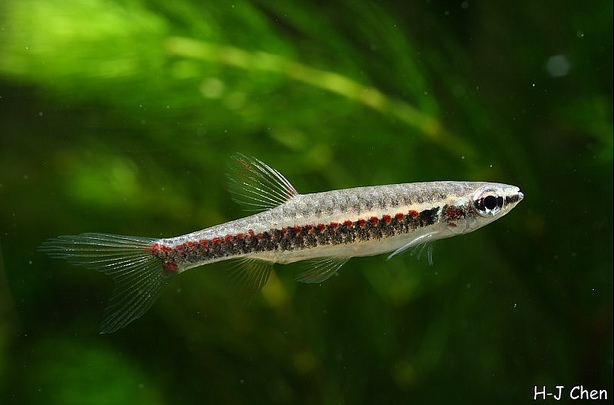
Copella nattereri
Steindachner, 1876
Max length45mm SL1.8in SLTank60 × 30cm24 × 12inTemp20–28°C68–82°FpH4.0–7.0This species is sometimes traded as C. sp. 'red line', 'spotted tetra' or as its congener C. nigrofasciata. In the past it's name was also widely applied to the fish now identified as C. callolepis and C. meinkeni, and this misidentification continues to an extent although the two are easily-distinguished by the fact that C. nattereri is the only one of the three possessing a dark lateral stripe on each side of the body.
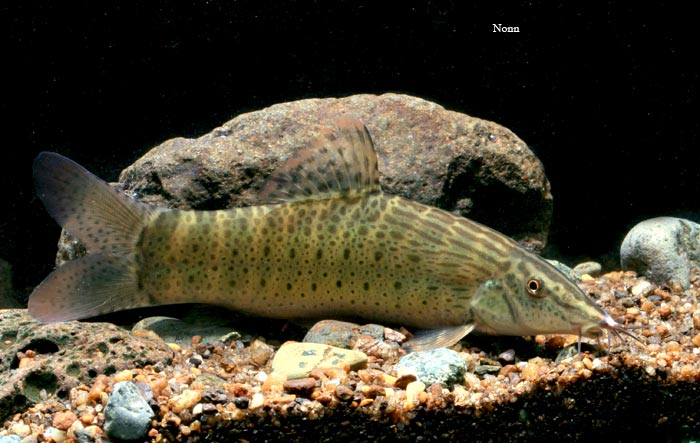
Syncrossus beaufortiChameleon Loach
Smith, 1931
Max length250mm SL10in SLTank150 × 45cm60 × 18inTemp22–30°C72–86°FpH6.0–7.5This species is very similar in appearance to S. berdmorei which is native to India and Myanmar, and has been widely mislabelled under that name in older aquarium literature. The two can appear identical on first glance but there are some notable differences, most obviously possession of 9-10 branchedrays in S. beauforti vs. 11-14 in S. bermorei, and the fact that even young specimens of S. beauforti exhibit laterally-orientated rows of small, dark markings running across the ...
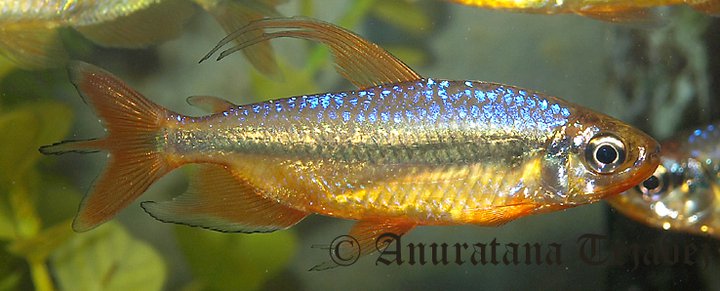
Alestopetersius brichardiCherry Red Congo Tetra
Poll, 1967
Max length80mm SL3.1in SLTank120 × 30cm48 × 12inTemp20–28°C68–82°FpH5.0–7.0This species is sometimes traded as 'cherry red Congo tetra' or 'super red Congo tetra' and has also been referred to using the misapplied names Alestopetersius nigropterus (a valid congener) and A. ansorgii (a synonym of Nannopetersius ansorgii).
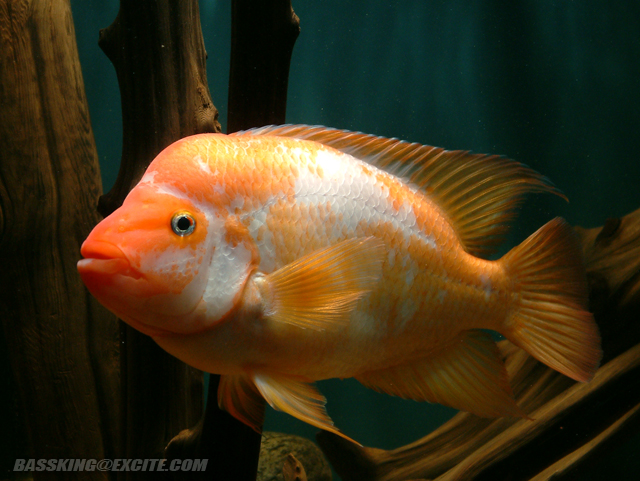
Amphilophus labiatusRed Devil Cichlid
Günther, 1864
Max length350mm SL14in SLTanknot recordedTemp21–26°C70–79°FpH6.0–8.0Previously included as a member of the genus Cichlasoma, the red devil is often confused with the midas cichlid, A. citrinellus. The two can be distinguished through differences in morphology. As suggested by its scientific name, A. labiatus possesses characteristically large lips, although in reality this is variable and should not be used as a defining indicator of species. Certainly, tank bred fish tend not to have these large lips. More reliable differences include the bigger nuchal hump and mo...
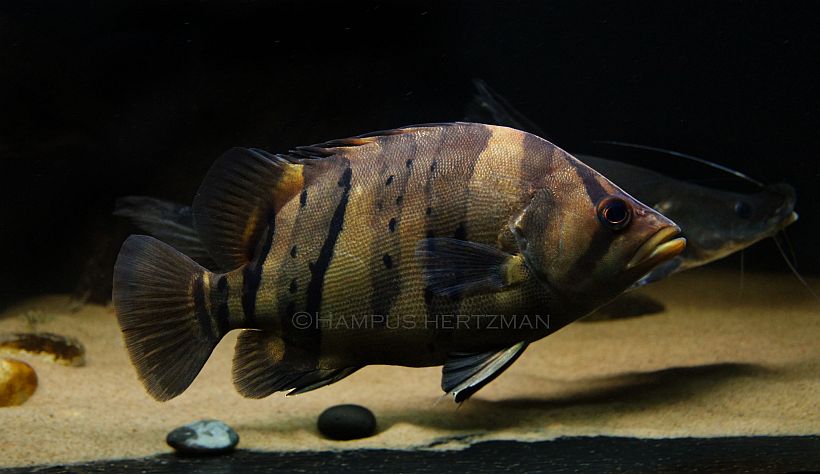
Datnioides microlepisIndonesian Tiger Perch
Bleeker, 1854
Max length500mm SL20in SLTanknot recordedTemp20–28°C68–82°FpH5.5–7.5In aquarium literature this species is also referred to as 'fine scaled tiger fish', 'Indonesian tiger fish', 'Sumatran tiger fish', 'Indo datnoid', and 'Indo dat'. The common name of 'tiger fish' is also used in reference to the African alestid genus Hydrocynus, and the more appropriate 'tiger perch' was suggested by Roberts and Kottelat (1994).
Synodontis nigriventrisUpside-down Catfish
authority not recorded
Max length100mm SL3.9in SLTanknot recordedTemp24–28°C75–82°FpH6.0–7.5One of the commonest Synos seen for sale, S. nigriventris is occasionally confused with S. contractus. However, on close inspection the species are easy to tell apart as S. nigriventris lacks the large head and mouth and larger eye of S. contractus. The scientific name nigriventris refers to the fact that the belly of this fish is darker than the dorsal area. This is a form of camouflage, making the fish harder to spot by predators above, such as predatory fish, birds etc. It is a basic re...
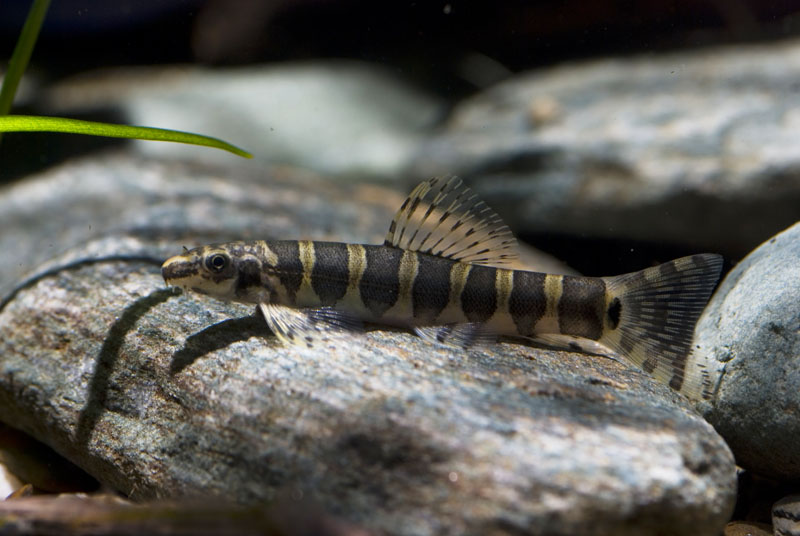
Serpenticobitis octozona
Roberts, 1997
Max length55mm SL2.2in SLTank75 × 30cm30 × 12inTemp23–26°C73–79°FpH6.0–7.0This species exhibits some interesting behaviour including a degree of social interaction plus the ability to cling to vertical or overhanging surfaces. It's sometimes sold under the name 'serpent loach'. The genus currently contains just three members all of which are known only from the Mekong basin. S. octozona is the type species and separated from the others mainly by body patterning which consists of 7-8 dark bars on each flank, these extending the full depth of the body and much wider than the pale interspaces between.
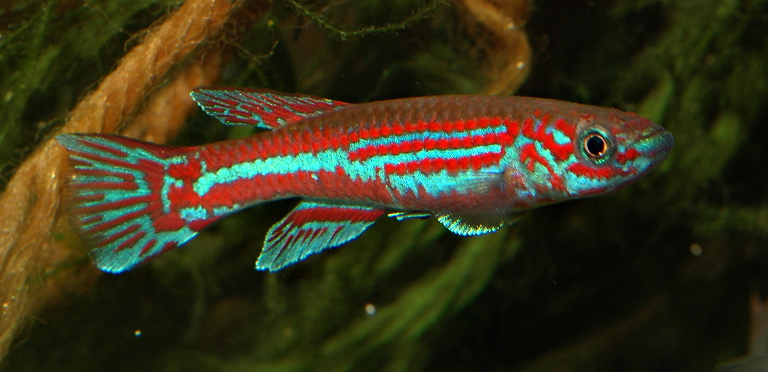
Aphyosemion ogoenseBroken-Line Lyretail
Pellegrin, 1930
Max length50mm SL2.0in SLTank45 × 25cm18 × 10inTemp18–22°C64–72°FpH5.0–6.5This species is not an annual fish, being found in permanent bodies of water in nature. Over 20 different forms of it have been discovered at different localities and a handful have been given subspecific names. The most popular in the aquarium hobby include A. o. ottogartneri and A. o. pyrophore, both of which were initially described as separate species.