Results for “species”
Type a name: scientific, common, or one a species used to go by. Or narrow the catalogue with the filters.
Filters
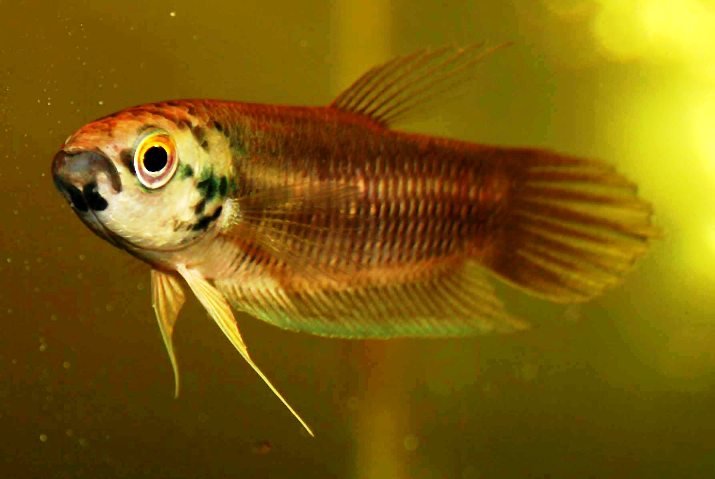
Betta pi
Tan, 1998
Max length90mm SL3.5in SLTank90 × 30cm36 × 12inTemp22–28°C72–82°FpH4.0–6.5B. pi is included in the Betta waseri group of closely-related species within the genus, an assemblage within which members share the following combination of characters: base body colouration clay yellow; opercle scales iridescent gold in mature males of all species except B. tomi; throat with black markings which join with black lower jaw in some species; no chin bar.
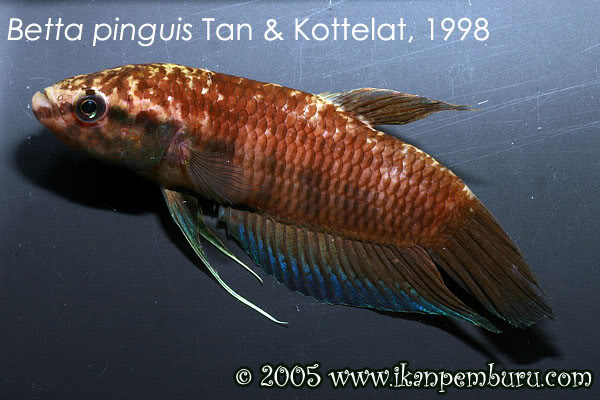
Betta pinguis
Tan & Kottelat, 1998
Max length80mm SL3.1in SLTank80 × 30cm31 × 12inTemp22–27°C72–81°FpH5.0–7.0B. pinguis is included in the Betta akarensis group/complex of closely-related species within the genus, of which members share the following set of characters: possession of pre-orbital and post-orbital stripes (the post-orbital stripe is faint or interrupted in some species); chin bar present; caudal-fin lanceolate with highly extended median rays in mature males; caudal fin usually with transverse bars; greenish or bluish iridescent scales on body of males in some species; opercle without iridescent scales except in juveniles.
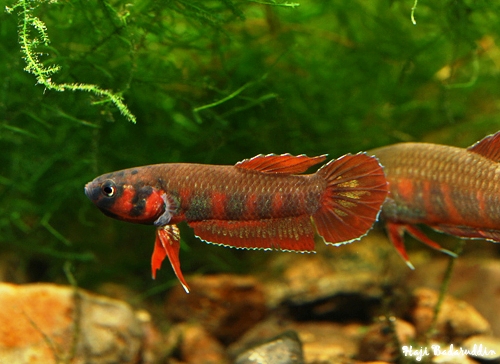
Betta rubra
Perugia, 1893
Max length42mm SL1.7in SLTank45 × 30cm18 × 12inTemp22–27°C72–81°FpH5.0–6.5This species was previously included in the Betta foerschi group of closely-related species within the genus, but following its redescription in 2012 now lends its name to the B. rubra group. It was first placed into its own species group by Witte and Schmidt (1992), primarily on the basis of a triangular marking that appears below the eyes of the fish, although Tan and Ng (2005) suggested that this feature is insufficient to warrant the fo...
Callochromis macropsBig-eyed Mouthbrooder
authority not recorded
Max length135mm SL5in SLTank120 × 45cm48 × 18inTemp24–27°C75–81°FpH7.8–9.5Members of the genus Callochromis feed in a similar way to the South American "eartheaters" such as Geophagus species. They extract invertebrates and other items hidden in the substrate by taking in mouthfulls of sand and sifting it through the gills. The common term "sand sifters" is applied to these and other Tanganyikan species that inhabit a similar ecological niche, such as Enantiopus and Xenotilapia spp. Several geographical colour forms of this species exist. These ...
Champsochromis spilorhynchus
authority not recorded
Max length350mm SL14in SLTank180 × 60cm72 × 24inTemp24–27°C75–81°FpH7.5–8.5This species is only occasionally offered for sale, as it is difficult to collect, living a predominantly solitary lifestyle. As a result, it is much sought after by enthusiasts. It may be confused with the other species in the genus, C. caerulus, but can be distinguished by its deeper body shape and very distinctive black markings on its snout. Champsochromis have widely spaced teeth compared to some other pelagic predatory cichlids found in Lake Malawi, such as Buccochromis species....
Chiloglanis polypogonAfrican Suckermouth Catfish
authority not recorded
Max length55mm SL2.2in SLTank45 × 30cm18 × 12inTemp22–26°C72–79°FpH6.5–7.0This fish belongs to a very distinctive genus of mochokid. There are almost 50 species of Chiloglanis described to science, but most are never imported and even the commoner species, such as this one, are seen only rarely. They are very difficult to identify down to species level, as many are very similar in looks. Some are strongly sexually dimorphic with the males having thickened or enlarged anal and caudal fins. Chiloglanis are also sometimes confused with the other 2 genera of African sucke...
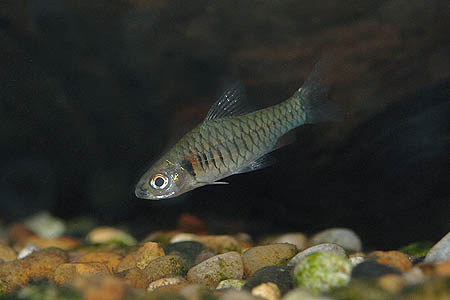
Clypeobarbus congicusCongo Barb
Boulenger, 1899
Max length60mm SL2.4in SLTank90 × 30cm36 × 12inTemp22–26°C72–79°FpH6.0–7.0Clypeobarbus was originally put forward as a subgenus of Barbus by Fowler in 1936 on the basis that member species possessed a midlateral row of enlarged, shield-like scales but he only included the type species 'Barbus' kemoensis (now a junior synonym of Clypeobarbus pleuropholis) in the group. Subsequent work by Poll and Lambert (1961), Jubb (1965) and Skelton (1993) resulted in several additional species being placed into the grouping although it appears that little of this work was widely-recognised until the recent study was published.
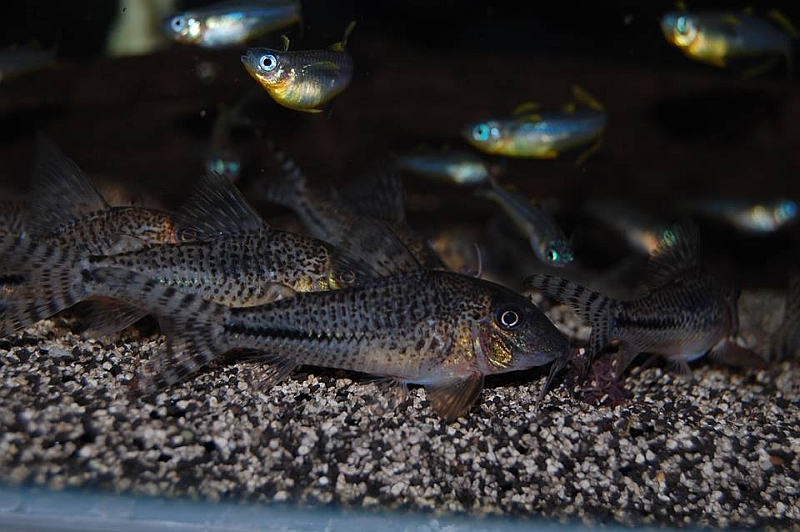
Corydoras sp.C115
authority not recorded
Max length70mm SL2.8in SLTanknot recordedTemp22–28°C72–82°FpH6.0–7.0This unidentified species was originally traded under the C-numbers C115 and C116 but these two are now thought to represent the same species, while fish collected from Manú National Park and sold as C. sp. 'Manu 1 long nose', C. sp. 'Manu 4', C. sp. 'Manu 7', and C. sp. 'Manu 8' may represent this species as well. It's highly variable in terms of colour patter...
Corydoras spectabilisMillenium Cory
authority not recorded
Max length70mm SL2.8in SLTank60 × 38cm24 × 15inTemp23–27°C73–81°FpH6.5–7.2This species was named the millenium cory because it was the first catfish species to be described in the year 2000. It was in fact described in late 1999, but the date of the journal containing the information was 01/2000. There are 4 other species of cory that may be confused with C. spectabilis at first glance. These are C. guapore, C. ourastigma, C. similis and C. caudimaculatus. They can be distinguished quite easily upon close examination, however. C. guapore, whilst exhibiting similar pat...
Craterocephalus stercusmuscarum stercusmuscarumFly-specked Hardyhead
authority not recorded
Max length70mm SL2.8in SLTank76 × 30cm30 × 12inTempnot recordedpHnot recordedA rarely seen species in the trade, although it's kept quite often by Australian hobbyists. Members of this genus are thought to have a more ancient association with Australian freshwaters than most others found in these habitats. Craterocephalus also contains the most species of any Australian freshwater fish genus. It has been shown that there are quite large genetic differences between groups of the species living in close proximity to each other, and even sharing the same waters. In ...
Cyrtocara mooriiMalawi Blue Dolphin
authority not recorded
Max length250mm SL10in SLTank150 × 38cm60 × 15inTemp25–29°C77–84°FpH7.5–8.8A gentle giant ideal for the larger community of Malawi cichlids, this species was formerly named Haplochromis moorii. It is occasionally referred to by the common name, "Humphead Mouthbrooder". In nature, it exhibits an interesting feeding behaviour in which it will be attracted to clouds of sand thrown up by the activity of substrate-sifting species such as Fossorochromis rostratus or Taeniolethrinops praeorbitalis. Shoals of C. moorii will follow these species and feast on any mo...
Dekeyseria brachyuraButterfly Plec
authority not recorded
Max length140mm SL6in SLTank120 × 30cm48 × 12inTemp25–28°C77–82°FpH5.6–7.0Formerly known as Peckoltia pulcher, this species is also known as the pretty peckoltia, flounder plec (in reference to its flattened shape) or chameleon plec. This latter name is quite appropriate, as the fish will change colour depending on the colour of the substrate and other surfaces. It also has a distinctive night time colouration. It closely resembles the Rio Orinoco species L052 and these may turn out to be the same species, as the waters that they inhabit become connected during th...
Erpetoichthys calabaricusRopefish
authority not recorded
Max length900mm SL35in SLTank150 × 60cm60 × 24inTemp23–30°C73–86°FpH6.0–7.5This is the only species in the genus Erpetoichthys, and is an incredibly hardy, nocturnal species. Due to its poor vision, the Ropefish relies on its excellent sense of smell to locate food. It's closely related to the Polypterus genus and both these are some of the last surviving relatives of very ancient species. Fossils of earlier relatives have been found that date back to the Triassic Period, which occured during the early development of the dinosaurs, more than 200 million years ago....
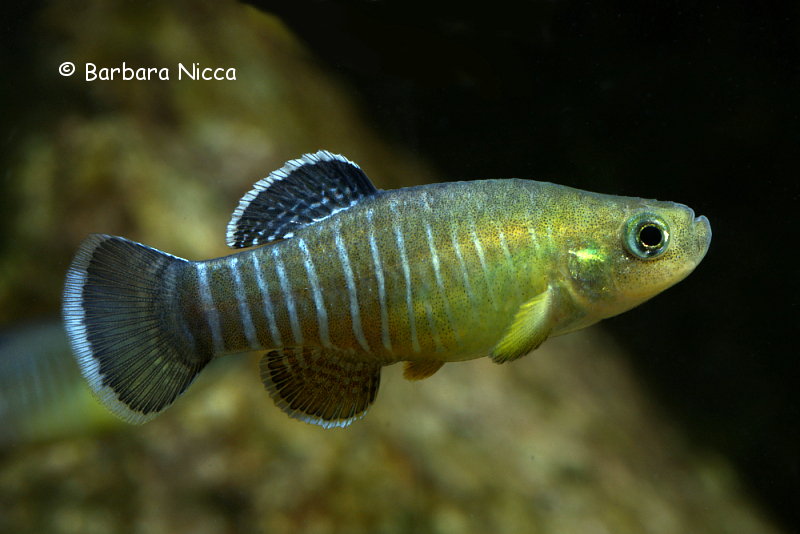
Esmaeilius persicusFarsi Toothcarp
Jenkins, 1910
Max length60mm SL2.4in SLTank120 × 30cm48 × 12inTemp8–32°C46–90°FpH6.5–8.0This species is still sometimes listed as a species of Lebias by some sources although that name has long been considered a synonym of Cyprinodon by most authorities and an ICZN committee voted to suppress the name in favour of Aphanius as recently as 2003. It was known as A. persicus until late 2011 when it was reclassified due to that name being preoccupied by a Late Miocene fossil species previously referred to as Brachylebias persicus Priem 1908. This change was necessary because Gau...
Exodon paradoxusBucktooth Tetra
authority not recorded
Max length150mm SL6in SLTank120 × 45cm48 × 18inTemp23–28°C73–82°FpH5.5–7.5The genus Exodon is currently monotypic, with this single species having uniquely designed teeth. These allow it to rip the scales from other species. It's an ideal choice for those wishing to keep a large shoal of a predatory species without possessing the massive amount of tank space needed for a shoal of piranha or similar. A tank full of these makes for a very colourful and active display....
Gambusia affinisWestern Mosquitofish
authority not recorded
Max length40mm SL1.6in SLTanknot recordedTemp18–27°C64–81°FpH6.0–8.0For many years G. affinis was thought to be the same species as the Eastern Mosquitofish, G. holbrooki, but has since been given distinct species status. They can be distinguished by several means. In G. holbrooki the leading ray of the males' gonopodium has a serrated edge, theusually has 7 rays and males also generally have a higher degree of dark spotting on the body than G. affinis males. Male G. affinis also lack the serrated leading ray of the gonopodium and this species usually has o...
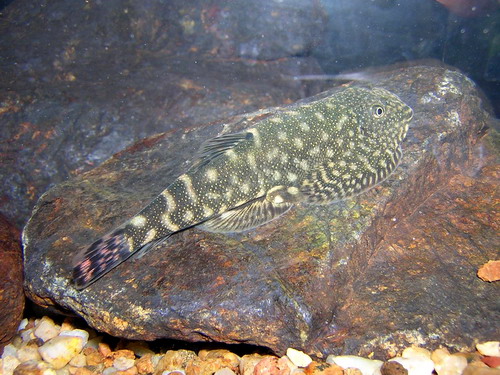
Gastromyzon sp. 'SK01'
authority not recorded
Max length50mm SL2.0in SLTank60 × 30cm24 × 12inTemp20–24°C68–75°FpH6.5–8.0This undescribed species has probably not been seen in the aquarium trade yet but is occasionally maintained private collectors. The 'SK' numbering system used here refers to 'South Kalimantan', home to several unidentified members of the genus. Gastromyzon spp. are placed into various 'species groups' (artificial assemblages of species which may or may not be monophyletic) for ease of reference, and based on colour and patterning G. sp. 'SK01' appears similar to members of the G. ridens group which also includes G. crenastus, G. stellatus and G. zebrinus.
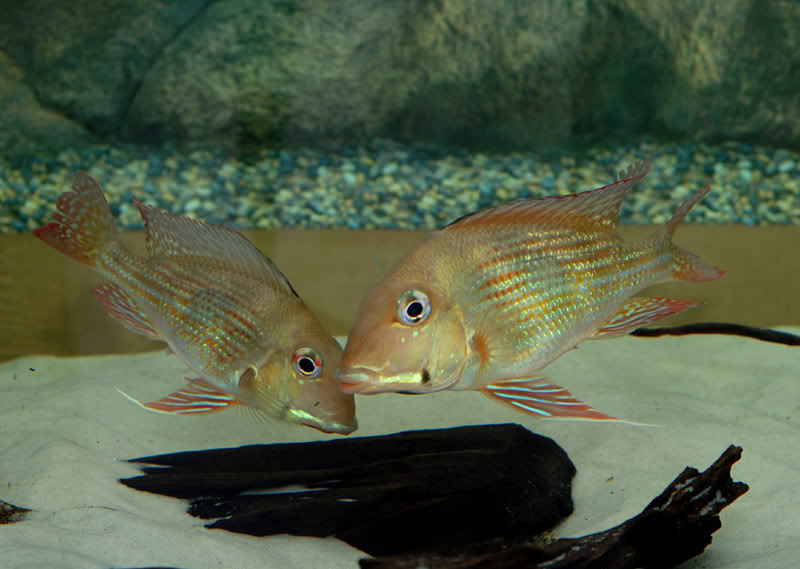
Geophagus brachybranchus
Kullander & Nijssen, 1989
Max length200mm SL8in SLTank180 × 60cm72 × 24inTemp26–30°C79–86°FpH5.0–7.0This species is generally rare in the aquarium hobby though oddly appears to be one of the commoner species in Australia where it's often referred to by the vernacular name 'black-throated eartheater'. It's a member of the nominal G. surinamensis 'group' of closely-related species within the genus and can be identified by a combination of characters including: presence of dark preopercular markings; no vertical bars on the flanks even when stressed/preserved; base of filaments on the first gill arch mostly covered by a flap of skin; exposed part of bra...
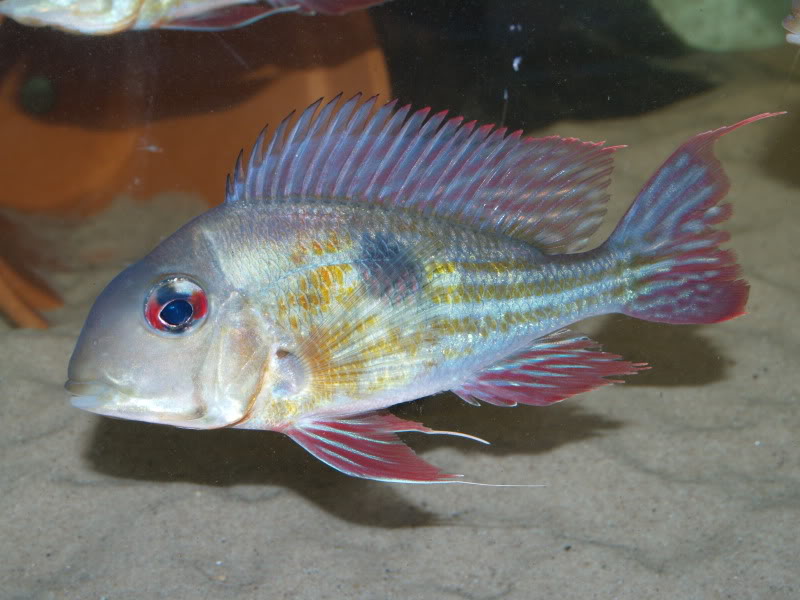
Geophagus proximus
Castelnau, 1855
Max length225mm SL9in SLTank180 × 60cm72 × 24inTemp24–32°C75–90°FpH4.0–7.0This species is rare in the hobby though it's name is often attached to shipments of other Geophagus species. It's a member of the nominal G. surinamensis 'group' of closely-related species within the genus and can be identified by a combination of characters including: possession of dark preopercular marking; no vertical bars on the flanks; relatively large, roughly oblong-shaped dark midlateral marking; caudal fin brownish with 3-5 light stripes on upper lobe and less well-defined stripes or mottled pattern of light spots with narrow dark interspaces on lower lobe.
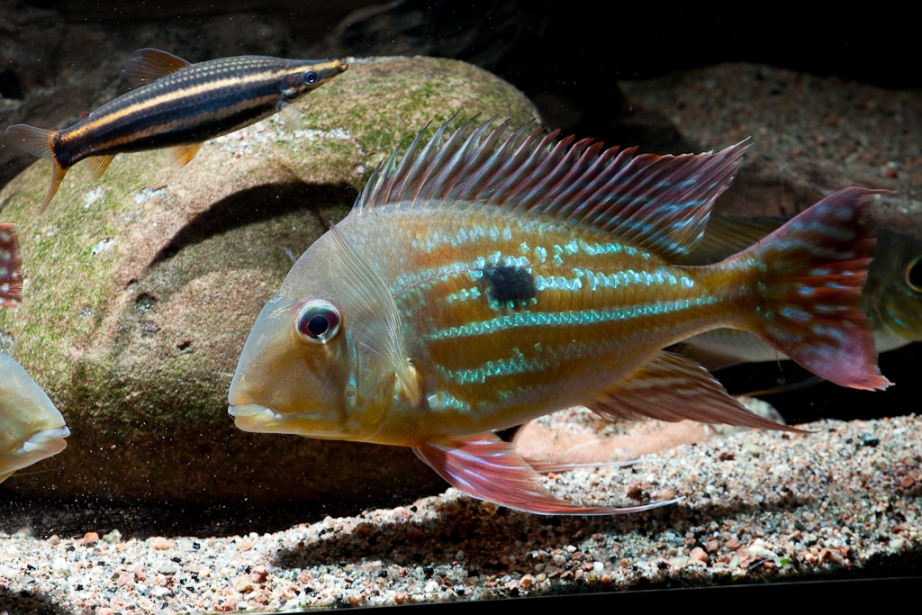
Geophagus winemilleri
López-Fernández & Taphorn, 2004
Max length200mm SL8in SLTank180 × 60cm72 × 24inTemp26–30°C79–86°FpH4.0–7.0This species is rare in the hobby although other species are sometimes sold under the name. It's a member of the nominal G. surinamensis 'group' of closely-related species within the genus and can be identified by a combination of characters including: possession of dark preopercular marking; four parallel, ventrally-inclined bars on each flank (normally visible only when the fish are stressed, spawning or preserved); dark lateral spot positioned within the second vertical bar; caudal fin red with variable pattern of large, iridescent blue to white spo...