Results for “character”
Type a name: scientific, common, or one a species used to go by. Or narrow the catalogue with the filters.
Filters
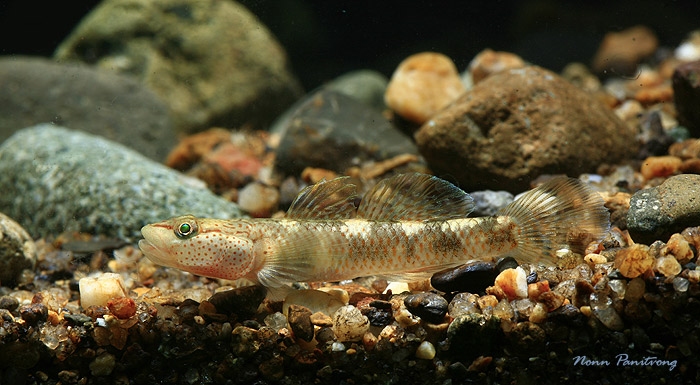
Rhinogobius chiengmaiensisChiangmai Stream Goby
Fowler, 1934
Max length50mm SL2.0in SLTank60 × 30cm24 × 12inTemp18–26°C64–79°FpH6.0–8.0This species has been exported for the ornamental trade but often labelled as the congener R. mekongianus. Although the two do appear relatively similar R. chiengmaiensis can be identified by a combination of external characters including: presence of 5 irregular dark markings on the body (vs. 7-8 i...
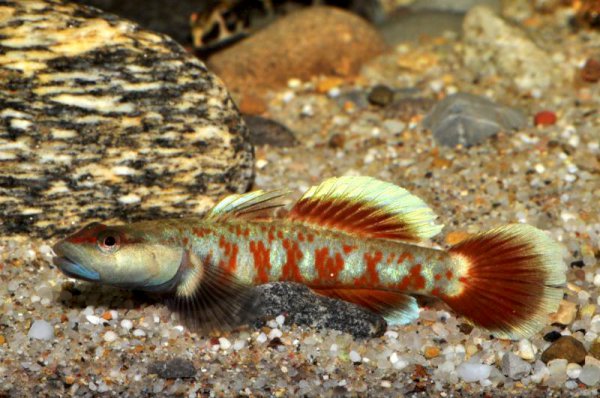
Rhinogobius zhoui
Li & Zhong, 2009
Max length36mm SL1.4in SLTank60 × 30cm24 × 12inTemp19–24°C66–75°FpH7.0–7.8This species has been in the aquarium trade since 2010 and is sold under several names including 'Chinese vermilion goby', 'Zhou's scarlet goby', 'scarlet goby', and 'flame goby'. It can be told apart from congeners by the following combination of characters: second dorsal-fin rays I, 8-9; anal-fin rays I, 7-8; pectoral-fin rays 16-18; longitudinal scale series 29-31; predorsal scales 10-12; vertebral count 10+16=26.
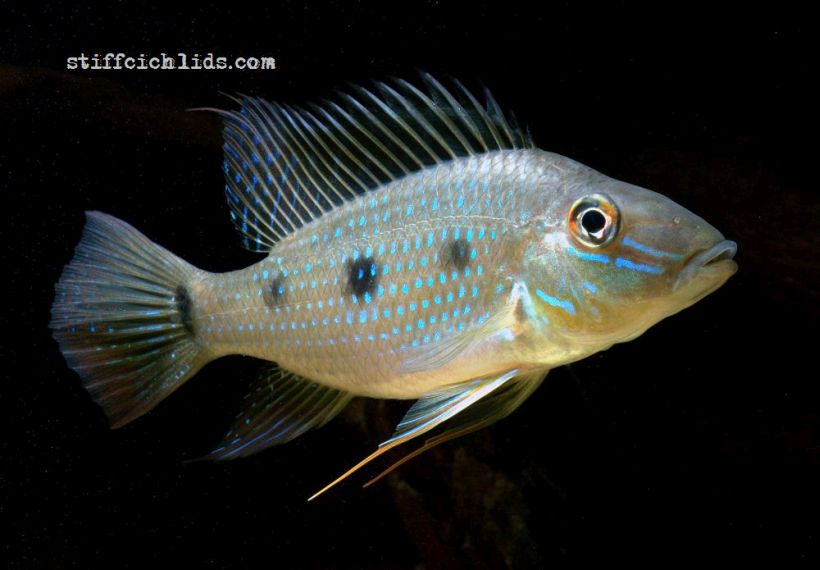
Satanoperca acuticepsSharphead Eartheater
Heckel, 1840
Max length170mm SL7in SLTank180 × 60cm72 × 24inTemp20–28°C68–82°FpH5.5–7.5This species is relatively rare in the ornamental trade, where it is sometimes confused with its similarly-patterned congeners S. daemon and S. lilith. These three species all possess 1-3 dark blotches on the side of the body and a relatively large ocellus on the upper caudal-fin base, characters that immediately separate them from the remainder of the genus which lack blotches on the body and have a relatively small ocellus on the upper caudal-fin base.
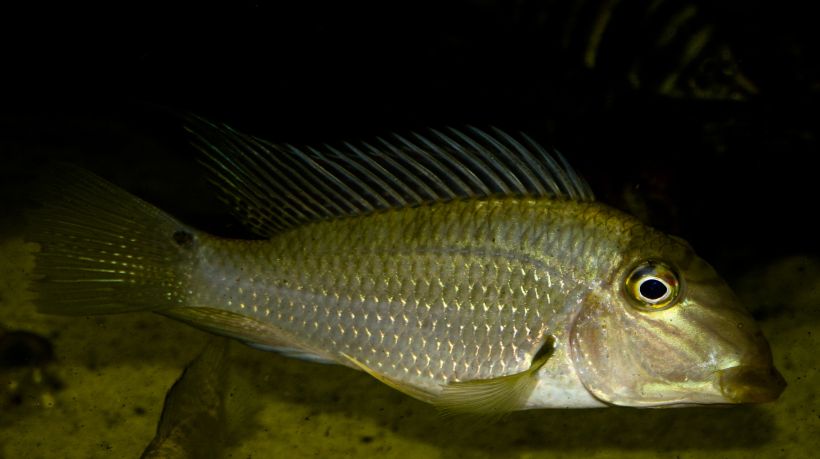
Satanoperca jurupariDemon Eartheater
Heckel, 1840
Max length185mm SL7in SLTank210 × 60cm84 × 24inTemp20–28°C68–82°FpH5.5–7.5S. jurupari is also known as 'demon fish', 'jurupari earth eater', 'green horse face', or simply 'jurupari' in the aquarium hobby. It can be distinguished from other members of the genus by the following combination of characters: presence of a relatively small dark ocellus on the upper caudal-fin base; absence of well-defined dark blot...
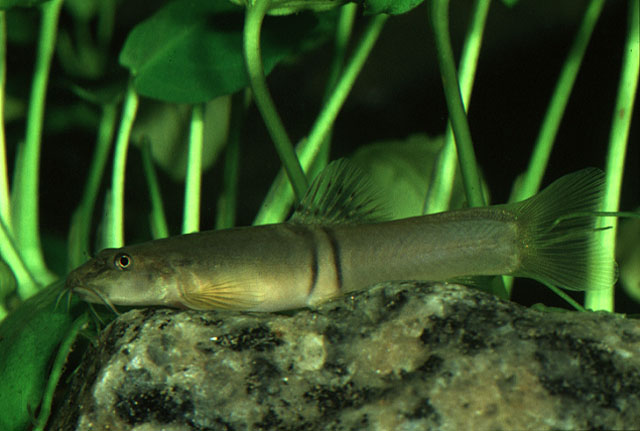
Schistura balteataSumo Loach
Rendahl, 1948
Max length80mm SL3.1in SLTank90 × 30cm36 × 12inTemp22–26°C72–79°FpH6.0–7.5This species is quite uncommon in the aquarium hobby although its name is sometimes used in reference to the similar-looking, apparently undescribed congener S. cf. balteata, and both are also traded as 'sumo loach', 'tri-banded sumo loach', and 'orange saddle-back loach'. Following Kottelat (1990) it's diagnosed by the following combination of characters: unique colour pattern consisting of two da...
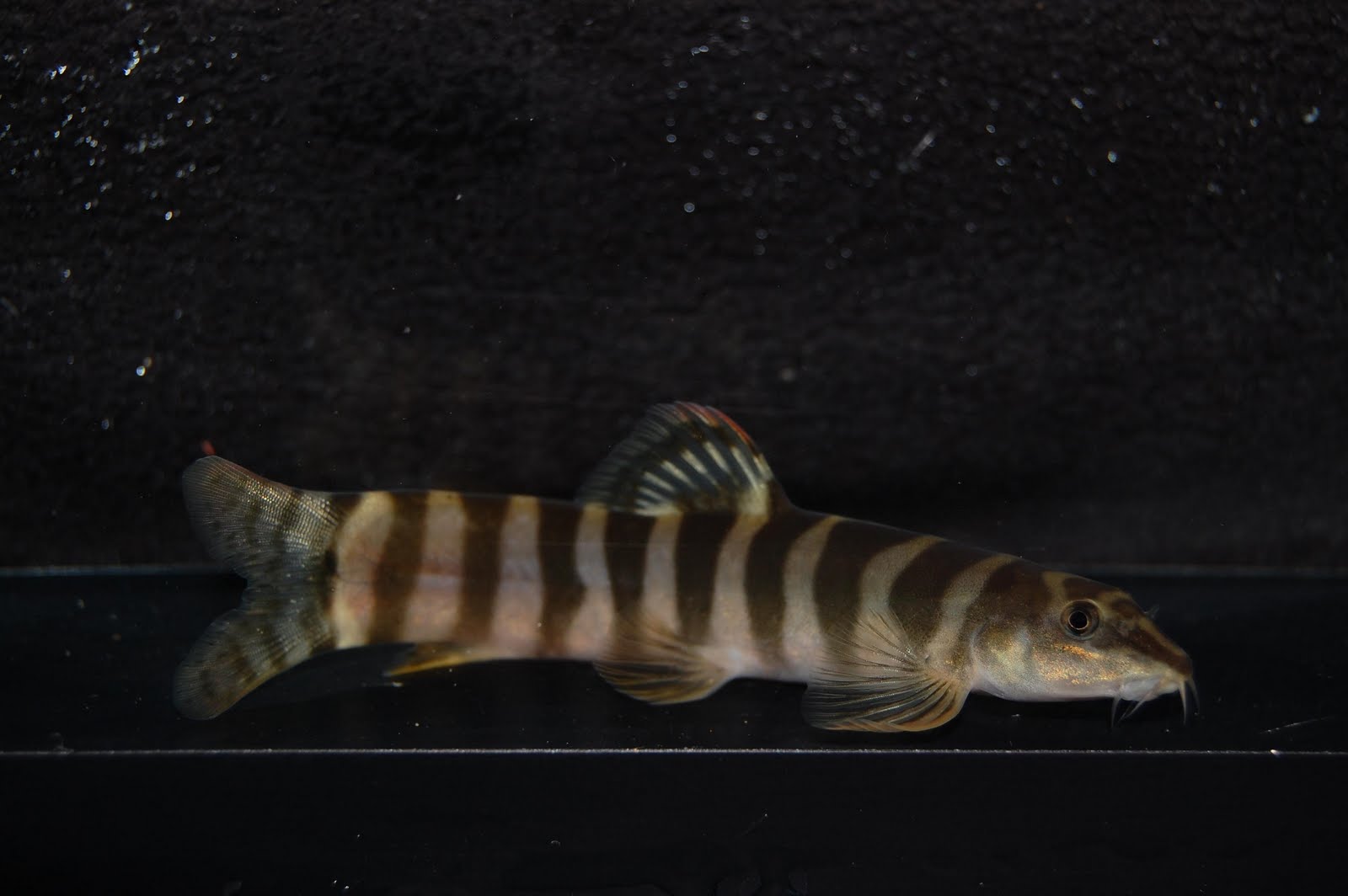
Schistura hypsiuraSuper Convict Loach
Bohlen, Ŝlechtová & Udomritthiruj, 2014
Max length73mm SL2.9in SLTank80 × 30cm31 × 12inTemp18–24°C64–75°FpH6.0–7.5It can be distinguished from congeners by the following combination of characters: caudal peduncle deep, ≥ the deepest part of the remainder of the body; no dorsal or ventral skin crests along the caudal peduncle; caudal-fin deeply forked, the outermost principal rays in the upper and lower lobes more than twice the length of the innermost: suborbital flap in males present; a well-developed suborbital groove in females; 6–8 very regular bars along the flank.
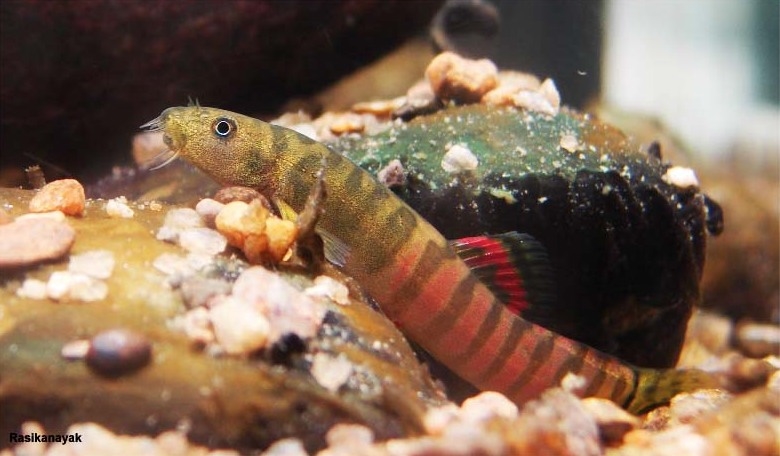
Schistura kodaguensis
Menon, 1987
Max length36mm SL1.4in SLTank60 × 30cm24 × 12inTemp20–25°C68–77°FpH6.0–7.5This species is not a well-known aquarium fish but is maintained by a number of Indian enthusiasts. It can be told apart from related species by the following combination of characters as per Sreekantha et al. (2006): pectoral-fin rays 10; absence of black spot at base of dorsal-fin; presence of rows of spots on caudal-fin; lateral line incomplete; caudal-fin slightly emarginate; 11-14 vertical bars on the body.
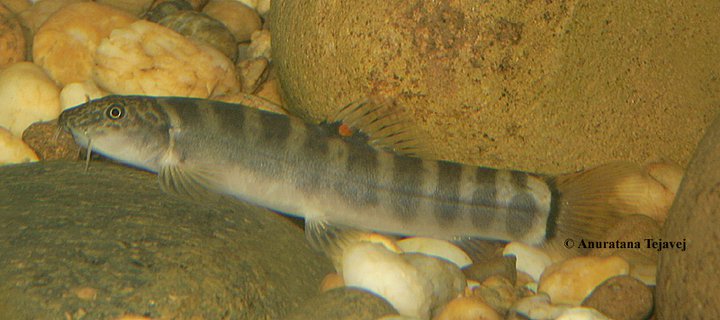
Schistura nicholsi
Smith, 1933
Max length74mm SL2.9in SLTank120 × 30cm48 × 12inTemp20–26°C68–79°FpH6.0–7.5This species is sometimes traded for aquaria but its name also appears to have been widely misapplied to other fishes. It can be identified via the following combination of characters: presence of 8-10 quite regular dark bars...
Sciaenochromis fryeriElectric Blue Hap
authority not recorded
Max length200mm SL8in SLTank150 × 45cm60 × 18inTemp24–28°C75–82°FpH7.6–8.8This popular species was previously imported and classified as Sciaenochromis ahli, and is still named as such in much of the available literature. Many morphs exist, although males of all these exhibit the characteristic blue colouration, differing only in fin colouration and patterning. These should not be mixed in aquaria as they will hybridise. Extra care must be taken regarding tankmates, too, as male S. fryeri have been known to spawn with females of other genera, particularly Aulonoca...
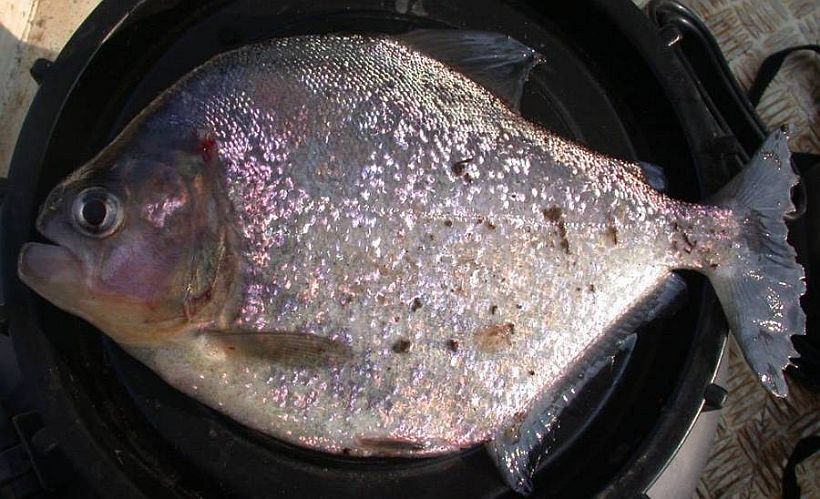
Serrasalmus gouldingiGoulding's Piranha
Fink & Machado-Allison, 1992
Max length280mm SL11in SLTank150 × 60cm60 × 24inTemp24–28°C75–82°FpH4.0–7.0This species occasionally appears in the ornamental trade where it is sometimes referred to as 'blue tiger piranha' Following Fink and Macaht can be distinguished from other members of the genus by the following combination of characters: body shape deep and rhomboid; head robust, snout blunt; eye large; mouth moderate, jaw projecting; 1-3 ontogeneticlly var...
Serrasalmus sancheziSanchez's Piranha
authority not recorded
Max length114mm SL4in SLTank120 × 30cm48 × 12inTemp24–28°C75–82°FpHnot recordedThere are currently 24 described species of Serrasalmus, many of which look superficially similar. S. sanchezi has frequently been confused with S. spilopleura in the past, and is sometimes still sold as "Spilo cf" or "Ruby-red Spilo". It actually appears to be more closely related to S. rhombeus or S. irritans than S. spilopleura. The characteristic red throat has also led to it being confused with S. medinai and even the red-bellied piranha Pygocentrus nattereri on occasion...
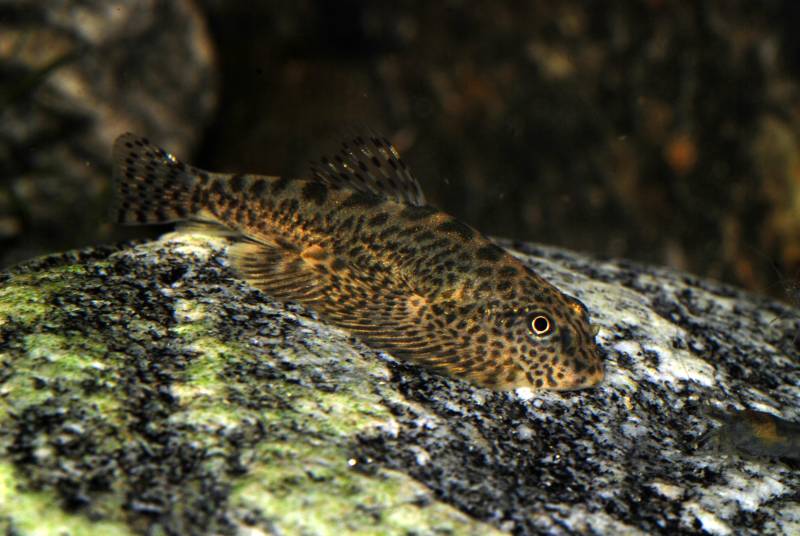
Sewellia speciosa
Roberts, 1998
Max length55mm SL2.2in SLTank75 × 30cm30 × 12inTemp20–24°C68–75°FpH6.0–7.5This species first became available in early 2010 and sometimes appears on trade lists under the vernacular names 'Laos sucker' or 'Laos Sakura sucker'. It's distinguishable from other members of the genus by the following combination of characters: body spotted and without stripes; no concentric bands on paired fins; origin of pelvic-fin below origin of dorsal-fin; origin of pectoral-fin posterior to corner of mouth; pelvic fin reaching origin of anal fin; small elevated ...
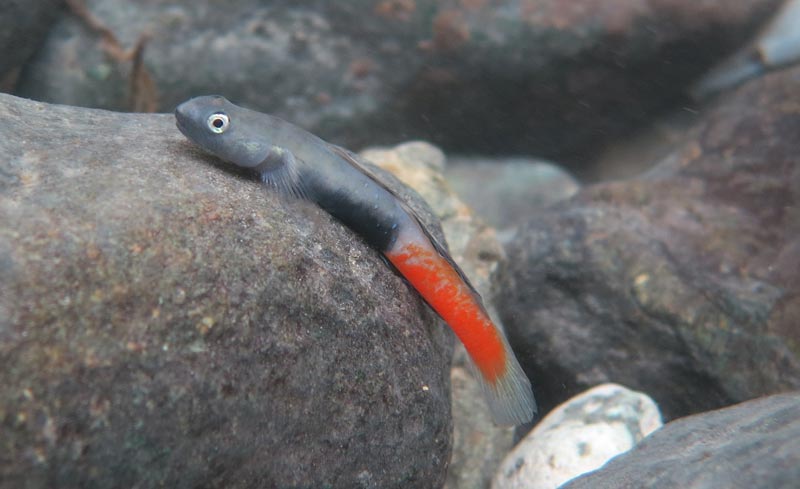
Sicyopus cebuensis
Chen & Shao, 1998
Max length45mm SL1.8in SLTank60 × 30cm24 × 12inTemp22–28°C72–82°FpH6.5–7.5This species is not in the aquarium trade though is maintained by a few private collectors. It can be distinguished from all other members of the genus by the following combination of characters: first dorsal-fin withfirst dorsal-fin elongate in males; anterior portion of body with loosely-arranged ctenoid scales; head, entire nape to first dorsal-fin base, pectoral base, and belly naked; male colour pattern comprising creamy-yellow anterior portion of body with dark blotch at midbody and bright orange/red in postero...
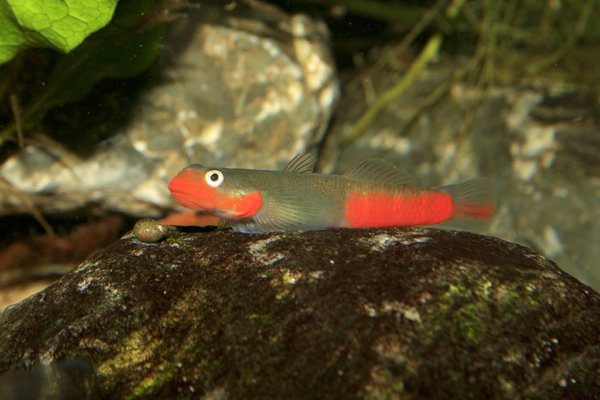
Sicyopus exallisquamulus
Watson & Kottelat, 2006
Max length52mm SL2.0in SLTank60 × 30cm24 × 12inTemp22–28°C72–82°FpH6.5–7.5Live colouration of this species was not included in the original description but the specimens in our images were identified by Dr. Ronald E. Watson, the principal author, as S. exallisquamulus. It's normally misidentified and traded as the Sri Lankan endemic species Sicyopus jonklaasi. It is diagnosable from congeners by the following combination of characters: 14-15 pectoral-fin rays; both genders exhibit small, widely-spaced scales...
Squaliforma cf. emarginataRed Fin Thresher Plec
authority not recorded
Max length400mm SL16in SLTanknot recordedTemp25–28°C77–82°FpH6.4–7.2This attractive species is often seen for sale at around 3-4" in length (often as Hypostomus cf. emarginata or H. emarginatus), but given its adult size, its not a terribly good choice for the general community tank. Due to its very wide natural distribution, there are a number of known geographical variants, and this has resulted in four L numbers currently being assigned to it. In reality, there are many more variants than this, and all share the characteristic elongated which gives rise...
Steatocranus casuariusBlockhead Cichlid
authority not recorded
Max length120mm SL5in SLTank75 × 30cm30 × 12inTemp24–28°C75–82°FpH6.0–7.5An easily kept cichlid whose character more than compensates for its somewhat drab colouration, S. casuarius is sometimes seen for sale as "Humphead", "Lionhead" or "Buffalohead" cichlid. It is a reophilic fish meaning it inhabits fast waters. Its swimbladder is modified to reduce buoyancy and thus prevent it from being swept away by the strong currents in it's natural habitat. In the aquarium it spends most of it's time resting on the substrate or hiding ...
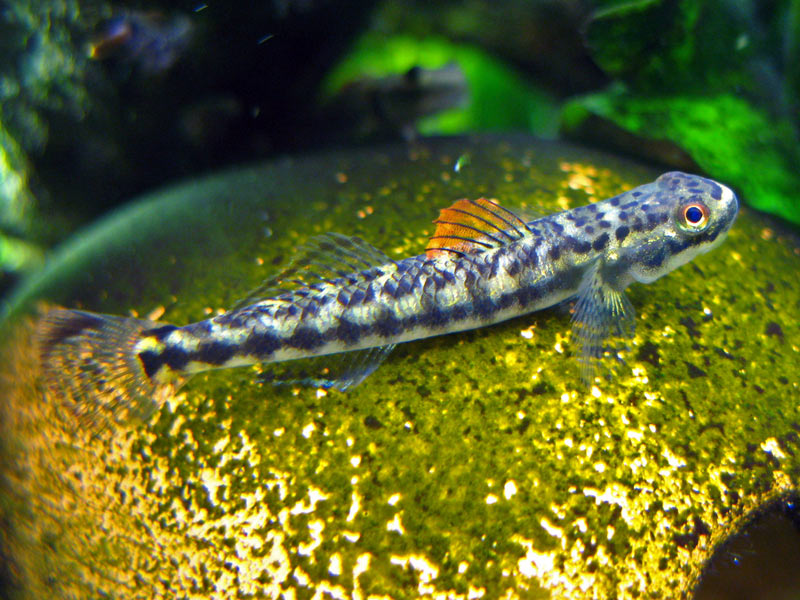
Stiphodon maculidorsalisOrange-fin Stiphodon
Maeda & Tan, 2013
Max length80mm SL3.1in SLTank80 × 30cm31 × 12inTemp20–28°C68–82°FpH6.5–7.5This species was referred to as S. sp. 'orange fin' or S. sp. 'ST01' prior to being offically named and is one of the more commonly-traded members of the genus, though often in batches containing only one gender, a mixture of species, or misidentified under an incorrect name such as S. zebrinus. It can be told apart from congeners by the following combination of characters: usually 9 soft second dorsal-fin rays; 15 soft pectoral-fin rays; first dorsal-fin in male poin...
Sundadanio axelrodi
authority not recorded
Max length22mm SL0.9in SLTank30 × 20cm12 × 8inTemp23–26°C73–79°FpHnot recordedThis species was initially described as Rasbora axelrodi and is referred to as such in older literature, but in 1999 was moved into the new genus Sundadanio where it remains the monotype. Its wider placement within the family Cyprinidae is still not fully resolved. Following Rüber et al. (2007) it is most closely-related to the miniature species of the genus Paedocypris, the two genera characteristically lacking bones in the roof of the skull as well as exhibiting genetic similarities. Howe...
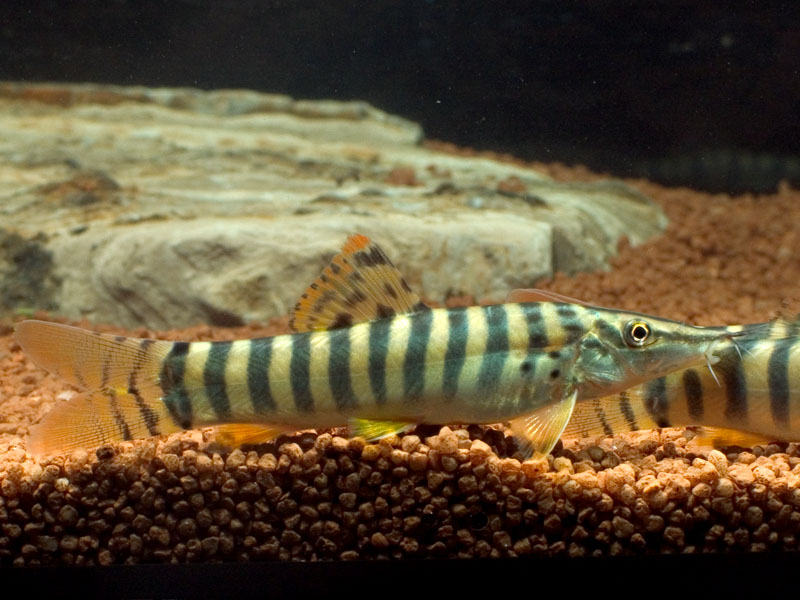
Syncrossus berdmoreiRedfin Tiger Loach
Blyth, 1860
Max length250mm SL10in SLTank180 × 45cm72 × 18inTemp21–26°C70–79°FpH6.5–7.5Interestingly some observations suggest that the character of the highest-ranked, or alpha, fish appears to affect that of the whole group though it must be said that scientific studies of botiid loach behaviour are virtually non-existent. It certainly seems that they display a degree of 'personality' with some specimens being naturally bolder/more aggressive than others. The alpha is normally the largest specimen within the group and often female. Sound also appears to be an important factor in communication since these loaches are able...
Synodontis acanthomiasBlack-spotted Synodontis
authority not recorded
Max length300mm SL12in SLTank120 × 60cm48 × 24inTemp22–24°C72–75°FpH6.5–8.0This is one of the species of Synodontis seen less frequently in the trade and it ranks alongside S. schall as one of the more aggressive members of the genus. It is very hardy however and makes a good tankmate for large aggressive cichlid species. One unique characteristic of S. acanthomias is that the humeral process (the bony extension just above the pectoral fins) is long and tapered with a curved end....