Results for “species”
Type a name: scientific, common, or one a species used to go by. Or narrow the catalogue with the filters.
Filters
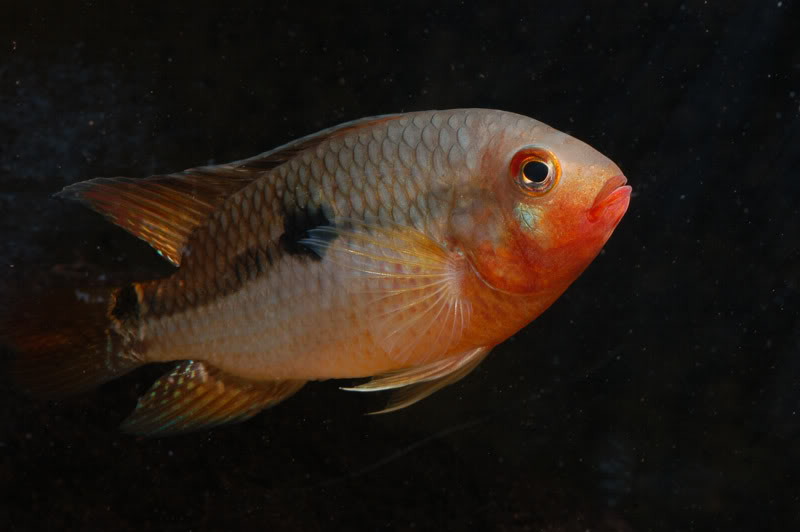
Aequidens tetramerusSaddle Cichlid
Heckel, 1840
Max length162mm SL6in SLTanknot recordedTemp24–27°C75–81°FpH4.5–7.5This is the type species of the genus Aequidens and has the widest distribution of any member species. It exists in various colour forms depending on locality with variants from Ecuador and Peru being particularly sought after since they develop striking red (Ecuador) or orange (Peru) colouration on the lower part of the jaw, head and anterior portion of the belly whereas those from Brazil tend to have an overall grey/blue/green colouration, for example. Despite its type status it's long...
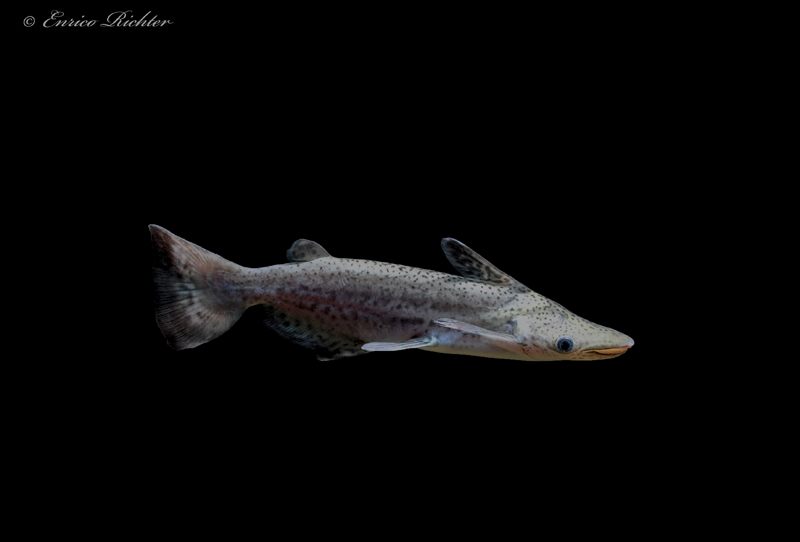
Ageneiosus marmoratusBottlenose Catfish
Eigenmann, 1912
Max length185mm SL7in SLTank150 × 60cm60 × 24inTemp22.5–26°C73–79°FpH6.0–7.0This species may also be seen on sale as 'Guyana slopehead catfish' 'dolphin catfish' or 'hammerhead catfish'. The attractive juvenile patterning is largely lost as the fish grow but this nevertheless remains an impressive predatory species for the larger aquarium. The genus Ageneiosus was at one point classified in the family Ageneiosidae alongside the genus Tetranematichthys, but this was not accepted by all...
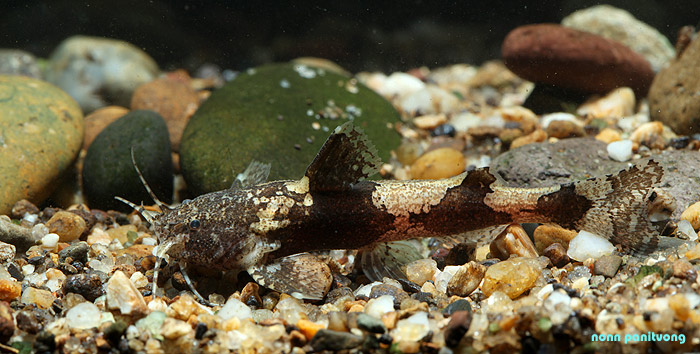
Akysis hendricksoniHendrickson's Stream Catfish
Alfred, 1966
Max length50mm SL2.0in SLTank45 × 30cm18 × 12inTemp16.5–24°C62–75°FpH6.0–7.2This species is among the few members of the family to have been exported for the aquarium hobby. It can be differentiated from all other Akysis species by the following combination of characters: head length 17.7-26.5% of standard length (SL); head width 25.4-28.7% SL; body depth at anus 13.0-17.0% SL; caudal peduncle depth 8.1-10.1% SL; interorbital di...
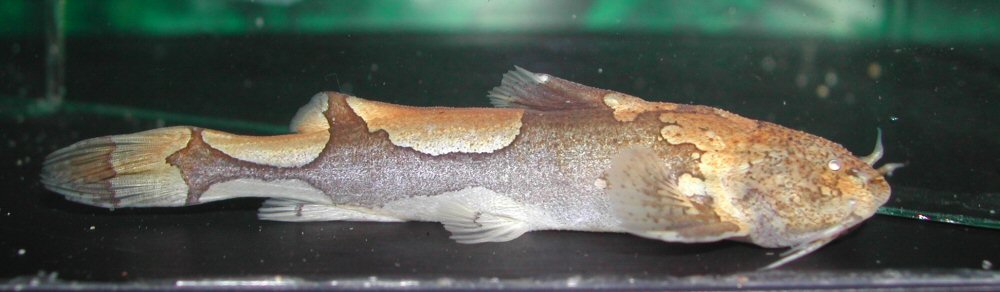
Akysis longifilisSittaung Stream Catfish
Ng, 2006
Max length53mm SL2.1in SLTank45 × 30cm18 × 12inTemp16.5–24°C62–75°FpH6.0–7.5This species is among the few members of the family to have been exported for the aquarium hobby. It can be differentiated from all other Akysis species by the following combination of characters: base of...
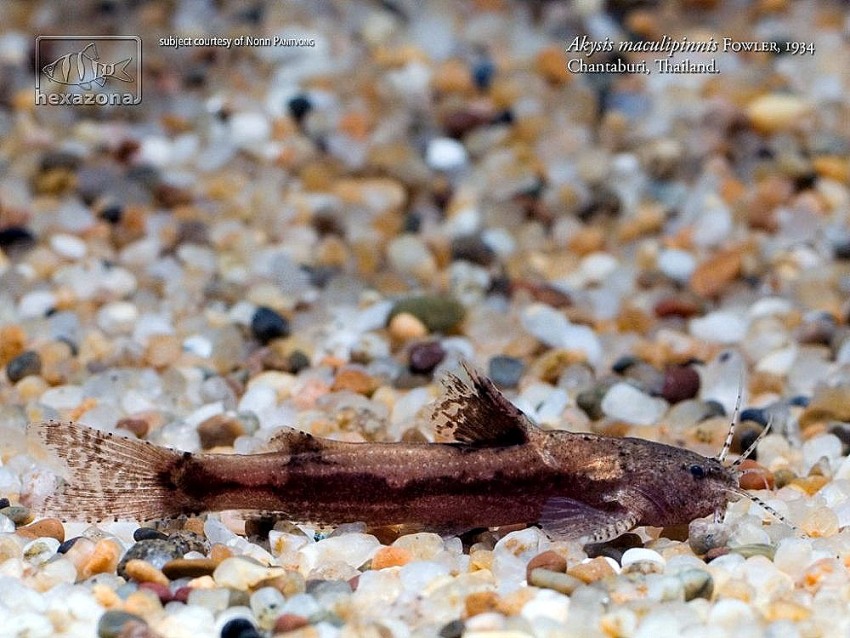
Akysis maculipinnisSpotfin Stream Catfish
Fowler, 1934
Max length35mm SL1.4in SLTank45 × 30cm18 × 12inTemp16.5–24°C62–75°FpH6.0–7.5This species has been exported for the aquarium hobby and ranks among the smaller members of the family. It can be differentiated from all other Akysis species by the following combination of characters: head length 22.0-28.6% of standard length (SL); caudal peduncle depth 8.8-10.7% of SL; anal-fin base length 15.2-19.1% of SL; eye diameter 12-16% of head length (HL); nasal barbel length 57 92% of HL; posession of 3-4 serrae on the posterior edge ofspine; body patterning mottled with indistinct ...
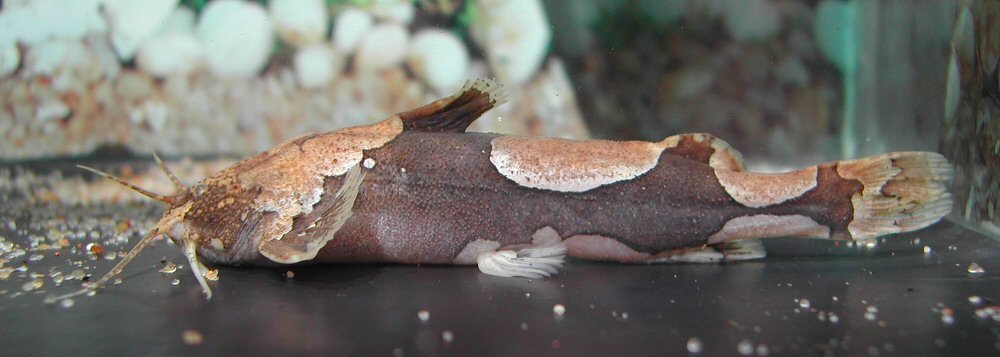
Akysis portellusSmallmouth Stream Catfish
Ng, 2009
Max length43mm SL1.7in SLTank45 × 30cm18 × 12inTemp16.5–24°C62–75°FpH6.0–7.5This species is among the few members of the family to have been exported for the aquarium hobby. It can be differentiated from all other Akysis species by the following combination of characters: base ofmeasures 17.1-19.2% of standard length (S...
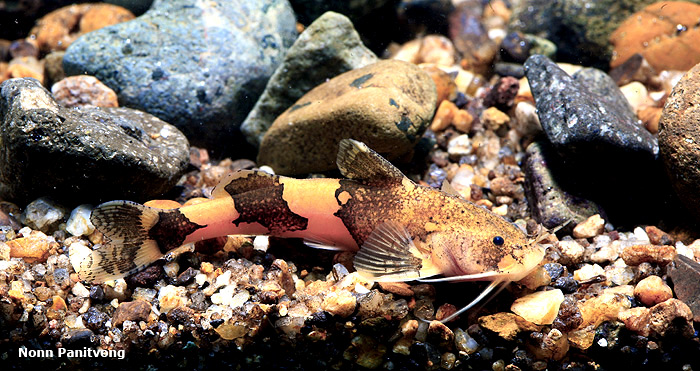
Akysis pulvinatusKra Stream Catfish
Ng, 2007
Max length30mm SL1.2in SLTank45 × 30cm18 × 12inTemp16.5–23.5°C62–74°FpH6.0–7.2This species has been exported for the aquarium hobby on an extremely limited basis. It can be differentiated from all other Akysis species by the following combination of characters: head length 27.6–29.8% of standard length (SL); head width 21.9–25.1% SL; caudal peduncle depth 9.4–10.3% SL; length ofbase 23.0–25.2% SL; nasal barbel len...
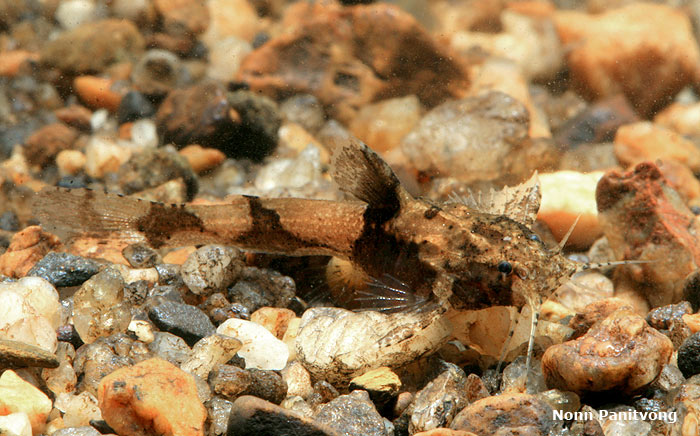
Akysis variusVariable Stream Catfish
Ng & Kottelat, 1998
Max length40mm SL1.6in SLTank45 × 30cm18 × 12inTemp16.5–24°C62–75°FpH6.0–7.5This species is among the smaller members of the family. It can be differentiated from all other Akysis species by the following combination of characters: caudal peduncle length 16.1-19.8% of standard length (SL); caudal peduncle depth 6.5-9.3% SL; length of adipose-fin base 25.6-29.5% SL; interorbital distance 42.0-46.0% of head length (HL), eye diameter 13.0-20.0% HL; length of nasal barbel 44.0-66.0% HL; lateral margins of the head appear straight when viewed from above; possession of 0-5 se...
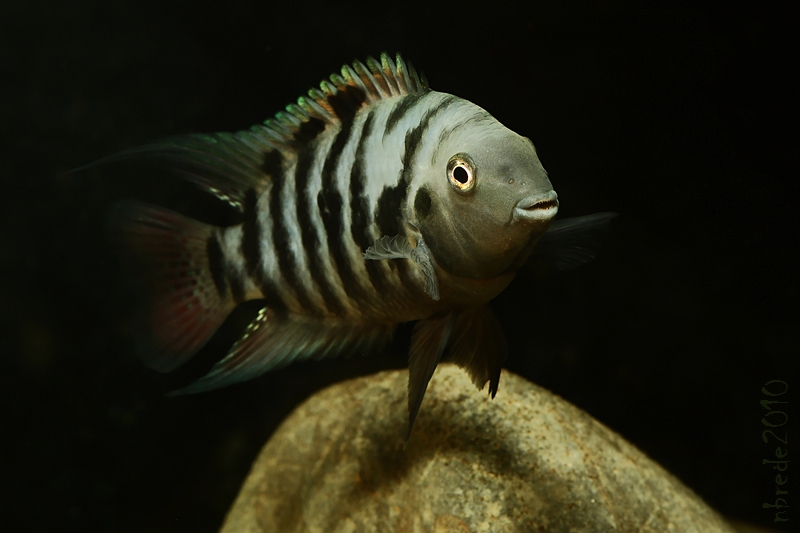
Amatitlania nigrofasciataConvict Cichlid
Günther, 1867
Max length150mm SL6in SLTanknot recordedTemp24–28°C75–82°FpH6.0–8.0A hugely popular and very adaptable species, the convict is one of the most ubiquitous fish in the hobby. It is often referred to by synonyms such as Cryptoheros nigrofasciatus and Cichlasoma nigrofasciatus. It's difficult to know how much to recommend it to the beginner, as despite its hardiness and ease of breeding, it's not really a community fish. However, if you want to breed a species and witness some amazing parental behaviour, it's an unreserved recommendation. It now exis...
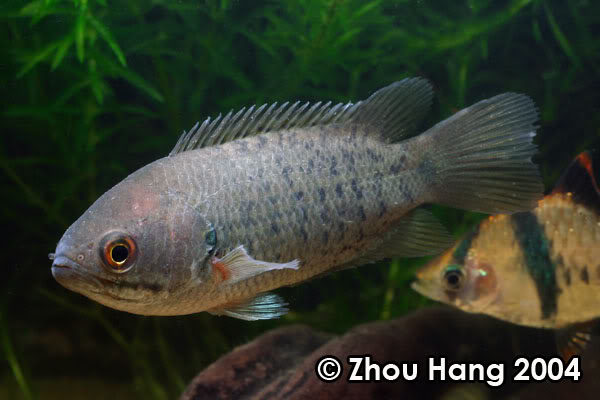
Anabas testudineusClimbing Perch
Bloch, 1792
Max length200mm SL8in SLTanknot recordedTemp15–30°C59–86°FpH5.5–8.0This species isn't especially popular in the aquarium trade but is undoubtedly interesting despite its lack of colour. In addition to its survival ability in the absence of water it's also capable of producing audible sounds though the purpose of these has not been fully-studied. Naturally-occurring xanthic and albino forms have also been recorded. There is considerable confusion as to the taxonomic status of the two species currently occupying this genus, with ichthyologists widely...
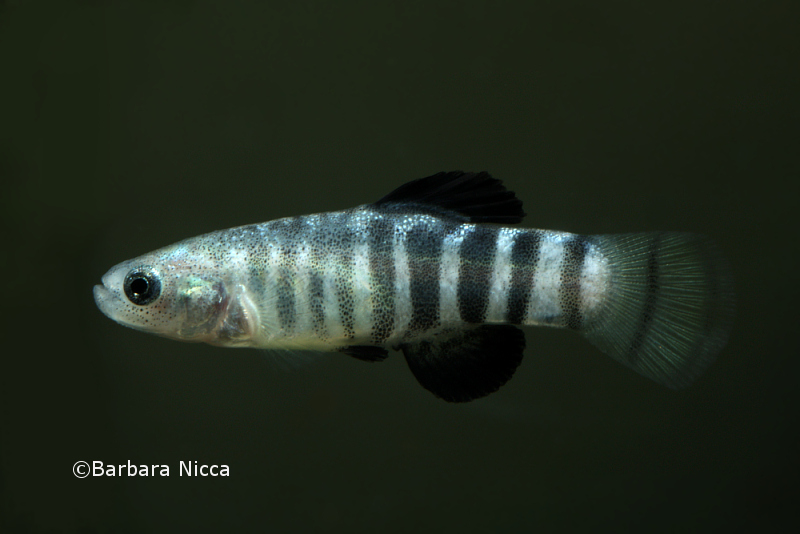
Anatolichthys transgrediensAcı Toothcarp
Ermin, 1946
Max length50mm SL2.0in SLTanknot recordedTempnot recordedpH8.0–10.0The modified lower jaw and reduced scalation exhibited by this little-known species have seen it placed in the disused genera Anatolichthys and Turkichthys in the past and it is still sometimes listed as a species of Lebias although that generic name has long been considered a synonym of Cyprinodon by most authorities and an ICZN committee voted to suppress the name in favour of Aphanius as recently as 2003. You're unlikely to find it on sale in aquatic stores although it ma...
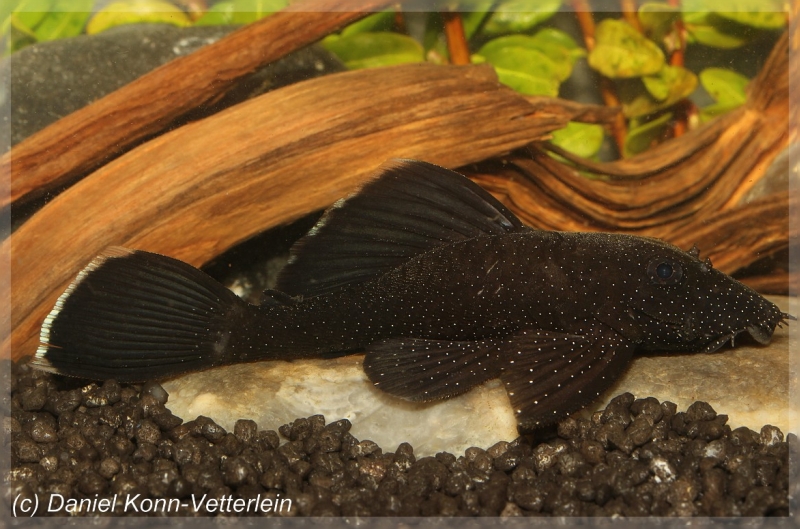
Ancistrus dolichopterusL183
Kner, 1854
Max length200mm SL8in SLTank120 × 45cm48 × 18inTemp26–30°C79–86°FpH5.0–7.0This species is not always identified correctly with its name used for the unidentified common bristlenose and other similar species, while the fish itself has been referred to as A. hoplogenys and assigned the L-number L183. Images and information describing it it in much of the available literature confirm this confusion.
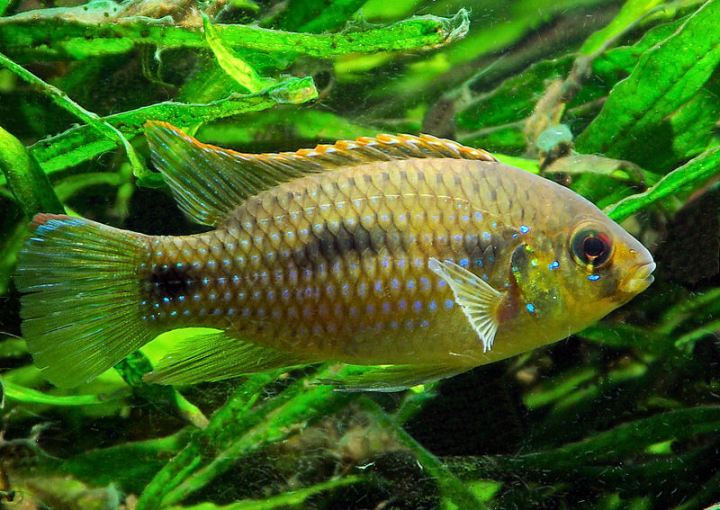
Anomalochromis thomasiAfrican Butterfly Cichlid
Boulenger, 1915
Max length80mm SL3.1in SLTank80 × 30cm31 × 12inTemp23–27°C73–81°FpH5.5–7.5Often overlooked when seen for sale, as juveniles can appear a little dull, A. thomasi is actually one of the best choices for the newcomer to dwarf cichlids. It is relatively undemanding, peaceful, easily bred and quite beautiful once settled into the aquarium. The species is currently monotypic, although several colour forms are available from time to time. In the future some or all of these may prove to be distinct species....
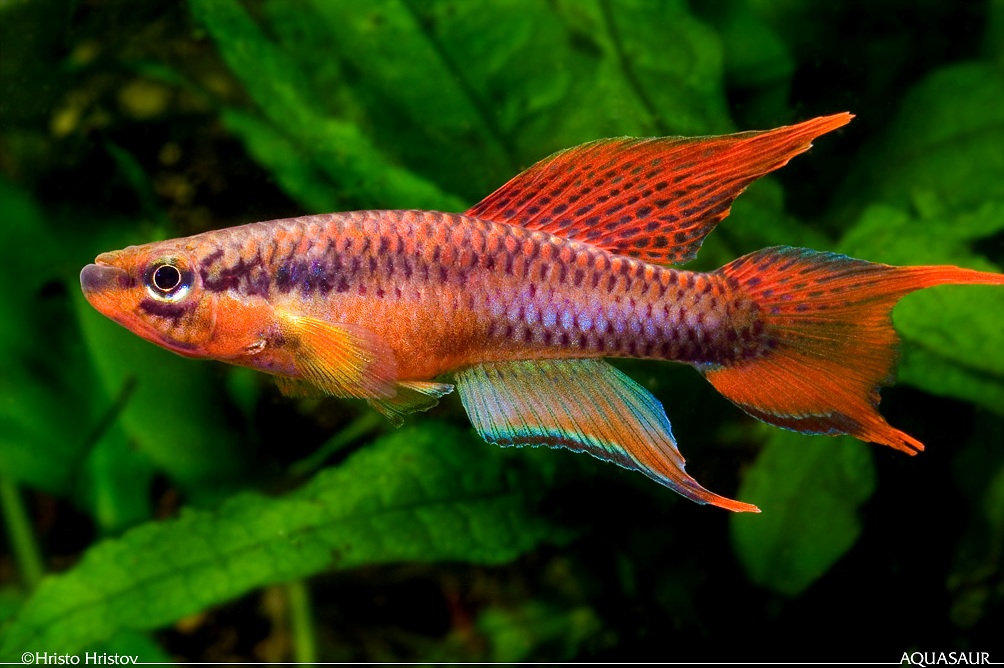
Aphyosemion bitaeniatumTwo-Striped Lyretail
Ahl, 1924
Max length45mm SL1.8in SLTanknot recordedTemp24–30°C75–86°FpH5.0–6.5This species is widely-distributed in lowland, coastal regions of Togo, Benin and Nigeria as far as the Cross River delta, and occurs at some inland localities along the lower Niger River. Populations in Cameroon, Equatorial Guinea and Gabon are now considered to represent other species.
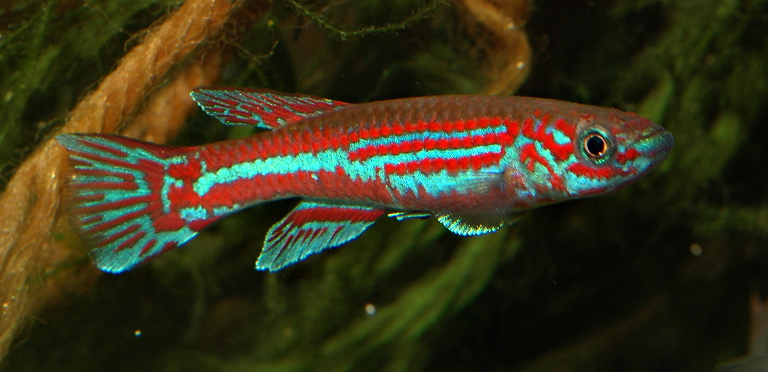
Aphyosemion ogoenseBroken-Line Lyretail
Pellegrin, 1930
Max length50mm SL2.0in SLTank45 × 25cm18 × 10inTemp18–22°C64–72°FpH5.0–6.5This species is not an annual fish, being found in permanent bodies of water in nature. Over 20 different forms of it have been discovered at different localities and a handful have been given subspecific names. The most popular in the aquarium hobby include A. o. ottogartneri and A. o. pyrophore, both of which were initially described as separate species.
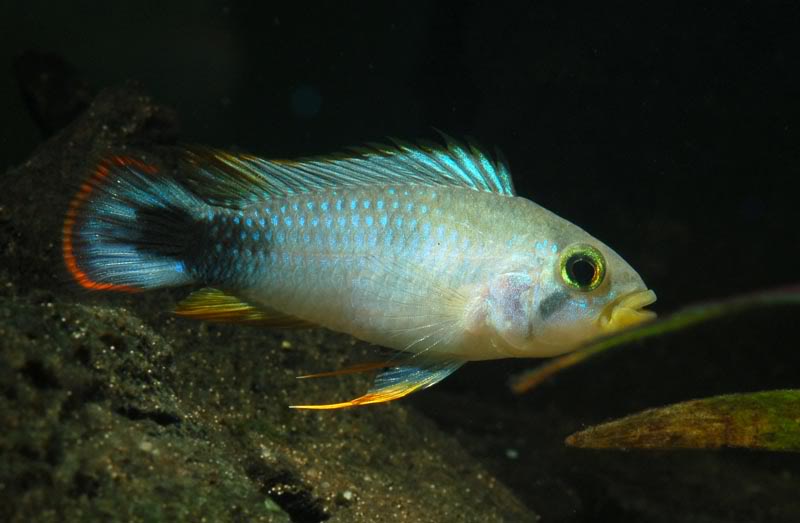
Apistogramma panduro
Römer, 1987
Max length♂ 75 · ♀ 55mm SL♂ 3.0 · ♀ 2.2in SLTank60 × 30cm24 × 12inTemp22–29°C72–84°FpH4.0–6.5This species is also known by the alternative vernacular names 'blue panda cichlid', 'blue sky dwarf cichlid and 'azure cichlid' as well as the confusing trade name A.sp. 'pandurini'. It has also been assigned the 'A' number A183 under the DATZ system with possibly conspecific, related forms similarly numbered A184 or A185 depending on locality. It can be distinguished from similar-looking species by the length of the lower jaw which characte...
Apricaphanius iberusSpanish Toothcarp
Valenciennes, 1846
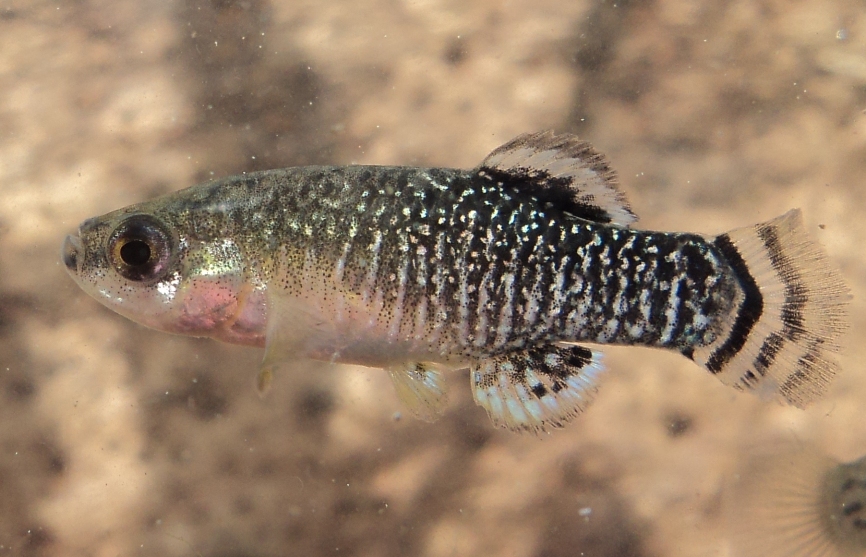
Max length50mm SL2.0in SLTank120 × 30cm48 × 12inTemp2–30°C36–86°FpH7.0–9.0Populations of Aphanius from Spain's southern, Atlantic coastline and Algeria previously considered representative of A. iberus have now been elevated to full species status with the names A. baeticus (Doadrio, Carmona & Fernández-Delgado, 2002) and A. saourensis (Blanco, Hrbek & Doadrio, 2006), respectively. All three species look broadly similar although A. saourensis can be easily identified as the patterning in males is mottled and does not form vertical bars, while femal...
Apricaphanius saourensisSahara Toothcarp
Blanco, Hrbek & Doadrio, 2006
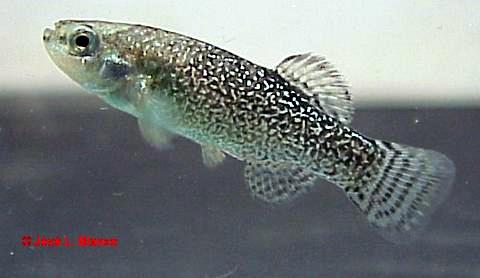
Max length45mm SL1.8in SLTank120 × 30cm48 × 12inTemp2–30°C36–86°FpH7.5–9.0All Algerian Aphanius populations were considered to be representative of A. iberus until this species was described in 2006. It differs both morphologically and genetically from A. iberusand A. baeticus, probably diverging about 5.3 million years ago during the opening of the Straits of Gibraltar. It is most easily distinguished by the distinct mottled body patterning which in males of the other two species forms distinct vertical bars and in females dark spot-like markings. A. iberusis now k...
Astyanax bimaculatusTwo Spot Astyanax
Linnaeus, 1758
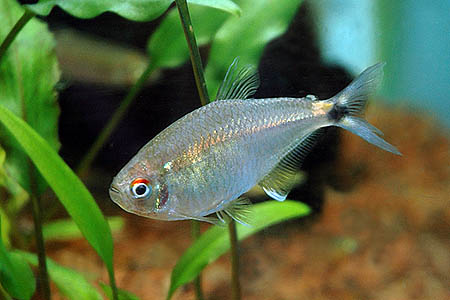
Max length150mm SL6in SLTank120 × 60cm48 × 24inTemp20–28°C68–82°FpH5.5–7.5A. bimaculatus is not a popular aquarium fish but is available on occasion exception, most often as a contaminant among shipments of other species. It's identity is also in question to an extent with the name currently applied to what is considered to represent a species complex comprising at least four taxa.
Aulonocara stuartgrantiGrant's Peacock
Meyer & Riehl, 1985
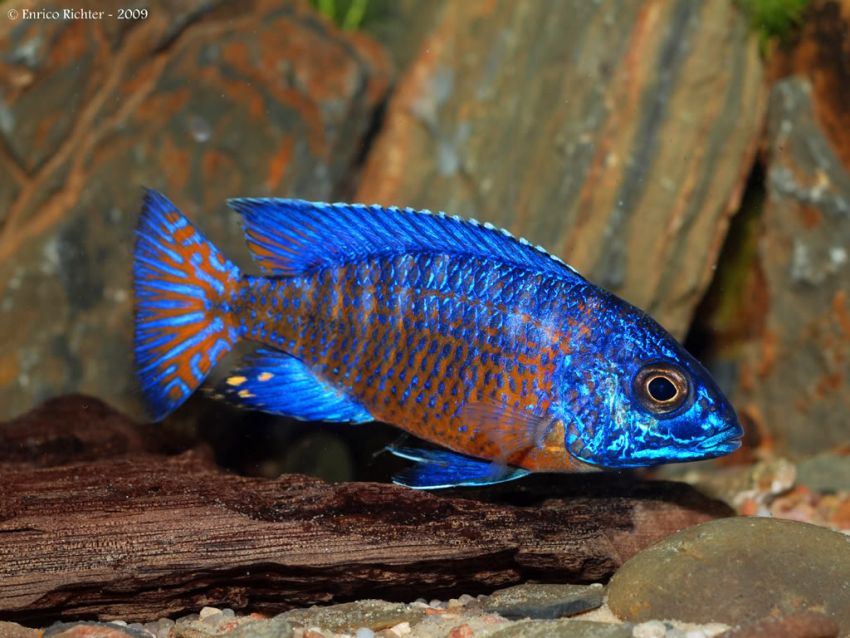
Max length130mm SL5in SLTank120 × 45cm48 × 18inTemp23–29°C73–84°FpH7.5–9.0Males of this species occur in a wide range of colour forms depending on locality, with blue variants being found predominantly (but not exclusively) towards the north of the lake and yellow in the south. This variation, alongside its relatively extensive distribution, has resulted in some taxonomical issues, several of which have not yet been resolved. For example, two forms from the southwest of the lake are referred to as A. sp. "stuartgranti maleri" and A. sp. "stuartgranti mbenji", respectively, and may turn out to be distinct species given their colour patterns an...