Results for “aquarium”
Type a name: scientific, common, or one a species used to go by. Or narrow the catalogue with the filters.
Filters
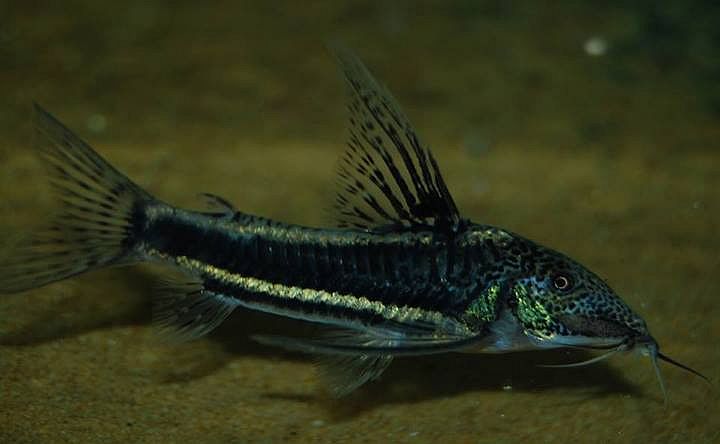
Scleromystax sp. C113
authority not recorded
Max length65mm SL2.6in SLTank120 × 30cm48 × 12inTemp16–24°C61–75°FpH5.0–7.5This fish is one of a number of apparently unidentified Scleromystax species known in the aquarium hobby. The genus Scleromystax is included in the family Callichthyidae, of which members are often referred to collectively as 'armoured' or 'mailed' catfishes group due to the presence of bony plates in place of scales on the body.
Scleropages jardiniiAustralian Arowana
authority not recorded
Max length900mm SL35in SLTank180 × 60cm72 × 24inTemp24–29°C75–84°FpH6.8–7.5Although S. jardinii superficially resembles its Asian cousins, it is not considered as desirable an aquarium inhabitant, nor is it classed as being at risk in nature. It can be easily distinguished from the asian species by its much smaller scale size, greater lateral scale count (32-35 as opposed to 21-25 in the asian aros) and duller patterning. It differs from its Australian relative S. leichardtii by its more sloping head, downward-pointing barbels and patterned gill covers. The base colour...
Scleropages leichardtiSpotted Australian Arowana
authority not recorded
Max length900mm SL35in SLTank180 × 60cm72 × 24inTempnot recordedpH6.8–7.5Although S. leichardtii superficially resembles its Asian cousins, it is not considered as desirable an aquarium inhabitant, nor is it classed as being at risk in nature. It can be easily distinguished from the asian species by its much smaller scale size, greater lateral scale count (32-35 as opposed to 21-25 in the asian aros) and duller patterning. It differs from its Australian relative S. jardinii by its spotted scales, forward-pointing barbels, lack of sloping head and unpatterned gill cov...
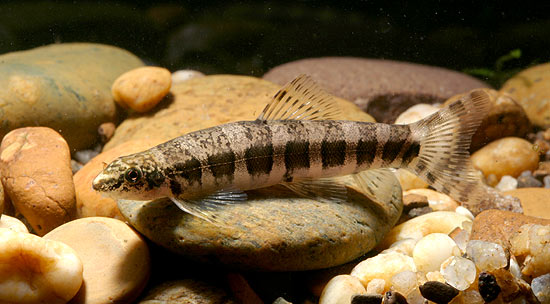
Serpenticobitis zonata
Kottelat, 1998
Max length50mm SL2.0in SLTank75 × 30cm30 × 12inTemp26°C79°FpH6.0–7.0Fish sold under the name S. zonata are sporadically available in the aquarium trade but the majority appear to be the congener S. octozona. The genus currently contains just three members all of which are known only from the Mekong basin. S. octozona is the type species and separ...
Serrasalmus elongatusPike Piranha
authority not recorded
Max length300mm SL12in SLTank120 × 60cm48 × 24inTemp24–28°C75–82°FpHnot recordedS. elongatus is known as "Caribe Pinche" in its native countries and is a rare find in the trade, tending to be quite expensive as a result. Individuals seem to vary in personality. While some are particularly fearless and will actively chase and attempt to bite hands or fingers placed in or up against the aquarium, others will always appear to be shy and nervous. The streamlined body form that gives rise to the species name is unique among serrasalmids, and has probably developed as a...
Serrasalmus geryiGéry's Pirambeba
authority not recorded
Max length181mm SL7in SLTank120 × 60cm48 × 24inTemp22–29°C72–84°FpHnot recordedS. geryi is sometimes sold as the "violet-line piranha" in reference to the unusal purple stripe that runs from the base of the lower jaw over the top of the body. It makes a stunning aquarium fish as it also possesses highly reflective scales, deep orange/red eyes and a compressed, high-bodied shape. Far from widespread in nature or the hobby, it tends to be pricey and highly sought-after when available. There are currently 24 described species of Serrasalmus, many of which look s...
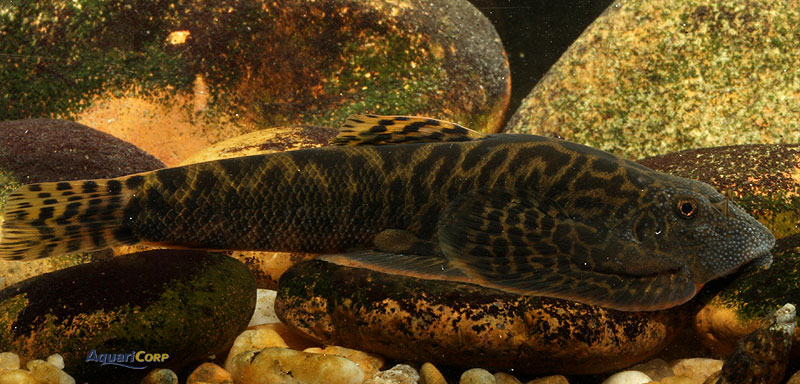
Sewellia elongata
Roberts, 1998
Max length75mm SL3.0in SLTank90 × 30cm36 × 12inTemp20–24°C68–75°FpH6.0–7.5This species appeared in the trade during 2010 and its identity has been confirmed to us by Thai exporter and aquarist Kamphol Udomritthiruj who collects it from the Se Kong system for the aquarium hobby. To date only subadult specimens have reached the western market.
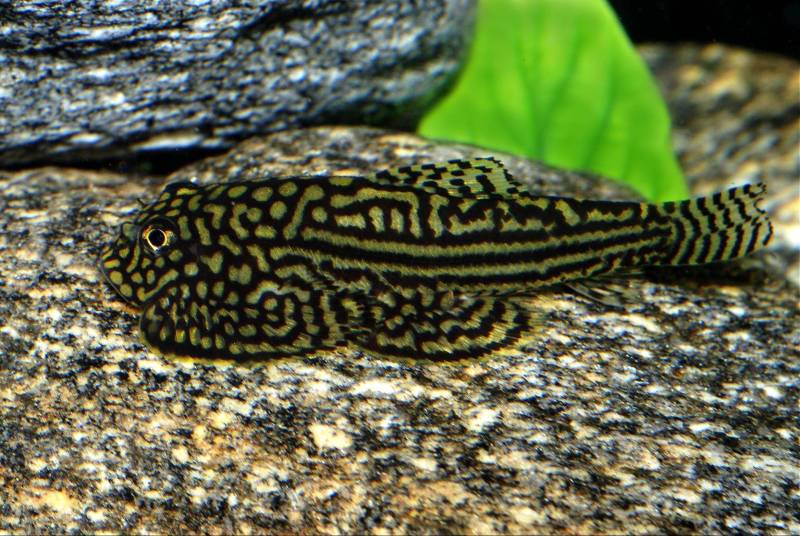
Sewellia lineolataTiger Hillstream Loach
Valenciennes, 1846
Max length65mm SL2.6in SLTank75 × 30cm30 × 12inTemp20–24°C68–75°FpH6.0–7.5S. lineolata was first recorded by Diard over 150 years prior to its 'rediscovery' in the early-1990s. It became available to the aquarium trade in the mid-2000s and swiftly established itself as one of the more popular balitorids in the hobby due to its attractive body markings and ease of breeding. It's also sold under the names 'reticulated hillstream loach', 'Vietnamese hillstream loach' and 'gold ring butterfly sucker'. It's difficult to...
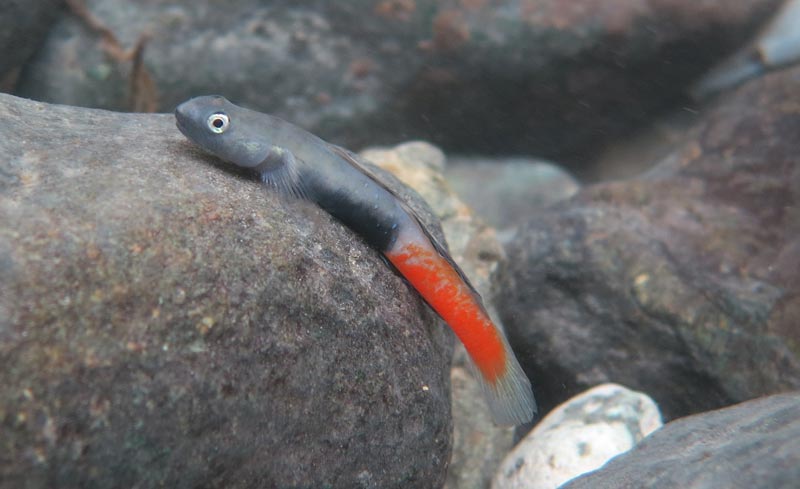
Sicyopus cebuensis
Chen & Shao, 1998
Max length45mm SL1.8in SLTank60 × 30cm24 × 12inTemp22–28°C72–82°FpH6.5–7.5This species is not in the aquarium trade though is maintained by a few private collectors. It can be distinguished from all other members of the genus by the following combination of characters: first dorsal-fin withfirst dorsal-fin elongate in males; anterior portion of body with loosely-arranged ctenoid scales; head, entire nape to first dorsal-fin base, pectoral base, and belly naked; male colour pattern comprising creamy-yellow anterior portion of body with dark blotch at midbody and bright orange/red in postero...
Silurus glanisWels catfish
authority not recorded
Max length5000mm SL197in SLTanknot recordedTemp3.9–20°C39–68°FpHnot recordedJuvenile specimens are occasionally available in the aquarium trade but this species is clearly not a viable subject for the vast majority of private aquarists. While it's considered a sport fish in some countries (France, Italy, Spain, UK) it's flesh and eggs are considered a delicacy in others (Hungary, Poland, Slovakia, Lithuania) and its skin is also used in the manufacture of leather and glue. The family Siluridae comprises those catfsh species commonly referred to as freshwate...
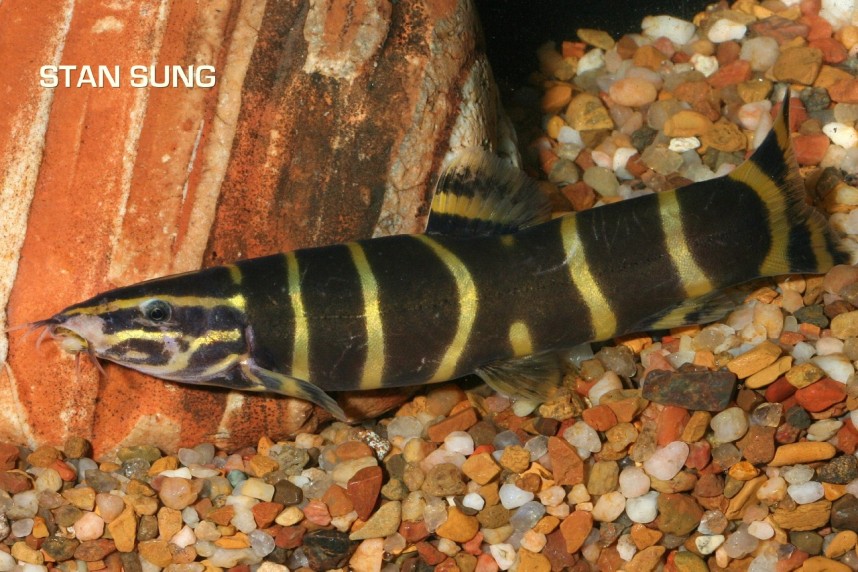
Sinibotia reevesae
Chang, 1944
Max length95mm SL3.7in SLTank120 × 30cm48 × 12inTemp20–25.5°C68–78°FpH6.5–8.0This species not often seen in the aquarium trade and is apparently rare in its natural waters, with the occasional individual imported as bycatch in shipments of S. pulchra or S. robusta, or by private collectors. Like others in the genus it has a highly flexible, sinuous body which makes it very interesting to observe. It's told apart from congeners by the following combination of chara...
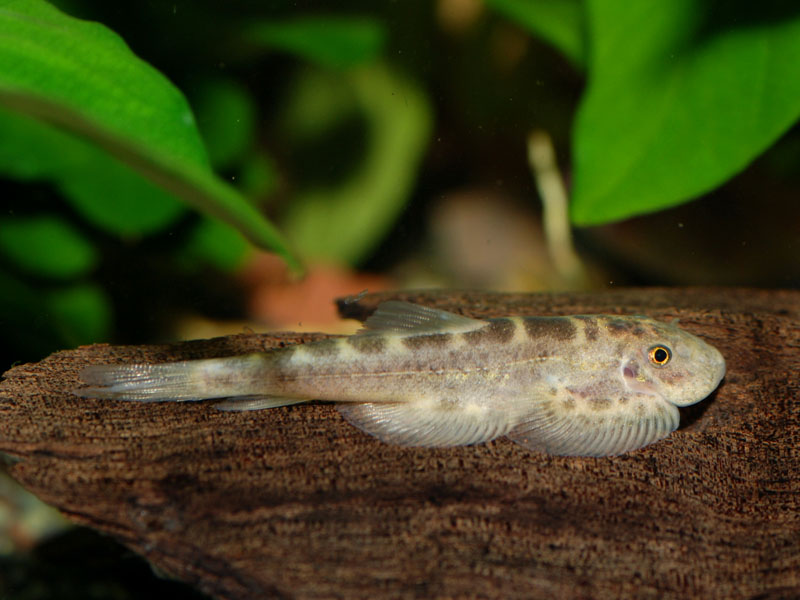
Sinogastromyzon wui
Fang, 1930
Max length110mm SL4in SLTank75 × 30cm30 × 12inTemp20–24°C68–75°FpH6.5–8.0This species is probably the most common member of the genus in the aquarium trade but still not often exported in numbers. Instead it's more often found in mixed shipments of other wild-collected fishes from southern China, particularly Beaufortia or Pseudogastromyzon spp. It may appear superficially simi...
Steatocranus casuariusBlockhead Cichlid
authority not recorded
Max length120mm SL5in SLTank75 × 30cm30 × 12inTemp24–28°C75–82°FpH6.0–7.5An easily kept cichlid whose character more than compensates for its somewhat drab colouration, S. casuarius is sometimes seen for sale as "Humphead", "Lionhead" or "Buffalohead" cichlid. It is a reophilic fish meaning it inhabits fast waters. Its swimbladder is modified to reduce buoyancy and thus prevent it from being swept away by the strong currents in it's natural habitat. In the aquarium it spends most of it's time resting on the substrate or hiding ...
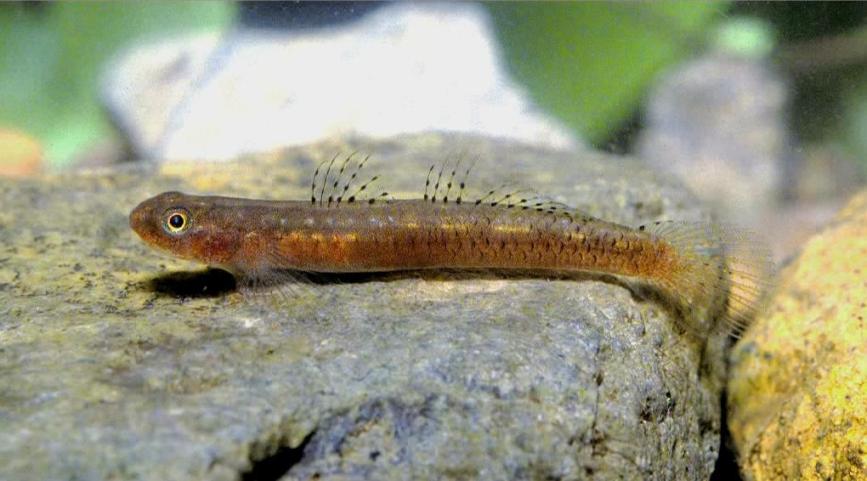
Stiphodon birdsong
Watson, 1996
Max length23mm SL0.9in SLTank60 × 30cm24 × 12inTemp22–28°C72–82°FpH6.5–7.5This species probably hasn't been seen in the trade yet but should make an interesting aquarium fish if it ever becomes available. Within the genus it's most similar to S. surrufus and S. mele from which it differs only in terms of meristics. In description it's distinguished from the former only by possession of more teeth in the upper jaw although images of live specimens depict S. surrufus as a more intensely-coloured, reddish fi...
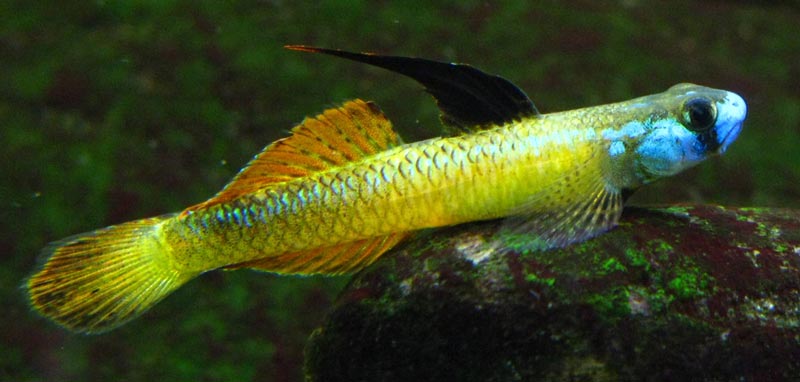
Stiphodon percnopterygionus
Watson & Chen, 1998
Max length35mm SL1.4in SLTank60 × 30cm24 × 12inTemp22–28°C72–82°FpH6.5–7.5This species is rare in the aquarium trade and normally expensive when available. It's one of the most easily-identifiable in the genus by the combination of usually 14 pectoral-fin rays, 10 segmented second dorsal-fin rays, relatively small adult size, unique colouration in males and the shape of the first dorsal-fin in males in which the fourth and fifth spines are...
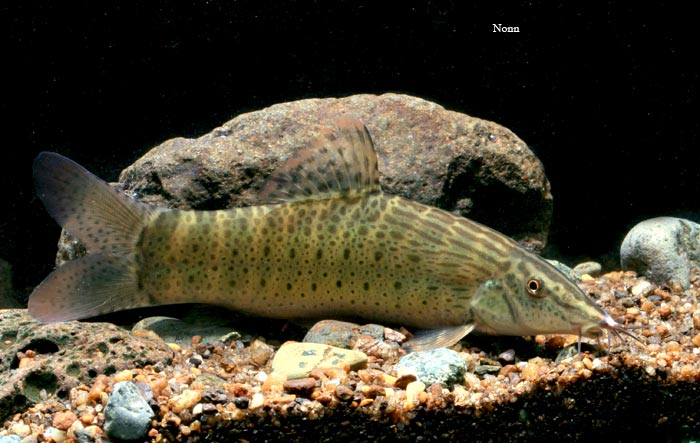
Syncrossus beaufortiChameleon Loach
Smith, 1931
Max length250mm SL10in SLTank150 × 45cm60 × 18inTemp22–30°C72–86°FpH6.0–7.5This species is very similar in appearance to S. berdmorei which is native to India and Myanmar, and has been widely mislabelled under that name in older aquarium literature. The two can appear identical on first glance but there are some notable differences, most obviously possession of 9-10 branchedrays in S. beauforti vs. 11-14 in S. bermorei, and the fact that even young specimens of S. beauforti exhibit laterally-orientated rows of small, dark markings running across the ...
Synodontis aterrima
authority not recorded
Max length115mm SL5in SLTank90 × 30cm36 × 12inTemp22–27°C72–81°FpH6.0–7.5This species is infrequently offered for sale but makes an attractive addition to the medium sized community aquarium.
Synodontis brichardiBrichard's Synodontis
authority not recorded
Max length150mm SL6in SLTank120 × 30cm48 × 12inTemp22–26°C72–79°FpH6.2–7.5An unusual and highly adapted species, S. brichardi is one of our favourite Synos and really deserves to be kept in a biotope aquarium to be appreciated at its best. Here, it will be seen moving in and out of areas of high and low current and rasping at algae attached to rocks as in nature. It is much more diurnal than many Synodontis species, if maintained correctly. The colours of this fish intensify with age....
Synodontis contractaBig-nosed Upside-down Catfish
authority not recorded
Max length75mm SL3.0in SLTank60 × 30cm24 × 12inTemp22–27°C72–81°FpH6.2–7.2Often confused with the similar S.nigriventris, this species is imported infrequently. It is easily distinguished from nigriventris by its larger eyes and broad mouth and head. These features give rise to the common name "Big-nosed upside-down catfish". S. contracta spends the majority of its time swimming in an inverted position and this, along with its exaggerated facial features,make it a characterful and interesting addition to the community aquarium. It is also known as the Bug-e...
Synodontis flavitaeniataPyjama Synodontis
authority not recorded
Max length195mm SL8in SLTank90 × 30cm36 × 12inTemp23–28°C73–82°FpH6.5–8.0Also known as the Orange Striped Squeaker, in our opinion this fish is one of the most attractively patterned Synos. S. flavitaeniata can vary considerably in patterning and colouration but is difficult to misidentify. This fish is more sensitive to deteriorating water quality than many Syno species so aquarium maintenance must be rigorous. When it was first imported 25 or so years ago it commanded an extortionate price but thankfully is affordable today. Its flexibility with regards to w...