Results for “C number”
Type a name: scientific, common, or one a species used to go by. Or narrow the catalogue with the filters.
Filters
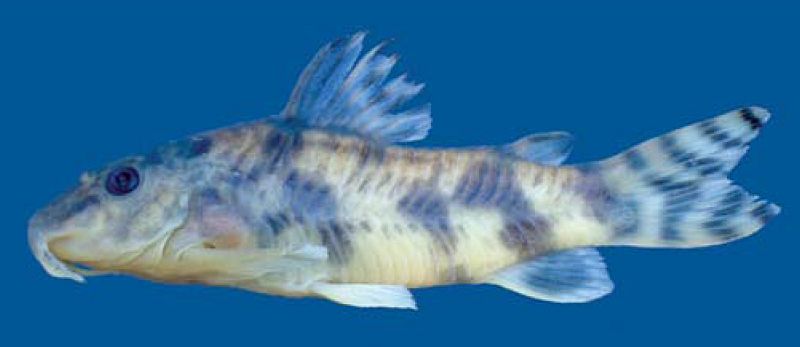
Scleromystax salmacis
Britto & Reis, 2005
Max length48mm SL1.9in SLTanknot recordedTempnot recordedpHnot recordedIt is most similar to S. macropterus, but differs in absence (vs. presence) of a black spot on the base of the median caudal-fin rays, a higher number of pectoral-fin rays (I,8,i vs. I,7,i), males with somewhat more slender bodies (25.7- 30.5% in SL [range 26.3-28.8% in type series] vs. 30.4-34.6% in SL), an...
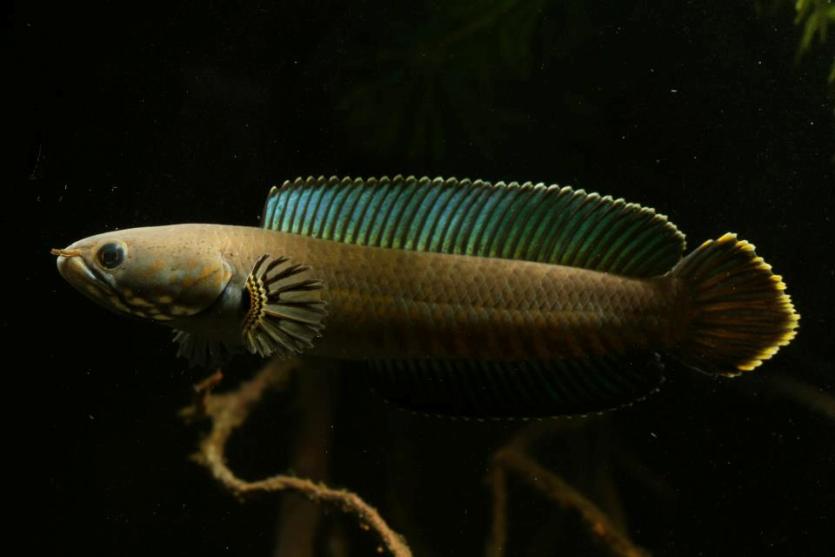
Channa andraoLal Cheng
Britz, 2013
Max length110mm SL4in SLTank80 × 30cm31 × 12inTemp14–28°C57–82°FpH6.0–8.0This species was available in the aquarium hobby for a number of years prior to description and continues to be traded under various names including C. sp. 'Lal Cheng', C. sp. 'Assam', C. sp. 'blue bleheri', C. sp. 'himalayanus', and C. sp. 'red'. The names of valid, but distinct, congeners such as C. amphibeus, C. bleheri or C. stewartii have also been misapplied to it.
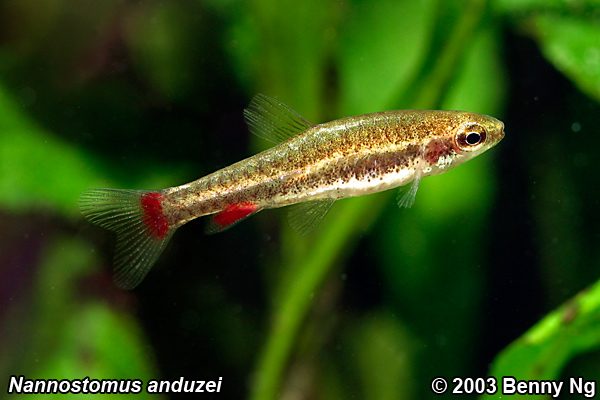
Nannostomus anduzei
Fernandez & Weitzman, 1987
Max length16mm SL0.6in SLTank45 × 30cm18 × 12inTemp22–28°C72–82°FpH5.0–7.0This is the smallest member of the genus and rarely traded in numbers, though it's a relatively common contaminant among shipments of wild fishes from Manaus. Unlike other Nannostomus spp. it does not exhibit a specific colour pattern of spots or bars at night-time, rather displaying an overall paleness. The family Lebiasinidae is included in the order Characiformes and sometimes split into the nominal subfamilies Lebiasininae a...
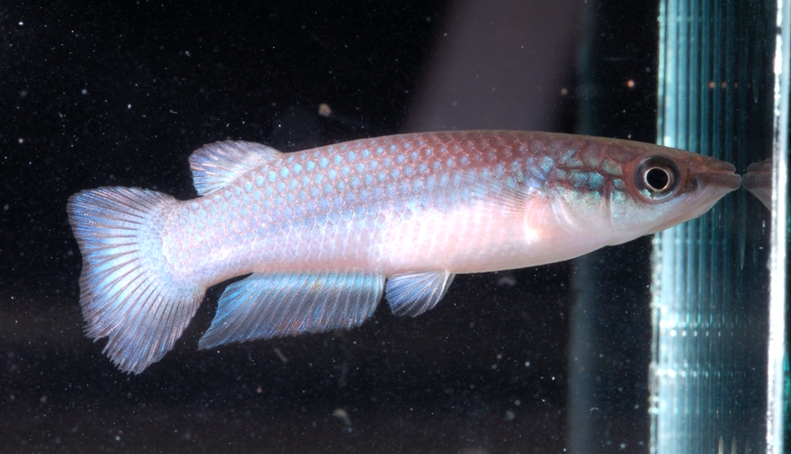
Pachypanchax omalonotusPowder-blue Panchax
Duméril, 1861
Max length90mm SL3.5in SLTank90 × 30cm36 × 12inTemp20–28°C68–82°FpH6.0–7.5For a number of decades this species was thought to occur throughout much of Madagsacar's western slope but populations immediately to the north and south of the range described above (see 'Distribution') are currently considered to represent unidentified species, while a number of populations from the Mahavavy du Sud and Betsiboka riv...
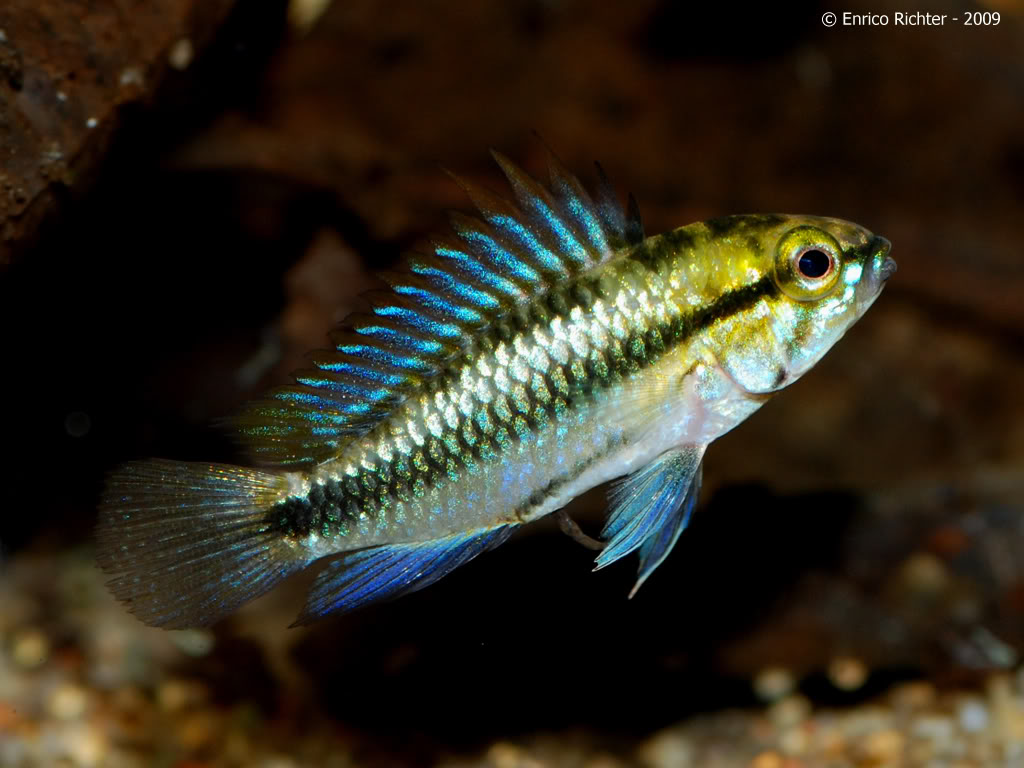
Apistogramma trifasciataThree-striped Apisto
Eigenmann & Kennedy, 1903
Max length♂ 55 · ♀ 40mm SL♂ 2.2 · ♀ 1.6in SLTank45 × 30cm18 × 12inTemp20–25°C68–77°FpH5.0–7.0This species is assigned the 'A' number A204 under the DATZ system with possibly conspecific, related forms coded A205 or A206 depending on collection locality and representing populations from Argentina and the rio Guaporé, respectively. The genus Apistogramma is among the most speciose of South American cichlid genera with around 70 species valid at present but many more awaiting description.
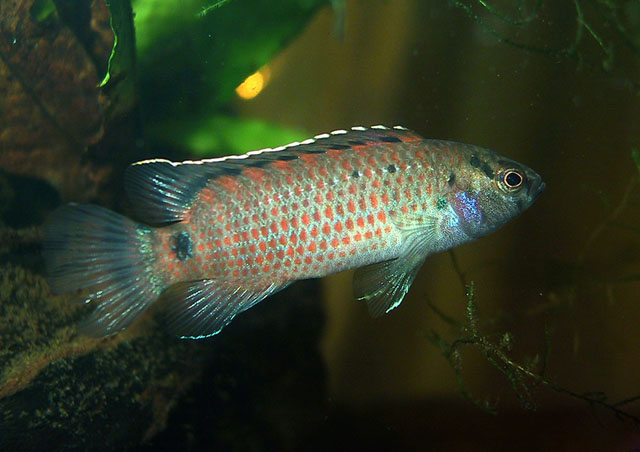
Badis khwae
Kullander & Britz, 2002
Max length60mm SL2.4in SLTank60 × 30cm24 × 12inTemp22–26°C72–79°FpH6.5–7.5Like most badids this species is poorly documented and has yet to find significant popularity in the aquarium hobby, though given its restricted natural distribution it is unlikely ever to be available in large numbers. Within the genus it is most easily confused with B. ruber and B. siamensis but both these species have rows of dark spot-like markings on the flanks which are lacking in B. khwae. The three also differ in the shape of the dark marking on the caudal peduncle; in B. ruber it is rel...
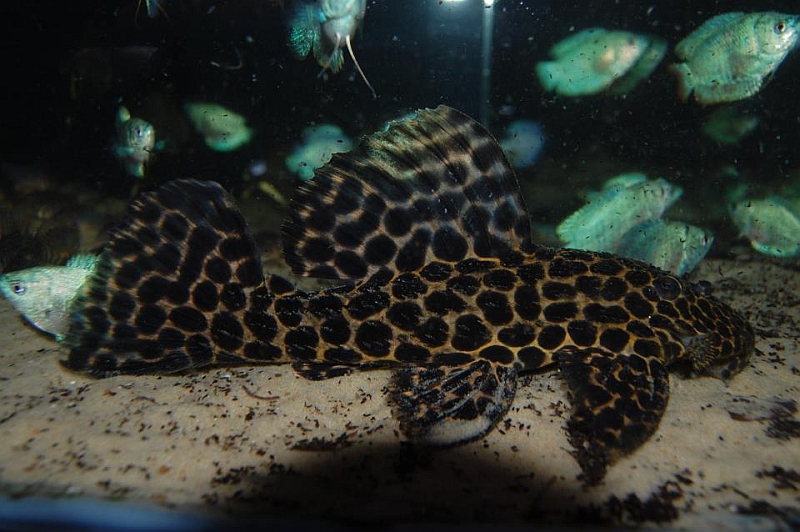
Megalancistrus parananusL113
Peters, 1881
Max length588mm SL23in SLTanknot recordedTemp20–28°C68–82°FpH6.0–7.5This species was formerly considered to be represented by the L-numbers L113 and L234 but it appears that only the former is native to the Paraná, Paraguay and Uruguay drainages, whereas L234 is collected in the rio São Francisco in eastern Brazil. M. barrae and M. sp. 'LDA097' are also exported from the São Francisco system.
Pangasianodon gigasGiant Mekong Catifish
authority not recorded
Max length3000mm SL118in SLTanknot recordedTemp20–28°C68–82°FpH6.5–7.5Pangasianodon is separated from other pangasiid generea primarily on the basis of some morphological differences including a lack of teeth and massively reduced barbels in adult specimens. Sadly it's numbers are declining rapidly in nature, through a combination of unsustainable fisheries, damming and habitat destruction. Since 1990 wild stocks are thought to have undergone a decrease of over 80%. From an annual catch of over 60 specimens in 1990, only 8-11 were being caught per year in ...
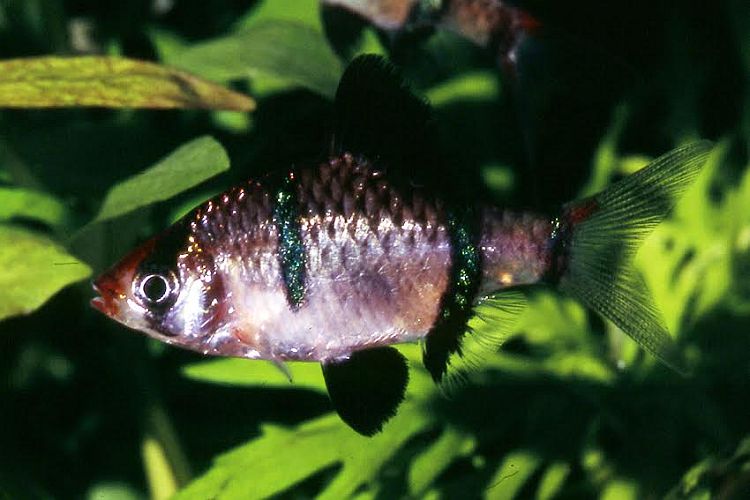
Puntigrus pulcher
Rendahl, 1922
Max length60mm SL2.4in SLTank80 × 30cm31 × 12inTemp20–26°C68–79°FpH5.0–7.5This species occasionally appears in the aquarium hobby, but the trade is largely reliant on commercially-produced 'tiger barbs' of questionable origin. It was considered a synonym of P. anchisporus for a number of decades following Alfred (1963), but revalidated by Kottelat and Tan (2011).
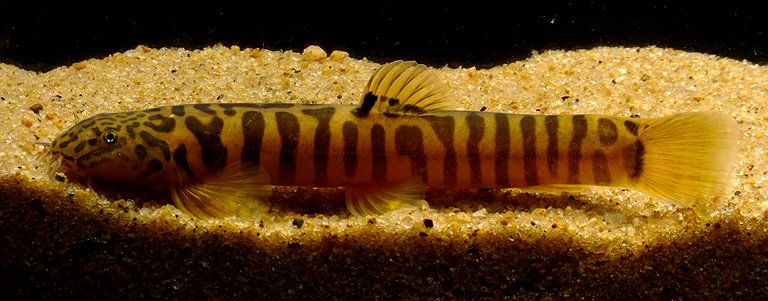
Schistura sp. 4Grizzled Loach
authority not recorded
Max length100mm SL3.9in SLTank120 × 30cm48 × 12inTemp12–20°C54–68°FpH7.0–8.5This species has been collected for the aquarium hobby, albeit in small numbers at time of writing, but its identity is unclear. Though obtained from close to the type local...
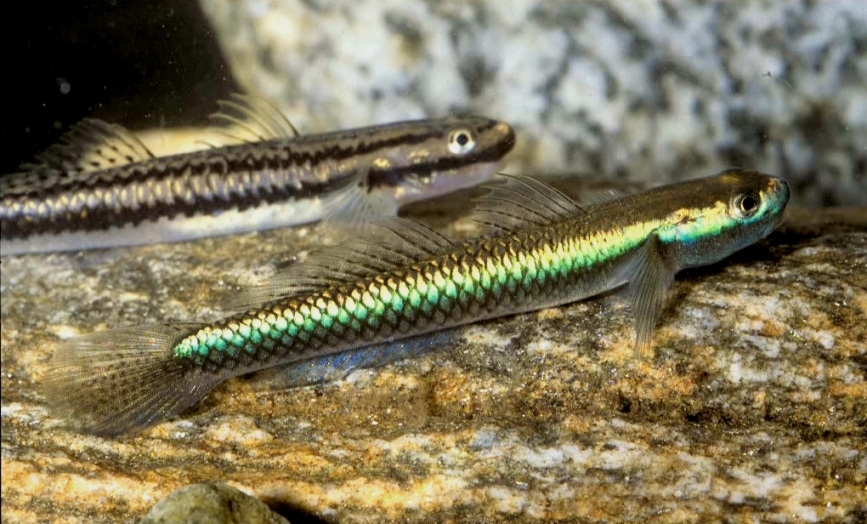
Stiphodon semoniCobalt Blue Goby
Weber, 1895
Max length50mm SL2.0in SLTank60 × 30cm24 × 12inTemp22–28°C72–82°FpH6.5–7.5This species has been traded for a number of years, though not always under the correct name. We've seen it on sale as S. elegans or S. atropurpureus on numerous occasions, for example, and other trade names include 'Sumatran blue neon goby', 'cobalt blue goby' and 'freshwater neon goby'. Further confusion has arisen because other species are sometimes sold as S. semoni meaning identification has not always been easy and there ...
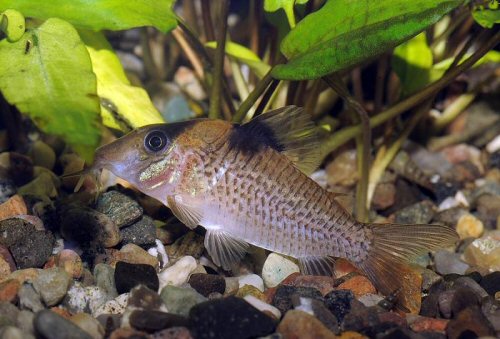
Corydoras ephippiferSaddle Cory
Nijssen, 1972
Max length60mm SL2.4in SLTanknot recordedTemp20–25°C68–77°FpH6.0–7.5This species appears superficially similar to a number of congeners including C. ambiacus, C. agassizii, C. brevirostris, C. delphax, and C. melanistius. Among these C. ephippifer seems to be unique in that all fins except the dorsal are transparent and lack markings.
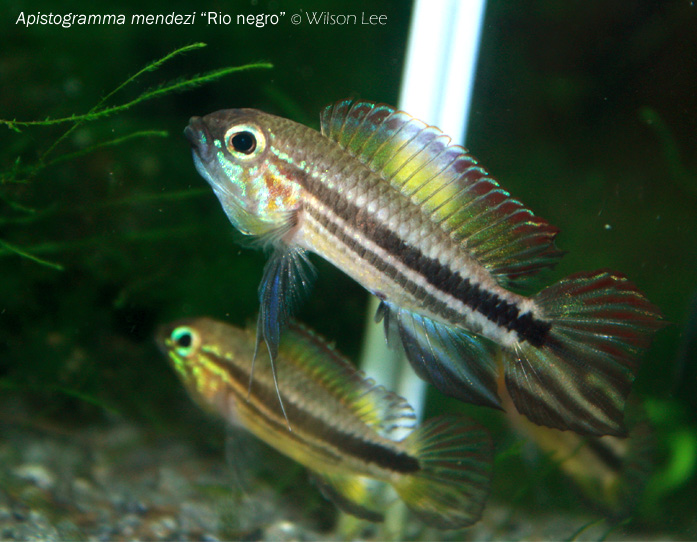
Apistogramma mendeziA220
Römer, 1994
Max lengthnot recordedTank45 × 30cm18 × 12inTemp23–29°C73–84°FpH4.0–6.0This species is assigned the codes A220, A221 and A222 under the DATZ 'A' number system with these referring to similar-looking, possibly conspecific, populations. These differ in some aspects of colour pattern, particularly the orientation of the caudal-fin markings which may be horizontal, vertical, or somewhere inbetween. One population displays an orange colouration on the belly and is som...
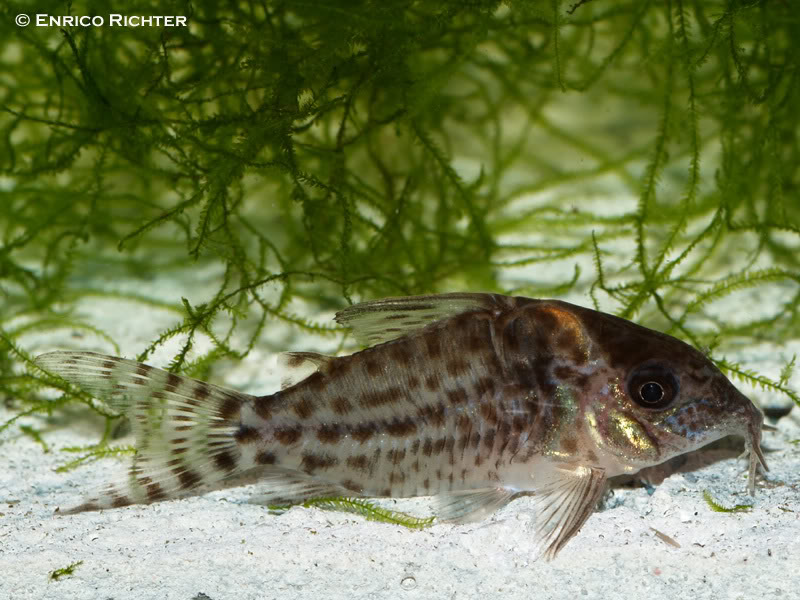
Corydoras agassiziiSpotted Cory
Steindachner, 1876
Max length70mm SL2.8in SLTanknot recordedTemp22–27°C72–81°FpH6.0–8.0This species' name is commonly misapplied to a number of similar-looking fishes and it can be difficult to identify if collection locality is unknown. In addition, colour pattern is variable and it's not clear whether this occurs between, within, or both between and within populations. In the original description, Steindachner did note that the first three dorsal-fin rays are completely black while the remainder is whi...
Glossolepis wanamensisLake Wanam Rainbowfish
authority not recorded
Max length100mm SL3.9in SLTank90 × 30cm36 × 12inTemp25–30°C77–86°FpH7.0–8.0Lake Wanam has been the subject of a management project co-ordinated by famous aquarist Heiko Bleher, who became concerned by an apparent drop in numbers of both this species and the barred rainbowfish (Chilatherina fasciata), which is also found in the lake. The drop in numbers is thought to be a result of the introduction of non-native Tilapia, Gambusia and carp species into the lake, along with a significant increase in the number of humans living in the area. G. wanamensis is now considered ...
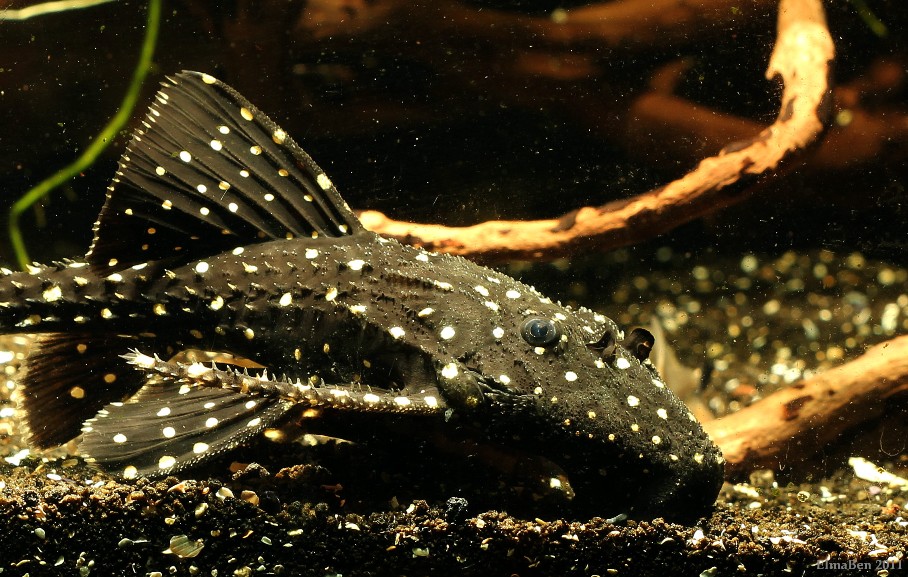
Acanthicus adonisPolka Dot Lyre Tail Pleco
Isbrücker & Nijssen, 1988
Max length1000mm SL39in SLTank600 × 200cm236 × 79inTemp23–30°C73–86°FpH6.0–7.5Despite its patent unsuitability as an aquarium subject attractively-coloured juvenile specimens of this species are traded in quite large numbers, although the scarcity of privately-maintained adults would suggest that most fail to reach their potential. The striking, spotted patterning also disappears as this species matures, and since it also becomes increasingly bellligerent with age it can only be recommended to owners of the largest private aquaria or tropical ponds. There exists an albino...
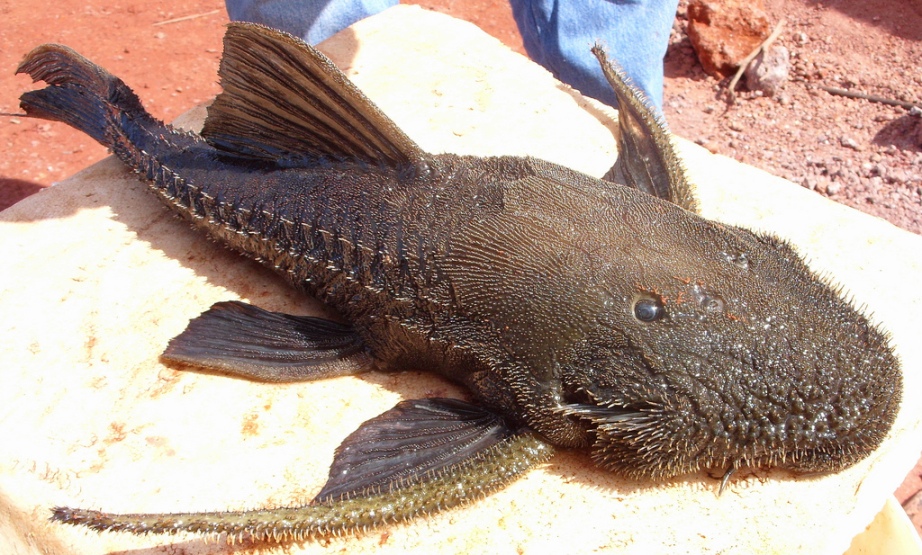
Acanthicus hystrixL155
Spix & Agassiz, 1829
Max length1000mm SL39in SLTank600 × 200cm236 × 79inTemp23–30°C73–86°FpH6.0–7.5Despite its patent unsuitability as an aquarium subject attractively-coloured juvenile specimens of this species are traded in quite large numbers, although the scarcity of privately-maintained adults would suggest that most fail to reach their potential. The striking, spotted patterning also disappears as this species matures, and since it also becomes increasingly bellligerent with age it can only be recommended to owners of the largest private aquaria or tropical ponds. There exists an albino...
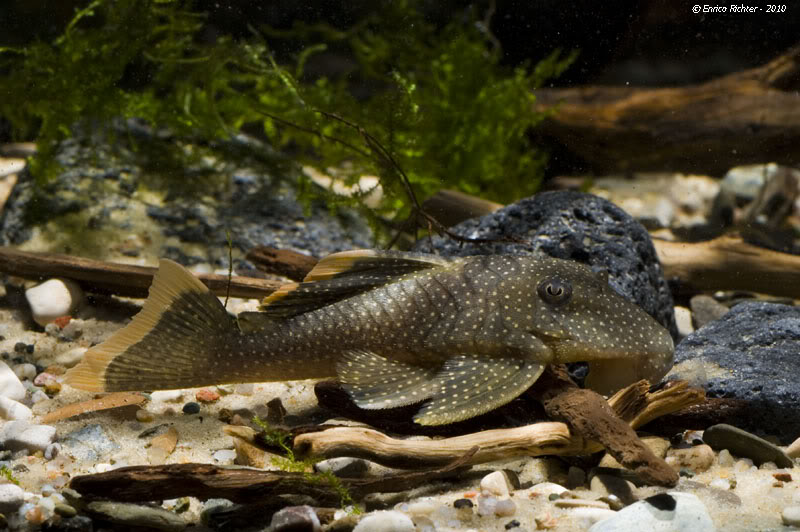
Baryancistrus sp. cf. xanthellusGold Nugget Pleco
authority not recorded
Max length180mm SL7in SLTank120 × 45cm48 × 18inTemp27–32°C81–90°FpH6.4–7.6It remains unconfirmed as to whether this fish represents a colour form of B. xanthellus or not since its DATZ code number of L081 is not referred to in the description paper whereas all other codes for 'gold nugget' plecos, i.e., L018, L085, L177 plus the 'Das Aquarium' code LDA060 are mentioned. In addition, one of the specimens in our images was apparently collected at São Félix do Xingu which is significantl...
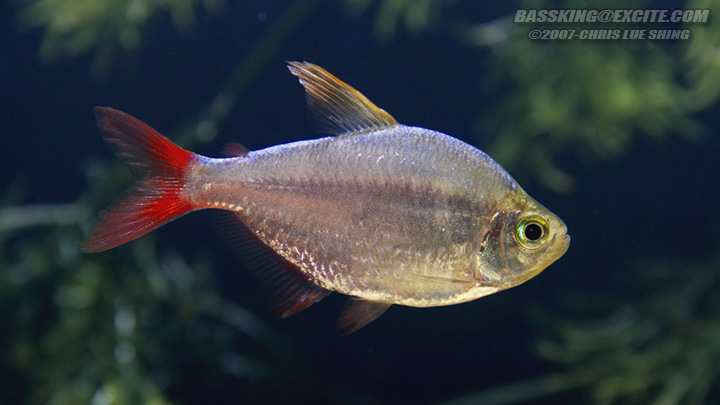
Hyphessobrycon columbianusColombian Tetra
Zarske & Géry, 2002
Max length65mm SL2.6in SLTank90 × 30cm36 × 12inTemp20–28°C68–82°FpH5.0–7.5This species is also traded as 'blue flame', 'blue-red', and 'Colombian red fin' tetra, and was misidentified as H. ecuadorensis for several years prior to its description. Within the genus it appears to be most closely related to the Costa Rica endemic H. savagei Bussing, 1967 but differs in a number of characters as fol...
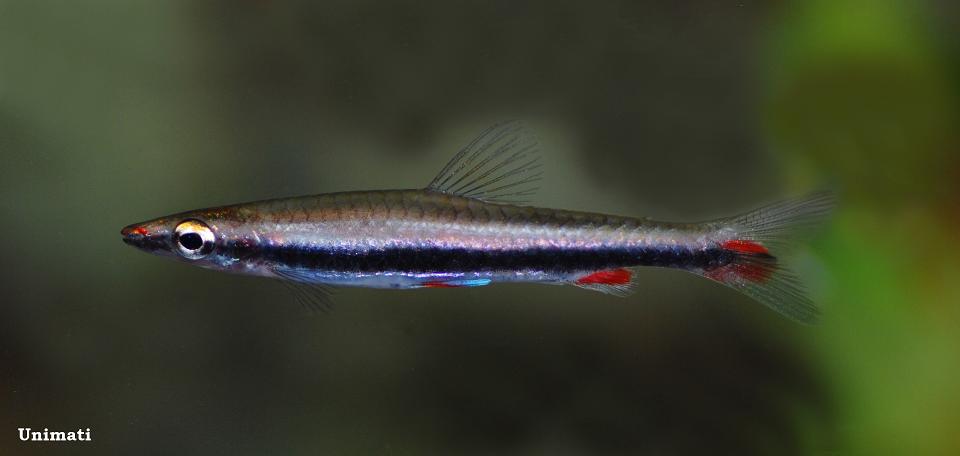
Nannostomus harrisoniBlackstripe Pencilfish
Eigenmann, 1909
Max length45mm SL1.8in SLTank60 × 30cm24 × 12inTemp22–28°C72–82°FpH5.0–7.0This species is quite rare in the aquarium hobby and is not often available in numbers, more often being exported as bycatch among shipments of the congener N. eques. Following Weitzman and Cobb (1975) it can be diagnosed by the following combin...