Results for “algae”
Type a name: scientific, common, or one a species used to go by. Or narrow the catalogue with the filters.
Filters
Labeotropheus trewavasaeTrewavas' Cichlid
authority not recorded
Max length113mm SL4in SLTank90 × 45cm36 × 18inTemp24–28°C75–82°FpH7.6–8.8This species has the characteristic overhanging snout possessed by all three members of the genus. It also has chisel-shaped teeth which are designed for scraping algae off rocks. These physical adaptations give it a competitive advantage, as they allow it to graze from rocks situated in very shallow water which other species cannot reach. The position of the mouth allows the fish to remain parallel to the rock surfaces, thus enabling it to cope with the turbulence in these areas. L. trewava...
Lobocheilos rhabdoura
Fowler, 1934
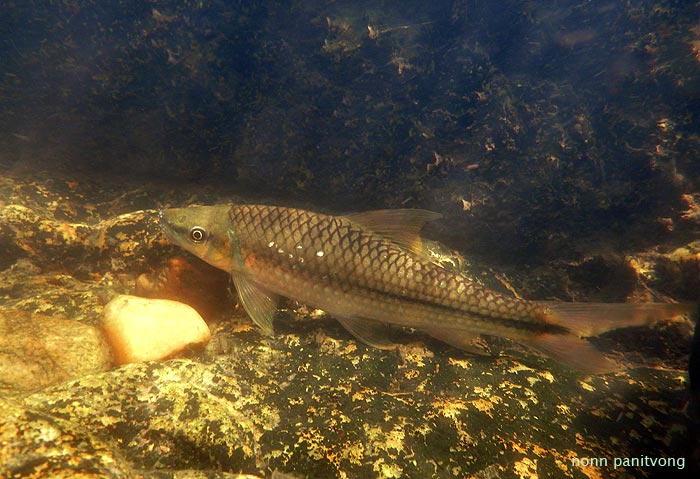
Max length220mm SL9in SLTank180 × 60cm72 × 24inTemp20–26°C68–79°FpH6.0–8.0Lobocheilos species are specialised grazers of periphyton, benthic algae, and other organisms which grow attached to rocks and other solid surfaces, and they typically leave visible scrape marks in places where they have been feeding. They are by no means herbivorous and should be offered meaty foods such as live or frozen chironomid larvae (bloodworm), Tubifex, Artemia, chopped prawn, etc., along with good quality, sinking dried products, at lea...
Pseudotropheus elongatusElongate Mbuna
authority not recorded
Max length135mm SL5in SLTank120 × 38cm48 × 15inTemp24–28°C75–82°FpH7.6–8.8Over 30 different forms of this species occur in Lake Malawi. These should not be mixed in the aquarium as they will hybridise freely. P. elongatus differs morphologically from other mbuna, being relatively slender and elongate. In nature females protect territories which contain 'gardens' of algae which they leave to breed before returning once they are holding eggs. Juvenile fish from previous spawns also inhabit the territory, protecting it when the female is away. This species i...
Pseudotropheus fainzilberiGoldbreast Zebra
authority not recorded
Max length175mm SL7in SLTank120 × 45cm48 × 18inTemp24–28°C75–82°FpH7.6–8.8There is ongoing debate as to the true genus of this species, it having been variously grouped in both Maylandia and Metriaclima as well as the currently valid Pseudotropheus. It is unlikely it will remain in Pseudotropheus, however. One interesting feature is the presence of additional rows of teeth when compared to others in the genus. Also, the rows of bicuspid teeth, used for rasping algae from rock surfaces, extend further back into the mouth than in other Pseudotropheus. P. fainzilberi...
Pseudotropheus flavus
authority not recorded
Max length90mm SL3.5in SLTank90 × 45cm36 × 18inTemp24–28°C75–82°FpH7.6–8.8Although it is a good choice for the general mbuna community, as mentioned above P. flavus should not be kept together with any member of the P. elongatus complex. Not only will these species interbreed, producing undesirable hybrid offspring, but males of these species will clash very heavily. As with other members of the genus it possesses flat, bicuspid teeth which are designed for scraping algae and other organisms from the surface of rocks....
Pseudotropheus lombardoiKennyi
authority not recorded
Max length150mm SL6in SLTank120 × 45cm48 × 18inTemp24–28°C75–82°FpH7.6–8.8A popular mbuna that has been in the hobby for many years. There is ongoing debate as to the true genus of this species, it having been variously grouped in both Maylandia and Metriaclima, as well as the currently valid Pseudotropheus. It is unlikely it will remain in Pseudotropheus, however, and many sources already consider it a member of Metriaclima. As with other members of the genus, it possesses flat, bicuspid teeth which are designed for scraping algae and other organisms from the surface...
Pseudotropheus sp. 'acei'
authority not recorded
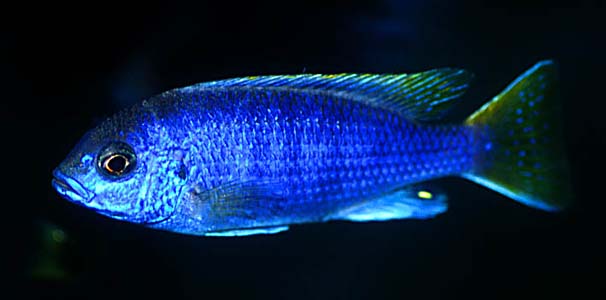
Max length125mm SL5in SLTanknot recordedTemp24–28°C75–82°FpH7.6–8.8This is an excellent beginner's species as it is relatively peaceful and easily bred. Despite being undescribed to science it is widely available in the hobby. It is sometimes sold as Gephyrochromis acei. Several colour forms are available, including "yellow tail acei" and "white tail acei". None of these should be kept together in aquaria to prevent hybridisation. In nature it feeds specifically on algae and other organisms growing on submerged wood, and is the only ...
Synodontis brichardiBrichard's Synodontis
authority not recorded
Max length150mm SL6in SLTank120 × 30cm48 × 12inTemp22–26°C72–79°FpH6.2–7.5An unusual and highly adapted species, S. brichardi is one of our favourite Synos and really deserves to be kept in a biotope aquarium to be appreciated at its best. Here, it will be seen moving in and out of areas of high and low current and rasping at algae attached to rocks as in nature. It is much more diurnal than many Synodontis species, if maintained correctly. The colours of this fish intensify with age....
Synodontis pleuropsBig Eyed Synodontis
authority not recorded
Max length230mm SL9in SLTank120 × 30cm48 × 12inTemp22–26°C72–79°FpH6.0–7.0S. pleurops is a very nocturnal species and unless the light in the aquarium is dim will rarely be seen. It is also very distinctive and is hard to confuse with other species. It has very large eyes and a downturned mouth, denoting its algae grazing habits. It will rarely venture into open water in the aquarium, preferring to hug the surface of pieces of driftwood, rocks and broad plant leaves. The colouration and patterning can vary considerably depending on type locality....
Tanganicodus irsacae
authority not recorded
Max length70mm SL2.8in SLTank75 × 30cm30 × 12inTemp24–28°C75–82°FpH8.0–9.0This is one of the so-called Tanganyikan Goby Cichlids. They occur only in the upper few feet of water around rocky shores, also known as the surge zone, where they scrape algae from the rocks with their specialised teeth. This habitat is typified by breaking waves and strong currents. They have a few adaptations allowing them to inhabit such an environment. The swim bladder is rendered useless to reduce their buoyancy. They also have a longand a laterally compressed body shape to allow them to ...