Results for “anal-fin”
Type a name: scientific, common, or one a species used to go by. Or narrow the catalogue with the filters.
Filters
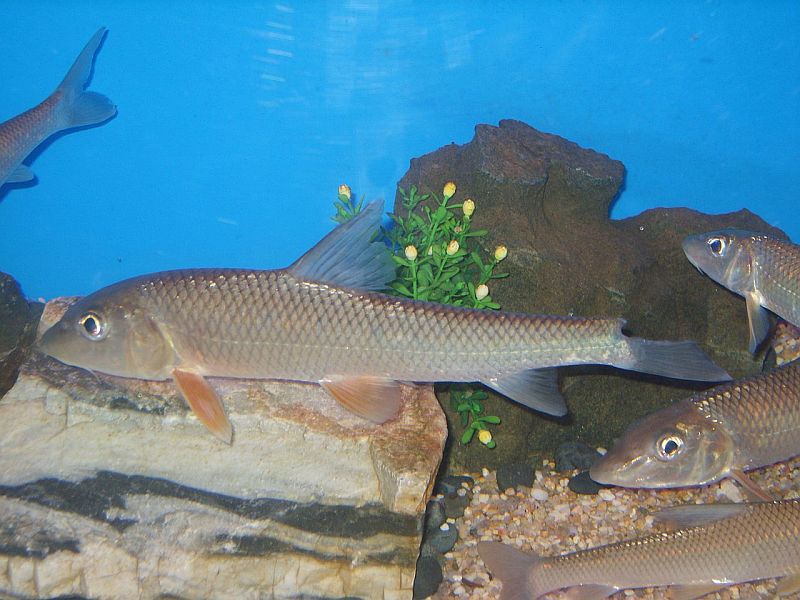
Hemibarbus labeoBarbel Steed
Pallas, 1776
Max length450mm SL18in SLTanknot recordedTempnot recordedpHnot recordedThis species can be distinguished from other members of the genus by the following combination of characters: absence of dark spots on body in adults; body elongate with slightly convex dorsal profile; head longer than body is deep; snout much longer than postorbital head length; lips well developed, lateral lobes of lower lip broad and thick with folds, median process small; barbel thickness shorter or equal to eye diameter; dorsal spine strong, ⅔ of HL; dorsal-fin origin closer to tip of snout than caudal-fin base base; 15+ gill rakers; 6½ branched anal-fin rays; posterior simple dorsal-fin rays ossified and spinous.
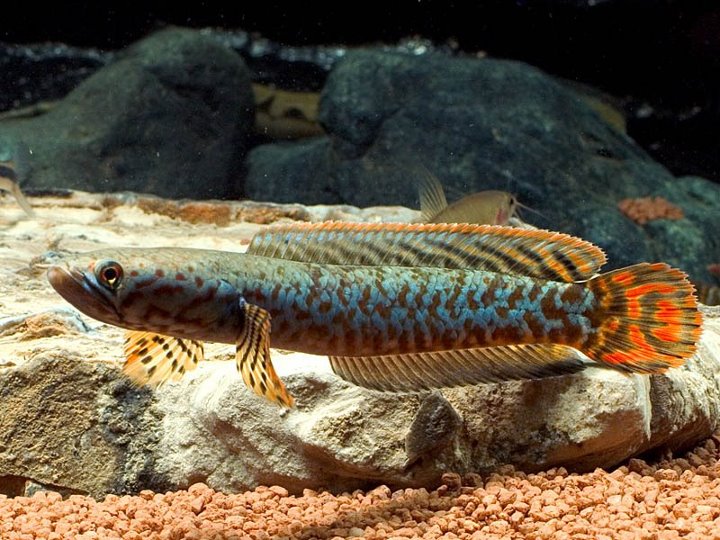
Channa bleheriRainbow snakehead
Vierke, 1991
Max length170mm SL7in SLTank120 × 30cm48 × 12inTemp14–28°C57–82°FpH6.0–8.0C. bleheri is a popular aquarium fish though it remains unclear whether collection for the ornamentaol trade is having a detrimental effect on wild populations (see 'Habitat'). It's one of several genus members to lack pelvic fins and can be further distinguished from other Channa species by the following combination of characters: sides of lower jaw with one large cycloid scale; lateral line complete with 46-50 scales; 14 pectoral-fin rays; 25 anal-fin rays; 4-11 irregular reddish orange markings on the caudal-fin
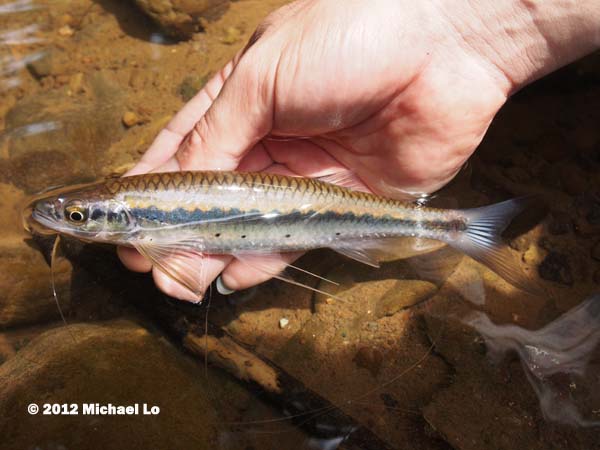
Luciosoma pellegrinii
Popta, 1905
Max length170mm SL7in SLTanknot recordedTempnot recordedpHnot recordedThe five species which currently comprise Luciosoma can be distinguished by elements of colour pattern. Popta described the colour pattern of L. pellegrinii as follows: body colour olive dorsally, with dark-edged scales, yellow ventrally; a lateral series of dark spots on the flank forming a midlateral band which extends onto the opercle but not the head; 4-8 blackish-brown, distinctly-separate spots on the lateral line; fins yellow; dorsal and anal fins with a blackish-brown band; anterior half of some pectoral-fin rays blackish-brown...
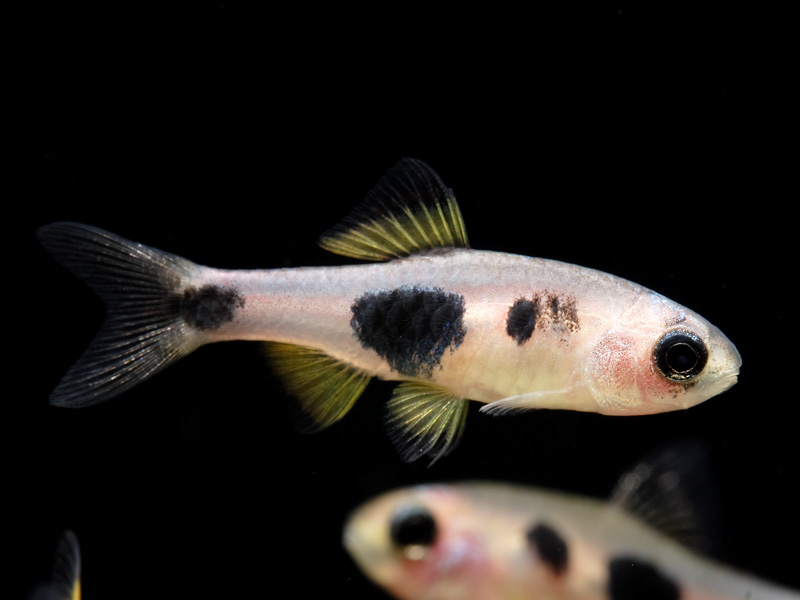
'Barbus' hulstaertiAfrican Butterfly Barb
Poll, 1945
Max length35mm SL1.4in SLTank45 × 30cm18 × 12inTemp17–24°C63–75°FpH5.0–6.5Two closely-related species are also found in the Congo basin and infrequently seen in the trade. 'B.' candens has been collected northeast of the range of 'B.' hulstaerti around the city of Kisangani (formerly Stanleyville) and nearby town of Yangambi. It can be distinguished from 'B.' hulstaerti by its paler body colouration, smaller dark markings on the body and red ventral and anal fins in males. 'B.' papillo is known only from its type locality close to the eastern town of Kindu between the Lualaba and Lomami rivers. It has an elongated central body marking and males possess black dorsal, ventral and anal fins.
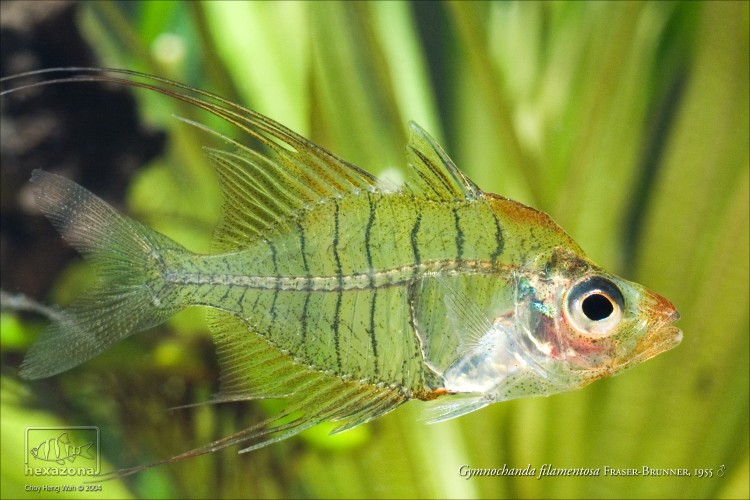
Gymnochanda filamentosa
Fraser-Brunner, 1955
Max length32mm SL1.3in SLTank60 × 30cm24 × 12inTemp20–28°C68–82°FpH4.0–6.0G. filamentosa has appeared in the ornamental trade but is evidently delicate and therefore recommended only to experienced aquarists. It can be told apart from congeners by the following combination of characters: possession of filamentous dorsal and anal-fin rays in males; body transparent to translucent yellowish-brown colour in life; absence of a highly-extended second anal-fin spine; absence of carmine-red pigmentation in the dorsal, anal an...
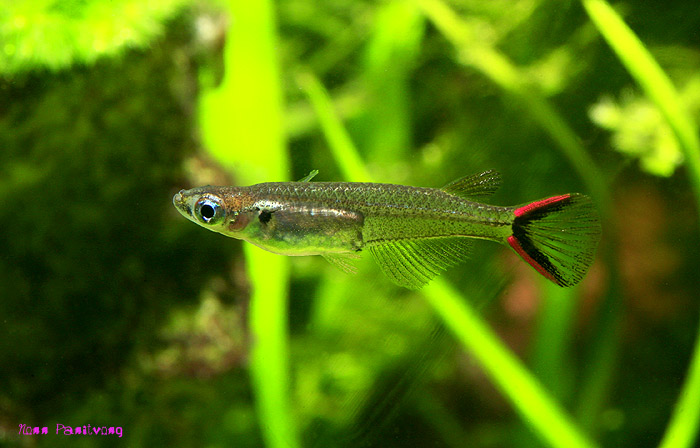
Oryzias mekongensisMekong Ricefish
Uwa & Magtoon, 1986
Max length21mm SL0.8in SLTank40 × 20cm16 × 8inTemp23–27°C73–81°FpH6.0–7.5It can be further distinguished from congeners by the following combination of characters: small adult size; bright orange-red marginal bands on caudal-fin lobes in males; caudal-fin rounded and elongate; 5-7 dorsal-fin rays; relatively few (13-18) anal-fin rays without bony contact organs, the last ray branched; 6-8 pectoral-fin rays. Members of the family Adrianichthyidae are...
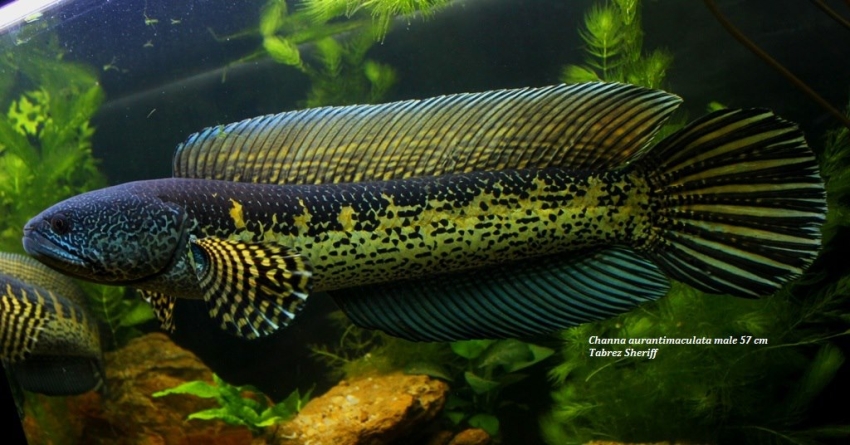
Channa aurantimaculataOrange-spotted Snakehead
Musikasinthorn, 2000
Max length400mm SL16in SLTank150 × 60cm60 × 24inTemp10–28°C50–82°FpH6.0–8.0This species is also traded as 'golden cobra snakehead' and is available in the aquarium trade on a regular basis. It can be distinguished from other Channa species by the following combination of characters: 51-54 lateral line scales; 45-47 dorsal-fin rays; 28-30 anal-fin rays; 8-12 cheek scales; 50-52 total verte...
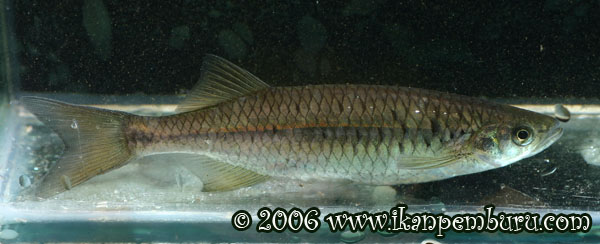
Nematabramis alestes
Seale & Bean, 1907
Max length105mm SL4in SLTanknot recordedTempnot recordedpHnot recordedN. alestes is the only member of the genus in which the barbels are shorter than the head, with additional diagnostic characters as follows: 8-9 branched dorsal-fin rays; 12-14 branched anal-fin rays; 22-23 predorsal scales; body with a pronounced ventral keel.
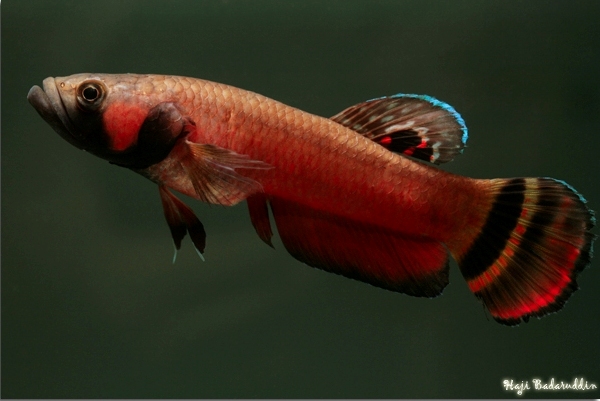
Betta macrostomaBrunei Beauty
Regan, 1910
Max length100mm SL3.9in SLTank80 × 30cm31 × 12inTemp20–25°C68–77°FpH4.0–6.0B. macrostoma is included in the Betta unimaculata complex of closely-related species within the genus, of which members share the following set of characters: body long and slender with depth at dorsal fin origin 18-25 % SL; head large and blunt with width 19-24 % SL; long maxilla and lower lip with distance from tip of lower jaw to posterior end of maxilla 27-54 % HL; caudal-fin rounded in shape, occasionally with elongated median rays; pelvic-fin short and filamentous; dorsal and anal fins relatively pointed.
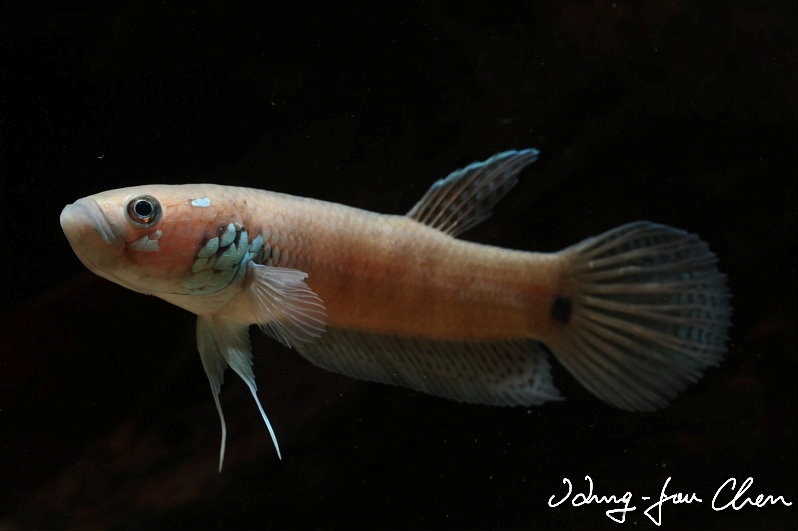
Betta ocellata
de Beaufort, 1933
Max length90mm SL3.5in SLTank80 × 30cm31 × 12inTemp21–25°C70–77°FpH5.5–7.5This species is included in the Betta unimaculata complex of closely-related species within the genus, of which members share the following set of characters: body long and slender with depth at dorsal fin origin 18-25 % SL; head large and blunt with width 19-24 % SL; long maxilla and lower lip with distance from tip of lower jaw to posterior end of maxilla 27-54 % HL; caudal-fin rounded in shape, occasionally with elongated median rays; pelvic-fin short and filamentous; dorsal and anal fins relatively pointed.
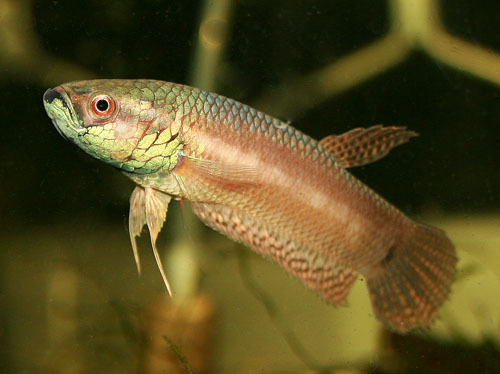
Betta pallifina
Tan & Ng, 2005
Max length90mm SL3.5in SLTanknot recordedTemp22–27°C72–81°FpH5.5–7.5This species is included in the Betta unimaculata complex of closely-related species within the genus, of which members share the following set of characters: body long and slender with depth at dorsal fin origin 18-25 % SL; head large and blunt with width 19-24 % SL; long maxilla and lower lip with distance from tip of lower jaw to posterior end of maxilla 27-54 % HL; caudal-fin rounded in shape, occasionally with elongated median rays; pelvic-fin short and filamentous; dorsal and anal fins relatively pointed.
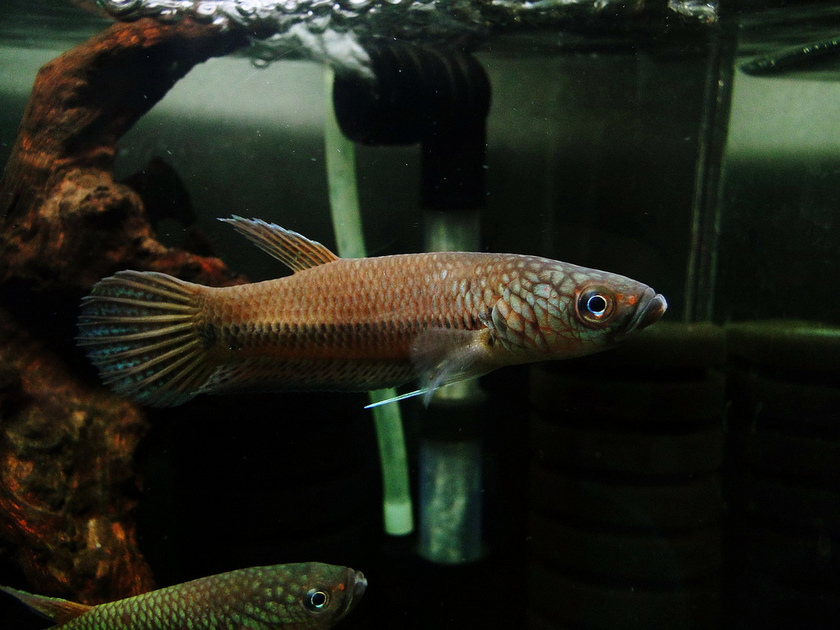
Betta sp. 'Antuta/Bulungan'
authority not recorded
Max length100mm SL3.9in SLTank80 × 30cm31 × 12inTemp21–27°C70–81°FpH5.5–7.5This hypothetically-undescribed species appears to be a member of the Betta unimaculata complex of closely-related species within the genus, of which members share the following set of characters: body long and slender with depth at dorsal fin origin 18-25 % SL; head large and blunt with width 19-24 % SL; long maxilla and lower lip with distance from tip of lower jaw to posterior end of maxilla 27-54 % HL; caudal-fin rounded in shape, occasionally with elongated median rays; pelvic-fin short and filamentous; dorsal and anal fins relatively pointed.
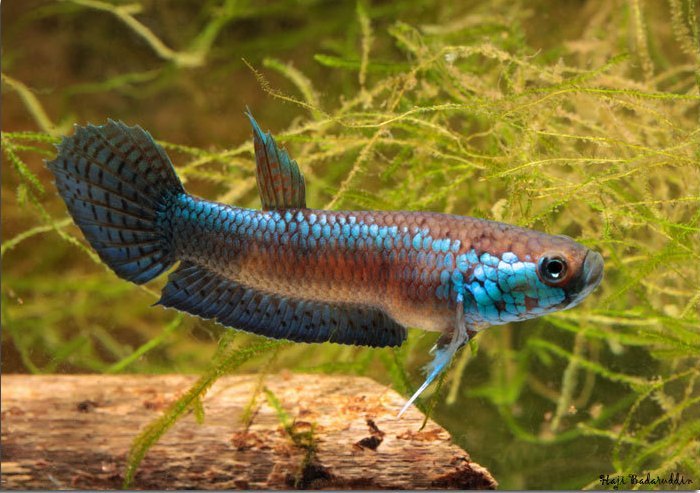
Betta unimaculata
Popta, 1905
Max length115mm SL5in SLTank80 × 30cm31 × 12inTemp21–26°C70–79°FpH5.0–7.5This species is included in the Betta unimaculata complex of closely-related species within the genus, of which members share the following set of characters: body long and slender with depth at dorsal fin origin 18-25 % SL; head large and blunt with width 19-24 % SL; long maxilla and lower lip with distance from tip of lower jaw to posterior end of maxilla 27-54 % HL; caudal-fin rounded in shape, occasionally with elongated median rays; pelvic-fin short and filamentous; dorsal and anal fins relatively pointed.
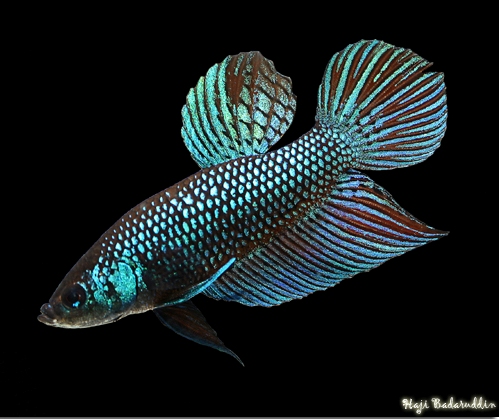
Betta smaragdinaEmerald Betta
Ladiges, 1972
Max length60mm SL2.4in SLTank45 × 30cm18 × 12inTemp22–28°C72–82°FpH5.5–7.5This species is included in the Betta splendens complex of closely-related species within the genus, of which members share the following set of characters: head length short 22-31 % SL; often a brightly-coloured body; iris of the eye with iridescent green or blue patches; body elongate or slender; opercles parallel when head viewed dorsally; caudal-fin rays red or brown and contrasting with the iridescent interradial membranes; unpaired fins without an iridescent margin; opercle with red or blue vertical bars in males; dorsal-fin rays 0-II, 7-9; anal-fin rays II-V, 21-26.
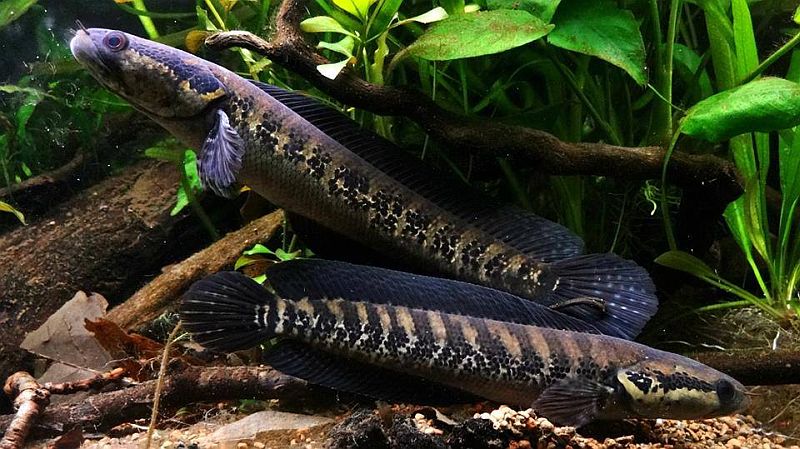
Parachanna africana
Steindachner, 1879
Max length300mm SL12in SLTank120 × 60cm48 × 24inTemp20–25°C68–77°FpH5.0–7.5Following Bonou and Teugels (1985), P. africana can be distinguished from congeners by the following combination of characters: colour pattern unique, comprising a series of 8-11 dark, chevron-shaped markings extending along the body posterior to the pectoral fins; 19-24 scales in the transverse series; lateral line complete with 73-83 pored scales; 45-48 dorsal-fin rays 45-48; 32-35 anal-fin rays.
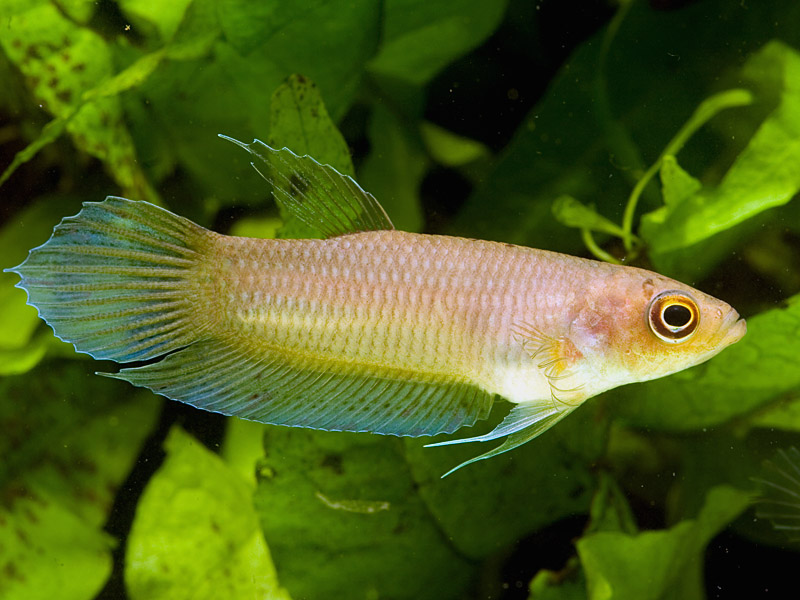
Betta hipposideros
Ng & Kottelat, 1994
Max length80mm SL3.1in SLTank80 × 30cm31 × 12inTemp22–28°C72–82°FpH3.5–6.0The easiest way to distinguish these is by examining the throat markings, which vary according to species, and in the case of B. hipposideros form a black horse-shoe shape. It can also be separated from other group members by the following suite of characters: dark blotch on throat joined to black lower lip; presence of transverse bars in dorsal and caudal fins; absence of dark margin in anal-fin; opercle usually with gold scales, without iridescrent green scales; ventral margin of opercle brown; 6.5-7 subdorsal scales (mode 6.5); 9-10 postdorsal scales (mode 9.5); 31-32 lateral scales (mode 32).
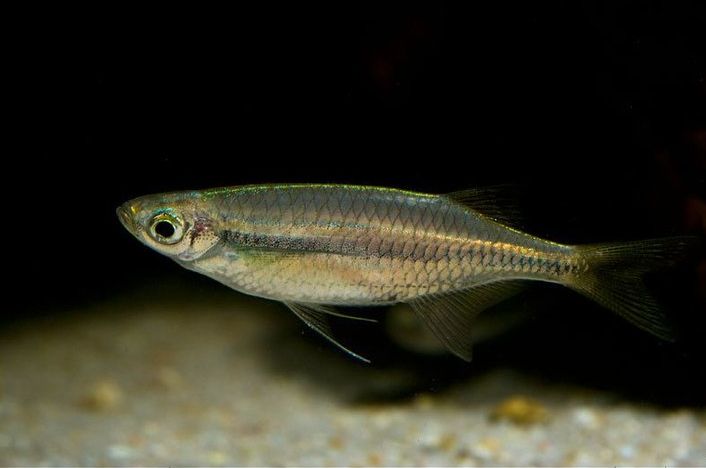
Laubuka fasciataMalabar Hatchet Chela
Silas, 1958
Max length50mm SL2.0in SLTank120 × 30cm48 × 12inTemp20–26°C68–79°FpH6.5–7.5It can be distinguished from other members of the genus by the following characters: dark longitudinal stripe on body, extending from eye to caudal peduncle; scattered tubercles present on lower jaw; 14½-16½ branched anal-fin rays; pelvic-fin long, reaching beyond anus.
Melanotaenia irianjayaIrian Jaya Rainbowfish
authority not recorded
Max length120mm SL5in SLTank90 × 30cm36 × 12inTemp23–26°C73–79°FpH6.5–8.0This beautiful rainbow is not often seen in the hobby. It can be identified by the fact that the middle rays in the dorsal and anal fins are longer than the other fin rays. This feature is usually associated with the closely-realated Glossolepis genus of rainbowfish....
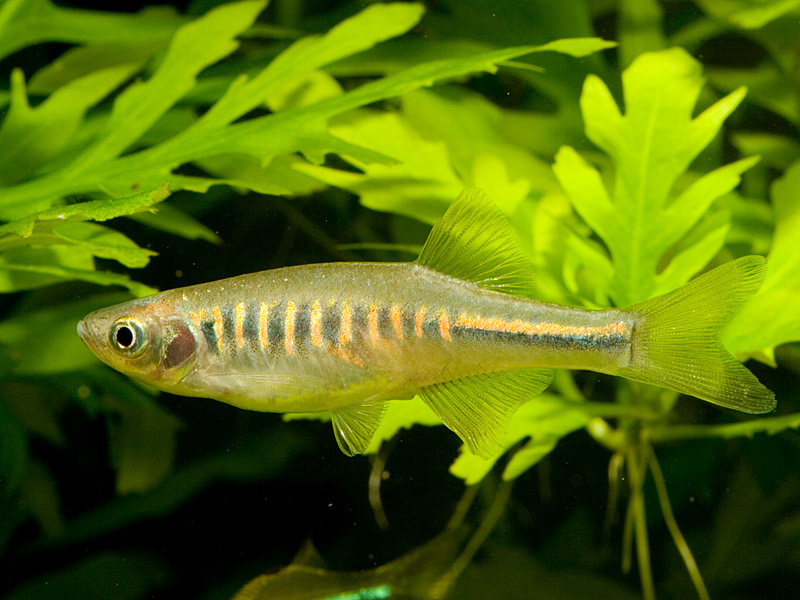
'Inlecypris' shanensis
Hora, 1928
Max length60mm SL2.4in SLTank80 × 30cm31 × 12inTemp18–26°C64–79°FpH6.0–8.0This species is sometimes referred to as 'Hora danio' or Salween danio'. It is distinguished from similar-looking species by a combination of characters as follows: lateral line complete or incomplete with 22-33 pored scales; absence of infraorbital process; 7 branched dorsal-fin rays; usually 10 or 11 branched anal-fin rays; barbels absent or rudimentary; flank markings comprising a series of narrow vertical bars on the anterior portion of each flank, fol...
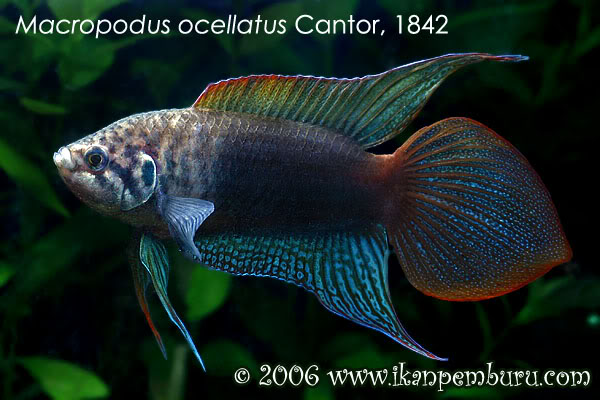
Macropodus ocellatusRoundtail Paradise Fish
Cantor, 1842
Max length80mm SL3.1in SLTank80 × 30cm31 × 12inTemp10–22°C50–72°FpH6.0–7.5M. ocellatus can be distinguished from congeners by the following combination of characters: caudal-fin rounded; eye stripe not connecting spot on posterior projection of opercle with eye; dorsal-fin rays filamentous posterior to a vertical through the posterior anal-fin rays in adults; 16-19 spinous dorsal-fin rays; 6-13 rakers on ceratobranchial of first gill arch; posterior tip or margin of body scales not darker than scales.