Results for “aquarium”
Type a name: scientific, common, or one a species used to go by. Or narrow the catalogue with the filters.
Filters
Piaractus brachypomusRed-bellied Pacu
authority not recorded
Max length880mm SL35in SLTank300 × 90cm118 × 36inTemp23–28°C73–82°FpH4.8–7.5Know as the pirapitinga in its native countries, this is the one of the largest species of scaled fish found in the Amazon basin. This alone should tell you much of what you need to know about its suitability as an aquarium inhabitant. In reality it's debatable as to whether the species should be considered an aquarium subject at all. While pacu rarely reach their maximum size in captivity, they're still easily capable of growing to a couple of feet in length. The myth that fish will o...
Platystacus cotylephorusBanded Banjo Catfish
authority not recorded
Max length320mm SL13in SLTank120 × 30cm48 × 12inTemp22–25°C72–77°FpH6.0–8.2Not a particularly good catfish for the general community tank, as it's a largely inactive, secretive species that will only emerge and become active under cover of darkness. It is, nonetheless, an interesting aquarium subject for the enthusiast, exhibiting an incredible degree of camouflage. It's designed to resemble a dead leaf, and usually will not even swim to escape a net. When released into the aquarium will simply drift in the current until it hits the bottom. All members of the...
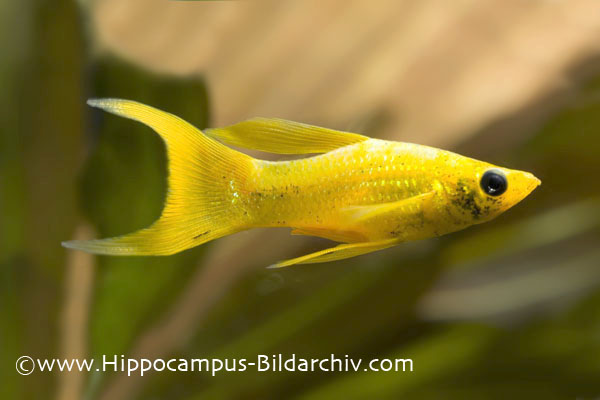
Poecilia latipinnaSailfin Molly
Lesueur, 1821
Max length125mm SL5in SLTank76 × 38cm30 × 15inTemp21–26°C70–79°FpH7.0–8.5The wild fish can exhibit several different types of patterning. P. latipinna has been selectively bred into many different colour morphs for the aquarium trade, and has also been crossbred with other molly species, particularly P. sphenops. They will also interbreed readily in the aquarium and in order to avoid this we suggest keeping only one species of molly per tank. There also exists a (in our opinion) grotesque 'balloon' variety of this fish in which the body is malformed and rou...
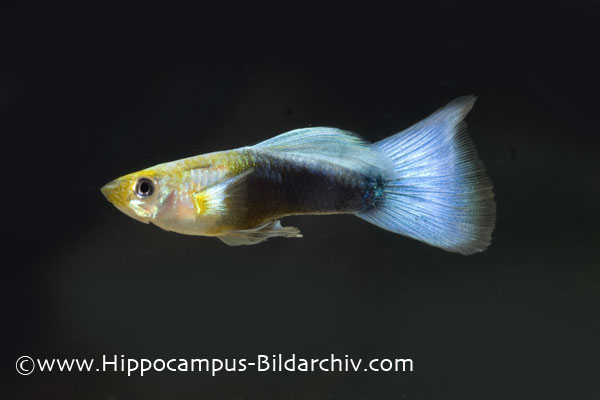
Poecilia reticulataGuppy
Peters, 1859
Max length60mm SL2.4in SLTank45 × 30cm18 × 12inTemp17–28°C63–82°FpH7.0–8.5One of the most popular aquarium fish in the world, the guppy is instantly recognisable to most people. There are many aquarium bred varieties of this species available, most have elongated finnage and gaudy colouration. The wild form is seldom seen for sale. Unfortunately many commercially bred guppies are not very hardy due to inbreeding and over-production and are prone to disease and premature death. We therefore recommend the purchase of quality stock from breeders or society auctions. P. ...
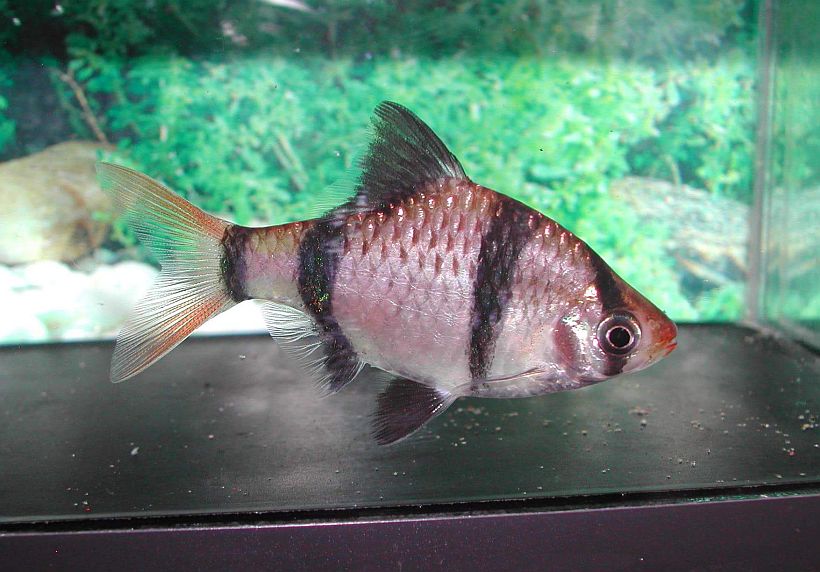
Puntigrus tetrazonaTiger Barb
Bleeker, 1855
Max length60mm SL2.4in SLTank80 × 30cm31 × 12inTemp20–26°C68–79°FpH5.0–8.0P. tetrazona is traditionally considered to be among the most ubiquitous species available in the aquarium trade. Wild examples are rarely traded, however, and there exists ongoing confusion as to the identity of the commercially-produced 'aquarium' tiger barb. A number of selectively-bred, ornamental strains are available. The albino, 'green' (aka 'moss'), and 'golden' (leucistic) variants are particularly pop...
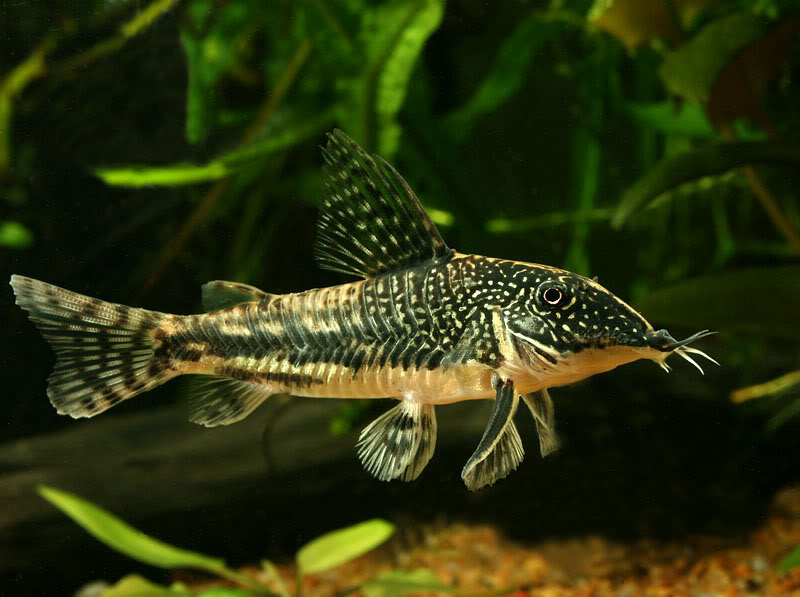
Scleromystax barbatusBanded 'Cory'
Quoy & Gaimard, 1824
Max length100mm SL3.9in SLTank120 × 45cm48 × 18inTemp16–24°C61–75°FpH5.5–7.5Scleromystax spp. are foraging omnivores, and most will accept sinking dried foods as well as small live and frozen varieties such as chironomid larvae (bloodworm), Tubifex, etc. Feeding a varied diet will ensure the fish are in optimum condition. Under no circumstances should they be expected to survive on 'left-overs' from other inhabitants of the aquarium or relied on to 'clean' the aquarium.
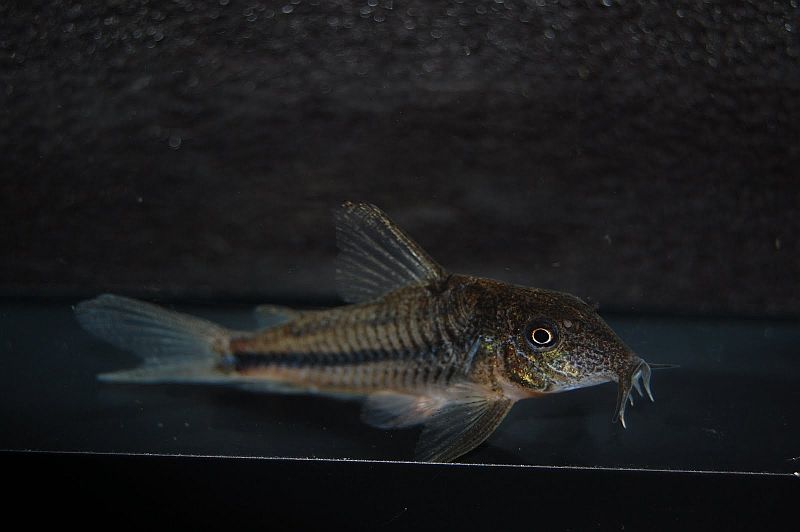
Scleromystax prionotos
Nijssen & Isbrücker, 1980
Max length65mm SL2.6in SLTank120 × 30cm48 × 12inTemp16–24°C61–75°FpHnot recordedScleromystax spp. are foraging omnivores, and most will accept sinking dried foods as well as small live and frozen varieties such as chironomid larvae (bloodworm), Tubifex, etc. Feeding a varied diet will ensure the fish are in optimum condition. Under no circumstances should they be expected to survive on 'left-overs' from other inhabitants of the aquarium or relied on to 'clean' the aquarium.
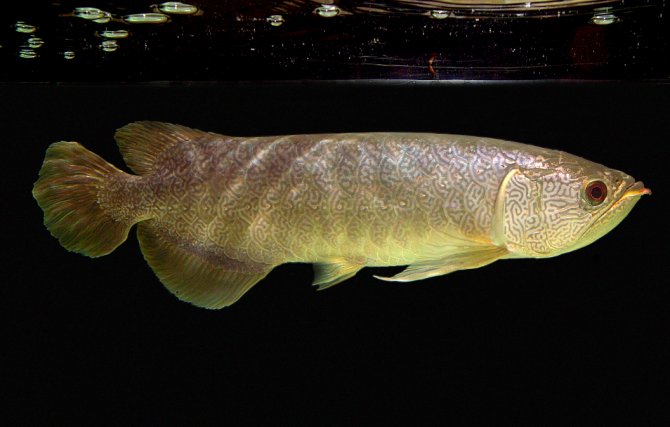
Scleropages inscriptus
Roberts, 2012
Max length600mm SL24in SLTanknot recordedTempnot recordedpHnot recordedThis species' distribution is unclear although individuals from the aquarium trade are said to have been collected in the Tenasserim river basin in Tananthayi Region, southern Myanmar. Type locality is 'supposedly from Tananthayi district, Tananthayi River basin, obtained dead from aquarium fish vendor at Meik'.
Sperata aorIndian Shovelnose Catfish
authority not recorded
Max length1800mm SL71in SLTank720 × 180cm283 × 72inTemp20–25°C68–77°FpH6.0–7.0This "shovelnose" is unique amongst bagrids, but superficially resembles several unrelated South American catfish species. It's common name is derived from it's flattened, extended head. We cannot stress strongly enough that this is a species totally unsuited to aquarium life. Alarmingly, it is can sometimes be spotted in dealer's tanks. When small, it makes an interesting and undeniably impressive addition to a large aquarium but bearing in mind its enormous adult size,...
Synodontis pleuropsBig Eyed Synodontis
authority not recorded
Max length230mm SL9in SLTank120 × 30cm48 × 12inTemp22–26°C72–79°FpH6.0–7.0S. pleurops is a very nocturnal species and unless the light in the aquarium is dim will rarely be seen. It is also very distinctive and is hard to confuse with other species. It has very large eyes and a downturned mouth, denoting its algae grazing habits. It will rarely venture into open water in the aquarium, preferring to hug the surface of pieces of driftwood, rocks and broad plant leaves. The colouration and patterning can vary considerably depending on type locality....
Trichopodus leeriiPearl Gourami
authority not recorded
Max length120mm SL5in SLTank90 × 30cm36 × 12inTemp24–30°C75–86°FpH5.5–8.0A very hardy, beautiful species which is highly recommended to the beginner. A male in full breeding dress is one of the most stunning fish available in the hobby. T. leerii is alo fairly long-lived and may survive for 8 years or more in the aquarium. These fish will also consume the aquarium pest hydra....
Tropheus brichardi
authority not recorded
Max length115mm SL5in SLTanknot recordedTemp23–27°C73–81°FpH8.0–9.5Like others in the genus, Tropheus brichardi is something of an enigma in the aquarium hobby, and is not a good species for the beginner. There has been much arguement and discussion about how best to maintain it in the aquarium, and some of these debates still rage on. We have provided the generally accepted method of keeping the fish, but in reality what works for one aquarist may not for another. One aspect which is always true is that water quality is of the utmost importance in a Tropheus t...
Tropheus duboisiWhite-Spotted Cichlid
authority not recorded
Max length120mm SL5in SLTanknot recordedTemp23–27°C73–81°FpH8.0–9.5Like others in the genus, Tropheus duboisi is something of an enigma in the aquarium hobby and despite it's popularity, is not a good species for the beginner. There has been much arguement and discussion about how best to maintain it in the aquarium, and some of these debates still rage on. We have provided the generally accepted method of keeping the fish, but in reality what works for one aquarist may not for another. One aspect which is always true, is that water quality is of the utmos...
Tropheus moorii
authority not recorded
Max length145mm SL6in SLTanknot recordedTemp23–27°C73–81°FpH8.0–9.5Like others in the genus, Tropheus moorii is something of an enigma in the aquarium hobby, and despite it's popularity is not a good species for the beginner. There has been much arguement and discussion about how best to maintain it in the aquarium, and some of these debates still rage on. We have provided the generally accepted method of keeping the fish, but in reality what works for one aquarist may not for another. One aspect which is always true, is that water quality is of the utmost...
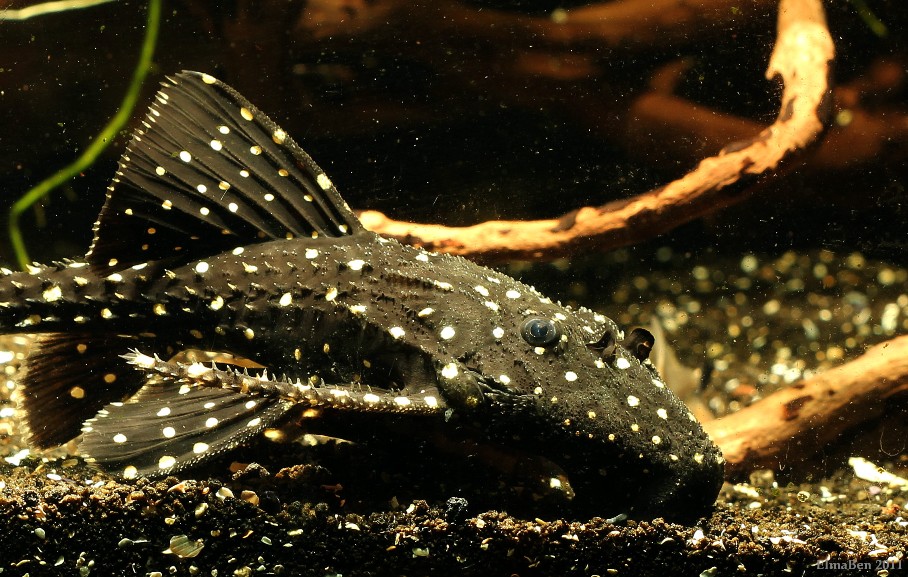
Acanthicus adonisPolka Dot Lyre Tail Pleco
Isbrücker & Nijssen, 1988
Max length1000mm SL39in SLTank600 × 200cm236 × 79inTemp23–30°C73–86°FpH6.0–7.5Despite its patent unsuitability as an aquarium subject attractively-coloured juvenile specimens of this species are traded in quite large numbers, although the scarcity of privately-maintained adults would suggest that most fail to reach their potential. The striking, spotted patterning also disappears as this species matures, and since it also becomes increasingly bellligerent with age it can only be recommended to owners of the largest private aquaria or tropical ponds. There exists an albino...
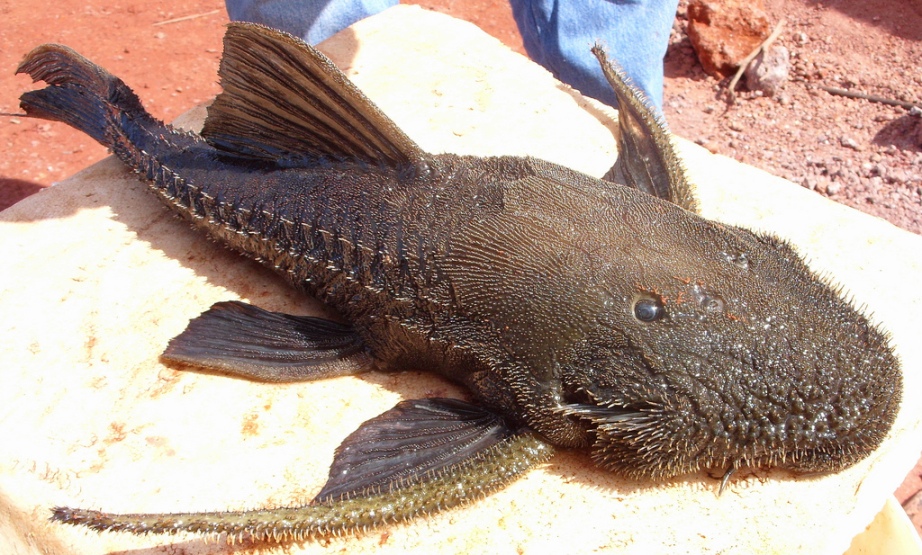
Acanthicus hystrixL155
Spix & Agassiz, 1829
Max length1000mm SL39in SLTank600 × 200cm236 × 79inTemp23–30°C73–86°FpH6.0–7.5Despite its patent unsuitability as an aquarium subject attractively-coloured juvenile specimens of this species are traded in quite large numbers, although the scarcity of privately-maintained adults would suggest that most fail to reach their potential. The striking, spotted patterning also disappears as this species matures, and since it also becomes increasingly bellligerent with age it can only be recommended to owners of the largest private aquaria or tropical ponds. There exists an albino...
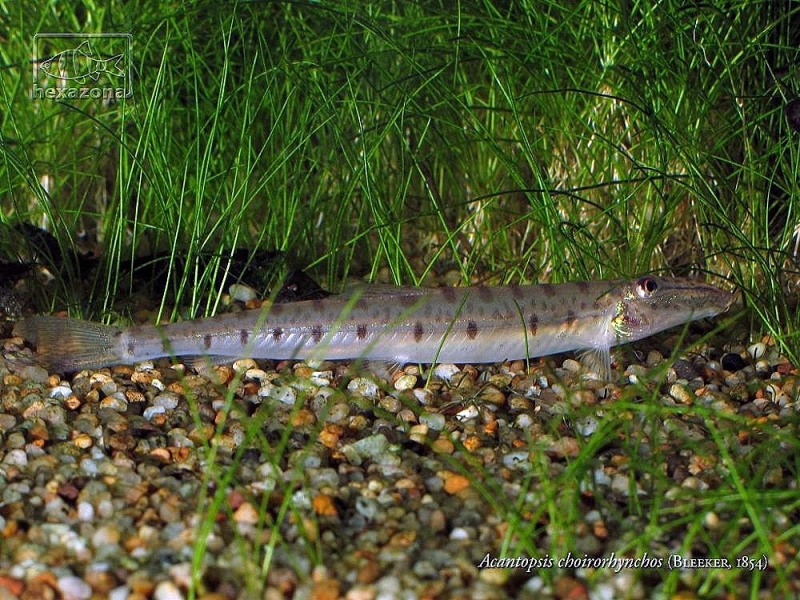
Acantopsis dialuzonaHorseface Loach
van Hasselt, 1823
Max length200mm SL8in SLTank120 × 45cm48 × 18inTemp16–24°C61–75°FpH6.0–8.0Juveniles of this 'species' (probably a group of species - see 'distribution') are traded in large numbers but it's still uncommon to see adult specimens in the hobby suggesting their needs are not catered for often enough. This is a shame as when maintained properly they're hardy, long-lived and interesting aquarium residents. Other trade names include 'long-nosed' and 'banana' loach. Please note although certain that more than one species is being tr...
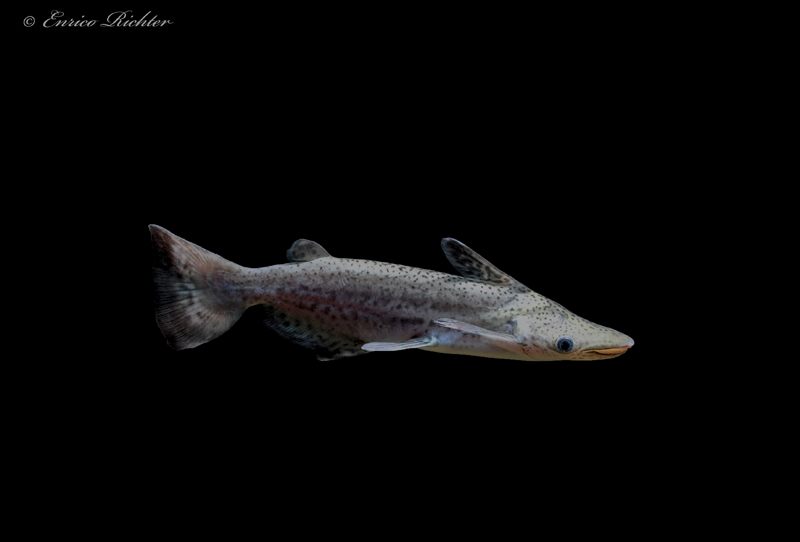
Ageneiosus marmoratusBottlenose Catfish
Eigenmann, 1912
Max length185mm SL7in SLTank150 × 60cm60 × 24inTemp22.5–26°C73–79°FpH6.0–7.0This species may also be seen on sale as 'Guyana slopehead catfish' 'dolphin catfish' or 'hammerhead catfish'. The attractive juvenile patterning is largely lost as the fish grow but this nevertheless remains an impressive predatory species for the larger aquarium. The genus Ageneiosus was at one point classified in the family Ageneiosidae alongside the genus Tetranematichthys, but this was not accepted by all...
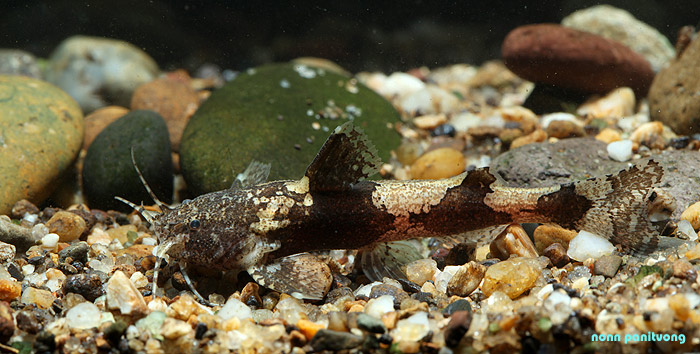
Akysis hendricksoniHendrickson's Stream Catfish
Alfred, 1966
Max length50mm SL2.0in SLTank45 × 30cm18 × 12inTemp16.5–24°C62–75°FpH6.0–7.2This species is among the few members of the family to have been exported for the aquarium hobby. It can be differentiated from all other Akysis species by the following combination of characters: head length 17.7-26.5% of standard length (SL); head width 25.4-28.7% SL; body depth at anus 13.0-17.0% SL; caudal peduncle depth 8.1-10.1% SL; interorbital di...
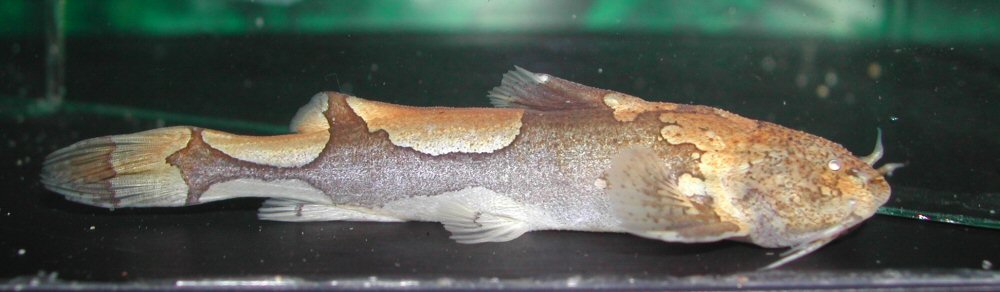
Akysis longifilisSittaung Stream Catfish
Ng, 2006
Max length53mm SL2.1in SLTank45 × 30cm18 × 12inTemp16.5–24°C62–75°FpH6.0–7.5This species is among the few members of the family to have been exported for the aquarium hobby. It can be differentiated from all other Akysis species by the following combination of characters: base of...