Results for “derived”
Type a name: scientific, common, or one a species used to go by. Or narrow the catalogue with the filters.
Filters
Macrognathus zebrinusZebra Spiny Eel
authority not recorded
Max length460mm SL18in SLTank120 × 45cm48 × 18inTemp23–26°C73–79°FpH6.5–7.5One of the newer and prettier spiny eels in the hobby, M. zebrinus was previously considered a member of the closely related Mastacembelus genus. Care should be exercised when handling spiny eels, as the common name is derived from the sharp dorsal rays that can easily puncture the skin of a human....
Nanochromis transvestitus
authority not recorded
Max length70mm SL2.8in SLTanknot recordedTemp24–27°C75–81°FpH4.0–7.0One of our favourite dwarf cichlids, N. transvestitus is a truly stunning fish when in good condition. However, it is not recommended to the beginner due to its very specific water requirements. The scientific name is derived from the fact that the female is the more colourful fish, making it something of an oddity....
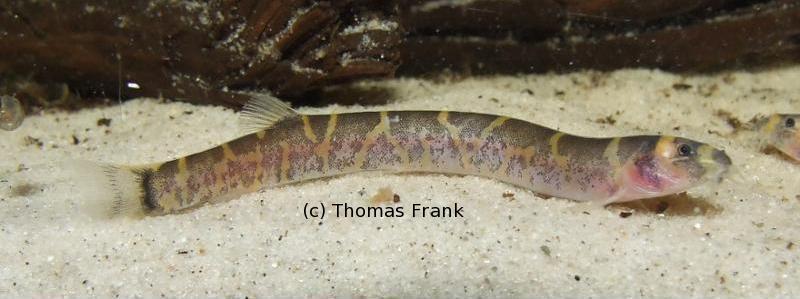
Pangio sp. 'PAN03'
authority not recorded
Max length80mm SL3.1in SLTank60 × 30cm24 × 12inTemp21–26°C70–79°FpH3.5–7.0Pangio species are often generically referred to as 'kuhli' or 'coolie' loaches in the aquarium hobby, the latter a variation of the former which was itself derived from the surname of German naturalist Heinrich Kuhl (1797-1821). Ichthyo...
Pantodon buchholziAfrican Butterfly Fish
authority not recorded
Max length120mm SL5in SLTank90 × 30cm36 × 12inTemp23–30°C73–86°FpH6.0–7.5The common name of this surface-dwelling species is derived from it's appearance when viewed from above, the large pectoral fins giving it the appearance of a butterfly. In reality, these fins serve a dual purpose. They help to camouflage the fish, making it look like a dead leaf floating on the surface, and along with the caudal fin, power the incredible jumps that it is capable of making. The fish jumps from the water to catch flying insects or to escape potential predators and it can mak...
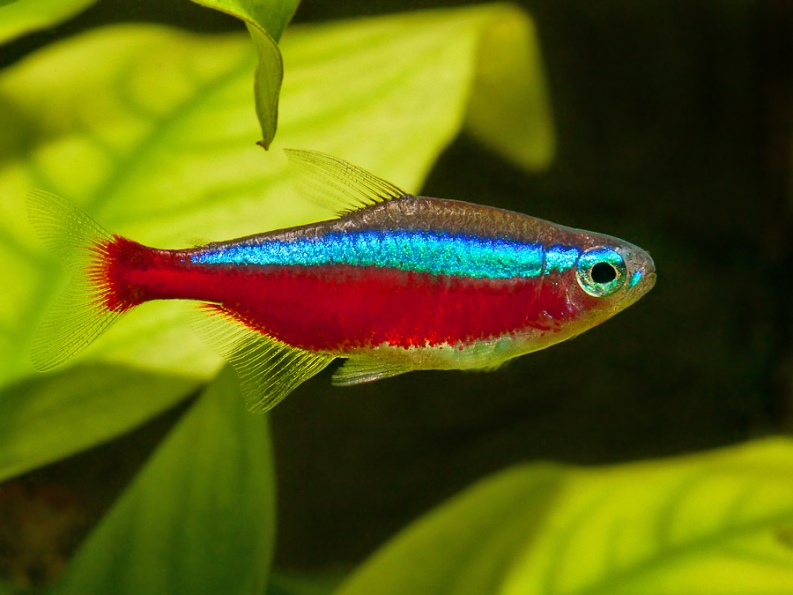
Paracheirodon axelrodiCardinal Tetra
Schultz, 1956
Max length35mm SL1.4in SLTank60 × 30cm24 × 12inTemp23–29°C73–84°FpH3.5–7.5It was initially going to be described as Hyphessobrycon cardinalis by Myers and Weitzman (1956) but just before this was due to be published Schultz presented an alternative description in the hobbyist magazine 'Tropical Fish Hobbyist' and named the fish after the publication's founder, Dr. Herbert R. Axelrod. A significant proportion of the fish available in the aquarium trade are still wild caught or derive from community-led breeding projects such as Project Piaba in the middle Negro region, where this sp...
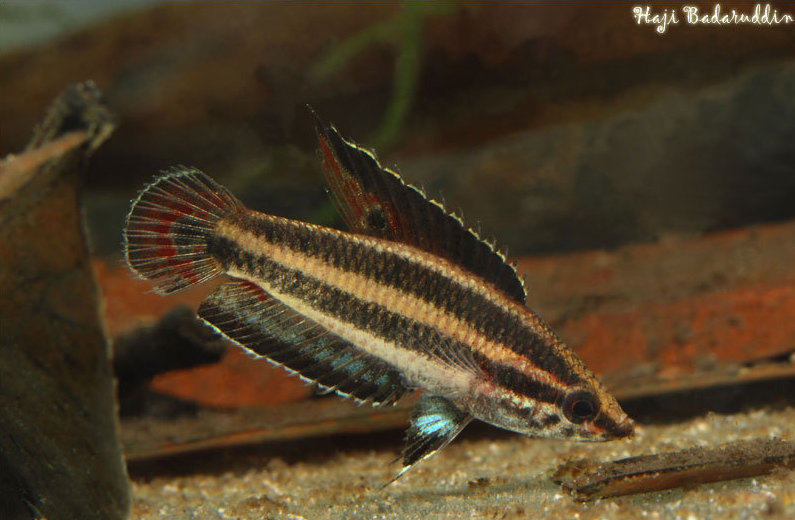
Parosphromenus allani
Brown, 1987
Max length35mm SL1.4in SLTank40 × 20cm16 × 8inTemp22–28°C72–82°FpH3.0–6.5Type locality is given only as 'Sarawak state, Borneo, East Malaysia', with the material deriving from Sibu Division in western Sarawak. It's since been recorded at other localities within Sarawak, to which it appears endemic, but it remains unclear whether all represent a single species or not with those from the area around Lundu in northwestern Kuching Division in par...
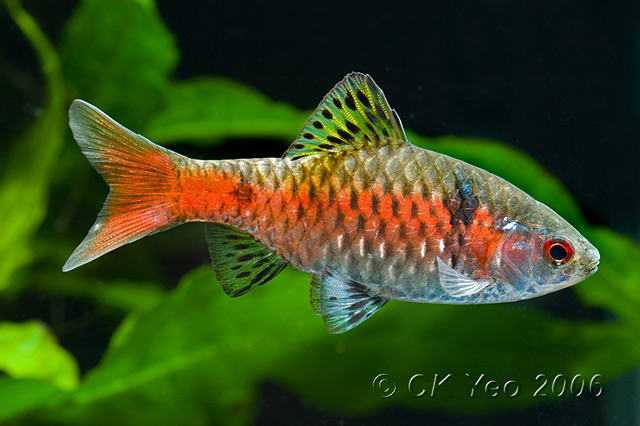
Pethia padamyaOdessa Barb
Kullander & Britz, 2008
Max length46mm SL1.8in SLTank80 × 30cm31 × 12inTemp16–25°C61–77°FpH6.5–8.5This species has been in the aquarium trade since the early 1970s but its precise origin was a mystery until 2003. It first appeared in Ukraine, the common name 'Odessa' being derived from the port city of that name, and when it arrived in western Europe was widely considered a hybrid of similar-looking congeners such as P. conchonius, P. ticto and P. cumingii. It was also hypothesised as a subspecies of P. ticto or P. conchonius, and some suggested the fish to be artificially dyed.
Placidochromis electraDeepwater Hap
authority not recorded
Max length200mm SL8in SLTank120 × 45cm48 × 18inTemp24–28°C75–82°FpH7.6–8.8The common name is derived from the fact that it was previously thought to be found only in much deeper water than we now know it inhabits. In nature, P. electra feeds from the surface of the substrate on invertebrates and other morsels stirred up by the action of digging substrate feeders such as Taeniolethrinops praeorbitalis. It is attracted to the clouds of sediment thrown up by these species. Several colour forms exist and these should not be kept together in aquaria as they may hybridis...
Platydoras armatulusHumbug Catfish
authority not recorded
Max length240mm SL9in SLTank120 × 30cm48 × 12inTemp24–30°C75–86°FpH5.8–7.5This popular species is also sold as the striped dora, striped raphael or striped talking catfish. It's often seen as an ideal beginner's cat, being hardy and tolerant of a wide range of water conditions. However its secretive nature, adult size and tendency to snack on smaller tankmates mean it should only be considered for communities of larger fish. The 'talking catfish' moniker is derived from the fish's ability to produce sounds when communicating with conspecif...
Rasbora caudimaculataGreater Scissortail Rasbora
authority not recorded
Max length150mm SL6in SLTank150 × 45cm60 × 18inTemp20–26°C68–79°FpHnot recordedThis striking species may also be seen on sale with the trade name of 'red scissortail'. It can be distinguished from the similar-looking R. trilineata by the presence of orange/red colouration in the with other diagnostic features including black tips to the caudal lobes, 11-12 predorsal scale rows and a dark reticulated pattern to the edges of the scales. The 'scissortail' moniker is derived from the characteristic twitching motion of the when the fish is at rest. Rainb...
Rasbora trilineataScissortail Rasbora
authority not recorded
Max length150mm SL6in SLTank120 × 45cm48 × 18inTemp22–25°C72–77°FpHnot recordedThis popular species is also known as the 'three-lined' rasbora and provided a large enough tank is available it is an excellent choice for those new to the hobby. The 'scissortail' moniker is derived from the characteristic twitching motion of the when the fish is at rest. It can be distinguished from the similar R. caudimaculata by lacking red colouration in the and from R. spilocerca by its much larger size. Several geographical forms appear to exist as some wild populatio...
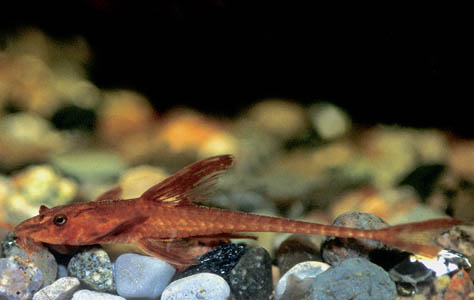
Rineloricaria sp.Red Lizard Catfish
authority not recorded
Max length110mm SL4in SLTank75 × 30cm30 × 12inTemp24–29°C75–84°FpH6.0–7.5As mentioned above, this fish may or may not be a man-made, or even hybrid, species. There are a few theories regarding this currently in circulation. Some believe that the fish are derived from a true wild caught fish, possibly of Paraguayan origin. These wild-caught red whiptails are supposed to breed true, producing all red fry, although there is no concrete evidence that they actually exist. The second possibility is that it's a selectively-bred form of Rineloricaria lanceolata, but thi...
Salminus brasiliensisDorado
authority not recorded
Max length1000mm SL39in SLTanknot recordedTemp22–28°C72–82°FpH6.0–7.5The common name of this species is derived from the Portugese dourado and refers to the beautiful golden colour of the fish. We've included this species on the site purely because there have been an alarming number of juvenile fish showing up in some aquatic stores and, as a result, in hobbyists tanks. This species is simply not suited to captive life in any respect. If you see one for sale, and they are undeniably an attractive fish, please don't be tempted to buy it. As responsib...
Sperata aorIndian Shovelnose Catfish
authority not recorded
Max length1800mm SL71in SLTank720 × 180cm283 × 72inTemp20–25°C68–77°FpH6.0–7.0This "shovelnose" is unique amongst bagrids, but superficially resembles several unrelated South American catfish species. It's common name is derived from it's flattened, extended head. We cannot stress strongly enough that this is a species totally unsuited to aquarium life. Alarmingly, it is can sometimes be spotted in dealer's tanks. When small, it makes an interesting and undeniably impressive addition to a large aquarium but bearing in mind its enormous adult size,...
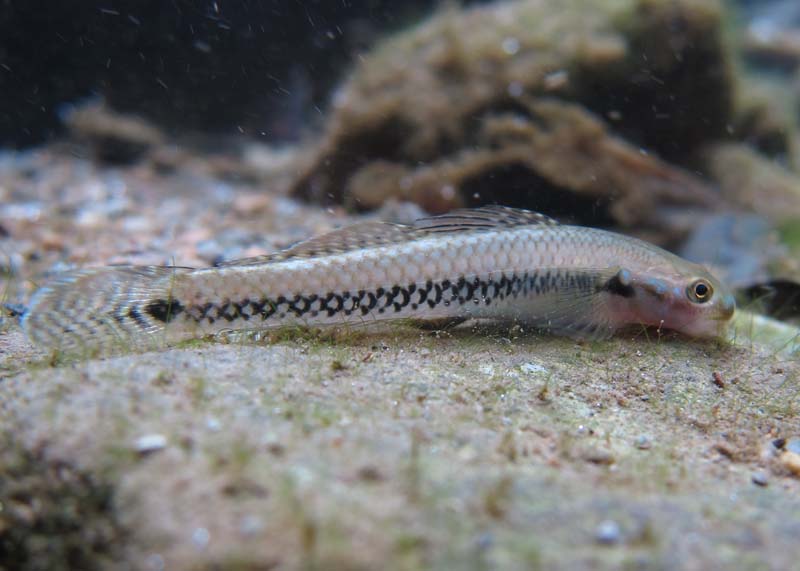
Stiphodon alcedo
Maeda, Mukai & Tachihara, 2011
Max length50mm SL2.0in SLTanknot recordedTemp22–28°C72–82°FpH6.5–7.5Known only from the Ryukyu Islands, Japan, and thus far recorded from just 4 streams on Okinawa island and two on Iriomote island. The type series derived from both islands with Okinawa given as type locality. It may be more widely-distributed than this however, and was possibly transported to the Ryukyu Islands via the Kuroshio Current, an ocean current similar to the Gulf Stream transporting warm, tropical water northward from an area east of Taiwan past Japan towards the polar region.
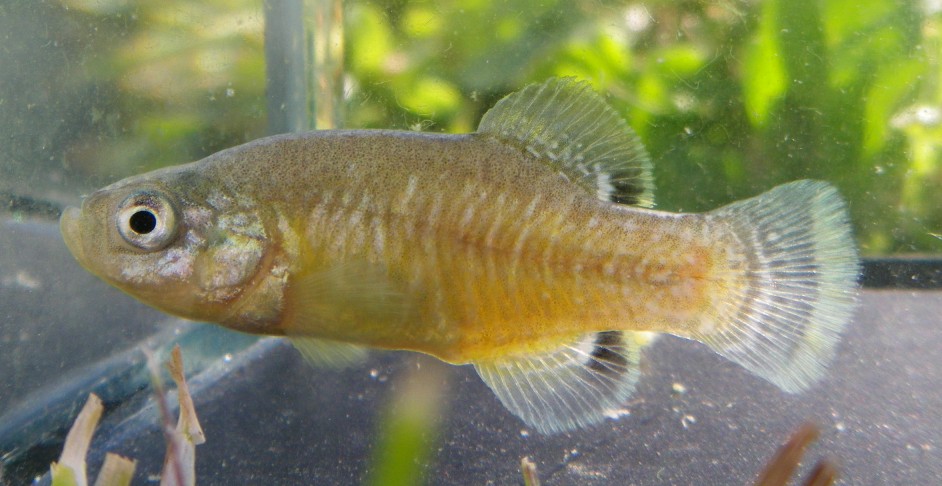
Tellia apodaFootless Toothcarp
Gervais, 1853
Max length45mm SL1.8in SLTank120 × 30cm48 × 12inTemp16–30°C61–86°FpH7.0–9.0The genus Aphanius currently contains 22 species and subspecies which are thought to have derived from a common ancestor originally distributed around the periphery of the former Tethys Sea. These can be separated into two main phylogenetic groups usually referred to as the 'eastern' and 'western' clades by scientists and aquarists because they broadly correspond to those coastlines of the Tethys. The eastern clade comprises the species now found in the Arabian Peninsula and ...
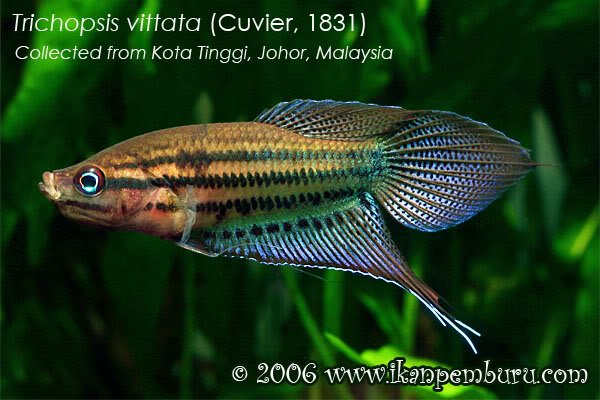
Trichopsis vittataCroaking gourami
Cuvier, in Cuvier & Valenciennes, 1831
Max length70mm SL2.8in SLTank60 × 30cm24 × 12inTemp22–28°C72–82°FpH5.0–7.5The common name is derived from the ability of genus members to produce audible sounds via a specialised pectoral mechanism which is unique within the family Osphronemidae. The structure comprises modified pectoral-fin tendons and muscles which are stretched and plucked by basal elevations of two fin rays in a similar way to guitar strings via rapid beating of the fins. The pectoral-fins beat alternately, each able to generate short or long bursts of sound. These sounds are produced by both sexes, predom...