Results for “endemic”
Type a name: scientific, common, or one a species used to go by. Or narrow the catalogue with the filters.
Filters
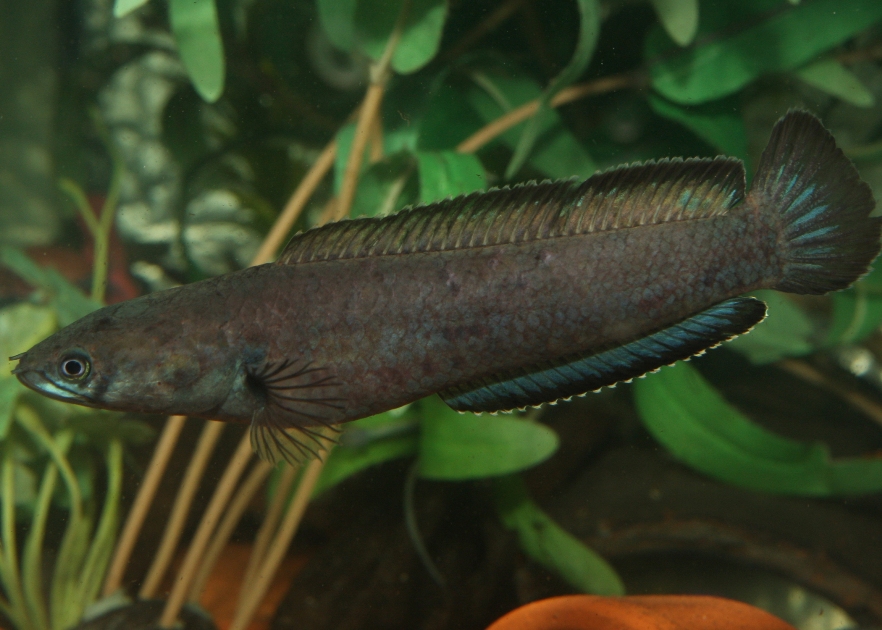
Channa orientalisCeylon snakehead
Bloch & Schneider, 1801
Max length100mm SL3.9in SLTank90 × 30cm36 × 12inTemp16–24°C61–75°FpH5.0–7.5Endemic to southwestern Sri Lanka where it appears restricted to the so-called ‘wet zone’ (see 'Habitat'). Confirmed localities are all within the Bentota and Kelani river systems and Kottawa Forest Reserve in Galle district, Southern Province. Type locality is given simply as 'Habitat in India orientale' and this appears to have caused confusion regarding the species' distribution with it of...
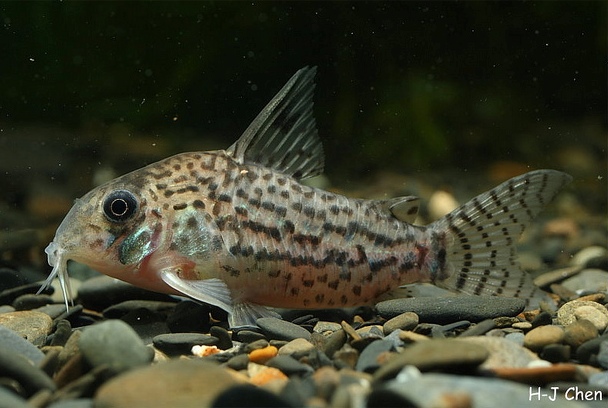
Corydoras acrensisAcre Cory
Nijssen, 1972
Max length55mm SL2.2in SLTanknot recordedTemp21–25°C70–77°FpH6.0–7.5Type locality is 'Furo do Lago São Francisco, 7°40'S, 72°39'W, tributary at left bank of Rio Juruá, Acre State, Brazil', and C. acrensis appears to be endemic to the rio Juruá basin. Unfortunately diagnostic characters cannot be provided since we've been unable to obtain the type description, and little has been written about this species since it was published.
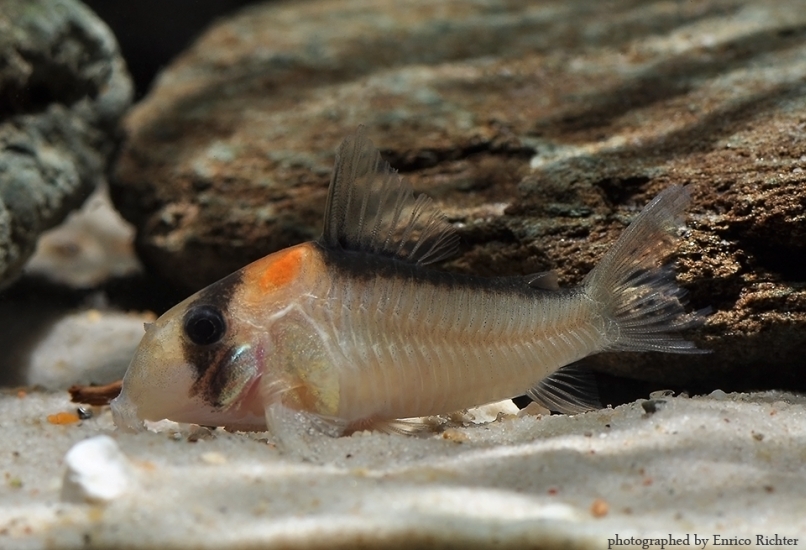
Corydoras adolfoiAdolfo's Cory
Burgess, 1982
Max length60mm SL2.4in SLTanknot recordedTemp20–26°C68–79°FpH4.0–7.0Type locality is given as 'Small tributary of the upper Rio Negro on the equator near São Gabriel da Cachoeira, Brazil', and this species is apparently highly endemic there. Some sources state that it also occurs in the rio Uaupés (known as 'Vaupés' in Colombia), a major tributary of the Negro, but we've been unable to obtain confirmation thus far.
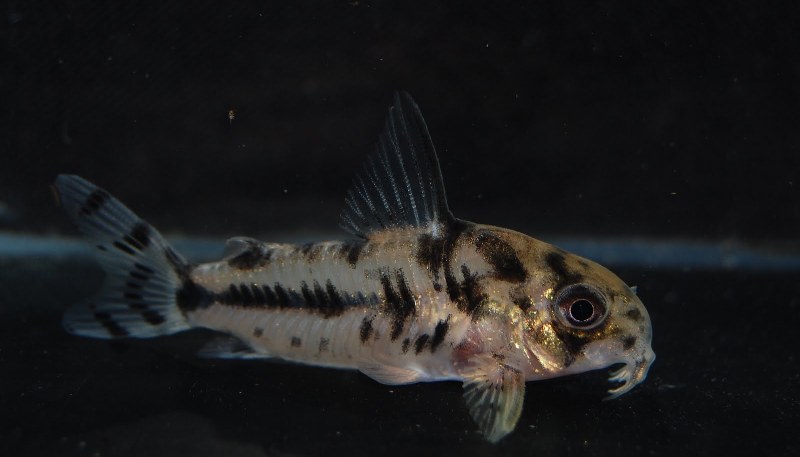
Corydoras boesemaniBoeseman's Catfish
Nijssen & Isbrücker, 1967
Max length45mm SL1.8in SLTanknot recordedTemp21–28°C70–82°FpH5.5–7.5This species appears endemic to and abundant within the upper Suriname River system, Suriname. Type locality is given as 'little tributaries of Gran Rio between Ligolio and Awaradam Falls', this corresponding to a section of the Suriname River, which is known as 'Gran Río' in parts of its upper basin, upstream of Brokopondo reservoir and not...
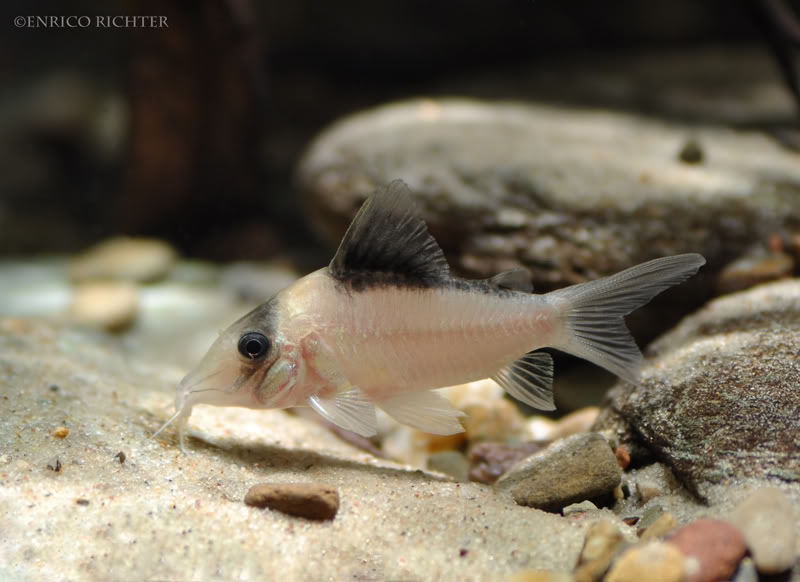
Corydoras imitatorImitator Cory
Nijssen & Isbrücker, 1983
Max length65mm SL2.6in SLTank90 × 30cm36 × 12inTemp20–26°C68–79°FpH4.0–7.0Endemic to the upper rio Negro basin in Amazonas state, northern Brazil, and Amazonas state, southern Venezuela. One specific locality is Igarapé Muiá (00°09'03"N 66°48'10"W). Type locality is 'Upper Rio Negro, eastern Amazonas, Brazil', which is thought to refer to forest brooks crossing the "new army road", north of São Gabriel da Cachoeira municipality.
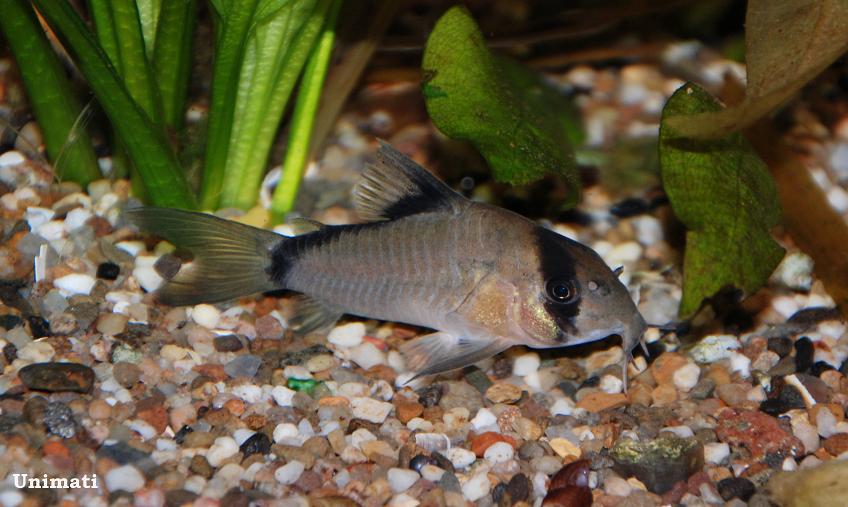
Corydoras metaeBandit Cory
Eigenmann, 1914
Max length50mm SL2.0in SLTank80 × 30cm31 × 12inTemp20–26°C68–79°FpH6.0–7.5Endemic to the Río Meta, a major tributary of the Río Orinoco in eastern Colombia and western Venezuela. It is known from several tributaries within the upper basin including the ríos Humea, Ocoa, Guatiquía (including its two branches the ríos Negrito and Guayuriba), Manacacias, and Metica (the name given to the upper Río Meta above its confluence with the Río Humea). It appears to be absent from the lower Meta and has not been recorded in Venezuela.
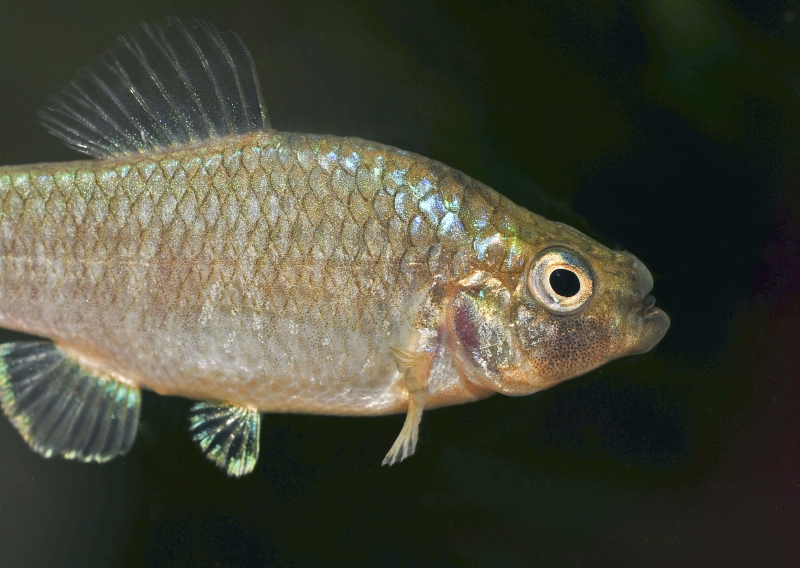
Cyprinodon brontotheroidesDurophage Pupfish
Martin & Wainwright, 2013
Max length36mm SL1.4in SLTanknot recordedTempnot recordedpHnot recordedEndemic to San Salvador Island in the Bahamas where it's known from six hypersaline lakes; Crescent Pond, Osprey Lake, Oyster Lake, Little Lake, Wild Dilly Pond and Moon Rock Pond. Type locality is 'San Salvador Island, Bahamas: Crescent Pond, 1 km SE of the Gerace Research Centre, lat 24°06'45"N, long 74°27'28"W'.
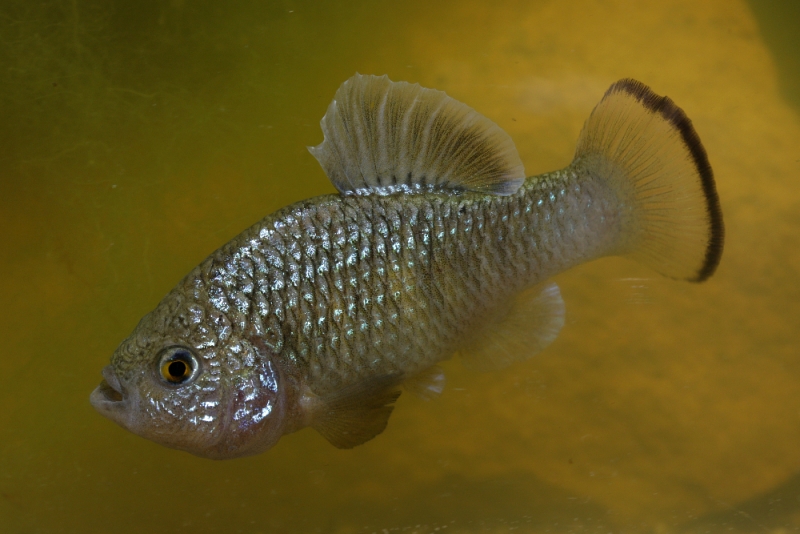
Cyprinodon veronicaeCharco Palma Pupfish
Lozano-Vilano & Contreras-Balderas, 1993
Max length50mm SL2.0in SLTank60 × 30cm24 × 12inTempnot recordedpHnot recordedThe surrounding area is semi-arid and the Bolsón de Sandia was once a beautiful oasis with a number of springs, abundant vegetation and diverse wildlife but has dried up over the last twenty to thirty years due to indiscriminate water extraction for agriculture and other human uses. Three endemic species of Cyprinodon, namely C. veronicae, C. longidorsalis and C. ceciliae, have been described from separate springs within the system...
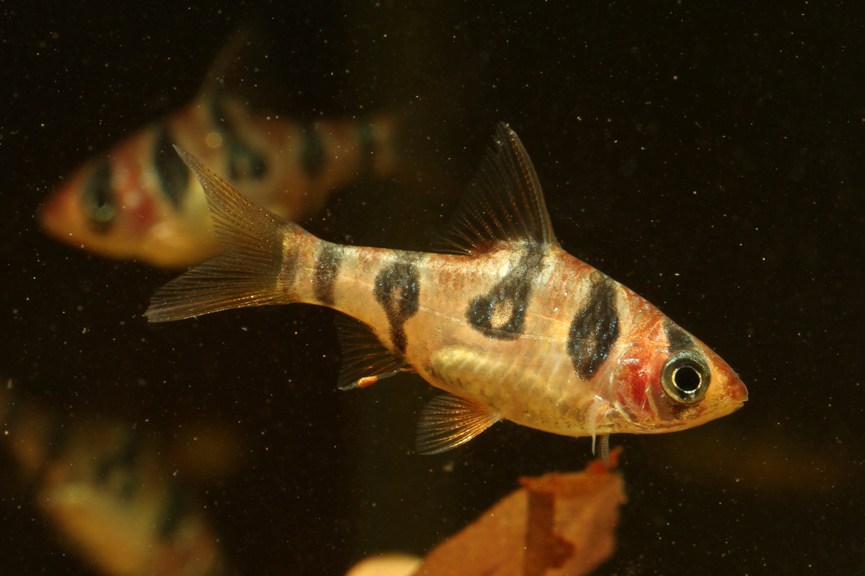
Desmopuntius rhomboocellatusSnakeskin Barb
Koumans, 1940
Max length55mm SL2.2in SLTank80 × 30cm31 × 12inTemp20–28°C68–82°FpH4.0–7.0Endemic to southern Kalimantan, the Indonesian portion of Borneo where it's been recorded from several river systems including the Kapuas, Kepayang, Barito and Kahajan. Type locality is given as 'Canal along the highway from Oelin to Bandjermasin, about 15 kilometers from Bandjermasin, Borneo.' Often referred to as the 'rhomb' or 'rhombo' barb and included in a group of closely-related, similar-looking congeners which also includes...
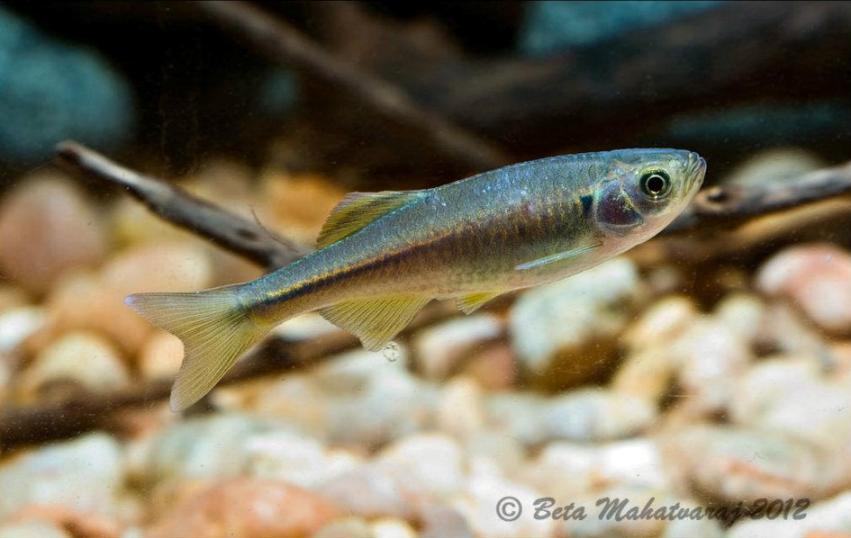
Devario neilgherriensisPeninsular 'Danio'
Day, 1867
Max length100mm SL3.9in SLTank120 × 45cm48 × 18inTemp16–24°C61–75°FpH6.0–7.5Appears endemic to tributaries of the Bhavani river system in the Nilgiri Hills of Tamil Nadu state, southern India including the Pykara, Avalanche and Kaity streams. Type locality is 'Ootacamund Lake, Pykara, Avelanche and Kaity streams, Neilgherry Hills, India', with the former now often shortened to Ooty Lake.
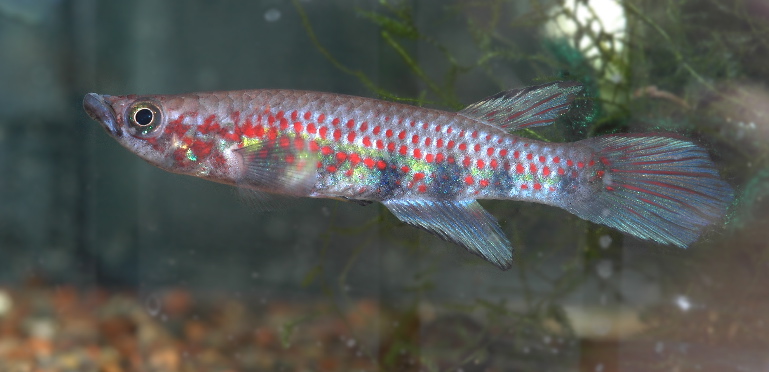
Epiplatys mesogramma
Huber, 1980
Max lengthnot recordedTanknot recordedTempnot recordedpHnot recordedEndemic to the Ubangi (also spelled Oubangui) River drainage in southwestern Central African Republic with type locality given as 'Small stream along Mbaiki-Mongoumba road, south of Bangui, 3°55'N, 18°10'E, Central African Republic'. The Ubangi is is the largest right-ba...
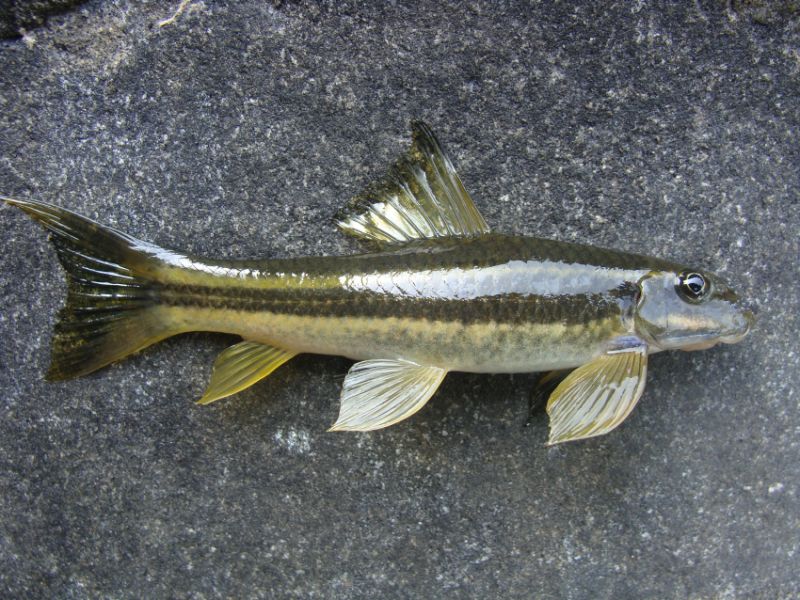
Garra mullya
Sykes, 1839
Max length170mm SL7in SLTanknot recordedTempnot recordedpHnot recordedThis species is endemic to and widespread within peninsular India, where it has been recorded from the states of Gujrat, Madhya Pradesh, Chhattisgarh, Orissa, Jharkhand, West Bengal, Maharashtra, Andhra Pradesh, Goa, Karnataka, Tamil Nadu and Kerala. It is thus found in numerous river systems of which some of the most important include the Tapti, Narmada, Mahanadi, Godavari, Krishna, and Cauvery.
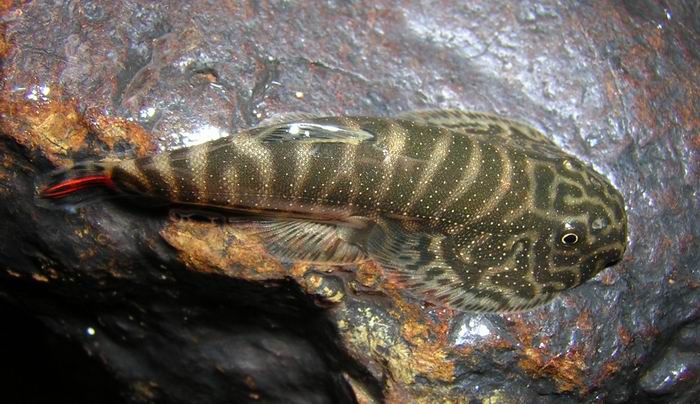
Gastromyzon sp. 'SK02'
authority not recorded
Max length50mm SL2.0in SLTank60 × 30cm24 × 12inTemp20–24°C68–75°FpH6.5–8.0Known only from headwaters of the Sungai (river) Amandit, a tributary of the larger Barito basin in the Meratus mountain range, Kalimantan Selatan (South Kalimantan) province, Indonesian Borneo. There currently exist 36 officially-described members of the genus, all of which are endemic to the island with over half restricted to a single river basin or sub-basin.
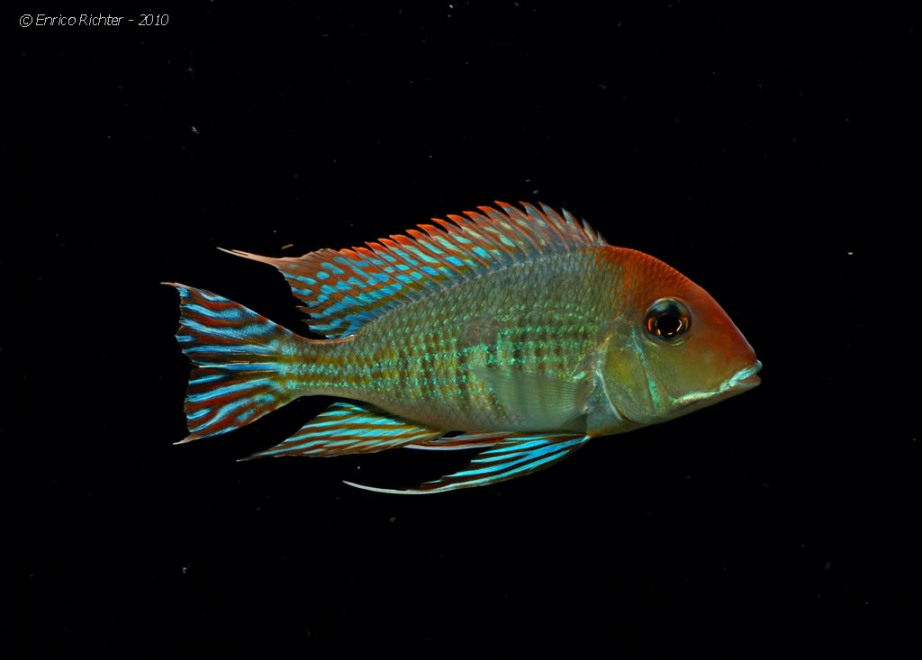
Geophagus sp. 'orange head'
authority not recorded
Max length250mm SL10in SLTank180 × 60cm72 × 24inTemp26–30°C79–86°FpH4.5–7.5There are at least two variants available one of which is often traded as G.sp. 'Araguaia orange head'. This is misleading since both are endemic to the Tapajós drainage (see 'Distribution'), and appears to date back to an error in collection locality when the fish were first exported. The two differ in the extent of orange colouration on the head which extends onto the opercle in G. sp. 'orange head (rio Arapiuns form) but is mostly restricted to the area above the ey...
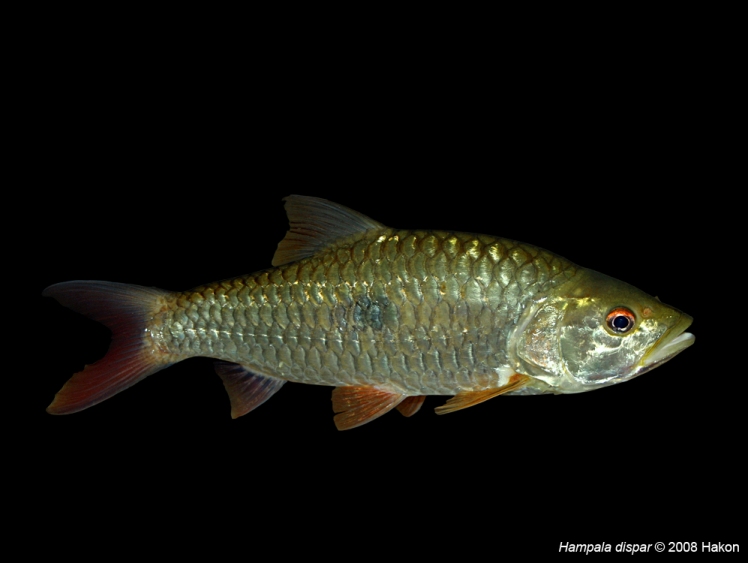
Hampala disparSpotted Hampala Barb
Smith, 1934
Max length350mm SL14in SLTank240 × 60cm96 × 24inTemp20–25°C68–77°FpH6.0–8.0The genus currently contains seven species of which H. macrolepidota and, to a lesser extent, H. dispar are the only ones seen with any regularity in the aquarium trade. As well as having the widest distribution H. macrolepidota is also the largest member of the group. All representatives can appear superficially similar at first glance, the exception being H. lopezi which is endemic to a single island in The Philippines and displays a unique lateral band-like marking on the flanks.
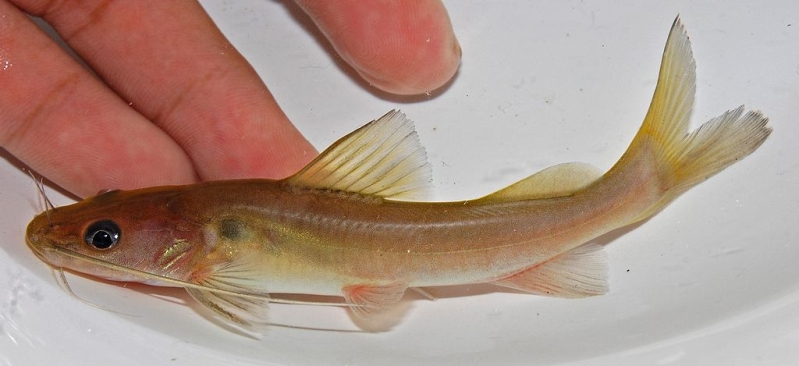
Hemibagrus planiceps
Valenciennes, 1840
Max length263mm SL10in SLTanknot recordedTempnot recordedpHnot recordedThis species is now considered endemic to Java but has been confused with the congeners H. gracilis (from eastern Peninsular Malaysia), H. velox (Sumatra) and H. bongan (Borneo) in the past, while the population formerly considered to inhabit northwestern Peninsular Malaysia has been described as H. divaricatus (Ng and Kottelat, 2013).
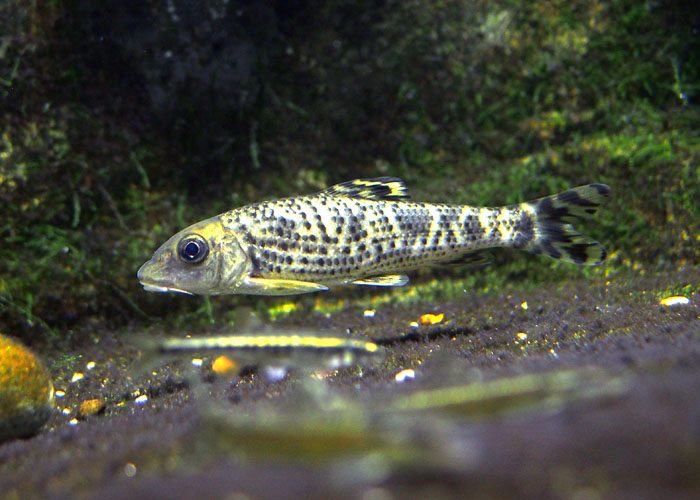
Hemibarbus mylodon
Berg, 1907
Max length350mm SL14in SLTanknot recordedTempnot recordedpHnot recordedEndemic to the Korean peninsula where it occurs throughout North Korea and South Korea. Type locality is 'Keumsan River, near Pusan, South Korea.'
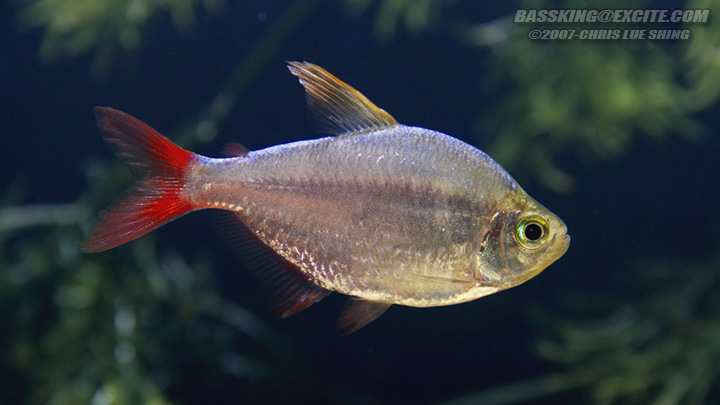
Hyphessobrycon columbianusColombian Tetra
Zarske & Géry, 2002
Max length65mm SL2.6in SLTank90 × 30cm36 × 12inTemp20–28°C68–82°FpH5.0–7.5This species is also traded as 'blue flame', 'blue-red', and 'Colombian red fin' tetra, and was misidentified as H. ecuadorensis for several years prior to its description. Within the genus it appears to be most closely related to the Costa Rica endemic H. savagei Bussing, 1967 but differs in a number of characters as fol...
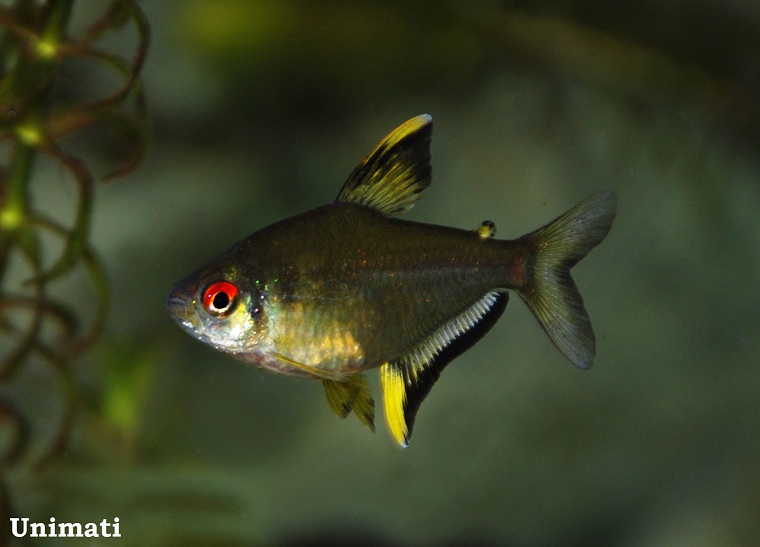
Hyphessobrycon pulchripinnisLemon Tetra
Ahl, 1937
Max length40mm SL1.6in SLTank80 × 30cm31 × 12inTemp20–28°C68–82°FpH5.0–7.5This species is a popular aquarium fish and is bred on a commercial basis in several countries, with a selectively-bred albino form also available. Wild specimens are rarely collected due to the low price of the farmed fish, but the origin of the commercial strain is questionable. The species was considered endemic to the rio Tapajós basin, but in the early 1990s fish appearing identical to the aquarium form were photographed in the...
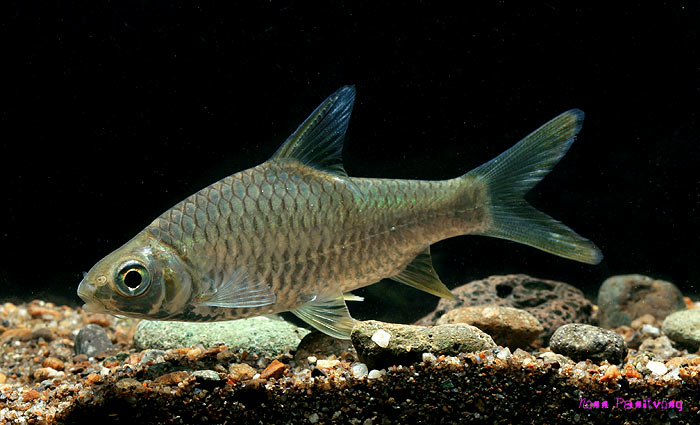
Hypsibarbus salweenensis
Rainboth, 1996
Max length300mm SL12in SLTanknot recordedTempnot recordedpHnot recordedEndemic to the Salween river system in Yunnan province, southern China, eastern Myanmar, and northwestern Thailand. Type locality is 'Salween River midway between Mae Sam Laep and Paleh, Mae Hong Son province, Thailand.'