Results for “freshwater”
Type a name: scientific, common, or one a species used to go by. Or narrow the catalogue with the filters.
Filters
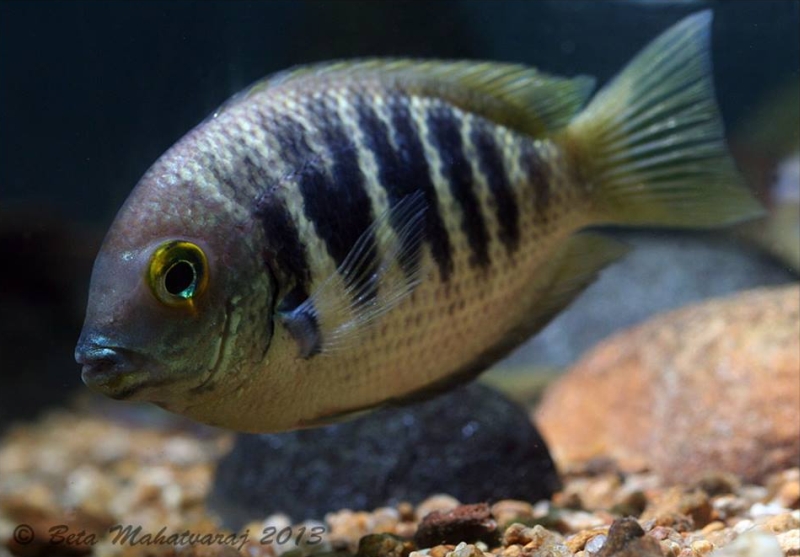
Etroplus canarensisCanara Pearlspot Cichlid
Day, 1877
Max length110mm SL4in SLTank120 × 45cm48 × 18inTemp22–32°C72–90°FpH6.0–7.5Etroplus is the only cichlid genus native to the Indian subcontinent and Sri Lanka and currently comprises three species among which E. canarensis is uniquely limited to freshwater and restricted in range. Its congeners E. maculatus and E. suratensis are both euryhaline inhabiting estuaries, coastal lagoons and the lower reaches of rivers around coastlines of western and southern India plus northern Sri Lanka.
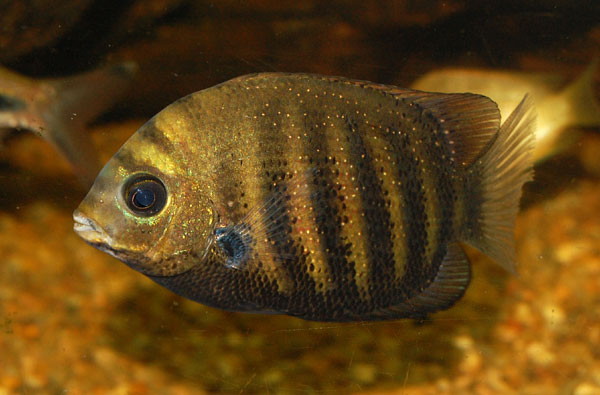
Etroplus suratensisGreen Chromide
Bloch, 1790
Max length350mm SL14in SLTanknot recordedTemp20–30°C68–86°FpH7.0–8.5This species is euryhaline and mostly inhabits brackish estuaries, coastal lagoons and the lower reaches of rivers. It also occurs in freshwater habitats, however, including a number of inland lakes in Sri Lanka although it appears to have been introduced intentionally.
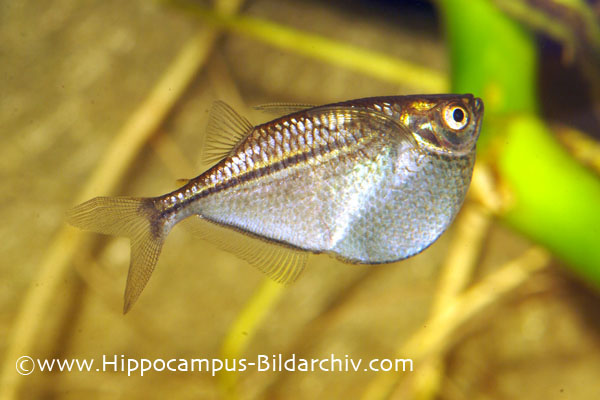
Gasteropelecus levisSilver Hatchetfish
Eigenmann, 1909
Max length35mm SL1.4in SLTank80 × 30cm31 × 12inTemp20–28°C68–82°FpH5.0–7.5Gasteropelecids are commonly-referred to as ‘freshwater hatchetfishes’ due to their heavily-keeled body shape which has evolved in such a way due to possessing an enlarged, heavily-muscled pectoral girdle, and which resembles the shape of a hatchet head. They are sometimes said to be capable of propelled flight above the water surface by beating their pectoral fins but in fact this is not the cas...
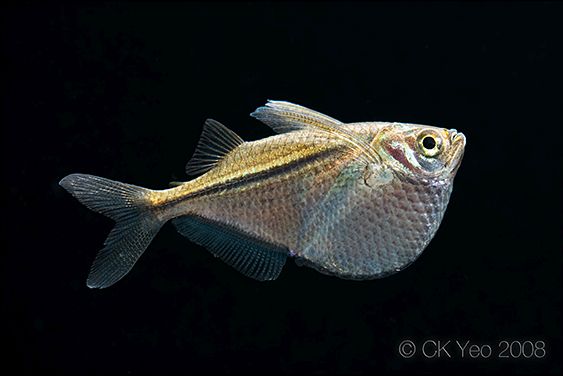
Gasteropelecus sterniclaCommon Hatchetfish
Linnaeus, 1758
Max length40mm SL1.6in SLTank120 × 30cm48 × 12inTemp20–28°C68–82°FpH5.0–7.5This species spends almost all of its time at or just below the water surface, although it will sometimes retreat into midwater if threatened or feeding. Like other freshwater hatchetfishes, it is renowned for its ability to leap from the water surface and glide for distances of several metres. This behaviour is used both to catch flying insects, and to escape potential predators.
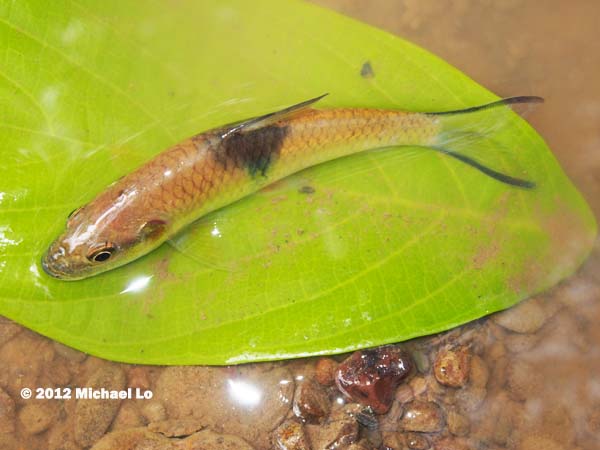
Hampala sabana
Inger & Chin, 1962
Max length410mm SL16in SLTanknot recordedTempnot recordedpHnot recordedPredominantly a riverine fish preferring clear, well-oxygenated, running waters with substrates of sand, gravel, rock or mud, and apparently displays a preference for deeper, slower-moving stretches. In Sabah such habitats typically flow through tropical forest, although in recent years freshwater habitats throughout much of the state have been extensively modified by human activity such as conversion to palm or rubber plantations.
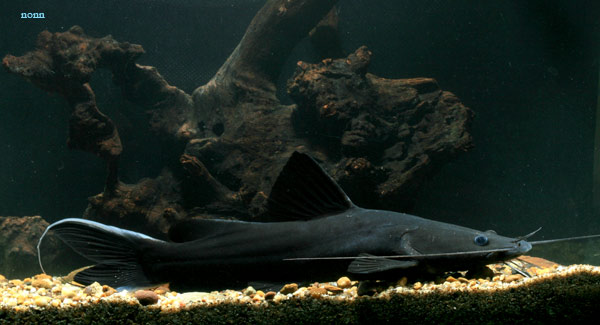
Hemibagrus wyckiiCrystal-eyed Catfish
Bleeker, 1858
Max length710mm SL28in SLTanknot recordedTemp20–27°C68–81°FpH6.0–8.0Aggressively territorial and incompatible with other fishes in all but the largest public installations and even then may attack its tankmates. It's also one of few freshwater fishes that appear unafraid of humans meaning care must be exercised when performing maintenance.
Heterobranchus longifilisVundu
authority not recorded
Max length1500mm SL59in SLTank180 × 60cm72 × 24inTemp20–27°C68–81°FpH5.5–7.5One of the largest freshwater fish species found in Africa, this is not a very good aquarium inhabitant. It is suitable only for the truly dedicated hobbyist able to house it properly or for public aquaria. It can be distinguished from similar members of the genus by its very long adipose fin....
Hydrocynus goliathGiant Tigerfish
authority not recorded
Max length2100mm SL83in SLTanknot recordedTemp24–28°C75–82°FpH6.5–7.5A voracious piscivore this species is perfectly designed for its lifestyle. It is very streamlined and muscular and has one of the most amazing sets of teeth of any freshwater fish. These are dagger-shaped and interlock, meaning the fish can rip chunks out of its prey. The teeth are visible even when the animal's mouth is closed, which makes for a fearsome sight. It is one of the world's most infamous game fish and specimens weighing over 100 pounds have been recorded. We cannot st...
Hydrocynus vittatusAfrican Tiger Fish
authority not recorded
Max length1050mm SL41in SLTank300 × 90cm118 × 36inTemp24–28°C75–82°FpH6.5–8.0A voracious piscivore that hunts in large shoals in the wild, this species is perfectly designed for its lifestyle. It is very streamlined and muscular and has one of the most amazing sets of teeth of any freshwater fish. These are dagger-shaped and interlock, meaning the fish can rip chunks out of its prey. The teeth are visible even when the animal's mouth is closed, which makes for a fearsome sight. It is a popular game fish in its native range, with the largest specimen caught weighi...
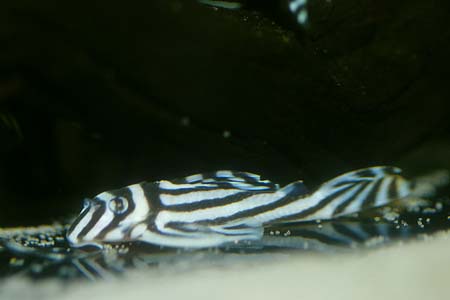
Hypancistrus zebraZebra Plec
Isbrücker and Nijssen, 1991
Max length80mm SL3.1in SLTank60 × 30cm24 × 12inTemp26–30°C79–86°FpH6.0–7.5One of the most enigmatic species in the hobby, this incredible little catfish must rank amongst the most stunning freshwater species known. In the late 1990s and the early part of this century you could buy one of these for as little as twenty pounds. However in 2004, the Brazilian government banned the exportation of the species amid apparent concerns over the exploitation of wild stocks. As yet, the conservation status of the fish has not been confirmed by any scientific proof with the only e...
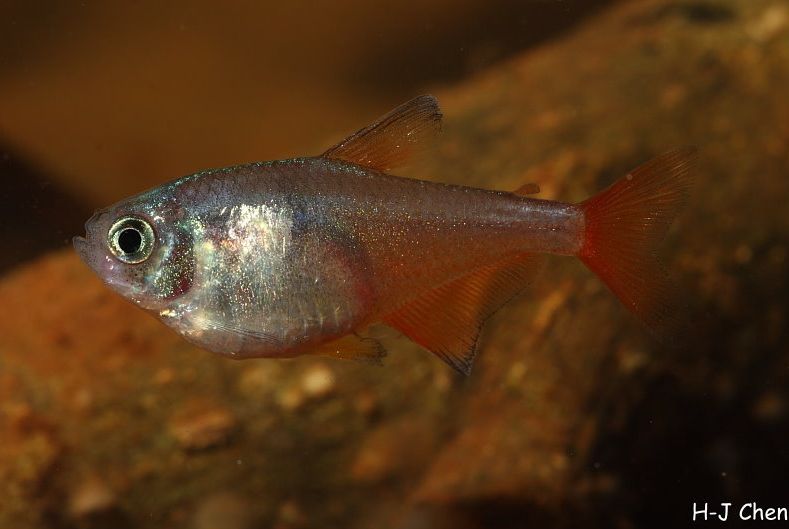
Hyphessobrycon flammeusFlame Tetra
Myers, 1924
Max length25mm SL1.0in SLTank60 × 30cm24 × 12inTemp20–26°C68–79°FpH5.5–7.5Its native rivers flow through one of the most densely-populated and industrialised parts of Brazil, and have suffered greatly from dam construction, water abstraction, pollution, introduced species (including over 40 exotic freshwater fishes in the rio Paraíba do Sul alone), and other forms of anthropogenic degradation. H. flammeus is now uncommon or even extinct across much of its putative natural range, and in Rio de Janeiro state only a handful of highly-fragmented populations remain at best, with the mo...
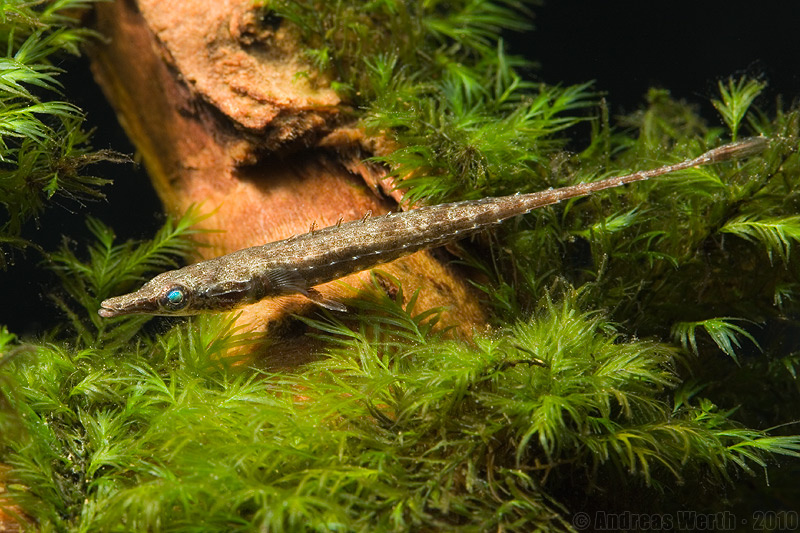
Indostomus crocodilus
Britz & Kottelat, 1999
Max length30mm SL1.2in SLTank40 × 20cm16 × 8inTemp22–27°C72–81°FpH5.0–7.0The type series was collected from a blackwater stream in Toh Daeng Peat swamp forest with the fish found in slow-moving or standing habitats among submerged shoreline roots and leaf litter. In the Tapi River floodplain it was collected from stagnant waters, one of which was an oxbow lake approximately 200 m long and 30 m across at its widest point, surrounded by 'freshwater scrub and swamp trees'. The substrate was composed of mud, woody structures including fallen twigs and branches, and decomposing plant material.
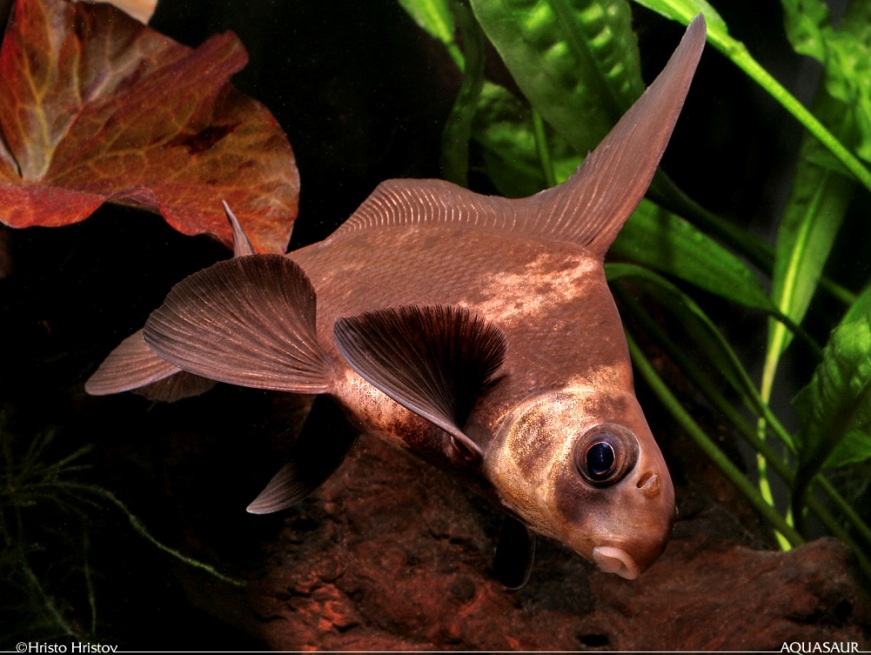
Myxocyprinus asiaticusChinese Sailfin Sucker
Bleeker, 1864
Max length900mm SL35in SLTanknot recordedTemp15.5–21°C60–70°FpH6.0–8.0This species is traded under various names including 'Chinese banded shark', 'Chinese sucker', 'freshwater batfish', 'high-fin banded loach', etc. It's currently illegal to import or own privately in several countries, including the UK, but continues to be available with only the attractive juvenile form traded, and almost always without information regarding adult size of almost a metre or potential lifepan of 25 years+. Myxocyprinus is a monotypic genus and the only Asian representative of the family Cato...
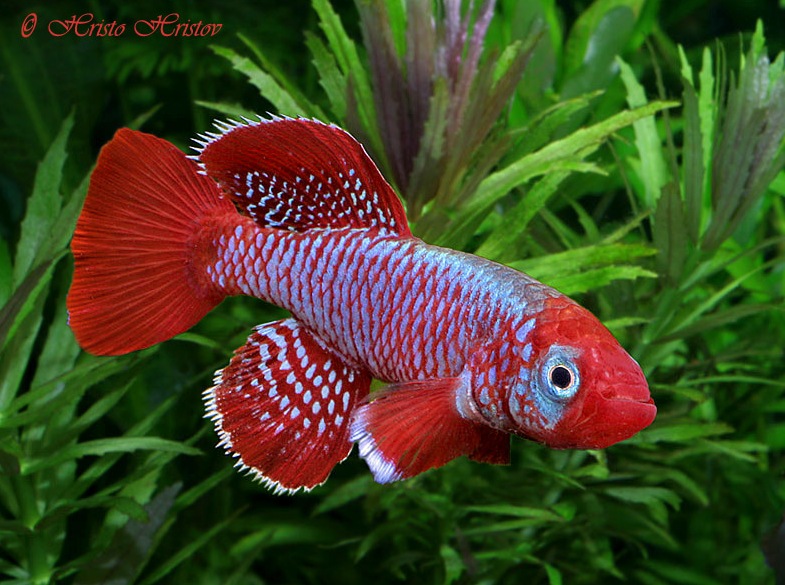
Nothobranchius eggersi
Seegers, 1982
Max length50mm SL2.0in SLTank45 × 30cm18 × 12inTemp20–24°C68–75°FpH7.0–8.2Type locality is 'Rufiji River near Utete, eastern Tanzania', and this species is apparently endemic to the lower Rufiji including the Selous Game Reserve and freshwater parts of the Rufiji delta region. Populations in the aquarium hobby include 'Rufiji river camp', 'Kikongono', 'Ruhoi River', 'Kanga', 'Utete', 'Saadani Game Reserve', 'Ruvu River', 'Bagamoyo', 'Makurunge', 'Killimani', 'Chamakwese', 'Nyamwage', 'Mohoro', and 'Ukuni'.
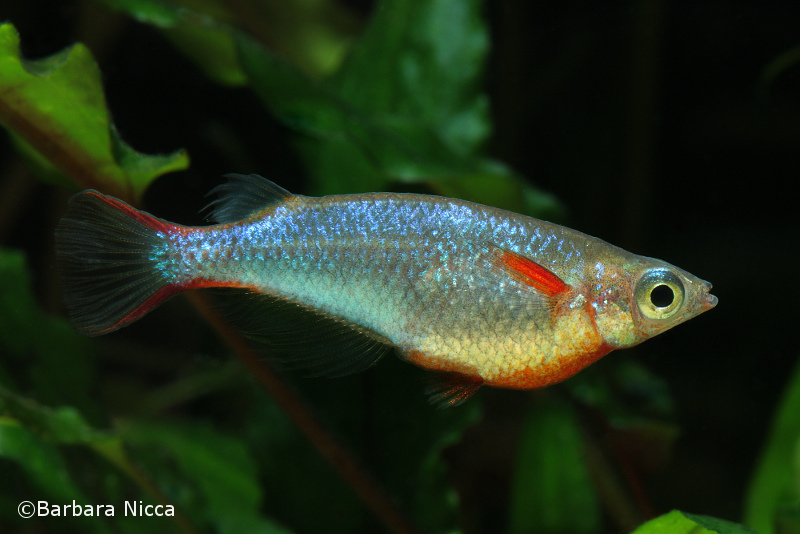
Oryzias woworaeDaisy's Ricefish
Parenti & Hadiaty, 2010
Max length30mm SL1.2in SLTank45 × 30cm18 × 12inTemp23–27°C73–81°FpH6.0–7.5The type locality is a karstic freshwater stream flowing under 80% forest cover with a mixed substrate of mud and sand plus patches of leaf litter. O. woworae was collected from a still pool around 3-4 m deep, opposite an affluent spring, where it was schooling with a species of Nomorhamphus which may turn out to be a form of N. ebrardtii but has subsequently appeared in the aquarium trad...
Pangasius sanitwongseiParoon Shark
authority not recorded
Max length2500mm SL98in SLTanknot recordedTemp24–27°C75–81°FpH6.5–7.5In size and weight terms Pangasius sanitwongsei is second only to the giant Mekong catfish, Pangasianodon gigas in the family Pangasiidae, easily qualifying it as one of the largest freshwater fish species in the world. Alarmingly it's been exported for the trade in quite large numbers in recent years. It's usually seen for sale as a cute silvery 2-3" youngster, most often without adequate information regarding its long term care requirements and potential size. Unfortunately ...
Parambassis siamensis
authority not recorded
Max length60mm SL2.4in SLTank45 × 30cm18 × 12inTemp22–27°C72–81°FpH6.5–7.5This occasional import is sometimes offered for sale as P. ranga, the Indian glass fish. Unlike that species however, P. siamensis is an exclusively freshwater fish and should never be kept under brackish conditions. It can be distinguished from ranga by the lack of patterning behind the eye and it's generally more elongate body....
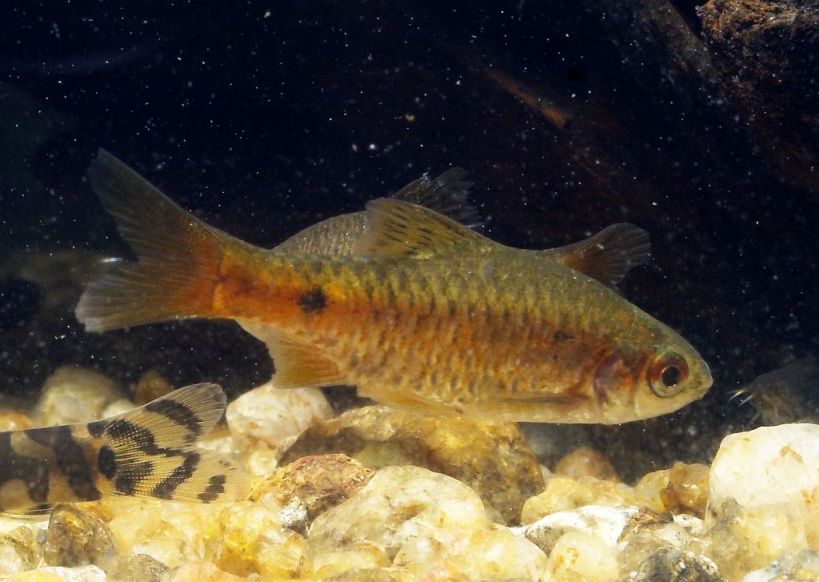
Pethia pookodensisPookode Lake Barb
Mercy & Jacob, 2007
Max length42mm SL1.7in SLTank75 × 30cm30 × 12inTemp20–25°C68–77°FpH5.5–7.5Described from Pookode Lake in Wayanad district, Kerala state, southern India and possibly endemic there although some unconfirmed records exist from within the surrounding Wayanad Wildlife Sanctuary. Pookode is a small freshwater lake surrounded by forest with a surface area of around 2 km² and is the source of the Panamaram River, a tributary within the much larger Kabani system. Its maximum depth is around 6.5 metres and in marginal areas dense patches of water lilies can be found.
Potamotrygon leopoldiPolka Dot Stingray
authority not recorded
Max length600mm SL24in SLTank240 × 90cm96 × 36inTemp20–29°C68–84°FpH6.0–7.5P. leopoldi is aruably one of the most stunning freshwater species in the hobby and comes with a price tag to match. A fully grown one of these makes a jaw-dropping sight. Sadly exports from Brazil are now illegal under the IBAMA regulations, although captive bred fish are available occasionally. The price tends to be even more expensive as a result. A rare form in which the light spots appear as rings with black centres is known as P. leopoldi "eclipse" is more costly still. The stunn...
Potamotrygon sp. "pearl"Pearl Ray
authority not recorded
Max length600mm SL24in SLTank240 × 90cm96 × 36inTemp23–29°C73–84°FpHnot recordedThis undescribed species must rank among the most jaw-dropping freshwater fish yet seen in the hobby. A good-sized adult makes a truly incredible sight. Unfortunately due to the current ban on ray exports from Brazil it is almost unobtainable and correspondingly expensive when it is. The handful of captive-bred specimens released each year can cost up to £1000 each, and we know of only a single breeder in the UK. The patterning of this "species" is highly variable, with...