Heterobranchus longifilis
Vundu
Last revised 2026Edit this page
On this page11 sections
Quick factsEdit
Difficulty4 of 8 measures
- Space
- very large tank
- Water
- flexible
- Temp
- flexible
- Diet
- unknown
- Temperament
- eats smaller fish
- Social
- unknown
- Compatibility
- unknown
Other demands
Each of these can raise the rating on its own, whatever the measures above say.
- Hardiness
- unknown
- Needs a very large tank
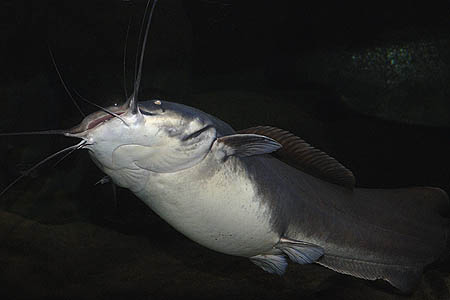
The vundu, Heterobranchus longifilis, is a clariid catfish widespread throughout Africa and one of the largest freshwater fishes on the continent. Growing to 150 cm, it is highly predatory, must be kept alone, and suits only public aquaria or a hobbyist able to house it properly. Its very long adipose fin separates it from similar members of the genus.
Distribution
EditWidespread throughout the African continent.
Habitat
Write a noteEditIt inhabits deep water, including rivers, lakes and ponds.
Aquarium size
Write a noteEdit180 ∗ 60 ∗ 60 cm72 ∗ 24 ∗ 24 in - ~648 litres~171 US gal absolute minimum. Although the maximum recorded size is unlikely to be attained this fish will still grow very large in the aquarium and it may outgrow the tank suggested here so be prepared to upgrade if necessary.
Maintenance
Write a noteEditDecor is not critical. Bearing in mind the adult size of this fish an undecorated tank with a soft substrate is probably the best option. It could also be kept in a suitably-sized tropical pond. Filtration should be very efficient as it produces a lot of waste.
Water conditions
EditTemperature: 20 – 27 °C68 – 81 °F, but aim for the upper end of this range.
pH: 5.5-7.5
Hardness: 3-20°H
These recommendations come from this profile’s own figures. They contain affiliate links, so we may earn a commission.
Diet
Write a noteEditA greedy and omnivorous species that will eat almost anything offered. A varied mixture of dried pellets, meaty frozen foods and vegetable matter is recommended. Adult specimens do not need to be fed every day. Take care not to overfeed as this is one fish that just doesn't know when to stop eating!
Behaviour and compatibility
Write a noteEditHighly predatory and should be kept alone. It will consume any fish it can fit in its mouth, and will often attack larger tankmates as well.
Sexual dimorphism
Write a noteEditFemales are thicker-bodied than males.
Reproduction
Write a noteEditHas been bred in aquaria for experimental purposes via hormone injection, but a breeding project is surely beyond the scope of the hobbyist.
Notes
EditOne of the largest freshwater fish species found in Africa, this is not a very good aquarium inhabitant. It is suitable only for the truly dedicated hobbyist able to house it properly or for public aquaria. It can be distinguished from similar members of the genus by its very long adipose fin.
Species images · 3
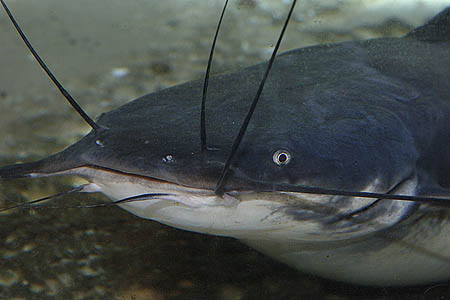
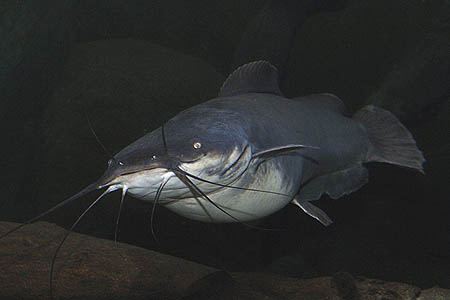
These photographs are used with each photographer's permission.
Send a photographDistribution
Profile completeness19 of 24
79% complete
Also missing: taxonomic authority, etymology.
Community
Questions about Heterobranchus longifilis?
Ask on Discord