Results for “lobe”
Type a name: scientific, common, or one a species used to go by. Or narrow the catalogue with the filters.
Filters
Pareutropius buffeiThree Striped African Glass Catfish
authority not recorded
Max length80mm SL3.1in SLTank75 × 30cm30 × 12inTemp24–28°C75–82°FpH6.0–7.5Formerly known as Eutropiellus buffei, this midwater swimming, diurnal catfish is very often sold as "Debauwi catfish". Pareutropius debauwi is a closely related species which is, in fact, seldom imported. Adults of the two species can be distinguished by several characteristics. In buffei there are three lateral stripes along the body, whilst debauwi possesses only one. Buffei also has black spots in the upper and lower parts of the caudal fin, and the fin itself has rounded lobes. Th...
Pelvicachromis taeniatusStriped Kribensis
authority not recorded
Max length80mm SL3.1in SLTanknot recordedTemp22–26°C72–79°FpH5.0–7.5This stunning species is now much more readily available than it once was. There are over a dozen morphs available, including "Dehane", "Moliwe", "Kienke", "Lobe", "Wouri", "Nigeria Red" and "Calabar". Males and females of these should not be cross bred in order to keep the lines pure. It can be distinguished from others in the genus by the more pronounced upper lip, which is often bright yellow in colour. Males of this spe...
Rasbora caudimaculataGreater Scissortail Rasbora
authority not recorded
Max length150mm SL6in SLTank150 × 45cm60 × 18inTemp20–26°C68–79°FpHnot recordedThis striking species may also be seen on sale with the trade name of 'red scissortail'. It can be distinguished from the similar-looking R. trilineata by the presence of orange/red colouration in the with other diagnostic features including black tips to the caudal lobes, 11-12 predorsal scale rows and a dark reticulated pattern to the edges of the scales. The 'scissortail' moniker is derived from the characteristic twitching motion of the when the fish is at rest. Rainb...
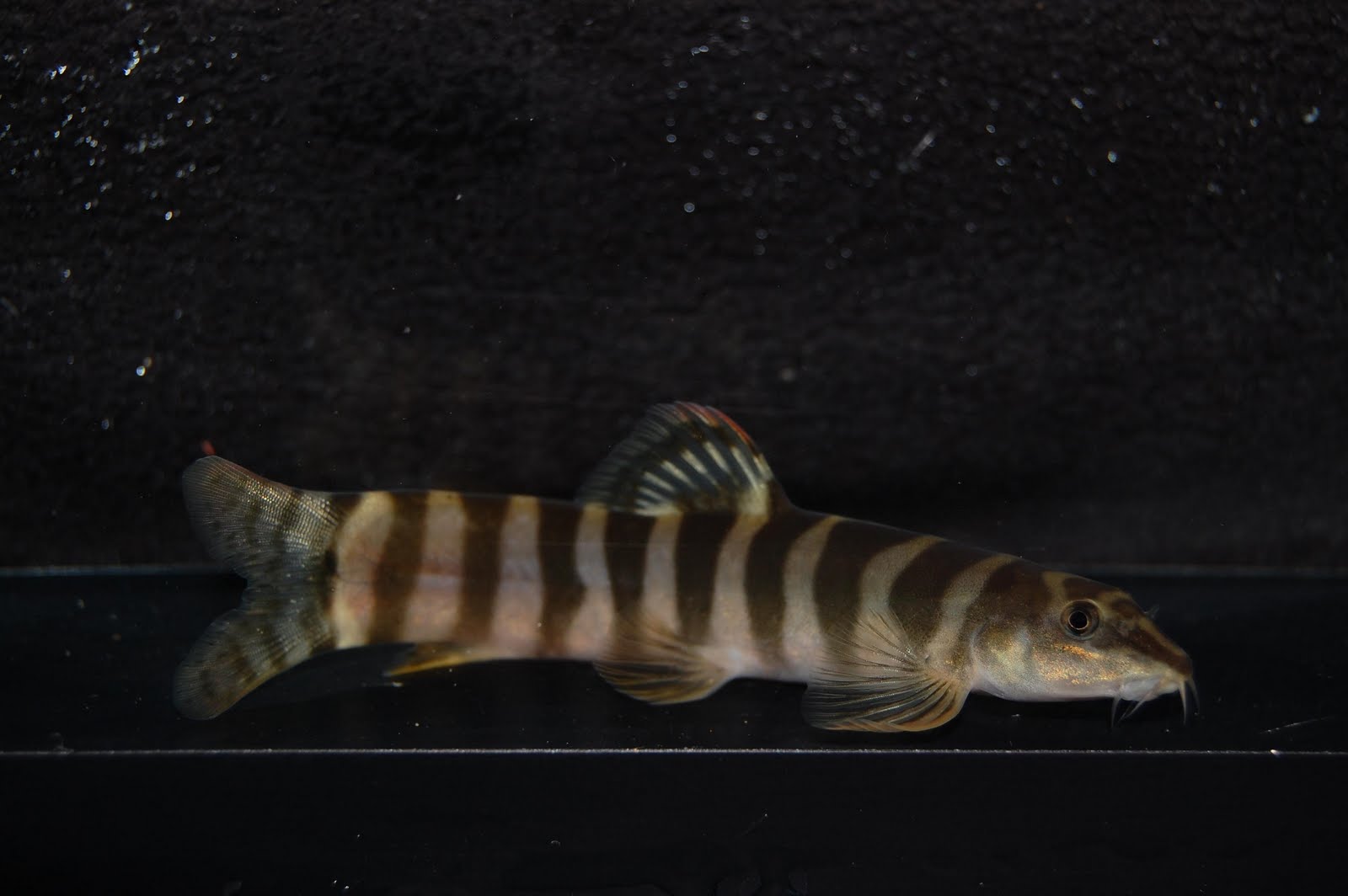
Schistura hypsiuraSuper Convict Loach
Bohlen, Ŝlechtová & Udomritthiruj, 2014
Max length73mm SL2.9in SLTank80 × 30cm31 × 12inTemp18–24°C64–75°FpH6.0–7.5It can be distinguished from congeners by the following combination of characters: caudal peduncle deep, ≥ the deepest part of the remainder of the body; no dorsal or ventral skin crests along the caudal peduncle; caudal-fin deeply forked, the outermost principal rays in the upper and lower lobes more than twice the length of the innermost: suborbital flap in males present; a well-developed suborbital groove in females; 6–8 very regular bars along the flank.
Thayeria boehlkeiFalse Penguin Tetra
authority not recorded
Max length36mm SL1.4in SLTank60 × 38cm24 × 15inTemp22–28°C72–82°FpHnot recordedThere are only three species in the genus Thayeria, of which T. boehlkei is by far the most popular in the hobby. Of its congeners, it was the type species T. obliqua that was originally given the common name of "penguin" fish or tetra, although T. boehlkei is usually sold under the same name (we've also seen it on sale as "hockeystick" tetra). The two are easy to tell apart, as in T. boehlkei the thick black stripe extending from the lower lobe of the travels laterally ...