Results for “posterior”
Type a name: scientific, common, or one a species used to go by. Or narrow the catalogue with the filters.
Filters
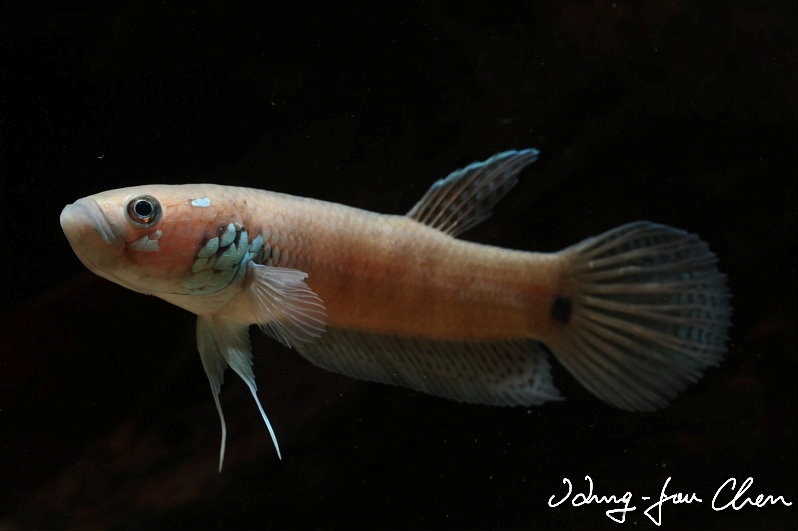
Betta ocellata
de Beaufort, 1933
Max length90mm SL3.5in SLTank80 × 30cm31 × 12inTemp21–25°C70–77°FpH5.5–7.5This species is included in the Betta unimaculata complex of closely-related species within the genus, of which members share the following set of characters: body long and slender with depth at dorsal fin origin 18-25 % SL; head large and blunt with width 19-24 % SL; long maxilla and lower lip with distance from tip of lower jaw to posterior end of maxilla 27-54 % HL; caudal-fin rounded in shape, occasionally with elongated median rays; pelvic-fin short and filamentous; dorsal and anal fins relatively pointed.
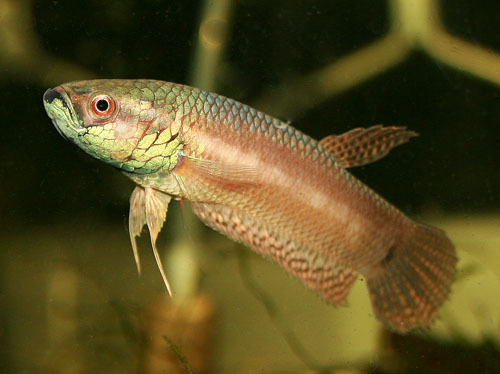
Betta pallifina
Tan & Ng, 2005
Max length90mm SL3.5in SLTanknot recordedTemp22–27°C72–81°FpH5.5–7.5This species is included in the Betta unimaculata complex of closely-related species within the genus, of which members share the following set of characters: body long and slender with depth at dorsal fin origin 18-25 % SL; head large and blunt with width 19-24 % SL; long maxilla and lower lip with distance from tip of lower jaw to posterior end of maxilla 27-54 % HL; caudal-fin rounded in shape, occasionally with elongated median rays; pelvic-fin short and filamentous; dorsal and anal fins relatively pointed.
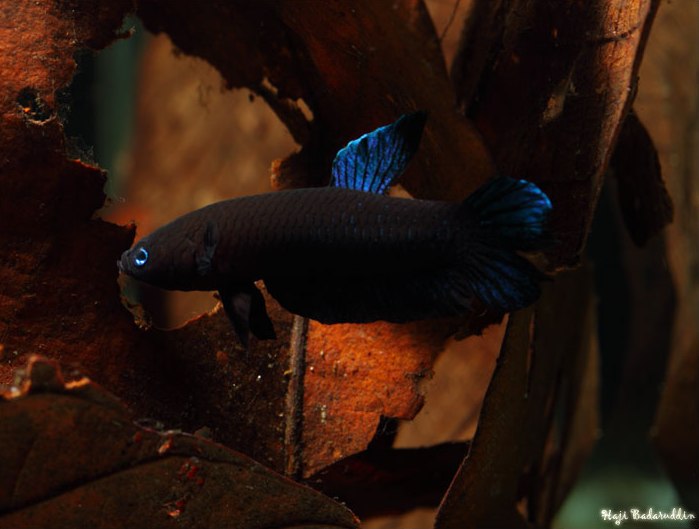
Betta persephone
Schaller, 1986
Max length35mm SL1.4in SLTank45 × 30cm18 × 12inTemp22–28°C72–82°FpH4.0–6.0B. persephone can be told apart from other members of the group by the following characters: no lateral blotch; body blackish; dorsal surface of head posterior to eye sloping gently; no parallel vertical iridescent gold opercle bars; pelvic-fin falcate with white filamentous tip, remainder black to reddish; median fins covered diffusely with light green iridescence; dorsal fin-rays 9; anal-fin rays 24-27; subdorsal scales 6-7; lateral scales 27-29; predorsal scales 17-18.
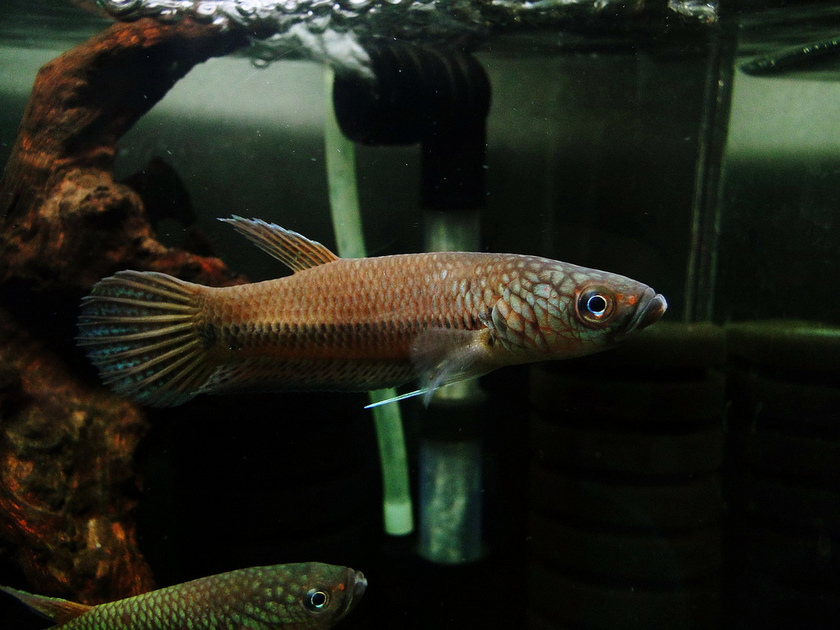
Betta sp. 'Antuta/Bulungan'
authority not recorded
Max length100mm SL3.9in SLTank80 × 30cm31 × 12inTemp21–27°C70–81°FpH5.5–7.5This hypothetically-undescribed species appears to be a member of the Betta unimaculata complex of closely-related species within the genus, of which members share the following set of characters: body long and slender with depth at dorsal fin origin 18-25 % SL; head large and blunt with width 19-24 % SL; long maxilla and lower lip with distance from tip of lower jaw to posterior end of maxilla 27-54 % HL; caudal-fin rounded in shape, occasionally with elongated median rays; pelvic-fin short and filamentous; dorsal and anal fins relatively pointed.
Betta unimaculata
Popta, 1905
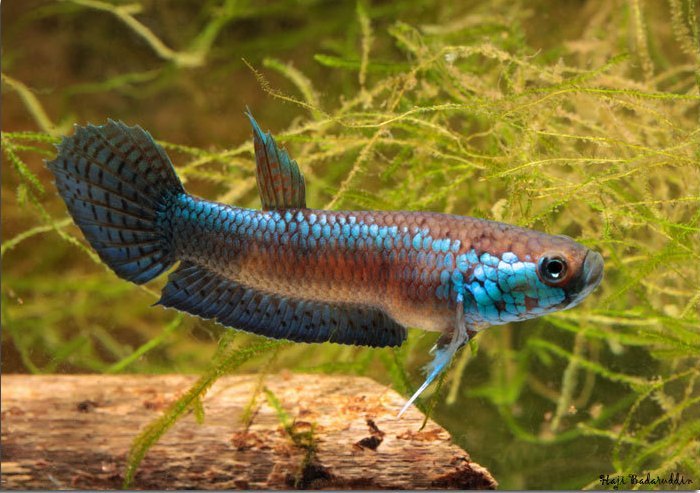
Max length115mm SL5in SLTank80 × 30cm31 × 12inTemp21–26°C70–79°FpH5.0–7.5This species is included in the Betta unimaculata complex of closely-related species within the genus, of which members share the following set of characters: body long and slender with depth at dorsal fin origin 18-25 % SL; head large and blunt with width 19-24 % SL; long maxilla and lower lip with distance from tip of lower jaw to posterior end of maxilla 27-54 % HL; caudal-fin rounded in shape, occasionally with elongated median rays; pelvic-fin short and filamentous; dorsal and anal fins relatively pointed.
Biotodoma wavriniOrinoco Eartheater
Gosse, 1963
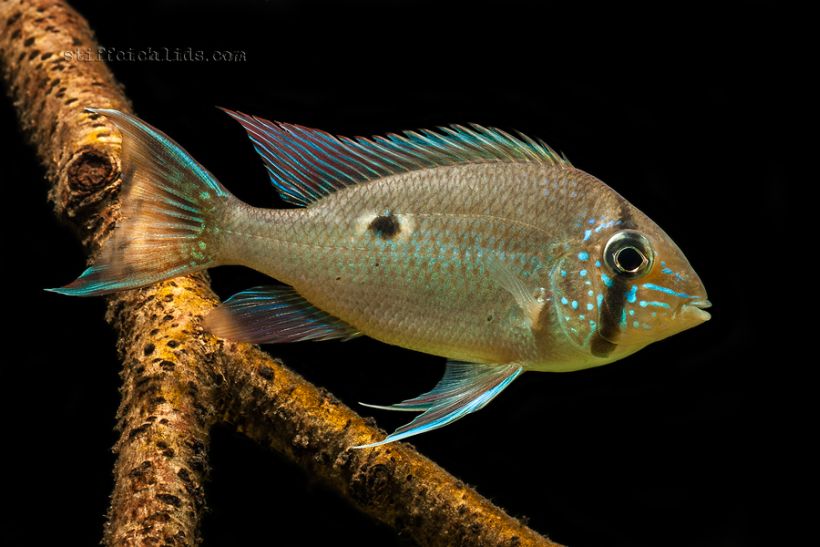
Max length100mm SL3.9in SLTank150 × 45cm60 × 18inTemp20–30°C68–86°FpH4.0–6.5Populations known in the aquarium trade include 'Cuao', 'Orinoco', 'San Antonio', and 'Sipapo Ventuari'. B. wavrini and its congener B. cupido can be separated by body shape and position of the dark blotch on the posterior portion of the flank. In B. cupido the body is relatively compact and the blotch located above the upper lateral line, whereas in B. wavrini the body is noticeably elongate and the blotch on or below the upper lateral line.
Brachygobius aggregatusSchooling Bumblebee Goby
Herre, 1940
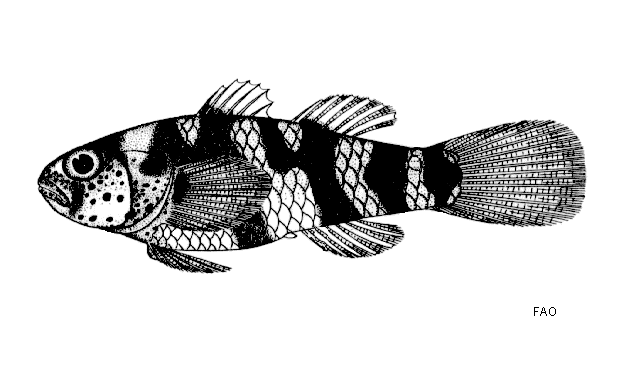
Max length44mm SL1.7in SLTank45 × 30cm18 × 12inTemp22–28°C72–82°FpHnot recordedThough this species appears on ornamental trade lists quite often the name appears to be routinely misapplied to other species, particularly B. doriae. It can be diagnosed as follows: <30 lateral scales; two black body bands reaching ventral midline posterior to anal-fin; band above anal-fin als...
Channa marulioidesEmperor Snakehead
Bleeker, 1851
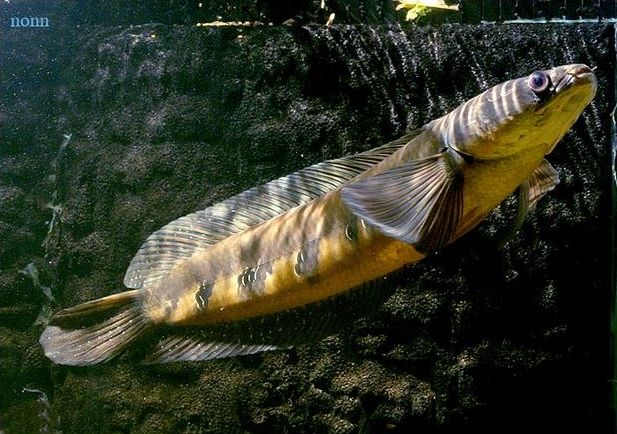
Max length650mm SL26in SLTanknot recordedTemp22–30°C72–86°FpH6.0–8.0This species is often confused with the nominal congeners C. marulius (Hamilton, 1822) and C. melanoptera (Bleeker, 1855) with all three presenting taxonomic problems. For example, C. marulioides exhibits a number of variations in colour pattern depending on collection locality with the most common possessing a brownish base colour with a series of dark, chevron-like markings along each flank and some scales margined posteriorly in white.
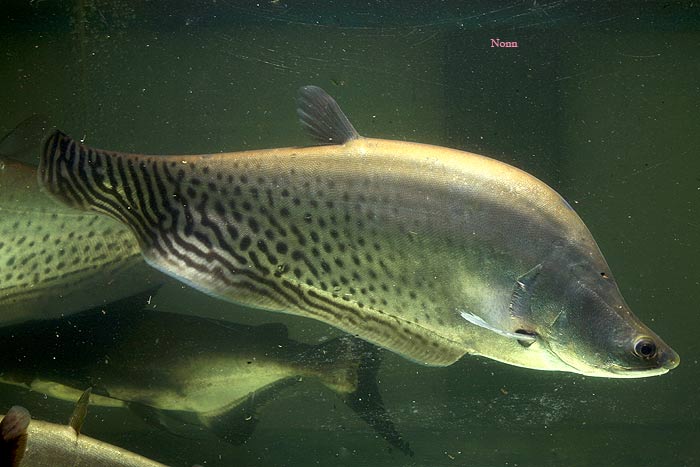
Chitala blanciRoyal Featherback
d'Aubenton, 1965
Max length1200mm SL47in SLTanknot recordedTemp20–28°C68–82°FpH6.0–8.0This species is also referred to as 'royal knifefish' in the aquarium trade but arguably has no place in the ornamental hobby given its adult size and specialised requirements. It can be distinguished from congeners by presence of many small, dark spots on the anterior portion of the body which merge to form oblique, irregular stripes extending onto the anal and caudal fins posteriorly.
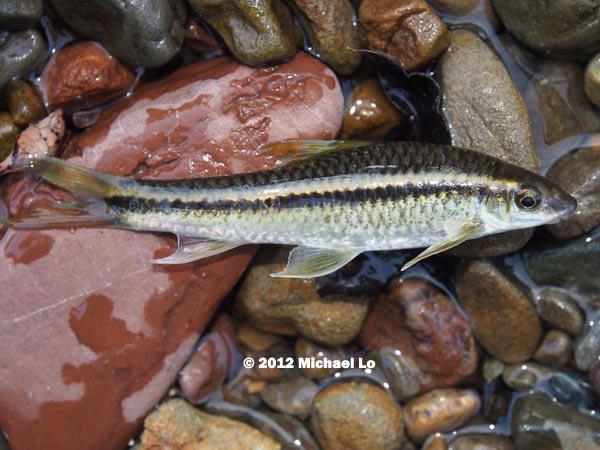
Crossocheilus cobitis
Bleeker, 1854
Max length52mm SL2.0in SLTank100 × 30cm39 × 12inTemp20–26°C68–79°FpHnot recordedGiven its wide natural range it seems logical that this species is or has been available in the aquarium trade, although its correct name may never have been applied. It is told apart from congeners by the following combination of characters: two pairs of barbels; a continuous midlateral stripe from the tip of the snout to the base of the caudal-fin, with a conspicuous small blotch at the posterior extremity, faintly marked on the caudal-fin; a faint mark between the anus and the anal-fin origin in juveniles; a narrow mouth.
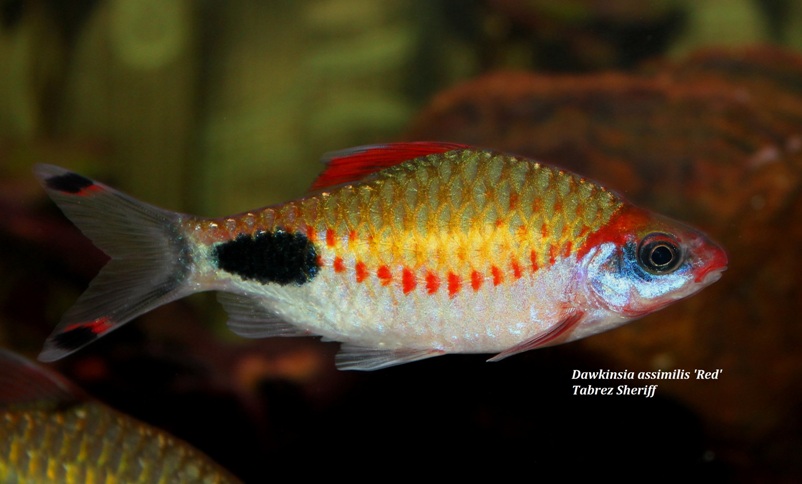
Dawkinsia assimilisMascara Barb
Jerdon, 1849
Max length120mm SL5in SLTank120 × 45cm48 × 18inTemp19–25°C66–77°FpH6.0–7.0D. assimilis has been misidentified as Puntius mahecola (Valenciennes 1844) in the past but the identity of both species was resolved by Pethioyagoda and Kottelat (2005 a, 2005b). They inspected the syntypes of P. mahecola and concluded that though valid it isn't closely related to any Dawkinsia (then the Puntius filamentosus group) but is rather a smaller, silvery fish with a single dark blotch on the caudal peduncle, located entirely posterior to the anal-fin. It's wi....
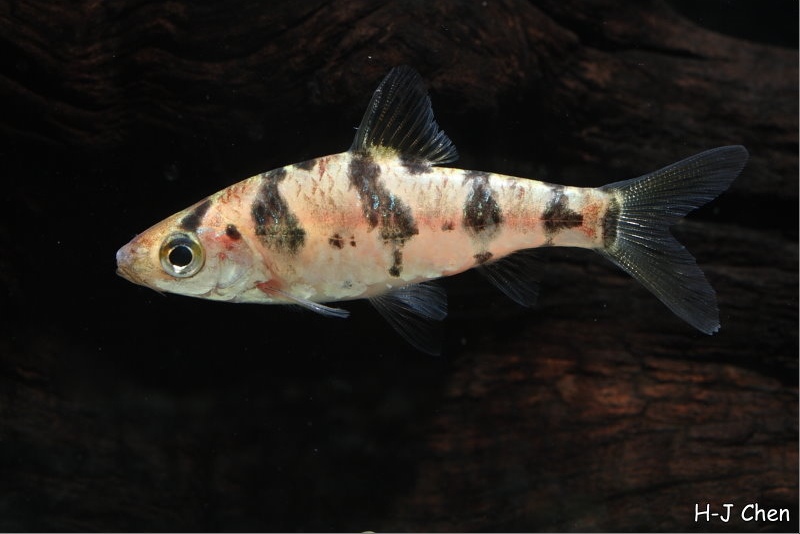
Desmopuntius foerschi
Kottelat, 1982
Max length55mm SL2.2in SLTank80 × 30cm31 × 12inTemp20–28°C68–82°FpH5.0–7.0D. foerschi is sometimes traded as 'boomerang barb' or 'Foersch's fire barb' and is included in a group of closely-related, similar-looking fishes which were moved into the new genus Desmopuntius by Kottelat (2013). It can be told apart from other vertically-striped congeners by possession of additional dark blotches between the second, third and fourth vertical bars and a further marking at the posterior base o...
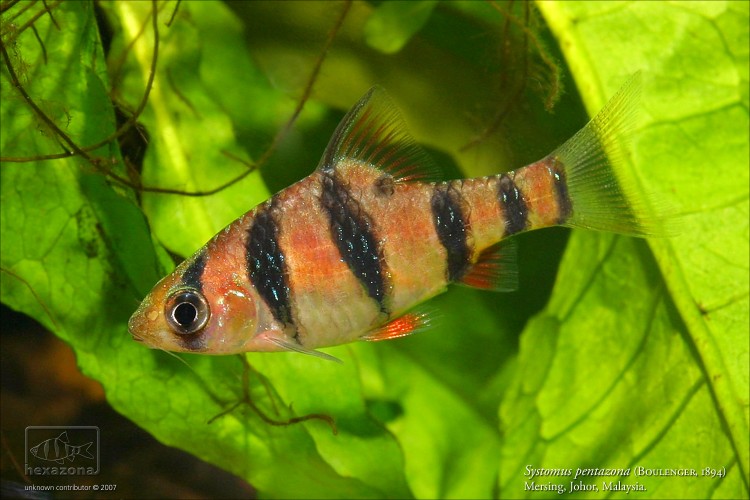
Desmopuntius pentazonaFive-banded Barb
Boulenger, 1894
Max length55mm SL2.2in SLTank80 × 30cm31 × 12inTemp21–26°C70–79°FpH4.0–7.0This species is rare in the aquarium trade with the majority of fish available under the name or the vernacular 'pentazona barb' being the closely-related D. hexazona. The two are almost identical in terms of both appearance and meristics but can be separated by the fact that D. pentazona possesses a small dark marking at the posterior base of the dorsal-fin which is absent in D. hexazona.
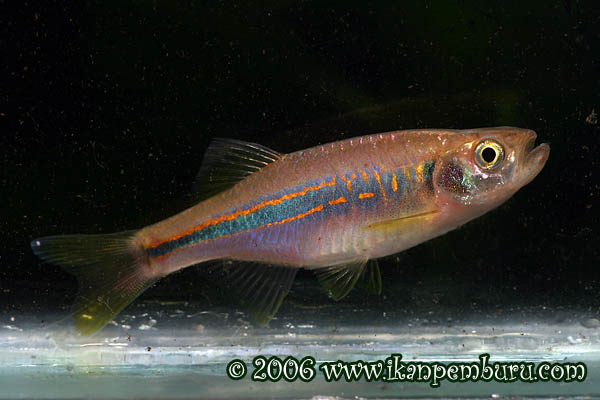
Devario laoensis
Pellegrin & Fang, 1940
Max length65mm SL2.6in SLTank90 × 30cm36 × 12inTemp23–26°C73–79°FpH6.0–7.5It can be further distinguished from other species in the genus by colour pattern consisting of a dark, horizontal P stripe originating around mid-body, where it's relatively faint, this becoming thicker and darker in the posterior portion of the body and terminating at the base of the caudal-fin. Among congeners it's most similar to D. chrysotaeniatus but that species lacks the infraorbital process, has three rows of pharyngeal teeth and the P stripe extends to the end of the caudal-fin rays.
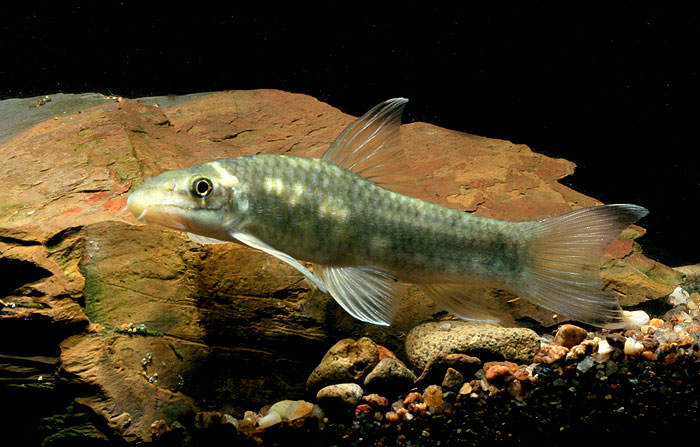
Garra rakhinica
Kullander & Fang, 2004
Max length60mm SL2.4in SLTanknot recordedTempnot recordedpHnot recordedG. rakhinica can be distinguished from other members of the genus by the following combination of characters: rostral furrow shallow and snout tip smoothly rounded; rostral lobe present, proboscis absent; scaled predorsal region, chest, and abdomen; two pairs of barbels; 28 lateral line scales; 16 circumpeduncular scale rows; colour pattern almost uniform greyish on body and caudal-fin; a dark spot immediately posterior to the upper extremity of the...
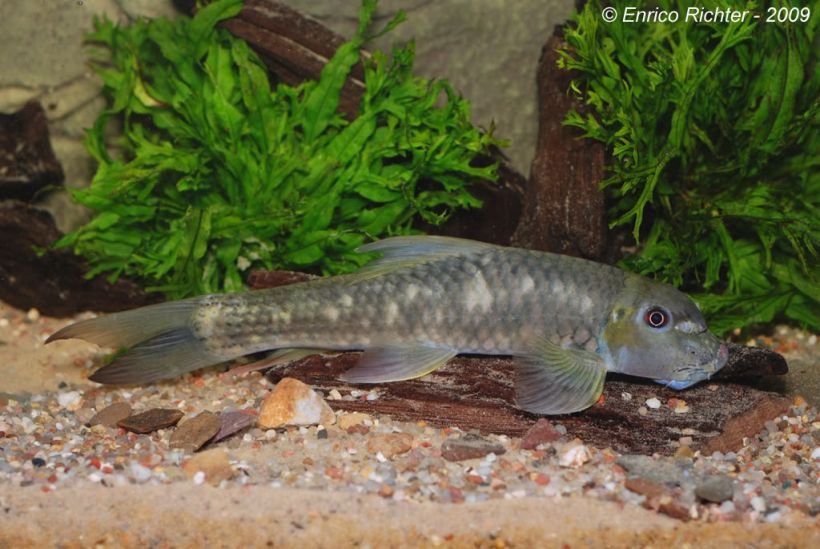
Garra salweenica
Hora & Mukerji, 1934
Max length175mm SL7in SLTanknot recordedTempnot recordedpHnot recordedG. salweenica can be distinguished from other congeners inhabiting the Salween watershed by the following combinatuion of characters: body brownish; presence of a trilobed proboscis on the snout; snout blunt; a series of black spots at the base of the central dorsal-fin rays; presence of longitudinal stripes on the posterior portion of the body; a dark marking at the tip of the upper (and lower in some specimens) caudal-fin lobe; body depth 22.4-25.3 % SL.
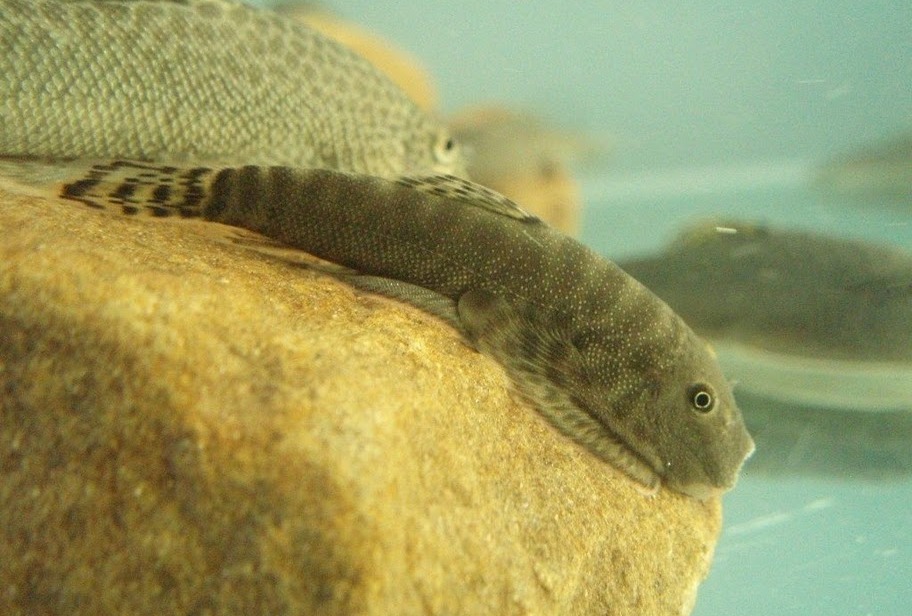
Gastromyzon cornusaccus
Tan, 2006
Max length50mm SL2.0in SLTank75 × 30cm30 × 12inTemp20–24°C68–75°FpH6.0–8.0G. cornusaccus can be distinguished from congeners by the following combination of characters: secondary rostrum present; incomplete postoral pouch present reduced to pockets located posterior to mouth corners; sublacrymal groove present and visible when viewed laterally; juveniles with thick, cream-coloured bars and blotches on body, adults uniformly-coloured; head dorsum plain; subopercular groove absent; gill slit vertical; snout truncate when viewed dorsally; no scales on abdomen; 55-61 lateral line scale...
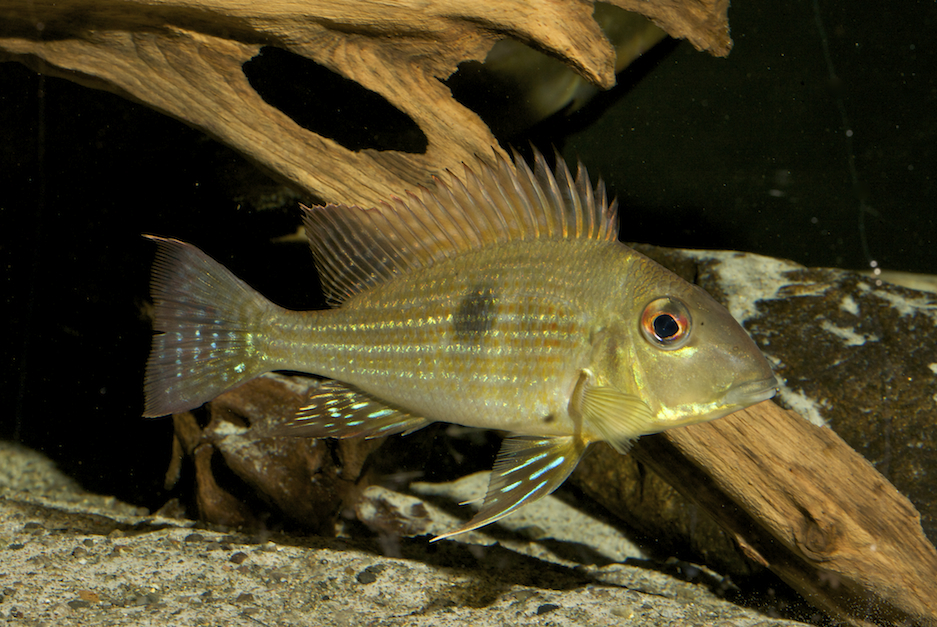
Geophagus brokopondo
Kullander & Nijssen, 1989
Max length150mm SL6in SLTank150 × 60cm60 × 24inTemp25–33°C77–91°FpH5.0–7.0This species is very rarely-traded since collections of fishes for commercial purposes aren't common in Suriname. It's a member of the nominal G. surinamensis 'group' of closely-related species within the genus and can be identified by a combination of characters including: no dark preopercular marking; six vertical/parallel bars on each flank (normally visible only when the fish are stressed, spawning or preserved); dark, squarish lateral spot positioned within the third vertical bar; sixth (posterior) bar elongate an...
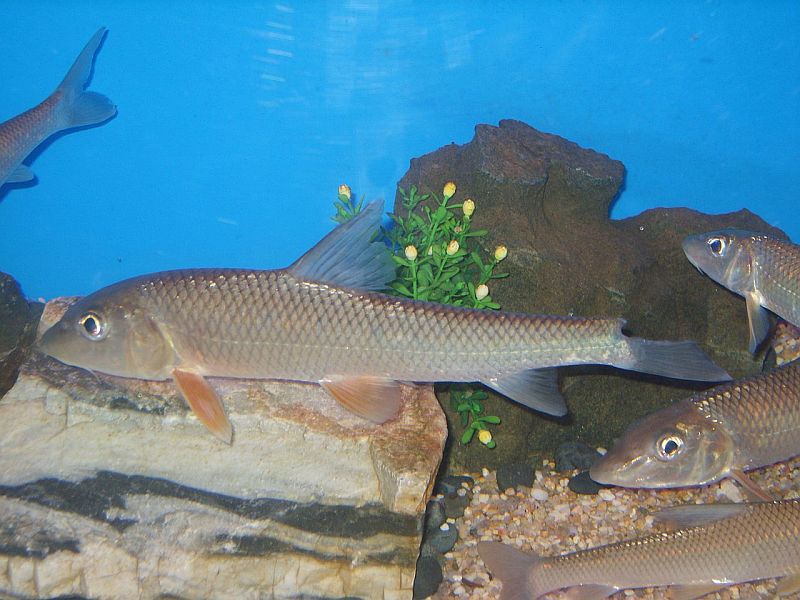
Hemibarbus labeoBarbel Steed
Pallas, 1776
Max length450mm SL18in SLTanknot recordedTempnot recordedpHnot recordedThis species can be distinguished from other members of the genus by the following combination of characters: absence of dark spots on body in adults; body elongate with slightly convex dorsal profile; head longer than body is deep; snout much longer than postorbital head length; lips well developed, lateral lobes of lower lip broad and thick with folds, median process small; barbel thickness shorter or equal to eye diameter; dorsal spine strong, ⅔ of HL; dorsal-fin origin closer to tip of snout than caudal-fin base base; 15+ gill rakers; 6½ branched anal-fin rays; posterior simple dorsal-fin rays ossified and spinous.
Herichthys cyanoguttatusTexas Cichlid
authority not recorded
Max length300mm SL12in SLTanknot recordedTempnot recordedpH6.0–7.5Like many cichlids, members of the genus Herichthys share something of a confused taxonomic past. Erected in 1854 with H. cyanoguttatus the type species, its members were moved into Cichlasoma by Regan in 1905. However following a reclassification of Cichlasoma by Kullander in 1983 it was once again deemed valid. In 1996 Kullander suggested Herichthys should only contain species "sharing a colour pattern of short vertical bars or black spots posteriorly from the middle of the side, and a un...