Results for “posterior”
Type a name: scientific, common, or one a species used to go by. Or narrow the catalogue with the filters.
Filters
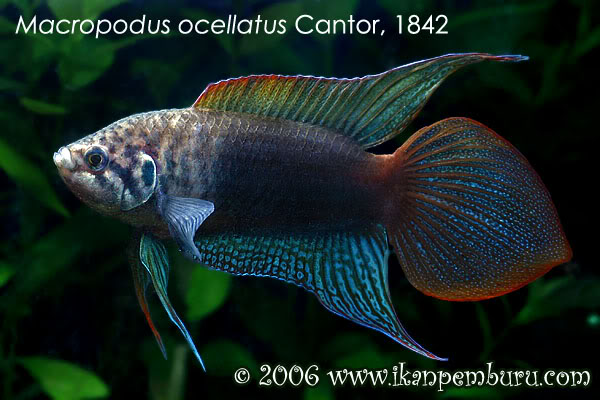
Macropodus ocellatusRoundtail Paradise Fish
Cantor, 1842
Max length80mm SL3.1in SLTank80 × 30cm31 × 12inTemp10–22°C50–72°FpH6.0–7.5M. ocellatus can be distinguished from congeners by the following combination of characters: caudal-fin rounded; eye stripe not connecting spot on posterior projection of opercle with eye; dorsal-fin rays filamentous posterior to a vertical through the posterior anal-fin rays in adults; 16-19 spinous dorsal-fin rays; 6-13 rakers on ceratobranchial of first gill arch; posterior tip or margin of body scales not darker than scales.
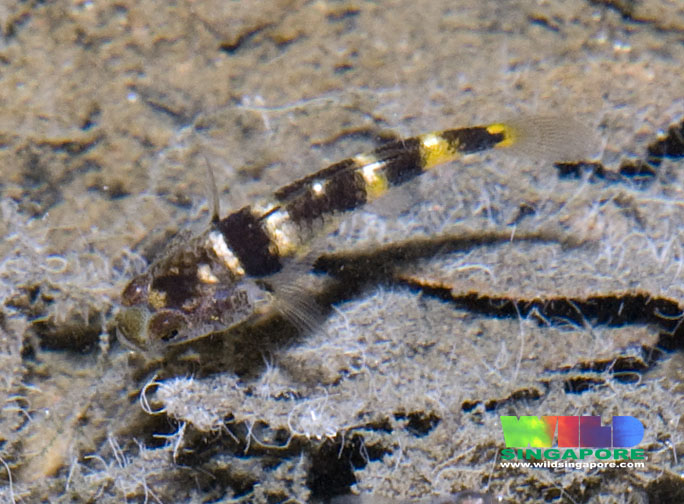
Brachygobius kabiliensisKabili bumblebee goby
Inger, 1958
Max length18mm SL0.7in SLTank45 × 30cm18 × 12inTemp22–28°C72–82°FpHnot recordedIt can be diagnosed as follows: <30 lateral scales; two black body bands reaching ventral midline posterior to anal-fin; band above anal-fin also reaching ventral midline no black band on head, though the first band may touch the posterior margin of the eye; band above anal-fin not reaching ventral midline; 6 branched anal-fin rays; 7-8 predorsal scales. Brachygobius currently contains 9 described species but is likely to prove more diverse should a review be carried out. Alt...
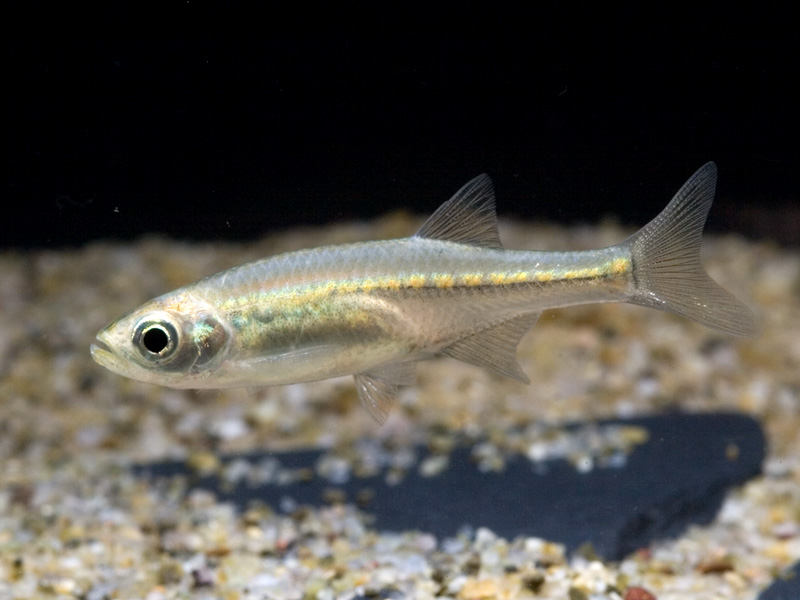
Devario sp. 'purple cypris'
authority not recorded
Max length45mm SL1.8in SLTank75 × 30cm30 × 12inTempnot recordedpHnot recordedThis unidentified species has only appeared in the aquarium trade on a handful of occasions and it has been widely misidentified as Devario jayarami (Barman, 1984). It differs from D. jayarami by possessing 9-10 lateral bars which progressively increase in size posteriorly (vs. 12-13 bars which decrease in size posteriorly), 12 anal-fin rays (vs. 15-16) and a blunter head profile with a lack of convexity behind the head (vs. head profile conical with noticeable convexity behind the head).
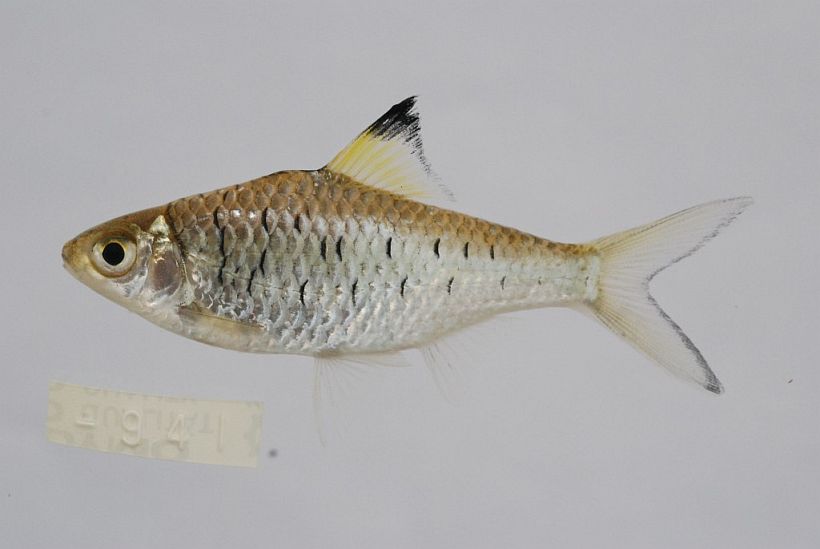
Mystacoleucus atridorsalis
Fowler, 1937
Max length80mm SL3.1in SLTanknot recordedTempnot recordedpHnot recordedThis species can be distinguished from congeners by the following combination of characters: body depth fits 2.5-2.7 times in SL; 28-31 +2-3 lateral line scales; 14-16 circumpeduncular scale rows; 5-5½ scale rows between the lateral line and dorsal-fin origin; a triangular distal blotch on the dorsal-fin; a few body scales with crescent-shaped black edges; a thin dark margin on the dorsal-fin, posterior to the distal blotch; a dark posterior margin on the caudal-fin; normally a single pair of rudimentary barbels present.
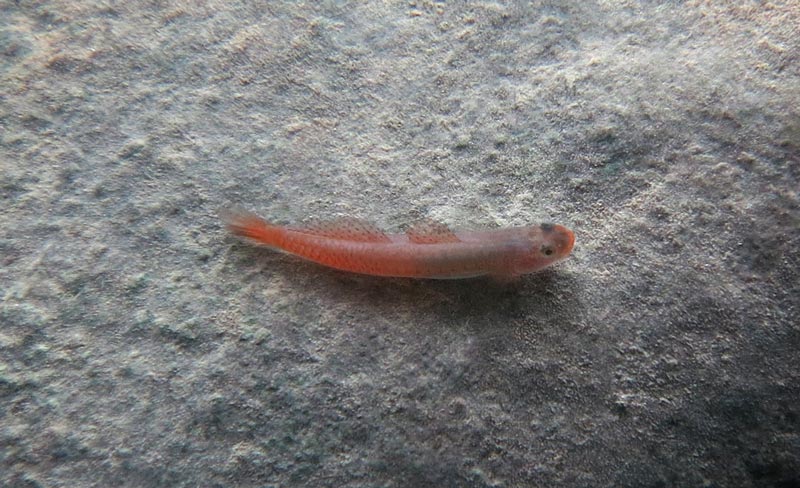
Stiphodon surrufus
Watson & Kottelat, 1995
Max length35mm SL1.4in SLTank60 × 30cm24 × 12inTemp22–28°C72–82°FpH6.5–7.5As with all members of the genus sexual dimorphism is pronounced. Males are brightly-coloured, with a reddish-orange stripe extending posteriorly from the pectoral-fin, with the posterior portion of the body entirely suffused with red. A darkish band extends from behind the eye to the edge of the opercle, and the basal third of the caudal-fin is reddish-orange.
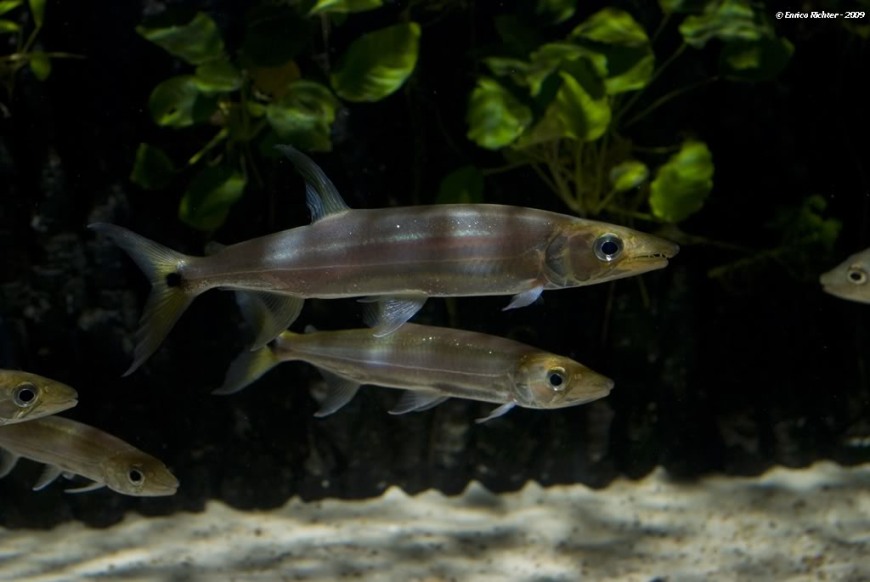
Acestrorhynchus falcirostrisBig-Eyed Cachorro
Cuvier, 1819
Max length350mm SL14in SLTank250 × 90cm98 × 36inTemp22–28°C72–82°FpH6.0–7.5This species is a member of the putative A. nasutus group of closely-related species within the genus alongside A. nasutus, A. maculipinna and A. isalineae. These are characterised by possession of two dark, longitudinal stripes, one running from the tip of the snout to the base and the other from the posterior edge of the lower maxilla to the underside of the caudal peduncle.
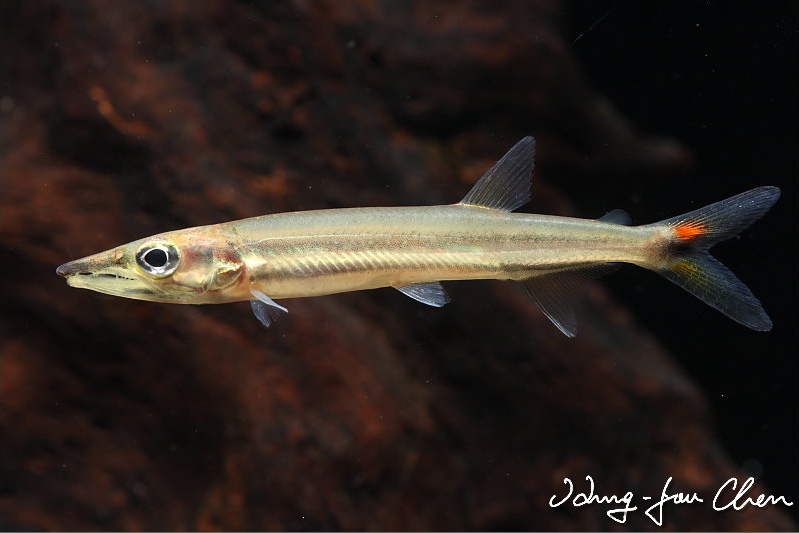
Acestrorhynchus isalineaeStriped Barracuda Tetra
Menezes & Géry, 1983
Max length105mm SL4in SLTank120 × 45cm48 × 18inTemp24–28°C75–82°FpH6.0–7.5This species is a member of the putative A. nasutus group of closely-related species within the genus alongside A. nasutus, A. maculipinna and A. isalineae. These are all characterised by possession of two dark, longitudinal stripes, one running from the tip of the snout to the base and the other from the posterior edge of the lower maxilla to the underside of the caudal peduncle.
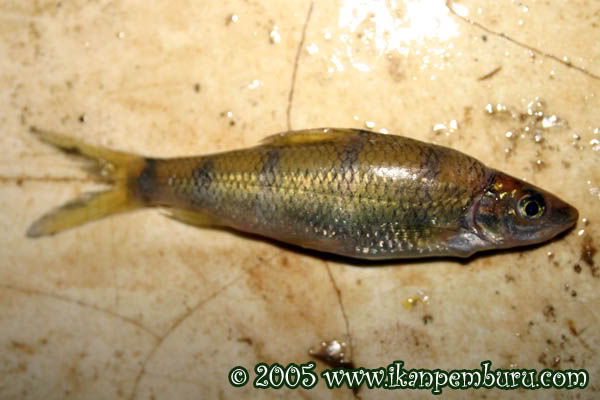
Acrossocheilus iridescens
Nichols & Pope, 1927
Max length300mm SL12in SLTanknot recordedTempnot recordedpHnot recordedA. iridescens and its closest relative A. longipinnis can be distinguished from all other barred species of Acrossocheilus by the following characters: wider (vs. narrower) black vertical bars on the flank in adults, each five to eight (vs. no more than four) scales in width; a horse-shoe shaped (vs. arched) mouth gape; rostral barbel located posteriorly (vs. anteriorly) to a horizontal line through the anteriormost margin of the lower jaw; two postlabial grooves extending anteromedially beyond (vs. away from) a horizontal line through the roots of the rostral barbels.
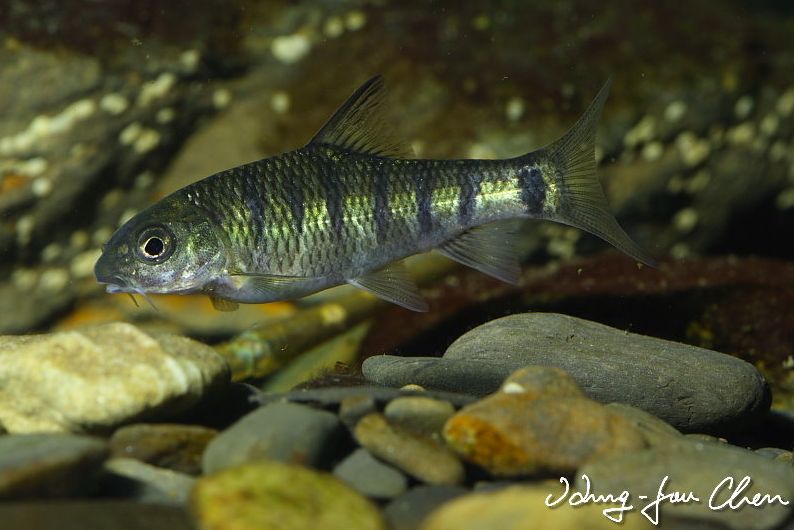
Acrossocheilus paradoxusTaiwan Banded Barb
Günther, 1868
Max length200mm SL8in SLTank180 × 45cm72 × 18inTemp15–25°C59–77°FpH6.0–8.0The genus Acrossocheilus is restricted to southern China, northern Vietnam and northern Laos. It can be distinguished from related genera by the following combination of characters: rostral fold present; lips fleshy and continuous around corners of mouth; lower lip with a median interruption; mouth inferior; horny sheath on lower jaw; two pairs of barbels; last simple ray of dorsal fin osseous with a serrated or smooth posterior margin.
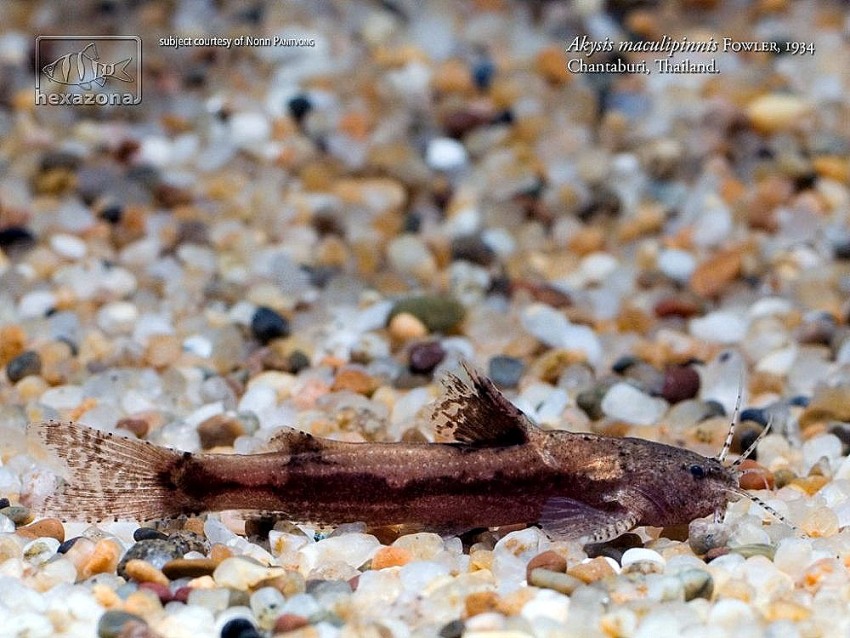
Akysis maculipinnisSpotfin Stream Catfish
Fowler, 1934
Max length35mm SL1.4in SLTank45 × 30cm18 × 12inTemp16.5–24°C62–75°FpH6.0–7.5This species has been exported for the aquarium hobby and ranks among the smaller members of the family. It can be differentiated from all other Akysis species by the following combination of characters: head length 22.0-28.6% of standard length (SL); caudal peduncle depth 8.8-10.7% of SL; anal-fin base length 15.2-19.1% of SL; eye diameter 12-16% of head length (HL); nasal barbel length 57 92% of HL; posession of 3-4 serrae on the posterior edge ofspine; body patterning mottled with indistinct ...
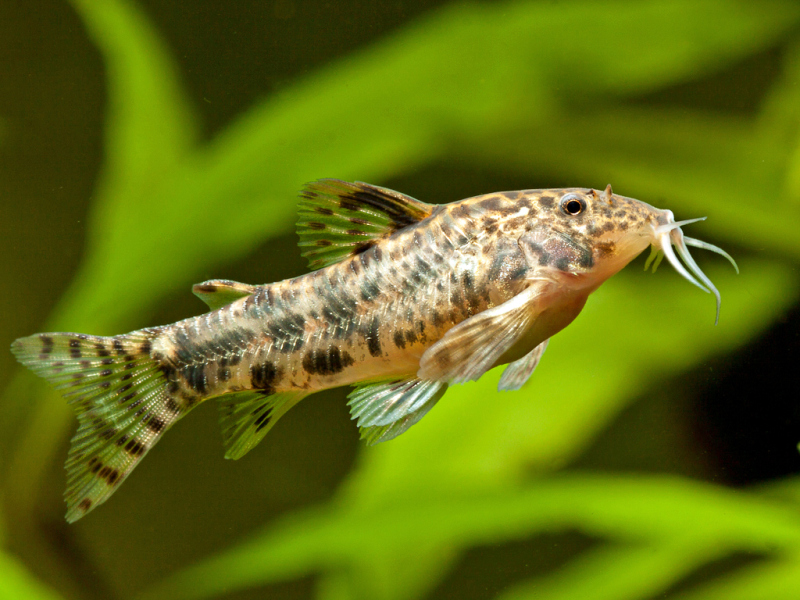
Aspidoras taurus
Lima & Britto, 2001
Max length55mm SL2.2in SLTank75 × 30cm30 × 12inTemp20–25°C68–77°FpH6.0–7.5A. taurus can be told apart from congeners by the following combination of characters: infraorbitals and preopercle covered by thick skin and not visible externally (vs. covered by thin skin and externally visible in other Aspidoras); nuchal plate reduced, covered by thick skin and not visible externally (vs. well developed, covered by thin skin and visible externally); lateral line absent posterior to two small lateral line ossicles (vs. lateral line present on at least first body plate).
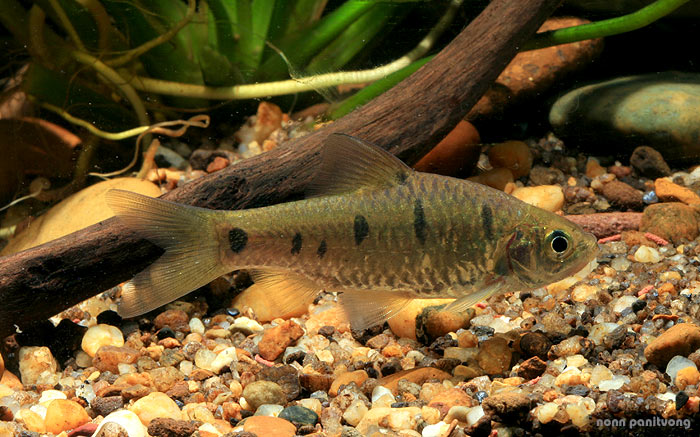
Barbodes aurotaeniatus
Tirant, 1885
Max length65mm SL2.6in SLTank80 × 30cm31 × 12inTemp18–26°C64–79°FpH6.0–7.5B. aurotaeniatus is uncommon in the aquarium trade. Following Kottelat (1998) it has a single pair of maxillary barbels, a complete lateral line and colour pattern usually comprising four small, vertically-orientated black markings on the flanks (located above anterior lateral line origin, below dorsal-fin origin, below posterior end of dorsal-fin base and on caudal peduncle, respectively) and one on the dorsal surface, below dorsal-fin origin.
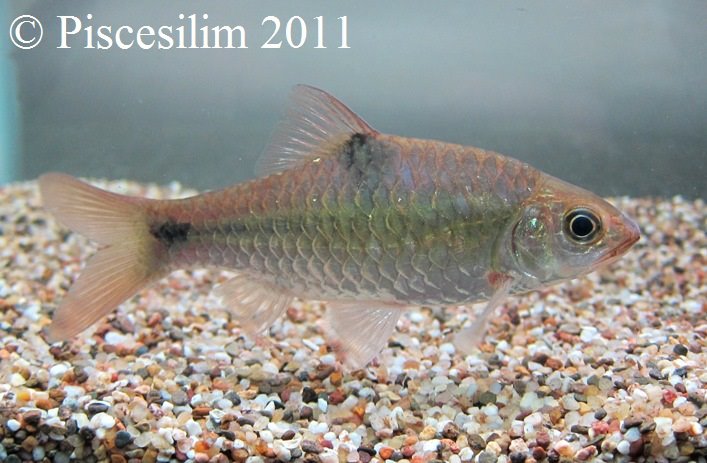
Barbodes binotatusSpotted Barb
Valenciennes, 1842
Max length200mm SL8in SLTank120 × 45cm48 × 18inTemp18–30°C64–86°FpH6.0–7.5This species is so ubiquitous across its natural range that it's often referred to simply as 'common barb'. Basic adult colour pattern consists of a small, dark spot at the base of the dorsal-fin origin and another on the caudal peduncle but overall appearance varies somewhat depending on origin, with the anterior dark spot enlarged ventrally forming a bar or posterior spot extending into the caudal-fin, for example. The spots may also appear darker or lighter in some individuals.
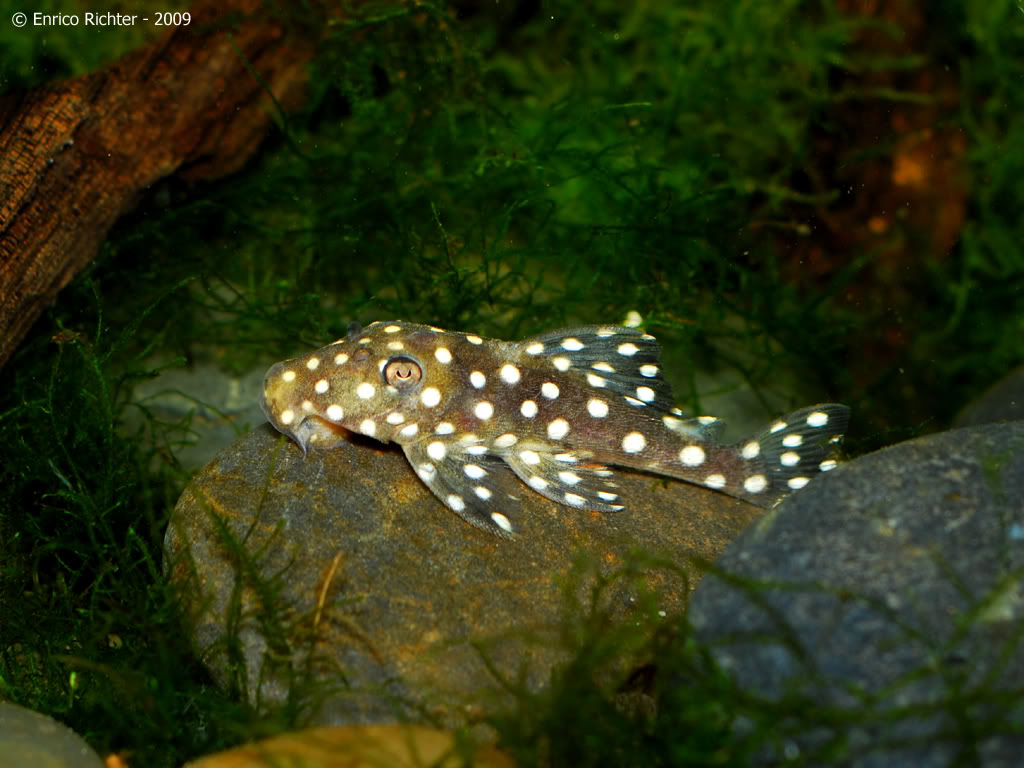
Baryancistrus sp. L142Big White Spot Pleco
authority not recorded
Max length250mm SL10in SLTank120 × 45cm48 × 18inTemp27–32°C81–90°FpH6.0–7.5The genus Baryancistrus can be distinguished from all other loricariids by possession of an enlarged membrane located posteriorly to the last branched dorsal-fin ray. This membrane may or may not reach the supporting structure of the adipose fin and in this way members can be told apart from the genera Oligancistrus, Parancistrus, and Spectracanthicus, in which the dorsal and adipose fins are completely connected, and Hemiancistrus...
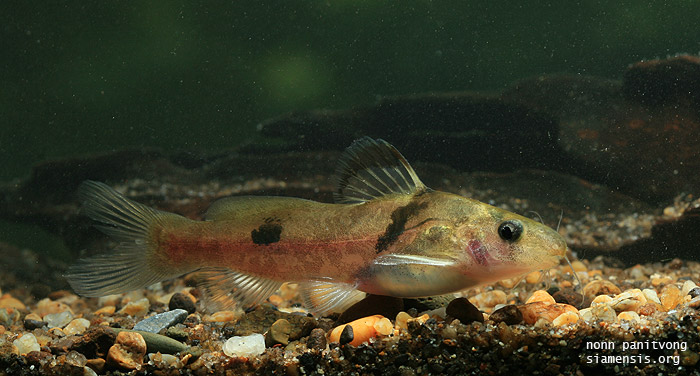
Batasio fluviatilis
Day, 1888
Max length72mm SL2.8in SLTank120 × 30cm48 × 12inTemp16–24°C61–75°FpH6.0–7.0Batasio havmolleri (Smith, 1931) is currently considered a junior synonym of B. fluviatilis. Members of the genus Batasio are characterised by the following combination of characters; laterally-compressed body shape; presence of large sensory pores on the head; a narrow mental region; a pair of prominent posterior proces...
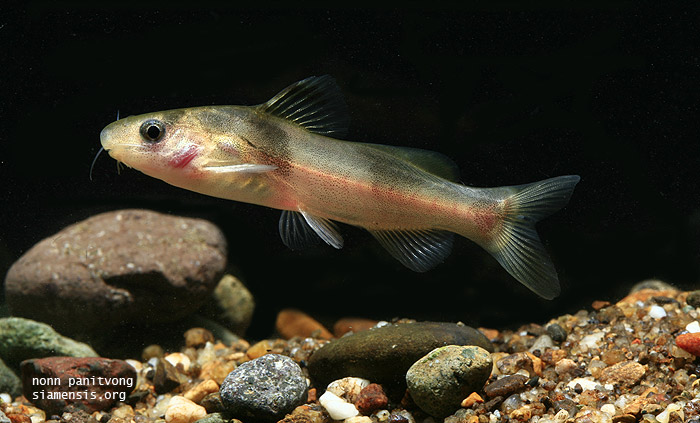
Batasio tigrinus
Ng & Kottelat, 2001
Max length80mm SL3.1in SLTank120 × 30cm48 × 12inTemp17–23°C63–73°FpH6.0–7.0Members of the genus Batasio are characterised by the following combination of characters; laterally-compressed body shape; presence of large sensory pores on the head; a narrow mental region; a pair of prominent posterior processes on the anterior portion of the vomer; a transversely elongated, bar-like entopterygoid; close contact between the metapterygoid and quadrate.
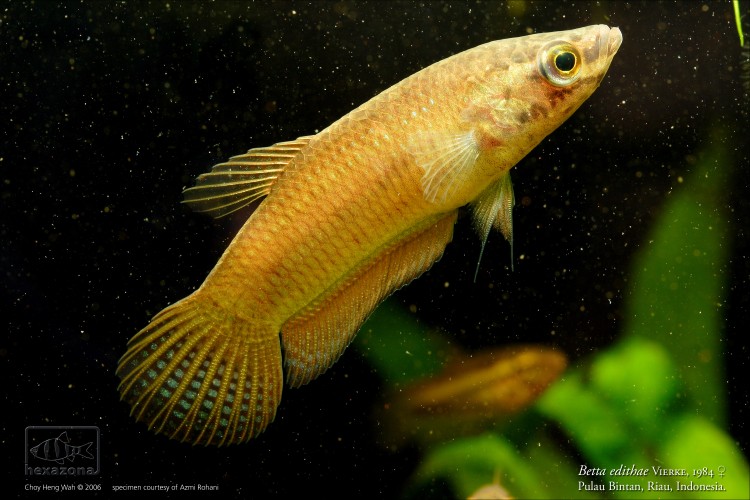
Betta edithae
Vierke, 1984
Max length60mm SL2.4in SLTank80 × 30cm31 × 12inTemp20–27°C68–81°FpH5.0–7.0This species is the only member of the B. edithae group within the genus, and separated from all other Betta spp. by the fact that the branchiostegal membrane and posterior portion of the opercle are opaque or translucent. The original diagnosis by Vierke also states that it has relatively small eyes and short fins with a typical pattern of partial barring.
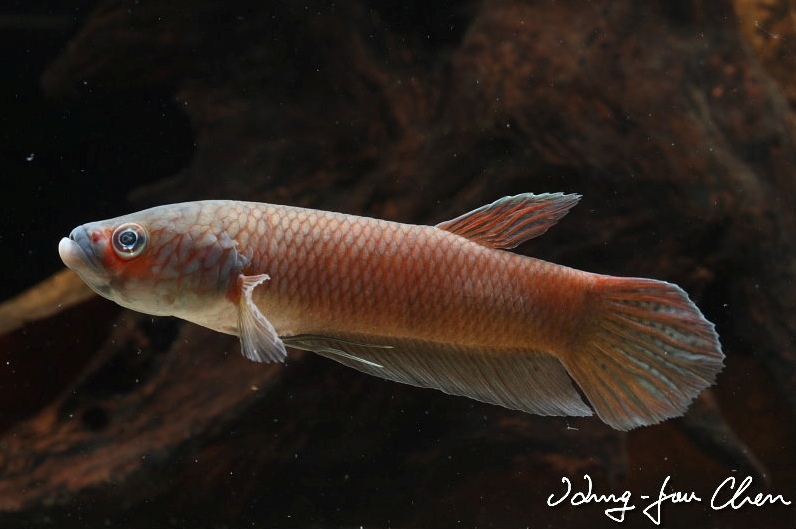
Betta ideii
Tan & Ng, 2006
Max length110mm SL4in SLTank90 × 30cm36 × 12inTemp20–26°C68–79°FpH5.5–7.5Prior to official description this species was traded as B. sp. 'Laut'. It's included in the Betta unimaculata complex of closely-related species within the genus, , of which members share the following set of characters: body long and slender with depth at dorsal fin origin 18-25 % SL; head large and blunt with width 19-24 % SL; long maxilla and lower lip with distance from tip of lower jaw to posterior end of maxilla 27-54 % HL; caudal-fin rounded in sha...
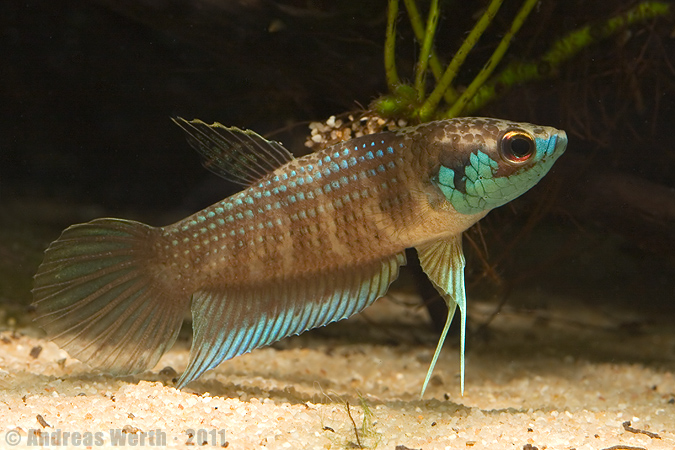
Betta kuehnei
Schindler & Schmidt, 2008
Max length60mm SL2.4in SLTank60 × 30cm24 × 12inTemp21–25°C70–77°FpH6.0–7.5It can be told apart from other members of the B. pugnax group by the following characters: caudal fin rounded in both males and females; chin bar and second postorbital stripe absent; adult males possess intensive blue or bluish-green iridescent (blackish in preservation) colouration on the sides of the head and throat extending from the snout tip to posterior edge of opercle; possession of two central body stripes, the upper extending from the pec...
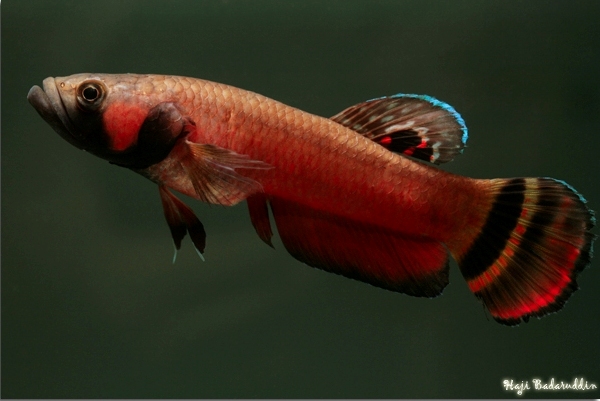
Betta macrostomaBrunei Beauty
Regan, 1910
Max length100mm SL3.9in SLTank80 × 30cm31 × 12inTemp20–25°C68–77°FpH4.0–6.0B. macrostoma is included in the Betta unimaculata complex of closely-related species within the genus, of which members share the following set of characters: body long and slender with depth at dorsal fin origin 18-25 % SL; head large and blunt with width 19-24 % SL; long maxilla and lower lip with distance from tip of lower jaw to posterior end of maxilla 27-54 % HL; caudal-fin rounded in shape, occasionally with elongated median rays; pelvic-fin short and filamentous; dorsal and anal fins relatively pointed.