Results for “sp.”
Type a name: scientific, common, or one a species used to go by. Or narrow the catalogue with the filters.
Filters
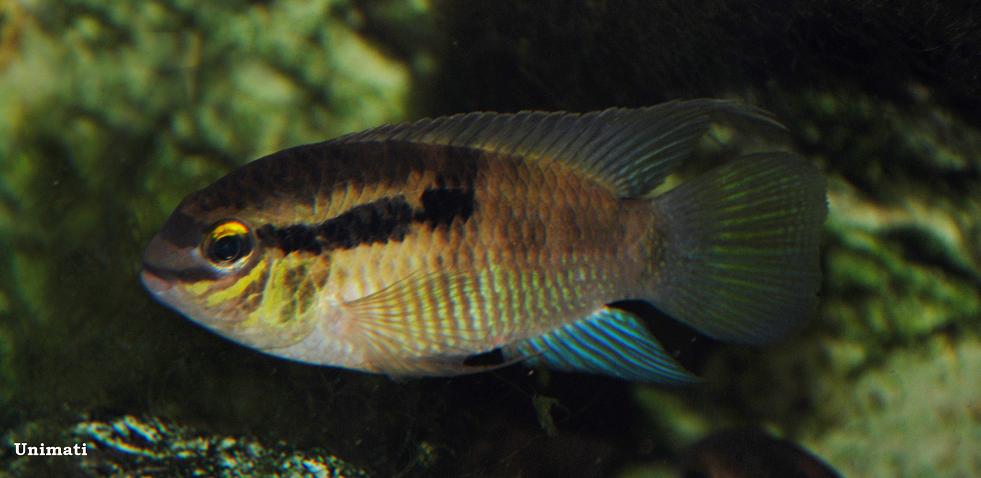
Laetacara thayeri
Steindachner, 1875
Max length65mm SL2.6in SLTanknot recordedTemp20–28°C68–82°FpH4.5–7.5This species is relatively rare in the aquarium trade. It can be differentiated from all congeners by a combination of possessing ctenoid (vs. cycloid) scales on the sides of the head plus lacking a dark spot at the caudal-fin base.
Lamprologus kungweensisOcellated Shell-dweller
authority not recorded
Max length80mm SL3.1in SLTank75 × 30cm30 × 12inTemp23–27°C73–81°FpH7.5–9.0L. kungweensis can be distinguished from similar species such as L. hecqui by the gold colour on the top of the eye. It also has a distinctive black spot towards the back of the dorsal fin. It is not often seen in the hobby....
Lates calcariferBarramundi
authority not recorded
Max length2000mm SL79in SLTanknot recordedTemp15–28°C59–82°FpH7.0–8.5This species is included purely because there have been an alarming number of juvenile fish showing up recently in some aquatic stores and as a result, in hobbyists tanks. This fish is simply not suited to captive life in any respect. To know that it's one of the most sought after sport fish in Australia should tell you all you need to know about it. Although undeniably attractive when juvenile, please don't be tempted to buy if you see these for sale. Housing one for life is beyond th...
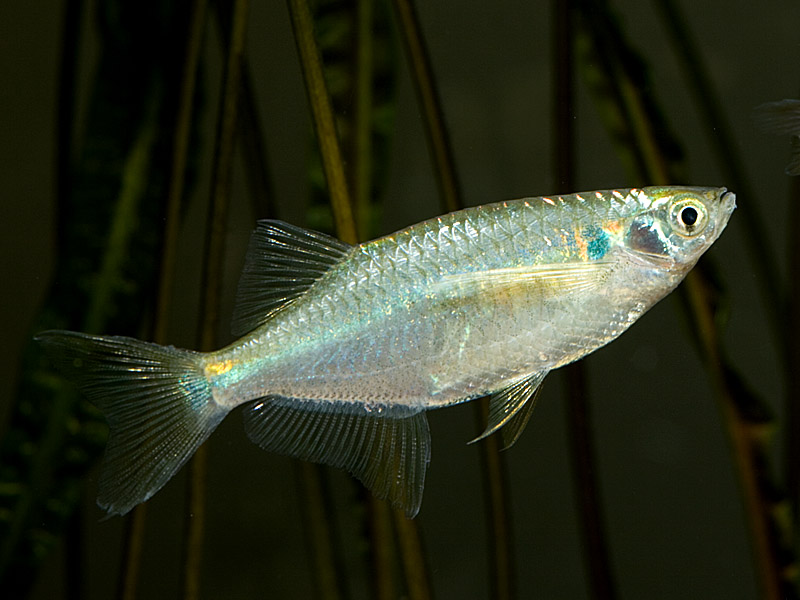
Laubuka caeruleostigmataFlying Minnow
Smith, 1931
Max length70mm SL2.8in SLTank120 × 30cm48 × 12inTemp20–26°C68–79°FpH6.0–8.0This species is also known as 'leaping barb' and was once quite common in the ornamental trade but is now seldom seen. It can be distinguished from other members of the genus by the following characters: bright blue spot on top of head; series of 4-5 short faint bars on anterior portion of body; 19-23½ branched anal-fin rays; body depth fits 2.1-2.9 times in SL.
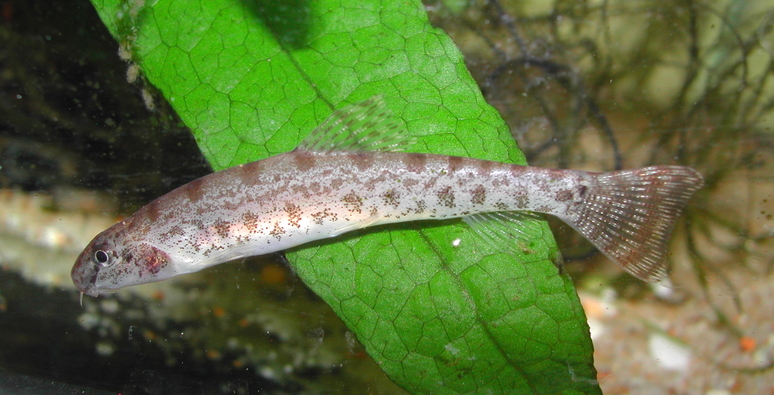
Lepidocephalichthys goalparensis
Pillai & Yazdani, 1976
Max length45mm SL1.8in SLTank45 × 30cm18 × 12inTemp22.8–26.1°C73–79°FpH6.0–7.5This species is almost unheard of in the hobby with the specimen pictured above the only one we're aware of. It was imported into the United Kingdom in late 2011 as bycatch among a shipment of mastacembelid eels from northern India, and the identification was subsequently confirmed by Justin Havird, senior author of the most recent revision of the genus.
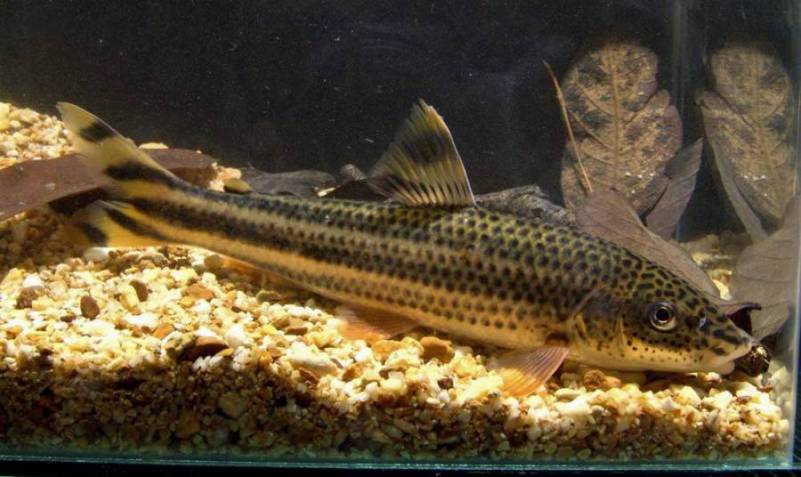
Leporellus vittatus
Valenciennes, 1850
Max length300mm SL12in SLTank210 × 60cm84 × 24inTemp18–26°C64–79°FpH5.5–7.5Type locality is given simply as 'Amazon River, Brazil' and according to current thinking this species has a huge natural range encompassing the Amazon River system in Brazil and Peru plus the Paraná-Paraguay drainage in southern Brazil and Paraguay and rio São Francisco basin in southern Brazil. Specimens in our images were collected fro...
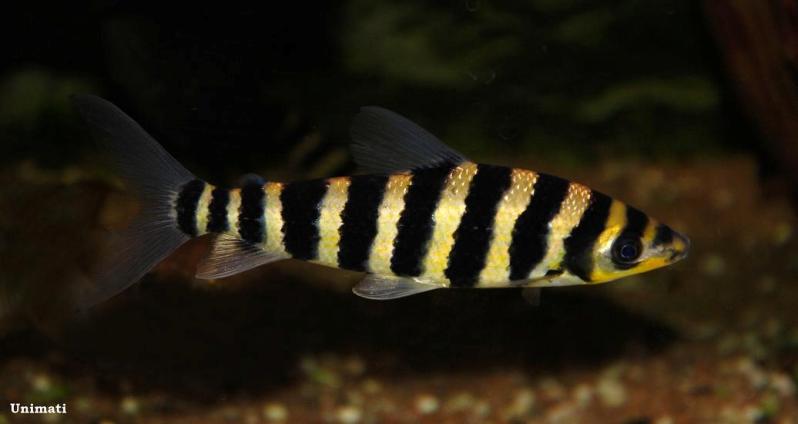
Leporinus fasciatusBanded Leporinus
Bloch, 1794
Max length270mm SL11in SLTank210 × 60cm84 × 24inTemp20–28°C68–82°FpH5.0–7.5This species is also referred to as 'black-anded leporinus', 'striped leporinus' and 'eight-banded leporinus'. Young specimens are often traded for aquaria without warning as to their potential size and requirements, and as a result it's fairly ubiquitous in public aquarium displays.
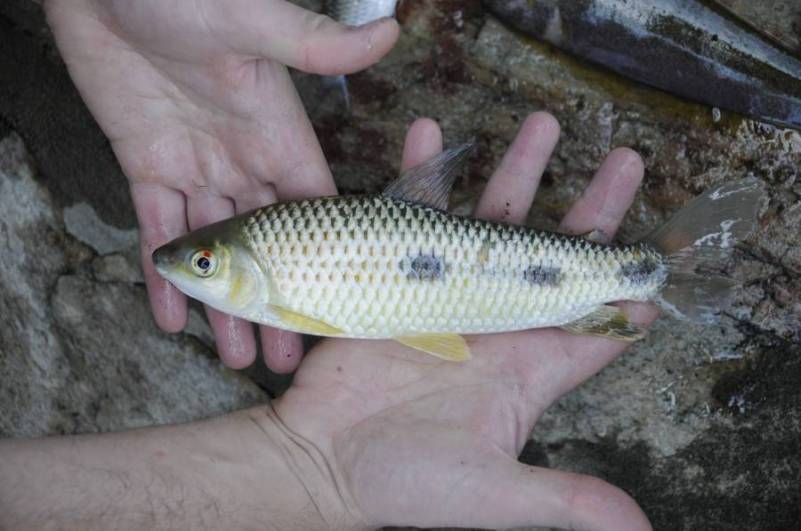
Leporinus fridericiThreespot Leporinus
Bloch, 1794
Max length400mm SL16in SLTank240 × 90cm96 × 36inTemp20–28°C68–82°FpH5.0–8.0This species was described from Suriname but no specific locality was given. It's currently accepted to occur throughout much of the Amazon river system in Brazil, Peru and Bolivia with additional records from coastal drainages of Guyana, Suriname and French Guiana plus the island of Trinidad (Trinidad and Tobago).
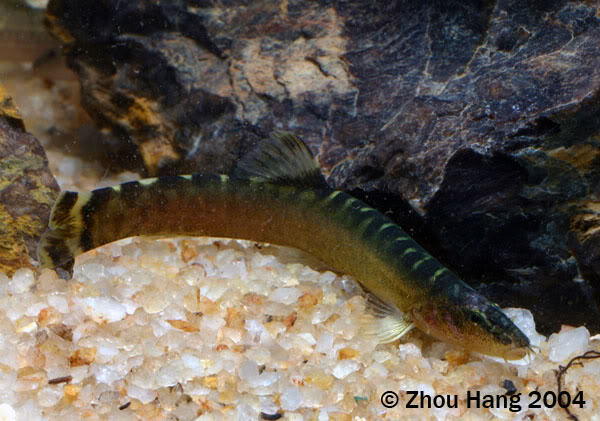
Leptobotia guilinensis
Chen, 1980
Max length100mm SL3.9in SLTank120 × 30cm48 × 12inTemp15.5–21°C60–70°FpH6.5–7.5L. elongata is the type species of the genus but according to current knowledge there exist 13 members in total, all of which are endemic to China and northern Vietnam. They're diagnosable by the following shared characters: possession of a simple (non-bifurcated), short sub-ocular spine not extending beyond the posterior edge of the eye; a laterally-compressed body; relatively deep caudal peduncle; pelvic fins reaching origin of anal-fin; anus below base of dorsal-fin and equidistant between pelvic and anal-fin origins.
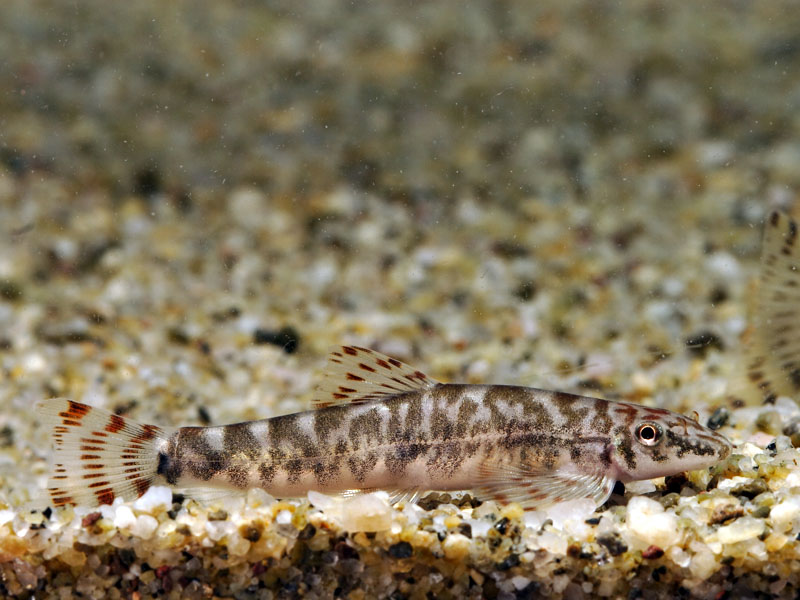
Liniparhomaloptera disparisBroken-band Hillstream Loach
Lin, 1934
Max length80mm SL3.1in SLTank80 × 30cm31 × 12inTemp20–24°C68–75°FpH6.5–8.0L. disparis is sometimes available as bycatch among shipments of other species such as Rhinogobius duospilus but also appears on trade lists under the fictitious scientific name 'Homaloptera hoffmani'. It can be told apart from similar-looking members of the genus Formosania by its noticeably shorter barbels and from Vanmanenia spp. by the fact that the rostral fold is not lobed and the mouth is relatively small (25% head width. In addition the lower lip in Liniparhomaloptera is not divided and has a flat, papillated edge.
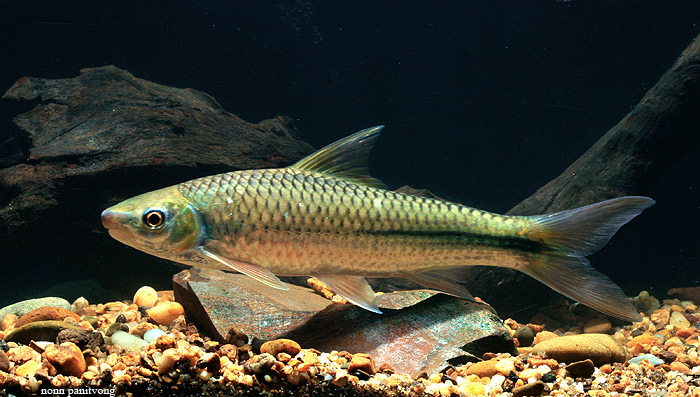
Lobocheilos melanotaenia
Fowler, 1935
Max length200mm SL8in SLTank180 × 60cm72 × 24inTemp20–26°C68–79°FpH6.0–8.0The majority of Lobocheilos species are endemic to the Greater Sunda Islands of Borneo, Sumatra, and Java, and are uncommon in the aquarium trade, but the widespread Indochinese taxa L. melanotaenia and L. rhabdoura are available on a sporadic basis. L. melanotaenia can be distinguished from L. rhabdoura by the following comb...
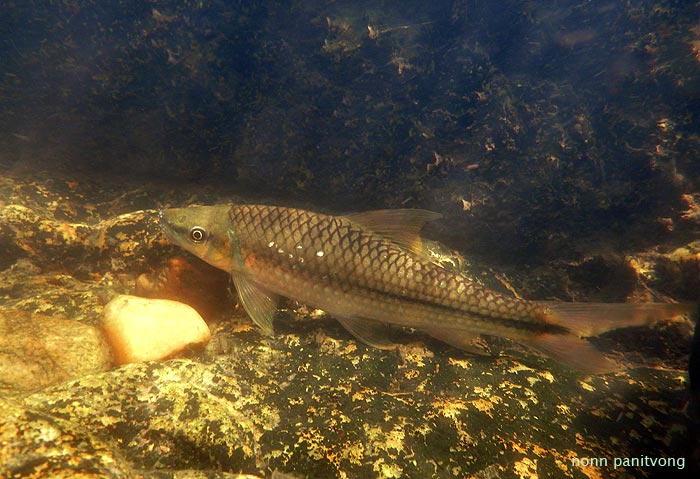
Lobocheilos rhabdoura
Fowler, 1934
Max length220mm SL9in SLTank180 × 60cm72 × 24inTemp20–26°C68–79°FpH6.0–8.0Lobocheilos species are specialised grazers of periphyton, benthic algae, and other organisms which grow attached to rocks and other solid surfaces, and they typically leave visible scrape marks in places where they have been feeding. They are by no means herbivorous and should be offered meaty foods such as live or frozen chironomid larvae (bloodworm), Tubifex, Artemia, chopped prawn, etc., along with good quality, sinking dried products, at lea...
Luciocephalus pulcherGiant Pikehead
authority not recorded
Max length200mm SL8in SLTank120 × 30cm48 × 12inTemp22–26°C72–79°FpHnot recordedWith a reputation as a difficult species to maintain in captivity, L. pulcher is recommended only to those enthusiasts able to provide the specialist diet and care it requires for its long-term health. It seems to travel very poorly, and is often seen on sale in a weakened, emaciated state. It is also particularly susceptible to bacterial infections when initially imported. Observe the fish carefully when buying and avoid any that are showing red patches around the mouthparts or fins, or that ap...
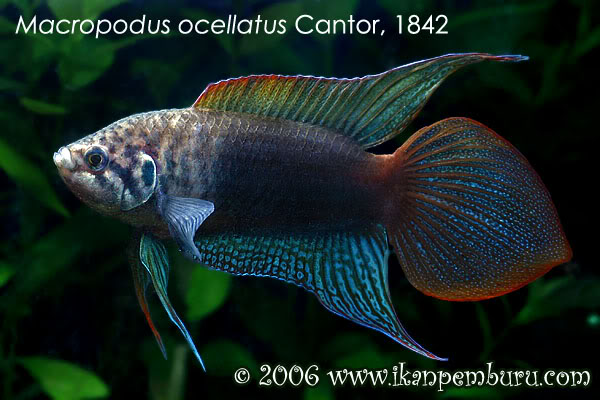
Macropodus ocellatusRoundtail Paradise Fish
Cantor, 1842
Max length80mm SL3.1in SLTank80 × 30cm31 × 12inTemp10–22°C50–72°FpH6.0–7.5M. ocellatus can be distinguished from congeners by the following combination of characters: caudal-fin rounded; eye stripe not connecting spot on posterior projection of opercle with eye; dorsal-fin rays filamentous posterior to a vertical through the posterior anal-fin rays in adults; 16-19 spinous dorsal-fin rays; 6-13 rakers on ceratobranchial of first gill arch; posterior tip or margin of body scales not darker than scales.
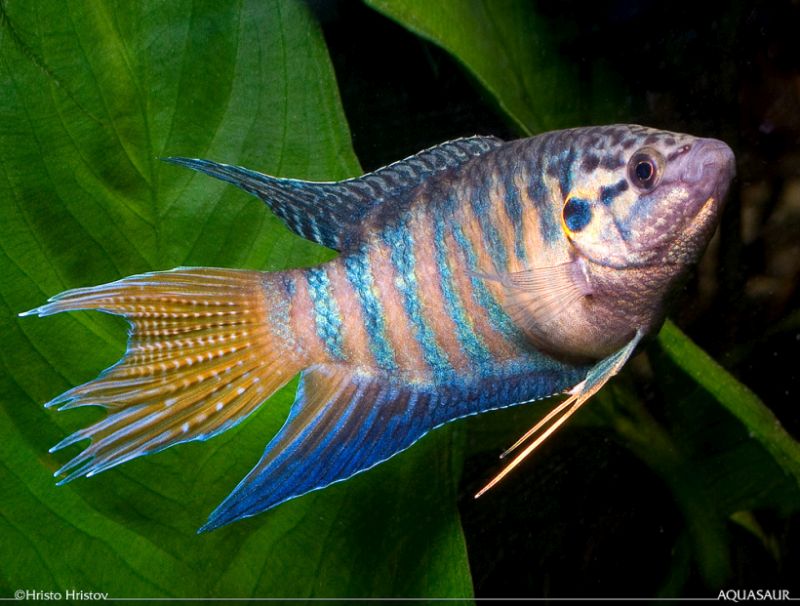
Macropodus opercularisParadise Fish
Linnaeus, 1758
Max length80mm SL3.1in SLTank80 × 30cm31 × 12inTemp10–22°C50–72°FpH6.0–8.0M. opercularis is a classic aquarium fish, having been introduced to the hobby by a French soldier named Gerault in 1869. Of the initial 100 specimens shipped, 22 survived and were successfully bred later that same year by another Frenchman, the Parisian Pierre Carbonnier. This gives the species the distinction of being one of the very first ornamental fish imported to Europe. It is also known as 'Chinese fighting fish', 'paradise gourami', and 'blue paradise fish'.
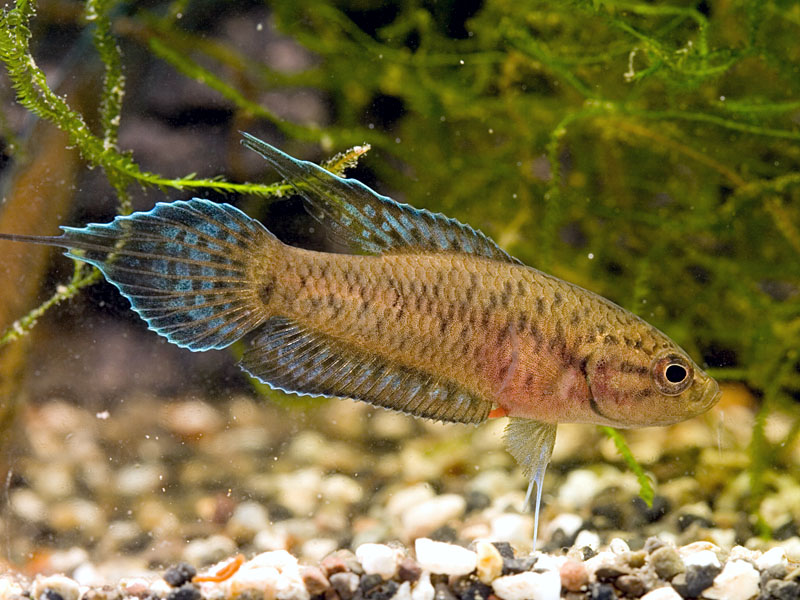
Malpulutta kretseriOrnate Paradisefish
Deraniyagala, 1937
Max length50mm SL2.0in SLTank40 × 20cm16 × 8inTemp16–22°C61–72°FpH5.0–7.5This species is also referred to as 'Kretser's paradisefish' and 'spotted gourami'. There exist three colour forms, two of which exhibit a greater degree of reddish or violet pigmentation in the fins, respectively. The third is more bluish and was described as M. kretseri minor by Deraniyagala (1958).
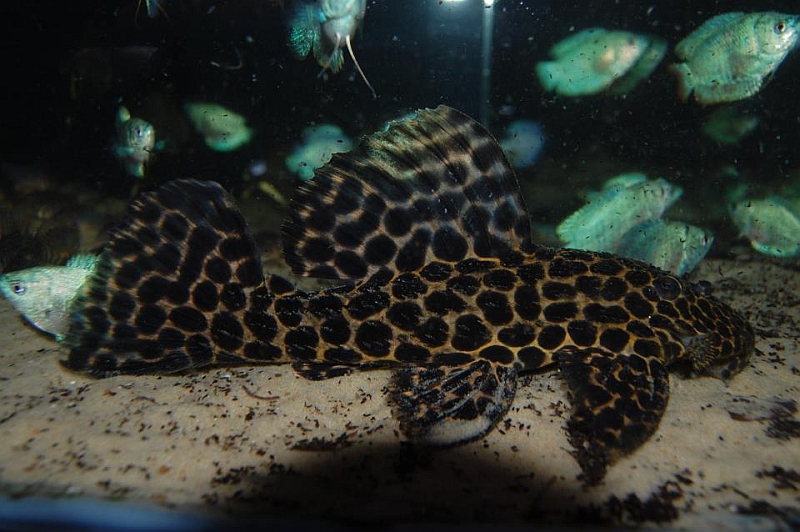
Megalancistrus parananusL113
Peters, 1881
Max length588mm SL23in SLTanknot recordedTemp20–28°C68–82°FpH6.0–7.5This species was formerly considered to be represented by the L-numbers L113 and L234 but it appears that only the former is native to the Paraná, Paraguay and Uruguay drainages, whereas L234 is collected in the rio São Francisco in eastern Brazil. M. barrae and M. sp. 'LDA097' are also exported from the São Francisco system.
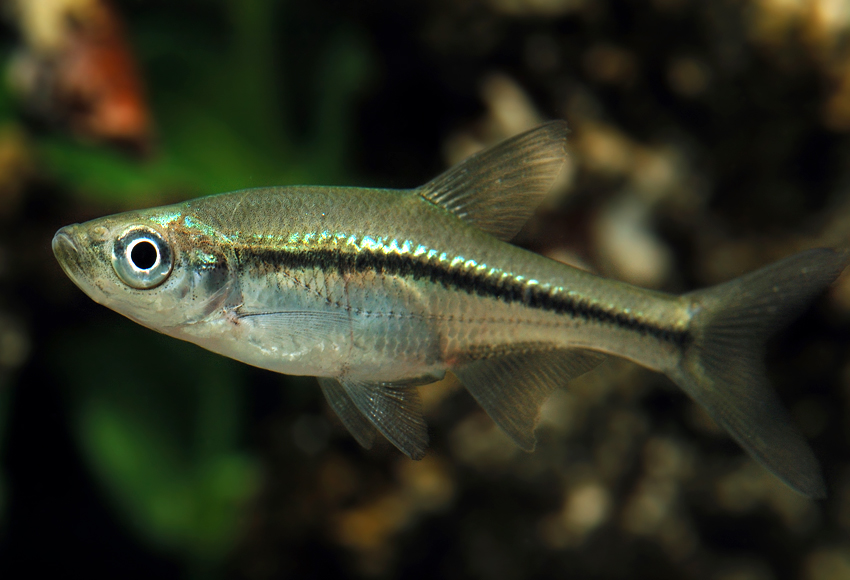
Metzia formosae
Oshima, 1920
Max length75mm SL3.0in SLTanknot recordedTempnot recordedpHnot recordedAlthough it is included in the genus Metzia this grouping remains somewhat unresolved in terms of taxonomy and it may contain more than a single genetic lineage. For example, members share a number of characters with the genera Ischikauia Jordan and Snyder 1900, Hemiculterella Warpachowski 1887, and several species of Anabarilius Cockerell 1923, including a bipartite gas bladder, a non-spinous dorsal-fin ray, and a sharp ventral keel between the pelvic-fin insertion and anus.
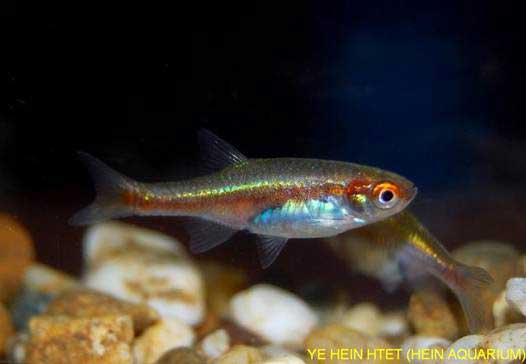
Microrasbora cf. rubescensFlame Red 'Rasbora'
authority not recorded
Max length40mm SL1.6in SLTank60 × 30cm24 × 12inTemp20–26°C68–79°FpH6.5–7.5This is possibly an undescribed species and has been marketed as 'Asian Cardinal Rasbora', 'flame red rasbora', M. sp. 'rose blue line' or M. 'thuzari' in the ornamental trade. It differs from M. rubescens by its larger adult size, possession of a greenish to bluish lateral stripe, and lesser extent of orange pigmentation on the body. It also appears to represent a distinct genetic lineage (Collins et al., 2012).
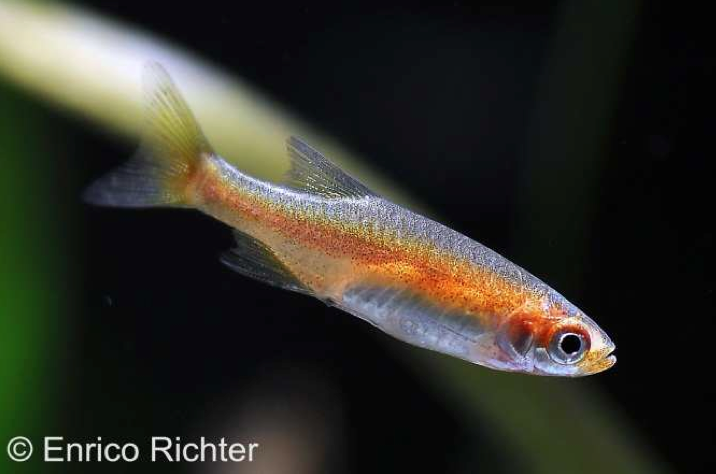
Microrasbora rubescensRed Dwarf 'Rasbora'
Annandale, 1918
Max length30mm SL1.2in SLTank60 × 30cm24 × 12inTemp20–24°C68–75°FpH6.0–8.0This species may be seen on sale under various trade names including 'red-line dwarf rasbora', 'emerald dwarf rasbora', or 'red dwarf rasbora'. A similar-looking, apparently undescribed congener has been collected near the town of Hopong, also in Shan State. It differs from M. rubescens by possessing a greenish to bluish lateral stripe plus a larger adult size, and is traded as Microrasbora cf. rubescens, M. 'thuzari', M. sp. 'rose blue line', 'Asian Cardinal Rasbora', or 'flame red rasbora'.