Results for “species”
Type a name: scientific, common, or one a species used to go by. Or narrow the catalogue with the filters.
Filters
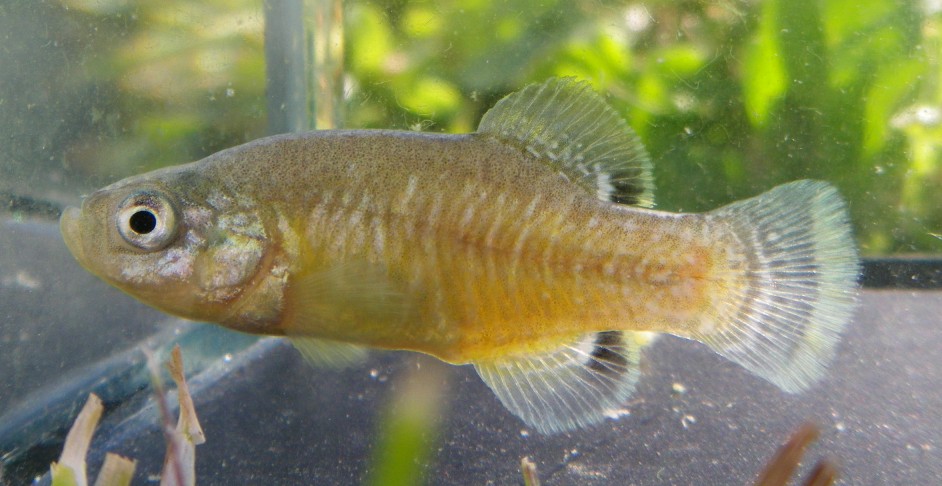
Tellia apodaFootless Toothcarp
Gervais, 1853
Max length45mm SL1.8in SLTank120 × 30cm48 × 12inTemp16–30°C61–86°FpH7.0–9.0The genus Aphanius currently contains 22 species and subspecies which are thought to have derived from a common ancestor originally distributed around the periphery of the former Tethys Sea. These can be separated into two main phylogenetic groups usually referred to as the 'eastern' and 'western' clades by scientists and aquarists because they broadly correspond to those coastlines of the Tethys. The eastern clade comprises the species now found in the Arabian Peninsula and ...
Thalassophryne amazonicaPrehistoric Monster Fish
authority not recorded
Max length150mm SL6in SLTank75 × 30cm30 × 12inTemp24–28°C75–82°FpHnot recordedThere are currently six described species in the genus Thalassophryne, of which T. amazonica is the only freshwater representative. The others (T. nattereri, T. maculosa, T. megalops, T. montevidensis and T. punctata) are all estuarine animals distributed along the western Atlantic coastlines of Central and South America and inhabit brackish-to-marine waters. They are members of the family Batrachoididae or toadfishes, of which most are exclusively marine species. All batrachoidids are ambush pr...
Thayeria boehlkeiFalse Penguin Tetra
authority not recorded
Max length36mm SL1.4in SLTank60 × 38cm24 × 15inTemp22–28°C72–82°FpHnot recordedThere are only three species in the genus Thayeria, of which T. boehlkei is by far the most popular in the hobby. Of its congeners, it was the type species T. obliqua that was originally given the common name of "penguin" fish or tetra, although T. boehlkei is usually sold under the same name (we've also seen it on sale as "hockeystick" tetra). The two are easy to tell apart, as in T. boehlkei the thick black stripe extending from the lower lobe of the travels laterally ...
Tilapia guinasana
authority not recorded
Max length140mm SL6in SLTank120 × 30cm48 × 12inTemp19–25°C66–77°FpH7.0–7.8Rare in the hobby, this species is unfortunately considered critically endangered in the wild. The lake in which it is found is receiving less groundwater than it once was, due to extraction of water for agriculture. Even if this were not the case, the species is found over such an enclosed range that it would still be at extreme risk. All attempts at captive breeding are therefore to be encouraged, with care being taken to keep the different lines pure. Interestingly, as there are no natural...
Tramitichromis intermedius
authority not recorded
Max length160mm SL6in SLTank120 × 38cm48 × 15inTemp24–28°C75–82°FpH7.6–8.8Sand dwelling Malawian cichlid species such as this can be somewhat delicate in the aquarium. A rigorous tank maintenance schedule is recommended to keep them in top shape; with small, regular partial water changes a necessity. Also take care with feeding as discussed above. It is likely this species will eventually be assigned to a different genus, as there is some confusion surrounding Tramitichromis and it's scientific validity. The fish included in the genus differ from Lethrinops sp...
Trichogaster labiosaThick-lipped Gourami
authority not recorded
Max length100mm SL3.9in SLTank74 × 30cm29 × 12inTemp22–27°C72–81°FpH6.0–7.5Despite its ease of keeping and peaceable nature, this species is not particularly popular in the hobby, although it is imported quite regularly. A gold or 'sunset' strain exists, in which the barred patterning is replaced by an overall orange/gold colouration. This is not a natural variation, but has been selectively bred for the trade. The female of this form is almost as colourful as the male. Like others in the suborder Anabantoidei, the species possesses an accessory breathing...
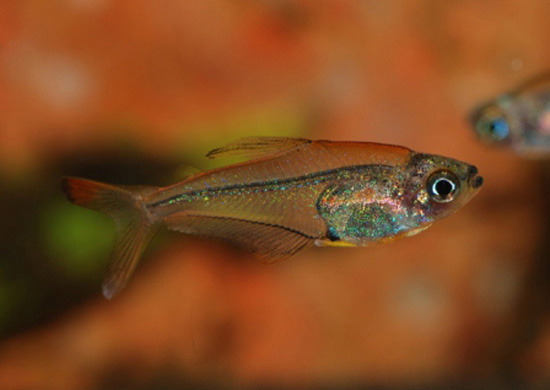
Trochilocharax ornatusHummingbird Tetra
Zarske, 2010
Max length17mm SL0.7in SLTank45 × 30cm18 × 12inTemp20–28°C68–82°FpH4.0–6.5This species is not often available and is much sought after in the aquarium hobby where it's been traded as 'crystal rainbow tetra' and 'orange-tailed glass tetra'. It's also been referred to as a Heterocharax or Tyttocharax species in the past. It's currently the only member of its genus which is separated fr...
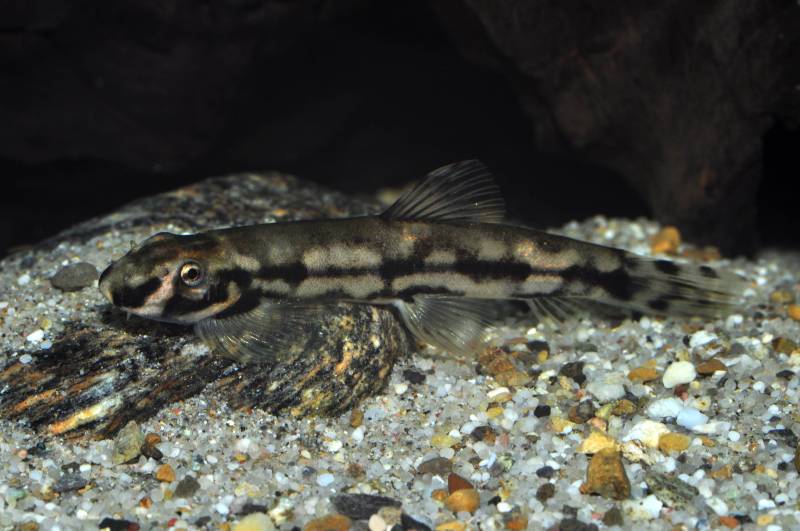
Yaoshania pachychilusPanda Loach
Chen, 1980
Max length60mm SL2.4in SLTank60 × 30cm24 × 12inTemp15.5–24°C60–75°FpH6.5–7.5Juvenile specimens were first exported for the aquarium hobby during 2009 and have since been available on a sporadic basis with prices generally reflecting its rarity and, hopefully, number of specimens being collected. The striking black-and-white-striped juvenile colour pattern inspired the vernacular name although it's sometimes labelled as 'panda goby' rather than 'panda loach'.
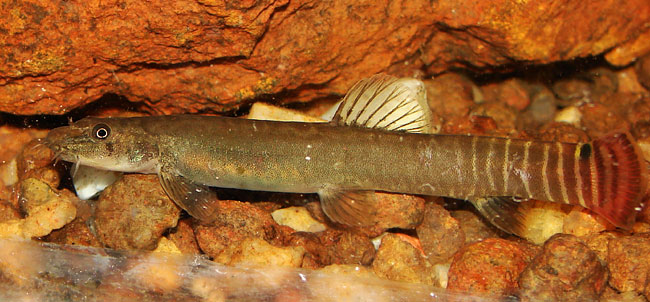
Aborichthys elongatusRed-Tailed Squirrel Loach
Hora, 1921
Max length75mm SL3.0in SLTank60 × 30cm24 × 12inTemp15–21°C59–70°FpH6.5–7.5This species may be seen listed as a member of Nemacheilus or the nomen nudum Noemacheilus in older literature and is sometimes sold as 'red tailed, striped sand loach' or 'red tailed squirrel loach'. Only two other Aborichthys have been described to...
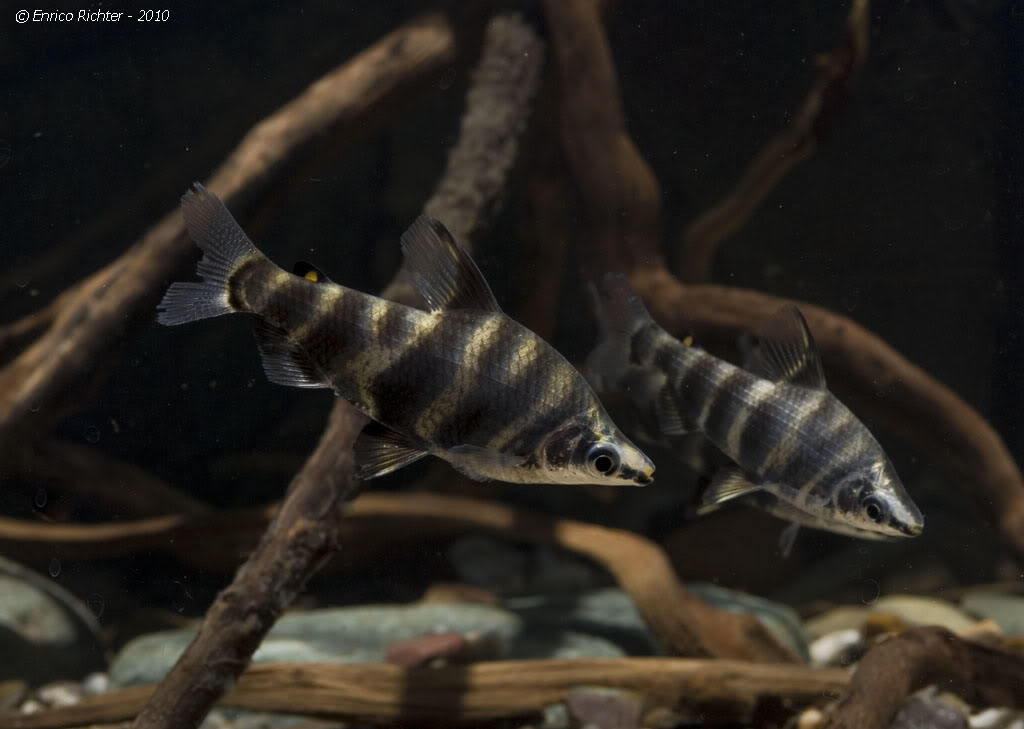
Abramites hypselonotusMarbled Headstander
Günther, 1868
Max length140mm SL6in SLTank120 × 30cm48 × 12inTemp20–30°C68–86°FpH5.5–7.5Abramites spp. are separated from other anostomids primarily on the basis of their relatively deeper bodies and presence of a prominent, post-pelvic median keel, a feature unique to the genus. At time of writing A. eques is the only other species recognised and is native to the Río Magdalena drainage in western Colombia. It can be distinguished by possession of 13-14 bra...
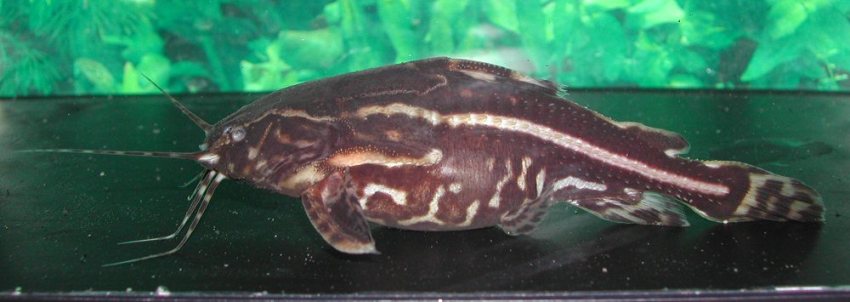
Acanthodoras cataphractusChocolate Talking Catfish
Linnaeus, 1758
Max length115mm SL5in SLTank120 × 30cm48 × 12inTemp22–26°C72–79°FpH6.0–7.5This species, which may also be referred to by the alternative vernacular names 'spiny catfish', 'painted talking catfish' or 'chocolate raphael', isn't particularly common in the trade and most often exported only as bycatch among shipments of Platydoras armatulus. It appears very similar to the congener A. spinosissimus with the most useful external distinguishing character being the presence of pale blotches on the dorsal surface, between the dorsal and caud...
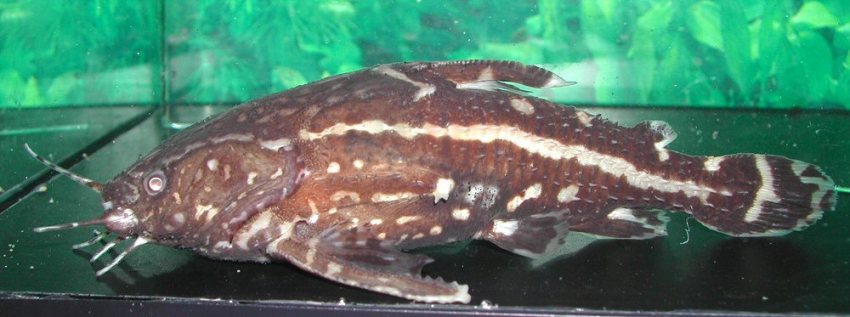
Acanthodoras spinosissimusChocolate Talking Catfish
Eigenmann & Eigenmann, 1888
Max length137mm SL5in SLTank120 × 30cm48 × 12inTemp22–26°C72–79°FpH6.0–7.5This species, which may also be referred to by the alternative vernacular names 'spiny catfish', 'painted talking catfish' or 'chocolate raphael', isn't particularly common in the trade and most often exported only as bycatch among shipments of Platydoras armatulus. It appears very similar to A. cataphractus with the most useful external distinguishing character being the presence of pale blotches on the dorsal surface, between the dorsal and caudal fins, in....
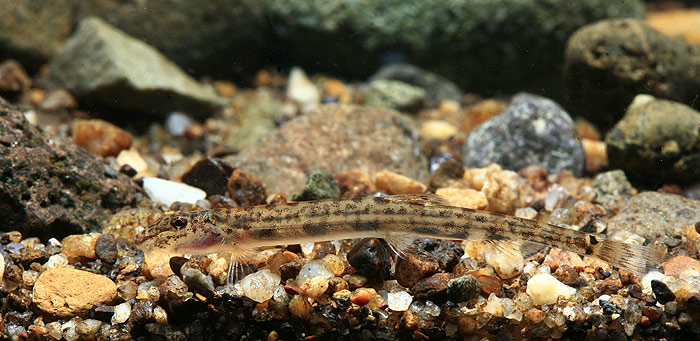
Acanthopsoides molobrion
Siebert, 1991
Max length50mm SL2.0in SLTank60 × 30cm24 × 12inTemp20–24°C68–75°FpH5.5–7.0Acanthopsoides spp. are most closely related to the horse-faced loaches of the genus Acantopsis with which they often co-occur in nature, and thus commonly referred to as 'dwarf horse-face loaches'. The genus currently comprises five species of which four were described by Siebert (1991); these were discovered in existing museum holdings...
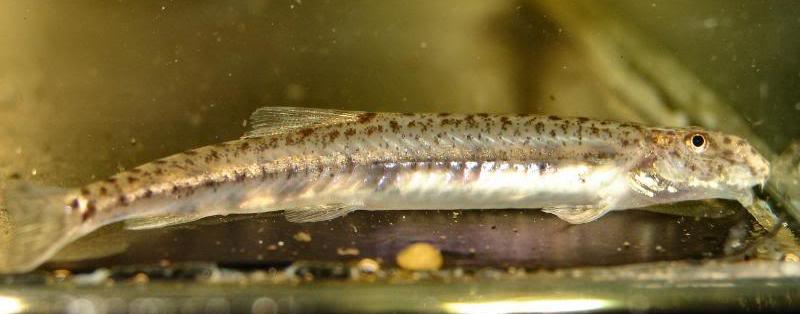
Acanthopsoides sp. 'A02'
authority not recorded
Max length55mm SL2.2in SLTank60 × 30cm24 × 12inTemp20–24°C68–75°FpH5.5–7.0Acanthopsoides spp. are most closely related to the horse-faced loaches of the genus Acantopsis with which they often co-occur in nature, and thus commonly referred to as 'dwarf horse-face loaches'. The genus currently comprises five species of which four were described by Siebert (1991);...
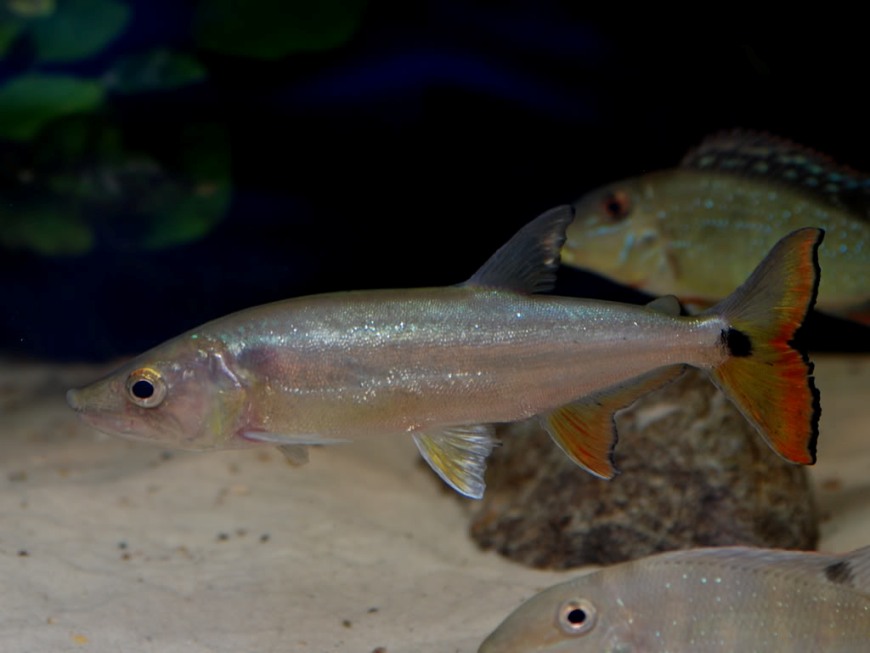
Acestrorhynchus altusRed Barracuda Tetra
Menezes, 1969
Max length233mm SL9in SLTank250 × 90cm98 × 36inTemp22–28°C72–82°FpH6.0–7.5This species is not normally aggressive towards conspecifics with juveniles in particular exhibiting a marked schooling instinct. Older individuals tend to be more solitary but still group together from time-to-time, and it's best maintained in numbers of four or more. One important point to note is that acestrorhynchids are can...
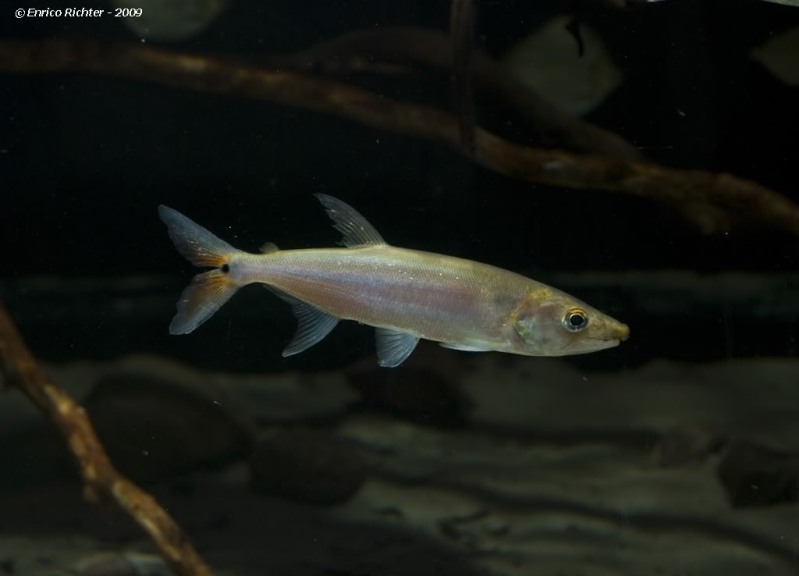
Acestrorhynchus falcatusRed-Tailed Freshwater Barracuda
Bloch, 1794
Max length275mm SL11in SLTank250 × 90cm98 × 36inTemp22–28°C72–82°FpH6.0–7.5The vernacular name of this fish is derived from its appearance and behaviour, rather than a genetic association with the marine barracuda, and it's also sometimes referred to as 'pike characin' or 'spotted cachorro' with local vernacular names including 'Grand dent-chien' (French Guiana), ' Cachorrinho' or 'Ueua' (Brazil). Although most species of Acestrorhynchus appear superficially similar to one another most exhibit distinguishable external chara...
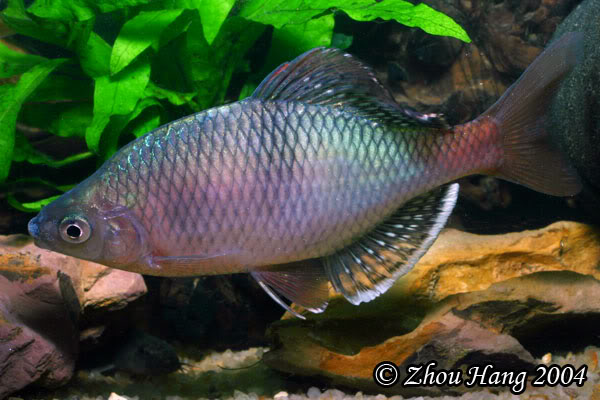
Acheilognathus macropterusGiant Chinese Bitterling
Bleeker, 1871
Max length275mm SL11in SLTank180 × 60cm72 × 24inTemp14–22°C57–72°FpH6.0–8.0A. macropterus appears in the ornamental trade on an irregular basis and should only be considered by more experienced aquarists with sufficiently large facilities. Given its wide geographical distribution there is a possibility that it represents a group of closely-related species, with genetic studies indicating the existence of several distinct clades.
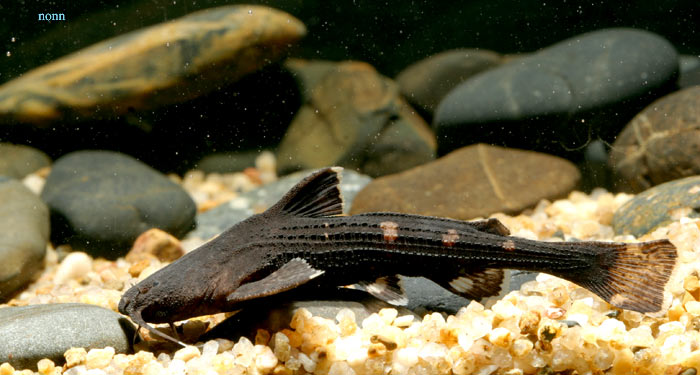
Acrochordonichthys rugosusAsian Banjo Catfish
Bleeker, 1846
Max length110mm SL4in SLTank90 × 30cm36 × 12inTemp17.5–24°C64–75°FpH5.0–7.0This is the most commonly-encountered representative of the genus in the aquatic trade though is by no means common. As in other members of the genus body colouration is highly variable, even among individuals collected from a single locality, although a few useful regularities have been observed which can be used to distinguish certain species. This is thought related to the fact that Acrochordonichthys spp. periodically shed their skins and appear paler post-moulting. A. rugosus lends its ...
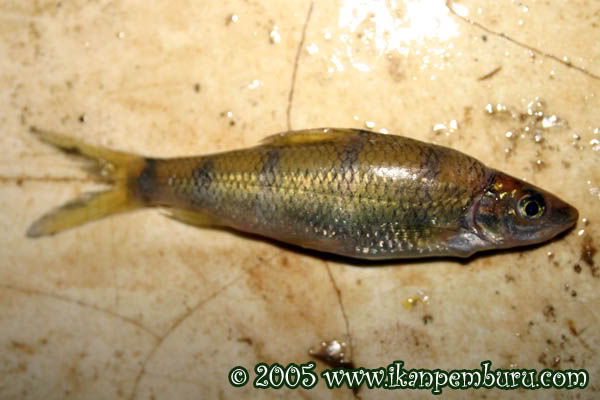
Acrossocheilus iridescens
Nichols & Pope, 1927
Max length300mm SL12in SLTanknot recordedTempnot recordedpHnot recordedA. iridescens and its closest relative A. longipinnis can be distinguished from all other barred species of Acrossocheilus by the following characters: wider (vs. narrower) black vertical bars on the flank in adults, each five to eight (vs. no more than four) scales in width; a horse-shoe shaped (vs. arched) mouth gape; rostral barbel located posteriorly (vs. anteriorly) to a horizontal line through the anteriormost margin of the lower jaw; two postlabial grooves extending anteromedially beyond (vs. away from) a horizontal line through the roots of the rostral barbels.
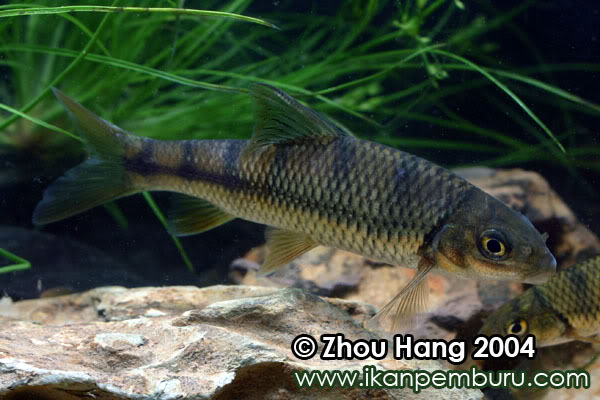
Acrossocheilus parallens
Nichols, 1931
Max length160mm SL6in SLTanknot recordedTempnot recordedpHnot recordedMembers of the genus are characterised by possessing a particular number of dark vertical bar on each flank, and A. parallens belongs to a group of species with five or six such bars, each of which is two scales in width. Congeners sharing this pattern include A. fasciatus, A. hemispinus (in juveniles only), A. jishouensis, A. kreyenbergii, A. paradoxus, A. spinifer, A. wenchowensis, and A. wuyiensis.