Results for “pair”
Type a name: scientific, common, or one a species used to go by. Or narrow the catalogue with the filters.
Filters
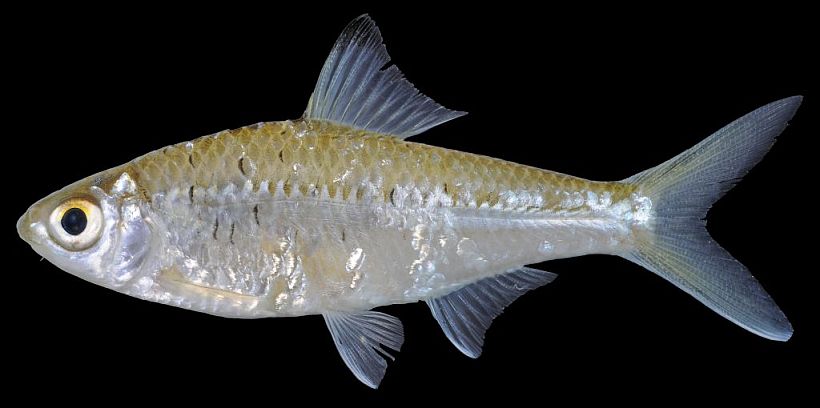
Mystacoleucus lepturus
Huang, 1979
Max length95mm SL3.7in SLTanknot recordedTempnot recordedpHnot recordedThis species can be distinguished from congeners by the following combination of characters: body relatively slender, depth fitting 3.4-3.8 times in SL; 32-33 + 2 lateral line scales; 14 circumpeduncular scale rows; presence of a single pair of barbels; black distal margin on dorsal-fin; numerous body scales with dark, crescent-shaped markings.
Neoceratodus forsteriAustralian Lungfish
authority not recorded
Max length1700mm SL67in SLTank180 × 90cm72 × 36inTemp22–28°C72–82°FpH6.5–8.0Lungfish are among the most intriguing of "oddball" aquarium subjects, being able to survive in the most extreme conditions. They are very ancient fish, having remained virtually unchanged for millions of years. Unlike its African relatives, N. forsteri cannot survive in completely dry conditions for long, although it does require access to atmospheric air to survive. It possesses only a single lung (the African species have paired lungs), which is formed via a modification of the swim...
Neolamprologus brevis
authority not recorded
Max length60mm SL2.4in SLTanknot recordedTemp23–27°C73–81°FpH7.5–9.0N. brevis is one of the commoner species of shell dweller available in the hobby. Several colour morphs are available including "sunspot", "katabe" and "sambia". As mentioned above, it is often found in areas within Lake Tanganyika where relatively few snail shells collect and in these areas, pairs of fish will share the same shell. This behaviour may or may not be observed in the aquarium, depending on the number of shells provided and the individual fish. The terr...
Neolamprologus leleupiLemon Cichlid
authority not recorded
Max length100mm SL3.9in SLTanknot recordedTemp23–27°C73–81°FpH7.5–9.0One of the most popular Tanganyikan species in the hobby, N. leleupi is a stunning fish when in good condition. However, it is not as easy to maintain as its popularity suggests, due to its disagreeable attitude towards conspecifics and its sensitivity to deteriorating water conditions. It is a solitary species in nature, with male fish entering females' caves as they find them and spawning with receptive females. This explains the weak pair bond formed by spawning fish in aquaria and also ...
Potamotrygon motoroMotoro Stingray
authority not recorded
Max length900mm SL35in SLTank240 × 90cm96 × 36inTemp24–26°C75–79°FpH6.0–7.5P. motoro is one of the most popular members of the genus with aquarists. Whilst it is quite easily obtainable and hardy once settled in, it does grow very large so make sure you can house it adequately long term. It should also be noted that the males of this species are among the most violent when in the mood for spawning and females can end up on the wrong end of a serious beating. If you're keeping a pair or group of these keep a close eye on proceedings and be prepared to separate them...
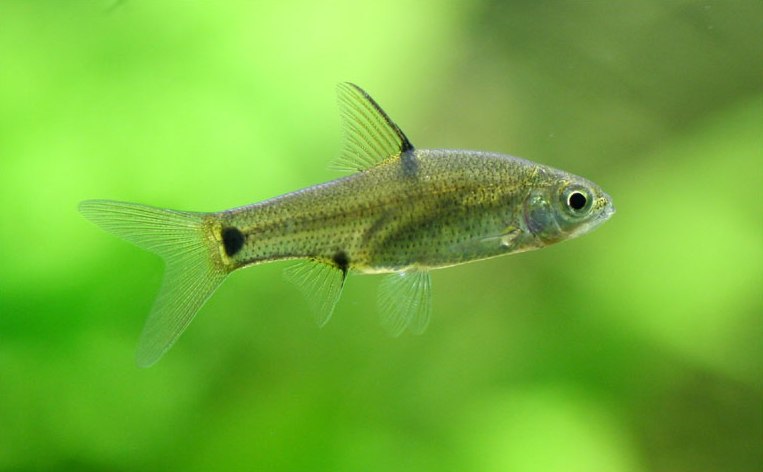
Puntius sharmai
Menon & Rema Devi, 1993
Max length40mm SL1.6in SLTank60 × 30cm24 × 12inTemp20–26°C68–79°FpH5.5–7.5This species is almost unheard of in the aquarium hobby outside of India but is maintained by some private collectors. It's distinguished from similar species by possessing a single pair of maxillary barbels, a relatively elongate body, and distinctive black spot above the anterior anal-fin base. The genus Puntius was for a number of years viewed as a polyphyletic catc...
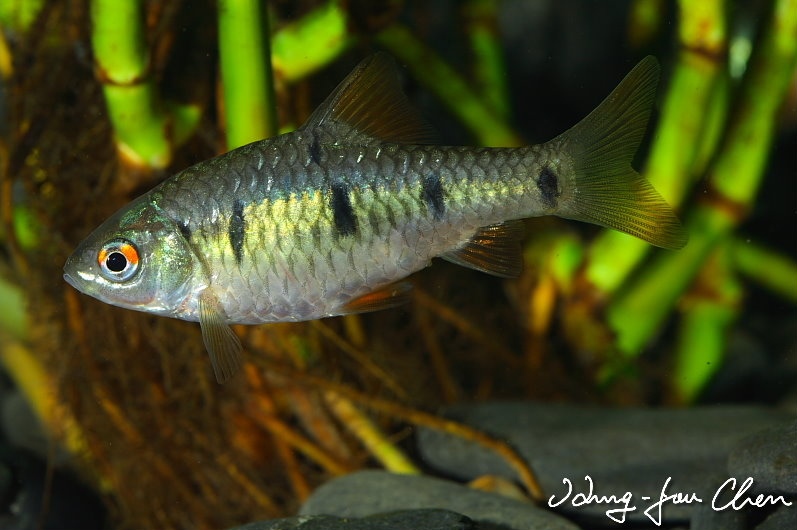
'Puntius' snyderi
Oshima, 1919
Max length75mm SL3.0in SLTank90 × 30cm36 × 12inTemp18–24°C64–75°FpH6.0–8.0This species is almost identical to the wild form of 'P.' semifasciolatus which is best known as the 'golden barb' in the aquarium hobby due to the popularity of a yellowish ornamental strain. The natural colour pattern is greenish in both species, however, and in terms of external characters they're only reliably distinguished by the fact that 'P.' semifasciolatus possesses a pair of prominent maxillary barbels wherea...
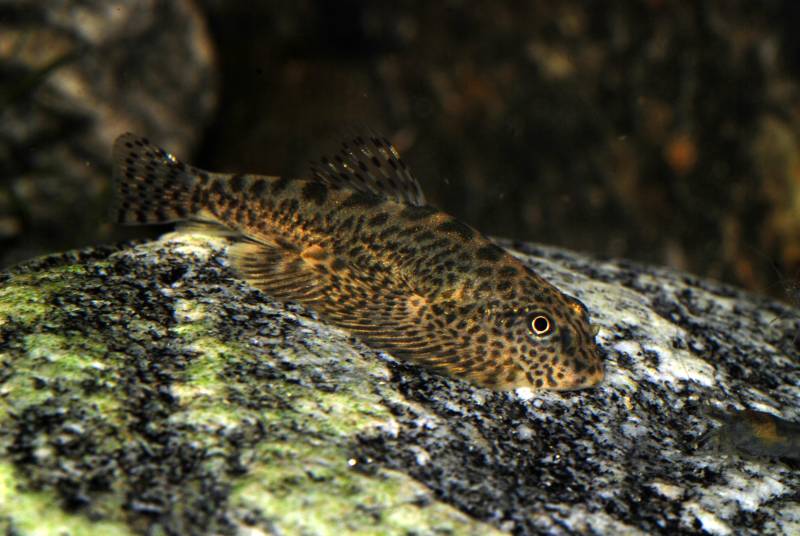
Sewellia speciosa
Roberts, 1998
Max length55mm SL2.2in SLTank75 × 30cm30 × 12inTemp20–24°C68–75°FpH6.0–7.5This species first became available in early 2010 and sometimes appears on trade lists under the vernacular names 'Laos sucker' or 'Laos Sakura sucker'. It's distinguishable from other members of the genus by the following combination of characters: body spotted and without stripes; no concentric bands on paired fins; origin of pelvic-fin below origin of dorsal-fin; origin of pectoral-fin posterior to corner of mouth; pelvic fin reaching origin of anal fin; small elevated ...
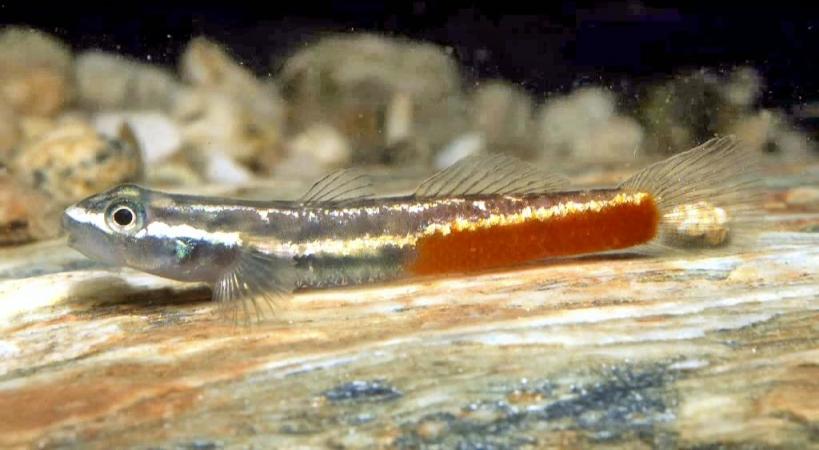
Sicyopus discordipinnis
Watson, 1995
Max length30mm SL1.2in SLTank60 × 30cm24 × 12inTemp22–26°C72–79°FpH6.0–7.5The fused pelvic fins form a structure normally referred to as the 'pelvic disc', a common feature among gobiids which is used to adhere to rocks and other submerged surfaces. In Sicyopus, as in Stiphodon, this is short-based and attached to the belly only between the fifth pair of fin rays whereas in other sicydiines it's attached between all five rays (Watson, 2005).
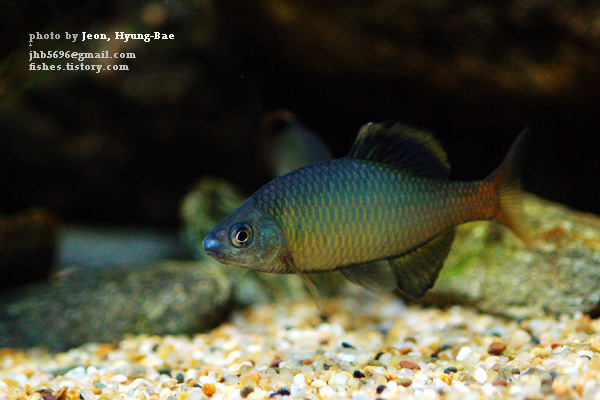
Tanakia signiferKorean Bitterling
Berg, 1907
Max length75mm SL3.0in SLTanknot recordedTempnot recordedpHnot recordedBitterlings (see 'Notes') exhibit an unusual spawning symbiosis in which the interlamellar spaces of the paired inner and outer gills of living unionid mussels are used as a spawning substrate. During the reproductive period females develop a long ovipositor which is used to deposit eggs through the mussel’s exhalant siphon. Males then move in to males release milt...
Uaru amphiacanthoidesUaru
authority not recorded
Max length254mm SL10in SLTanknot recordedTemp27–30°C81–86°FpH6.0–7.0A large, peaceful South American cichlid. Uaru can make very interesting aquarium subjects. They require clean, well filtered water on the higher end of the temprature scale. Avoid keeping with overly aggressive fish, Uaru are happiest when kept in groups or pairs....
Vieja bifasciataRed-spotted Cichlid
authority not recorded
Max length300mm SL12in SLTanknot recordedTemp27–29°C81–84°FpH7.0–8.5Vieja bifasciata are often confused for vieja synspilum but can be told apart as bifasciata have two prominent horizontal lines running between their eyes (hence the name). They are a very colourful fish and respond to their owner's presence - usually looking for food! Bifasciata are not particularly demanding in terms of water parameters and easy to keep, especially if suitable tankmates can be found. It is sometimes the case that a pair of fish that will not live together in a tank on ...