Results for “rare”
Type a name: scientific, common, or one a species used to go by. Or narrow the catalogue with the filters.
Filters
Craterocephalus stercusmuscarum stercusmuscarumFly-specked Hardyhead
authority not recorded
Max length70mm SL2.8in SLTank76 × 30cm30 × 12inTempnot recordedpHnot recordedA rarely seen species in the trade, although it's kept quite often by Australian hobbyists. Members of this genus are thought to have a more ancient association with Australian freshwaters than most others found in these habitats. Craterocephalus also contains the most species of any Australian freshwater fish genus. It has been shown that there are quite large genetic differences between groups of the species living in close proximity to each other, and even sharing the same waters. In ...
Crenicara latruncularium
authority not recorded
Max length90mm SL3.5in SLTank90 × 38cm36 × 15inTemp24–28°C75–82°FpH6.0–7.0Rarely seen in the hobby in the UK, but makes an interesting addition to a South American setup.
Crenicichla tigrinaTiger Pike Cichlid
authority not recorded
Max length300mm SL12in SLTank180 × 60cm72 × 24inTemp23–26°C73–79°FpH6.0–7.0A strikingly marked species that is rarely seen in the hobby in the UK.
Ctenopoma murieiOcellated Bushfish
authority not recorded
Max length75mm SL3.0in SLTank60 × 30cm24 × 12inTemp24–28°C75–82°FpH6.0–7.5One of the smallest species in the genus, it is rarely seen in the trade. A pity, as its diminutive size makes for an ideal aquarium subject. Like others in the suborder Anabantoidei, the species possesses an accessory breathing organ known as the labyrinth organ. So-called due to its maze-like structure, this organ allows the fish to breathe atmospheric air to a certain extent. It is formed by a modification of the first gill arch, and consists of many highly vascularised, folded flaps of sk...
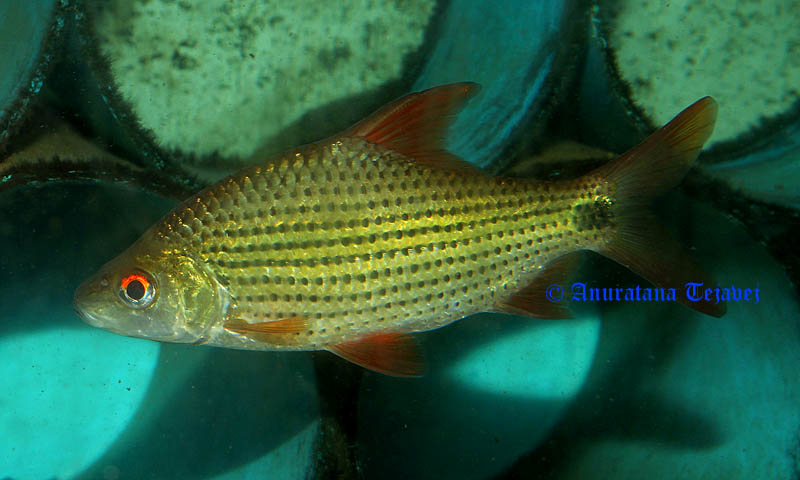
Cyclocheilichthys apogonBeardless Barb
Valenciennes, 1842
Max length180mm SL7in SLTank180 × 45cm72 × 18inTemp20–27°C68–81°FpH5.5–8.0In the aquarium trade this species may also be seen on sale as 'skinhead barb'. As with others in the genus little has been written regarding its captive care but it makes a peaceful and unusual addition to larger aquaria. The best way of obtaining it may be to keep an eye on shipments of wild fishes from Indochina and the Greater Sunda Islands as it's rarely imported in large numbers and most often arrives as bycatch.
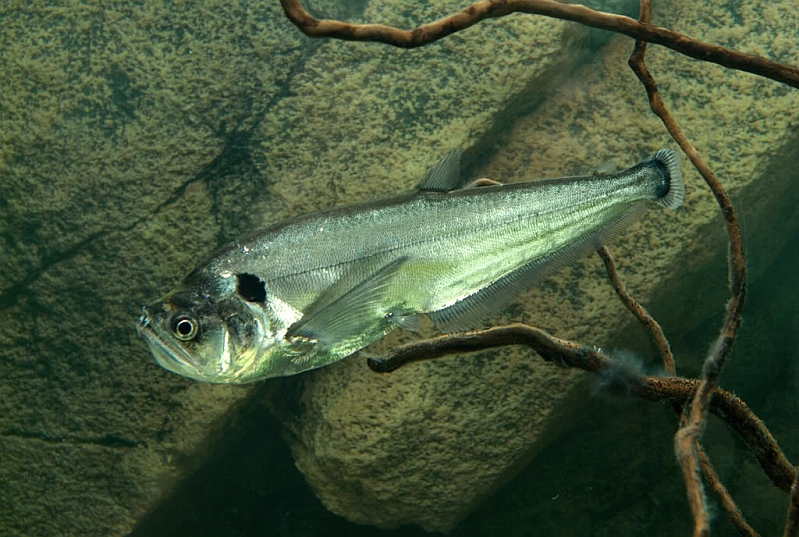
Cynodon gibbus
Agassiz, 1829
Max length280mm SL11in SLTank210 × 75cm84 × 30inTemp24–28°C75–82°FpH6.0–8.0This species is rare in the aquarium trade but is arguably more suitable for the home aquarium than some of its better-known relatives given its adult size and relatively docile behaviour. Other vernacular names include 'Dientón' (Peru), 'Perrito' (Ecuador), 'Payara-chata' or 'Payarin' (Venezuela) and 'Icanga', 'Minguilista' or 'Peice-cachorro' (Brazil), some of which are also applied to related species.
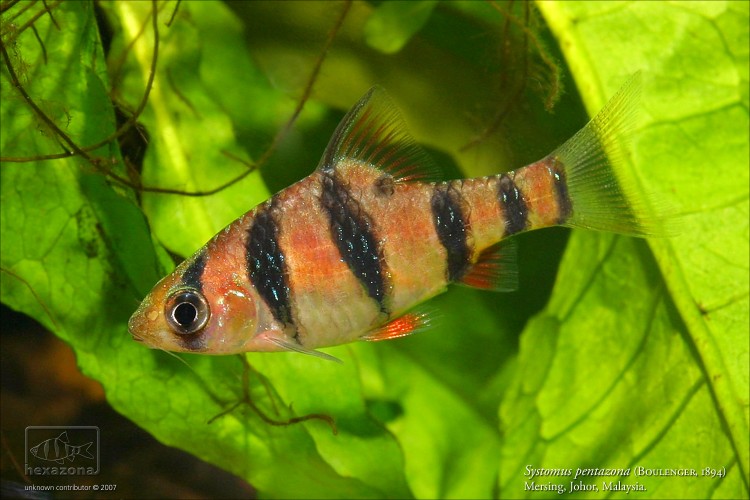
Desmopuntius pentazonaFive-banded Barb
Boulenger, 1894
Max length55mm SL2.2in SLTank80 × 30cm31 × 12inTemp21–26°C70–79°FpH4.0–7.0This species is rare in the aquarium trade with the majority of fish available under the name or the vernacular 'pentazona barb' being the closely-related D. hexazona. The two are almost identical in terms of both appearance and meristics but can be separated by the fact that D. pentazona possesses a small dark marking at the posterior base of the dorsal-fin which is absent in D. hexazona.
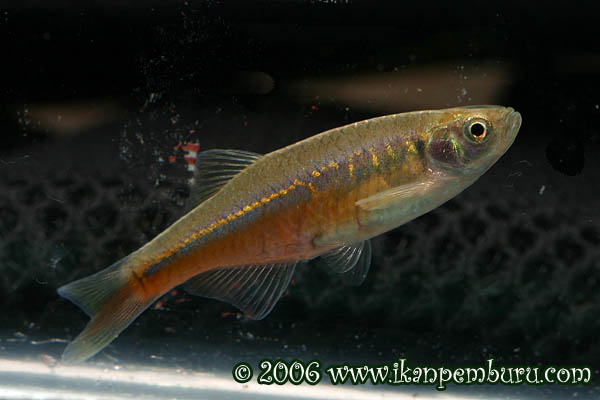
Devario chrysotaeniatus
Chu, 1981
Max length75mm SL3.0in SLTank120 × 30cm48 × 12inTemp23–26°C73–79°FpH6.0–7.0This species is poorly known and first appeared in the hobby during 2005 but has rarely been seen since, probably because its natural waters lie outside the range of most commercial collectors. It can be distinguished by a combination of characters including: lateral line complete; infraorbital process absent; two pairs of short barbels; 8-9 branched dorsal fin rays; 12-13 branched anal fin rays; P stripe originating above pelvic fin and extending to en...
Ectodus descampsiiDescamp's Strange-Tooth Cichlid
authority not recorded
Max length104mm SL4in SLTank90 × 30cm36 × 12inTemp24–27°C75–81°FpH7.5–9.0A rare species in the hobby, there is also another, as yet undescribed fish sometimes imported as E. descampsii but this is thought to be a distinct species. This one is currently known as Ectodus sp. "north", as it's found further up the lake than E. decampsii. It can be distinguished by its smaller adult size and the fact that the black spot on the dorsal is found towards the front whereas in E. descampsii it's found in the middle of the fin. Confusingly, E. sp. "north...
Erethistes maesotensis
authority not recorded
Max length40mm SL1.6in SLTank45 × 30cm18 × 12inTemp20–24°C68–75°FpH6.0–7.0This species is now considered a member of the Hara genus by many experts, but as things stand it is still officially included in Erethistes. It is, in all likelihood, a Hara, as Erethistes is characterised by divergent denticles on the pectoral fins, whereas Hara possess outwardly pointing denticles. E. maesotensis has these outwardly pointing denticles. It's quite rare in the trade, but makes an interesting addition to an Asian stream community tank if you can get hold of some....
Euchilichthys guentheri
authority not recorded
Max length190mm SL7in SLTank120 × 30cm48 × 12inTemp23–27°C73–81°FpH6.4–7.4This is one of only 4 described species of Euchilichthys (although more have been discovered) and is very rare in the hobby. It can be distinguished from similar Chiloglanis species by its elliptical (as opposed to circular) mouthparts and larger adult size. Unlike the South American Loricariids, it lacks armoured scuting on the body....
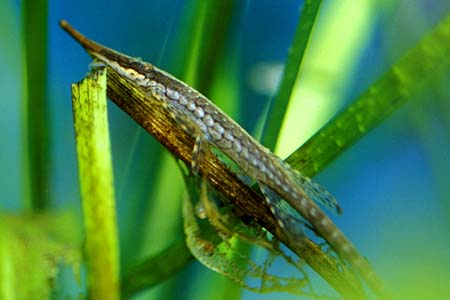
Farlowella vittataTwig Catfish
Myers, 1942
Max length150mm SL6in SLTank90 × 30cm36 × 12inTemp24–27°C75–81°FpH6.0–7.0Although often sold as the closely related F. acus (a species that is highly endangered and imported very rarely, if at all), F. vittata is the most common representative of the genus in hobbyists' tanks. The easiest way to distinguish the two is by comparing the shape of the rostrum, which is longer and more slender in vittata, although there are also differences in the arrangement of the ventral scutes. They are adapted for life among peripheral vegetation and tree roots along the edges o...
Fundulopanchax marmoratusMarbled Lyretail
authority not recorded
Max length60mm SL2.4in SLTank45 × 25cm18 × 10inTemp21–24°C70–75°FpH6.0–7.0Note the cooler temperatures required by this rare species. It is not an annual fish, occuring only in permanent bodies of water.
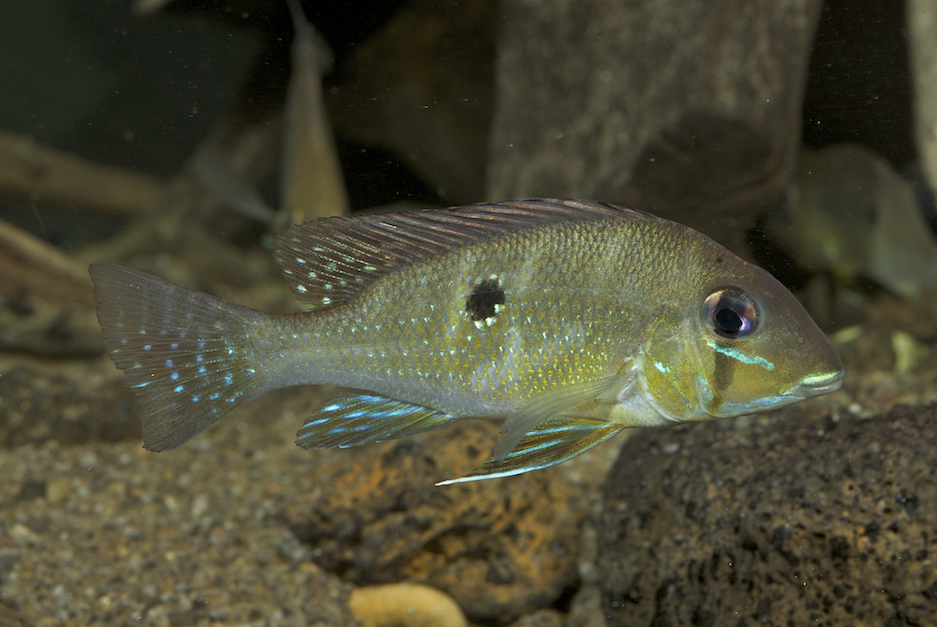
Geophagus argyrostictus
Kullander, 1991
Max length180mm SL7in SLTank150 × 45cm60 × 18inTemp26–30°C79–86°FpH6.0–7.5This species is relatively rare in the hobby but sometimes available from specialist retailers or private breeders. Though described in 1991 it was first collected much earlier and misidentified by Gosse (1976) as G. surinamensis. It's one of just five Geophagus species not to be included in the nominal G. surinamensis 'group' of closely-related species within the genus along with G. gottwaldi, G. grammepareius, G. harreri an...
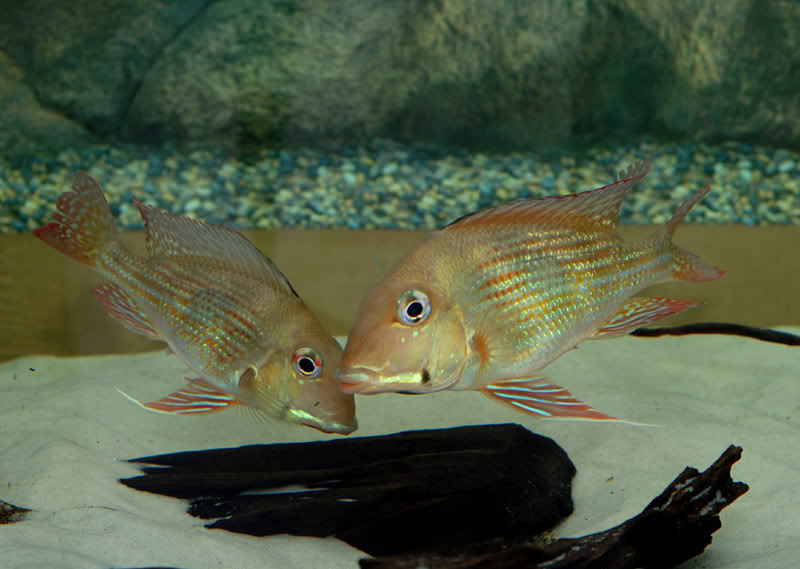
Geophagus brachybranchus
Kullander & Nijssen, 1989
Max length200mm SL8in SLTank180 × 60cm72 × 24inTemp26–30°C79–86°FpH5.0–7.0This species is generally rare in the aquarium hobby though oddly appears to be one of the commoner species in Australia where it's often referred to by the vernacular name 'black-throated eartheater'. It's a member of the nominal G. surinamensis 'group' of closely-related species within the genus and can be identified by a combination of characters including: presence of dark preopercular markings; no vertical bars on the flanks even when stressed/preserved; base of filaments on the first gill arch mostly covered by a flap of skin; exposed part of bra...
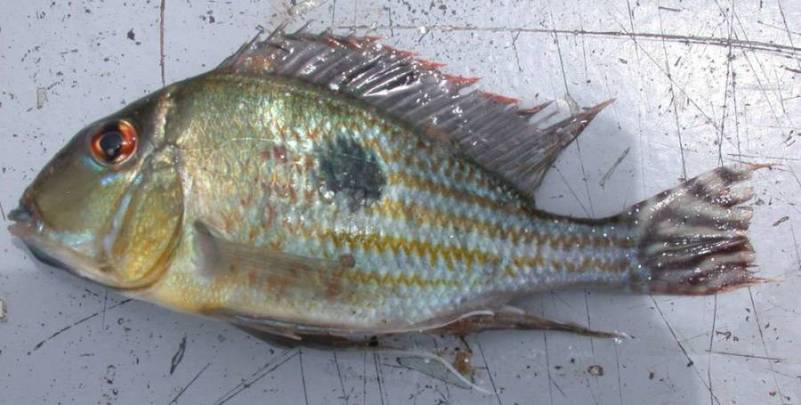
Geophagus megasema
Heckel, 1840
Max length175mm SL7in SLTank180 × 60cm72 × 24inTemp22–30°C72–86°FpH5.5–7.5This species is very rare in the aquarium hobby and may never have been available on a commercial basis although it has been collected, bred and distributed by some private collectors. It's a member of the putative G. surinamensis 'group' of closely-related species within the genus and ca...
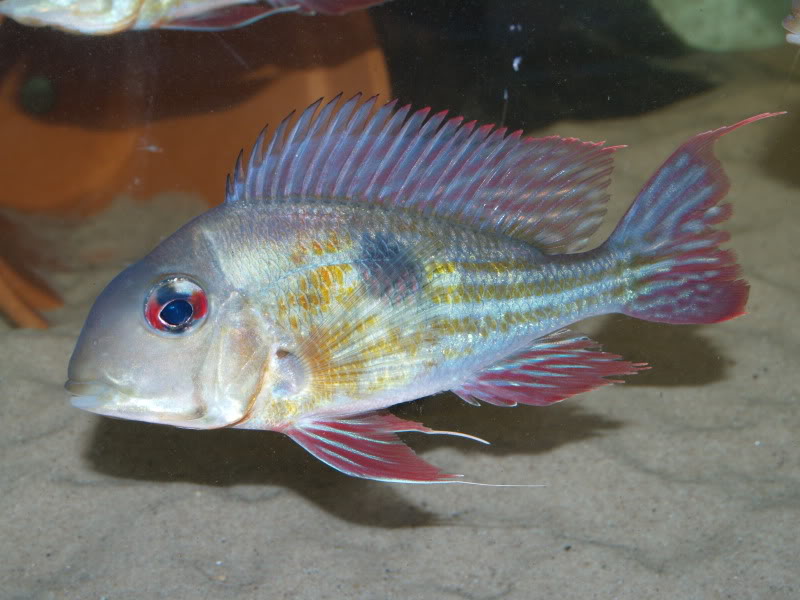
Geophagus proximus
Castelnau, 1855
Max length225mm SL9in SLTank180 × 60cm72 × 24inTemp24–32°C75–90°FpH4.0–7.0This species is rare in the hobby though it's name is often attached to shipments of other Geophagus species. It's a member of the nominal G. surinamensis 'group' of closely-related species within the genus and can be identified by a combination of characters including: possession of dark preopercular marking; no vertical bars on the flanks; relatively large, roughly oblong-shaped dark midlateral marking; caudal fin brownish with 3-5 light stripes on upper lobe and less well-defined stripes or mottled pattern of light spots with narrow dark interspaces on lower lobe.
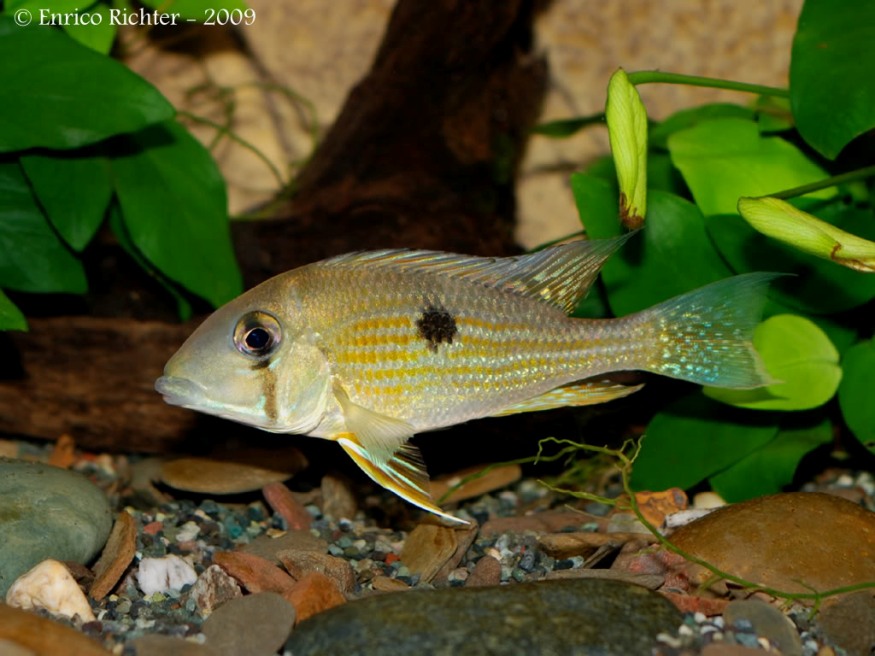
Geophagus taeniopareius
Kullander & Royero, 1992
Max length150mm SL6in SLTank150 × 45cm60 × 18inTemp24–30°C75–86°FpH5.5–6.8This species is relatively rare in the hobby but sometimes available from specialist retailers or private breeders. Though described in 1992 it was first collected much earlier and has been in the hobby since the late 1970s, being known as 'Wangenstrich-Erdfresser' (cheek-stripe eartheater) in Germany. It's one of just five Geophagus species not to be included in the nominal G. surinamensis 'group' of closely-related species within the genus along with G. argyrostictus, G. gottwaldi, G. grammepareius and G. harreri.
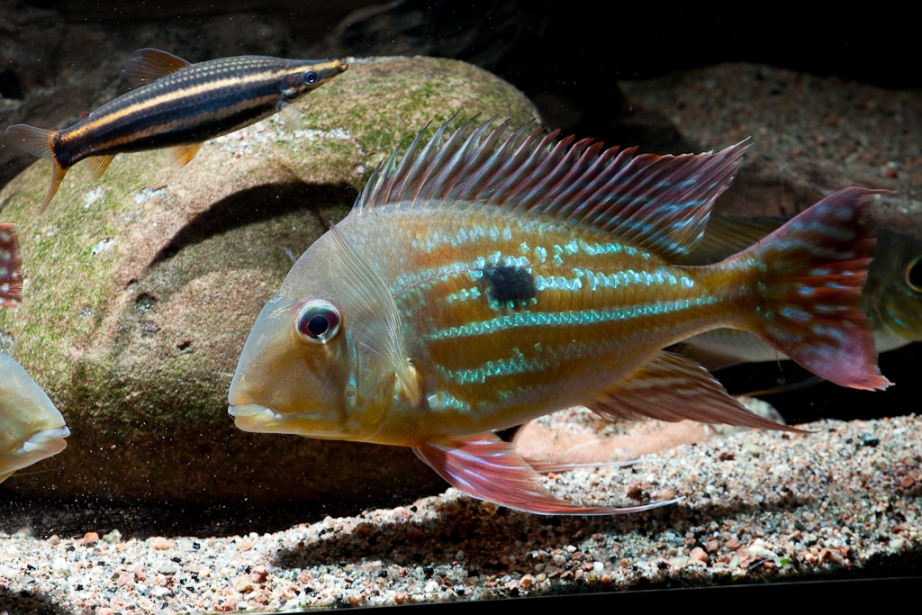
Geophagus winemilleri
López-Fernández & Taphorn, 2004
Max length200mm SL8in SLTank180 × 60cm72 × 24inTemp26–30°C79–86°FpH4.0–7.0This species is rare in the hobby although other species are sometimes sold under the name. It's a member of the nominal G. surinamensis 'group' of closely-related species within the genus and can be identified by a combination of characters including: possession of dark preopercular marking; four parallel, ventrally-inclined bars on each flank (normally visible only when the fish are stressed, spawning or preserved); dark lateral spot positioned within the second vertical bar; caudal fin red with variable pattern of large, iridescent blue to white spo...
Gymnotus pedanopterusZebra Knifefish
authority not recorded
Max length280mm SL11in SLTanknot recordedTemp22–28°C72–82°FpH6.0–7.0The genus Gymnotus has undergone considerable taxonomic revision in recent years, with over 20 new species being described since 1994, of which this stunning species is one. It's still very rare in the hobby and tends to command a high price when available. Like other Gymnotids, it produces a weak electric field using specially-adapted muscle tissue located towards the tail. It also possesses electroreceptors which allow the fish to receive electrical signals. With these the fish can sense ...