Results for “species name”
Type a name: scientific, common, or one a species used to go by. Or narrow the catalogue with the filters.
Filters
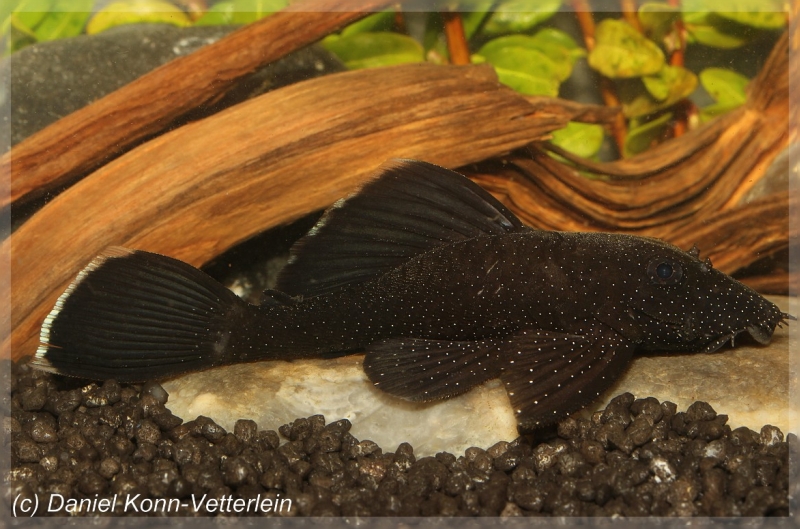
Ancistrus dolichopterusL183
Kner, 1854
Max length200mm SL8in SLTank120 × 45cm48 × 18inTemp26–30°C79–86°FpH5.0–7.0This species is not always identified correctly with its name used for the unidentified common bristlenose and other similar species, while the fish itself has been referred to as A. hoplogenys and assigned the L-number L183. Images and information describing it it in much of the available literature confirm this confusion.
Mesonauta insignis
authority not recorded
Max length100mm SL3.9in SLTank120 × 38cm48 × 15inTemp26–30°C79–86°FpHnot recordedThere is some debate that this species is actually the fish that finds its way into aquatic stores under the name of the Flag cichlid (normally attributed to m. festivus). The two fish look very similar and, in reality, it is likely that both species are sold under the same name - depending on the area where the fish were originally caught and exported from....
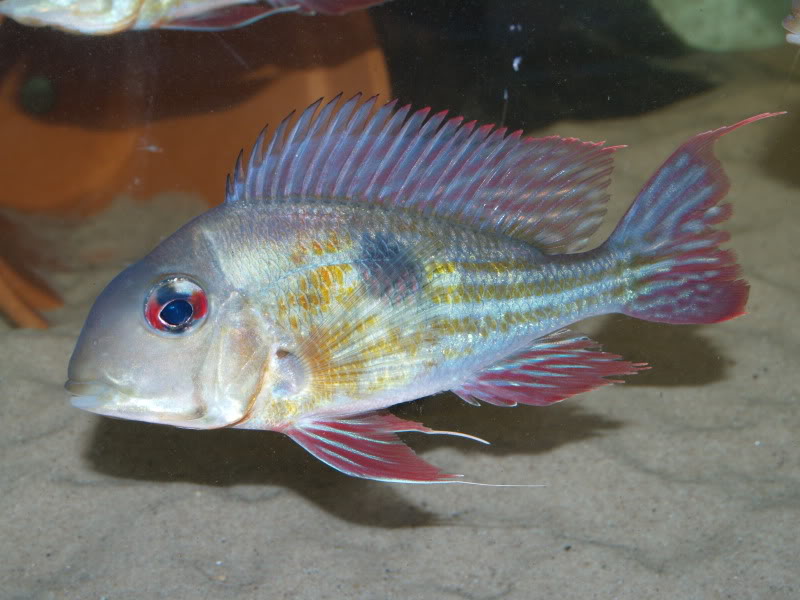
Geophagus proximus
Castelnau, 1855
Max length225mm SL9in SLTank180 × 60cm72 × 24inTemp24–32°C75–90°FpH4.0–7.0This species is rare in the hobby though it's name is often attached to shipments of other Geophagus species. It's a member of the nominal G. surinamensis 'group' of closely-related species within the genus and can be identified by a combination of characters including: possession of dark preopercular marking; no vertical bars on the flanks; relatively large, roughly oblong-shaped dark midlateral marking; caudal fin brownish with 3-5 light stripes on upper lobe and less well-defined stripes or mottled pattern of light spots with narrow dark interspaces on lower lobe.
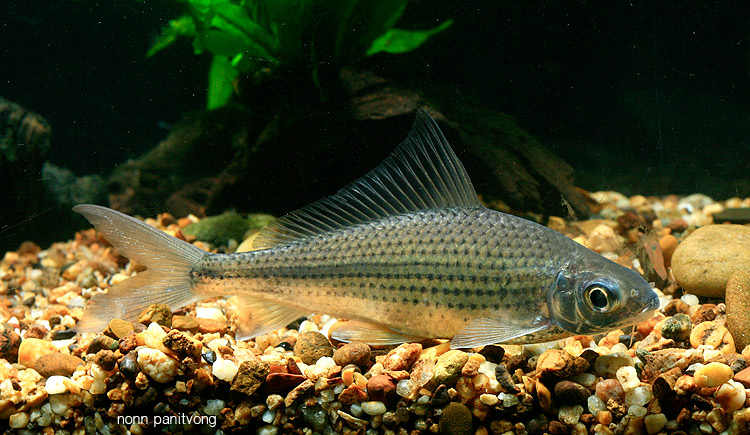
Labiobarbus leptocheilus
Valenciennes, 1842
Max length260mm SL10in SLTank240 × 60cm96 × 24inTemp20–26°C68–79°FpH6.0–8.0Different populations vary in appearance somewhat (see image of Salween specimen for example), and L. leptocheilus may turn out to represent a group of closely-related species rather than a single taxon. The population from the Cambodian Mekong has been considered to represent a distinct species, Labiobarbus lineatus, although that name is currently a synonym of L. leptocheilus following Kottelat (2013). It is widely used in the ornamental trade, however.
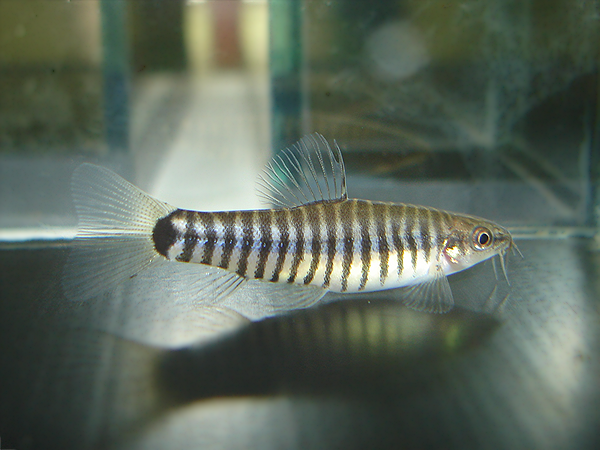
Micronemacheilus cruciatus
Rendahl, 1944
Max length40mm SL1.6in SLTank60 × 30cm24 × 12inTemp22–27°C72–81°FpH6.0–7.5This species is traded under various names including 'Vietnamese multi-banded zebra loach', 'hovering zebra loach', 'Laos pygmy multi-stripe loach', and 'banded dwarf loach'. It can be distinguished from related species by the following combination of characters: body with distinct vertical bars; 8 branched dorsal-fin rays; 3-10 pored lateral line scales; one pair of large papillae in median portion of upper lip; two pairs of large papillae in median portion of lower lip; lower posterior edge of opercle with 3-4 prominent indentations.
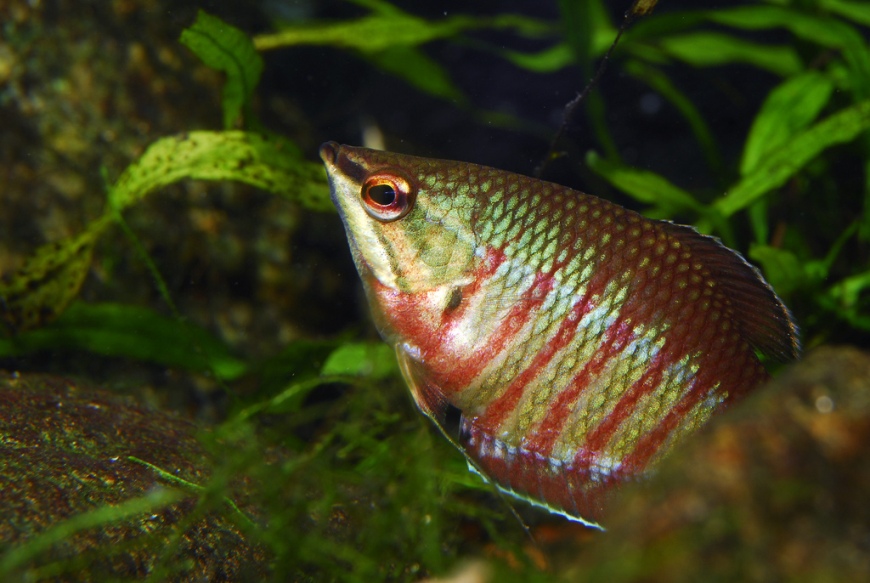
Sphaerichthys vaillantiVaillant's Chocolate Gourami
Pellegrin, 1930
Max length55mm SL2.2in SLTank60 × 30cm24 × 12inTemp21–25°C70–77°FpH3.5–6.5This species is traded under several names of which others include 'Samurai gourami' and 'Samurai Zebra Chocolate Gourami'. Though the former of these is arguably the most common, these names are potentially misleading since the fish is neither especially combative nor from Japan. Its unique colour pattern makes it difficult to confuse with any of the three other members of the genus even in the abse...
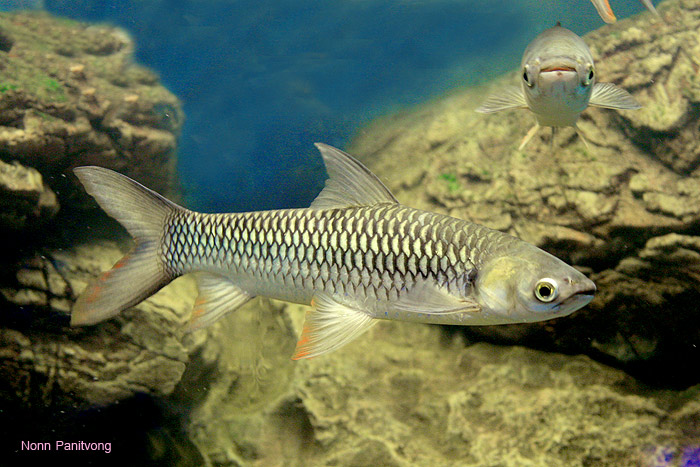
Leptobarbus rubripinnaRed-finned Cigar Shark
Fowler, 1937
Max length1000mm SL39in SLTanknot recordedTemp20–26°C68–79°FpH6.0–8.0This species was referred to as its congener Leptobarbus hoevenii for a number of decades and continues to be misidentified as such in the aquarium hobby, with both species traded under the same name. It is a popular sport fish in its native countries and is wholly unsuitable for private aquaria. Unfortunately it is...
Metynnis argenteus
authority not recorded
Max length150mm SL6in SLTank180 × 38cm72 × 15inTemp24–28°C75–82°FpH6.0–7.0Metynnis argenteus is very similar to another member of the genus, Metynnis hypsauchen and both fish are sold in the hobby under the name "Silver Dollar". The latter species is sometimes referred to as the Plain Metynnis in an effort to distinguish it from its close relation. They are virtually indentical in terms of appearance and care requirements. The two species can be told apart as m. hypsauchen has a black blotch located slightly above and behind each eye. In addition to these tw...
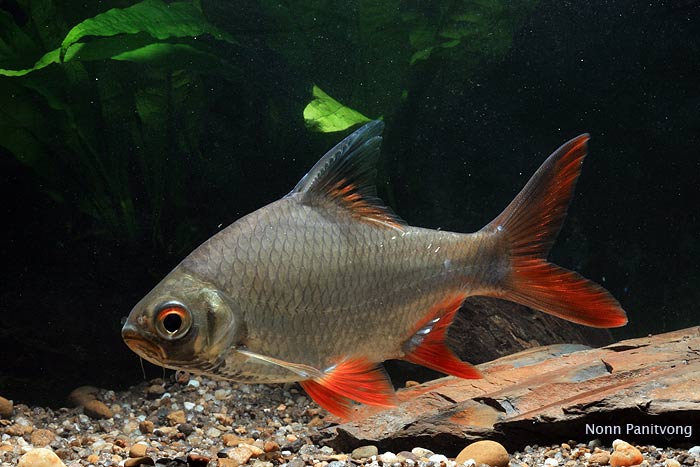
Barbonymus altusRed-tailed Tinfoil Barb
Günther, 1868
Max length210mm SL8in SLTank150 × 60cm60 × 24inTemp20–27°C68–81°FpH6.0–8.0This is one of two species sold with the common/trade name of "tinfoil barb", the other being the more widely-recognised B. schwanenfeldii. Despite this it appears that B. altus is just as widely available as B. schwanenfeldii and in many cases is seen on sale more regularly. Unfortunately both are usually offered at a small size (usually around 2 - 3"/5 - 7.5cm) with little to no information regarding the eventual size of the fish. Although B. altus is the ...
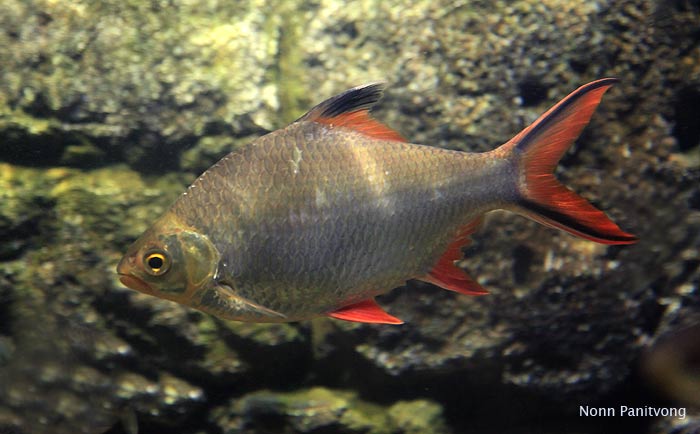
Barbonymus schwanefeldiiTinfoil barb
Bleeker, 1854
Max length355mm SL14in SLTank210 × 60cm84 × 24inTemp20–28°C68–82°FpH6.0–8.0This is one of two species traded under the vernacular name 'tinfoil barb', the other being the less well-known congener B. altus. Despite this it appears that B. altus is just as widely available as B. schwanefeldii and in many cases is seen on sale more regularly. Unfortunately both are usually offered at a small size (usually around 50 - 75 mm) with little to no information regarding the eventual size of the fish.
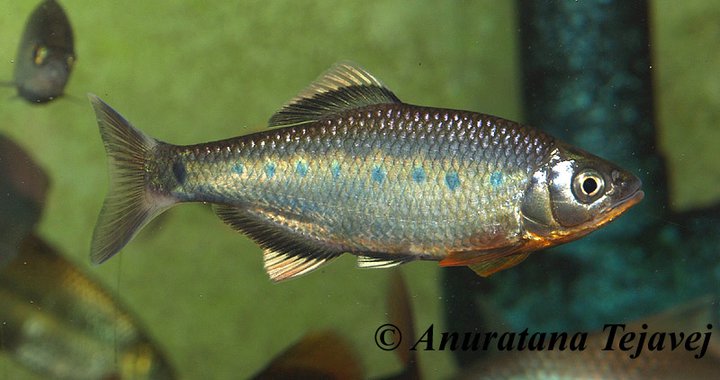
Barilius bakeri
Day, 1865
Max length130mm SL5in SLTank150 × 60cm60 × 24inTemp18–26°C64–79°FpH6.0–7.5This species is traded under several names including 'royal danio', 'blue-spotted hill trout', and 'blue-dotted mirror fish'. It can be distinguished from congeners by possessing a single row of bluish-green spots along the length of the body, white margins on the dorsal and anal fins, 37-38+1 lateral line scales, and fleshy rudi...
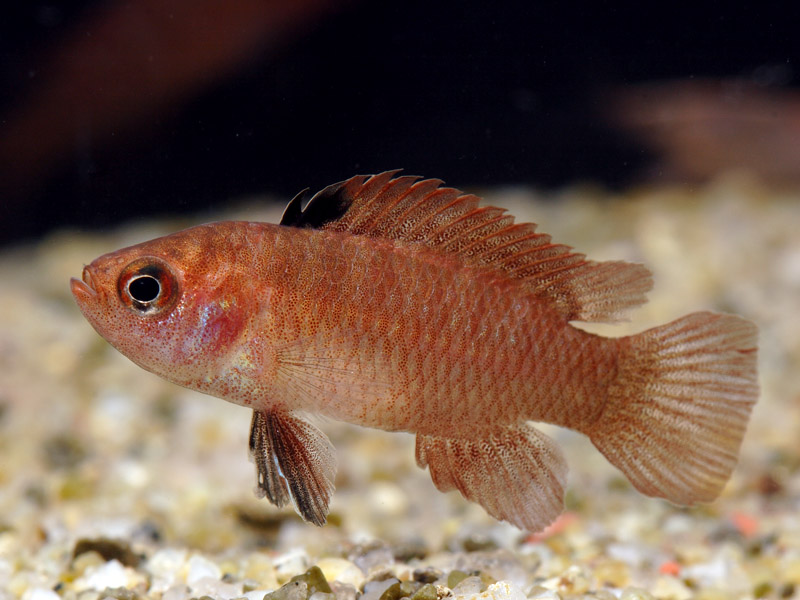
Dario hysginon
Kullander & Britz, 2002
Max length20mm SL0.8in SLTank45 × 30cm18 × 12inTemp20–24°C68–75°FpH6.5–7.5This species is traded under various names such as 'red melon Dario' or 'flame red Dario'. Among congeners D. dayingensis is most similar since it differs only in a few meristic counts and by its slightly larger adult size. D. hysginon can be told apart by possessing 22-24, usually 23, lateral scales (vs. 24-25 in D. dayingensis), 8½ (vs. 9½) scales in the transverse scale row, a...
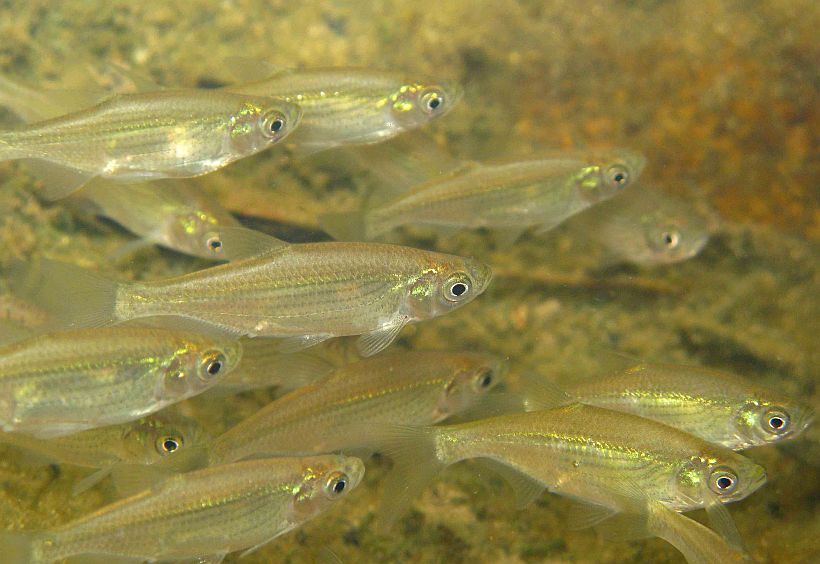
Metzia lineata
Pellegrin, 1907
Max length100mm SL3.9in SLTanknot recordedTempnot recordedpHnot recordedPopulations from the upper Pearl River (Nanpan Jiang basin) differ in several morphological characters from those inhabiting Guangdong, Guangxi, and Guizhou Provinces, and Hainan Island. Those from Vietnam also seem to be different (Gan et al., 2009), the implication being that there may be several species currently included under the name M. lineata.
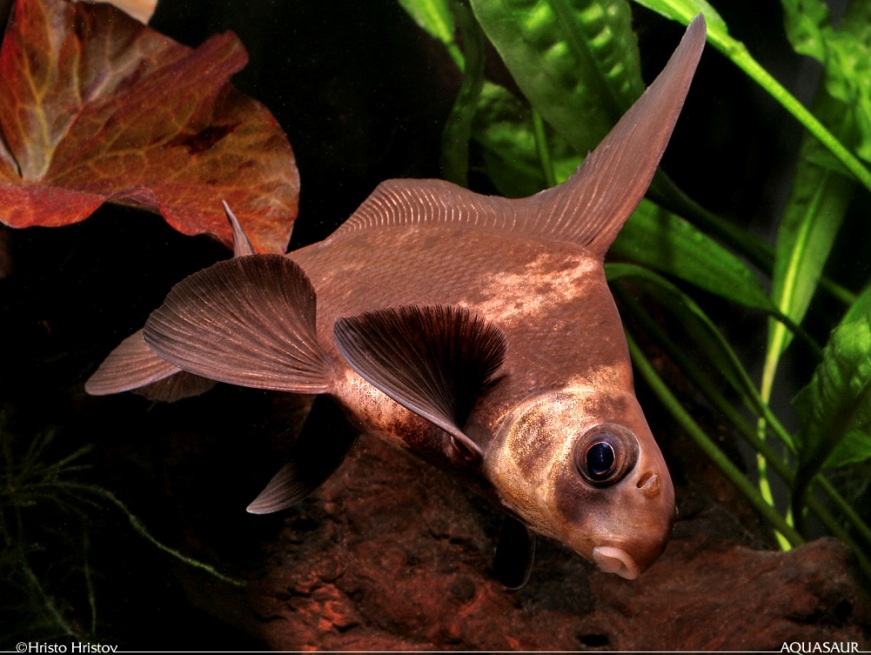
Myxocyprinus asiaticusChinese Sailfin Sucker
Bleeker, 1864
Max length900mm SL35in SLTanknot recordedTemp15.5–21°C60–70°FpH6.0–8.0This species is traded under various names including 'Chinese banded shark', 'Chinese sucker', 'freshwater batfish', 'high-fin banded loach', etc. It's currently illegal to import or own privately in several countries, including the UK, but continues to be available with only the attractive juvenile form traded, and almost always without information regarding adult size of almost a metre or potential lifepan of 25 years+. Myxocyprinus is a monotypic genus and the only Asian representative of the family Cato...
Nanochromis transvestitus
authority not recorded
Max length70mm SL2.8in SLTanknot recordedTemp24–27°C75–81°FpH4.0–7.0One of our favourite dwarf cichlids, N. transvestitus is a truly stunning fish when in good condition. However, it is not recommended to the beginner due to its very specific water requirements. The scientific name is derived from the fact that the female is the more colourful fish, making it something of an oddity....
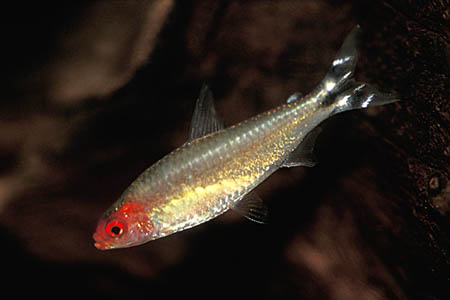
Petitella georgiaeFalse Rummy-nose
authority not recorded
Max length50mm SL2.0in SLTanknot recordedTemp22–26°C72–79°FpH5.5–7.0This is one of three species commonly sold under the name "rummy-nose tetra". The commonest of these is the firehead tetra, Hemigrammus bleheri, whilst the "true" rummy-nose is Hemigrammus rhodostomus. All three are very similar in appearance, but can be distinguished by several factors. The first is by the extent to which the red colouration on the head of the fish extends into the body. H. bleheri is the only one of the 3 in which the red extends beyond the gill covers. ...
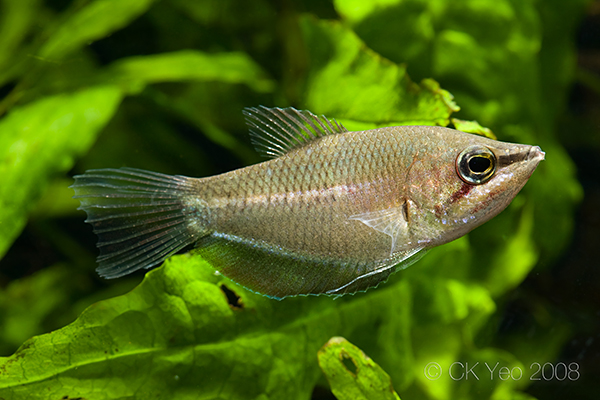
Sphaerichthys acrostomaGiant Chocolate Gourami
Vierke, 1979
Max length70mm SL2.8in SLTank80 × 30cm31 × 12inTemp21–25°C70–77°FpH3.5–6.5This species is traded under several names of which others include 'sharp-nosed gourami', 'moonlight chocolate gourami', 'black-lined chocolate gourami' and 'black-tailed chocolate gourami', though it's far from common in the hobby. Its unique colour pattern makes it difficult to confuse with any of the three other members of the genus even in the absence of meristic data.
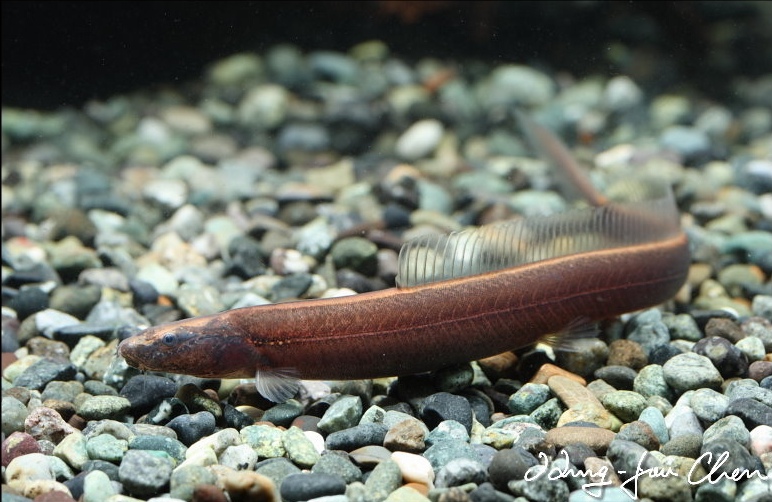
Vaillantella maassiFork-tailed Loach
Weber & de Beaufort, 1912
Max length125mm SL5in SLTank120 × 30cm48 × 12inTemp23–29°C73–84°FpH3.5–7.2This species is traded under various names including 'chocolate scissor-tailed loach', chocolate long-finned loach', 'red line cobra loach', 'spiny eel loach' and 'dragon loach'. It's apparently difficult to find in its natural habitats and thus time-consuming to collect, meaning it's rarely traded in numbers, sought after by enthusiasts and tends to carry a relatively high price tag when available. The genus currently contains just three...
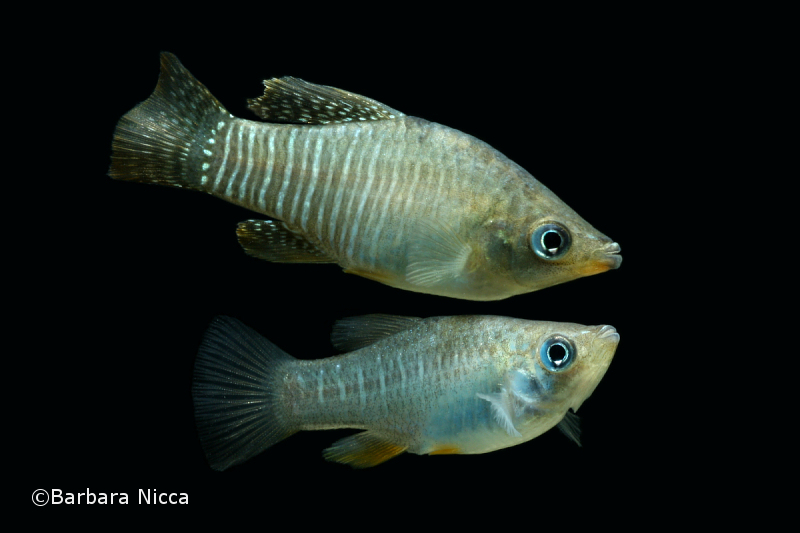
Fundulus xenicusDiamond Killifish
Jordan & Gilbert, 1882
Max length50mm SL2.0in SLTanknot recordedTemp21–35°C70–95°FpH7.5–9.0This species is not a common aquarium species but is occasionally available from specialist retailers or breeders. It was initially named Adinia multifasciata by Girard (1859) before later being redescribed as Fundulus xenicus (mispelled 'Fundnlus') by Jordan and Gilbert (1882). Body stout and trapezoidal in adults, body depth usually 2 to 3 times in standard length; scales large, fewer than 30 scales along midlateral scale row...
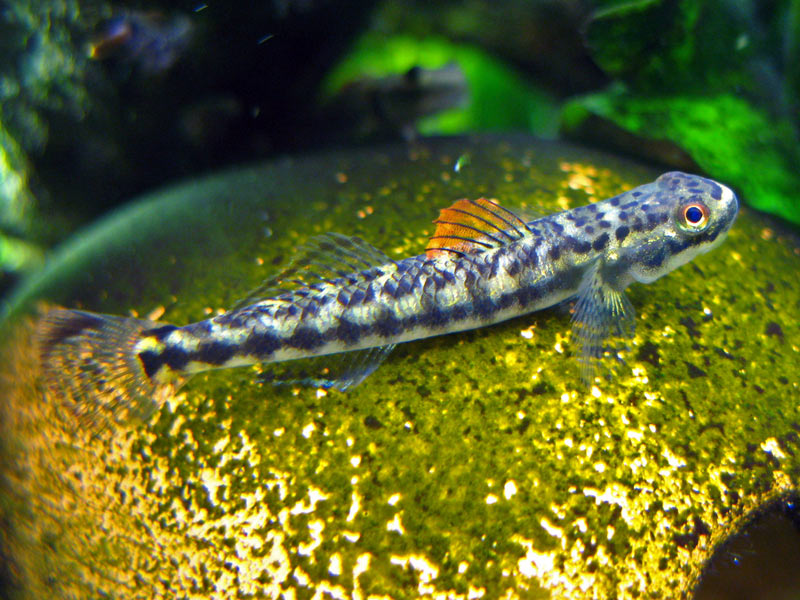
Stiphodon maculidorsalisOrange-fin Stiphodon
Maeda & Tan, 2013
Max length80mm SL3.1in SLTank80 × 30cm31 × 12inTemp20–28°C68–82°FpH6.5–7.5This species was referred to as S. sp. 'orange fin' or S. sp. 'ST01' prior to being offically named and is one of the more commonly-traded members of the genus, though often in batches containing only one gender, a mixture of species, or misidentified under an incorrect name such as S. zebrinus. It can be told apart from congeners by the following combination of characters: usually 9 soft second dorsal-fin rays; 15 soft pectoral-fin rays; first dorsal-fin in male poin...