Results for “substrate”
Type a name: scientific, common, or one a species used to go by. Or narrow the catalogue with the filters.
Filters
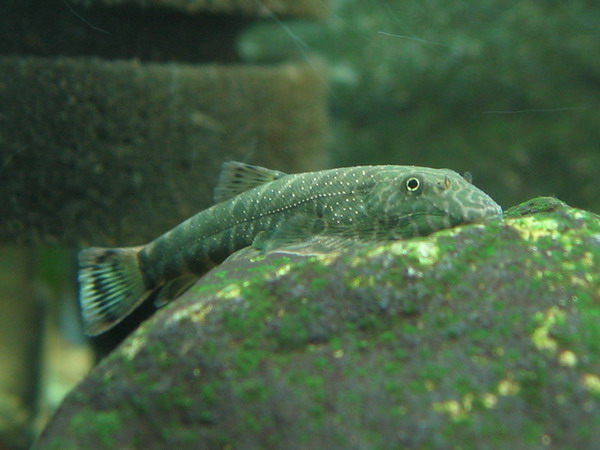
Gastromyzon sp. 'SK03'
authority not recorded
Max length50mm SL2.0in SLTank60 × 30cm24 × 12inTemp20–24°C68–75°FpH6.5–8.0Gastromyzon spp. are obligate dwellers of swift, shallow streams containing clear, oxygen-saturated water and have been recorded from sea level to 1350 m amsl throughout hill regions of Borneo. They typically inhabit riffles and runs and are often found above or below cascades and waterfalls. Substrates are generally composed of gravel, rocks, boulders or bedrock carpeted with a rich biofilm formed by algae and other micro-organisms.
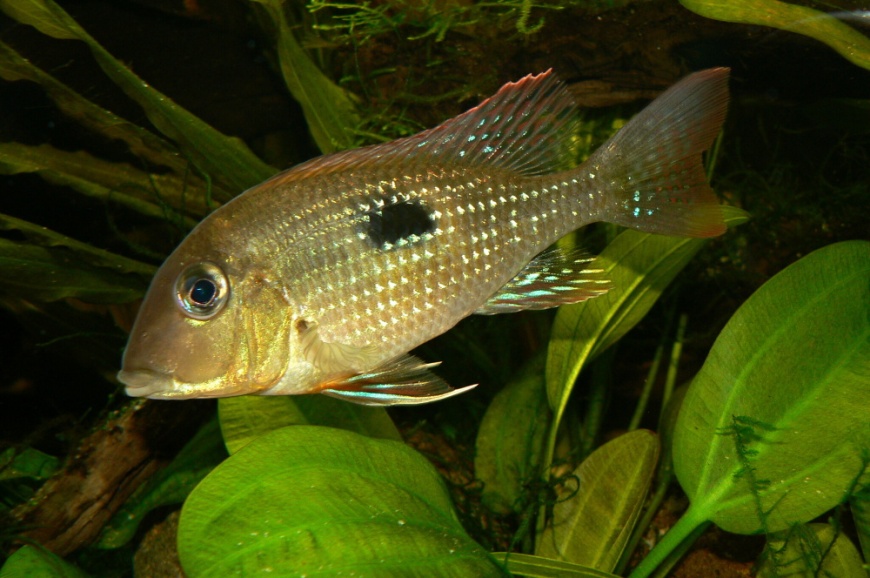
Geophagus camopiensisOiapoque Eartheater
Pellegrin, 1903
Max length200mm SL8in SLTank150 × 45cm60 × 18inTemp25–33°C77–91°FpH6.0–7.5In a study conducted on the Arataye River, the main tributary of the Approuage, this species was mostly collected from stretches of rapids with rocky substrate which were reduced to a series of pools during the dry season. Other fishes observed at the same site were Auchenipterus nuchalis, Hypostomus gymnorhynchus and Moenkhausia cf. intermedia while at other localities in the river Bryconops affinis, Myleus ternetzi, M. rhomboidalis, Moenkhausia aff. barbouri, Curimata sp. and Serrasalmus sp. were collected.
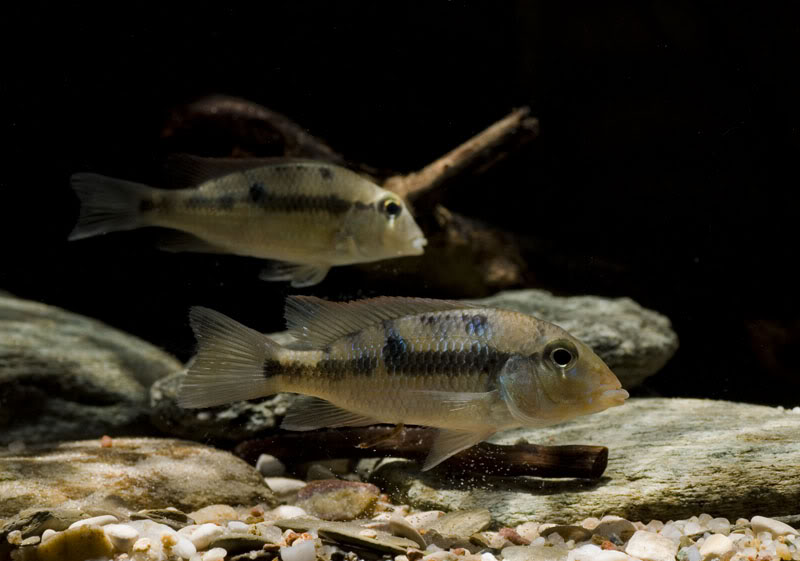
'Geophagus' crassilabrisPanamanian Eartheater
Steindachner, 1876
Max length240mm SL9in SLTank180 × 60cm72 × 24inTemp22–30°C72–86°FpH6.0–8.0The most essential item of décor is a soft, sandy substrate so that the fish can browse naturally (see 'Diet'). Coarser materials such as gravel or small pebbles can inhibit feeding, damage gill filaments and even be ingested with the potential of internal damage or blockages. Additional furnishings ar...
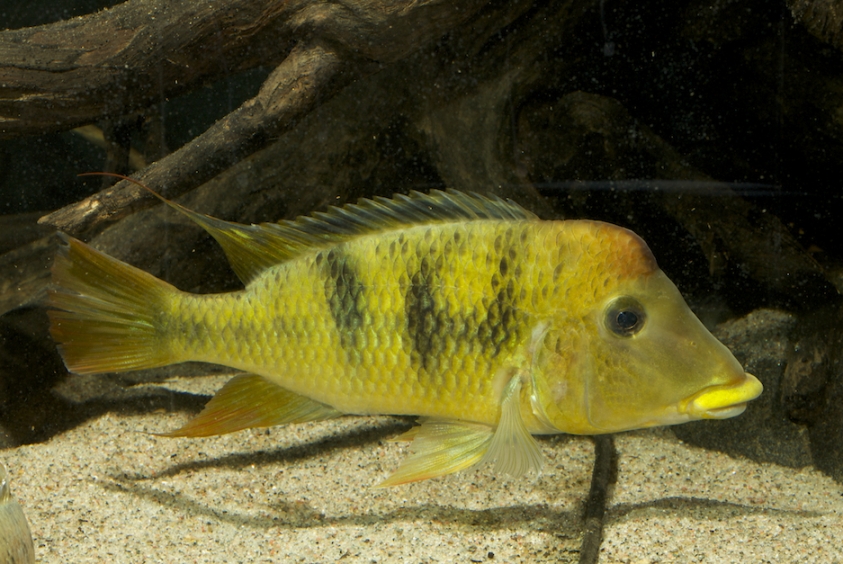
'Geophagus' pellegriniYellowhump Eartheater
Regan, 1912
Max length155mm SL6in SLTank120 × 45cm48 × 18inTemp25–30°C77–86°FpH5.0–6.0This species appears to be a relative ecological generalist. During a sampling trip in 1989 it was collected various habitat-types including a narrow (maximum width 3 m) stream containing shallow (maximum depth 1 m), transparent, moderate to fast-flowing water and substrate comprising gravel, mud, clay and organic debris including submerged logs. Aquatic plants consisted of water lilies and marginal vegetation was dense, comprising various trees, shrubs, grasses and ferns.
Gnathochromis permaxillaris
authority not recorded
Max length150mm SL6in SLTank120 × 30cm48 × 12inTemp22–27°C72–81°FpH7.5–9.0This species was originally classified in the genus Limnochromis. There are a couple of colour morphs available and these should not be mixed in aquaria, as they may hybridise. In nature, this fish feeds in a similar way to Geophagus species, in that it will sift sand through its gills to extract invertebrates hidden in the substrate. It is a deep water fish and has been recorded foraging at depths of up to 200 metres. These movements seem to be related to the presence of the plankton on which...
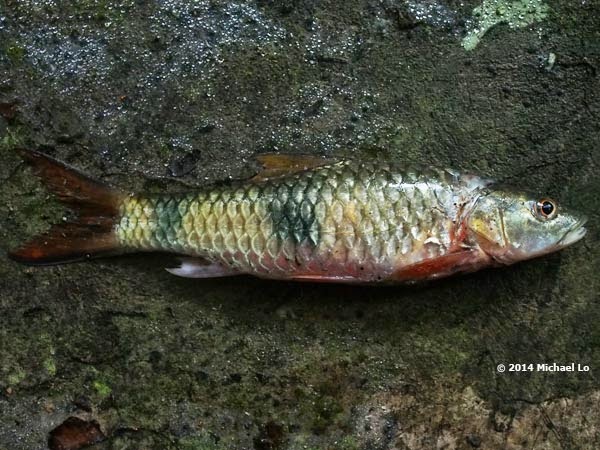
Hampala bimaculata
Popta, 1905
Max length500mm SL20in SLTanknot recordedTempnot recordedpHnot recordedPredominantly a riverine fish preferring clear, well-oxygenated, running waters with substrates of sand, gravel, rock or mud, typically flowing through tropical forest. In the habitat seen in our images sympatric fish species included Barbonymus balleroides, B. collingwoodi, Cyclocheilichthys repasson, C. apogon, Diplocheilichthys pleurotaenia, Garra borneensis, Leptobarbus hosii, and an unidentified Gastromyzon sp.
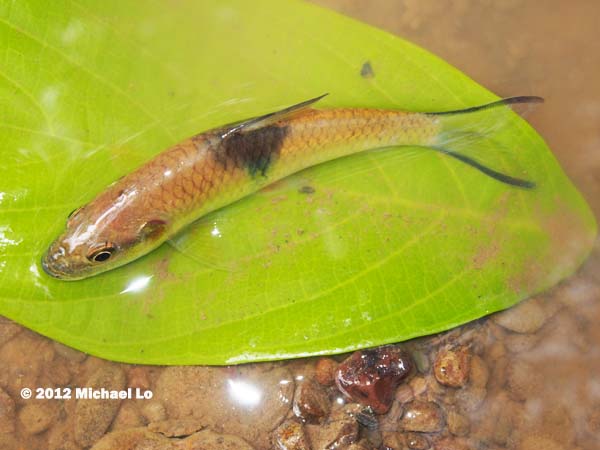
Hampala sabana
Inger & Chin, 1962
Max length410mm SL16in SLTanknot recordedTempnot recordedpHnot recordedPredominantly a riverine fish preferring clear, well-oxygenated, running waters with substrates of sand, gravel, rock or mud, and apparently displays a preference for deeper, slower-moving stretches. In Sabah such habitats typically flow through tropical forest, although in recent years freshwater habitats throughout much of the state have been extensively modified by human activity such as conversion to palm or rubber plantations.
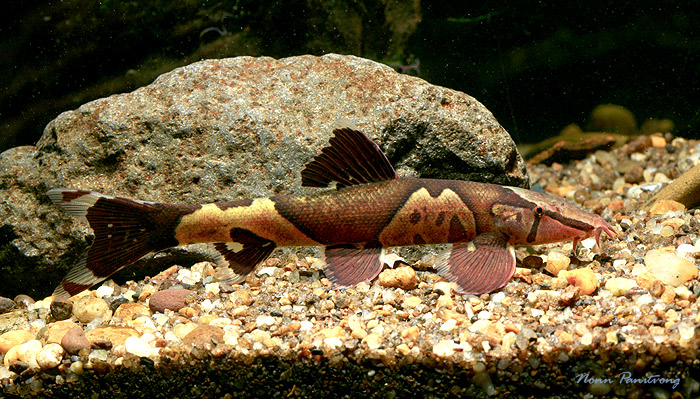
Homaloptera parclitella
Tan & Ng, 2005
Max length80mm SL3.1in SLTank120 × 30cm48 × 12inTemp20–25.5°C68–78°FpH6.0–7.5The water at the type locality is described as 'clear and fast-flowing over a rocky substratum'. H. parclitella was observed in shallow water among the rocks, and sympatric species included Garra cambodgiensis, Neolissochilus soroides, Poropuntius smedleyi, 'Puntius' binotatus, Homaloptera nebulosa and Amblyceps mangois.
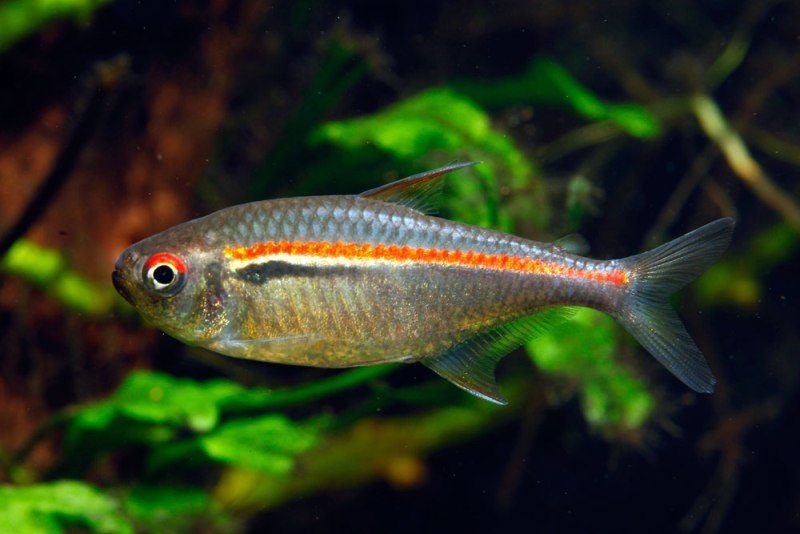
Hyphessobrycon amapaensisAmapá Tetra
Zarske & Géry, 1998
Max length30mm SL1.2in SLTank60 × 30cm24 × 12inTemp23–28°C73–82°FpH5.0–7.0Collected from small streams flowing through savanna grassland containing clear, light brown-coloured water with substrates of sand and gravel and little in the way of submerged or riparian vegetation. At the type locality pH varied between 5.8 – 6.3, GH and KH were both <1°, conductivity was 9-13 μs and temperature 24.7 – 27.2°C/76.6 – 80.1°F.
Hyphessobrycon auca
Almirón, Casciotta, Bechara & Ruíz Díaz, 2004
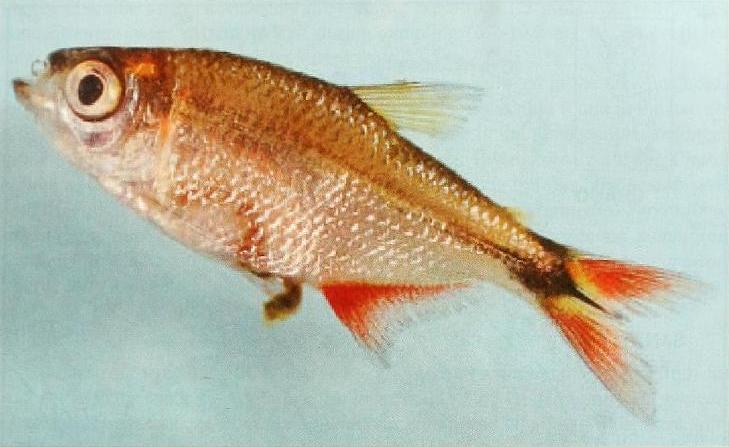
Max length55mm SL2.2in SLTanknot recordedTempnot recordedpHnot recordedThe two ponds where H. auca was collected were located on a sand bar deposited by the nearby Paraná river during the Pleistocene. At time of collection the substrates were composed of sand with submerged vegetation dominated by Egeria najas plus floating Eichhornia in marginal areas.
Hyphessobrycon erythrostigmaBleeding Heart Tetra
Fowler, 1943
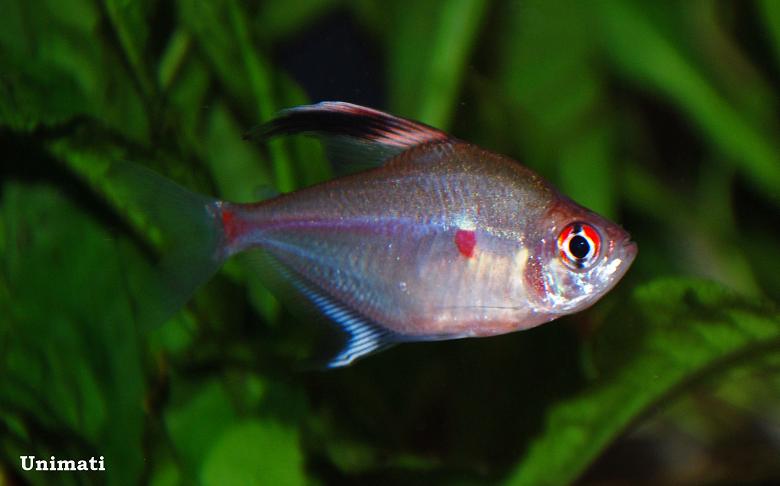
Max length60mm SL2.4in SLTank90 × 30cm36 × 12inTemp21–28°C70–82°FpH4.0–7.5In the igarapés Baré and Ubim, western Brazil H. erythrostigma was collected from stretches measuring 5-7 metres in width with thick riparian and overhanging vegetation. The substrate was mostly composed of sand and the fish displayed a preference for boundary zones between shallow and deeper water. Conductivity was measured at 14.2-62.1 mS/cm³, dissolved oxy...
Indostomus crocodilus
Britz & Kottelat, 1999
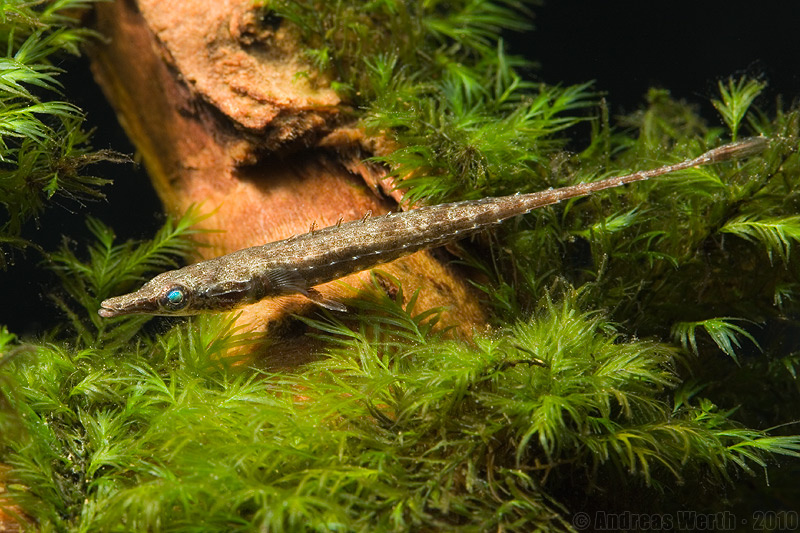
Max length30mm SL1.2in SLTank40 × 20cm16 × 8inTemp22–27°C72–81°FpH5.0–7.0The type series was collected from a blackwater stream in Toh Daeng Peat swamp forest with the fish found in slow-moving or standing habitats among submerged shoreline roots and leaf litter. In the Tapi River floodplain it was collected from stagnant waters, one of which was an oxbow lake approximately 200 m long and 30 m across at its widest point, surrounded by 'freshwater scrub and swamp trees'. The substrate was composed of mud, woody structures including fallen twigs and branches, and decomposing plant material.
Lamprologus callipterus
authority not recorded
Max length150mm SL6in SLTank90 × 30cm36 × 12inTemp24–27°C75–81°FpH7.5–9.0In nature, the spawning nests of large male fish may measure several meters across and contain hundreds of snail shells. Interestingly, when they are protecting brooding females males do not eat and eventually become so weak that their territories are taken over by stronger fish. Immature and sub-dominant males can be seen over areas of open substrate where they feed voraciously in large shoals. Females are only ever found in areas containing the nests of dominant males. It appears that the ...
Lamprologus congoensisCongo Lamprologus
authority not recorded
Max length150mm SL6in SLTank120 × 30cm48 × 12inTemp23–25°C73–77°FpH6.0–7.5An interesting species which resembles the popular Steatocranus species, both physically and in lifestyle. It has several physiological adaptations to allow it to live in rapids and fast-moving waters. The body is very streamlined, with strong pectoral fins. The swimbladder is also modified, being much reduced in size. This makes the fish less buoyant and thus less likely to be swept away by strong currents. In the aquarium it spends most of its time on the substrate, where it swims in a comical...
Lepidocephalichthys hasselti
Valenciennes, 1846
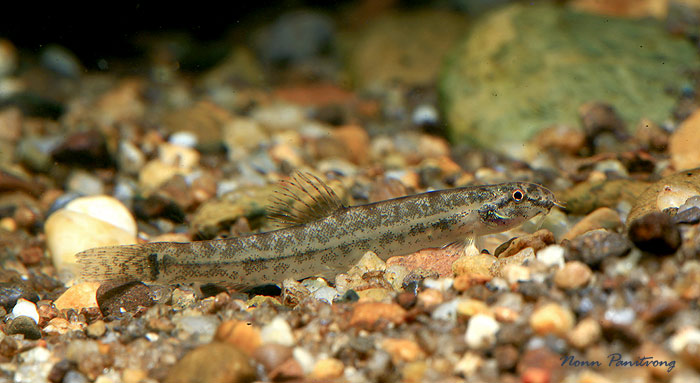
Max length60mm SL2.4in SLTank60 × 30cm24 × 12inTemp23–26°C73–79°FpH5.5–7.5At one locality close to Ban Na Hwai, Chiang Mai Province, Thailand L. hasselti was collected from a shallow (<0.5 m) pool in a swampy zone between forest and rice fields. The substrate was of mud, there was no aquatic vegetation and it was being used as drinking water by local animals, with the only effluent connected to a 'small creek'. Other species found there were Physoschistura pseudobrunneana, Rasbora hobelmani and Systomus cf. orphoides.
Leptobotia rubrilabris
Dabry de Thiersant, 1872
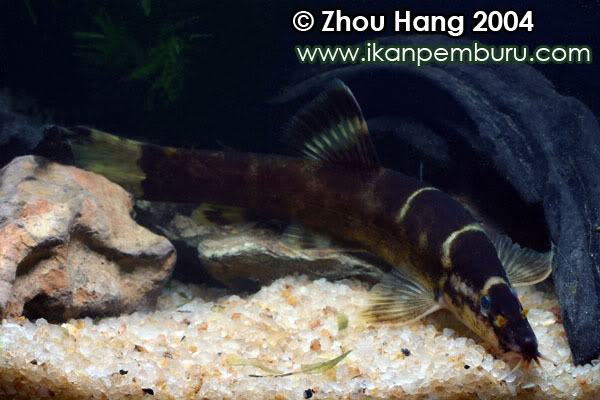
Max length150mm SL6in SLTank120 × 45cm48 × 18inTemp15.5–21°C60–70°FpH6.5–7.5Should be kept in a set-up designed to resemble a flowing stream with a substrate of variably-sized rocks, gravel and some water-worn boulders. This can be further furnished with driftwood roots and branches arranged to form some shaded spots while lengths of PVC piping or similar can be used to provide additional cover. Although most plant species will fail to thrive in such surroundings hardy genera such as Microsorum, Bolbitis or Anubias spp. can be grown attached to the décor and bright lighting will promote the growth of aufwuchs.
Microdevario kubotai
Kottelat & Witte, 1999
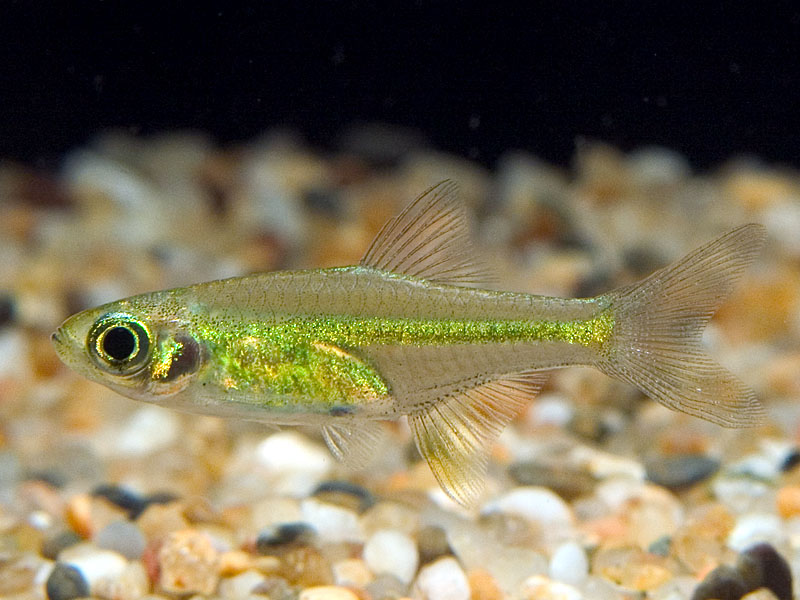
Max length20mm SL0.8in SLTank60 × 30cm24 × 12inTemp20–27°C68–81°FpH6.0–7.0Apparently inhabits calm to moderately-flowing stretches of well-oxygenated headwaters and minor tributaries. Such habitats tend to comprise transparent water, substrates of sand, gravel, rocks, boulders, and patches of leaf litter, with submerged driftwood, roots of riparian vegetation, and aquatic vegetation in places.
Mystacoleucus greenwayi
Pellegrin & Fang, 1940
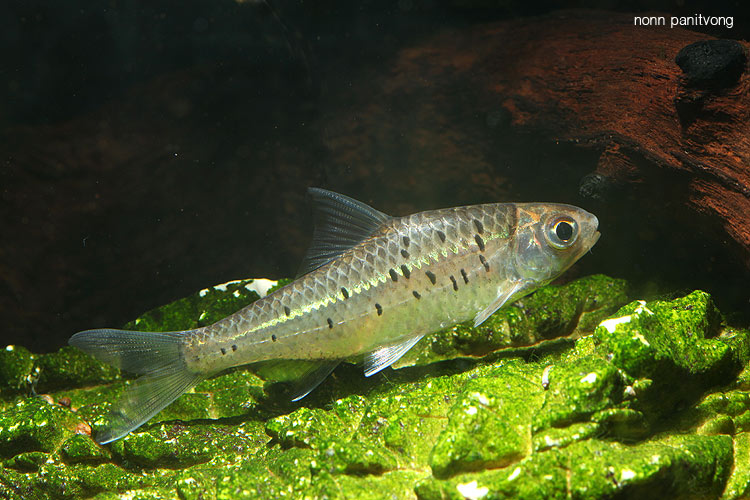
Max length100mm SL3.9in SLTank120 × 45cm48 × 18inTemp20–27°C68–81°FpH6.0–7.5Predominantly a riverine fish favouring clear, well-oxygenated, running water with substrates of sand or gravel and often present in rock and boulder-filled headwater streams. In the Mun River, close to the Pak Mun dam, Thailand, sympatric species included Hampala dispar, Cyclocheilichthys apogon, Osteochilus hasseltii,...
Neolamprologus fasciatusBarred Lamprologus
authority not recorded
Max length150mm SL6in SLTank90 × 38cm36 × 15inTemp23–27°C73–81°FpH7.5–9.0N. fasciatus is a predator by nature and its body shape has been adapted to allow it to enter small crevices and gaps in the rockwork of Lake Tanganyika to prey on invertebrates, eggs, fry and small fish. The lateral compression exhibited by this fish also makes the fish hard to spot head on, giving it an advantage over both its predators and prey. It hunts in a head down position a few feet above the substrate, moving its body in sinuous motions to counteract the water currents. It is sometimes...
Opsarius koratensis
Smith, 1931
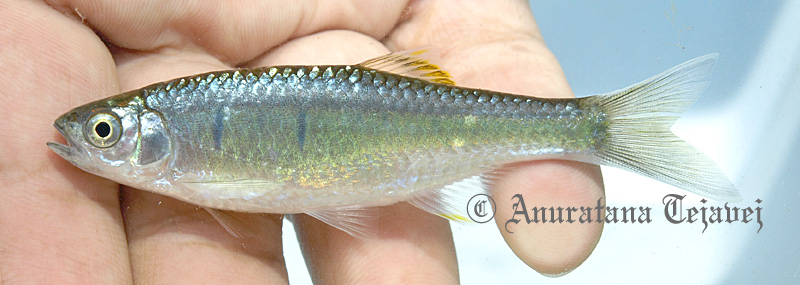
Max length100mm SL3.9in SLTank150 × 45cm60 × 18inTemp22–30°C72–86°FpH6.0–8.0Inhabits well-oxygenated, low-to-medium gradient, slow to moderate-flowing rivers and streams with substrates of gravel, cobbles, larger boulders and exposed bedrock. At the habitat in our image pH was 7.5, temperature 26°C and cond...