Neolamprologus fasciatus
Barred Lamprologus
On this page11 sections
Quick facts
Difficulty4 of 8 measures
More bars, more demanding. Hardiness is not averaged with the rest.
- Space
- large tank
- Water
- tap water
- Temp
- steady heat
- Diet
- unknown
- Temperament
- territorial
- Social
- unknown
- Compatibility
- unknown
Hardiness on its own can raise the rating, whatever the measures above say.
- Hardiness
- unknown
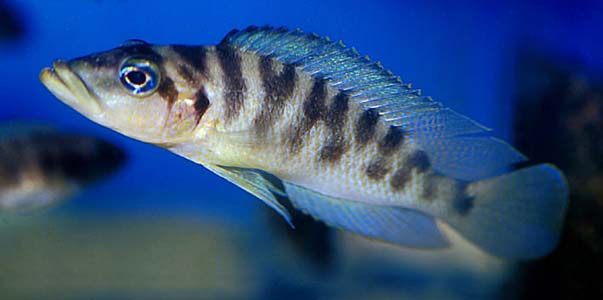
N. fasciatus is a predator by nature and its body shape has been adapted to allow it to enter small crevices and gaps in the rockwork of Lake Tanganyika to prey on invertebrates, eggs, fry and small fish. The lateral compression exhibited by this fish also makes the fish hard to spot head on, giving it an advantage over both its predators and prey. It hunts in a head down position a few feet above the substrate, moving its body in sinuous motions to counteract the water currents. It is sometimes...
Distribution
Endemic to Lake Tanganyika.
Habitat
It generally occurs in rocky areas but also may be found in shallow waters around the water's edge.
Aquarium size
90 ∗ 38 ∗ 30 cm36 ∗ 15 ∗ 12 in - ~103 litres~27 US gal.
Maintenance
Should be housed in a Lake Tanganyika biotope setup, with piles of rocks arranged to form caves filling much of the aquarium. A sandy substrate is preferable.
Water conditions
Temperature: 23 – 27 °C73 – 81 °F
pH: 7.5-9.0
Hardness: 8-25°H
These recommendations come from this profile’s own figures. They contain affiliate links, so we may earn a commission.
Diet
Most live and frozen foods are readily accepted. Dried foods are rarely accepted.
Behaviour and compatibility
Although it is a territorial species, it is generally peaceful towards fish it can't fit into its mouth and is a good addition to a Tanganyikan community. Suitable tankmates include other Neolamprologus species, Julidochromis, Eretmodus and Telmatochromis. However it is quite shy and aggressive or very vigorous tankmates such as Mbuna should be avoided. It can be maintained singly, in pairs or as a group in a suitably sized tank.
Sexual dimorphism
Unknown. It appears that the sexes are identical physically.
Reproduction
Not achieved in aquaria. It is known to spawn in caves and also in snail shells in nature.
Notes
N. fasciatus is a predator by nature and its body shape has been adapted to allow it to enter small crevices and gaps in the rockwork of Lake Tanganyika to prey on invertebrates, eggs, fry and small fish. The lateral compression exhibited by this fish also makes the fish hard to spot head on, giving it an advantage over both its predators and prey. It hunts in a head down position a few feet above the substrate, moving its body in sinuous motions to counteract the water currents. It is sometimes confused with juvenile Altolamprologus species but can be easily distinguished by its blue-green iris and more elongate body shape.
Species images · 1
Used with the photographer’s permission. Not licensed for reuse.
Profile completeness18 of 24
75% complete
Also missing: a recorded distribution, taxonomic authority, etymology.
Community
Questions about Neolamprologus fasciatus?
Ask on Discord