Results for “species”
Type a name: scientific, common, or one a species used to go by. Or narrow the catalogue with the filters.
Filters
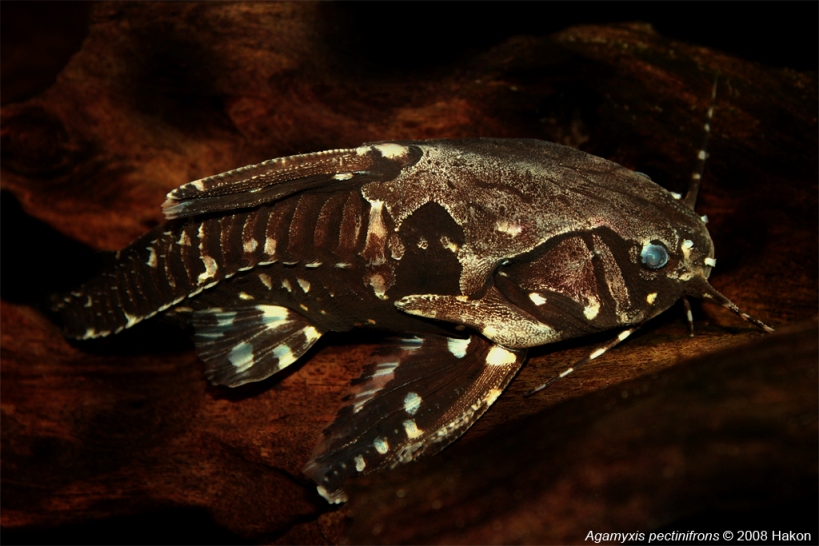
Agamyxis pectinifronsSpotted Talking Catfish
Cope, 1870
Max length150mm SL6in SLTank120 × 30cm48 × 12inTemp22–26°C72–79°FpH5.5–7.5This species, which may also be referred to by the alternative vernacular names 'spotted raphael', 'white-spotted' or 'white-barred' catfish, is very common in the trade and despite its adult size is recommended to beginners and experienced aquarists alike since it is hardy, attractive and relatively-long-lived. The light body markings are highly variable in terms of exact placement and may be either white or pale to darkish yellow in colour. It is very similar i...
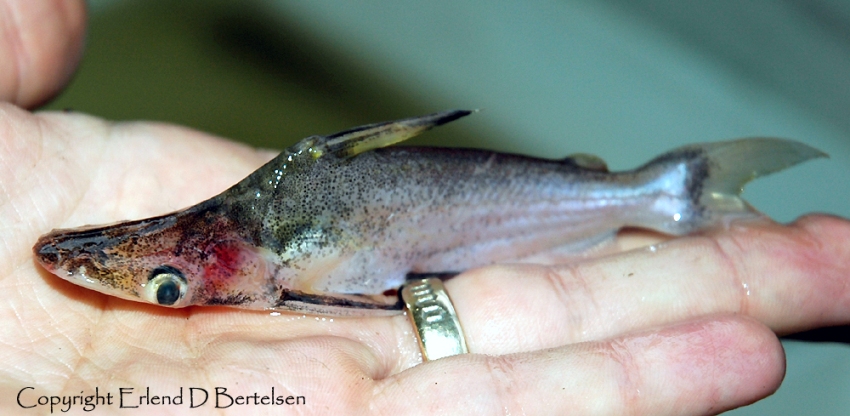
Ageneiosus ucayalensisDuck Catfish
Castelnau, 1855
Max length290mm SL11in SLTank180 × 60cm72 × 24inTemp22.5–28°C73–82°FpH5.5–7.5Apparently this species is polymorphic with body patterning varying significantly depending on locality. Individuals collected from black water habitats tend to be noticeably darker in overall colouration, for example, with this being particularly evident among populations from the Guiana Shield. The genus Ageneiosus was at one point classified in...
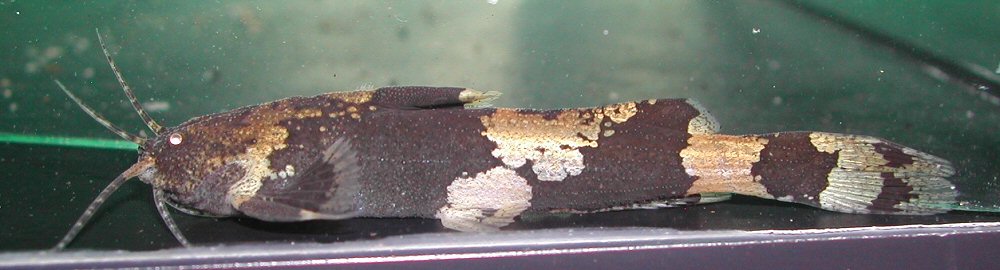
Akysis prashadiIndawgyi Stream Catfish
Hora, 1936
Max length62mm SL2.4in SLTank45 × 30cm18 × 12inTemp16.5–24°C62–75°FpH6.0–7.2This species is among the few members of the family to be exported for the aquarium hobby though is by no means common. It can be differentiated from a...
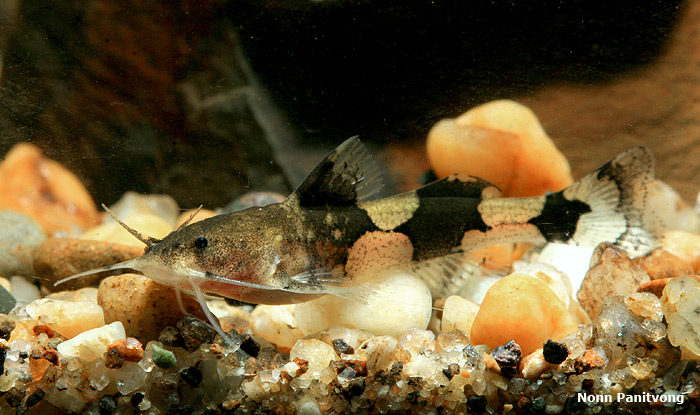
Akysis vespaOrange-Banded Stream Catfish
Ng & Kottelat, 2004
Max length31mm SL1.2in SLTank45 × 30cm18 × 12inTemp16.5–23.5°C62–74°FpH6.0–7.5This species is among the few members of the family to be exported for the aquarium hobby and we've also seen it on sale under various names such as 'orange-banded stone catfish', 'orange micro bumblebee catfish', 'Burmese orange mini bee catfish' or more simply 'wasp catfish'. Though the majority of forms are yellowish to orange in colouration there appears to exist a bright red variant which to date we've only seen in photos.
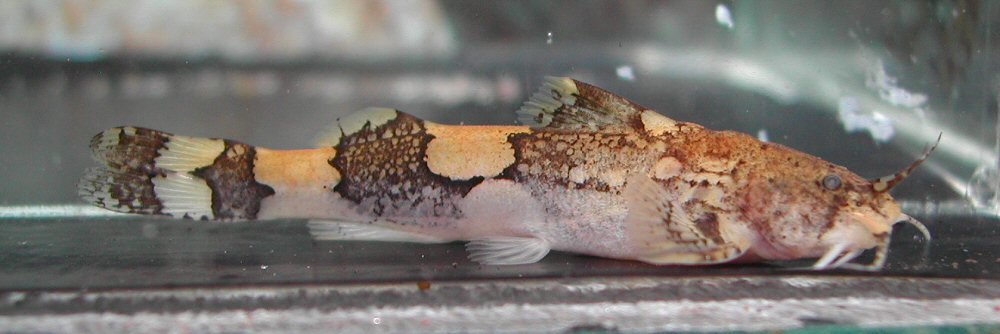
Akysis vespertinusWestern Stream Catfish
Ng, 2008
Max length35mm SL1.4in SLTank45 × 30cm18 × 12inTemp16.5–24°C62–75°FpH6.0–7.5This species is exceptionally rare in the aquarium trade and can be distinguished from congeners by the following combination of characters: snout narrow with head appearing triangular as a resul...
Alcolapia grahamiGraham's Soda Cichlid
Boulenger, 1912
Max length120mm SL5in SLTank90 × 30cm36 × 12inTempnot recordedpH8.0–10.0This species is a true wonder of nature. It lives in a soda lake which is full of hot, alkaline springs. The water contains a high concentration of sodium carbonate and other dissolved minerals and salts. The water conditions in the lake are typically pH 9.5-10.5, kH 7000+ and temperature 90-110°F! The water also has a sg reading of 1.2+ and is very shallow, having a maximum depth of only 3 metres. It can be acclimatised to more 'normal' conditions but the pH should not be allowed ...
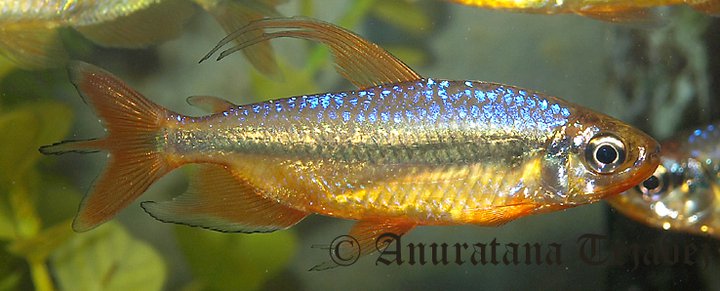
Alestopetersius brichardiCherry Red Congo Tetra
Poll, 1967
Max length80mm SL3.1in SLTank120 × 30cm48 × 12inTemp20–28°C68–82°FpH5.0–7.0This species is sometimes traded as 'cherry red Congo tetra' or 'super red Congo tetra' and has also been referred to using the misapplied names Alestopetersius nigropterus (a valid congener) and A. ansorgii (a synonym of Nannopetersius ansorgii).
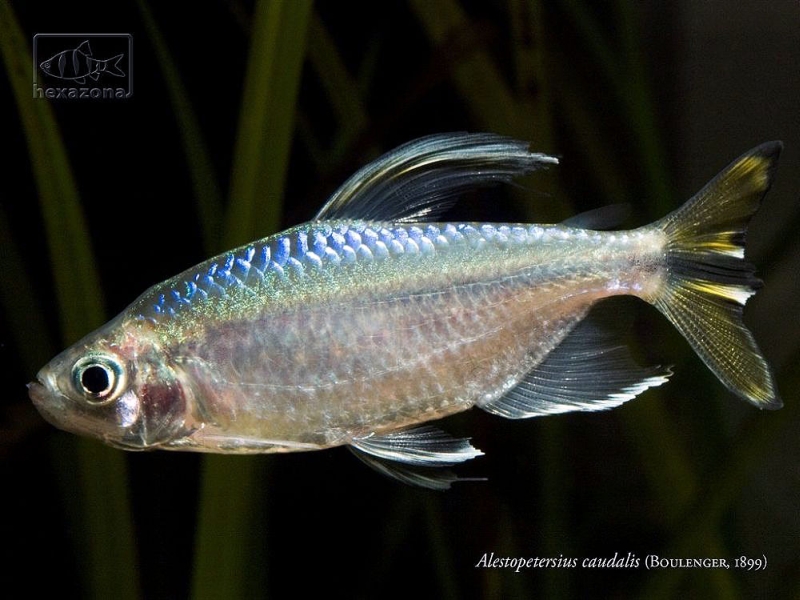
Alestopetersius caudalisYellow-Tailed Congo Tetra
Boulenger, 1899
Max length60mm SL2.4in SLTank120 × 30cm48 × 12inTemp22–26°C72–79°FpH5.0–7.5This species is also traded as 'yellow-finned', 'yellowtail' or 'blue Congo' tetra and is occasionally bred on a commercial basis, although not on a scale comparable to its better-known relative Phenacogrammus interruptus. No recent key to the genus exists but based on Géry (1977) and images in Mbimbi Mayi Munene and Stiassny (2012) it can be told apart from congeners by a combination of: extended median caudal-fin rays in adult males; absence of prominent dar...
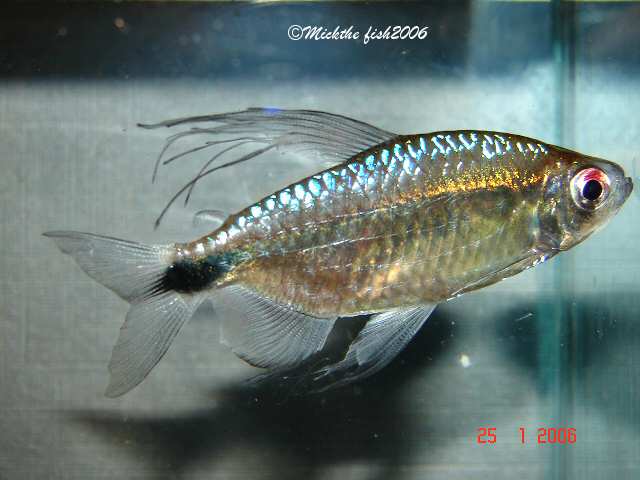
Alestopetersius smykalaiBlue Diamond Tetra
Poll, 1967
Max length60mm SL2.4in SLTank120 × 30cm48 × 12inTemp20–28°C68–82°FpH5.0–7.0This species appears to be restricted to the Imo and Niger drainages in Nigeria but the full extent of its distribution is unclear. Type locality is 'Aba, Lower Niger, Nigeria', corresponding to the city of Aba in Abia state, southern Nigeria which lies on the Aba River, a tributary of the Imo. Nigeria has lost 95 % of its original rainforest cover, num...
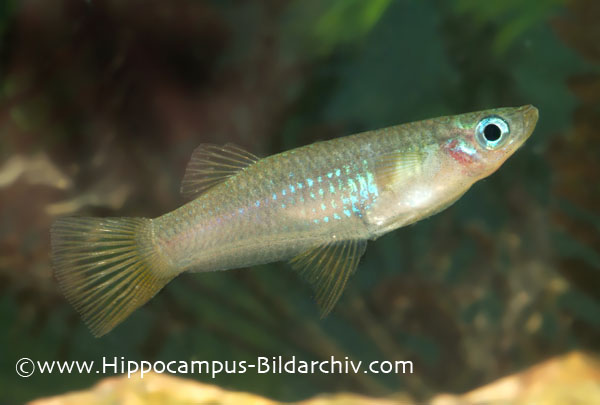
Alfaro cultratusKnife Livebearer
Regan, 1908
Max length75mm SL3.0in SLTanknot recordedTemp24–28°C75–82°FpH6.0–8.0This is an exceptionally hardy and adaptable species. It's not an especially common fish in stores, but is quite widely available in hobbyist circles. The common name arises from the row of modified, paired scales that form a keel running from the base of theto the caudal fin....
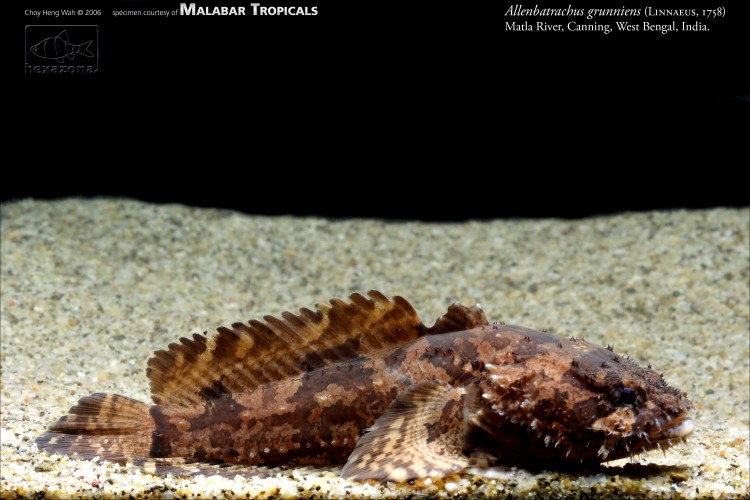
Allenbatrachus grunniensFreshwater Toadfish
Linnaeus, 1758
Max length300mm SL12in SLTanknot recordedTemp23–28°C73–82°FpH7.5–9.0This species is relatively common in the aquarium hobby but contrary to popular belief is not venomous in any way. Its dorsal and opercular spines can pierce the skin, however, meaning extreme caution is necessary when netting it or performing aquarium maintenance. The genus Allenbatrachus was erected in 1997 to accom...
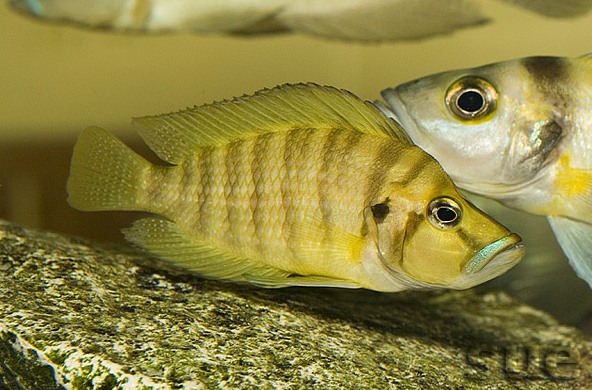
Altolamprologus compressicepsCompressed Cichlid
Boulenger, 1898
Max length125mm SL5in SLTank120 × 45cm48 × 18inTemp24–28°C75–82°FpH8.0–9.0This species varies in colour pattern depending on locality. Some of them are sold under several such names with the variant from Kigoma being known variously as A. compressiceps "Kigoma red", "Kigoma red fin", "Kigoma orange top" or "firefin" for example. The different populations should ideally be kept apart in aquaria and clearly labelled with collection locality in order to avoid hybridisation. Forms popular in the aquarium hobby include: - &quo...
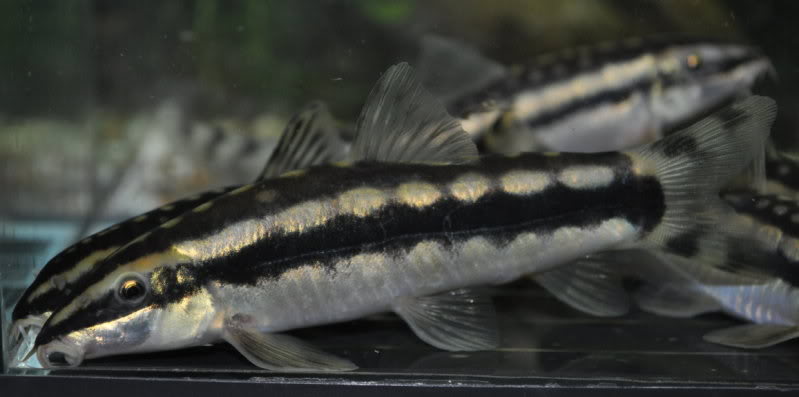
Ambastaia nigrolineataBlack-Lined Loach
Kottelat & Chu, 1987
Max length80mm SL3.1in SLTank90 × 30cm36 × 12inTemp20–25°C68–77°FpH6.5–7.5This specie is relatively rare in the aquarium trade and much sought after by enthusiasts as a result. It looks relatively similar to A. sidthimunki but according to the original description by Kottelat and Chu (1987) can be told apart by colour patterning which uniquely consists of a solid da...
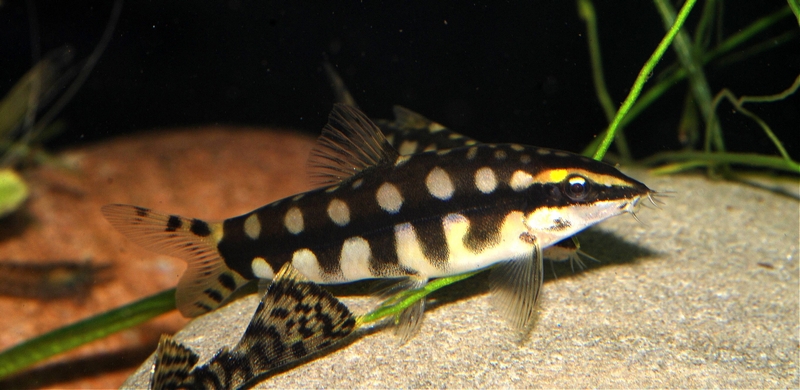
Ambastaia sidthimunkiDwarf Chain Loach
Klausewitz, 1959
Max length60mm SL2.4in SLTank80 × 30cm31 × 12inTemp20–30°C68–86°FpH5.5–7.5This species was lost to the hobby for several years prior to the turn of the century and when commercially-produced stock first came onto the market prices were very high. It's now readily available, though, and while never particularly cheap is considerably less expensive.
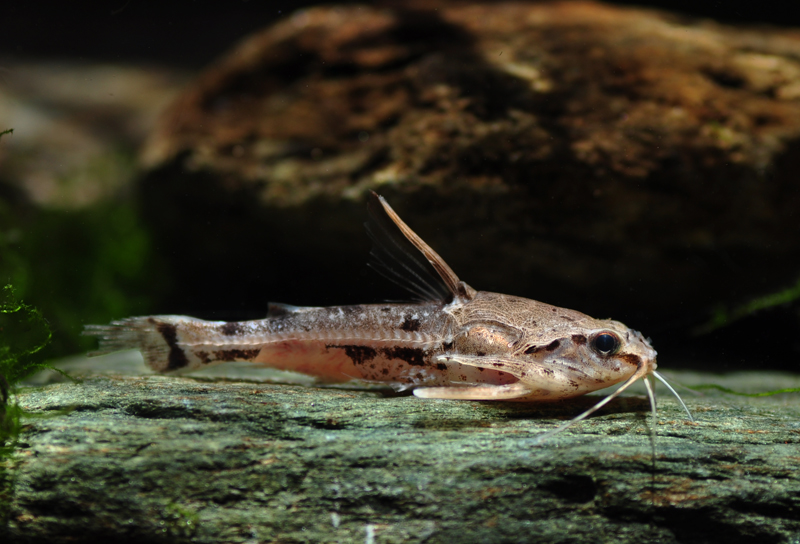
Amblydoras nauticusMarbled Talking Catfish
Cope, 1874
Max length75mm SL3.0in SLTank60 × 30cm24 × 12inTemp23–28°C73–82°FpH5.5–7.5This species was previously thought to be, and is often still sold as, A. hancockii, a name currently considered synonymous with Platydoras hancockii (Valenciennes 1840). It's also known by the vernacular names of blue-eyed catfish or Hancock's doradid, and in many ways is an ideal beginners' catfish, being hardy and tolerant of a wide range of water conditions...
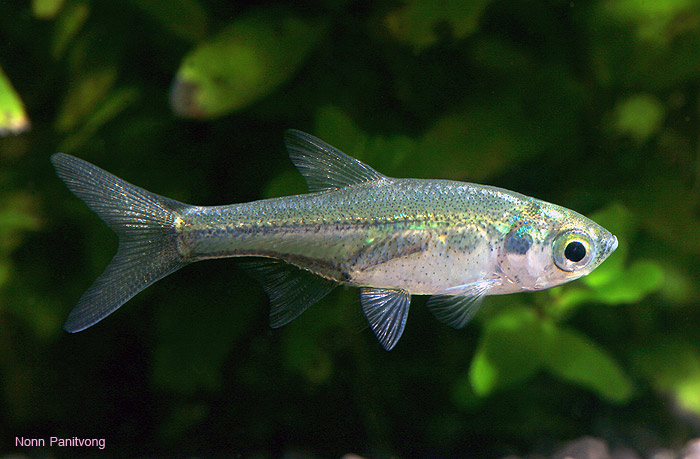
Amblypharyngodon chulabhornaePrincess Carplet
Vidthayanon & Kottelat, 1990
Max length40mm SL1.6in SLTank90 × 30cm36 × 12inTemp18–28°C64–82°FpH6.0–8.0The genus Amblypharyngodon currently contains five valid species, and A. chulabhornae can be distinguished from congeners by the following combination of characters: 42-50 (vs. 50-79) scales in the lateral row; lateral line incomplete with 6-7 (vs. 7-23) perforated scales; 4-5 scales on a transverse row between the lateral line and pelvic-fin base. All members of the genus lack barbels.
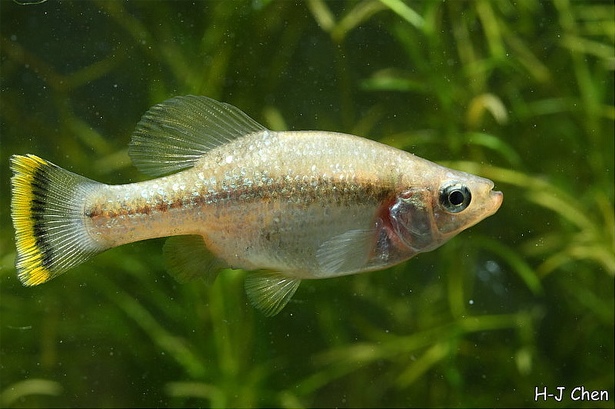
Ameca splendensButterfly Goodeid
Miller & Fitzsimons, 1971
Max length90mm SL3.5in SLTank90 × 30cm36 × 12inTemp24°C75°FpH7.0–8.0Despite often being referred to as extinct in the wild this monotypic species is still surviving at a few localities. It's not particularly scarce in the hobby with strong captive populations existing, some of which have been selectively bred to produce variations in colour and patterning. As with other goodeids, there is less of a size difference between the sexes than in many other livebearers. This is thought to be related to the relatively primitive...
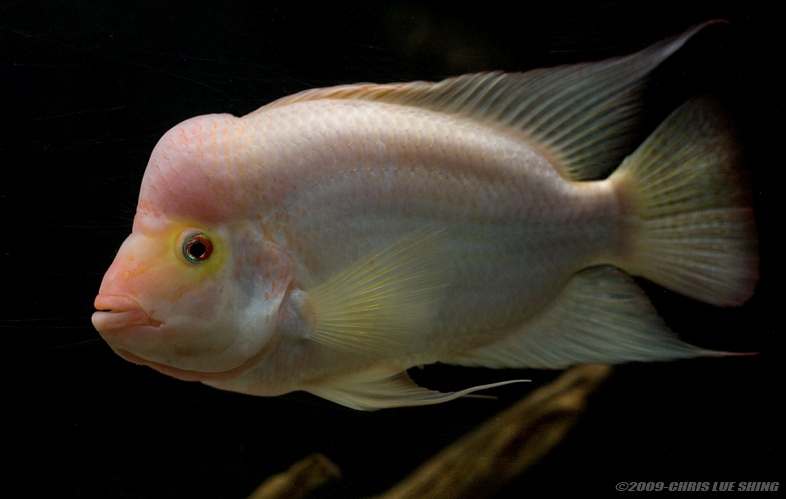
Amphilophus citrinellusMidas Cichlid
Günther, 1864
Max length350mm SL14in SLTanknot recordedTemp21–26°C70–79°FpH6.0–8.0Previously included as a member of the genus Cichlasoma, the midas cichlid is often confused with the red devil, A. labiatus. The two can be distinguished through differences in morphology. As suggested by its scientific name, A. labiatus often possesses characteristically large lips, although this is variable and should not be used as a defining indicator of species. More reliable differences include the bigger nuchal hump and more thick-set appearance in A. citrinellus. The midas exists in many n...
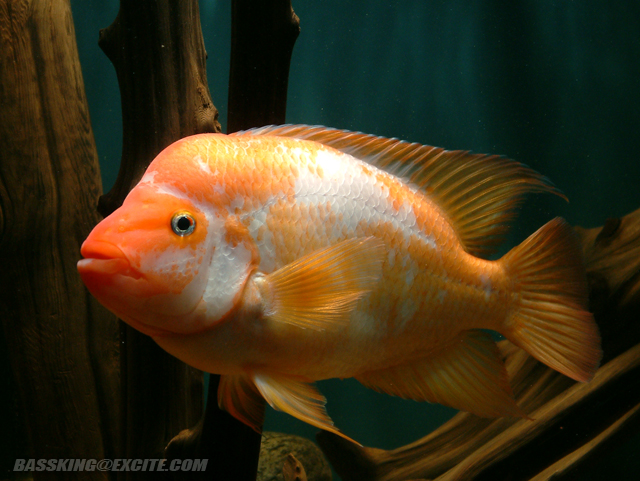
Amphilophus labiatusRed Devil Cichlid
Günther, 1864
Max length350mm SL14in SLTanknot recordedTemp21–26°C70–79°FpH6.0–8.0Previously included as a member of the genus Cichlasoma, the red devil is often confused with the midas cichlid, A. citrinellus. The two can be distinguished through differences in morphology. As suggested by its scientific name, A. labiatus possesses characteristically large lips, although in reality this is variable and should not be used as a defining indicator of species. Certainly, tank bred fish tend not to have these large lips. More reliable differences include the bigger nuchal hump and mo...
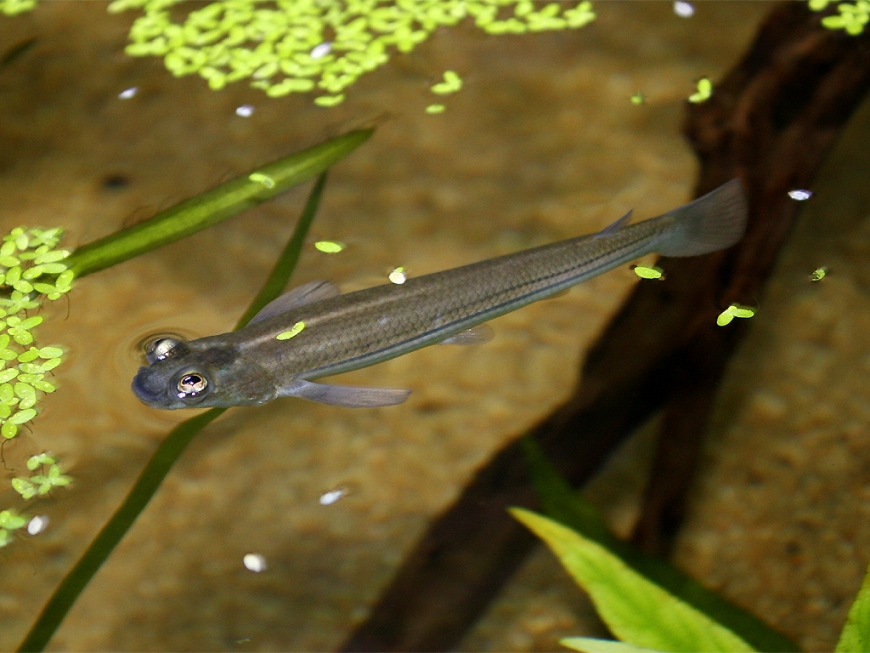
Anableps anablepsFour-Eyed Fish
Linnaeus, 1758
Max length260mm SL10in SLTank150 × 45cm60 × 18inTemp25–31°C77–88°FpH7.5–9.0The eye of Anableps species is split horizontally by a band of epithelial tissue. It has two corneas, two pupils, a single, egg-shaped lens and one retina that's also split into two sections. The lens is oval and asymmetric with the upper part flattened as in the human eye and the lower section curved as in most other fishes. The upper cornea is thicker and enriched with glycogen which possibly helps to protect it from drying and UV irradiation. Two horizontal flaps of the iris are thought ...