Results for “várzea”
Type a name: scientific, common, or one a species used to go by. Or narrow the catalogue with the filters.
Filters
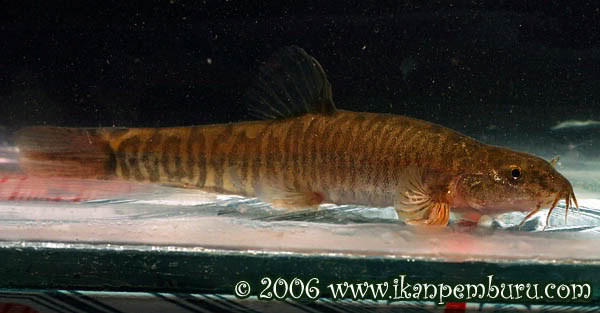
Schistura polytaenia
Zhu, 1982
Max length50mm SL2.0in SLTank60 × 30cm24 × 12inTemp20–24°C68–75°FpH6.0–7.5Schistura species are omnivorous although the bulk of their diet consists of small insects, worms, crustaceans and other zooplankton with only relatively small amounts of plant matter consumed, mostly via the stomach contents of prey items. In the aquarium they will acc...
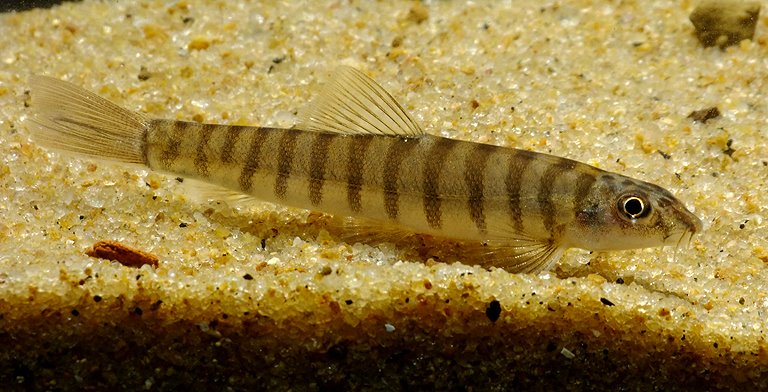
Schistura sp. 1Ring Loach
authority not recorded
Max lengthnot recordedTank75 × 30cm30 × 12inTemp18–24°C64–75°FpH6.0–7.5The identity of this fish is somewhat unclear although it's available in the aquarium trade on an occasional basis. It's been considered to represent various species including Schistura beavani, S. montana and S. himachalensis but there exi...
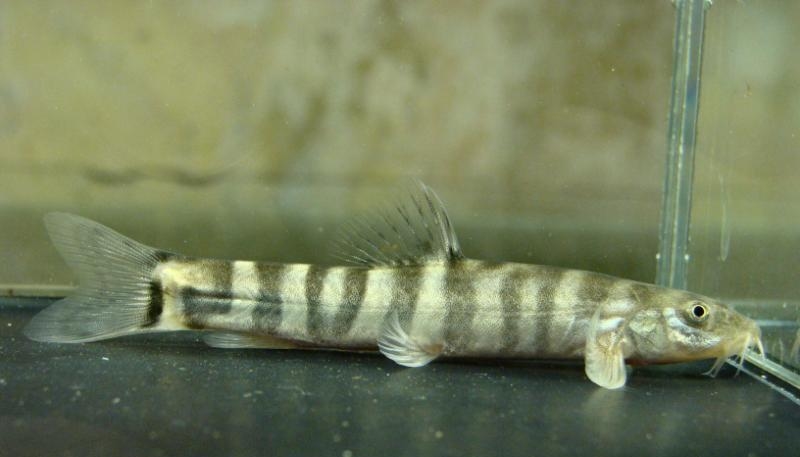
Schistura sp. 3
authority not recorded
Max length50mm SL2.0in SLTank80 × 30cm31 × 12inTemp20–26°C68–79°FpH6.0–7.5The identity of this fish is unclear but it has been traded as Schistura scaturigina M'Clelland, 1839 but does not appear to be that species based on its original description plus Vishwanath and Laisram (2001). The latter describe S. scaturigina as possessing a yellowish-white body with 12 transverse, triangu...
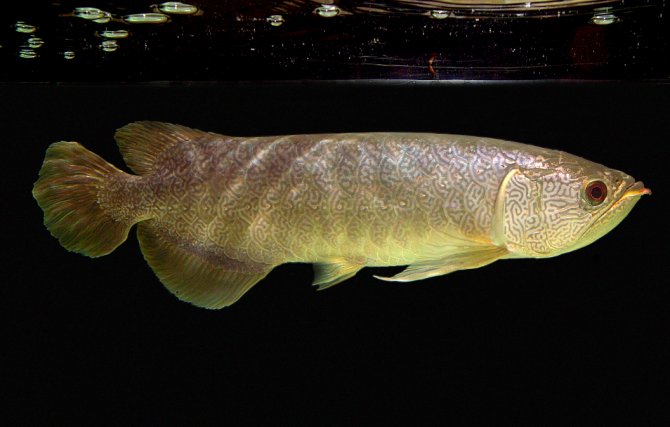
Scleropages inscriptus
Roberts, 2012
Max length600mm SL24in SLTanknot recordedTempnot recordedpHnot recordedThis species' distribution is unclear although individuals from the aquarium trade are said to have been collected in the Tenasserim river basin in Tananthayi Region, southern Myanmar. Type locality is 'supposedly from Tananthayi district, Tananthayi River basin, obtained dead from aquarium fish vendor at Meik'.
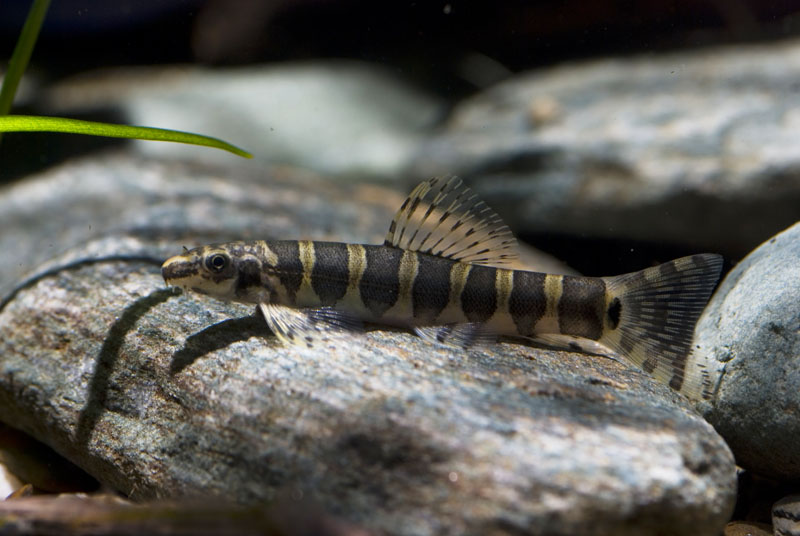
Serpenticobitis octozona
Roberts, 1997
Max length55mm SL2.2in SLTank75 × 30cm30 × 12inTemp23–26°C73–79°FpH6.0–7.0This species exhibits some interesting behaviour including a degree of social interaction plus the ability to cling to vertical or overhanging surfaces. It's sometimes sold under the name 'serpent loach'. The genus currently contains just three members all of which are known only from the Mekong basin. S. octozona is the type species and separated from the others mainly by body patterning which consists of 7-8 dark bars on each flank, these extending the full depth of the body and much wider than the pale interspaces between.
Serrasalmus elongatusPike Piranha
authority not recorded
Max length300mm SL12in SLTank120 × 60cm48 × 24inTemp24–28°C75–82°FpHnot recordedS. elongatus is known as "Caribe Pinche" in its native countries and is a rare find in the trade, tending to be quite expensive as a result. Individuals seem to vary in personality. While some are particularly fearless and will actively chase and attempt to bite hands or fingers placed in or up against the aquarium, others will always appear to be shy and nervous. The streamlined body form that gives rise to the species name is unique among serrasalmids, and has probably developed as a...
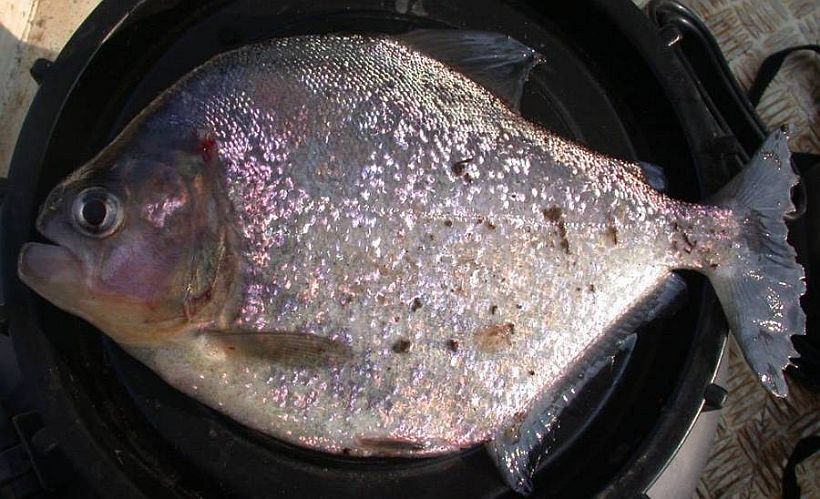
Serrasalmus gouldingiGoulding's Piranha
Fink & Machado-Allison, 1992
Max length280mm SL11in SLTank150 × 60cm60 × 24inTemp24–28°C75–82°FpH4.0–7.0This species occasionally appears in the ornamental trade where it is sometimes referred to as 'blue tiger piranha' Following Fink and Macaht can be distinguished from other members of the genus by the following combination of characters: body shape deep and rhomboid; head robust, snout blunt; eye large; mouth moderate, jaw projecting; 1-3 ontogeneticlly var...
Serrasalmus maculatusMac
authority not recorded
Max length210mm SL8in SLTank120 × 45cm48 × 18inTemp21.1–30°C70–86°FpHnot recordedS. maculatus is one of the better choices for aquarists new to this group of fishes. It grows to a manageable size, is relatively hardy, attractive and usually quite inexpensive. It's sometimes referred to by the alternative vernacular names "gold piranha" or "golden mac" in the hobby. There are in excess of 30 described species of Serrasalmus many of which appear superficially similar and have confusing taxonomic histories. S. maculatus and S. spilopleura have often ...
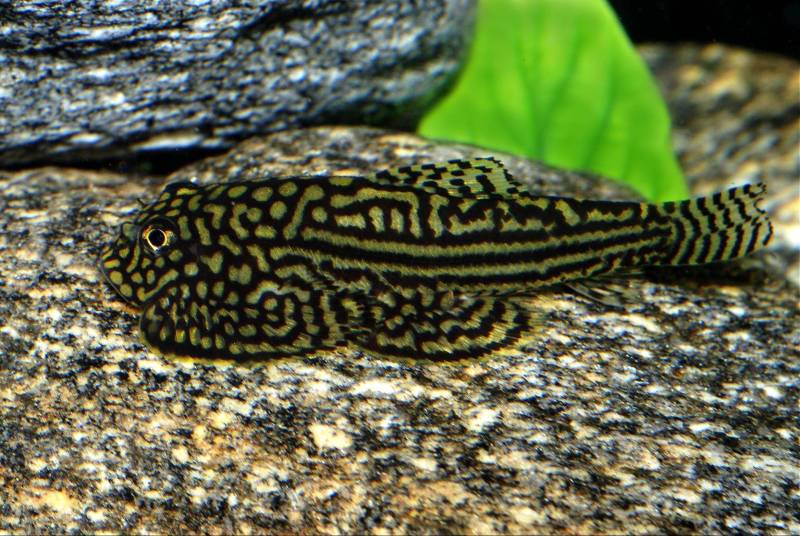
Sewellia lineolataTiger Hillstream Loach
Valenciennes, 1846
Max length65mm SL2.6in SLTank75 × 30cm30 × 12inTemp20–24°C68–75°FpH6.0–7.5S. lineolata was first recorded by Diard over 150 years prior to its 'rediscovery' in the early-1990s. It became available to the aquarium trade in the mid-2000s and swiftly established itself as one of the more popular balitorids in the hobby due to its attractive body markings and ease of breeding. It's also sold under the names 'reticulated hillstream loach', 'Vietnamese hillstream loach' and 'gold ring butterfly sucker'. It's difficult to...
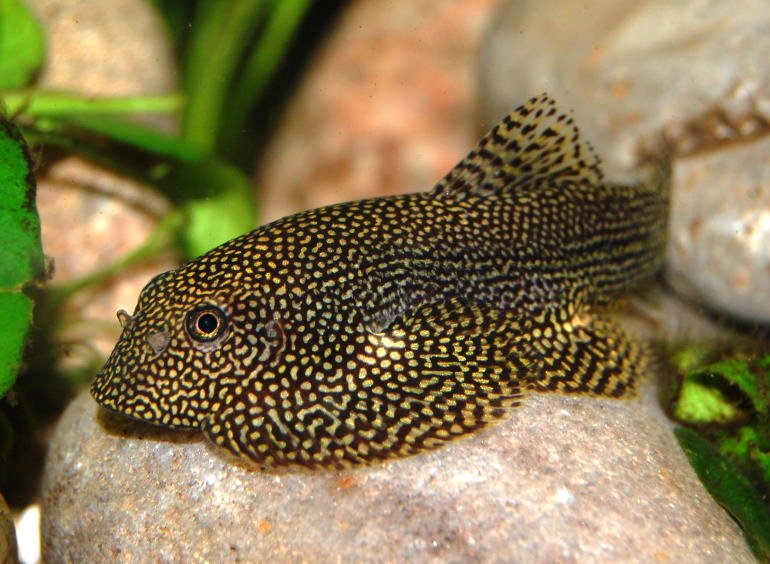
Sewellia sp. 'SEW01'Spotted Butterfly Loach
authority not recorded
Max length80mm SL3.1in SLTank90 × 30cm36 × 12inTemp20–24°C68–75°FpH6.0–7.5This is one of the more readily-available members of the genus and popularly referred to as S. sp. 'spotted' or S. sp. 'special'. It's superficially similar in appearance to S. albisuera but in that species body patterning consists of a network of irregular dark lines forming a complicated series of reticulations vs. many small, light spots on a dark background in S. sp. 'SEW01'. It's been suggested that these two may represent the same species but this...
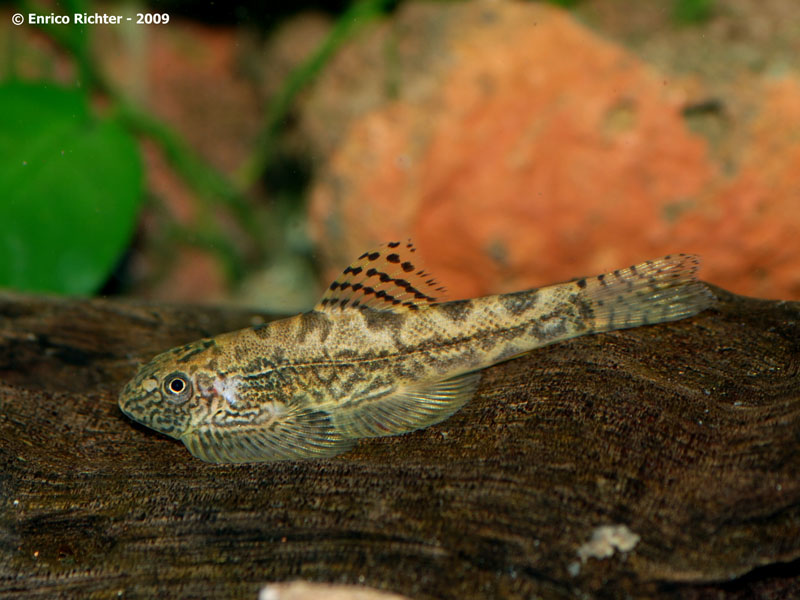
Sewellia sp. 'SEW02'
authority not recorded
Max length65mm SL2.6in SLTank75 × 30cm30 × 12inTemp18–24°C64–75°FpH6.0–7.5This species first became available in early 2009 and was initially identified as S. breviventralis (Freyhof and Serov, 2000) because there is a clear space between the pelvic and anal fins and body patterning is vaguely similar to that species, and also appears quite similar to S. elongata (Roberts, 1998) and S. sp. 'SEW03'. It does not fully match the original descriptions of either, however, and therefore remains in need of identification.
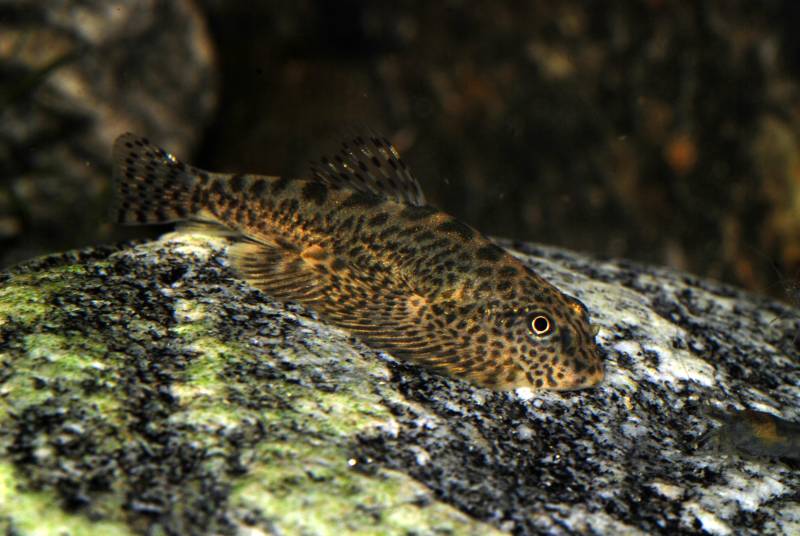
Sewellia speciosa
Roberts, 1998
Max length55mm SL2.2in SLTank75 × 30cm30 × 12inTemp20–24°C68–75°FpH6.0–7.5This species first became available in early 2010 and sometimes appears on trade lists under the vernacular names 'Laos sucker' or 'Laos Sakura sucker'. It's distinguishable from other members of the genus by the following combination of characters: body spotted and without stripes; no concentric bands on paired fins; origin of pelvic-fin below origin of dorsal-fin; origin of pectoral-fin posterior to corner of mouth; pelvic fin reaching origin of anal fin; small elevated ...
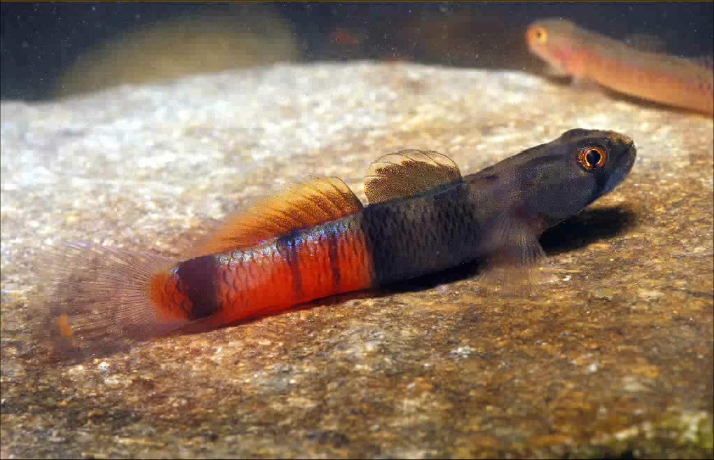
Sicyopus zosterophorus
Bleeker, 1856
Max length45mm SL1.8in SLTank60 × 30cm24 × 12inTemp22–26°C72–79°FpH6.0–7.5Type locality is given as 'Boleling, northern Bali, Indonesia' which appears to correspond to modern-day Buleleng, but this species is currently understood to have a patchy but wide distribution with a range stretching westwards from the Marquesas Islands (French Polynesia), throughout much of Vanuatu, New Caledonia, the Solomon Islands, Papua New Guinea, Palau, Fiji, Indonesia, the Philippines, Japan, Taiwan, and most recently, southern mainland China...
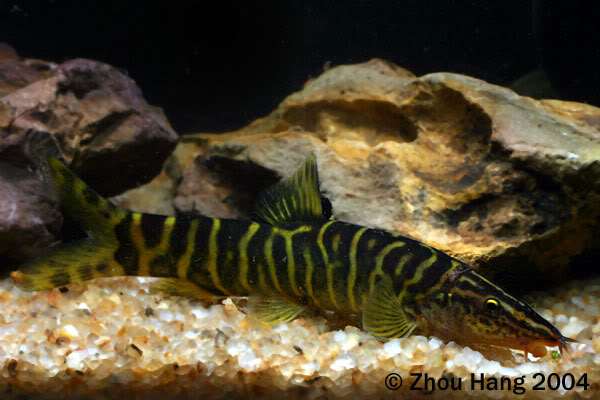
Sinibotia pulchraGolden Zebra Loach
Wu, 1939
Max length110mm SL4in SLTank120 × 30cm48 × 12inTemp20–25.5°C68–78°FpH6.5–8.0This species is also sold under the vernacular names 'golden Chinese loach' and '12-banded Chinese loach'. Along with S. robusta it's the most commonly-traded member of the genus, and the two are often imported in mixed batches, presumably because they occur and are thus collected together in nature. Like most congeners it has a highly flexible, sinuous body which makes it very interesting to observe. S. pulchra can be differentiated from...
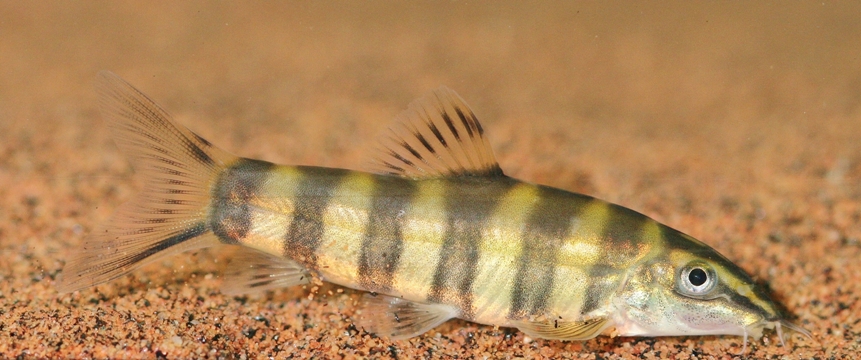
Sinibotia robustaKansu Loach
Wu, 1939
Max length100mm SL3.9in SLTank120 × 30cm48 × 12inTemp20–25.5°C68–78°FpH6.5–8.0This species is also sold under the vernacular names 'golden Chinese loach' and '12-banded Chinese loach'. Along with S. pulchra it's the most commonly-traded member of the genus, and the two are often imported in mixed batches, presumably because they occur and are thus collected together in nature.
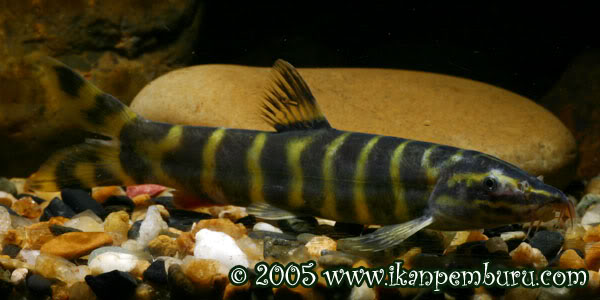
Sinibotia superciliaris
Günther, 1892
Max length110mm SL4in SLTank120 × 30cm48 × 12inTemp20–25.5°C68–78°FpH6.5–8.0This species is rarely-seen in the trade due to a relative lack of commercial exports from the middle Yangtze basin. It looks very similar to S. pulchra but can be told apart by the fact it lacks irregular, brownish markings and spots on the side of the head (vs. present in S. pulchra), and like most congeners it has a highly flexible, sinuous body which makes it very interesting to observe.
Sorubim limaDuckbill Catfish
authority not recorded
Max length501mm SL20in SLTank200 × 75cm79 × 30inTemp23.3–30°C74–86°FpHnot recordedThis species is also known by the vernacular names "Hockey Stick Catfish", "Lima Shovelnose", "Chiripira", "Chucharón" and "Pico de pato". The genus Sorubim currently contains five recognised species. Of the others S. cuspicaudus is recorded from the parts of the Rio Essequibo, Rio Orinoco, Amazon and Lake Maracaibo basins, S. elongatus from the Rio Essequibo, Rio Orinoco Rio Mamore and Amazon and S. maniradii from the mid-to-upper Amaz...
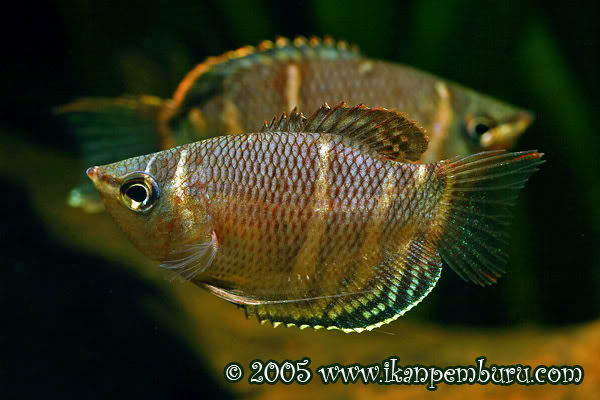
Sphaerichthys osphromenoidesChocolate Gourami
Canestrini, 1860
Max length50mm SL2.0in SLTank60 × 30cm24 × 12inTemp26–31°C79–88°FpH4.0–6.5The genus Sphaerichthys currently comprises four species with S. osphromenoides by far the best known in the hobby. It's easily distinguishable from the congeners S. vaillanti and S. acrostoma since both exhibit a notably more elongate head and body profile, reverse sexual dimorphism (i.e. females are the more colourful/strongly-patterened), and are paternal mouthbrooders.
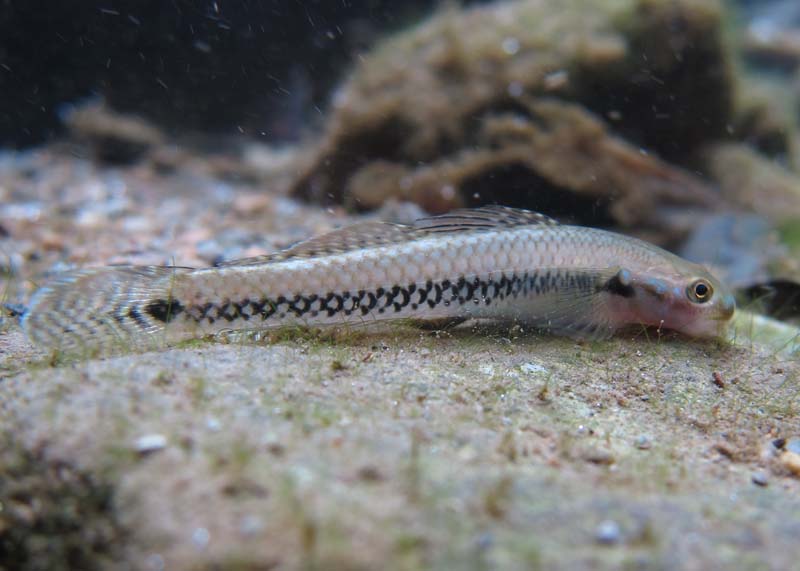
Stiphodon alcedo
Maeda, Mukai & Tachihara, 2011
Max length50mm SL2.0in SLTanknot recordedTemp22–28°C72–82°FpH6.5–7.5Known only from the Ryukyu Islands, Japan, and thus far recorded from just 4 streams on Okinawa island and two on Iriomote island. The type series derived from both islands with Okinawa given as type locality. It may be more widely-distributed than this however, and was possibly transported to the Ryukyu Islands via the Kuroshio Current, an ocean current similar to the Gulf Stream transporting warm, tropical water northward from an area east of Taiwan past Japan towards the polar region.
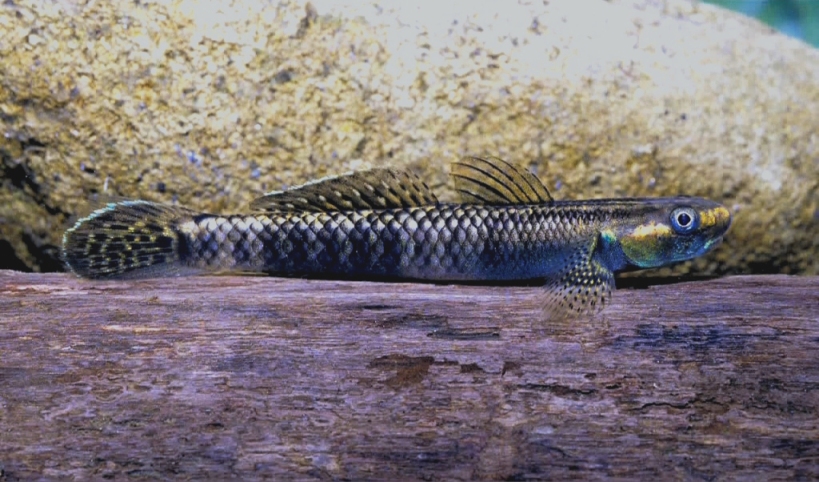
Stiphodon atratus
Watson, 1996
Max length60mm SL2.4in SLTank60 × 30cm24 × 12inTemp22–28°C72–82°FpH6.5–7.5Type locality is given as 'Stream at end of long narrow bay, Waigeo Island, Irian Jaya, Indonesia', with the species also known from rivers draining the northern slope of New Guinea as well as Halmahera Island (Indonesia), the Admiralty Islands (Papua New Guinea), the Bismarck Archipelago (Papua New Guinea), D'Entrecasteaux Islands (Papua New Guinea), Louisiade Archipelago (Papua New Guinea), Bougainville (Papua New Guinea), Vanuatu, and...