Results for “sp.”
Type a name: scientific, common, or one a species used to go by. Or narrow the catalogue with the filters.
Filters
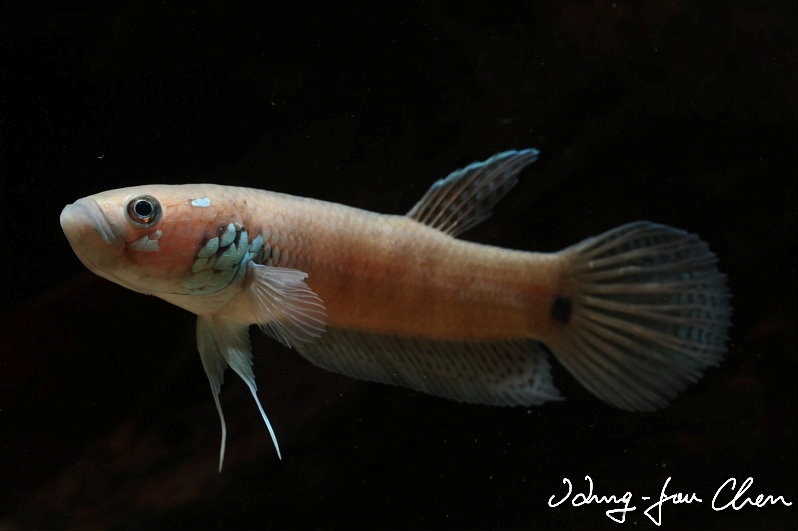
Betta ocellata
de Beaufort, 1933
Max length90mm SL3.5in SLTank80 × 30cm31 × 12inTemp21–25°C70–77°FpH5.5–7.5This species is included in the Betta unimaculata complex of closely-related species within the genus, of which members share the following set of characters: body long and slender with depth at dorsal fin origin 18-25 % SL; head large and blunt with width 19-24 % SL; long maxilla and lower lip with distance from tip of lower jaw to posterior end of maxilla 27-54 % HL; caudal-fin rounded in shape, occasionally with elongated median rays; pelvic-fin short and filamentous; dorsal and anal fins relatively pointed.
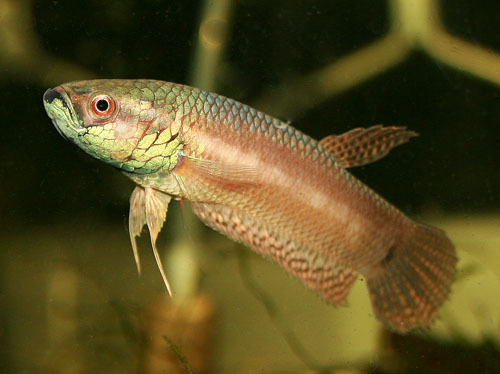
Betta pallifina
Tan & Ng, 2005
Max length90mm SL3.5in SLTanknot recordedTemp22–27°C72–81°FpH5.5–7.5This species is included in the Betta unimaculata complex of closely-related species within the genus, of which members share the following set of characters: body long and slender with depth at dorsal fin origin 18-25 % SL; head large and blunt with width 19-24 % SL; long maxilla and lower lip with distance from tip of lower jaw to posterior end of maxilla 27-54 % HL; caudal-fin rounded in shape, occasionally with elongated median rays; pelvic-fin short and filamentous; dorsal and anal fins relatively pointed.
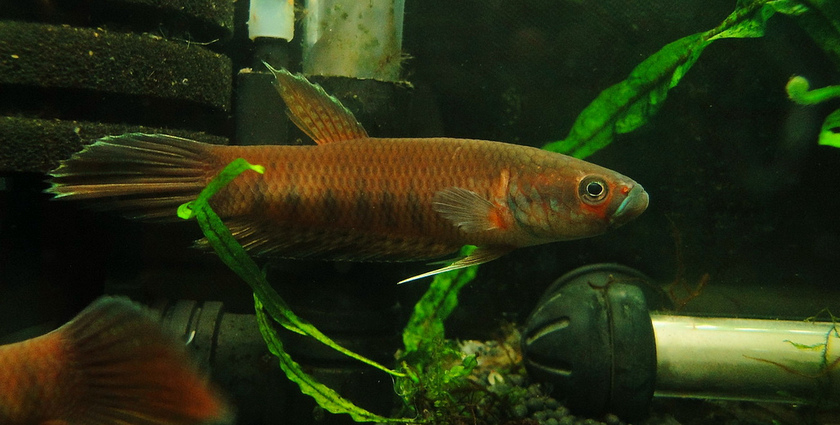
Betta patoti
Weber & de Beaufort, 1922
Max length100mm SL3.9in SLTank80 × 30cm31 × 12inTemp21–27°C70–81°FpH4.0–7.0This species is included in the Betta unimaculata complex of closely-related species within the genus, of which members share the following set of characters: body long and slender with depth at dorsal fin origin 18-25 % SL; head large and blunt with width 19-24 % SL; long maxilla and lower lip with distance from tip of lower jaw to poste...
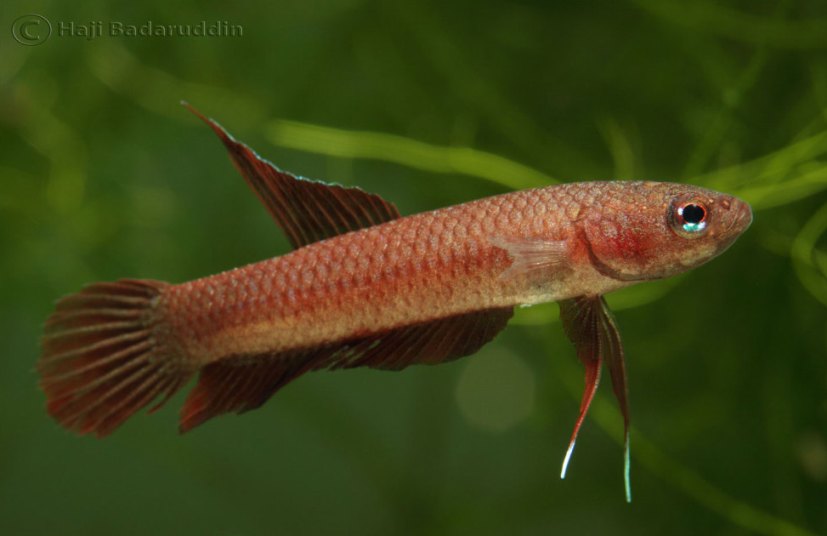
Betta rutilans
Witte & Kottelat, 1991
Max length35mm SL1.4in SLTank45 × 30cm18 × 12inTemp22–27°C72–81°FpH3.0–6.0This species is included in the B. coccina group/complex of closely-related Betta species within the genus. This assemblage mostly comprises small, red-coloured fishes, with the exceptions of B. persephone and B. miniopinna which are darkish, and identifying some of them can be problematic as external patterning can be both similar and confusingly variable.
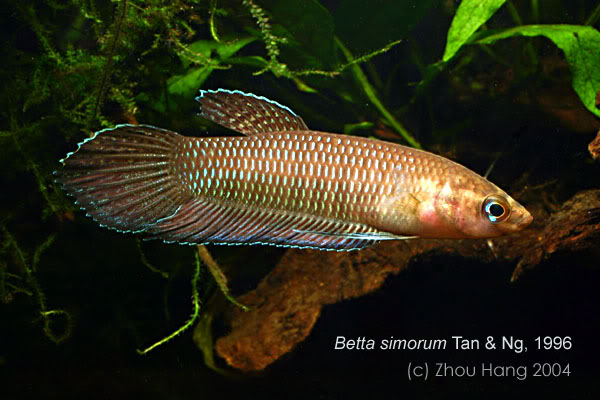
Betta simorum
Tan & Ng, 1996
Max length90mm SL3.5in SLTank80 × 30cm31 × 12inTemp25–30°C77–86°FpH3.0–6.0This species is included in the B. bellica group/complex of closely-related species within the genus, an assemblage of which members share the following set of characters: long and slender body with dorsal and ventral margins almost parallel; body depth 23-28 % SL; 30-33 anal-fin rays; 11-13 dorsal-fin rays; 32-34 total vertebrae; body dark brown in colour with iridescent green markings on each individual scale.
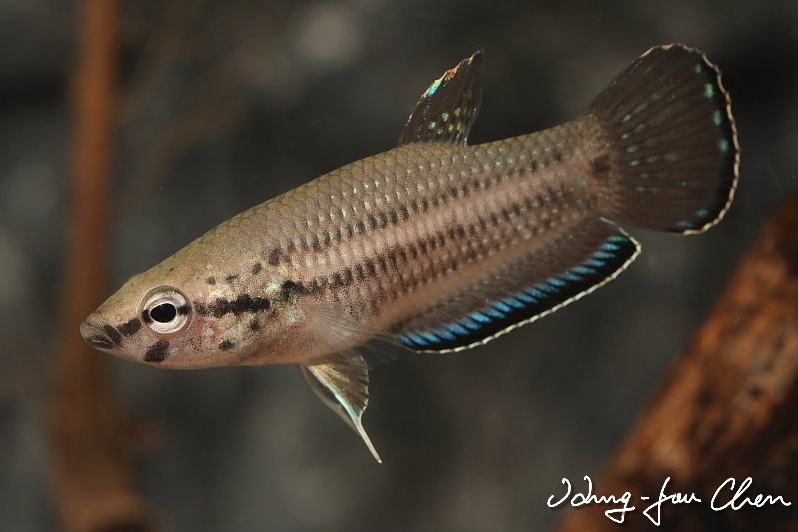
Betta simplex
Kottelat, 1994
Max length60mm SL2.4in SLTank60 × 30cm24 × 12inTemp20–28°C68–82°FpH7.0–8.0B. simplex is included in the Betta picta group/complex of closely-related species within the genus, an assemblage comprising species with the following shared characters: unpaired fins rounded (anal-fin sometimes tapering to a blunt point); anal-fin rays I-III, 18-24; dark marginal band on anal and caudal fins, more pronounced in mature males; presence of pre-orbital and post-orbital stripes; presence of chin bar on throat; iridescent green, gold, or blue scales on opercle.
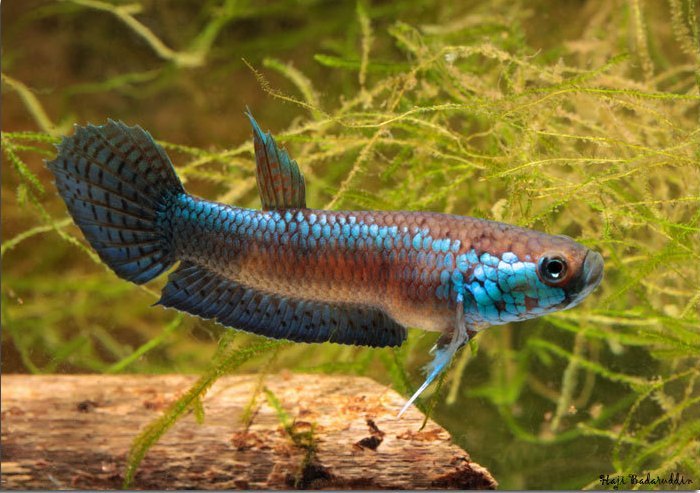
Betta unimaculata
Popta, 1905
Max length115mm SL5in SLTank80 × 30cm31 × 12inTemp21–26°C70–79°FpH5.0–7.5This species is included in the Betta unimaculata complex of closely-related species within the genus, of which members share the following set of characters: body long and slender with depth at dorsal fin origin 18-25 % SL; head large and blunt with width 19-24 % SL; long maxilla and lower lip with distance from tip of lower jaw to posterior end of maxilla 27-54 % HL; caudal-fin rounded in shape, occasionally with elongated median rays; pelvic-fin short and filamentous; dorsal and anal fins relatively pointed.
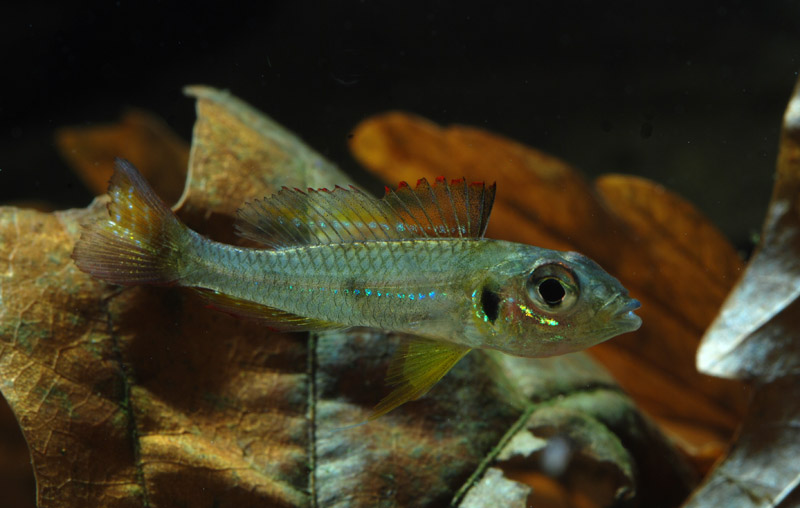
Biotoecus opercularis
Steindachner, 1875
Max length40mm SL1.6in SLTank90 × 30cm36 × 12inTemp25–30°C77–86°FpH4.0–6.5At time of writing there exists no scientific evidence that the different populations of this species seen in the aquarium trade (see 'Distribution') represent anything other than a single, widely-distributed species although some exibit minor morphological differences including relative body depth, longer fin rays in the unpaired fins and yellow or orange colouration in the paired fins. There is apparently a form from the upper rio Negro which may turn out to be distinct but it's...
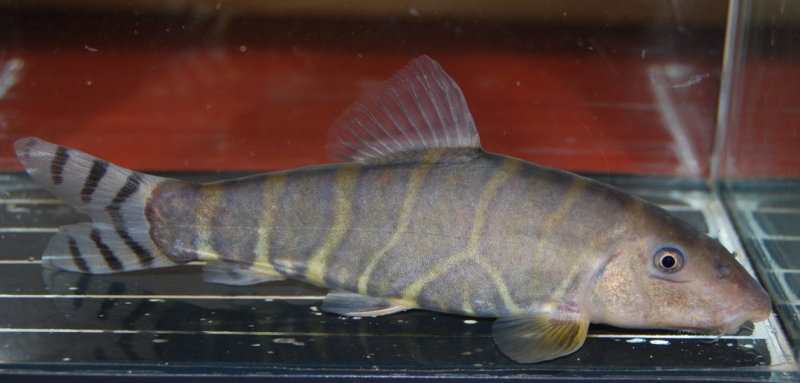
Botia darioBengal Loach
Hamilton, 1822
Max length130mm SL5in SLTank120 × 45cm48 × 18inTemp23–26°C73–79°FpH6.0–7.5Following Grant (2007) this species is included in the B. dario complex of closely-related species within the genus alongside B. striata. They're characterised by body patterning consisting of a base yellow to golden colour with 7-9 blue, green, grey or black body bars usually with thinner, lighter bars between. In some individuals the...
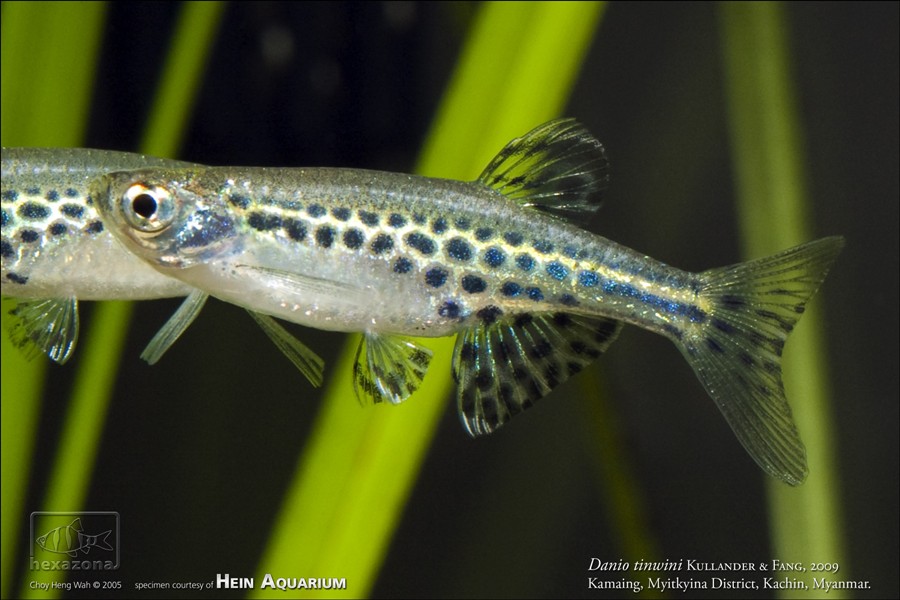
Brachydanio tinwiniGold Ring 'Danio'
Kullander & Fang, 2009
Max length30mm SL1.2in SLTank45 × 30cm18 × 12inTemp18–26°C64–79°FpH6.5–7.5Adult size is comparable to B. nigrofasciata, and in the description paper the authors hypothesise that the two are closely-related given they share other features such as similar barbel length (plus some additional merisitic counts), absent lateral line and spotted pelvic fins. The two are easy to tell apart, however, since in B. tinwini the P+1 stripe is composed of a series of spots (vs. solid), it possesses an indistinct P+2 str...
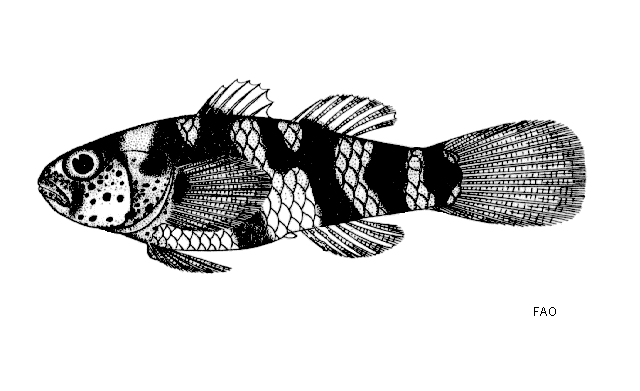
Brachygobius aggregatusSchooling Bumblebee Goby
Herre, 1940
Max length44mm SL1.7in SLTank45 × 30cm18 × 12inTemp22–28°C72–82°FpHnot recordedThough this species appears on ornamental trade lists quite often the name appears to be routinely misapplied to other species, particularly B. doriae. It can be diagnosed as follows: <30 lateral scales; two black body bands reaching ventral midline posterior to anal-fin; band above anal-fin als...
Brycon cephalusRed-tailed Brycon
authority not recorded
Max length220mm SL9in SLTank210 × 60cm84 × 24inTemp22–26°C72–79°FpH5.5–7.5The Brycon genus is large, at present containing over 50 species. A number of these are very similar, a couple of which (B. rubricauda and B. orbignyanus) resemble B. cephalus quite closely. However this one is the most common in nature and is likely to be the species seen on sale most often. Commonly known as the matrinxã in Brazil, it has an interesting life cycle, migrating twice per year over large distances according to the season. The first movement occurs at the start of...
Bunocephalus coracoideusBanjo Catfish
authority not recorded
Max length150mm SL6in SLTank60 × 38cm24 × 15inTemp20–27°C68–81°FpH5.8–7.8Bunocephalus is the largest genus within the Aspredinidae family and there are several undescribed species. B. coracoideus is the most common member seen in dealers' tanks. Its native name "Guitarrita" translates as "little guitar" and refers to the shape of the fish when viewed from above. Despite the regularity with which it is seen for sale, it isn't really a good catfish for the general community tank because it's a largely inactive, secretive species, ...
Carinotetraodon travancoricusDwarf Puffer
authority not recorded
Max length25mm SL1.0in SLTanknot recordedTemp22–28°C72–82°FpH6.8–8.0C. travancoricus is probably the smallest species of puffer, and is certainly one of the more diminutive fish regularly found in the trade. It's cute looks, amusing personality and fascinating swimming action make it a justifiably popular import, although it's all-too-often sold without the correct information needed for its long-term health and care. It's also known as the Malabar puffer, in reference to the area of southern India that contains much of the species' natural r...
Chaca bankanensisChocolate Frogmouth Catfish
authority not recorded
Max length200mm SL8in SLTanknot recordedTemp22–26°C72–79°FpH6.0–8.0Chaca are unsuitable subjects for the general aquarist, but are relatively popular among lovers of oddball species. This species is very similar in appearance to the closely related C. chaca. However, it is somewhat darker and redder in colour than its relative, and lacks the hooklets that occur on the lips and body of chaca. It is a true master of disguise, and is also known as the angler catfish, due to it's ability to use its barbels as a kind of lure, using them to simulate the movement...
Chaca chacaFrogmouth Catfish
authority not recorded
Max length200mm SL8in SLTanknot recordedTemp22–25°C72–77°FpH6.0–8.0Chaca are unsuitable subjects for the general aquarist, but are quite popular among lovers of oddball species. This species is very similar in appearance to the closely related C. bankanensis. However, it's usually a bit lighter in colour than its relative and possesses small hooklets on the lower lip and body that are not present in bankanensis. It's a true master of disguise and is also known as the angler catfish, due to its ability to use its barbels as a kind of lure. These can be...
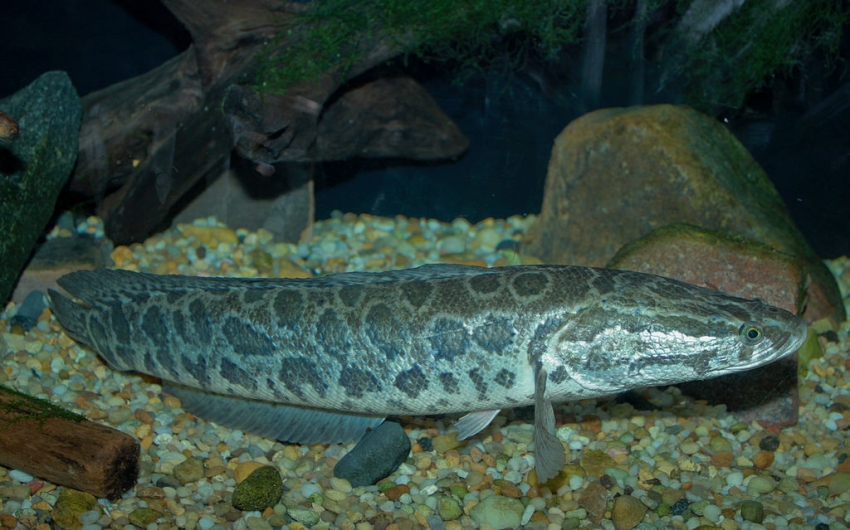
Channa argusNorthern Snakehead
Cantor, 1842
Max length850mm SL33in SLTanknot recordedTemp0–30°C32–86°FpH6.0–8.0This species is largely unsuitable for the home aquarium given its eventual size and natural behaviour, and we know of only a handful of private aquarists with the facilities required to house it long-term. It's currently illegal to import or own the species in the United States, United Kingdom and several other countries unless in possession of an official license.
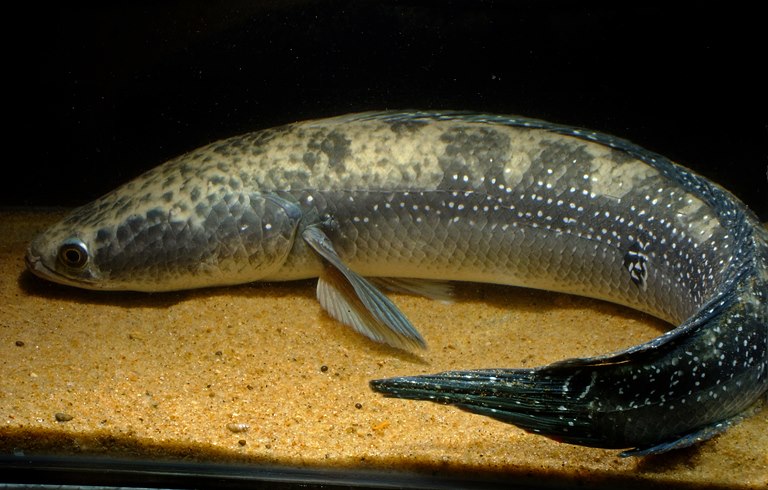
Channa maruliusBullseye Snakehead
Hamilton, 1822
Max length600mm SL24in SLTanknot recordedTemp15–28°C59–82°FpH6.0–8.0This species is also referred to as 'giant', 'great', 'cobra', or 'Indian' snakehead. Although currently-considered to be distributed throughout much of southern Asia it is widely-accepted to represent a complex of related species in need of additional research. A number of geographical variants exhibiting diffe...
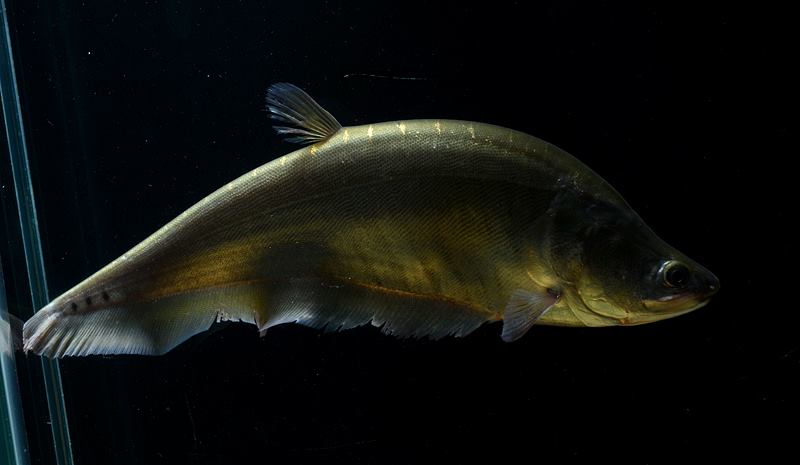
Chitala chitalaIndian Featherback
Hamilton, 1822
Max length1220mm SL48in SLTanknot recordedTemp20–28°C68–82°FpH6.0–8.0This species' name has been widely misapplied in the aquarium trade and hobbyist literature, most often in reference to the Southeast Asian species C. ornata, but unlike its relative is in fact very rarely exported for ornamental purposes although its is fished and cultured for food in India. It can be told apart from C. ornata by possessing fe...
Cichlasoma salviniSalvini
authority not recorded
Max length152mm SL6in SLTank90 × 30cm36 × 12inTemp22–26°C72–79°FpH6.5–8.0Salvin's Cichlid has a well deserved reputation for aggression, especially when breeding. They are regularly available in the trade and make an extremely colourful addition to any north/central American aggression tank. Take care when choosing tank mates, however. If only this species is kept in the tank, it will be quite shy until mature or until the natural domination order has been established. If a single fish of this species is kept alone, it will be extremely shy, usually choosing ...