Results for “sp.”
Type a name: scientific, common, or one a species used to go by. Or narrow the catalogue with the filters.
Filters
Colossoma macropomumBlack Pacu
authority not recorded
Max length600mm SL24in SLTank300 × 90cm118 × 36inTemp22–28°C72–82°FpH5.5–7.5Known as the tambaqui in its native countries, this is the second largest species of scaled fish found in the Amazon basin. This alone should tell you much of what you need to know about its suitability as an aquarium inhabitant. In reality, it's debatable as to whether the species should be considered an aquarium subject at all. While pacu rarely reach their maximum size in captivity, they're still easily capable of growing to a couple of feet in length. The myth that fish will only g...
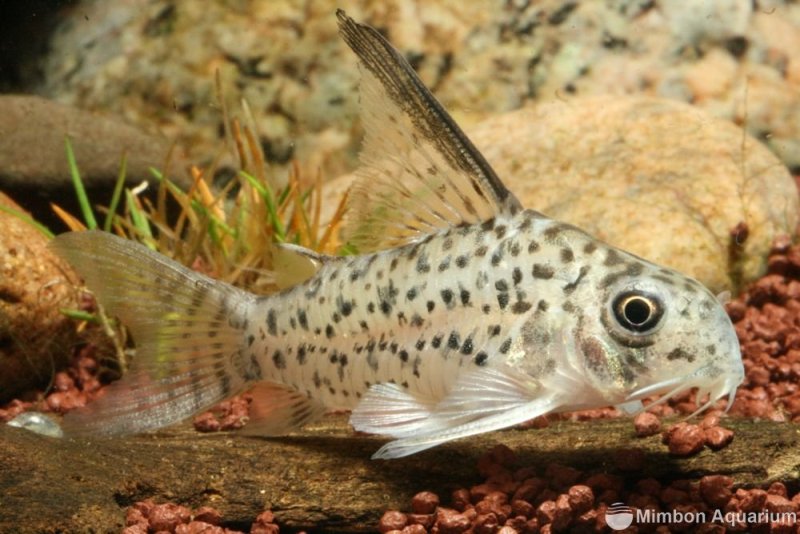
Corydoras armatus
Günther, 1868
Max length65mm SL2.6in SLTanknot recordedTemp22–26°C72–79°FpH6.0–7.5Fish collected in the upper rio Maderia basin in Brazil and Bolivia have been traded under the invented names C. sp. 'dorsalis' and C. sp. 'ogawae' in the past, although are officially-considered conspecific with C. armatus. This appears to warrant investigation since the Río Huallaga in Peru, type locality of C. armatus, and collection localities in the upper Madeira are separated by a straight-line distance of almost 2500 km.
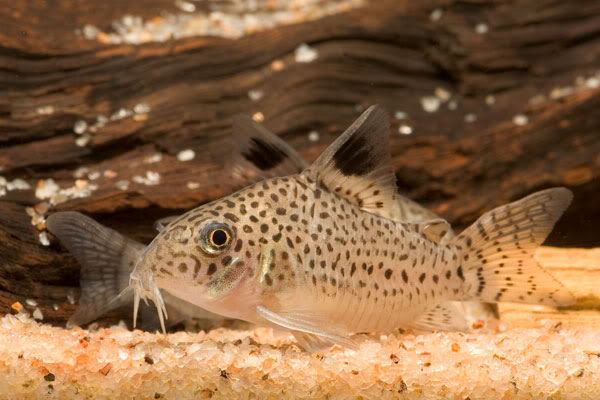
Corydoras copei
Nijssen & Isbrücker, 1986
Max length50mm SL2.0in SLTank80 × 30cm31 × 12inTemp20–26°C68–79°FpH5.0–7.0This species is not well known and rarely traded for the aquarium hobby. Unfortunately diagnostic characters cannot be provided since we’ve been unable to obtain the type description, and little has been written about this species since it was published. It looks very similar to several congeners, particularly C. acrensis and C. cruziensis.
Corydoras oiapoquensisFlag-tailed Panda Cory
authority not recorded
Max length55mm SL2.2in SLTank45 × 38cm18 × 15inTemp23–28°C73–82°FpH6.0–7.2This species occurs alongside a near-identical congener, C. condiscipulus in nature. In fact condiscipulus literally means 'schoolmate', as the species are often found shoaling together. The only external difference between the 2 seems to be the longer snout and wider distribution within the Rio Oyapock of condiscipulus....
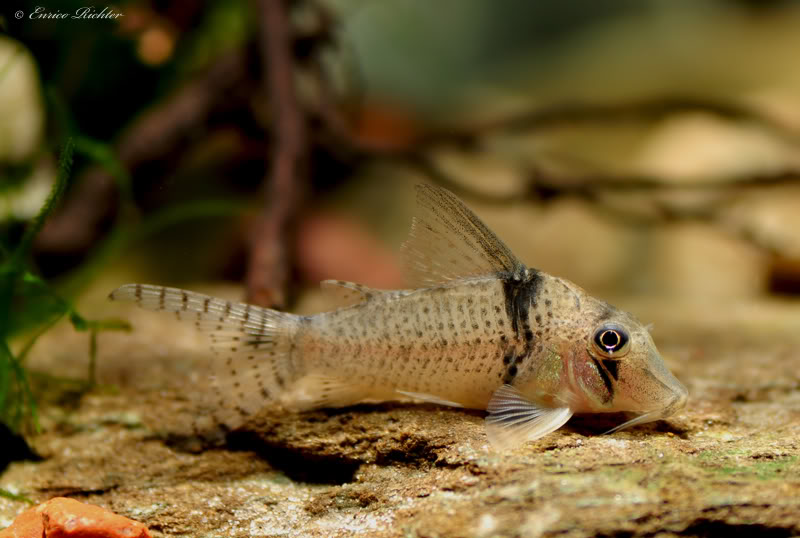
Corydoras pastazensisPastaza Cory
Weitzman, 1963
Max length70mm SL2.8in SLTank90 × 30cm36 × 12inTemp22–28°C72–82°FpH5.0–7.0The form from the Río Tigre, previously referred to as the subspecies C. p. orcesi (Weitzman & Nijssen, 1970) was raised to full species status as C. orcesi by Isbrücker (2001), but this decision does not appear to have been followed by all authorities some of which consider C. p. orcesi a synonym of C. pastazensis. The two species are relatively easy to tell apart by colour pattern; in C. pastazensis the dark vertical...
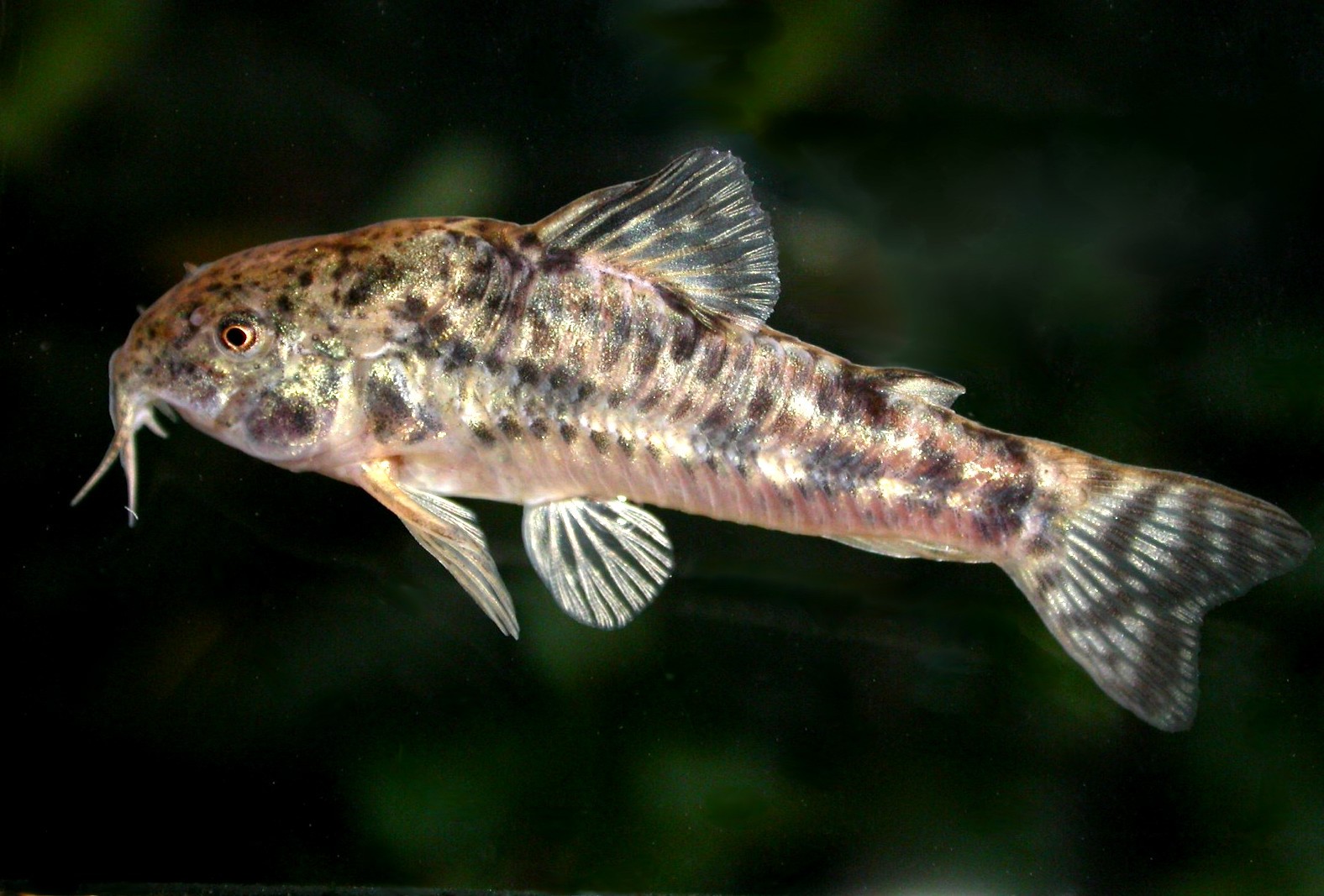
Corydoras petracinii
Calviño & Alonso, 2010
Max length38mm SL1.5in SLTank60 × 30cm24 × 12inTemp10–20°C50–68°FpH7.0–8.0It also exhibits morphological adaptations to an existence among rocks in a flowing environment, such as a cryptic colour pattern, reduced spine length in the dorsal and pectoral fins, ventrally-oriented pectoral fins, slightly emarginate caudal-fin, and reduced body depth. Reduced fin spines and body depth are typical features associated with the related genus Aspidoras, but the...
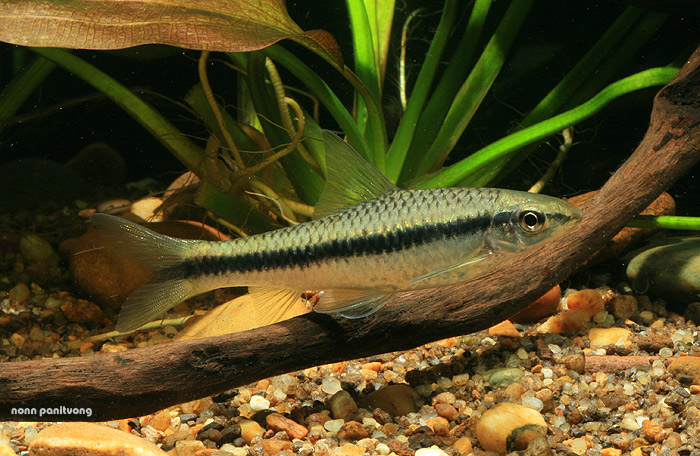
Crossocheilus atrilimesSiamese Algae Eater
Kottelat, 2000
Max length75mm SL3.0in SLTank120 × 30cm48 × 12inTemp20–26°C68–79°FpH6.0–7.5This species is among a handful of near-identical congeners that are traded as 'Siamese algae-eater' (often abbreviated to 'SAE'), 'Siamese flying fox' and 'Crossocheilus siamensis'. The latter name is not valid, however, and is a synonym of Epalzeorhynchos siamensis which is itself a synonym of Crossocheilus oblongus, a species described from Java. C. oblongus is currently accepted to...
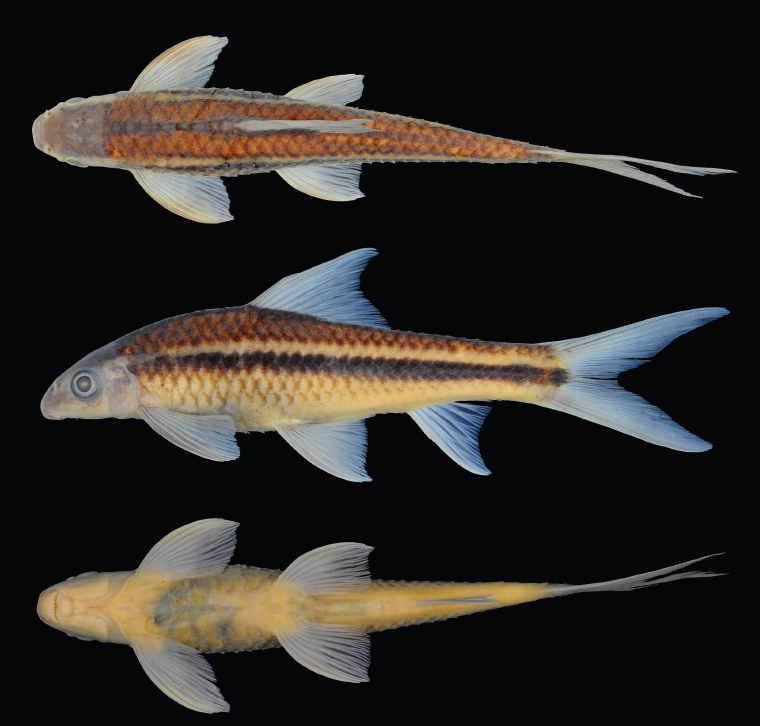
Crossocheilus elegans
Kottelat & Tan, 2011
Max length110mm SL4in SLTank150 × 45cm60 × 18inTemp20–25.5°C68–78°FpHnot recordedThis species can be most easily distinguished from other members of the genus by its colour pattern which consists of a blackish midlateral stripe extending from the tip of the gill opening to the middle of the caudal-fin base, which is separated from the dark brown dorsum by a pale yellowish brown stripe. This differs from the pattern seen in other Crossocheilus species with a black midlateral stripe in which the the dorsum is olive brown and much paler than the midlateral stripe, there is no yellow stripe between the dorsum and the black stripe, and the black stripe extends to the tip of the snout.
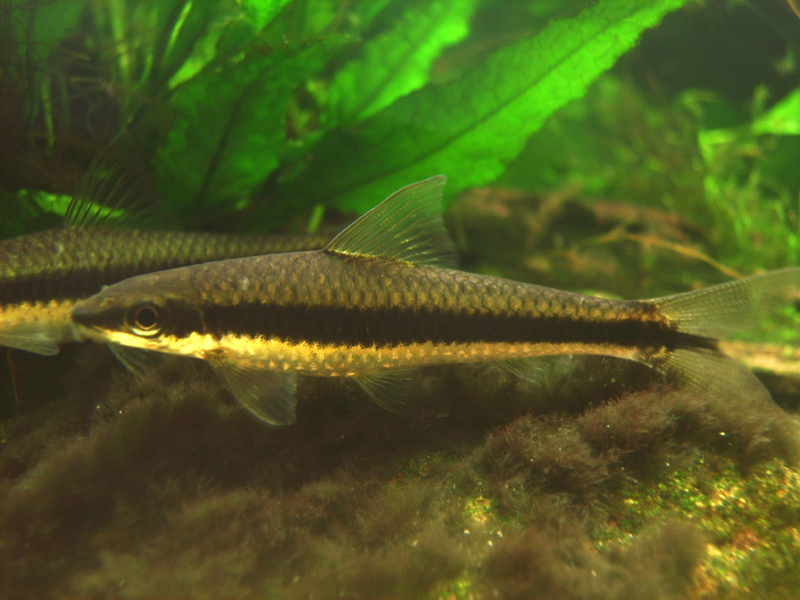
Crossocheilus langeiSiamese Algae Eater
Bleeker, 1860
Max length150mm SL6in SLTank150 × 45cm60 × 18inTemp20–26°C68–79°FpH6.0–7.5C. oblongus is another name widely misused in the trade but that species has seemingly never been exported and was described as a blueish fish with yellow fins. It's native to streams of Gunung Salak mountain in Bogor Regency, West Java, Indonesia where collecting of ornamental fishes is almost non-existent. Other species of laterally-striped Crossocheilus also exist and may be available from time-to-time but are more easily told apart from the group described above.
Ctenopoma acutirostreLeopard Bushfish
Pellegrin, 1899
Max length150mm SL6in SLTank120 × 30cm48 × 12inTemp20–28°C68–82°FpH5.5–7.5An ideal species for the newcomer to 'oddballs'. It is exceptionally hardy, long-lived (it can survive for over 15 years when cared for properly) and exhibits some interesting behaviour. It appears to have evolved convergently with leaf fish of the genera Polycentrus and Monocirrhus (they're not closely related). All these species mimic leaves and other aquatic debris to assist them in hunting their prey. If you add live food to its tank, you will see the typical stalking behaviou...
Ctenopoma murieiOcellated Bushfish
authority not recorded
Max length75mm SL3.0in SLTank60 × 30cm24 × 12inTemp24–28°C75–82°FpH6.0–7.5One of the smallest species in the genus, it is rarely seen in the trade. A pity, as its diminutive size makes for an ideal aquarium subject. Like others in the suborder Anabantoidei, the species possesses an accessory breathing organ known as the labyrinth organ. So-called due to its maze-like structure, this organ allows the fish to breathe atmospheric air to a certain extent. It is formed by a modification of the first gill arch, and consists of many highly vascularised, folded flaps of sk...
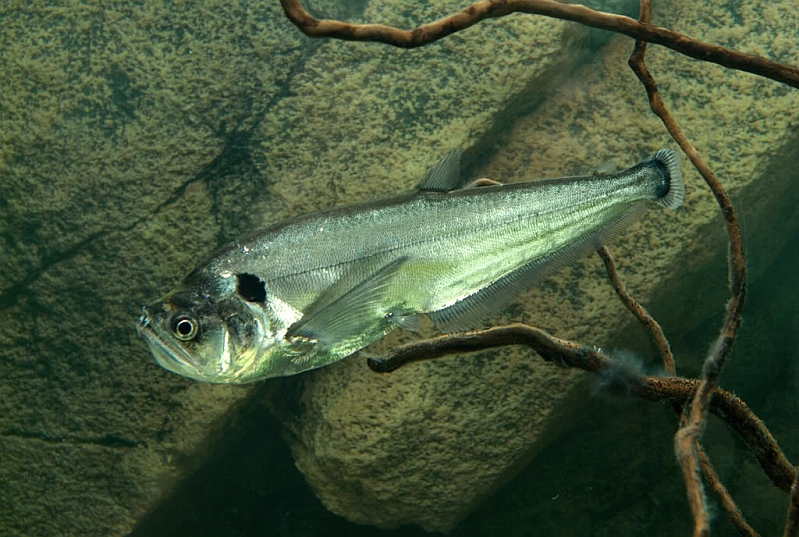
Cynodon gibbus
Agassiz, 1829
Max length280mm SL11in SLTank210 × 75cm84 × 30inTemp24–28°C75–82°FpH6.0–8.0This species is rare in the aquarium trade but is arguably more suitable for the home aquarium than some of its better-known relatives given its adult size and relatively docile behaviour. Other vernacular names include 'Dientón' (Peru), 'Perrito' (Ecuador), 'Payara-chata' or 'Payarin' (Venezuela) and 'Icanga', 'Minguilista' or 'Peice-cachorro' (Brazil), some of which are also applied to related species.
Cyprichromis microlepidotusSmallscale Cyprichromis
authority not recorded
Max length110mm SL4in SLTank120 × 45cm48 × 18inTemp24–27°C75–81°FpH7.8–9.0Quite a rarity in the hobby, but when available it is much sought after by enthusiasts. It can be found living in huge mixed species groups with other Cyprichromis species and the similar Paracyprichromis. There are a few geographical variants known, each of which has both a yellow and blue tailed form. Individual populations can also contain males with different colour and patterning, a phenomenon known as polychromatism. The different forms should never be mixed in the aquarium, as they will i...
Dario darioScarlet Badis
Hamilton, 1822
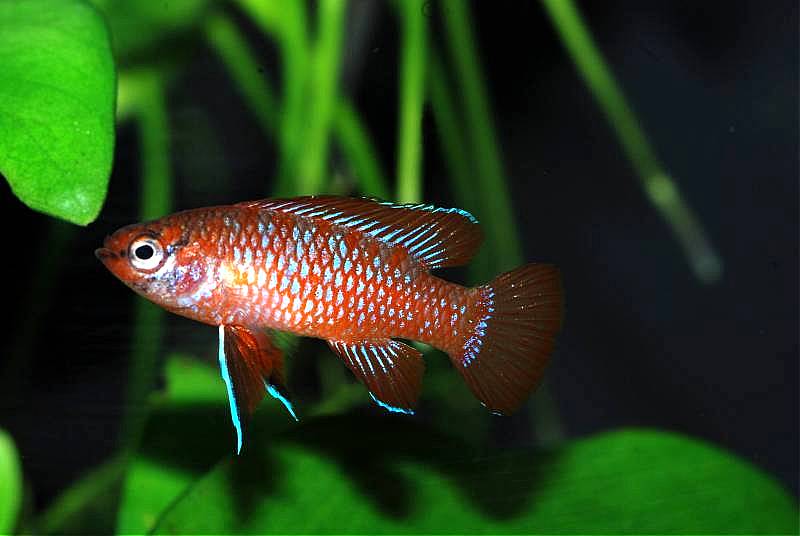
Max length20mm SL0.8in SLTank45 × 30cm18 × 12inTemp18–26°C64–79°FpH6.5–8.5This species is among the more well-known badids in the aquarium hobby, and is a popular choice for 'nano' aquaria since it is among the smallest percoid fishes known. It is easily told apart from congeners since it is the only species in which males possess a series of seven iridescent blue vertical bars on the flanks.
Dawkinsia tambraparniei'Arulius' Barb
Silas, 1954
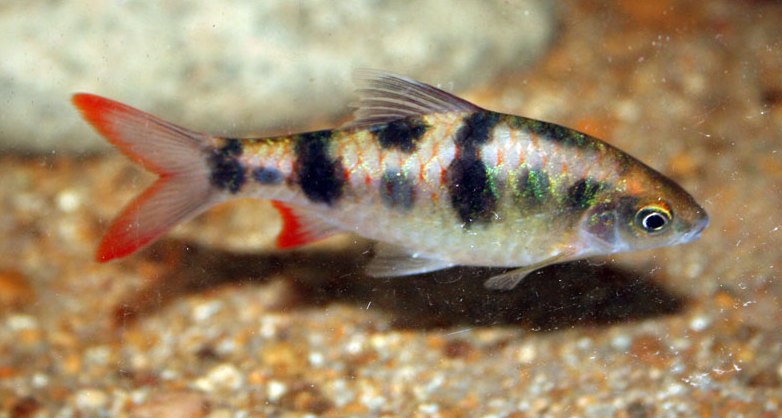
Max length130mm SL5in SLTank120 × 45cm48 × 18inTemp18–25°C64–77°FpH6.0–8.0D. exclamatio should also have a sub-terminal mouth and lack dorsal-fin filaments but some specimens possess a terminal mouth and/or possess dorsal filaments, and one specimen also had black caudal-fin tips as typically seen in D. filamentosa, whereas the description states that the fin tips are only dusky and lack distinctive markings.
Desmopuntius johorensisStriped Barb
Duncker, 1904
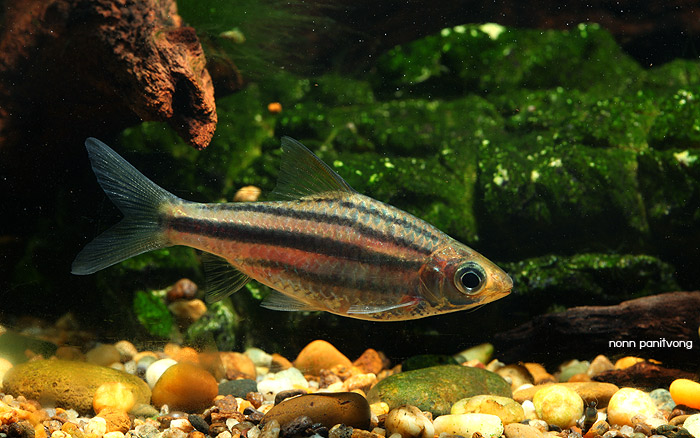
Max length100mm SL3.9in SLTank120 × 45cm48 × 18inTemp20–25°C68–77°FpH5.0–7.0D. johorensis can be distinguished by the following combination of characters: 5-6 dark, lateral stripes on body in specimens larger than 40 mm; stripes immediately above and below the central stripe (stripes '+1' and '-1', respectively) located on scale rows +2 and -2, not touching dorsal and ventral midlines (except in some small specimens from Peninsular Malaysia); stripes broad, typically between 0.5-1 scale rows deep...
Devario laoensis
Pellegrin & Fang, 1940
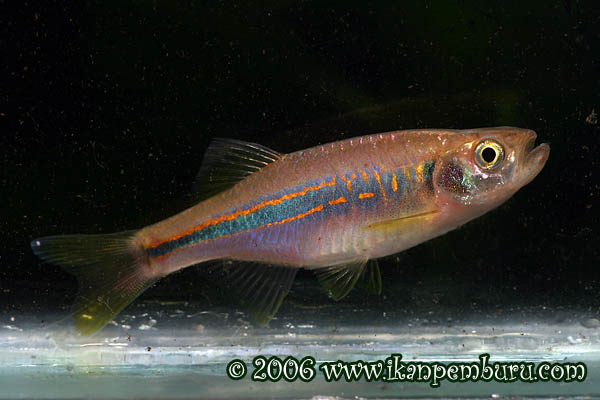
Max length65mm SL2.6in SLTank90 × 30cm36 × 12inTemp23–26°C73–79°FpH6.0–7.5It can be further distinguished from other species in the genus by colour pattern consisting of a dark, horizontal P stripe originating around mid-body, where it's relatively faint, this becoming thicker and darker in the posterior portion of the body and terminating at the base of the caudal-fin. Among congeners it's most similar to D. chrysotaeniatus but that species lacks the infraorbital process, has three rows of pharyngeal teeth and the P stripe extends to the end of the caudal-fin rays.
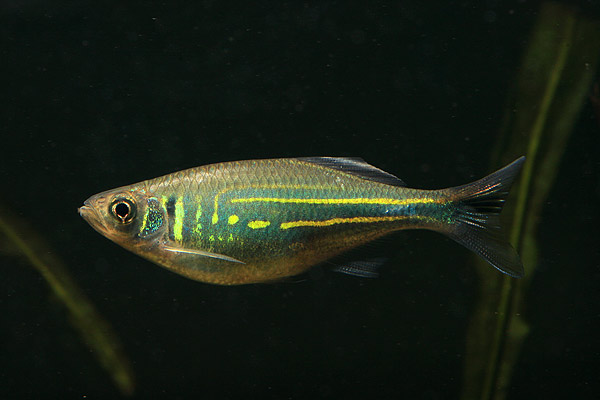
Devario malabaricusGiant 'Danio'
Jerdon, 1849
Max length80mm SL3.1in SLTank120 × 45cm48 × 18inTemp18–25°C64–77°FpH6.0–8.0This species is frequently confused with the congener D. aequipinnatus auct. but their identitities are in a state of confusion, particularly that of the latter. There are however a handful of characters which separate these two nominal species from one another. D. malabaricus possesses a moderately deep body, 35-38 scales in the lateral se...
Electrophorus electricusElectric Eel
authority not recorded
Max length2500mm SL98in SLTanknot recordedTemp23–28°C73–82°FpH5.5–7.0One of the most notorious fish in the world, the electric eel is a truly fascinating species. Its vital organs are contained in the front portion of the body, with up to 80% of it being reserved for the enormous electricity-producing organs. It uses electricity in several ways. The species is nocturnal and has very poor eyesight and so uses a weak electric field to navigate and identify its surroundings. This weak, pulsing signal is produced by the Sachs organ, one of 3 electricity-producing org...
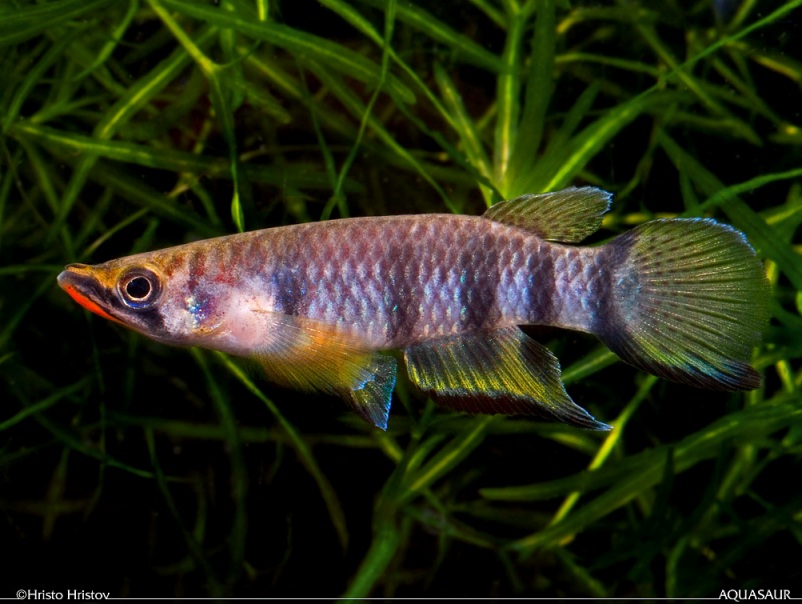
Epiplatys dagetiRed-chinned Panchax
Poll, 1953
Max length45mm SL1.8in SLTank60 × 30cm24 × 12inTemp20–30°C68–86°FpH5.0–7.0This species is also known as 'Daget's panchax', 'black-lipped panchax', 'orange-throated panchax' or 'firemouth killifish' and is an aquarium stalwart with the red-throated form having first been exported in 1908. It's an excellent choice for those new to killifishes or egg-laying species in general since the aquarium strain is well-established, quite hardy and easy to breed. There was some initial confusion after Belgian ich...