Results for “family”
Type a name: scientific, common, or one a species used to go by. Or narrow the catalogue with the filters.
Filters
Thalassophryne amazonicaPrehistoric Monster Fish
authority not recorded
Max length150mm SL6in SLTank75 × 30cm30 × 12inTemp24–28°C75–82°FpHnot recordedThere are currently six described species in the genus Thalassophryne, of which T. amazonica is the only freshwater representative. The others (T. nattereri, T. maculosa, T. megalops, T. montevidensis and T. punctata) are all estuarine animals distributed along the western Atlantic coastlines of Central and South America and inhabit brackish-to-marine waters. They are members of the family Batrachoididae or toadfishes, of which most are exclusively marine species. All batrachoidids are ambush pr...
Toxotes chatareusLargescale Archerfish
authority not recorded
Max length400mm SL16in SLTank120 × 60cm48 × 24inTemp25–30°C77–86°FpH7.0–8.0The Largescale Archerfish is one of a fascinating group of fish that have evolved this very distinctive feeding pattern. The family contains six species, of which toxotes jaculatrix is the most commonly available (sometimes sold incorrectly as t. jaculator). Toxotes chatareus is offered for sale in the UK although much less frequently. There are reports that juvenile archers can be kept in fresh water but it is recommended that a brackish setup is always used. Eaten as a food fish in many...
Toxotes jaculatrixBanded Archerfish
authority not recorded
Max length300mm SL12in SLTank120 × 60cm48 × 24inTemp25–30°C77–86°FpH7.0–8.0The Banded Archer fish is one of a fascinating group of fish that have evolved this very distinctive feeding pattern. The family contains six species, of which toxotes jaculatrix is the most commonly available (sometimes sold incorrectly as t. jaculator). Occasionally, the similarly marked toxotes chatareus is offered for sale in the UK although much less frequently. There are reports that juvenile archers can be kept in fresh water but it is recommended that a brackish setup is always used. ...
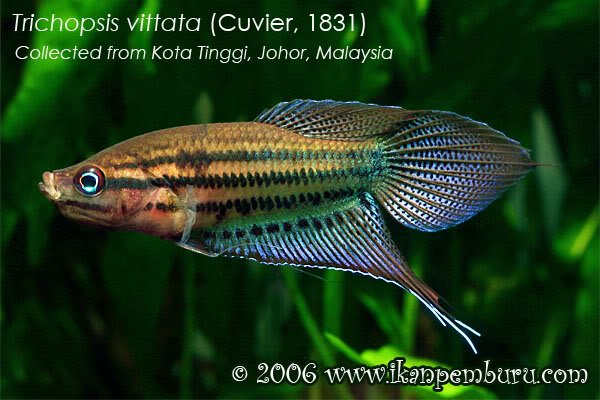
Trichopsis vittataCroaking gourami
Cuvier, in Cuvier & Valenciennes, 1831
Max length70mm SL2.8in SLTank60 × 30cm24 × 12inTemp22–28°C72–82°FpH5.0–7.5The common name is derived from the ability of genus members to produce audible sounds via a specialised pectoral mechanism which is unique within the family Osphronemidae. The structure comprises modified pectoral-fin tendons and muscles which are stretched and plucked by basal elevations of two fin rays in a similar way to guitar strings via rapid beating of the fins. The pectoral-fins beat alternately, each able to generate short or long bursts of sound. These sounds are produced by both sexes, predom...
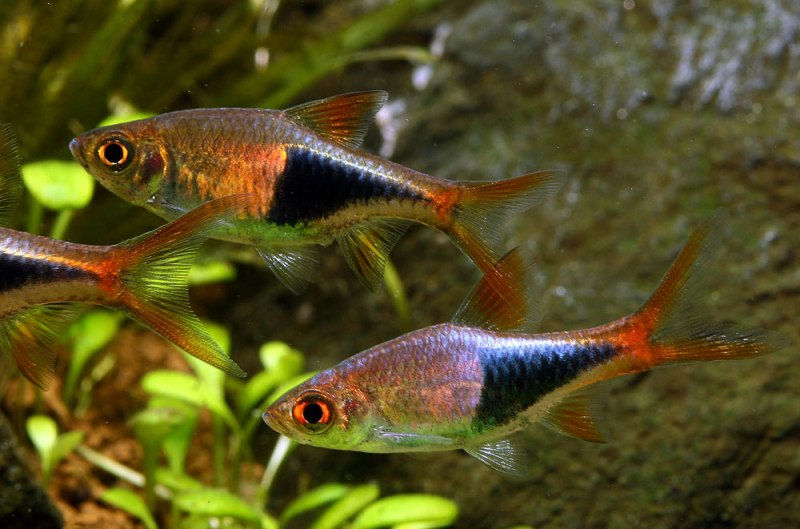
Trigonostigma heteromorphaHarlequin
Duncker, 1904
Max length45mm SL1.8in SLTank60 × 30cm24 × 12inTemp21–28°C70–82°FpH5.0–7.5T. heteromorpha was first exported for aquaria in the early 1900s and has gone on to become one of the most familiar, enduring species in the hobby. It has suffered as a result of its popularity to a certain extent with the mass-produced fish we see today lacking much of the colour seen in wild specimens and even exhibiting morphological deformities in some cases. Several selectively-bred ornamental strains have also...
Vieja synspilaRedhead Cichlid
authority not recorded
Max length350mm SL14in SLTanknot recordedTemp24–30°C75–86°FpH7.0Widely and incorrectly referred to as vieja synspillum, this colourful fish is the most commonly available of the vieja species to the hobby. Although not as aggressive as some of its family, it is still a fish to treat carefully. It can be found in mildly brackish waters in its natural range but this is not recommended or required in captivity....
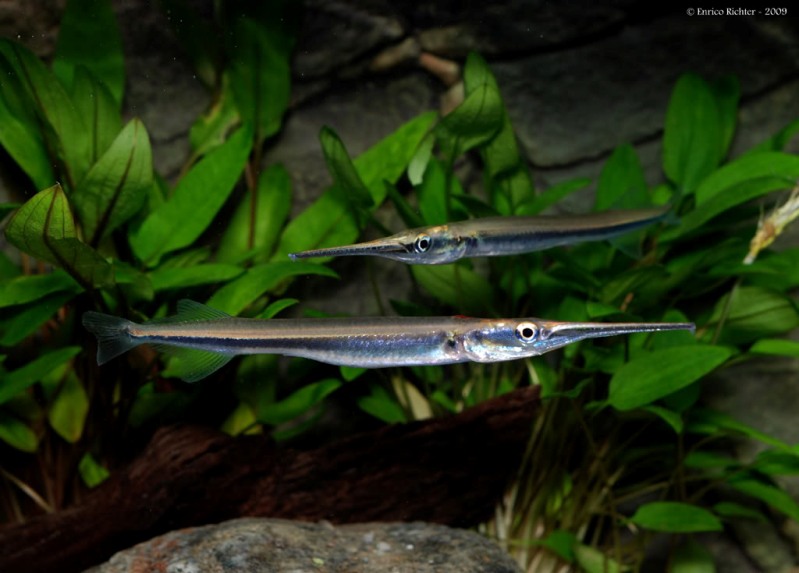
Xenentodon cancilaFreshwater Needlefish
Hamilton, 1822
Max length350mm SL14in SLTank180 × 60cm72 × 24inTemp18–30°C64–86°FpH6.0–8.0X. cancila is often seen referred to as 'freshwater garfish', and although it does superficially resemble the true gars of the family Lepisosteidae, it's actually a member of the Belonidae, or needlefishes, the majority of which are marine or estuarine in existence. There are currently just two species in the genus although the probable existence of a third member has been noted by Roberts (1989) among oth...