Results for “species name”
Type a name: scientific, common, or one a species used to go by. Or narrow the catalogue with the filters.
Filters
Rasbora paviana
authority not recorded
Max length90mm SL3.5in SLTank120 × 30cm48 × 12inTemp22–26°C72–79°FpHnot recordedIn much of the literature this species is pictured with the invalid name R. paviei, due to an issue with spelling which was corrected by Kottelat (2005), and the common name 'sidestripe rasbora' although the latter has yet to find popularity in the aquarium hobby. There are a number of similar-looking species including R. sumatrana, R. hobelmani and R. laticlavia and it can be problematic to separate members of this 'group'. If the collection locality of the fish is known ide...
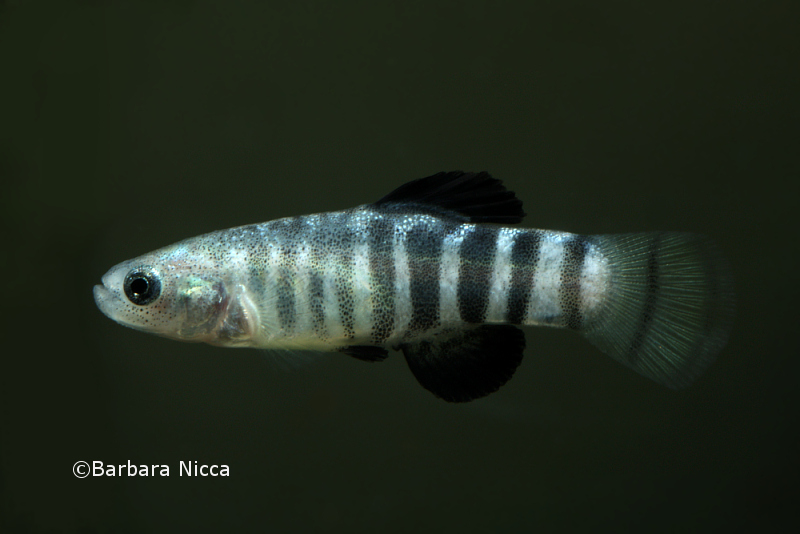
Anatolichthys transgrediensAcı Toothcarp
Ermin, 1946
Max length50mm SL2.0in SLTanknot recordedTempnot recordedpH8.0–10.0The modified lower jaw and reduced scalation exhibited by this little-known species have seen it placed in the disused genera Anatolichthys and Turkichthys in the past and it is still sometimes listed as a species of Lebias although that generic name has long been considered a synonym of Cyprinodon by most authorities and an ICZN committee voted to suppress the name in favour of Aphanius as recently as 2003. You're unlikely to find it on sale in aquatic stores although it ma...
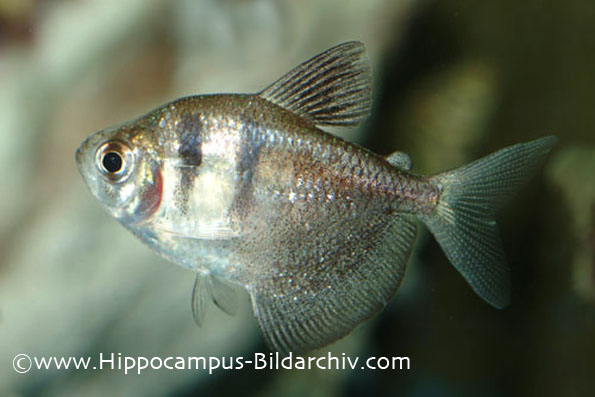
Gymnocorymbus ternetziBlack Widow Tetra
authority not recorded
Max length60mm SL2.4in SLTank75 × 30cm30 × 12inTemp20–26°C68–79°FpH6.0–7.0This species is ubiquitous in most dealers' tanks and is one of the best choices for the newcomer to fishkeeping. All the fish sold in the trade have been captive bred and as such are unfussy regarding water chemistry and diet. The intense black colouration of juveniles does fade as they grow, but adult fish provide a subtle contrast to most other commonly kept species. It goes by several common names, including 'butterfly tetra', 'black skirt tetra' and simply '...
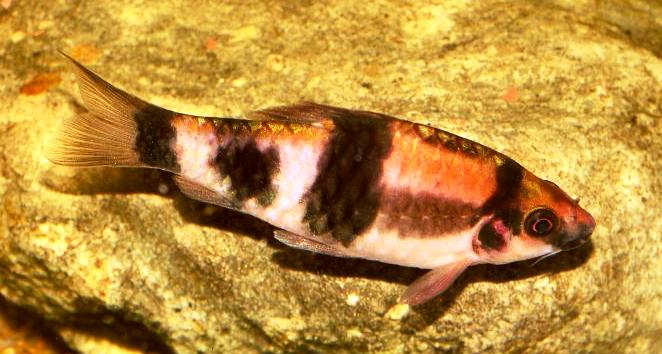
Haludaria fasciataMelon Barb
Jerdon, 1849
Max length70mm SL2.8in SLTank90 × 30cm36 × 12inTemp22–26°C72–79°FpH6.0–7.5This species is traded under various vernacular names including 'ember barb', 'banded barb' and 'black spot barb', and is perhaps among the more undervalued small cyprinids in the aquarium hobby being peaceful, relatively hardy, colourful, and of interesting behaviour. It exists in a number of colour for...
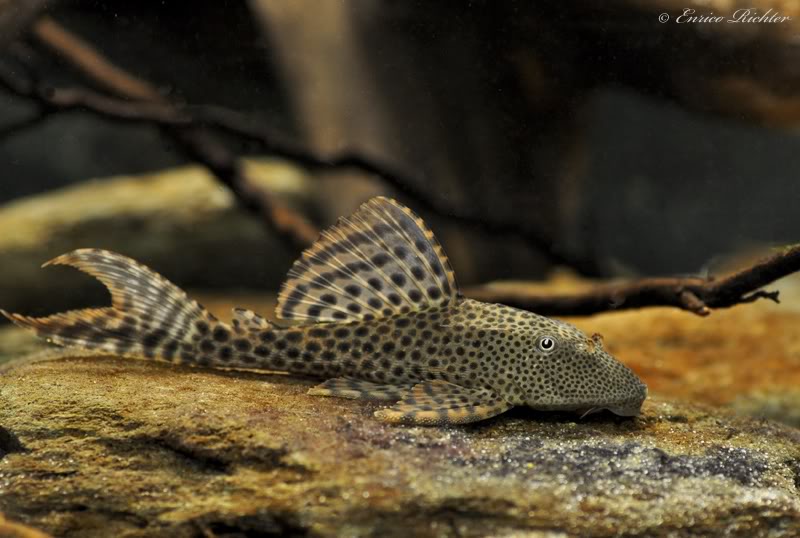
Hypostomus sp.L231
authority not recorded
Max length300mm SL12in SLTank180 × 60cm72 × 24inTemp22–28°C72–82°FpH6.0–7.5Supposedly exported from the upper Amazon region in Peru but precise details are lacking. It's unclear whether this unidentified species is conspecific with the similarly nameless congener L266 or not.
Nannocharax brevisAfrican Darter Characin
authority not recorded
Max length45mm SL1.8in SLTank45 × 30cm18 × 12inTemp23–27°C73–81°FpH6.0–7.5There are currently 25 described species in the genus Nannocharax, these forming a monophyletic group with members of the very similar Hemigrammocharax. None can be described as particularly common in the hobby but N. brevis and N. fasciatus are the most often seen. They are notoriously tricky to identify though, and it's quite possible that more than two species are being sold under these names. In nature these fish occupy a similar ecological niche to the South American darter characi...
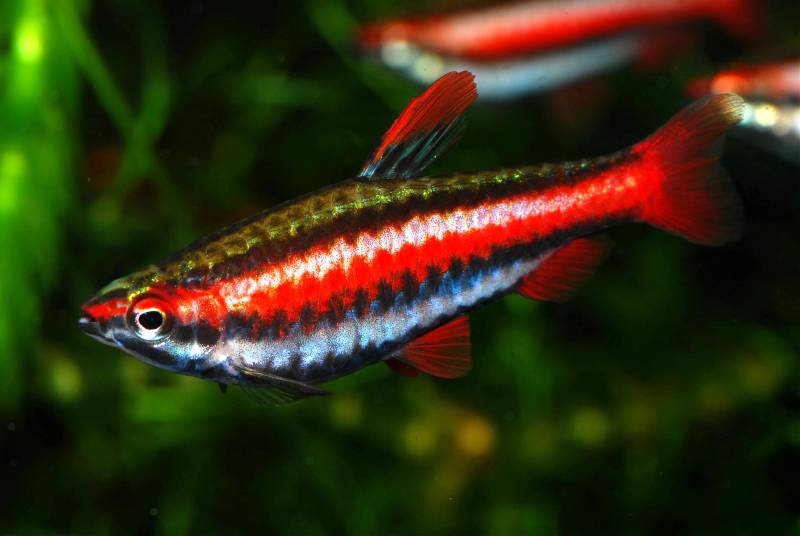
Nannostomus mortenthaleriCoral Red Pencilfish
Paepke & Arendt, 2001
Max length30mm SL1.2in SLTank90 × 30cm36 × 12inTemp24–28°C75–82°FpH4.0–7.0This species is traded under various other names including 'red arc pencilfish', 'Peruvian red pencilfish', 'ruby red pencilfish', 'red pencilfish', and Nannostomus cf. marginatus 'red'. It was initially described as a subspecies of N. marginatus but can be identified by the following combination of characters: pronounced sexual dimorphism with adult males exhibiting bright red pigmentation between the central...
Pantodon buchholziAfrican Butterfly Fish
authority not recorded
Max length120mm SL5in SLTank90 × 30cm36 × 12inTemp23–30°C73–86°FpH6.0–7.5The common name of this surface-dwelling species is derived from it's appearance when viewed from above, the large pectoral fins giving it the appearance of a butterfly. In reality, these fins serve a dual purpose. They help to camouflage the fish, making it look like a dead leaf floating on the surface, and along with the caudal fin, power the incredible jumps that it is capable of making. The fish jumps from the water to catch flying insects or to escape potential predators and it can mak...
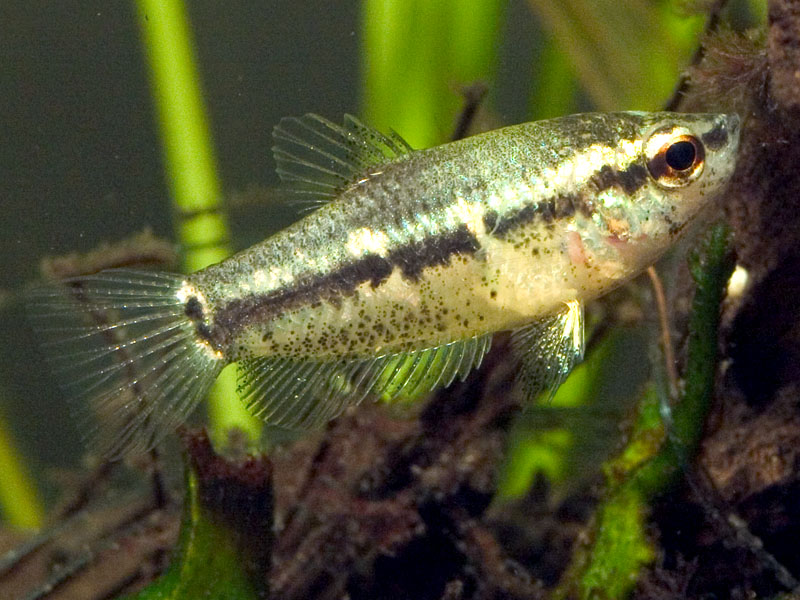
Parasphaerichthys lineatus
Britz & Kottelat, 2002
Max length19mm SL0.7in SLTank40 × 20cm16 × 8inTemp22–27°C72–81°FpH6.5–8.0This species is sometimes traded under the names 'mini chocolate gourami', 'Burmese chocolate gourami' or mislabelled as the congener P. ocellatus, these two currently comprising the only known members of the genus. P. lineatus can be told apart from P. ocellatus via the following combination of characters: smaller body size (maximum standard length 18.7 mm vs. 32.0 mm); absence of ocellus-type marking in middle of each flank (vs. presence); presence of dark, stripe (vs. abs...
Pseudogastromyzon myersi
authority not recorded
Max length60mm SL2.4in SLTank75 × 30cm30 × 12inTempnot recordedpH6.0–7.5This species is traded under various vernacular names including 'Chinese hillstream loach', 'Chinese butterfly plec' and 'Hong Kong Otocinclus. It's the commonest member of the genus in the hobby but has been frequently misidentified as the congener P. cheni in the past with the two often said to be indistinguishable in terms of colour pattern. Some sources additionally suggest the sole defining external character to be that in P. cheni the distance between the resp...
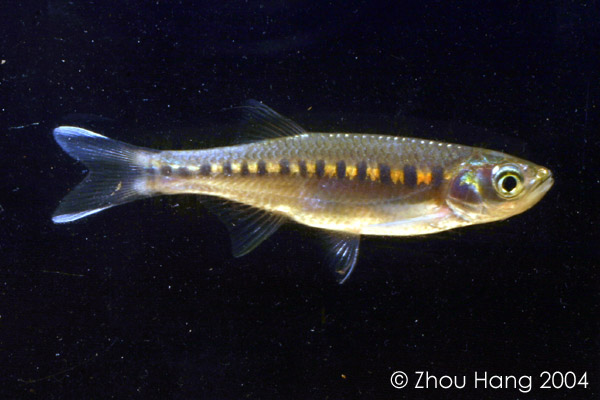
Luciosoma spilopleura
Bleeker, 1855
Max length82mm SL3.2in SLTanknot recordedTempnot recordedpHnot recordedThis species is poorly known in general and is not present in the ornamental trade, although its name is widely misapplied to other Luciosoma species. Its congeners are mostly marketed as 'apollo shark', 'shark minnow', or similar, and often labelled with incorrect scientific names. Identification of the fish pictured here is based on Bleeker (1855, 1860) and Roberts (1989), plus drawings by Bleeker, thus...
Megalodoras uranoscopusGiant Raphael Catfish
authority not recorded
Max length700mm SL28in SLTank240 × 120cm96 × 48inTemp21.1–25°C70–77°FpHnot recordedThis species is also known by the vernacular name "ripsaw catfish" (U.S.) and was often referred to by the scientific name M. irwini, now considered a junior synonym of M. uranoscopus, in older literature. Within the family Doradidae the genus Megalodoras is considered most closely-related to Lithodoras, Centrodoras and Platydoras, respectively. Members of the family Doradidae can be distinguished from all other Siluriformes by possession of a unique infranuchal scute, a dermal bon...
Sorubim limaDuckbill Catfish
authority not recorded
Max length501mm SL20in SLTank200 × 75cm79 × 30inTemp23.3–30°C74–86°FpHnot recordedThis species is also known by the vernacular names "Hockey Stick Catfish", "Lima Shovelnose", "Chiripira", "Chucharón" and "Pico de pato". The genus Sorubim currently contains five recognised species. Of the others S. cuspicaudus is recorded from the parts of the Rio Essequibo, Rio Orinoco, Amazon and Lake Maracaibo basins, S. elongatus from the Rio Essequibo, Rio Orinoco Rio Mamore and Amazon and S. maniradii from the mid-to-upper Amaz...
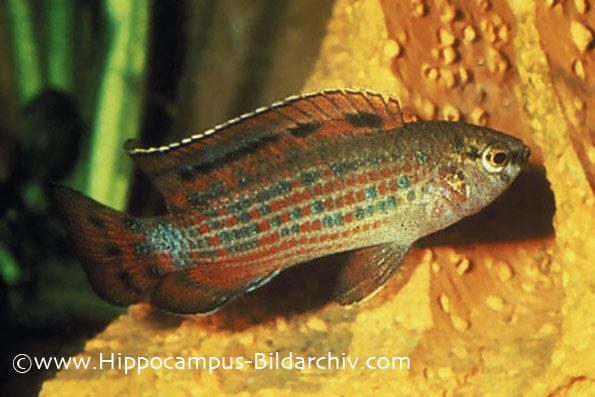
Badis ruberBurmese Badis
Schreitmüller, 1923
Max length50mm SL2.0in SLTank60 × 30cm24 × 12inTemp15–25°C59–77°FpH6.5–7.5B. ruber is among the better known Badis species in the aquarium hobby with trade names including 'Burmese badis' and 'red badis'. It was referred as Badis badis burmicanus for a number of years and will be seen labelled as such in older literature. Among congeners it is most easily confused with...
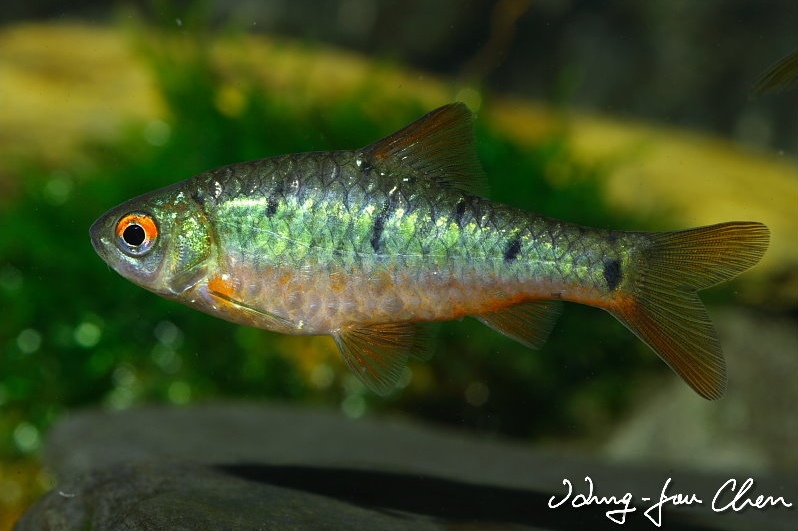
Barbodes semifasciolatusGolden Barb*
Günther, 1868
Max length75mm SL3.0in SLTank90 × 30cm36 × 12inTemp16–24°C61–75°FpH6.0–8.0This species is also known by the alternative names 'green' or 'Chinese' barb. The natural 'green' form is an infrequent find in the aquarium trade whereas the selectively-bred 'golden' variant is farmed in huge numbers and is among the most popular of freshwater aquarium fish. The latter was first produced in the 1960s and is now so ubiquitous that many hobbyists are initially unaware that it is not the natural form.
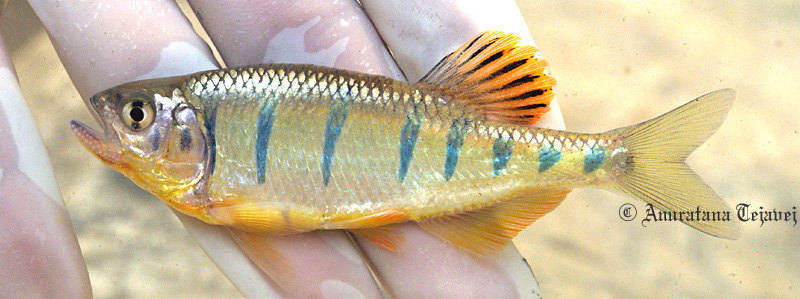
Opsarius pulchellus
Smith, 1931
Max length110mm SL4in SLTank120 × 45cm48 × 18inTemp18–26°C64–79°FpH6.0–7.5This species is traded for aquaria under various names including 'butterfly barb', 'mackerel barb', 'green-barred danio', and 'royal opsarius'. It can be told apart from other memb...
Rasbora rubrodorsalis
authority not recorded
Max length30mm SL1.2in SLTank45 × 30cm18 × 12inTemp24–28°C75–82°FpHnot recordedR. rubrodorsalis occurs sympatrically with the very similar-looking R. borapetensis over some of its natural range but is much the rarer of the two in the aquarium hobby. They are easily distinguishable from one another because R. rubrodorsalis has a bright red blotch in thewhilst in R. borapetensis the dorsal is colourless and only the base of the is coloured red. This species is sometimes sold under the erroneous name(s) R. beauforti or R. sp. cf. beauforti, probably because it was picture...
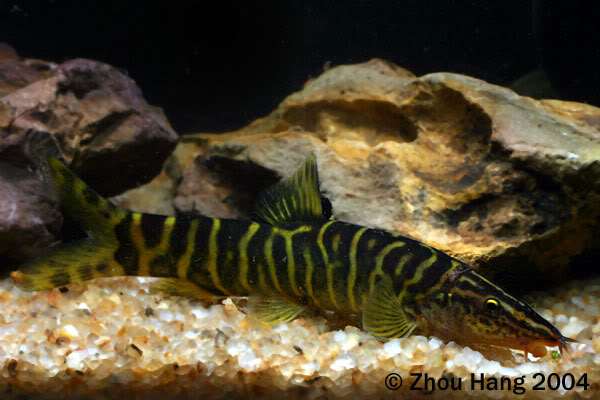
Sinibotia pulchraGolden Zebra Loach
Wu, 1939
Max length110mm SL4in SLTank120 × 30cm48 × 12inTemp20–25.5°C68–78°FpH6.5–8.0This species is also sold under the vernacular names 'golden Chinese loach' and '12-banded Chinese loach'. Along with S. robusta it's the most commonly-traded member of the genus, and the two are often imported in mixed batches, presumably because they occur and are thus collected together in nature. Like most congeners it has a highly flexible, sinuous body which makes it very interesting to observe. S. pulchra can be differentiated from...
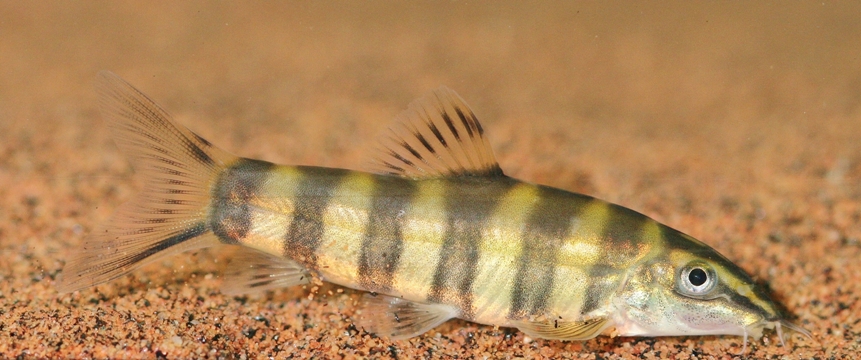
Sinibotia robustaKansu Loach
Wu, 1939
Max length100mm SL3.9in SLTank120 × 30cm48 × 12inTemp20–25.5°C68–78°FpH6.5–8.0This species is also sold under the vernacular names 'golden Chinese loach' and '12-banded Chinese loach'. Along with S. pulchra it's the most commonly-traded member of the genus, and the two are often imported in mixed batches, presumably because they occur and are thus collected together in nature.
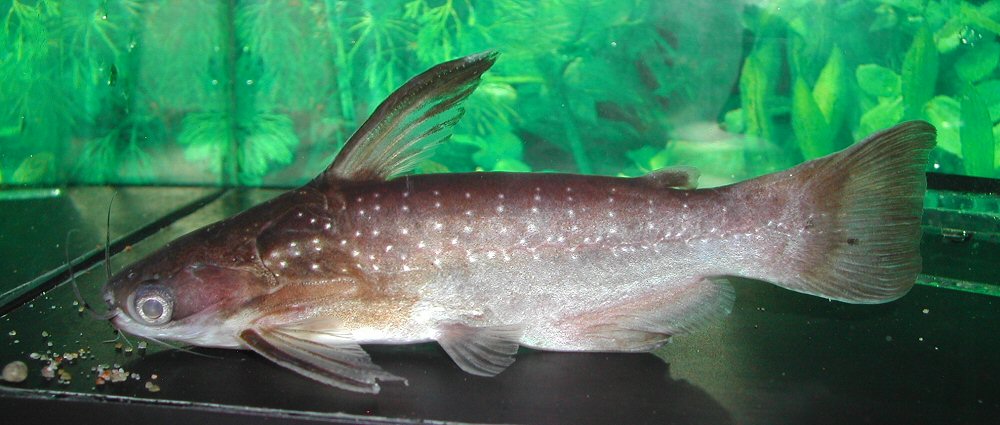
Auchenipterichthys coracoideusMidnight Catfish
Eigenmann & Allen, 1942
Max length110mm SL4in SLTank80 × 30cm31 × 12inTemp22–25°C72–77°FpH6.0–7.2This species is also known by the alternative vernacular name of 'Zamora woodcat', and is often misidentified as A. thoracatus. The latter is a valid species and very similar to A. coracoideus in that the coracoid bone is exposed ventrally and covered only by a thin layer of integument in both species. The two differ principally in the number of anal fin rays...