Results for “species”
Type a name: scientific, common, or one a species used to go by. Or narrow the catalogue with the filters.
Filters
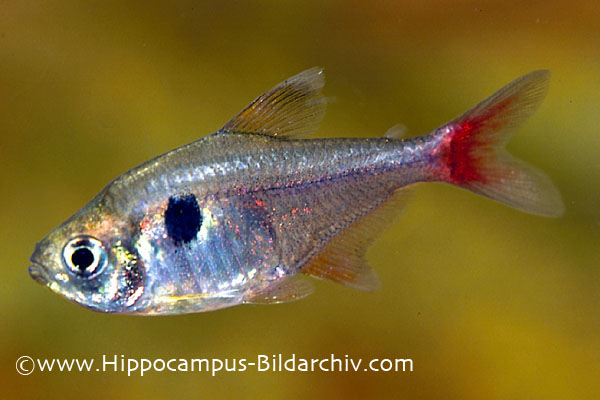
Hyphessobrycon roseusYellow Phantom Tetra
Géry, 1960
Max length20mm SL0.8in SLTank60 × 30cm24 × 12inTemp20–28°C68–82°FpH5.0–7.0This small species is a popular aquarium fish but there is some confusion surrounding its identity. Two colour forms have been traded, one of which also possesses tiny hooks on the fin rays. It can be distinguished from congeners by colour pattern; the body is rose-coloured, fins red with no black markings, and the ovoid humeral spot is prominent, measuring around half of the body depth.
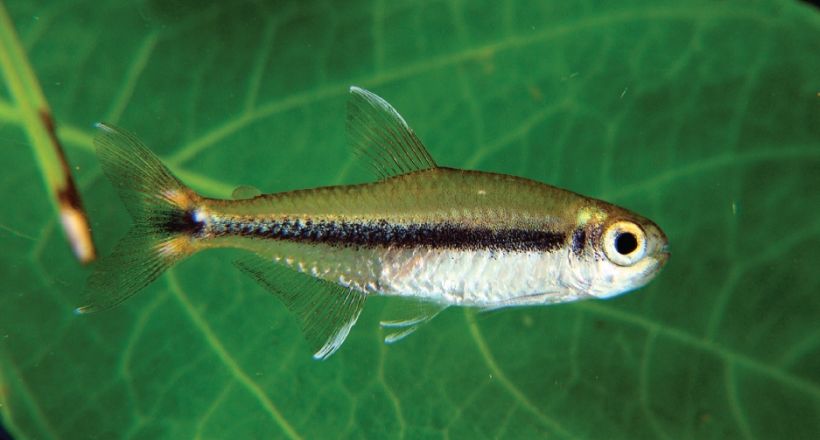
Hyphessobrycon stegemanniSavanna Tetra
Géry, 1961
Max length35mm SL1.4in SLTank60 × 30cm24 × 12inTemp20–25°C68–77°FpH5.5–7.5In the aquarium hobby the name Hyphessobrycon stegemanni has frequently been misapplied to a species that has been described as Hemigrammus ataktos Marinho, Dagosta, & Birindelli 2014. The reasons for this confusion are presumably that the two occur sympatrically in the rio Tocantins system and both possess a dark lateral stripe on the body.
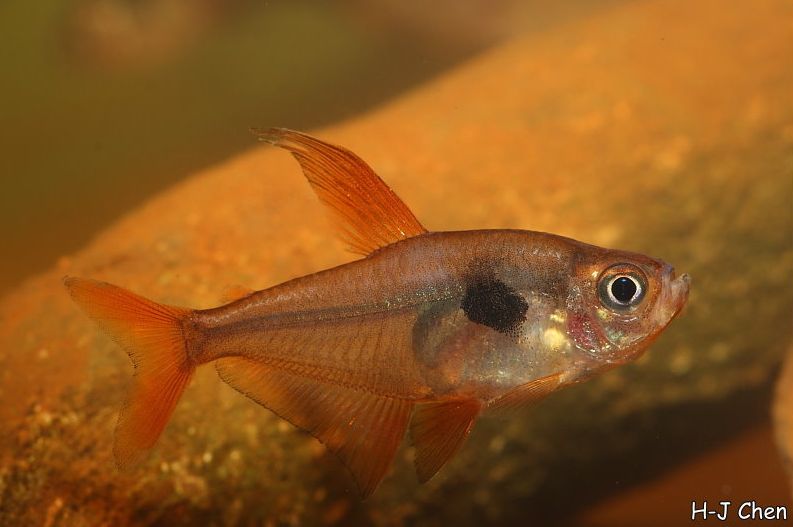
Hyphessobrycon sweglesiRed Phantom Tetra
Géry, 1961
Max length35mm SL1.4in SLTank80 × 30cm31 × 12inTemp20–28°C68–82°FpH4.5–7.5At least two colour forms have been traded, one of which is more intensely-coloured and has been referred to as H. sweglesi 'red' or 'rubra'. The bright red pigmentation is retained in long-term captive specimens, suggesting that it is not considered to be an artefact of diet, but we suspect it might reflect conditions at the collection locality with the reddest fish putatively inhabiting blackwater and plainer forms clearwater environments. Zarske (2014) found the two forms to be identical in terms of morphology an...
Hypostomus cf. cochliodonSpotted Cochliodon
authority not recorded
Max length230mm SL9in SLTank120 × 45cm48 × 18inTemp21–24°C70–75°FpH6.3–7.2This undescribed species is part of the Hypostomus cochliodon complex, all of which were previously included in the genus Cochliodon. This is now considered a synonym of Hypostomus. Members of this group can be distinguished from congeners by several differences in morphology, most notably the hump-backed profile of mature fish and spoon-shaped dentition. These features, along with the fishes tendency to eat wood, are shared with the Panaque genus of the Ancistrinae subfamily, but the two genera...
Hypostomus mutucaeLDA10
authority not recorded
Max length75mm SL3.0in SLTank60 × 30cm24 × 12inTemp23–28°C73–82°FpH6.2–7.6It's suprising that this relatively unknown species is not more popular in the hobby, given its small adult size and peaceable nature. It's often confused with LDA09, but can be distinguished by the pattern of small spots on its head, as in LDA09 the spots are larger and uniform in size over the whole body.
Hypostomus plecostomoidesLDA42
authority not recorded
Max length250mm SL10in SLTank120 × 45cm48 × 18inTemp21–27°C70–81°FpH6.5–8.0This species is part of the Hypostomus cochliodon complex, all of which were previously included in the genus Cochliodon, which is now considered a synonym of Hypostomus. Members of this group can be distinguished from congeners by several differences in morphology, most notably the hump-backed profile of mature fish and spoon-shaped dentition. These features, along with the fishes tendency to eat wood, are shared with the Panaque genus of the Ancistrinae subfamily, but the two genera are known ...
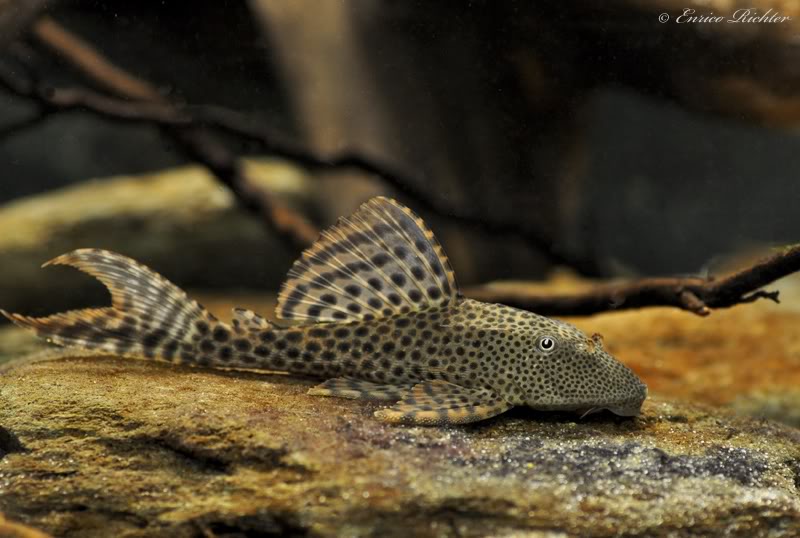
Hypostomus sp.L231
authority not recorded
Max length300mm SL12in SLTank180 × 60cm72 × 24inTemp22–28°C72–82°FpH6.0–7.5Supposedly exported from the upper Amazon region in Peru but precise details are lacking. It's unclear whether this unidentified species is conspecific with the similarly nameless congener L266 or not.
Hypostomus sp.L229
authority not recorded
Max length250mm SL10in SLTank120 × 45cm48 × 18inTemp21–27°C70–81°FpH6.0–7.5This undescribed species is part of the Hypostomus cochliodon complex, all of which were previously included in the genus Cochliodon, which is now considered a synonym of Hypostomus. Members of this group can be distinguished from congeners by several differences in morphology, most notably the hump-backed profile of mature fish and spoon-shaped dentition. These features, along with the fishes tendency to eat wood, are shared with the Panaque genus of the Ancistrinae subfamily, but the two gener...
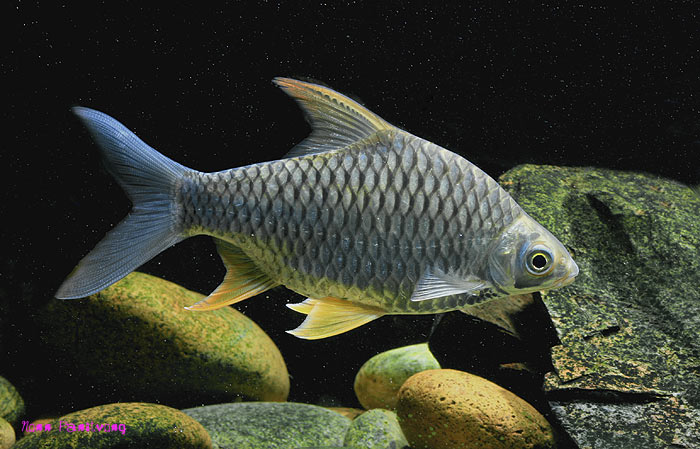
Hypsibarbus lagleri
Rainboth, 1996
Max length350mm SL14in SLTank240 × 60cm96 × 24inTemp20–26°C68–79°FpH6.0–8.0This species is migratory on a seasonal basis; during the dry season it can be found in larger river channels, whereas during drier months it moves into smaller tributaries and flooded forests. Apparently displays a preference for rocky habitats and is not known to adapt to reservoirs or other artificial impoundments.
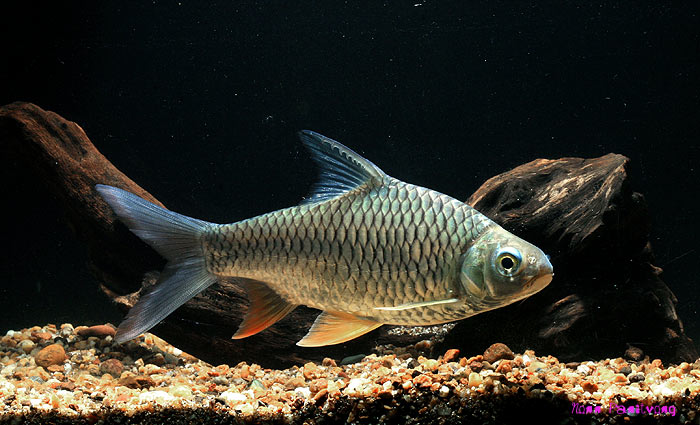
Hypsibarbus vernayi
Norman, 1925
Max length216mm SL9in SLTank240 × 60cm96 × 24inTemp20–26°C68–79°FpH6.0–8.0It is very similar to H. wetmorei but can be told apart by possessing yellow (vs. orange to red in H. wetmorei) pectoral, pelvic, and anal fins. It thus appears likely that yellow-finned fish marketed as H. wetmorei or 'lemon fin barb' in the ornamental trade are actually H. vernayi, with both species available on a regular basis.
Hypsophrys nicaraguensisNicaragua Cichlid
authority not recorded
Max length250mm SL10in SLTank120 × 45cm48 × 18inTemp23–28°C73–82°FpH7.0–8.0Also known as the Spilotum or Moga, this is a popular and beautiful cichlid that exists in several different colour forms, depending on collection locality. It has also been hybridised with the convict cichlid (Archocentrus nigrofasciatus), although this is not to be encouraged. A study in 2004 found an apparent close genetic association between this species and Neetroplus nematopus, another cichlid found in the same area in nature. The 2 show remarkable similarities strategy, patterning and uni...
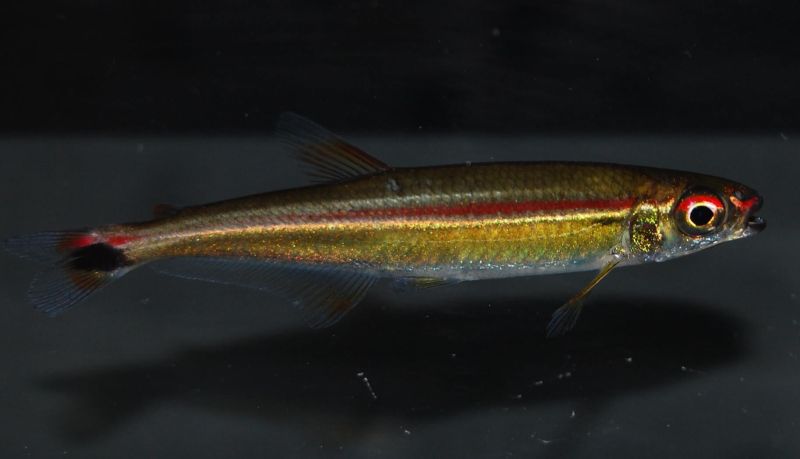
Iguanodectes adujai
Géry, 1970
Max length62mm SL2.4in SLTank90 × 30cm36 × 12inTemp20–26°C68–79°FpH5.0–7.0This species is known from the rio Negro within the Brazilan Amazon basin and upper Río Orinoco system in Venezuela. Type locality is 'Rio Adujá, Rio Itú, tributary of middle Rio Negro, Amazonia, Brazil'.
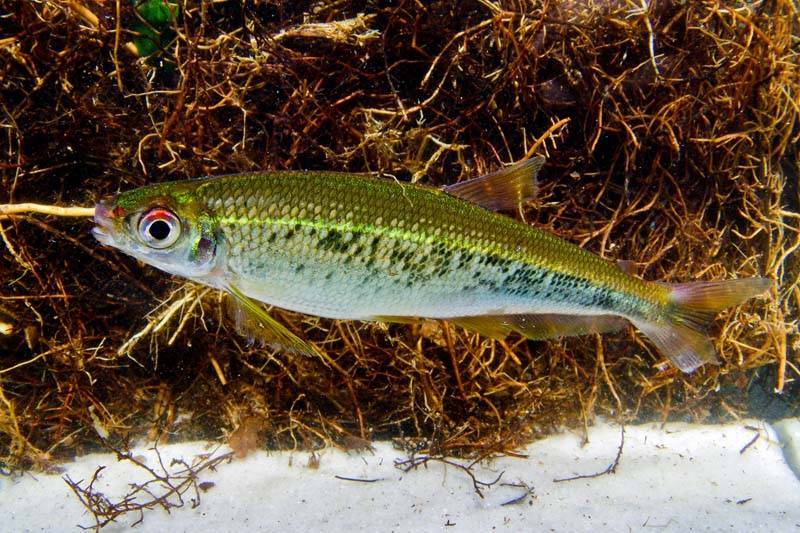
Iguanodectes variatus
Géry, 1993
Max length103mm SL4in SLTanknot recordedTempnot recordedpHnot recordedThis species has been recorded from the Guaporé, Madeira, Branco, Trombetas, and Urubu river systems within the Amazon river basin, Brazil. Type locality is 'Igarapé Jatuarana, 5 kilometers above Samuel, Rio Guaporé, Rondonia, Brazil'.
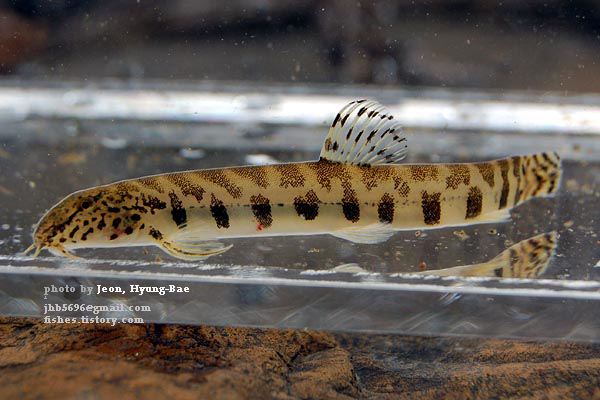
Iksookimia pumila
Kim & Lee, 1987
Max length80mm SL3.1in SLTank60 × 30cm24 × 12inTemp20–24°C68–75°FpH7.0–8.0All Iksookimia species are endemic to Korea, and I. pumila is known only from the Baek River drainage in south-western Korea where its presence has been undermined at some localities due to construction of a dam in the middle reaches of the river during the late 1990s. Type locality is 'Paikchon stream at Sangso-myon, Puan-gun, Chollabuk-do, South Korea'. The reservoir formed by the dam has also be...
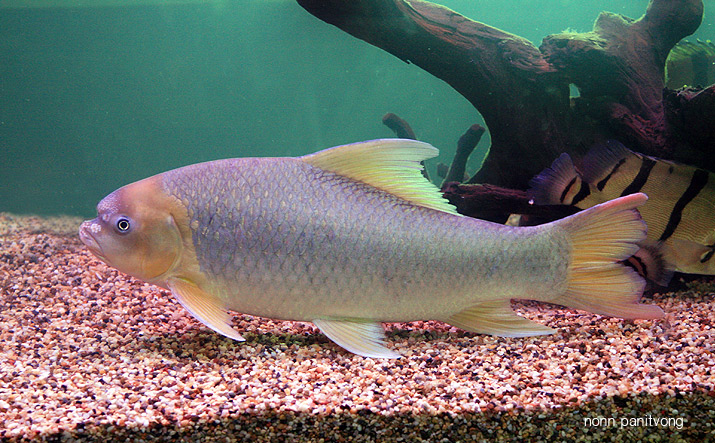
Incisilabeo behri
Fowler, 1937
Max length550mm SL22in SLTanknot recordedTemp20–26°C68–79°FpH6.0–8.0The monotypic genus Incisilabeo is separated from the closely-related taxon Bangana by presence of a unique and conspicuous transverse notch across the top of the head, comparable in position to the ethmoid furrow in Bangana species. This notch approaches the eye, and the top of the head bulges forward, with the nostrils located partially beneath this projection and immediately anterior to the eyes. Tubercles cover the upper portion of the rostral fold, lower part of the notch, and upper surface of the forehead projection...
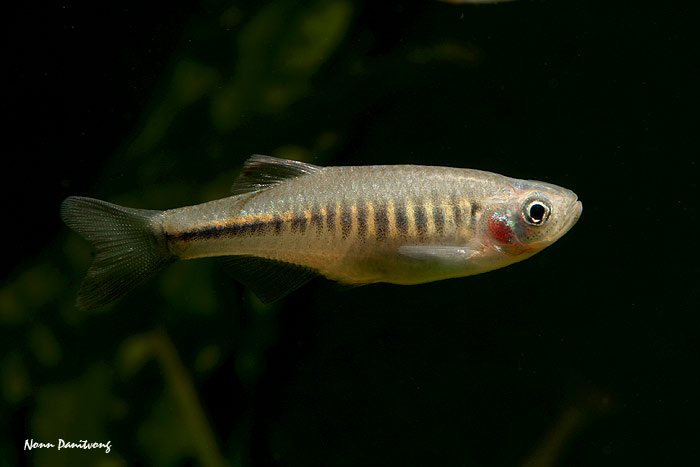
'Inlecypris' maetaengensisFire Bar 'Danio'
Fang, 1997
Max length50mm SL2.0in SLTank75 × 30cm30 × 12inTemp20–26°C68–79°FpH6.0–8.0A peaceful species suited to a well-chosen community aquarium. There are plenty of potential tankmates including many cyprinids, loaches, cichlids, catfishes and characins, although as always proper research is essential in order to avoid problems.
Ivanacara adoketaZebra Acara
authority not recorded
Max length130mm SL5in SLTanknot recordedTemp22.2–28.9°C72–84°FpHnot recordedThis species was previously included in the genus Nannacara before being moved to the newly-erected taxon Ivanacara by Römer and Hahn (2006)....
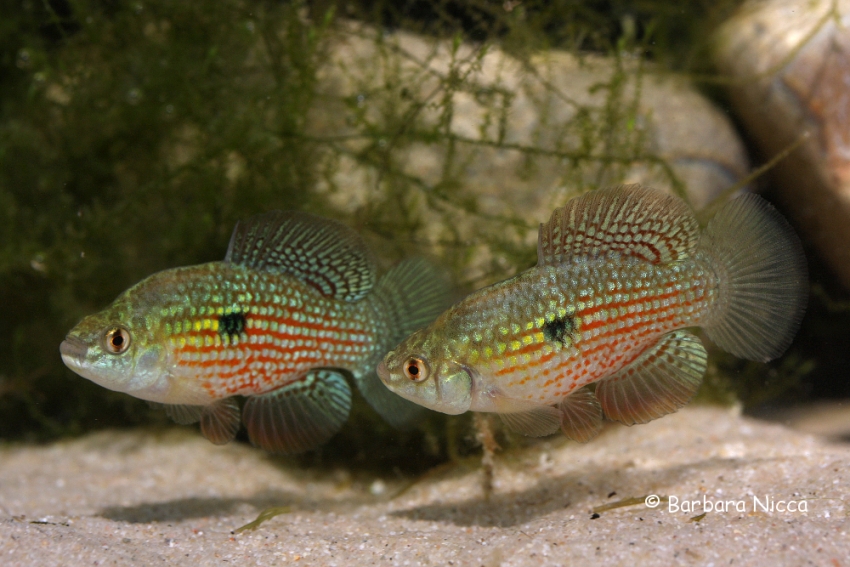
Jordanella floridaeFlorida Flagfish
Goode & Bean, 1879
Max length55mm SL2.2in SLTank60 × 30cm24 × 12inTemp18–30°C64–86°FpH6.5–8.5Contrary to many reports, including a number of scientific papers, this species breeds in the same way as other cyprinodontids and does not dig pits or exhibit extended parental care. It's a fractional spawner with females depositing eggs on a more-or-less continuous basis when a warm temperature is maintained though ideally it should be permitted to breed on a seasonal basis in spring and late summer as it would in nature.
Julidochromis dickfeldiBrown Julie
authority not recorded
Max length80mm SL3.1in SLTank75 × 30cm30 × 12inTemp23–27°C73–81°FpH8.0–9.2Julidochromis are commonly known as "Julies" in the hobby. As with other Julies, large water changes should be avoided as this can cause mated pairs to turn on one another. There is some speculation as to whether this species has been placed in the correct genus. It has a different shape to other Julidochromis, having a pointed snout. It also exhibits different patterning, with blue edging to the dorsal and anal fins, and the horizontal stripes are very dark in colour. Furthermore i...
Julidochromis reganiRegan's Julie
authority not recorded
Max length300mm SL12in SLTank120 × 30cm48 × 12inTemp23–27°C73–81°FpH7.5–9.0Julidochromis are commonly known as "Julies" in the hobby. Despite being the largest species of Julie this is actually the least aggressive member of the genus. As with other Julies, large water changes should be avoided as it can cause mated pairs to turn on one another. J.regani may also be seen for sale labelled as Striped Julie or Convict Julie. Several geographical morphs are available. Apparently, the yellower of these are found in shallower water with the darker forms inhabit...