Results for “sp.”
Type a name: scientific, common, or one a species used to go by. Or narrow the catalogue with the filters.
Filters
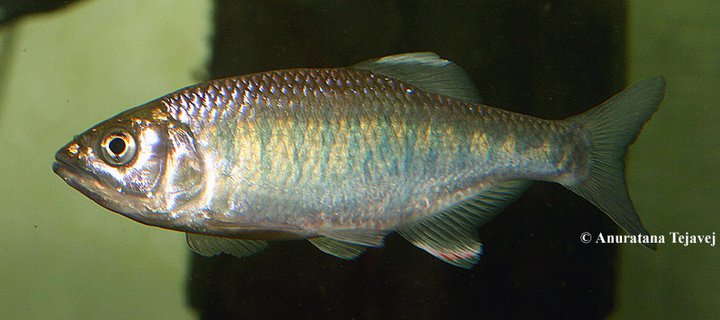
Barilius gatensisMalabar Baril
Valenciennes, 1844
Max length130mm SL5in SLTank150 × 60cm60 × 24inTemp18–26°C64–79°FpH6.0–7.5This species is traded very occasionally, sometimes under the alternative vernacular names of 'river baril, 'river carp-baril', or 'striated hill trout'. It can be told apart from congeners by the following combination of characters: 1 pair of minute rostra...
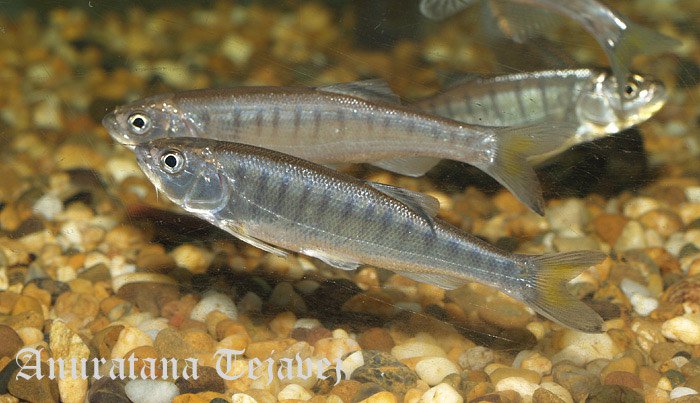
Barilius shacra
Hamilton, 1822
Max length130mm SL5in SLTank150 × 60cm60 × 24inTemp18–26°C64–79°FpH6.0–7.5Like many fishes that naturally inhabit running waters it's intolerant to the accumulation of organic wastes and requires spotless water at all times in order to thrive. It also does best if there is a high proportion of dissolved oxygen and moderate degree of water movement so external filters, powerheads, airstones, etc., should be employed as necessary.
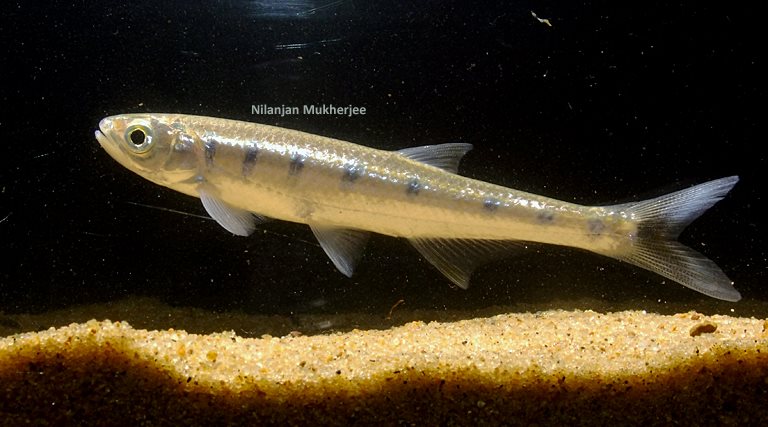
Barilius vagra
Hamilton, 1822
Max length125mm SL5in SLTank150 × 60cm60 × 24inTemp18–26°C64–79°FpH6.0–7.5Barilius spp. are near-exclusive surface-feeders preying mostly on flying insects in nature with some small fishes and benthic invertebrates probably taken as well but in the aquarium they're largely unfussy and will accept most foods.
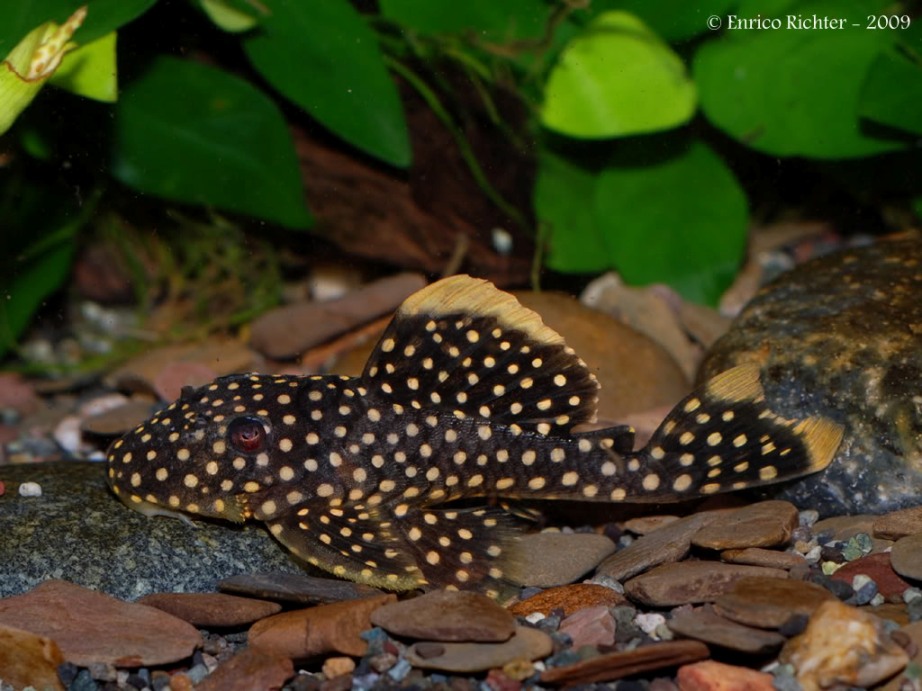
Baryancistrus xanthellusGold Nugget Pleco
Rapp Py-Daniel, Zuanon & Ribeiro de Oliveira, 2011
Max length224mm SL9in SLTank120 × 45cm48 × 18inTemp27–32°C81–90°FpH6.0–8.0Prior to description in 2011 this species was traded under the DATZ code numbers L018, L085, L077 and 'Das Aquarium' code LDA060, while a very similar-looking fish from the lower rio Xingu which has been assigned the code L081 may also represent a form of B. xanthellus but is not mentioned in the description paper. B. xanthellus can be distinguished from congeners by a combination of the following...
Batasio feruminatus
Ng & Kottelat, 2008
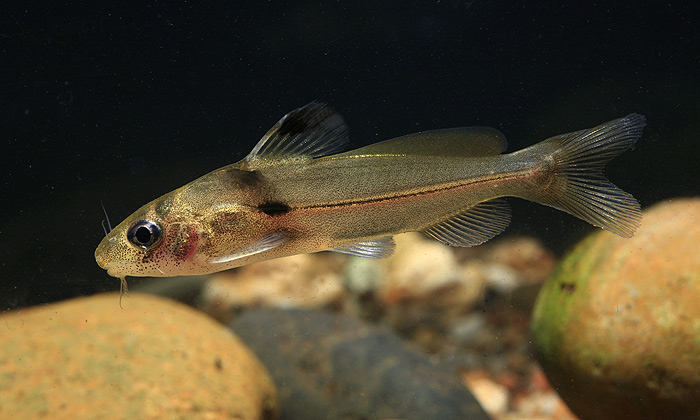
Max length60mm SL2.4in SLTank90 × 30cm36 × 12inTemp16–24°C61–75°FpH6.0–7.0Batasio spp. are obligate inhabitants of headwater streams and the upper reaches of smaller rivers characterised by shallow, fast-flowing, highly-oxygenated stretches of riffles and runs broken up by pools or cascades in some cases. Images of the Ataran correspondingly depict flowing sections of forest-shaded, seemingly well-oxygenated headwaters containing clear water, a mixed sand/rock substrate and lots of submerged driftwood/leaf litter.
Batasio travancoriaMalabar Batasio
Hora & Law, 1941
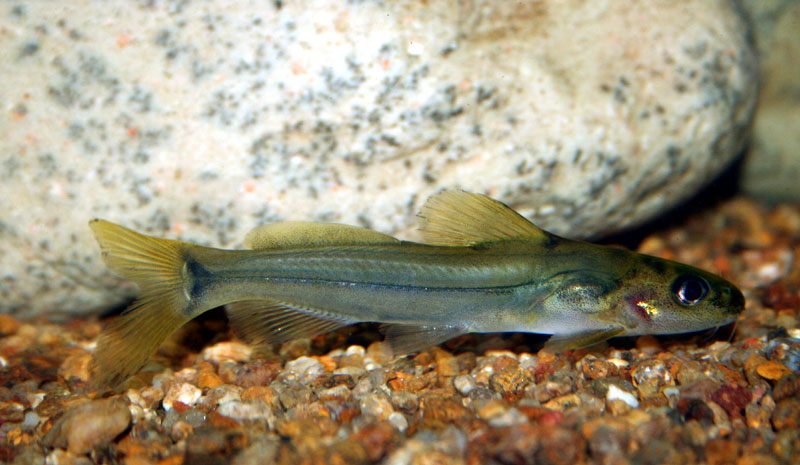
Max length100mm SL3.9in SLTank120 × 30cm48 × 12inTemp18–25°C64–77°FpH6.0–7.0The only other described member of the genus native to southwestern India is B. sharavtiensis which occurs a little further north than B. travancoria in Karanataka state. The two are easily distinguished by colour pattern in that B. travancoria possesses a darkish midlateral stripe and a poorly-defined, but normally visible, post-opercular spot, whereas B. sharavtiensis has no such mark...
Bedotia madagascarensisMadagascan Rainbow Fish
Regan, 1903
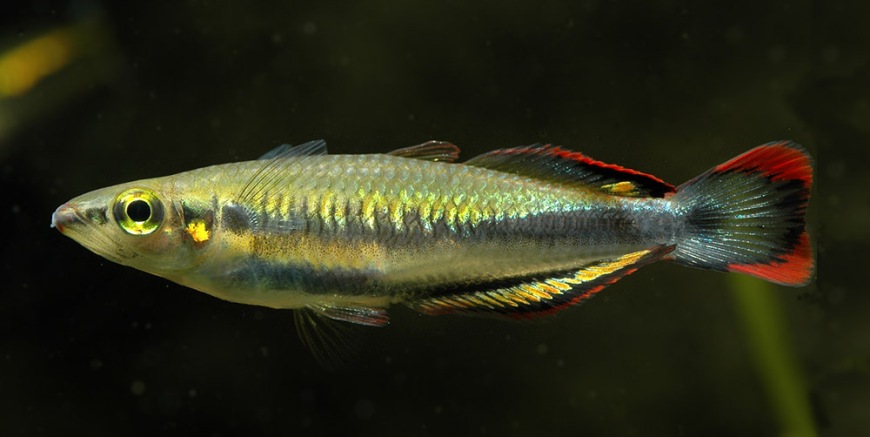
Max length100mm SL3.9in SLTank120 × 30cm48 × 12inTemp23–32°C73–90°FpH4.5–7.5This species was first imported for the aquarium hobby during the 1950s and was for many years misidentified and traded as Bedotia geayi, a valid, but different-looking congener native to the Mananjary River system, south of the range of B. madagascarensis. In terms of external characters, the two are most easily told apart by differences in colour pattern, particularly that of the unpaired fins, and some morphometric counts.
Belontia hasseltiJava Combtail
Cuvier, 1831
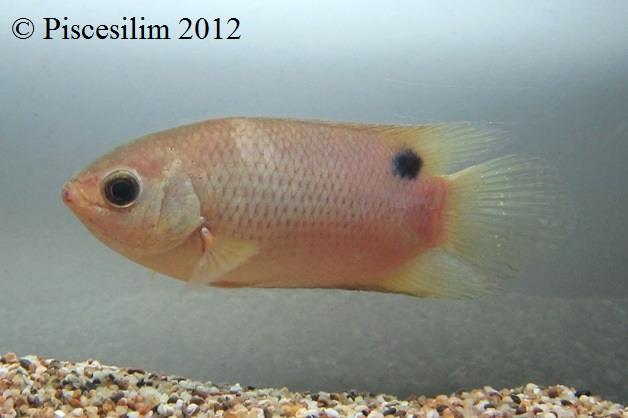
Max length200mm SL8in SLTank120 × 30cm48 × 12inTemp21–26°C70–79°FpH4.5–8.5This species is also referred to by the vernacular name 'Malay combtail'. In terms of external characters it differs most obviously from its only congener, B. signata by its overal brownish grey (vs. reddish) body colouration and presence of a mosaic-type patterning in the unpaired fins (vs. absence). The position of relatedness of the genus Belontia with respect to other anabantoids remains somewhat...
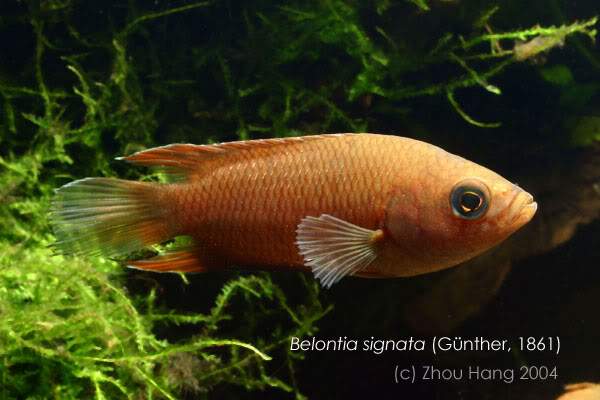
Belontia signataCeylonese Combtail
Günther, 1861
Max length120mm SL5in SLTank120 × 30cm48 × 12inTemp20–27°C68–81°FpH6.0–7.5This species is also traded/referred to by the vernacular name 'Ceylon fighting fish'. It differs from its only congener, B. hasselti, by its overall reddish (vs. brownish-grey) body colouration, and absence (vs. presence) of a mosaic-like patterning in the unpaired fins. At least three putative phenotypes have been recorded. The nominative, and commonest, mostly inhabits clear streams in rainier zones...
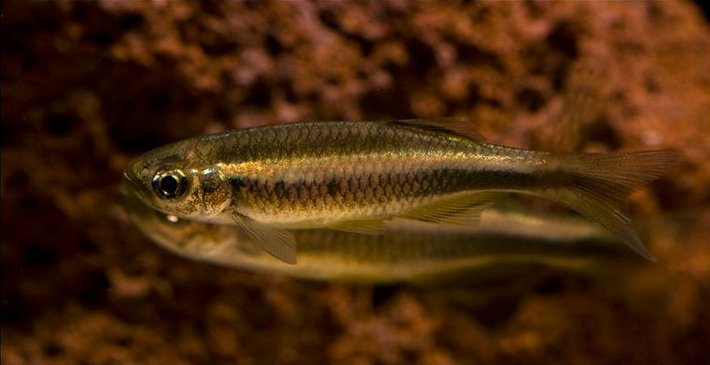
Betadevario ramachandrani
Pramod, Fang, Rema Devi, Liao, Indra, Jameela Beevi & Kullander, 2010
Max length61mm SL2.4in SLTank120 × 30cm48 × 12inTemp18–23°C64–73°FpH6.0–7.0As far as we know this species is yet to arrive to the international aquarium trade though it has been maintained by a handful of Indian aquarists. It's restricted geographical range and difficulty of collection mean it's unlikely to become available in numbers unless adopted by commercial breeders.
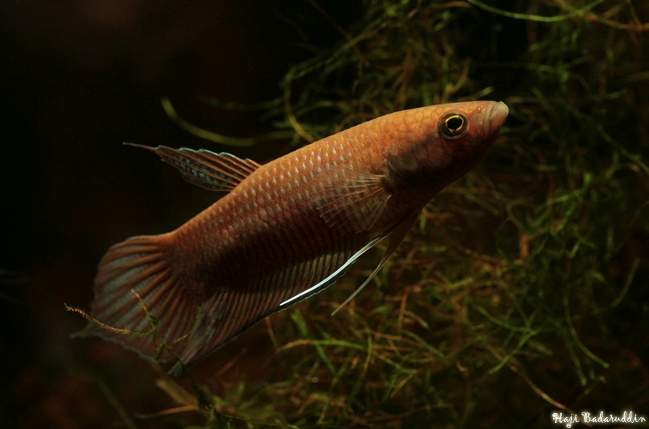
Betta akarensis
Regan, 1910
Max length80mm SL3.1in SLTank60 × 30cm24 × 12inTemp21–27°C70–81°FpH5.5–7.5Like others in the suborder Anabantoidei this species possesses an accessory breathing organ known as the labyrinth. So-called due to its maze-like structure this organ allows the fish to breathe atmospheric air to a certain extent. Comprising paired suprabranchial organs formed via expansion of the epibranchial (upper) section of the first gill arch and housed in a chamber above the gills, it contains...
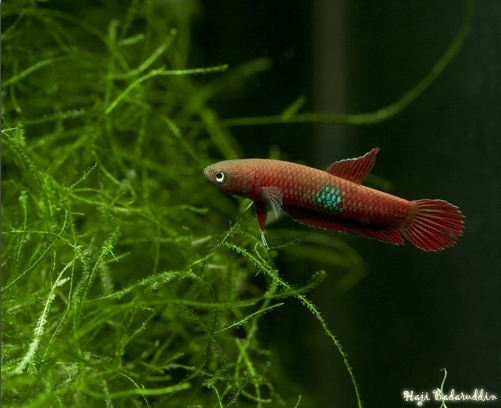
Betta brownorum
Witte & Schmidt, 1992
Max length30mm SL1.2in SLTank45 × 30cm18 × 12inTemp24–30°C75–86°FpH3.0–6.0B. brownorum is included in the Betta coccina group/complex of closely-related species within the genus. This assemblage mostly comprises small, red-coloured fishes with the exceptions of B. persephone and B. miniopinna which are darkish. Identifying some of the red ones correctly is not always easy as the patterning in them can be both similar and confusingly variable. In B. brownorum and B. livida, for example, both male and female individuals may or may not possess a green lateral blotch.
Betta burdigala
Kottelat & Ng, 1994
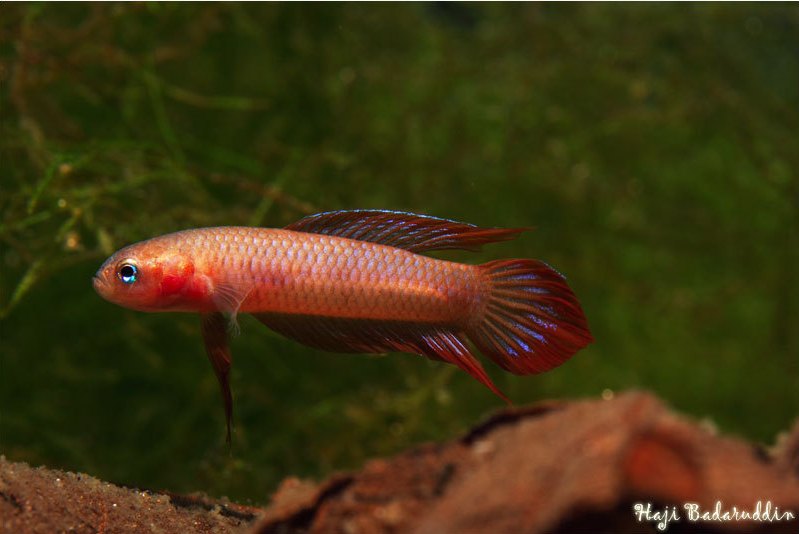
Max length35mm SL1.4in SLTank45 × 30cm18 × 12inTemp22–30°C72–86°FpH4.0–6.0B. burdigala is exceptionally rare in the hobby with many fishes traded or pictured as such being B. uberis or other congener. It's included in the Betta coccina group/complex of closely-related species within the genus. This assemblage mostly comprises small, red-coloured fishes with the exceptions of B. persephone and B. miniopinna which are darkish. Identifying some of the red ones correctly is not always easy as the patterning in them can be both similar and confusingly variable.
Betta gladiator
Tan & Ng, 2005
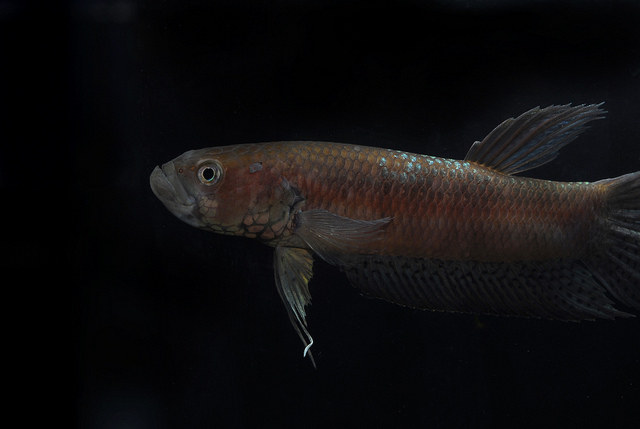
Max length90mm SL3.5in SLTank90 × 30cm36 × 12inTemp22–27°C72–81°FpH4.0–6.0Presumed endemic to the geographically-isolated Maliau basin, a roughly circular plateau enclosed by hills in Sabah state, Malaysia, Borneo. The Maliau River is part of the much larger Kinabantangan watershed, Malaysia's second longest river. The type series was collected from heath forest alongside 'Puntius' sealei and Hemibagrus cf. baramensis in acidic water with a pH of 4.2-4.8. Adult individuals were spaced around a metre apa...
Betta hipposideros
Ng & Kottelat, 1994
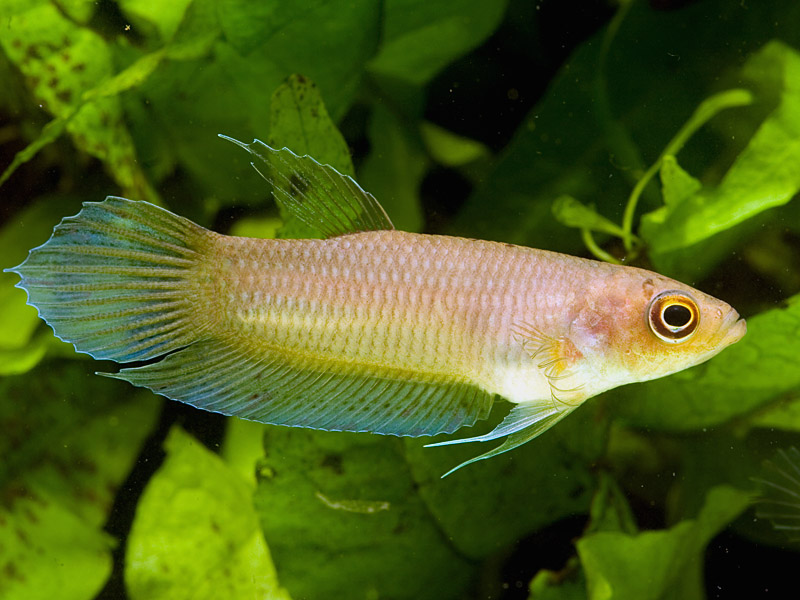
Max length80mm SL3.1in SLTank80 × 30cm31 × 12inTemp22–28°C72–82°FpH3.5–6.0The easiest way to distinguish these is by examining the throat markings, which vary according to species, and in the case of B. hipposideros form a black horse-shoe shape. It can also be separated from other group members by the following suite of characters: dark blotch on throat joined to black lower lip; presence of transverse bars in dorsal and caudal fins; absence of dark margin in anal-fin; opercle usually with gold scales, without iridescrent green scales; ventral margin of opercle brown; 6.5-7 subdorsal scales (mode 6.5); 9-10 postdorsal scales (mode 9.5); 31-32 lateral scales (mode 32).
Betta macrostomaBrunei Beauty
Regan, 1910
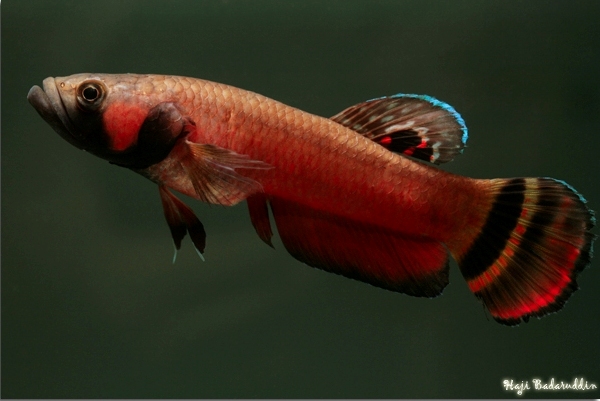
Max length100mm SL3.9in SLTank80 × 30cm31 × 12inTemp20–25°C68–77°FpH4.0–6.0B. macrostoma is included in the Betta unimaculata complex of closely-related species within the genus, of which members share the following set of characters: body long and slender with depth at dorsal fin origin 18-25 % SL; head large and blunt with width 19-24 % SL; long maxilla and lower lip with distance from tip of lower jaw to posterior end of maxilla 27-54 % HL; caudal-fin rounded in shape, occasionally with elongated median rays; pelvic-fin short and filamentous; dorsal and anal fins relatively pointed.
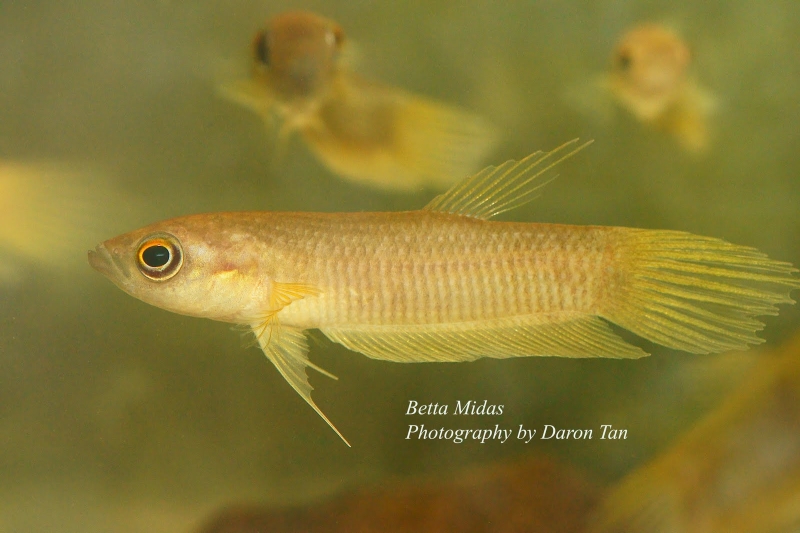
Betta midas
Tan, 2009
Max length66mm SL2.6in SLTank80 × 30cm31 × 12inTemp22–28°C72–82°FpH3.5–6.5Not recommended for the standard community set-up for reasons already touched upon. It's requirements and disposition mean it's best kept alone or with very peaceful species since much bigger or more vigorous fishes are likely to intimidate and outcompete it. Some small cyprinids and loaches that inhabit similar environments in nature are compat...
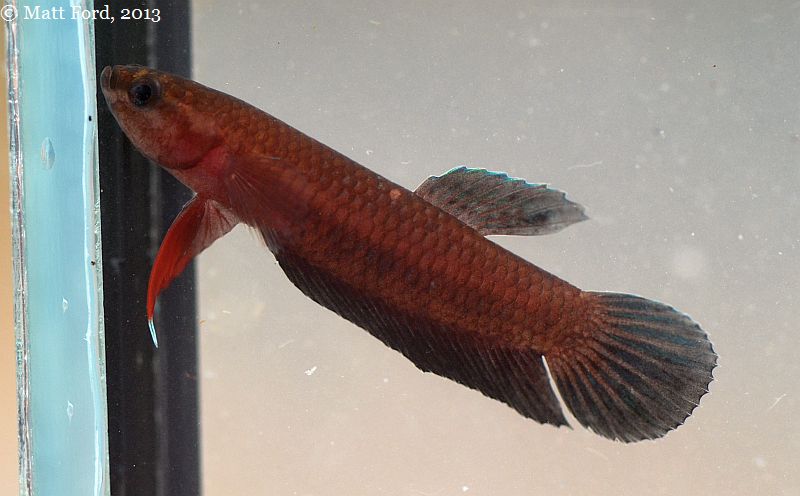
Betta miniopinna
Tan & Tan, 1994
Max length35mm SL1.4in SLTank45 × 30cm18 × 12inTemp22–28°C72–82°FpH4.0–6.0Bintan has been developed for tourism over the last decades and is heavily-promoted by Indonesia, with luxury beach resorts and golf courses increasing in number. Further deforestation has occurred in order to establish large rubber plantations in the interior of the island. B. miniopinna is now restricted to a few remaining pockets of primary peat swamp forest and has been listed as 'Critically Endangered' on the IUCN Red List of Threatened Species since 1996.
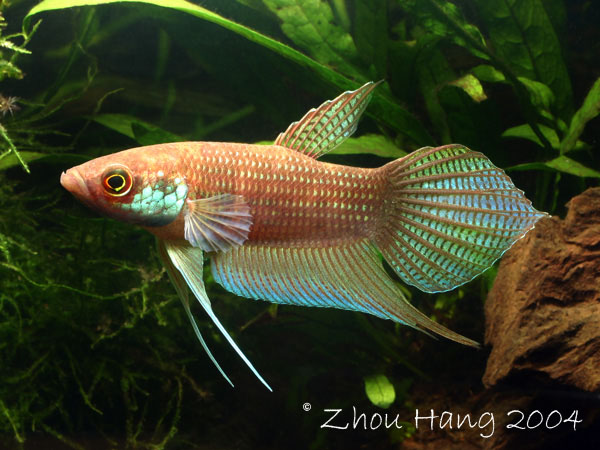
Betta raja
Tan & Ng, 2005
Max length70mm SL2.8in SLTank80 × 30cm31 × 12inTemp22–27°C72–81°FpH4.0–7.0It should be noted that not all authors consider the B. pugnax group to contain the same species, with some placed in the B. picta complex by Schindler and Schmidt (2006), for example. B. raja can be told apart from other members of the B. pugnax group by the following characters: mature males with very long pelvic fins covering 15-23 anal-fin rays or even longer than the base of the anal-fin in some cases; anal-fin and lower caudal-fin with black marginal bands; 25-28 anal-fin rays; 30-32 lat...
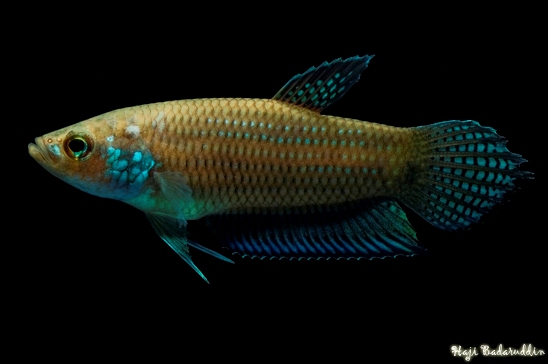
Betta stigmosa
Tan & Ng, 2005
Max length50mm SL2.0in SLTank60 × 30cm24 × 12inTemp22–28°C72–82°FpH5.0–7.0Known only forest hill streams with flowing, clear water. These are typically shaded from the sun by dense riparian vegetation. The substrate is composed of rocks or gravel, fallen leaves, branches and submerged tree roots, and presumably the fish show a preference for quieter marginal zones as with related congeners. The type locality was described as a 'swampy stream' and sympatric species incl...