Results for “fin”
Type a name: scientific, common, or one a species used to go by. Or narrow the catalogue with the filters.
Filters
Pantodon buchholziAfrican Butterfly Fish
authority not recorded
Max length120mm SL5in SLTank90 × 30cm36 × 12inTemp23–30°C73–86°FpH6.0–7.5The common name of this surface-dwelling species is derived from it's appearance when viewed from above, the large pectoral fins giving it the appearance of a butterfly. In reality, these fins serve a dual purpose. They help to camouflage the fish, making it look like a dead leaf floating on the surface, and along with the caudal fin, power the incredible jumps that it is capable of making. The fish jumps from the water to catch flying insects or to escape potential predators and it can mak...
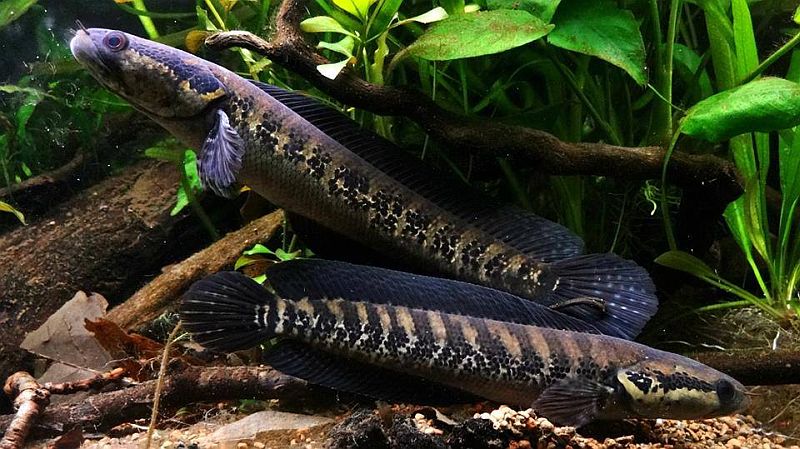
Parachanna africana
Steindachner, 1879
Max length300mm SL12in SLTank120 × 60cm48 × 24inTemp20–25°C68–77°FpH5.0–7.5Following Bonou and Teugels (1985), P. africana can be distinguished from congeners by the following combination of characters: colour pattern unique, comprising a series of 8-11 dark, chevron-shaped markings extending along the body posterior to the pectoral fins; 19-24 scales in the transverse series; lateral line complete with 73-83 pored scales; 45-48 dorsal-fin rays 45-48; 32-35 anal-fin rays.
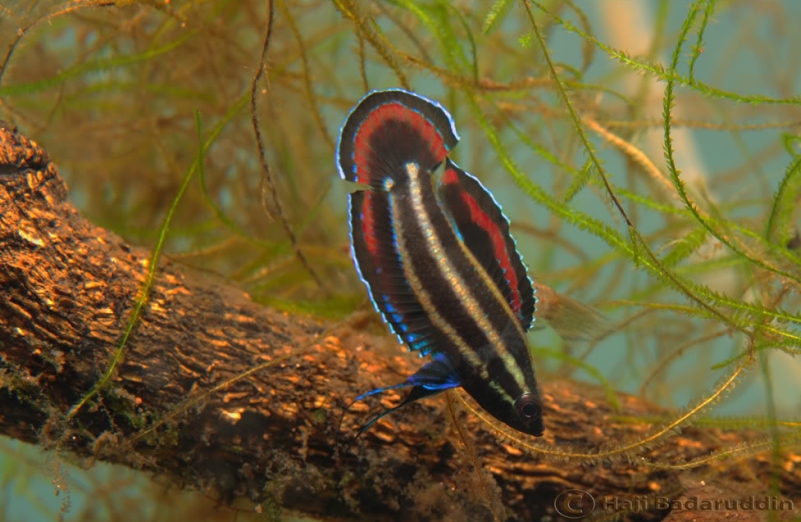
Parosphromenus tweediei
Kottelat & Ng, 2005
Max length35mm SL1.4in SLTank40 × 20cm16 × 8inTemp22–28°C72–82°FpH3.0–6.5This species has been known in the aquarium hobby since the mid-twentieth century but has almost always been identified as the congener P. deissneri and appears as such in the majority of aquarium literature. It can be told apart from congeners by the colour pattern in adult males (see 'Sexual Dimorphism') plus possession of 11-12 spinous dorsal-fin rays, 13-14 spinous anal-fin rays and 6-8 segmented anal-fin rays.
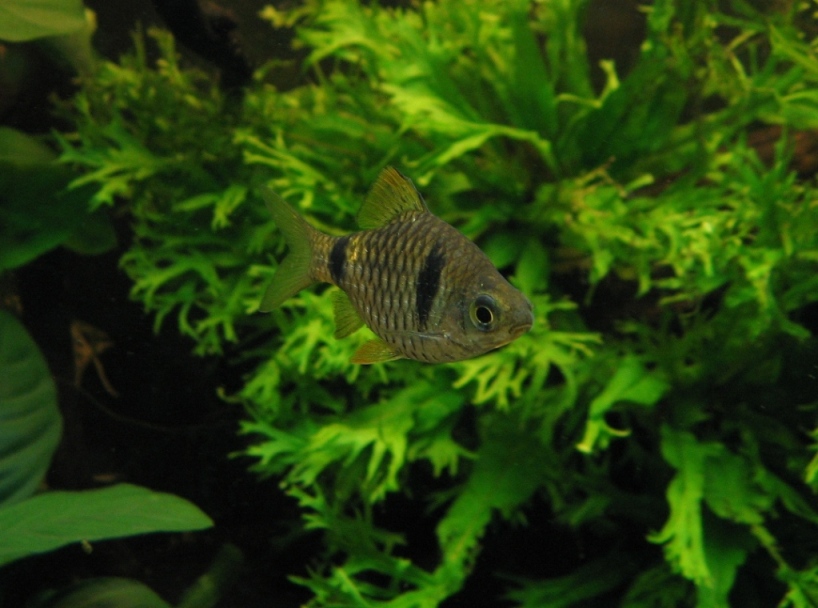
Pethia cumingiiCuming's Barb
Günther, 1868
Max length41mm SL1.6in SLTank60 × 30cm24 × 12inTemp20–27°C68–81°FpH5.5–7.0For many years this species was considered to occur in two colour forms with yellow or red dorsal, anal, and pelvic fins, respectively, but the red-finned variant has now been elevated to full species status as P. reval (Meegaskumbura et al. 2008). The latter is a smaller fish with a maximum SL of 33.6 mm recorded to date. As well as the obvious differences in body size and fin colour P. cumingii can be told apart from P. reval by the following...
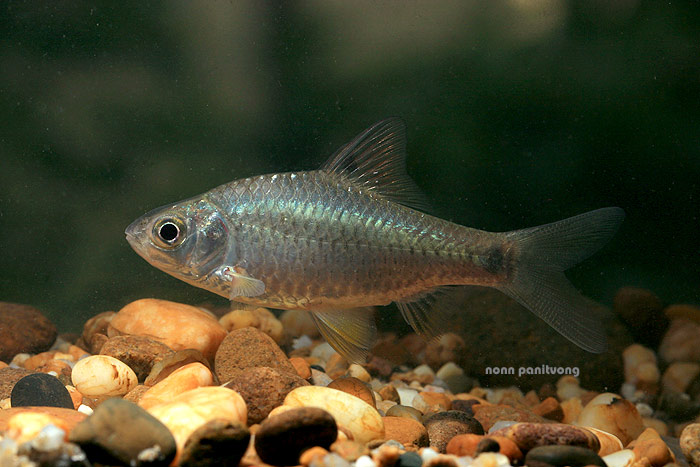
Puntius cholaSwamp Barb
Hamilton, 1822
Max length130mm SL5in SLTank120 × 45cm48 × 18inTemp18–26°C64–79°FpH5.5–8.0P. chola was retained in Puntius sensu stricto, of which members are defined by the following combination of characters: adult size usually less than 120 mm SL; maxillary barbels absent or present; rostral barbels absent; 3-4 unbranched and 8 branched dorsal-fin rays; 3 unbranched and 5 branched anal-fin rays; last unbranched dorsal-fin ray weak or strong and unserrated; lateral line complete with 22-28 pored body scales...
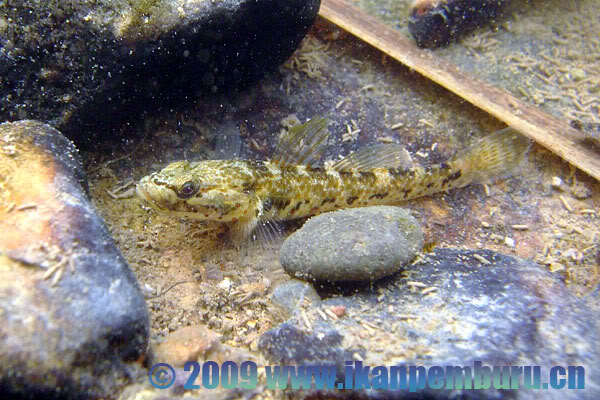
Rhinogobius lentiginis
Wu & Zheng, 1985
Max length32mm SL1.3in SLTank60 × 30cm24 × 12inTemp16–24°C61–75°FpH6.0–8.0It's unlikely that this species has been in the aquarium hobby given its natural range and the lack of commercial fishing for the ornamental trade in that area. Among congeners it's most similar to R. davidi but can be told apart by presence of 8 (vs. always 9 in R. davidi) soft dorsal-fin rays, 10 (vs. 11-12) transverse scale rows, and 6-7 (vs. 8-10) scales between the first dorsal-fin origin and upper pectoral-fin base.
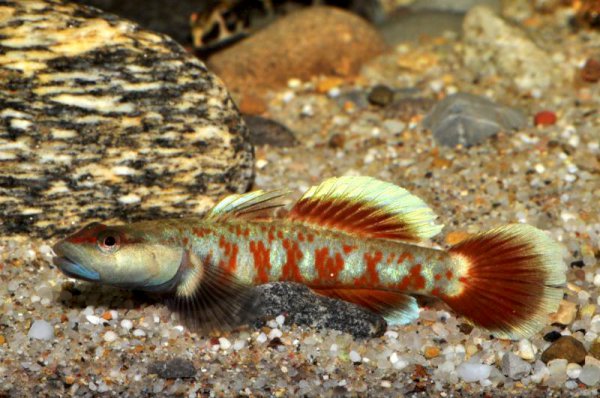
Rhinogobius zhoui
Li & Zhong, 2009
Max length36mm SL1.4in SLTank60 × 30cm24 × 12inTemp19–24°C66–75°FpH7.0–7.8This species has been in the aquarium trade since 2010 and is sold under several names including 'Chinese vermilion goby', 'Zhou's scarlet goby', 'scarlet goby', and 'flame goby'. It can be told apart from congeners by the following combination of characters: second dorsal-fin rays I, 8-9; anal-fin rays I, 7-8; pectoral-fin rays 16-18; longitudinal scale series 29-31; predorsal scales 10-12; vertebral count 10+16=26.
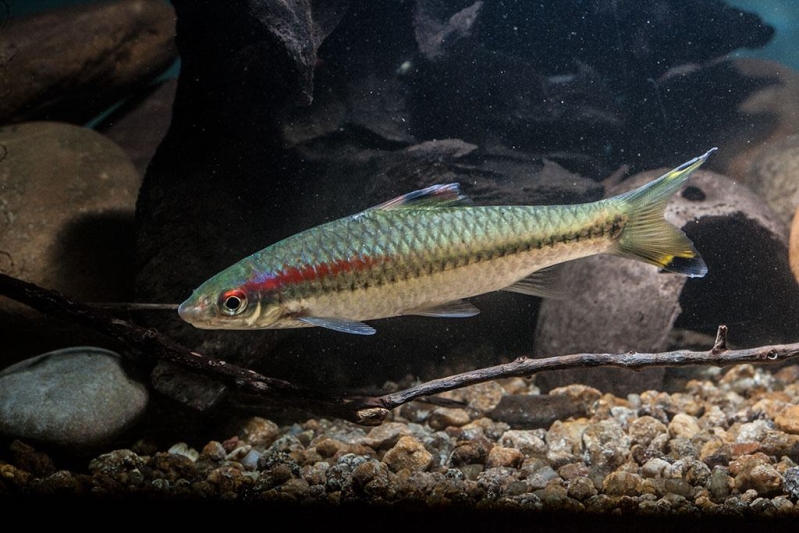
Sahyadria chalakkudiensis
Menon, Rema Devi & Thobias, 1999
Max length125mm SL5in SLTank120 × 45cm48 × 18inTemp15–25°C59–77°FpH6.5–7.5S. chalakkudiensis can be told apart from S. denisonii by possession of an inferior mouth (vs. subterminal) and presence of a black marking in the dorsal-fin (vs. absence), and the scarlet body stripe being duller and terminating beneath or anterior to the dorsal-fin origin (vs. brighter and terminating beneath the centre of the dorsal-fin).
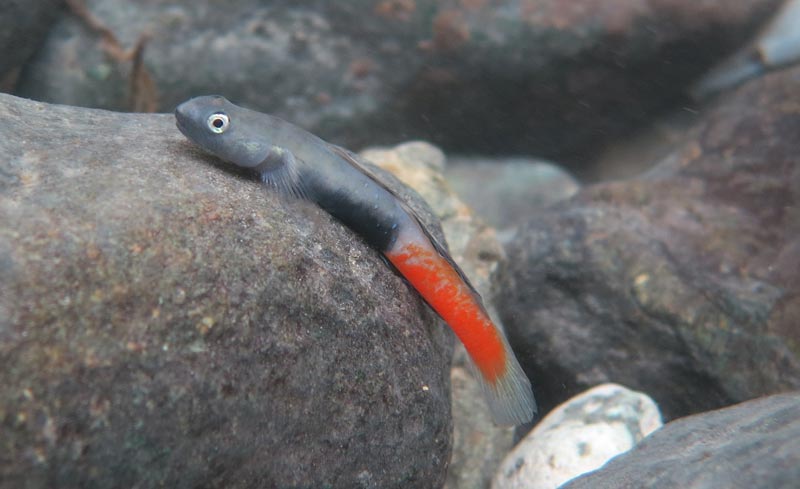
Sicyopus cebuensis
Chen & Shao, 1998
Max length45mm SL1.8in SLTank60 × 30cm24 × 12inTemp22–28°C72–82°FpH6.5–7.5This species is not in the aquarium trade though is maintained by a few private collectors. It can be distinguished from all other members of the genus by the following combination of characters: first dorsal-fin withfirst dorsal-fin elongate in males; anterior portion of body with loosely-arranged ctenoid scales; head, entire nape to first dorsal-fin base, pectoral base, and belly naked; male colour pattern comprising creamy-yellow anterior portion of body with dark blotch at midbody and bright orange/red in postero...
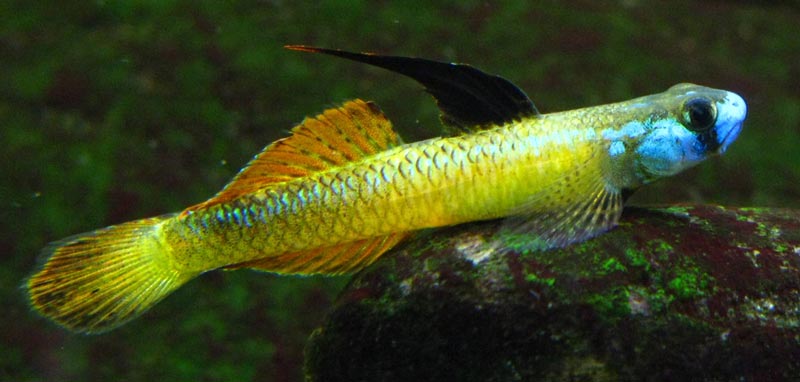
Stiphodon percnopterygionus
Watson & Chen, 1998
Max length35mm SL1.4in SLTank60 × 30cm24 × 12inTemp22–28°C72–82°FpH6.5–7.5This species is rare in the aquarium trade and normally expensive when available. It's one of the most easily-identifiable in the genus by the combination of usually 14 pectoral-fin rays, 10 segmented second dorsal-fin rays, relatively small adult size, unique colouration in males and the shape of the first dorsal-fin in males in which the fourth and fifth spines are...
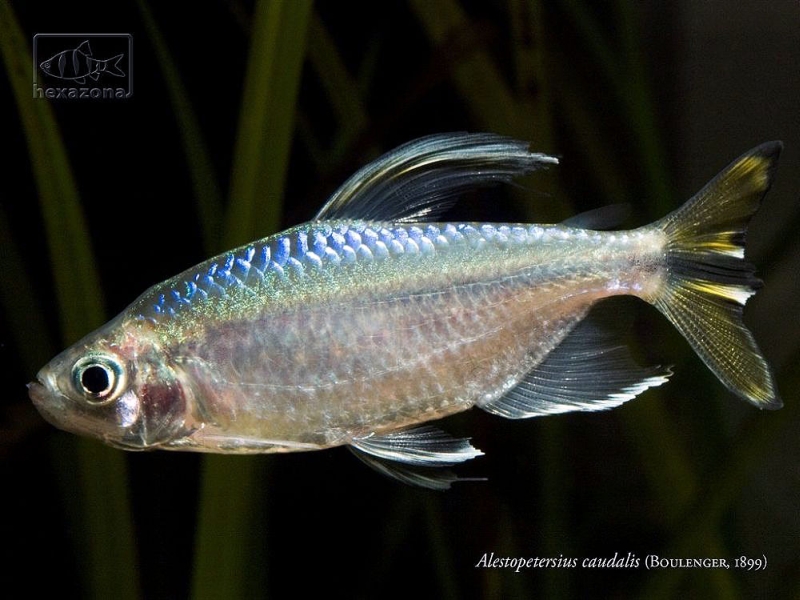
Alestopetersius caudalisYellow-Tailed Congo Tetra
Boulenger, 1899
Max length60mm SL2.4in SLTank120 × 30cm48 × 12inTemp22–26°C72–79°FpH5.0–7.5This species is also traded as 'yellow-finned', 'yellowtail' or 'blue Congo' tetra and is occasionally bred on a commercial basis, although not on a scale comparable to its better-known relative Phenacogrammus interruptus. No recent key to the genus exists but based on Géry (1977) and images in Mbimbi Mayi Munene and Stiassny (2012) it can be told apart from congeners by a combination of: extended median caudal-fin rays in adult males; absence of prominent dar...
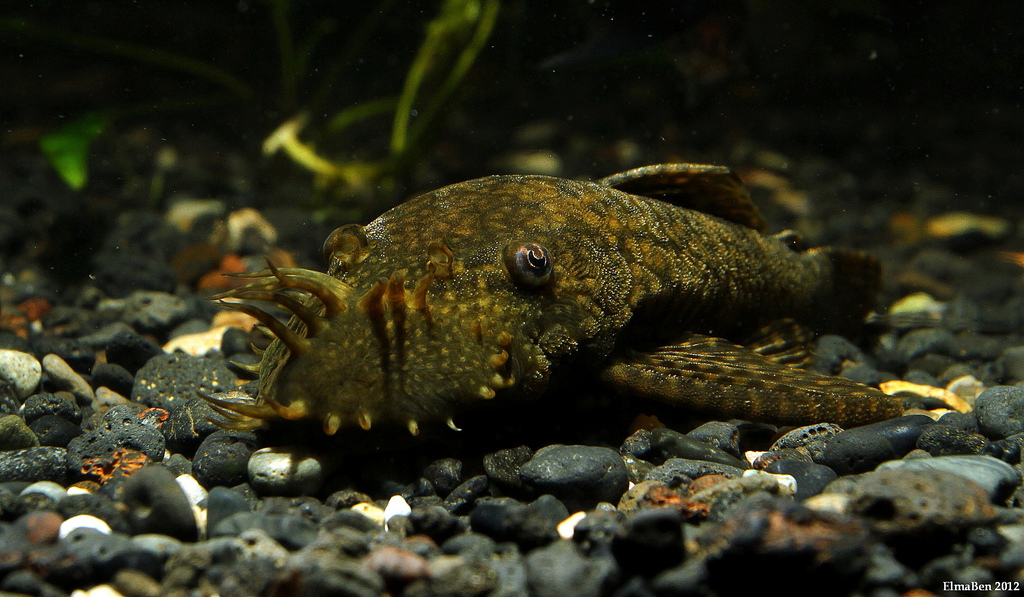
Ancistrus sp. '3'Common Bristlenose Catfish
authority not recorded
Max length125mm SL5in SLTank60 × 30cm24 × 12inTemp21–26°C70–79°FpH5.5–7.5This is the ubiquitous 'bristlenose' catfish in the aquarium hobby and is bred commerically on a large scale although it's precise origin is unknown with some of the opinion that it may be a hybrid. Several line-bred ornamental varieties exist, including piebald, albino and long-finned forms of both the standard and albino fish, of which long-finned fish are sometimes sold as 'butterfly' or 'veiltail' catfish.
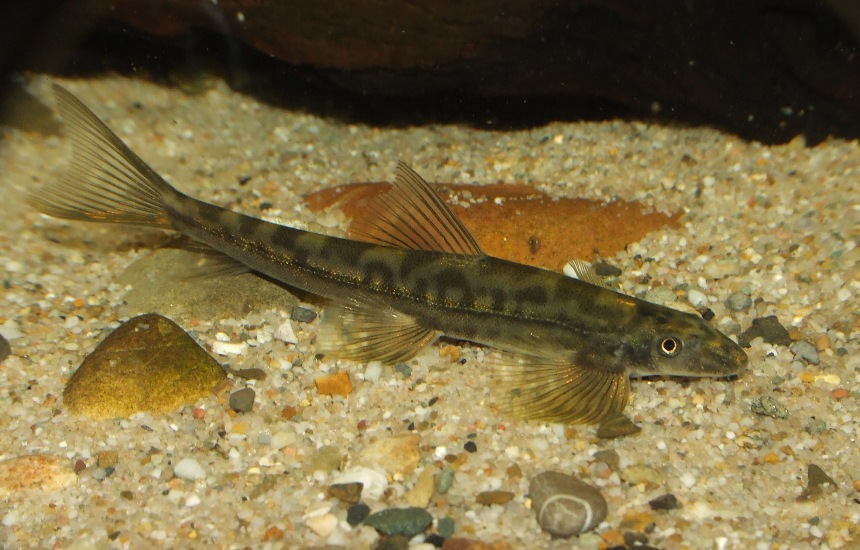
Annamia cf. thuathienensis
Nguyen, 2005
Max length100mm SL3.9in SLTank120 × 30cm48 × 12inTemp16–22°C61–72°FpH6.0–7.5Annamia spp. may be confused with related genera such as those of the genus Balitoropsis. They can be identified by their more depressed body shape, elongate lower caudal-fin lobe, and the presence of a single unbranched ray in the pectoral and pelvic fins. At least one undescribed member of the genus is thought to exist.
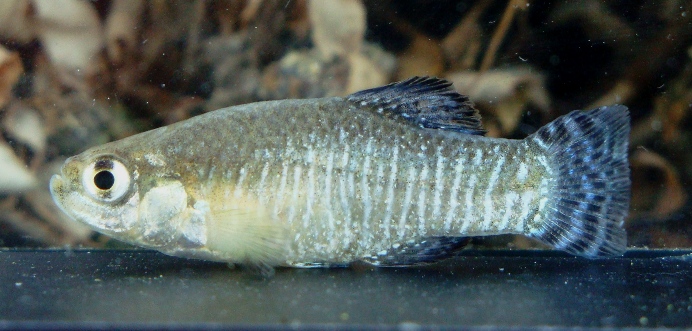
Apricaphanius baeticusBaetican Toothcarp
Doadrio, Carmona & Fernández-Delgado, 2002
Max length50mm SL2.0in SLTank120 × 30cm48 × 12inTemp2–30°C36–86°FpH7.0–9.0Prior to its description this species was considered a geographic variant of A. iberus but the 2002 paper revealed the pair to be genetically quite distinct and also highlighted some morphological differences. It is distinguished from A. iberus by possessing 8-9 (usually 8 ) branched dorsal-fin rays (vs. 8-9, sometimes 10), 9-11 branched anal-fin rays (vs. 8-9), a deeper, more elongate body shape, noticeably shorter snout, relatively thick (vs. thin) vertical bars in males and a flank patterning consisting of a few la...
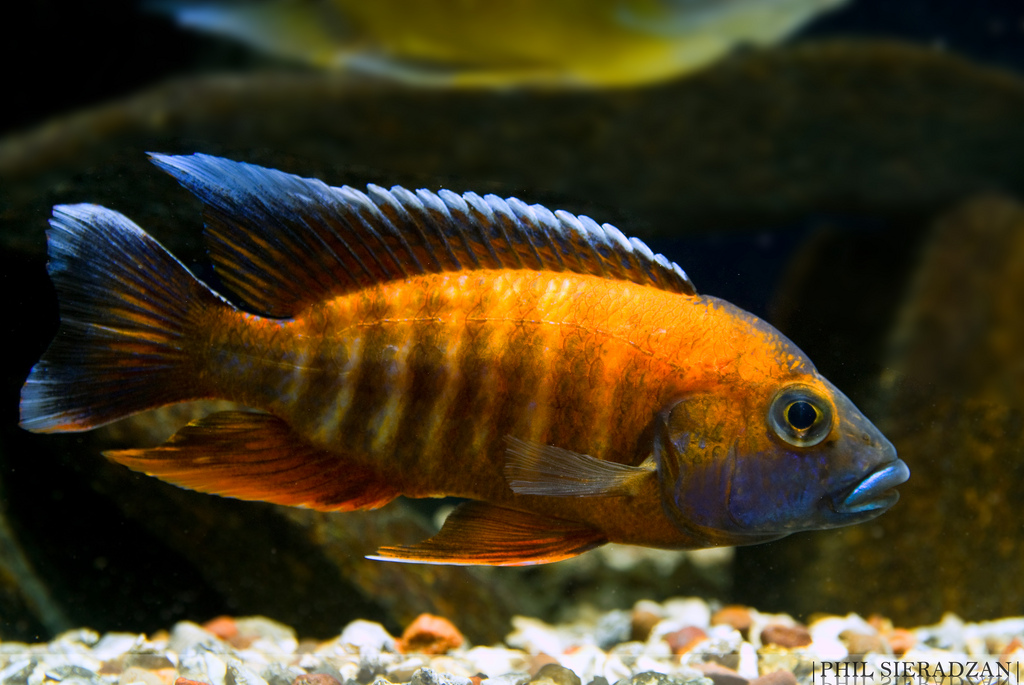
Aulonocara jacobfreibergiMalawi Butterfly
Johnson, 1974
Max length170mm SL7in SLTank120 × 60cm48 × 24inTemp25–29°C77–84°FpH7.5–9.0This was one of the first Aulonocara spp. to enter the hobby and its popularity has endured. It's known by several other vernacular names including 'Freiberg's peacock', 'fairy cichlid' and 'African butterfly' as well as the erroneous 'scientific' names Trematocranus trevori, T. jacobfreigbergi and T. regina. A naturally-occurring, yellowish form from Undu reef, Tanzania is often referred to as 'lemon jake'. It can be told apart from most other members of the genus by the broad, pale distal margins in the dorsal, anal and caudal fins, more deeply-forked caudal fin and larger adult size.
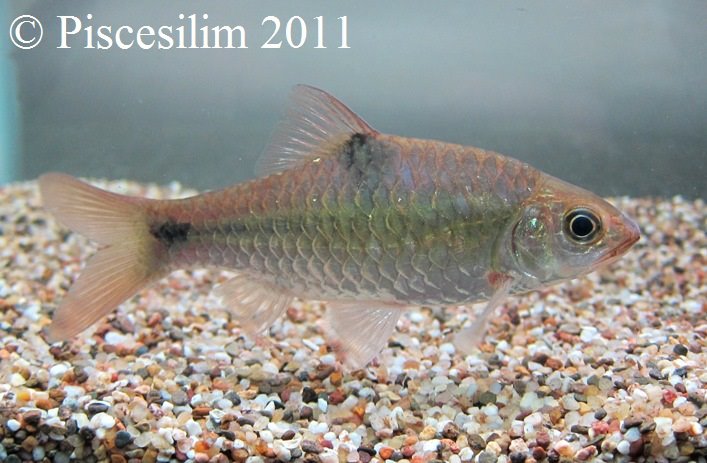
Barbodes binotatusSpotted Barb
Valenciennes, 1842
Max length200mm SL8in SLTank120 × 45cm48 × 18inTemp18–30°C64–86°FpH6.0–7.5This species is so ubiquitous across its natural range that it's often referred to simply as 'common barb'. Basic adult colour pattern consists of a small, dark spot at the base of the dorsal-fin origin and another on the caudal peduncle but overall appearance varies somewhat depending on origin, with the anterior dark spot enlarged ventrally forming a bar or posterior spot extending into the caudal-fin, for example. The spots may also appear darker or lighter in some individuals.
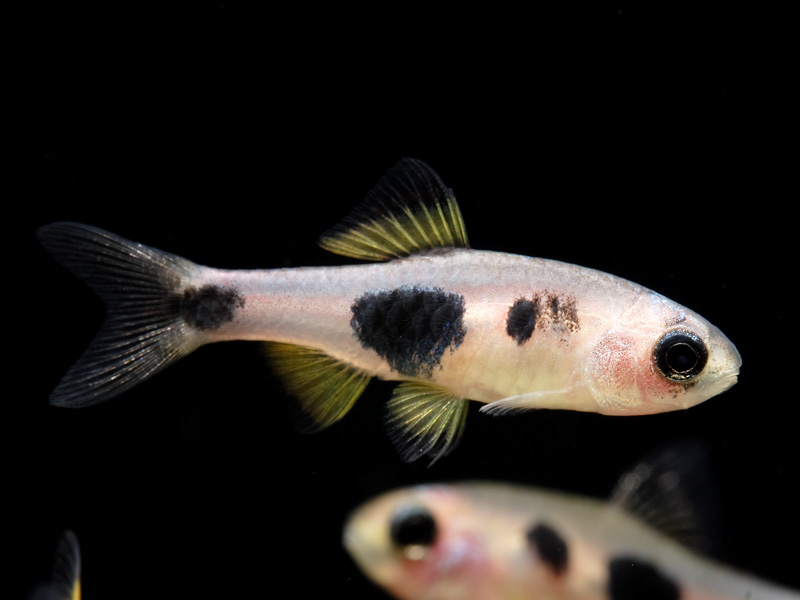
'Barbus' hulstaertiAfrican Butterfly Barb
Poll, 1945
Max length35mm SL1.4in SLTank45 × 30cm18 × 12inTemp17–24°C63–75°FpH5.0–6.5Two closely-related species are also found in the Congo basin and infrequently seen in the trade. 'B.' candens has been collected northeast of the range of 'B.' hulstaerti around the city of Kisangani (formerly Stanleyville) and nearby town of Yangambi. It can be distinguished from 'B.' hulstaerti by its paler body colouration, smaller dark markings on the body and red ventral and anal fins in males. 'B.' papillo is known only from its type locality close to the eastern town of Kindu between the Lualaba and Lomami rivers. It has an elongated central body marking and males possess black dorsal, ventral and anal fins.
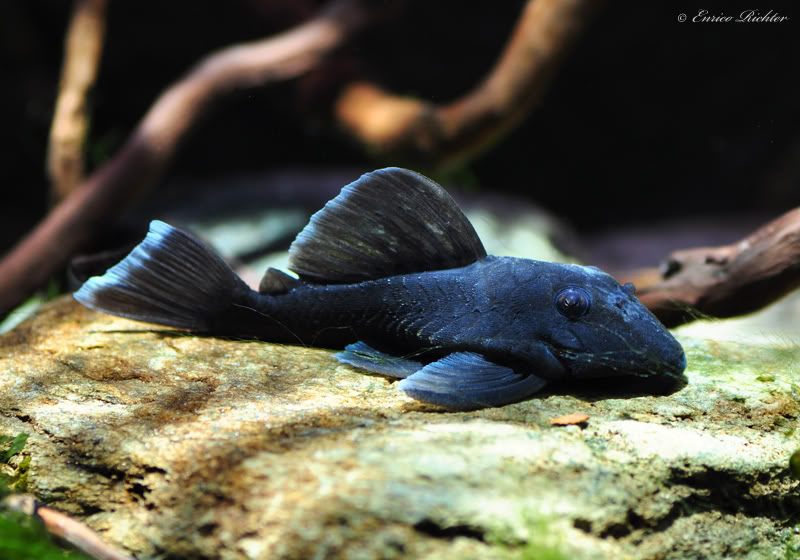
Baryancistrus begginiL239
Lujan, Arce & Armbruster, 2009
Max length81mm SL3.2in SLTank80 × 30cm31 × 12inTemp26–30°C79–86°FpH5.5–7.5Prior to description this species was traded under the DATZ code L239. It can be distinguished from other species in the genus and other hypostomines (see below for definition of this grouping) by its uniformly black to brownish body and fin colouration with a turquoise to bluish sheen, and the acutely bent shape of midventral body plates 3-5 which form a distinctive keel running along the body, above the pectoral fins...
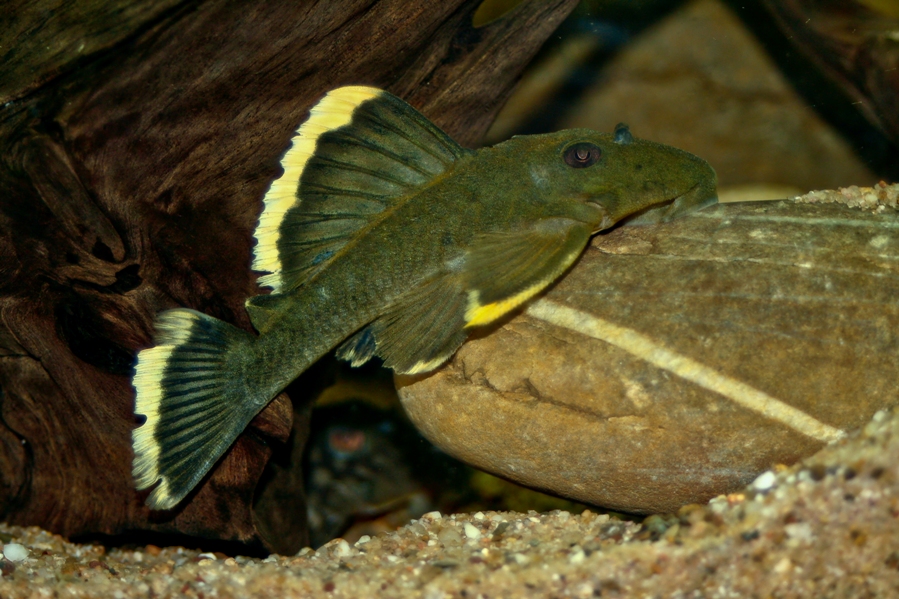
Baryancistrus chrysolomusMango Pleco
Rapp Py-Daniel, Zuanon & Ribeiro de Oliveira, 2011
Max length219mm SL9in SLTank120 × 45cm48 × 18inTemp27–32°C81–90°FpH6.0–7.5Prior to description this species was traded under the DATZ code L047 or the alternative vernacular name 'magnum pleco'. It can be distinguished from congeners by a combination of the following characters: presence of a broad, light-coloured (usually yellowish) distal band on the dorsal and caudal fins throughout life, slightly reduced in adults. The only other member of the genus to possess such bands is B. xanthellus but in that species they are reduced to small markings at the fin tips in adults, and the body is covered in pale, normally yellowish, spots.
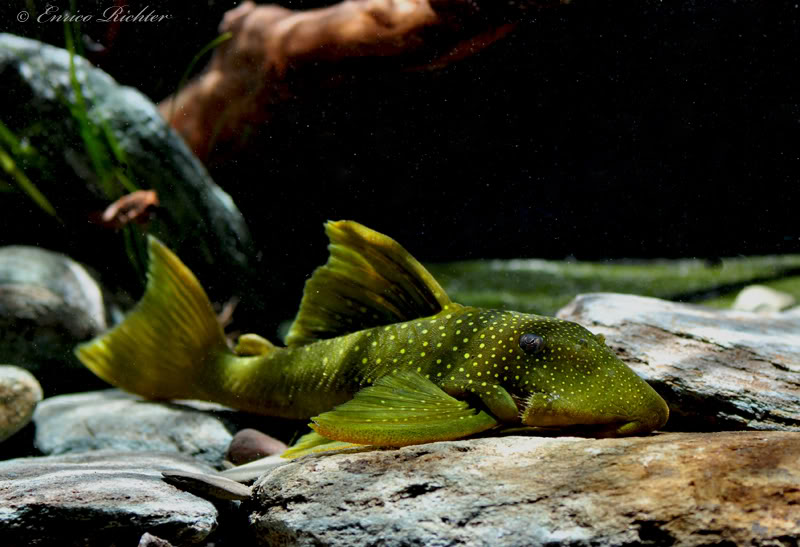
Baryancistrus demantoidesGreen Phantom Pleco
Werneke, Sabaj Pérez, Lujan & Armbruster, 2005
Max length151mm SL6in SLTank120 × 45cm48 × 18inTemp26–30°C79–86°FpH5.5–7.5This species is very similar to Hemiancistrus subviridis in appearance and the two occur sympatrically in nature, although B. demantoides is less common in the aquarium trade. Both have been marketed under the DATZ code L200 with B. demantoides sometimes referred to as 'L200 high-fin' or 'L200a', the former name in reference to its comparatively long dorsal-fin spine (average length in the type series 42.1 mm vs. 34.3 mm in H. subviridis).