Results for “river”
Type a name: scientific, common, or one a species used to go by. Or narrow the catalogue with the filters.
Filters
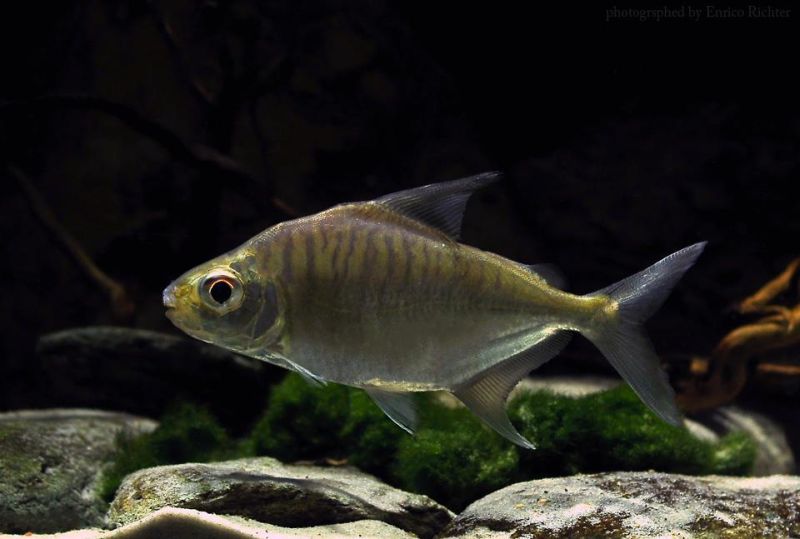
Acnodon normaniSheep Pacu
Gosline, 1951
Max length135mm SL5in SLTank150 × 45cm60 × 18inTemp22–28°C72–82°FpH5.5–7.5Known only from the lower Amazon river basin, and possibly restricted to the Xingu and Tocantins watersheds. Type locality is ' Rio Santa Teresa, a western tributary of upper Rio Tocantins, Goiaz State, Brazil', referring to what is now known as Goiás state, central Brazil.
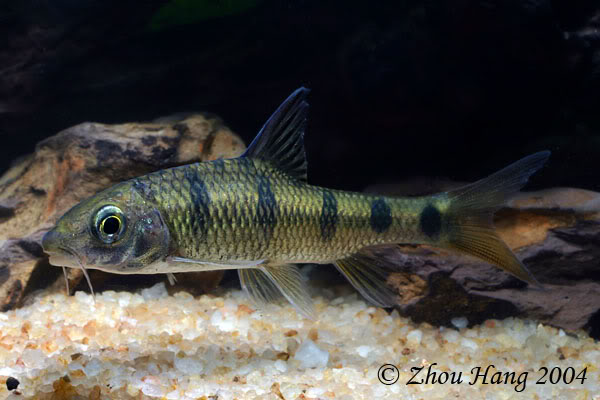
Acrossocheilus beijiangensis
Wu & Lin, 1977
Max length131mm SL5in SLTanknot recordedTempnot recordedpHnot recordedRecorded from Fujian, Guangdong, and Guangxi provinces in southwestern China, plus the islands of Hainan and Hong Kong. Type locality is 'Lian-Xian and Yang-Shan, Guangdong, China', corresponding to the Bei River drainage.
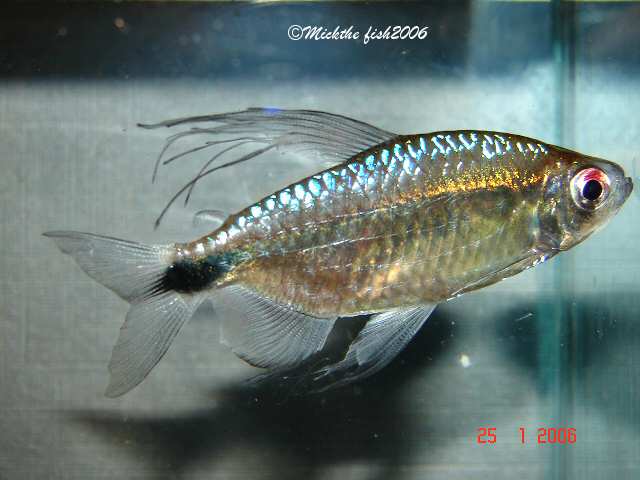
Alestopetersius smykalaiBlue Diamond Tetra
Poll, 1967
Max length60mm SL2.4in SLTank120 × 30cm48 × 12inTemp20–28°C68–82°FpH5.0–7.0This species appears to be restricted to the Imo and Niger drainages in Nigeria but the full extent of its distribution is unclear. Type locality is 'Aba, Lower Niger, Nigeria', corresponding to the city of Aba in Abia state, southern Nigeria which lies on the Aba River, a tributary of the Imo. Nigeria has lost 95 % of its original rainforest cover, num...
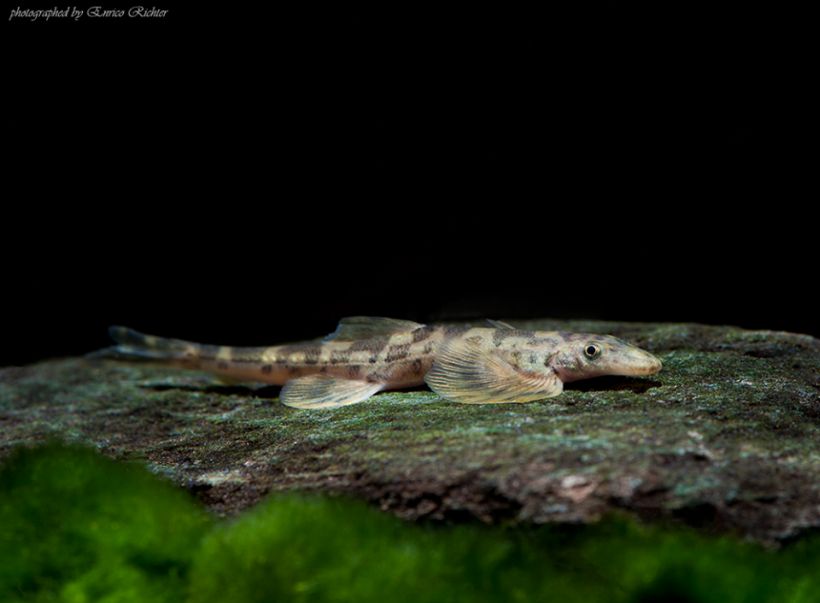
Annamia normaniVietnamese Giraffe Loach
Hora, 1931
Max length100mm SL3.9in SLTank120 × 30cm48 × 12inTemp16–22°C61–72°FpH6.0–7.5Traditionally considered to be a micropredator feeding on insect larvae and suchlike (Rainboth, 1996), but a study by Herder and Freyhof (2006) revealed adult A. normani inhabiting the Duc My River in central Vietnam to be specialised grazers of cyanobacteria. In rapids the latter form hard encrustations on rock surfaces from which adults are able to bite chunks.
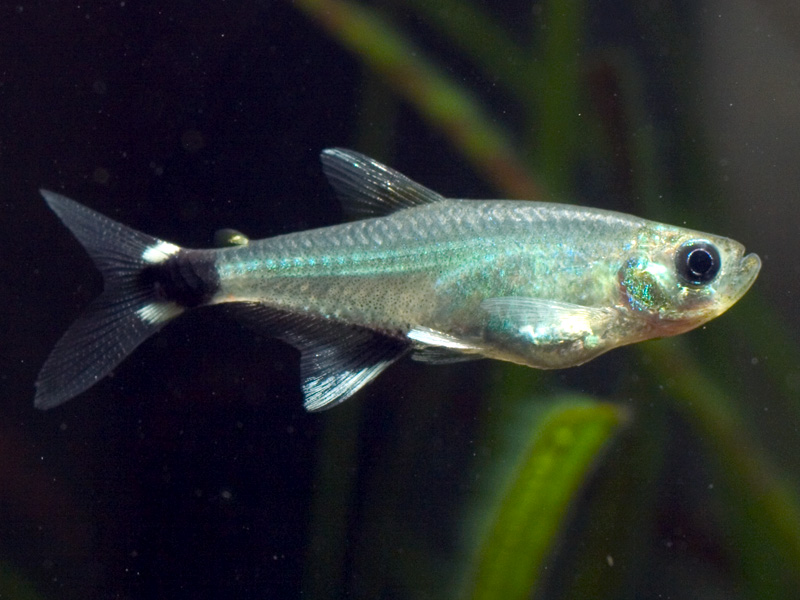
Aphyocharax nattereriDawn Tetra
Steindachner, 1882
Max length35mm SL1.4in SLTank60 × 30cm24 × 12inTemp22–27°C72–81°FpH5.5–7.5This species is normally referred to as A. paraguayensis, but that name has been considered a synonym of A. nattereri since 2003. Confusion remains however, as the type locality for the latter is 'Villa Bella', now known as Parintins, a settlement on the main Amazon river channel between Manaus and Santarém and many kilometres away from the majority of confirmed localities.
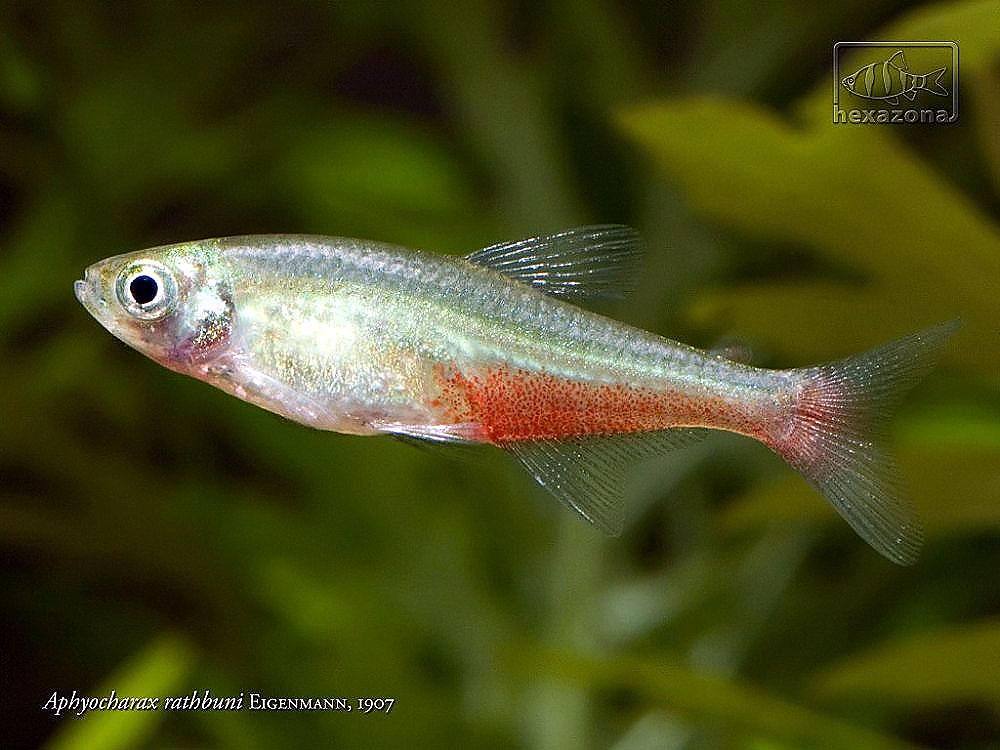
Aphyocharax rathbuniGreen Fire Tetra
Eigenmann, 1907
Max length45mm SL1.8in SLTank60 × 30cm24 × 12inTemp20–26°C68–79°FpH6.5–7.5Endemic to the Paraguay, Paraná and Uruguay river drainages in Brazil, Paraguay, Argentina and Uruguay. The smallest of the three Aphyocharax species seen in the hobby, the redflank is relatively uncommon in the hobby in the aquarium trade. It is also known as the Green Fire Tetra.
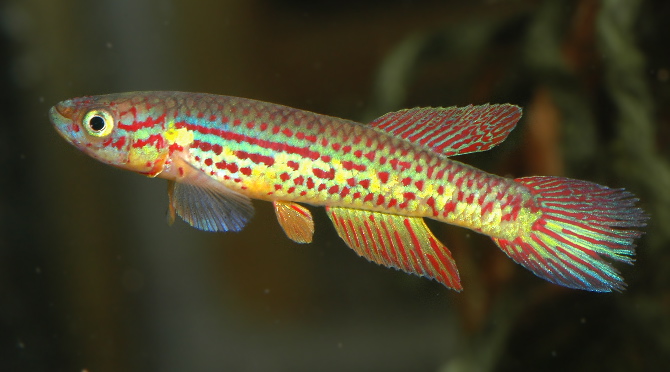
Aphyosemion bochtleriBochtler's Lyretail
Radda, 1975
Max length50mm SL2.0in SLTanknot recordedTemp18–22°C64–72°FpH6.0–7.0Described from a rainforest stream near the settlement of Mintoum, northern Gabon and has a wider distribution in the upper Ivindo River basin, a tributary of the larger Ogooué system. Thi species was considered synonymous with the congener A. herzogi Radda 1975 for a number of years but is currently recognised as distinct.
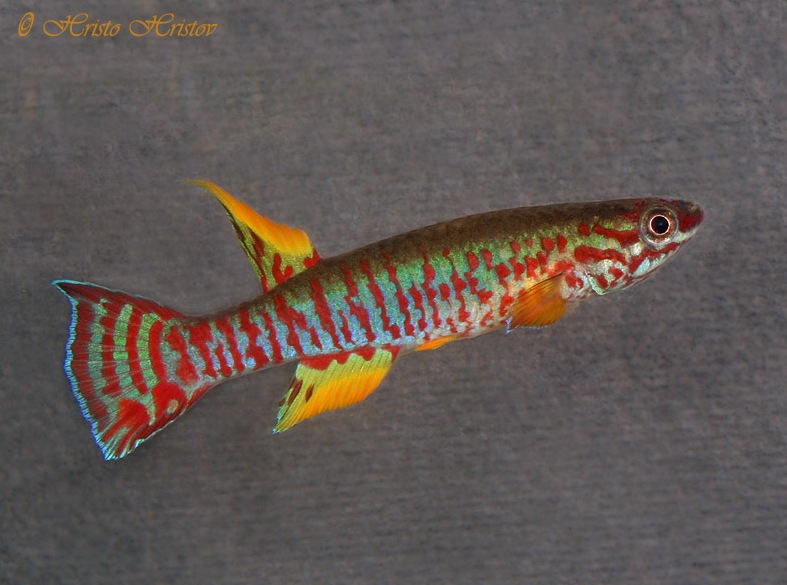
Aphyosemion bualanumBouala Lyretail
Ahl, 1924
Max length50mm SL2.0in SLTanknot recordedTempnot recordedpHnot recordedDescribed from 'Buala, Cameroon', which corresponds to modern-day Bouala in Central African Republic. It's known distribution includes parts of northern Cameroon, western Central African Republic, southeastern Chad and possibly eastern Nigeria in the upper Benue and Mayo Kébbi river systems. The specific name was mis-used to refer to various populations of the congener A. elberti prior to 1990, and we've been unable to confirm if the specimen pictured here is correctly identified or not. It is listed as 'endangered' by the IUCN.
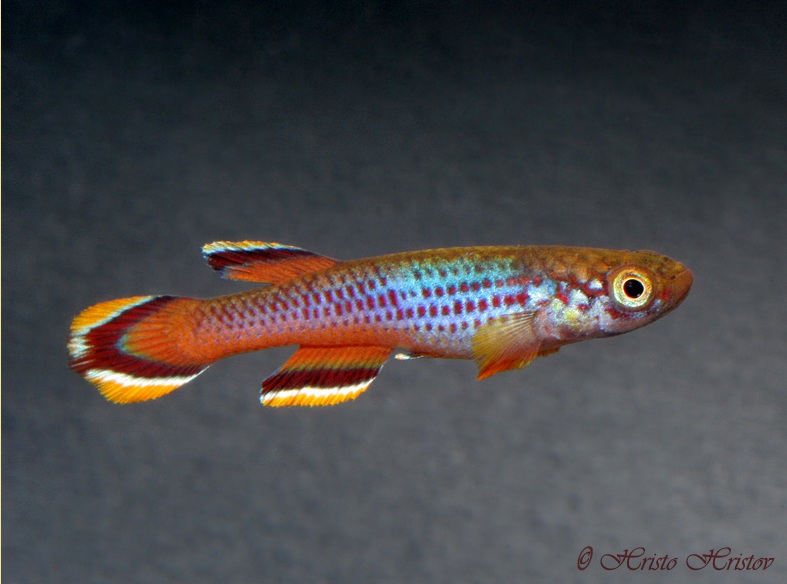
Aphyosemion celiaeCelia's Lyretail
Scheel, 1971
Max length65mm SL2.6in SLTanknot recordedTemp20–26°C68–79°FpH6.0–7.6Described from a small stream in Mambanda, near Kumba, western Cameroon, and appears restricted to parts of the central Mungo River basin in that region.
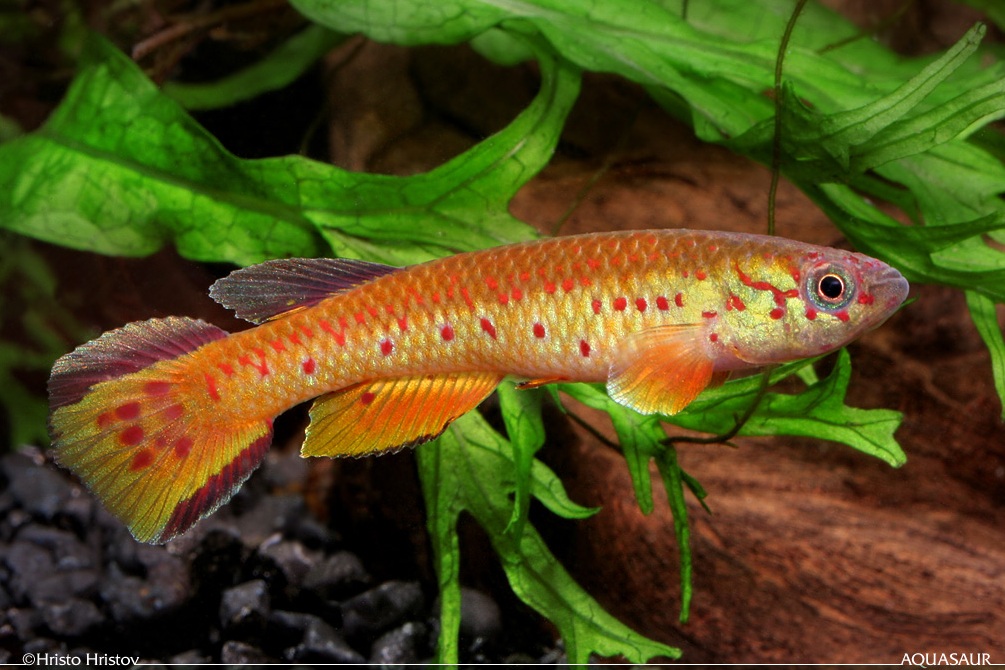
Aphyosemion congicumCongo Lyretail
Ahl, 1924
Max length45mm SL1.8in SLTanknot recordedTempnot recordedpHnot recordedThe type series was derived from a commercial shipment and this species' natural range remains unconfirmed. It may be restricted to the area between the Kwango and Gamba rivers, the latter a tributary of the former, in western Democratic Republic of Congo. The Kwango is itself a tributary of the Kasai, an affluent of the Congo.
Aphyosemion loennbergiiLönnberg's Lyretail
Boulenger, 1903
Max length50mm SL2.0in SLTanknot recordedTemp18–22°C64–72°FpH6.0–7.0Described from the 'Kribi', now known as Kienké, river, southwestern Cameroon and has a wider distribution in the region, occurring in the Lokundje and Nyong drainages.
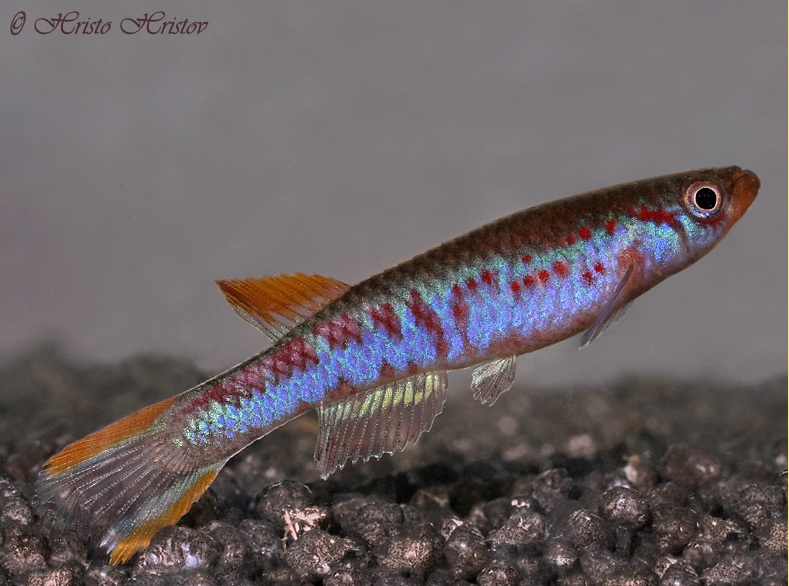
Aphyosemion mimbon
Huber, 1977
Max length45mm SL1.8in SLTanknot recordedTemp18–22°C64–72°FpH5.5–6.5Described from a minor tributary of the Mvé River running through the village of Akoga, northwestern Gabon and has been recorded in other headwater drainages of the region including the Abanga, Mbei, Komo and Nkam. May occur across the border in southeastern Equatorial Guinea.
Aphyosemion rectogoense
Radda & Huber, 1977
Max lengthnot recordedTanknot recordedTemp20–26°C68–79°FpH5.0–6.5Known only from the Batéké plateau region and surrounding area in southeastern Gabon where it's been recorded from the Léconi-Djouya and upper Mpassa rivers, these forming a portion of the much larger Ogooué basin. Type locality is '6 km west of Léconi', the latter presumably referring to the settlement of that name.
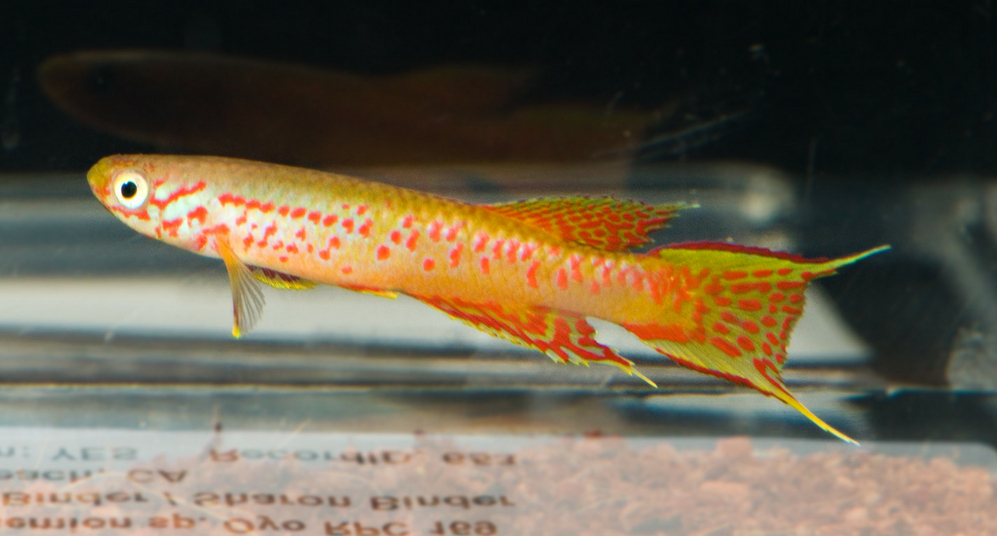
Aphyosemion sp. 'Oyo' RPC 91/8
authority not recorded
Max length50mm SL2.0in SLTank45 × 30cm18 × 12inTemp18–23°C64–73°FpH5.5–7.0This fish may be synonymous with the congener A. castaneum. Collected for the aquarium hobby in 1991 from close to the town of Oyo, Cuvette department, Republic of the Congo. The town lies on the Alima River, a right bank tributary of the middle Congo system.
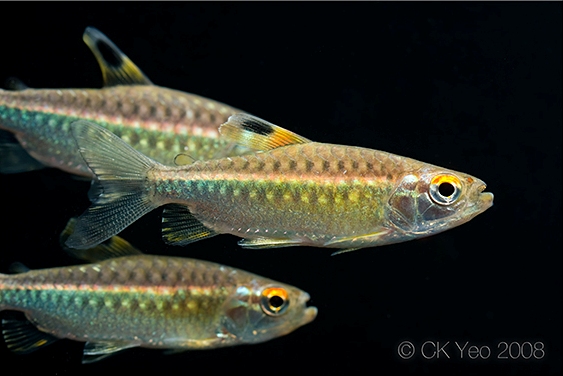
Arnoldichthys spilopterusAfrican Red-eyed Tetra
Boulenger, 1909
Max length100mm SL3.9in SLTank120 × 30cm48 × 12inTemp24–27°C75–81°FpH6.0–7.5Endemic to Nigeria, where it occurs in the Ogun and lower Niger river systems. Despite its popularity in the aquarium hobby it's relatively scarce in the wild and is known from less than 10 localities, all lying in an area where deforestation and pollution are uncontrolled and continue to occur extensively.
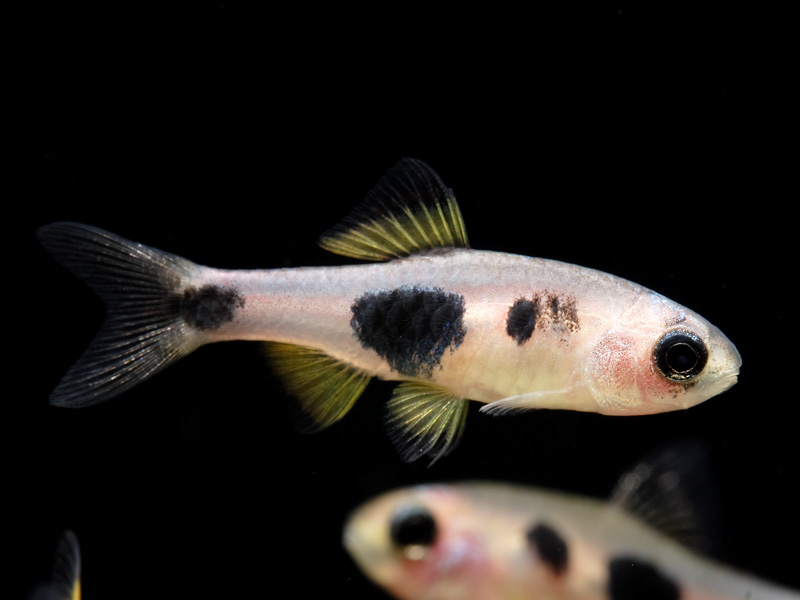
'Barbus' hulstaertiAfrican Butterfly Barb
Poll, 1945
Max length35mm SL1.4in SLTank45 × 30cm18 × 12inTemp17–24°C63–75°FpH5.0–6.5Two closely-related species are also found in the Congo basin and infrequently seen in the trade. 'B.' candens has been collected northeast of the range of 'B.' hulstaerti around the city of Kisangani (formerly Stanleyville) and nearby town of Yangambi. It can be distinguished from 'B.' hulstaerti by its paler body colouration, smaller dark markings on the body and red ventral and anal fins in males. 'B.' papillo is known only from its type locality close to the eastern town of Kindu between the Lualaba and Lomami rivers. It has an elongated central body marking and males possess black dorsal, ventral and anal fins.
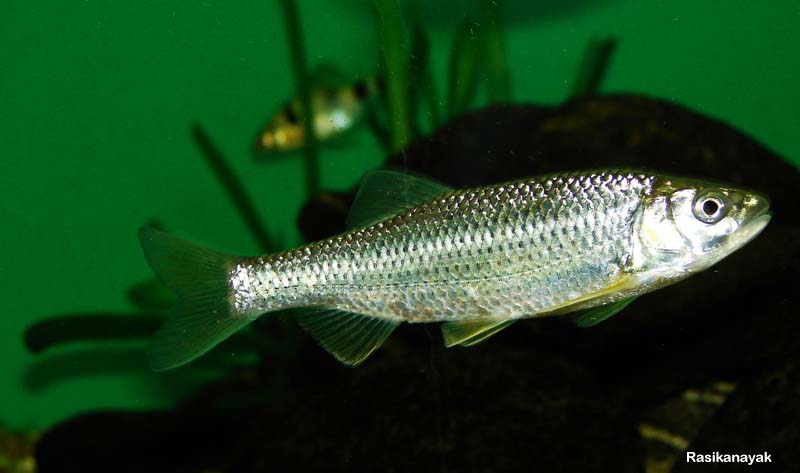
Barilius bendelisis
Hamilton, 1807
Max length200mm SL8in SLTank180 × 60cm72 × 24inTemp18–26°C64–79°FpH6.0–8.0Type locality is given as 'Cedawáti [Vedawati] stream, headwaters of Krishna River near Heriuru, Mysore, India', with the species currently considered to occur throughout India, Bangladesh, Nepal, and probably Bhutan. It's also been recorded in Pakistan, Myanmar, Thailand and Sri Lanka although some or all of these reports may refer to other species.
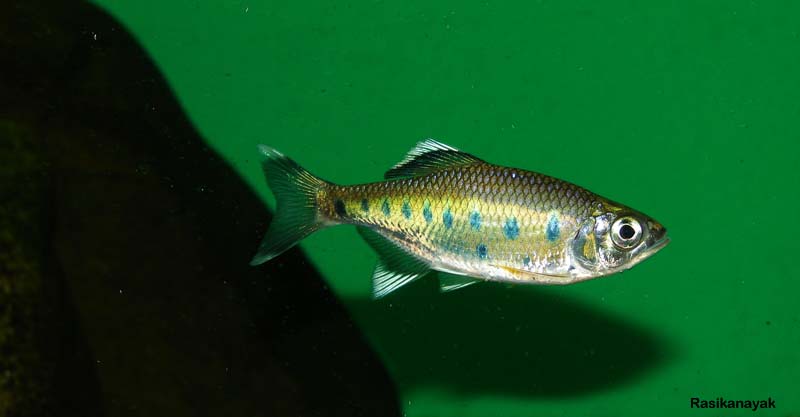
Barilius canarensis
Jerdon, 1849
Max length130mm SL5in SLTank150 × 60cm60 × 24inTemp18–26°C64–79°FpH6.0–7.5Type locality is 'Canara, southern India', which corresponds to a coastal region of approximately 300 km in length covering several districts of Karnataka and Kerala states, southwestern India. Rivers in this area drain the Western Gha...
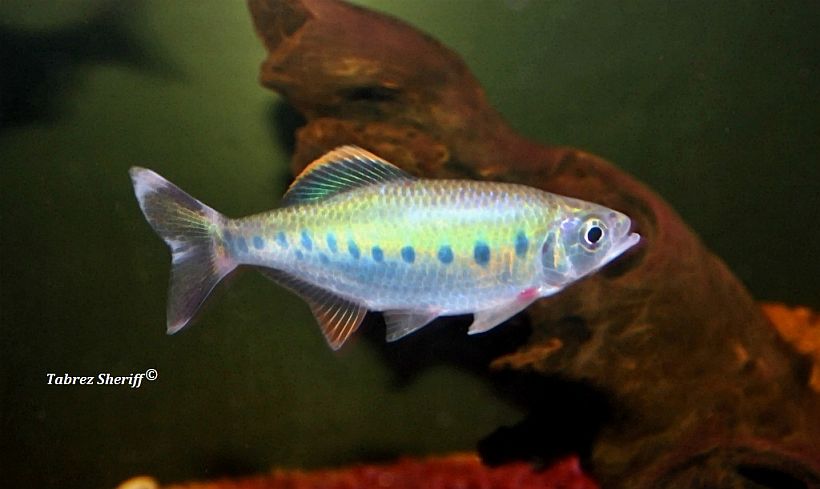
Barilius malabaricus
Jerdon, 1849
Max length105mm SL4in SLTank150 × 60cm60 × 24inTemp18–26°C64–79°FpH6.0–7.5Probably restricted to southern parts of Karnataka state and northern Kerala state in southwestern India. Following its revalidation in 2015 (see 'Notes') it is known with certainty only from the Payaswini and Vallapattanam river systems in Kerala although it is thought to occur elsewhere.
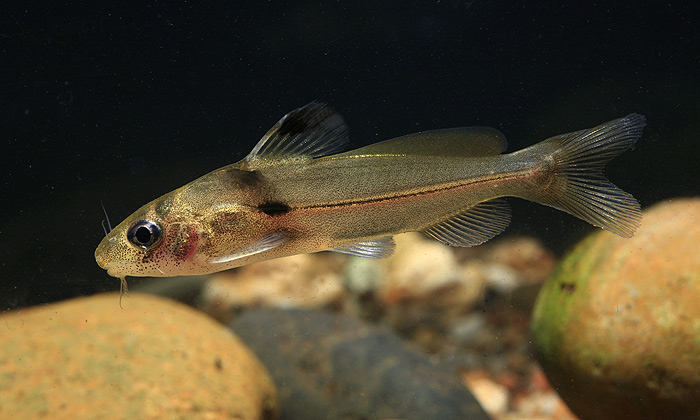
Batasio feruminatus
Ng & Kottelat, 2008
Max length60mm SL2.4in SLTank90 × 30cm36 × 12inTemp16–24°C61–75°FpH6.0–7.0Batasio spp. are obligate inhabitants of headwater streams and the upper reaches of smaller rivers characterised by shallow, fast-flowing, highly-oxygenated stretches of riffles and runs broken up by pools or cascades in some cases. Images of the Ataran correspondingly depict flowing sections of forest-shaded, seemingly well-oxygenated headwaters containing clear water, a mixed sand/rock substrate and lots of submerged driftwood/leaf litter.