Results for “scale”
Type a name: scientific, common, or one a species used to go by. Or narrow the catalogue with the filters.
Filters
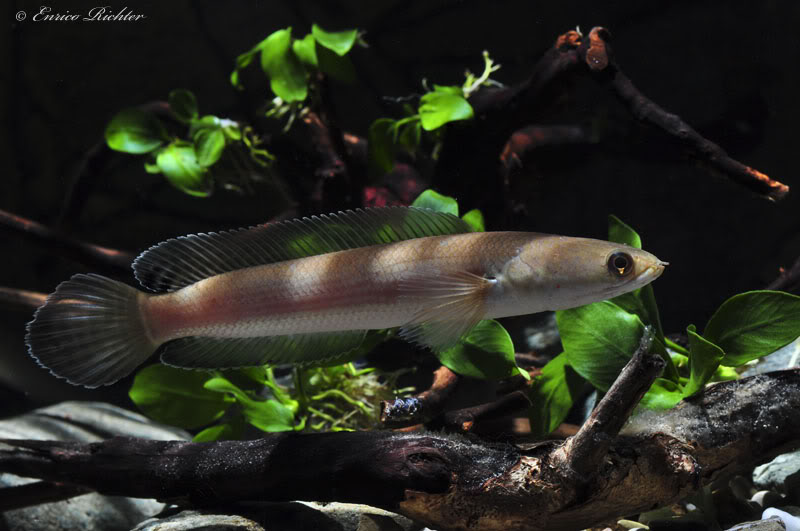
Channa melasomaBlack Snakehead
Bleeker, 1851
Max length300mm SL12in SLTank120 × 45cm48 × 18inTemp22–32°C72–90°FpH4.0–7.0This species can be told apart from the similar-looking congener C. baramensis (once considered synonymous with C. melasoma) by absence (vs. presence) of a black spot in the centre of numerous body scales and absence (vs. presence in specimens larger than 120 mm SL) of a barred caudal-fin pattern.
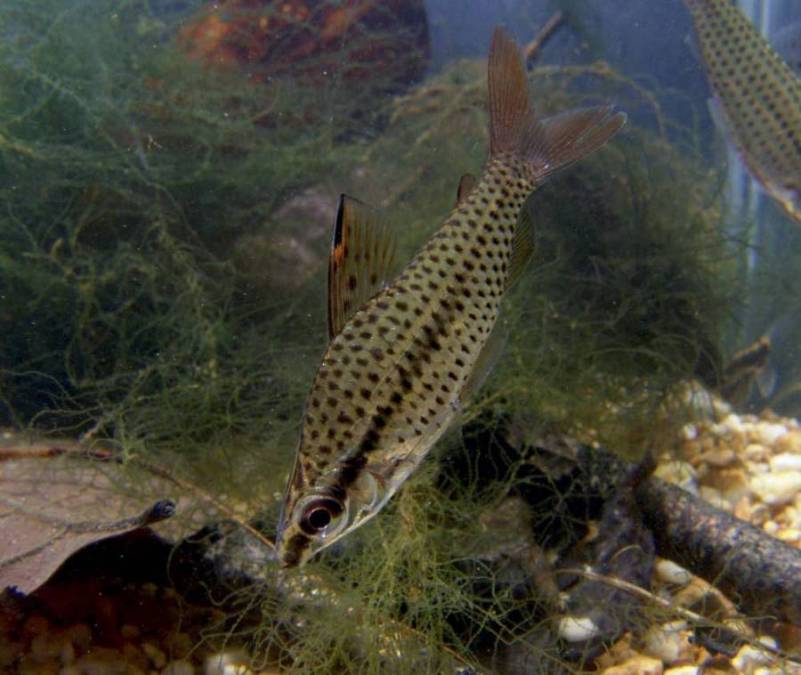
Chilodus punctatusSpotted Headstander
Müller & Troschel, 1844
Max length80mm SL3.1in SLTank90 × 30cm36 × 12inTemp20–28°C68–82°FpH5.0–7.5Omnivorous and will accept most foods offered, with the stomach contents of wild specimens varying on a seasonal basis but mostly comprising insects and insect larvae (orders Trichoptera, Hemiptera, Homoptera) plus some terrestrial fruits and even scales of other fishes (Sánchez et al., 2003). In the aquarium offer live Daphnia, Artemia, Moina, bloodowrm, etc., vegetable matter in the form of blanched spinach, lettuce, cucumber, fruit, algae wafers, etc., and good quality, sinking dried foods.
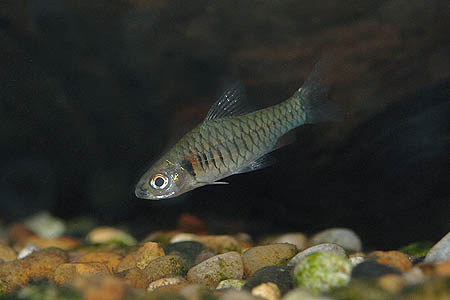
Clypeobarbus congicusCongo Barb
Boulenger, 1899
Max length60mm SL2.4in SLTank90 × 30cm36 × 12inTemp22–26°C72–79°FpH6.0–7.0Clypeobarbus was originally put forward as a subgenus of Barbus by Fowler in 1936 on the basis that member species possessed a midlateral row of enlarged, shield-like scales but he only included the type species 'Barbus' kemoensis (now a junior synonym of Clypeobarbus pleuropholis) in the group. Subsequent work by Poll and Lambert (1961), Jubb (1965) and Skelton (1993) resulted in several additional species being placed into the grouping although it appears that little of this work was widely-recognised until the recent study was published.
Colossoma macropomumBlack Pacu
authority not recorded
Max length600mm SL24in SLTank300 × 90cm118 × 36inTemp22–28°C72–82°FpH5.5–7.5Known as the tambaqui in its native countries, this is the second largest species of scaled fish found in the Amazon basin. This alone should tell you much of what you need to know about its suitability as an aquarium inhabitant. In reality, it's debatable as to whether the species should be considered an aquarium subject at all. While pacu rarely reach their maximum size in captivity, they're still easily capable of growing to a couple of feet in length. The myth that fish will only g...
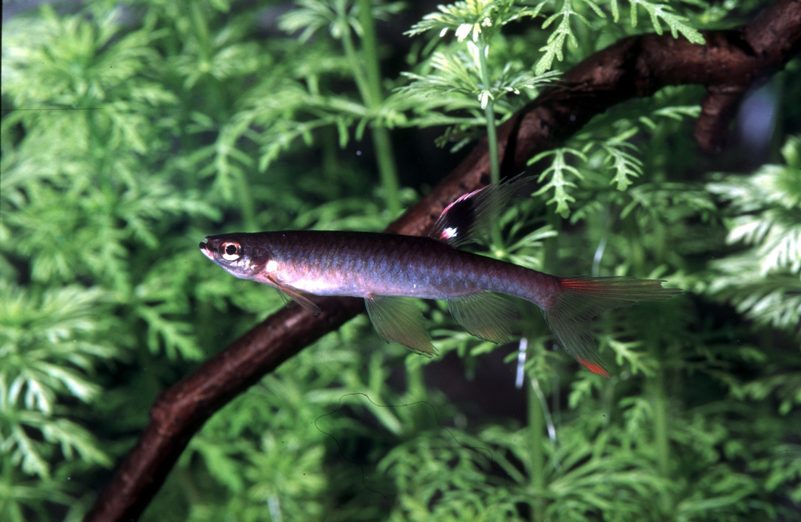
Copella carsevennensis
Regan, 1912
Max length40mm SL1.6in SLTank75 × 30cm30 × 12inTemp20–28°C68–82°FpH4.0–7.0C. carsevennensis has formerly been synonymised with C. arnoldi but was considered separate by Zarske (2011) using the following combination characters: absence (vs. presence) of a silvery-white to white patch in the centre of some of the flank scales in males, particularly in the lower half of the body; absence (vs. presence) of a horizontal dark body bar in nuptial males; absence (vs. presence) of thin black margins in the dorsal, ventral and anal fins; eggs deposited among submerged vegetation (vs. eg...
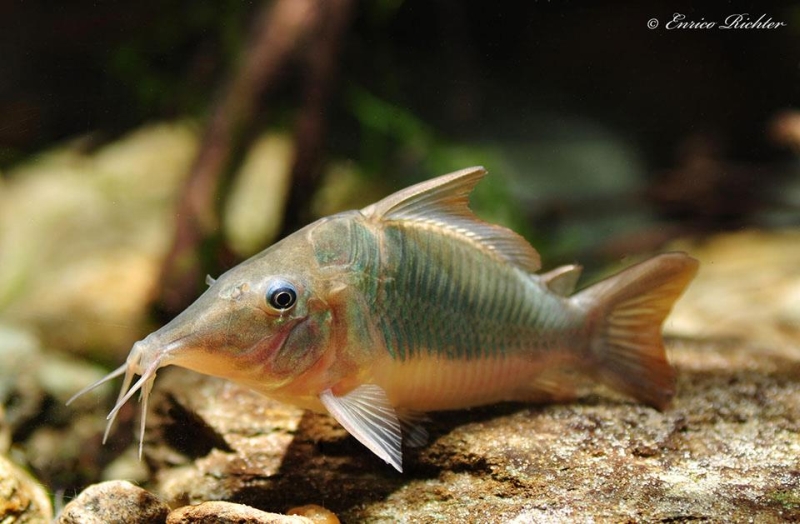
Corydoras multiradiatusHognose 'Brochis'
Orcés V., 1960
Max length100mm SL3.9in SLTank120 × 45cm48 × 18inTemp20–26°C68–79°FpH6.0–7.5The genus is included in the family Callichthyidae, of which members are often referred to collectively as 'armoured' or 'mailed' catfishes group due to the presence of bony plates in place of scales on the body. Their taxonomy can be confusing, and numerous undescribed species are also thought to exist.
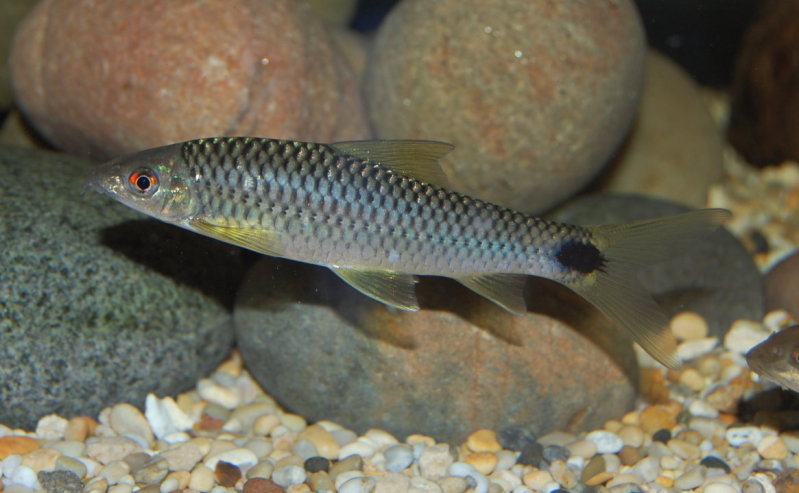
Crossocheilus reticulatus
Fowler, 1934
Max length170mm SL7in SLTank180 × 45cm72 × 18inTemp16–24°C61–75°FpH6.0–7.5While some laterally-striped members of the genus look very similar to one another the combination of silvery body, dark-edged scales and dark caudal peduncle blotch set C. reticulatus uniquely apart. The names Crossocheilus tchangi, Epalzeorhynchos coatesi and E. stigmaeus are all now considered synonyms of the species but were erected because the fish vary, most often in minor aspects of patt...
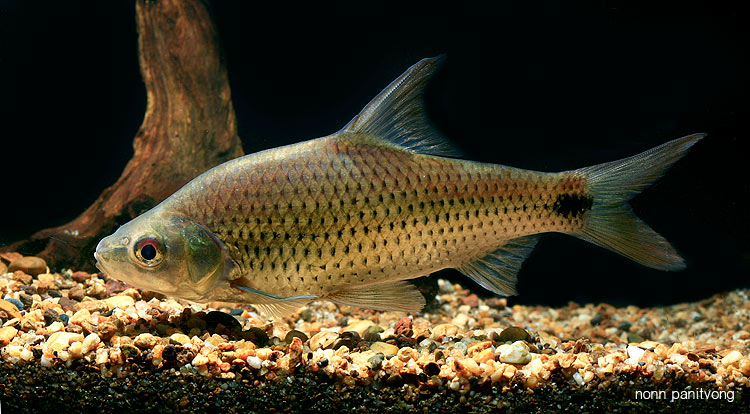
Cyclocheilichthys armatus
Valenciennes, 1842
Max length230mm SL9in SLTank180 × 60cm72 × 24inTemp20–26°C68–79°FpH6.0–8.0It can be distinguished from congeners by possessing one or two pairs of barbels, a black blotch at the base of the caudal-fin, and rows of dark spots along the lateral scale rows. Members of Cyclocheilichthys are characterised by possessing a serrated dorsal fin spine, 9 branched pelvic fin rays, a conical snout, small, subterminal...
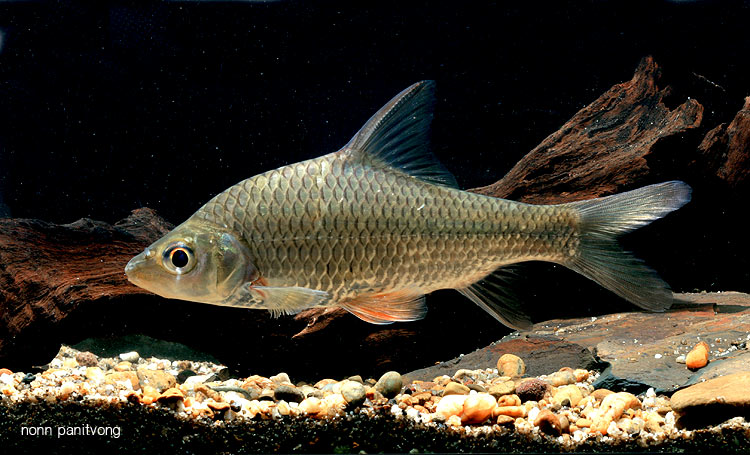
Cyclocheilichthys lagleri
Sontirat, 1985
Max length200mm SL8in SLTank180 × 60cm72 × 24inTemp20–26°C68–79°FpH6.0–8.0As with others in the genus little has been written regarding captive care of this species, but it makes a peaceful and unusual addition to larger aquaria. The best way of obtaining it may be to keep an eye on shipments of wild fishes from Indochina. It can be distinguished from congeners by possessing 20 circumpeduncular scales and lacking barbels entirely.
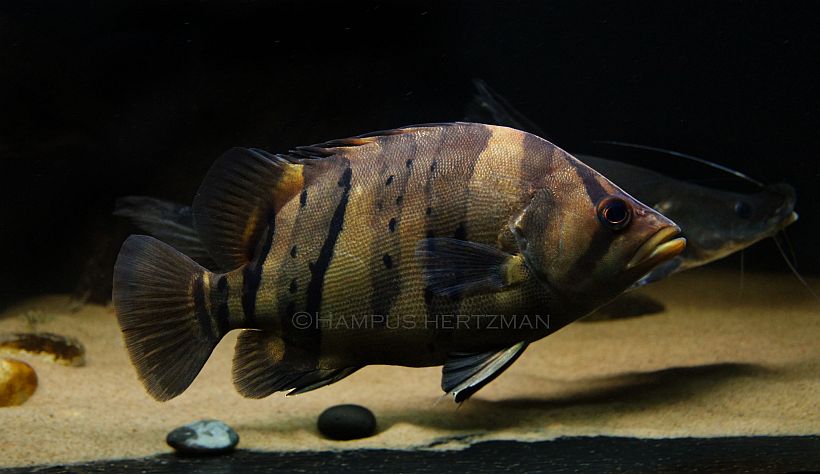
Datnioides microlepisIndonesian Tiger Perch
Bleeker, 1854
Max length500mm SL20in SLTanknot recordedTemp20–28°C68–82°FpH5.5–7.5In aquarium literature this species is also referred to as 'fine scaled tiger fish', 'Indonesian tiger fish', 'Sumatran tiger fish', 'Indo datnoid', and 'Indo dat'. The common name of 'tiger fish' is also used in reference to the African alestid genus Hydrocynus, and the more appropriate 'tiger perch' was suggested by Roberts and Kottelat (1994).
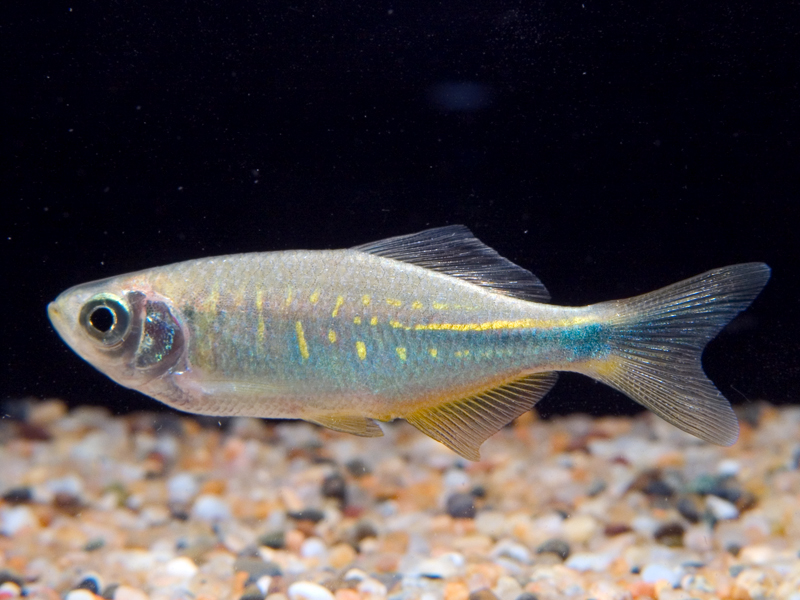
Devario devarioBengal Danio
Hamilton, 1822
Max length80mm SL3.1in SLTank120 × 45cm48 × 18inTemp15–26°C59–79°FpH6.0–8.0Ecological studies have revealed this species to be more of a generalist than its chiefly insectivorous congeners. Aquatic and terrestrial insects form a significant proportion of the diet, but substantial amounts of filamentous algae and diatoms are consumed with water mites, fish scales, isopods, nematodes and detritus also taken occasionally. In the aquarium it's largely unfu...
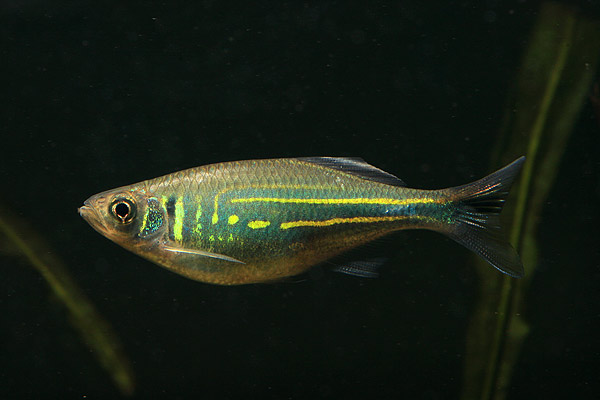
Devario malabaricusGiant 'Danio'
Jerdon, 1849
Max length80mm SL3.1in SLTank120 × 45cm48 × 18inTemp18–25°C64–77°FpH6.0–8.0This species is frequently confused with the congener D. aequipinnatus auct. but their identitities are in a state of confusion, particularly that of the latter. There are however a handful of characters which separate these two nominal species from one another. D. malabaricus possesses a moderately deep body, 35-38 scales in the lateral se...
Exodon paradoxusBucktooth Tetra
authority not recorded
Max length150mm SL6in SLTank120 × 45cm48 × 18inTemp23–28°C73–82°FpH5.5–7.5The genus Exodon is currently monotypic, with this single species having uniquely designed teeth. These allow it to rip the scales from other species. It's an ideal choice for those wishing to keep a large shoal of a predatory species without possessing the massive amount of tank space needed for a shoal of piranha or similar. A tank full of these makes for a very colourful and active display....
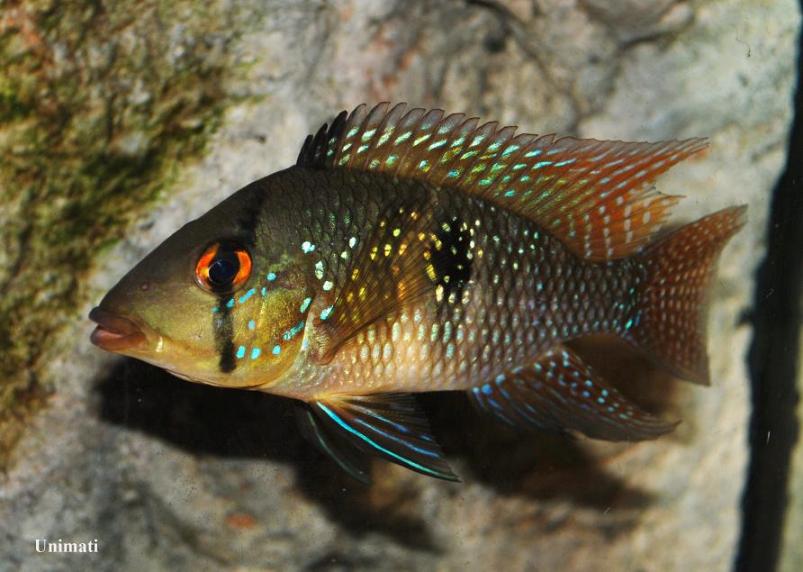
'Geophagus' brasiliensisPearl Cichlid
Quoy & Gaimard, 1824
Max length250mm SL10in SLTank150 × 45cm60 × 18inTemp18–28°C64–82°FpH6.0–8.0This species is also known as the 'pearlscale' or 'mother-of-pearl' cichlid in deference to the iridescent body scaling. It's also worth noting that fishes sold as Gymnogeophagus australis in Europe are 'G.' brasiliens is more often than not. Wild specimens exhibits significant dissimilarities in body colour and patterning depending on locality with basic colouration being dominated by varying shades of blue, green or yellow, for example. Some populations al...
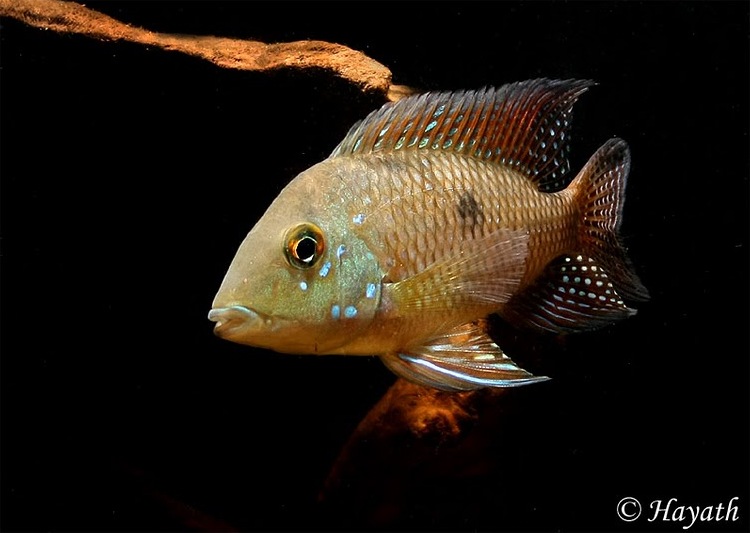
'Geophagus' iporangensis
Haseman, 1911
Max length100mm SL3.9in SLTank120 × 30cm48 × 12inTemp20–26°C68–79°FpH6.0–7.0Juvenile specimens of this species are readily confused with those of other members of the 'G.' brasiliensis species group, but adults are easily-distinguished by their relatively smaller adult size and comparative lack of reflective blue scales on the body and head. The genus Geophagus was rediagnosed by Kullander (1986) who restricted it to include only those species with paired caudal extensions to the swi...
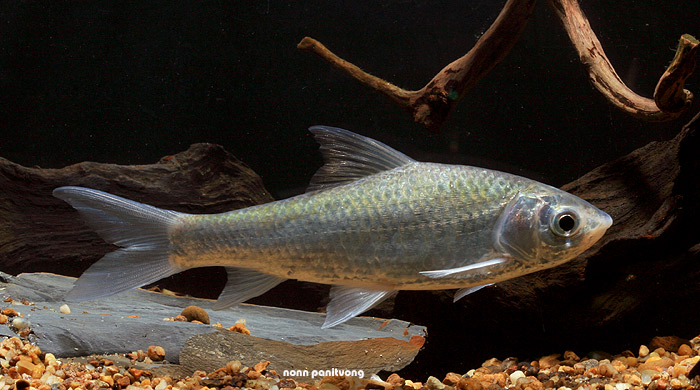
Gymnostomus siamensisSiamese Mud Carp
Sauvage, 1881
Max length150mm SL6in SLTanknot recordedTempnot recordedpHnot recordedG. siamensis can be distinguished from congeners by the following combination of characters: possession of 5½ lateral line scales; body relatively deep, depth fits 3.2-3.4 times in SL; head large and broad, width fits 5.5-6.7 times in SL; snout not or only weakly projecting; body plain silver in colour with no dark marking on caudal peduncle.
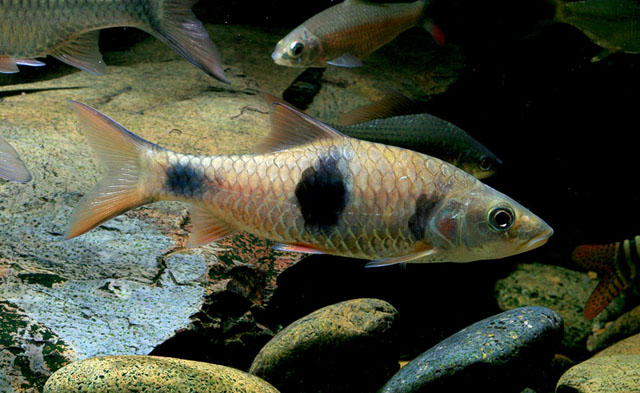
Hampala salweenensis
Doi & Taki, 1994
Max length201mm SL8in SLTank240 × 60cm96 × 24inTemp20–26°C68–79°FpH6.0–8.0This species is poorly-known in the aquarium hobby and may have never been maintained outside its native countries. It can be distinguished from congeners by the following combination of characters: 26-27 lateral line scales; two roundish, dark blotches on each flank, one beneath dorsal-fin origin and above the lateral line, the other on the caudal peduncle and passing thro...
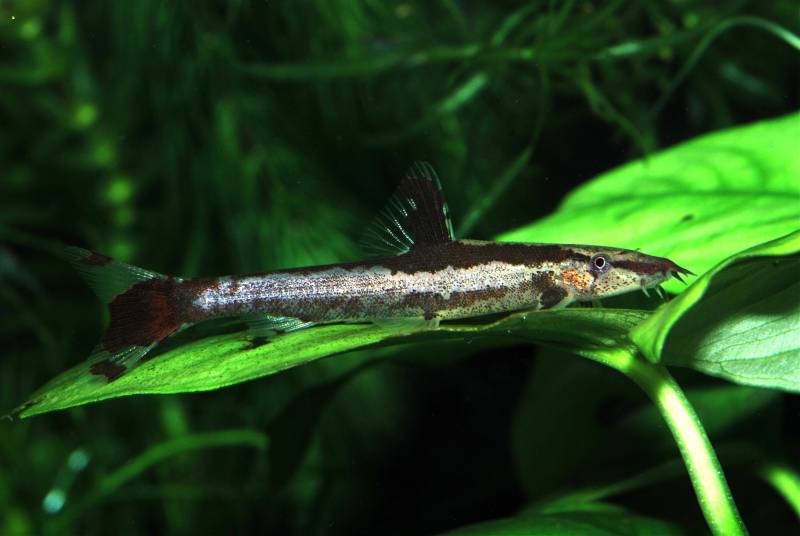
Homaloptera bilineata
Blyth, 1860
Max length100mm SL3.9in SLTank120 × 30cm48 × 12inTemp20–25.5°C68–78°FpH6.0–7.5This rarely-traded species is a member of the H. ocellata 'group' of closely-related congeners, an assemblage which currently comprises H. ocellata, H. bilineata, H. confuzona, H. orthogoniata, H. ogilviei and H. parclitella. Following Tan and Ng (2005) these share possession of a colour pattern with reddish tints and dark brown head markings, elongate head, slightly compressed body, 61-77 lateral line scales and dorsal-fin origin placed in advance of pelvic-fin origin.
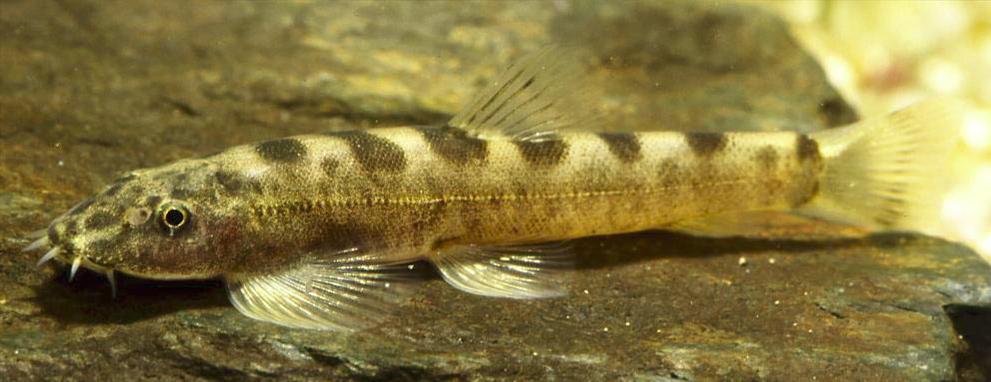
Homalopterula ripleyi
Fowler, 1940
Max length59mm SL2.3in SLTank80 × 30cm31 × 12inTemp20–25.5°C68–78°FpH6.0–7.5Fowler (1940) described this species as the unique member of his new genus Homalopterula on the basis of a single specimen, separated from related genera by the curved shape of the jaws, truncate caudal-fin and scaleless ventral surface.
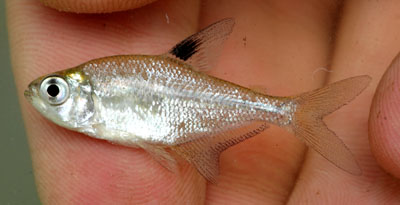
Hyphessobrycon compressusMayan Tetra
Meek, 1904
Max length45mm SL1.8in SLTanknot recordedTemp20–26°C68–79°FpH6.5–8.0H. compressus is the type species of the genus Hyphessobrycon but is not well-known in the ornamental trade. Hyphessobrycon was raised by Durbin in Eigenmann (1908) as a subgenus of Hemigrammus, differing from the latter by the absence of scales on the caudal-fin.