Channa melasoma
Black Snakehead
Formerly Ophicephalus melanosoma Bleeker, 1851 · Ophicephalus rhodotaenia Bleeker, 1851 · Ophicephalus mystax Bleeker, 1853
Last revised 2014Edit this page
On this page10 sections
Quick factsEdit
Difficulty5 of 8 measures
- Space
- large tank
- Water
- needs soft water
- Temp
- flexible
- Diet
- unknown
- Temperament
- unknown
- Social
- best in a pair
- Compatibility
- choose tankmates carefully
Other demands
Each of these can raise the rating on its own, whatever the measures above say.
- Hardiness
- unknown
Before you buy
Needs a tight-fitting lid as this species is known to jump
It's essential to use a tightly-fitting cover since Channa spp.
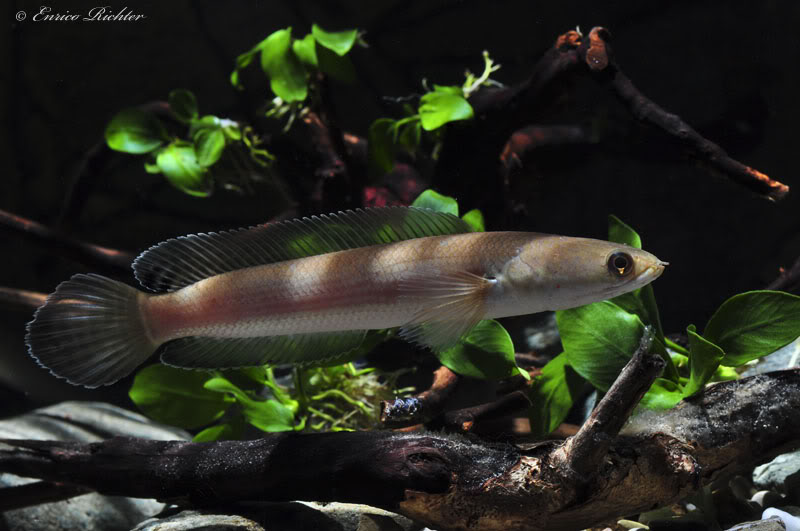
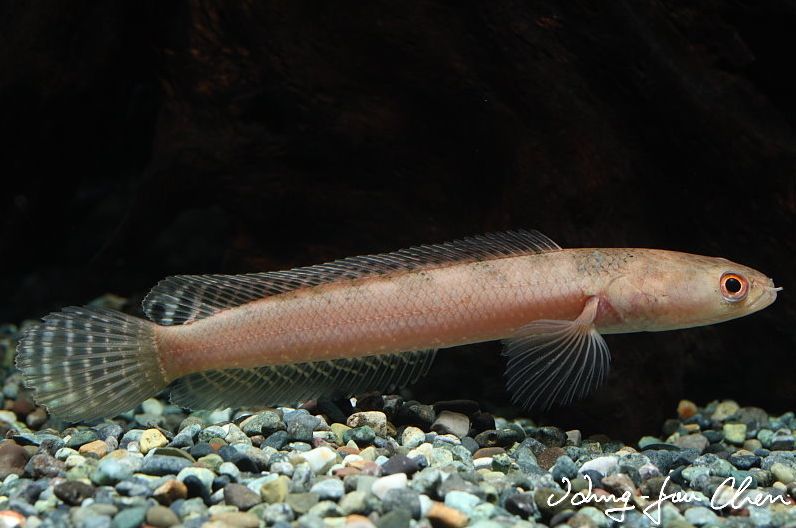
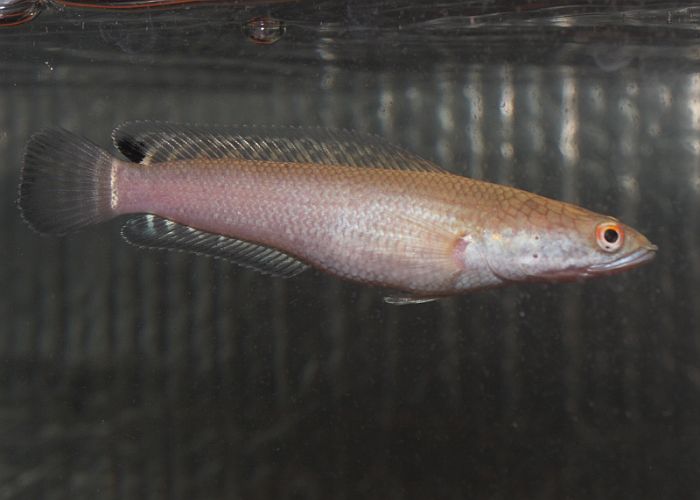
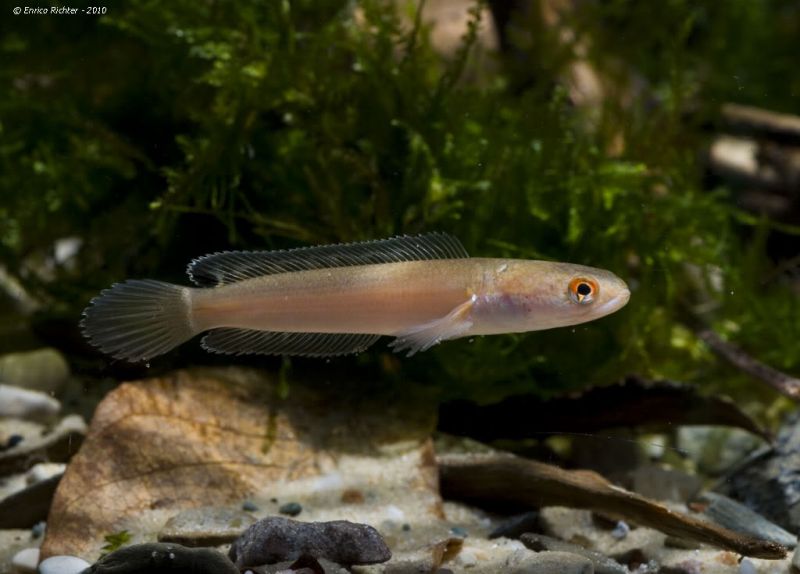
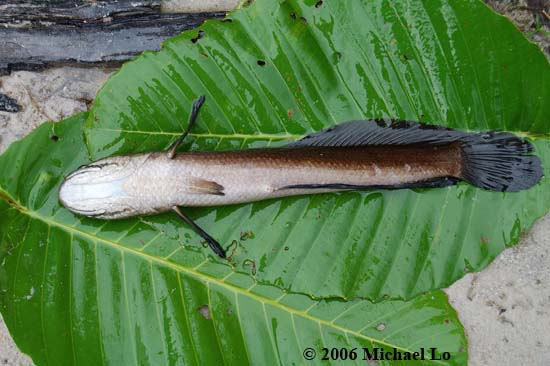
The black snakehead, Channa melasoma, is a snakehead from southern Thailand, Peninsular Malaysia, Singapore, Borneo, Sumatra and the Philippines. It can be told apart from the similar C. baramensis, once considered a synonym, by lacking a black spot in the centre of many body scales and a barred caudal fin. In nature it appears to favour clear forest streams with mud and leaf litter, but it has also been recorded from acidic blackwater in peat swamp forest.
Etymology
EditChanna: from the Latin channe, used to refer to an unspecified species of sea perch.
melasoma: from the Ancient Greek μέλας (melas), meaning 'black', and σῶμα (soma) meaning 'body', in reference to this species' colour pattern.
Distribution
EditThis species' range is currently considered to extend from extreme southern Thailand (Kolok district) through Peninsular Malaysia, Singapore and the Greater Sunda Islands of Borneo and Sumatra, although it is absent from Java.
It also occurs in the Philippines and on a number of smaller archipelagos including Bangka, Belitung (Billiton), and Palawan.
Reports from the Chao Phraya river, Thailand, and Mekong in Cambodia may be the result of misidentification or artificial introductions.
Type locality is 'Sambas, western Borneo, Indonesia'.
Habitat
Write a noteEditApparently displays a preference for clear water forest streams with substrates of mud and leaf litter but has also been recorded from acidic blackwater in peat swamp forests and from turbid environments.
Aquarium size
Write a noteEditAn aquarium with base measuring at least 120 ∗ 45 cm48 ∗ 18 in is recommended.
Water depth is less important but should not be less than 30 cm.
Maintenance
Write a noteEditLike most smaller Channa species it prefers a dimly-lit aquarium with plenty of cover in the form of live plants, driftwood branches, terracotta pipes, plant pots, etc., arranged to form a network of nooks, crannies, and shaded spots.
Surface vegetation such as Ceratopteris spp. is also appreciated and makes the fish less inclined to conceal themselves.
It's essential to use a tightly-fitting cover since Channa spp. are notorious for their ability to escape, and a gap should be left between this and the water surface as they require access to a layer of humid air.
Water conditions
EditThese recommendations come from this profile’s own figures. They contain affiliate links, so we may earn a commission.
Diet
Write a noteEditAn obligate predator feeding mostly on smaller fishes and insects in nature but in most cases adapting well to dead alternatives in captivity.
Some specimens even accept dried foods although these should never form the staple diet.
Young fish can be offered chironomid larvae (bloodworm), small earthworms, chopped prawn and suchlike while adults will accept strips of fish flesh, whole prawns/shrimp, mussels, live river shrimp, larger earthworms, etc.
This species should not be fed mammalian or avian meat such as beef heart or chicken since some of the lipids contained in these cannot be properly metabolised by the fish and may cause excess fat deposits and even organ degeneration.
Similarly there is no benefit in the use of 'feeder' fish such as livebearers or small goldfish which carry with them the risk of parasite or disease introduction and at any rate tend not have a high nutritional value unless properly conditioned beforehand.
Notes
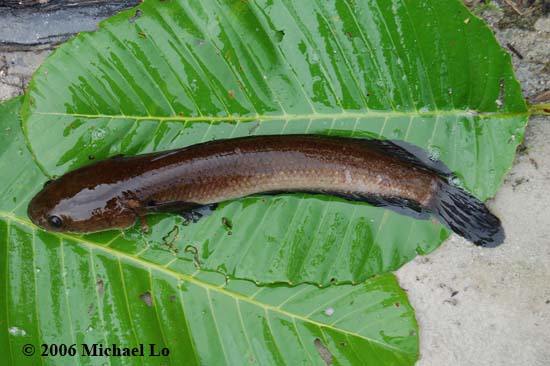
EditThis species can be told apart from the similar-looking congener C. baramensis (once considered synonymous with C. melasoma) by absence (vs. presence) of a black spot in the centre of numerous body scales and absence (vs. presence in specimens larger than 120 mm5 in SL) of a barred caudal-fin pattern.
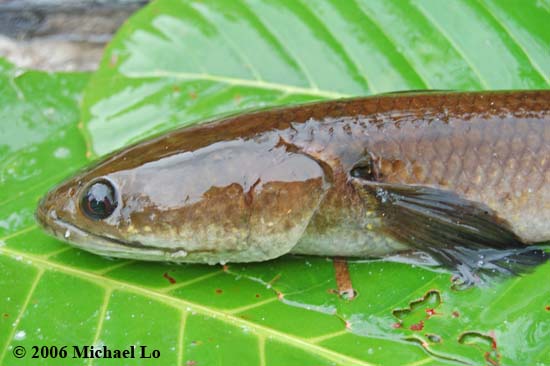
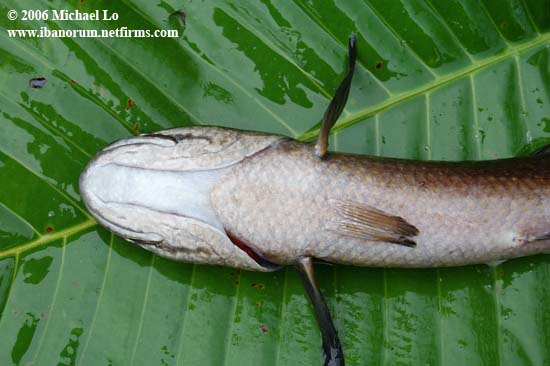
C. melasoma is also comparable to C. cyanospilos but has a more pointed snout when viewed laterally on account of its longer lower jaw measuring >10% SL (vs 5% SL) and possession of a pale marbled (vs. pale spotted) colour pattern on the throat.
Additional morphological characters in C. melasoma include: gular scales absent; dorsal-fin rays 37-40; anal-fin rays 22-25; pectoral-fin rays rays 14-17; lateral line scales 50-54; transverse scale rows between lateral line and dorsal fin origin 4-5½; transverse scale rows between lateral line and anal fin origin 7½; colour in preservative dark brown above, pale below, with fins dusky or dark.
Members of the family Channidae are commonly referred to as 'snakeheads' due to possession of large scales on the head of most species which are reminiscent of the epidermal scales (cephalic plates) on the heads of snakes.
There currently exist over 30 valid species but diversity within the group is likely to prove significantly greater.
All Channa spp. posses-s supplementary breathing apparatus in the form of paired suprabranchial chambers located behind and above the gills, although these are not labyrinthic but lined with respiratory epithelium.
These chambers allow the fish to breathe atmospheric air and survive in hypoxic conditions or even out of the water for a considerable period of time, and in aquaria they are often seen rising to the surface to take gulps of air.
References
- Bleeker, P. (1851). Vijfde bijdrage tot de kennis der ichthyologische fauna van Borneo, met beschrijving van eenige nieuwe soorten van zoetwatervisschen. Natuurkundig Tijdschrift voor Nederlandsch Indië v. 2, 415-442
- Brede, N. and P. Antler (2009). Schlangenkopffische—Die Gattungen Channa und Parachanna. Natur und Tier Verlag, Münster, 62 pp.
- Courtenay, W. R., Jr. and J. D. Williams (2004). Snakeheads (Pisces, Channidae) - a biological synopsis and risk assessment. Circular, U. S. Department of the Interior, Geological Survey No. 1251, i-v + 1-143
- Tan, H. H. and P. K. L. Ng (2005). The labyrinth fishes (Teleostei: Anabanatoidei, Channoidei) of Sumatra, Indonesia. Raffles Bulletin of Zoology Supplement 13, 115-138
- Ng, P. K. L. and K. Lim (1990). The Black Snakehead, Channa melasoma (Bleeker, 1851) (Channidae): First Record From Singapore The Raffles Bulletin of Zoology 38(1), 21-24
- Rainboth, W. J. (1996). FAO species identification field guide for fishery purposes. Fishes of the Cambodian Mekong. Rome, FAO, 1-265
- Roberts, T. R. (1989). The freshwater fishes of western Borneo (Kalimantan Barat, Indonesia). Memoirs of the California Academy of Sciences 14, 1-210
- Ng, P. K. L. and K. Lim (1991). The Identity of Ophicephalus cyanospilos Bleeker from Sumatra, and a New Record of Channa bankanensis (Bleeker) from Peninsular Malaysia (Pisces: Channidae). The Raffles Bulletin of Zoology 39(1), 119-130
Species images · 8
These photographs are used with each photographer's permission.
Send a photographDistribution
Profile completeness19 of 24
79% complete
Also missing: water condition notes, behaviour and compatibility, sexual dimorphism, reproduction.
Community
Questions about Channa melasoma?
Ask on Discord