Results for “substrate”
Type a name: scientific, common, or one a species used to go by. Or narrow the catalogue with the filters.
Filters
Steatocranus casuariusBlockhead Cichlid
authority not recorded
Max length120mm SL5in SLTank75 × 30cm30 × 12inTemp24–28°C75–82°FpH6.0–7.5An easily kept cichlid whose character more than compensates for its somewhat drab colouration, S. casuarius is sometimes seen for sale as "Humphead", "Lionhead" or "Buffalohead" cichlid. It is a reophilic fish meaning it inhabits fast waters. Its swimbladder is modified to reduce buoyancy and thus prevent it from being swept away by the strong currents in it's natural habitat. In the aquarium it spends most of it's time resting on the substrate or hiding ...
Synodontis waterloti
authority not recorded
Max length185mm SL7in SLTank90 × 30cm36 × 12inTemp23–25°C73–77°FpH6.5–7.5This is an uncommonly imported Syno that is nevertheless very attractive. It has distinctive serrated edges to the pectoral fins and will exhibit its strongest colouration over a light coloured substrate....
Taenioides cirratusBearded Worm Goby
authority not recorded
Max length300mm SL12in SLTanknot recordedTemp22–27°C72–81°FpH7.5–8.5Something for the true oddball enthusiast, this bizarre looking goby has been imported at least once over the last few years. It's a mud-burrowing species that digs networks of sloping tunnels in the substrate in nature. Apparently each series of burrows has several openings, one of which has a mound outside. According to Itani and Uchino (2003), this mound suggests that the fish "actively process sediment". Even more odd is its appearance (see picture). It has greatly reduced eye...
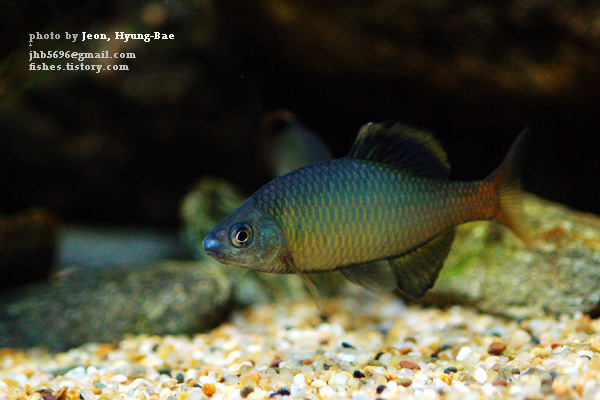
Tanakia signiferKorean Bitterling
Berg, 1907
Max length75mm SL3.0in SLTanknot recordedTempnot recordedpHnot recordedBitterlings (see 'Notes') exhibit an unusual spawning symbiosis in which the interlamellar spaces of the paired inner and outer gills of living unionid mussels are used as a spawning substrate. During the reproductive period females develop a long ovipositor which is used to deposit eggs through the mussel’s exhalant siphon. Males then move in to males release milt...
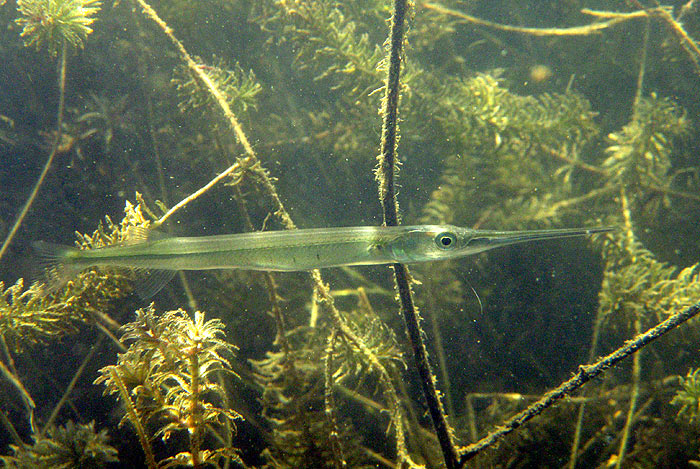
Xenentodon canciloides
Bleeker, 1854
Max length300mm SL12in SLTank180 × 60cm72 × 24inTemp18–26°C64–79°FpH6.0–8.0This species is a near-exclusive inhabitant of the upper water column and appreciates surface cover in the form of floating or overhanging vegetation. Other décor is relatively unimportant but can consist of a sandy substrate with leaf litter plus some large driftwood branches and twisted roots. Plants which can grow rooted in sand can al...
Xenotilapia melanogenysBlack-Chinned Xenotilapia
authority not recorded
Max length160mm SL6in SLTank120 × 38cm48 × 15inTemp24–27°C75–81°FpH7.5–9.0This fish feeds in a similar way to Geophagus species in that it will sift sand through its gills to extract invertebrates and morsels hidden in the substrate. It was until recently classified in the genus Enatiopus and is still named as such in much of the available literature. There are slight geographical variations in colour but these are not major. Interestingly, the shoals in which these fish live in nature appear to be fixed. That is, that an individual will remain in the same group for ...
Xenotilapia simaBig-Eyed Xenotilapia
authority not recorded
Max length165mm SL6in SLTank120 × 38cm48 × 15inTemp23–27°C73–81°FpH8.0–9.5A rarely seen species in the hobby, X. sima is nevertheless a charming species for the peaceful Tanganyikan community. It feeds in a similar way to the well-known South American Geophagus species in that it will sift sand through its gills to extract invertebrates and morsels hidden in the substrate. It is quite a skittish fish and may react very nervously to rapid movements outside the tank or when lights are switched on and off....