Results for “sp.”
Type a name: scientific, common, or one a species used to go by. Or narrow the catalogue with the filters.
Filters
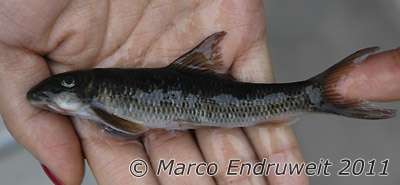
Garra imberba
Garman, 1912
Max length120mm SL5in SLTanknot recordedTempnot recordedpHnot recordedThis species can be distinguished from congeners inhabiting the Red River basin in Yunnan province, China, by the following combination of characters: no barbels; 46-52 lateral line scales; 16 circumpeduncular scales; pharyngeal teeth in 3 rows, 2.4.5-5.4.2; snout rounded, no secondary rostrum, no longitudinal...
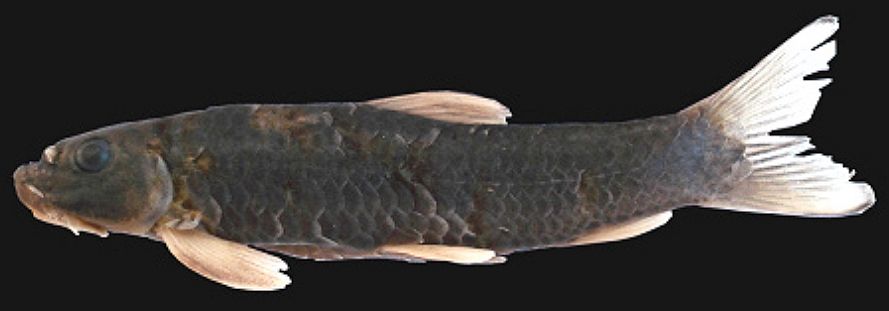
Garra kalpangi
Nebeshwar, Bagra & Das, 2012
Max length75mm SL3.0in SLTanknot recordedTempnot recordedpHnot recordedG. kalpangi is distinguished from other Garra species from the Himalayan foothills by the following combination of characters: two pairs of barbels; a weakly developed proboscis represented by a squarish area anterior to the nostrils; 16 circ...
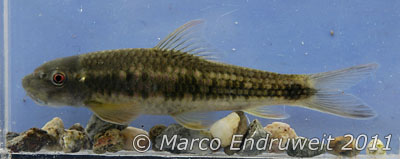
Garra mirofrontis
Chu & Cui, 1987
Max length85mm SL3.3in SLTanknot recordedTempnot recordedpHnot recordedThis species is characterised by possession of a transverse groove on the snout, directly in front of the eyes, and a bifurcate proboscis with a conical keratinised tubercle at each anterior tip.
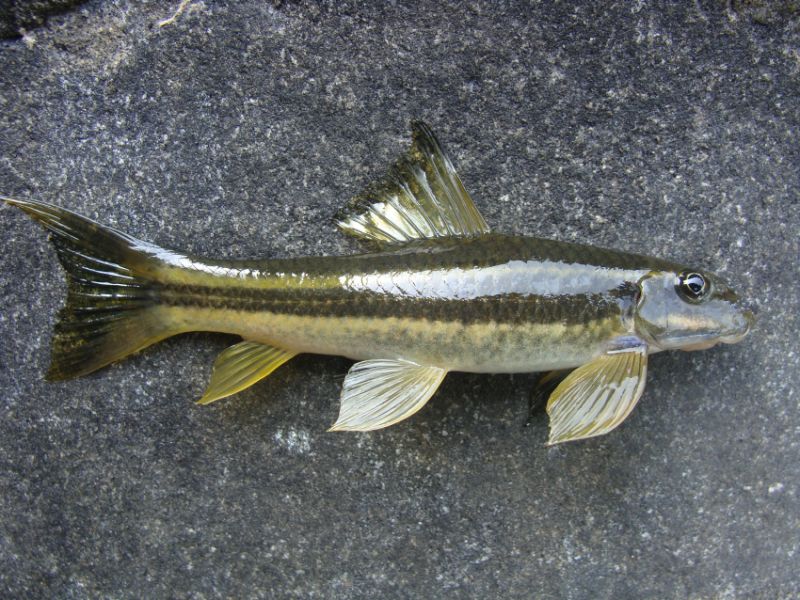
Garra mullya
Sykes, 1839
Max length170mm SL7in SLTanknot recordedTempnot recordedpHnot recordedThis species is endemic to and widespread within peninsular India, where it has been recorded from the states of Gujrat, Madhya Pradesh, Chhattisgarh, Orissa, Jharkhand, West Bengal, Maharashtra, Andhra Pradesh, Goa, Karnataka, Tamil Nadu and Kerala. It is thus found in numerous river systems of which some of the most important include the Tapti, Narmada, Mahanadi, Godavari, Krishna, and Cauvery.
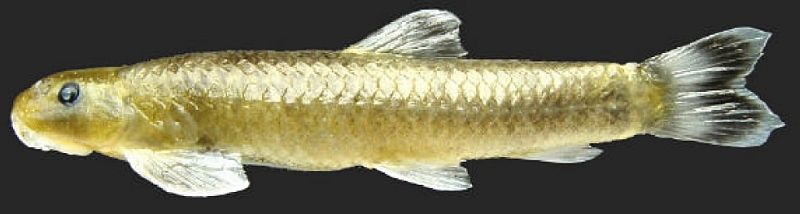
Garra nambulica
Vishwanath & Joyshree, 2005
Max length65mm SL2.6in SLTanknot recordedTempnot recordedpHnot recordedThis species is diagnosed by the following combination of characters: body moderate sized; head squarish; no proboscis or transverse groove on snout; mental disc length 96.9% its own width; pre...
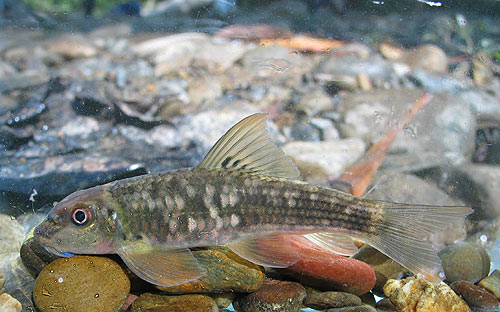
Garra notata
Blyth, 1860
Max length120mm SL5in SLTanknot recordedTempnot recordedpHnot recordedG. notata is one of a number of congeners to lack both a transverse groove and a proboscis on the snout. It also possesses 33-34 lateral line scales and a series of dark spots at the base of the dorsal-fin rays, and lacks scales on the lower portion of the body and abdomen. The genus Garra is a particularly enigmatic grouping with new taxa...
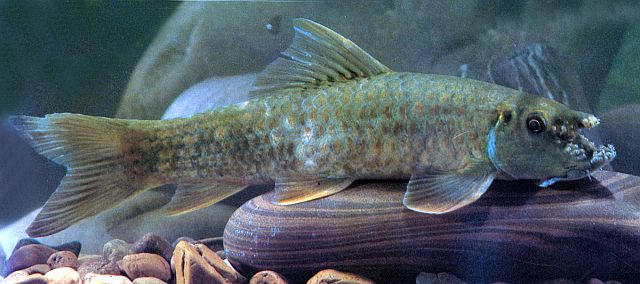
Garra orientalis
Nichols, 1925
Max length120mm SL5in SLTanknot recordedTempnot recordedpHnot recordedAmong other Garra species from Southeast Asia and China, G. orientalis is most similar to G. salweenica and G. fuliginosa in that all three possess a roughly triangular, trilobed proboscis on the snout, the anterior margin of which is densely tuberculated, and the inferior margin not in contact with the depressed rostral surface, i.e., the proboscis projects forwards.
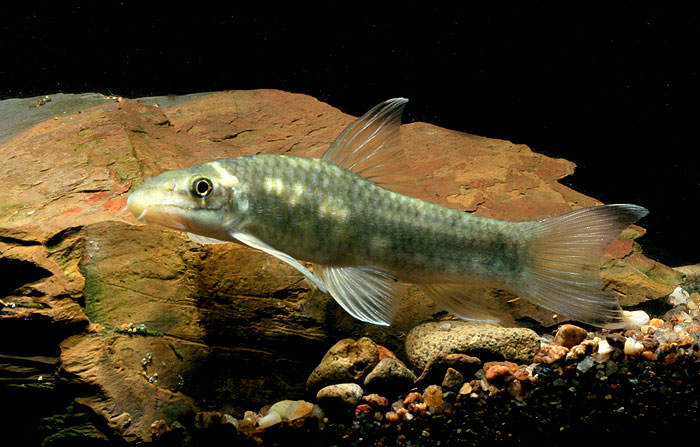
Garra rakhinica
Kullander & Fang, 2004
Max length60mm SL2.4in SLTanknot recordedTempnot recordedpHnot recordedG. rakhinica can be distinguished from other members of the genus by the following combination of characters: rostral furrow shallow and snout tip smoothly rounded; rostral lobe present, proboscis absent; scaled predorsal region, chest, and abdomen; two pairs of barbels; 28 lateral line scales; 16 circumpeduncular scale rows; colour pattern almost uniform greyish on body and caudal-fin; a dark spot immediately posterior to the upper extremity of the...
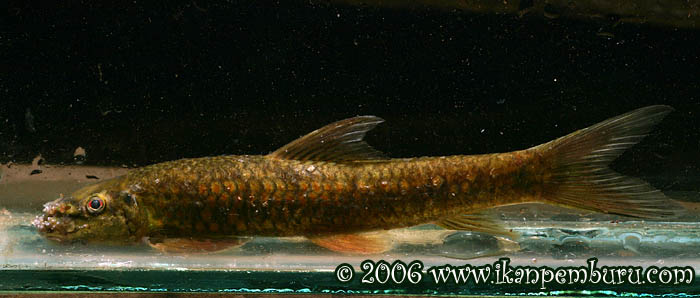
Garra rotundinasus
Zhang, 2006
Max length185mm SL7in SLTanknot recordedTempnot recordedpHnot recordedPrior to its description, G. rotundinasus was considered to represent the congener G. gravleyi, but the latter is now accepted to occur only in the Salween and Manipur river basins. These two are separated from all other Garra species in China and Southeast Asia by possession of a weakly-devel...
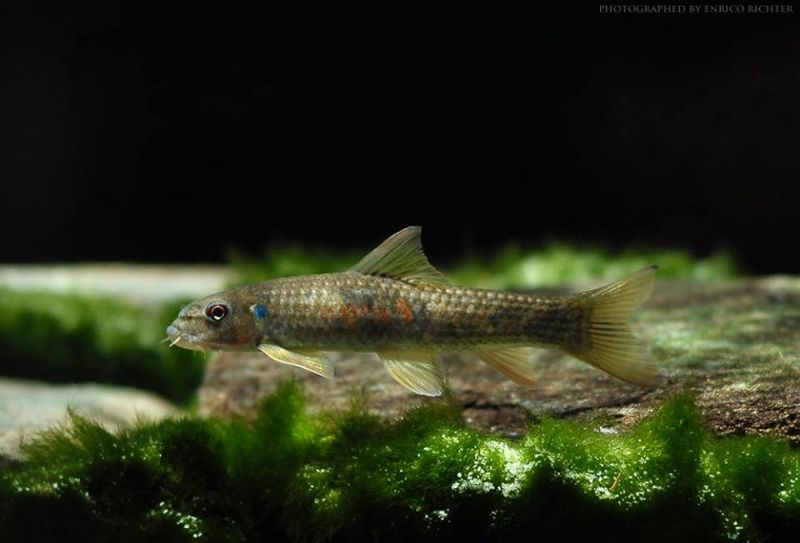
Garra rufaDoctor Fish
Heckel, 1843
Max length120mm SL5in SLTank120 × 45cm48 × 18inTemp14–20°C57–68°FpH6.0–8.0Fish referred to as G. rufa are marketed worldwide as 'doctor fish', with the questionable ability to remove dead and scaly skin and ease complaints such as psoriasis. These fish are quite commonly available in the aquarium trade as well, although in both cases it is unclear whether they represent G. rufa or another, related species.
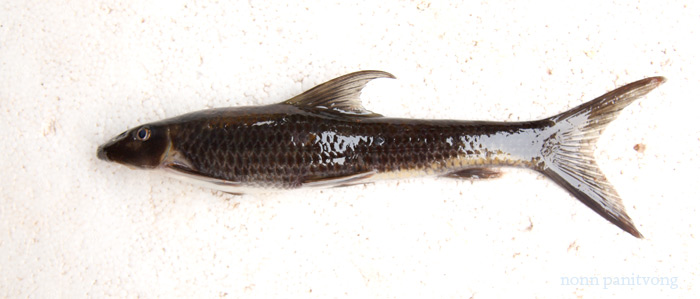
Garra theunensis
Kottelat, 1998
Max length300mm SL12in SLTanknot recordedTempnot recordedpHnot recordedThis species can be distinguished from congeners in Southeast Asia and China by the following combination of characters: plain brown body and fins, sometimes with 6-8 narrow, faintly distinct, longitudinal stripes; snout triangular in dorsal view, with small tubercules and without transverse groove...
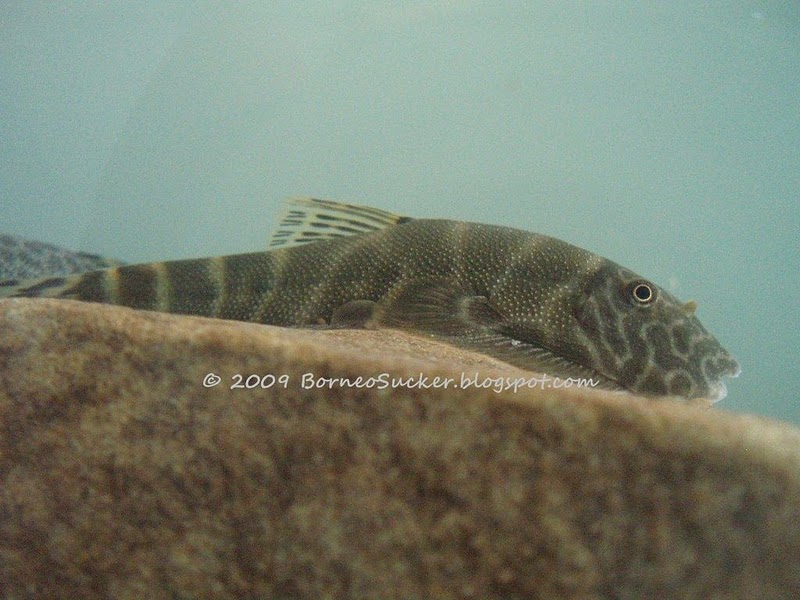
Gastromyzon extrorsus
Tan, 2006
Max length80mm SL3.1in SLTank75 × 30cm30 × 12inTemp20–24°C68–75°FpH6.0–8.0This species has probably not been seen in the aquarium trade yet but has been maintained by a few private collectors. It can be distinguished from congeners by the following combination of characters: secondary rostrum present; complete postoral pouch present; body colour brown with up to 9 thin gold stripes; head dorsum dark brown with gold reticulate pattern; subopercular groove absent; gill slit vertical; sublacrymal groove present; sno...
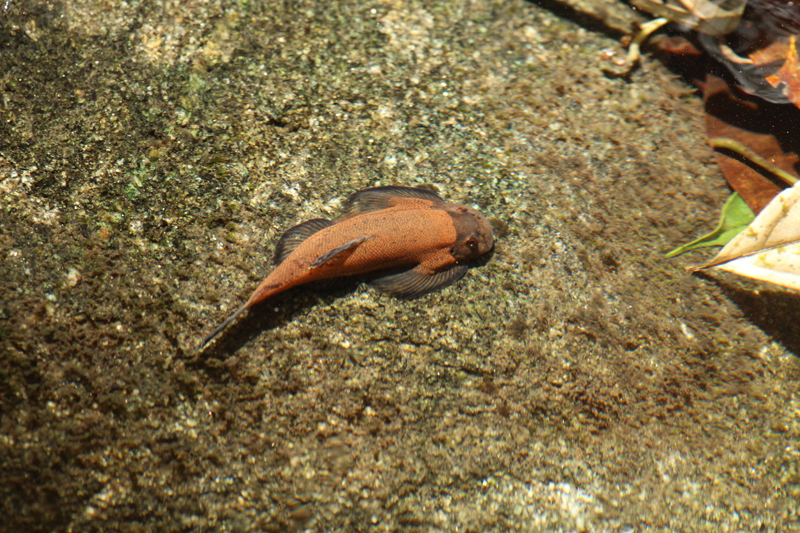
Gastromyzon lepidogaster
Roberts, 1982
Max length100mm SL3.9in SLTank120 × 30cm48 × 12inTemp18–24°C64–75°FpH6.0–8.5This species is variable in terms of colour. Large adults may be bright green, orange or barred but are apparently capable of changing from barred to plain in just a few seconds. These different forms have been recorded in the same natural habitats, and some individuals also possess prominent nuptial tubercules covering much of the body.
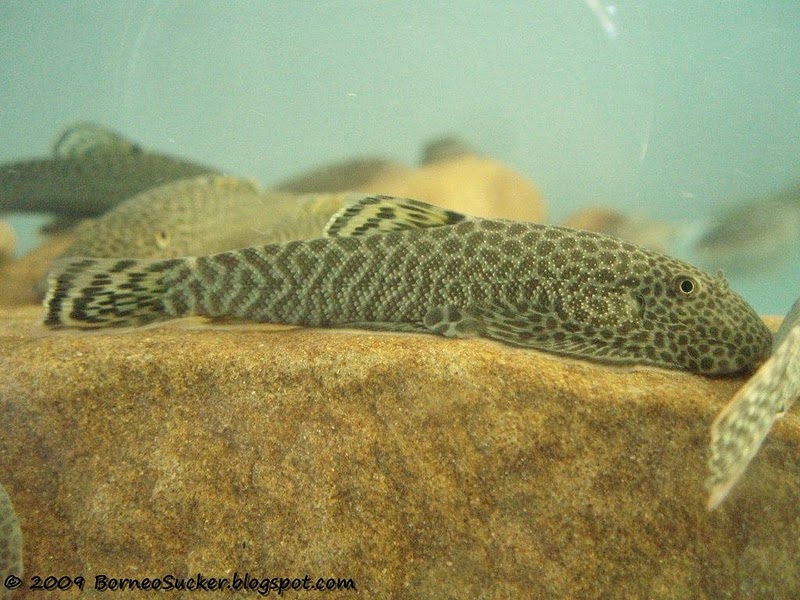
Gastromyzon monticola
Vaillant, 1889
Max length85mm SL3.3in SLTank75 × 30cm30 × 12inTemp20–24°C68–75°FpH6.0–8.5Field observations have revealed that individuals almost always position themselves facing into the flow, either along the sides, behind or under rocks, their specialised morphology (see 'notes') allowing them to feed and maintain position without being swept away. In nature G. monticola occurs sympatrically alongside Garra borneensis, Osteochilus ingeri, Gastromyzon auronigrus, G. cornusaccus, Nemacheilus olivaceus,...
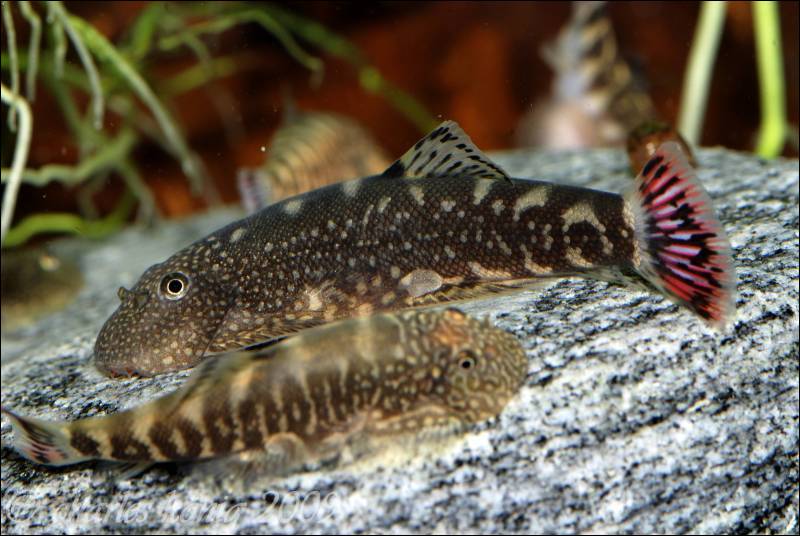
Gastromyzon ocellatus
Tan & Ng, 2004
Max length45mm SL1.8in SLTank60 × 30cm24 × 12inTemp20–24°C68–75°FpH6.0–7.5Some individuals do appear very similar to G. farragus, with noticeable spotting on the head, but can usually still be told apart by examining the caudal-fin which tends to contain only a single thick, dark vertical bar in G. farragus whereas in G. ocellatus there are more often two bars, one thick, one thinner. Intermediate forms do exist though meaning identification is sometimes tricky.
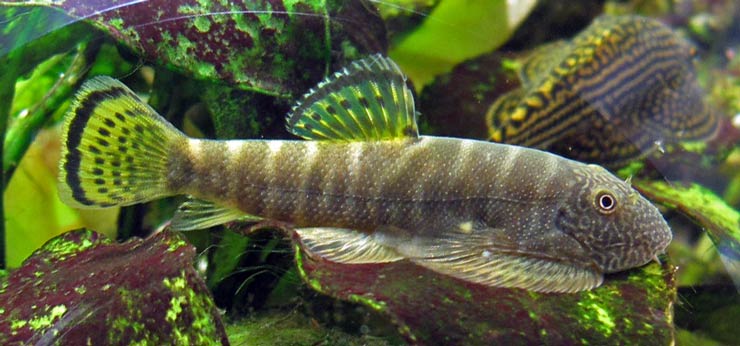
Gastromyzon viriosus
Tan, 2006
Max length55mm SL2.2in SLTank75 × 30cm30 × 12inTemp20–24°C68–75°FpH6.0–7.5Many loaches from the families Nemacheilidae, Balitoridae and Gastromyzontidae are also suitable but research your choices before purchase in order to be sure as some are excessively aggressive or otherwise competitive. Gastromyzon spp. tend to exist in lo...
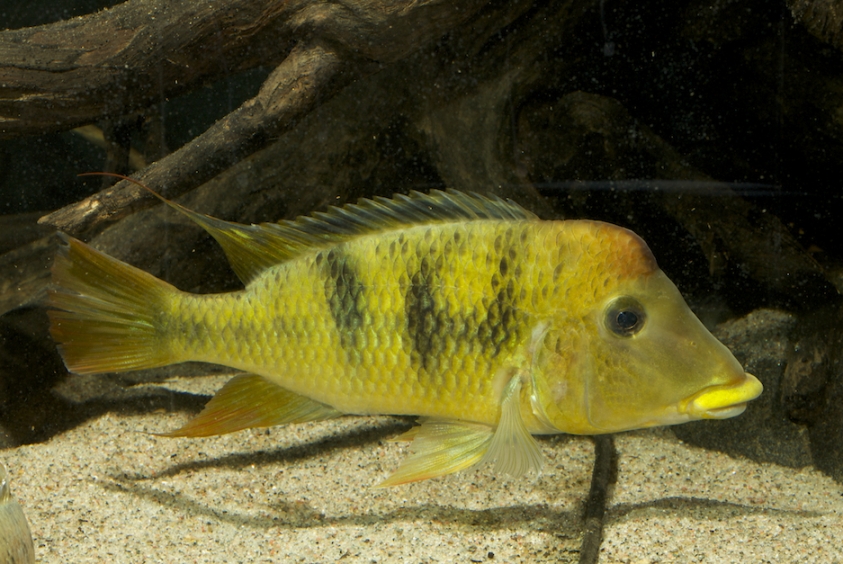
'Geophagus' pellegriniYellowhump Eartheater
Regan, 1912
Max length155mm SL6in SLTank120 × 45cm48 × 18inTemp25–30°C77–86°FpH5.0–6.0This species appears to be a relative ecological generalist. During a sampling trip in 1989 it was collected various habitat-types including a narrow (maximum width 3 m) stream containing shallow (maximum depth 1 m), transparent, moderate to fast-flowing water and substrate comprising gravel, mud, clay and organic debris including submerged logs. Aquatic plants consisted of water lilies and marginal vegetation was dense, comprising various trees, shrubs, grasses and ferns.
Gnathonemus petersiiElephantnose Fish
authority not recorded
Max length225mm SL9in SLTank120 × 45cm48 × 18inTemp23–28°C73–82°FpH6.0–7.5Also known as Peter's elephantnose, this fascinating species is currently the most common Mormyrid in the hobby. Sadly, its popularity means it is often kept in unsuitable conditions. To deny the fish a soft substrate really is cruel, as it uses its "trunk" to locate food hidden in the substrate. It also needs dim lighting, and will commonly become withdrawn and pine away if kept under bright lights. If you cannot provide suitable lighting, add food to the tank at lights out to al...
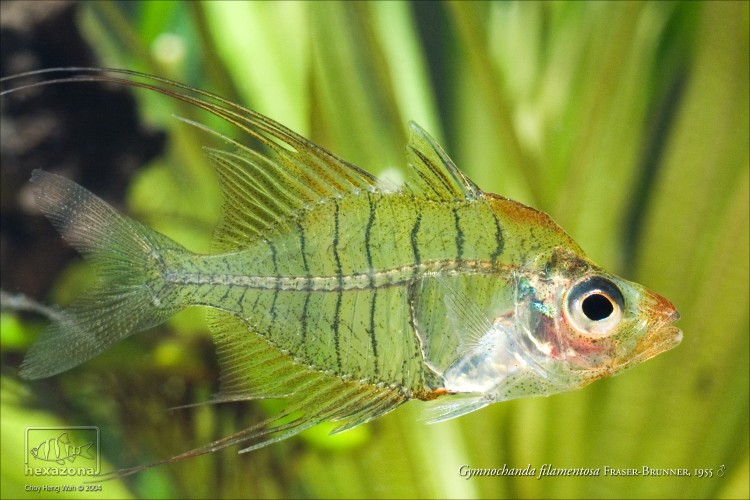
Gymnochanda filamentosa
Fraser-Brunner, 1955
Max length32mm SL1.3in SLTank60 × 30cm24 × 12inTemp20–28°C68–82°FpH4.0–6.0G. filamentosa has appeared in the ornamental trade but is evidently delicate and therefore recommended only to experienced aquarists. It can be told apart from congeners by the following combination of characters: possession of filamentous dorsal and anal-fin rays in males; body transparent to translucent yellowish-brown colour in life; absence of a highly-extended second anal-fin spine; absence of carmine-red pigmentation in the dorsal, anal an...
Gymnocorymbus bondiSilver Tetra
authority not recorded
Max length50mm SL2.0in SLTank60 × 38cm24 × 15inTemp22–27°C72–81°FpH5.5–7.5Not often seen in the hobby, probably because it's a fairly bland species when mature. Juveniles are more attractive, possessing reddish unpaired fins, but these fade as the fish mature. It is, however, both peaceful and hardy and is a good choice for the beginner. It is sometimes seen labelled as G. socolofi. This name is now considered a junior synonym of G. bondi....