Results for “ex gr.”
Type a name: scientific, common, or one a species used to go by. Or narrow the catalogue with the filters.
Filters
Leporacanthicus heterodonGolden Vampire Plec
authority not recorded
Max length100mm SL3.9in SLTank120 × 30cm48 × 12inTemp22–26°C72–79°FpH6.0–7.0The vampire part of the common name is derived from the unique upper jaw dentition exhibited by members of this genus, consisting of, you guessed it, two large teeth or "fangs". The exact use for these is unknown, but they're probably utilised to grip prey items such as snails or other aquatic invertebrates in some way. When buying one of these (or any Loricariid), be sure to check the fish has a rounded belly and that its eyes aren't sunken, as these are classic signs of ema...
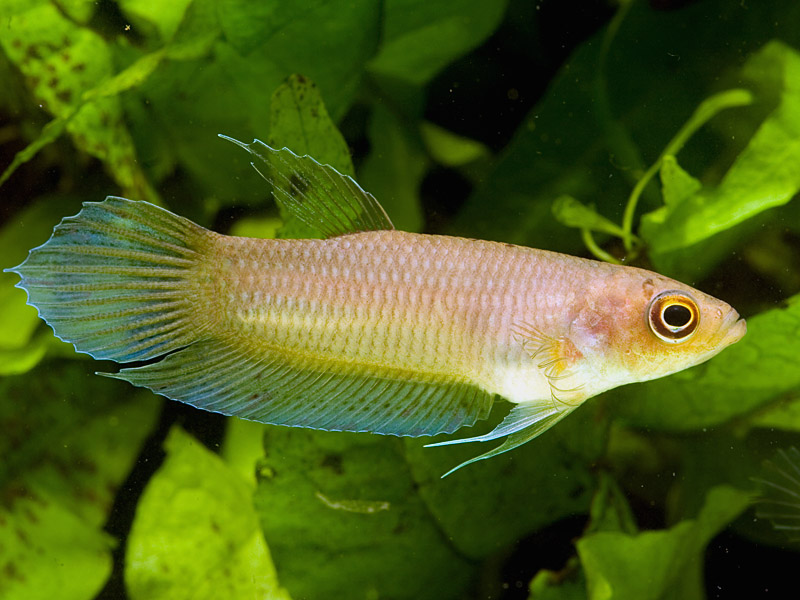
Betta hipposideros
Ng & Kottelat, 1994
Max length80mm SL3.1in SLTank80 × 30cm31 × 12inTemp22–28°C72–82°FpH3.5–6.0The easiest way to distinguish these is by examining the throat markings, which vary according to species, and in the case of B. hipposideros form a black horse-shoe shape. It can also be separated from other group members by the following suite of characters: dark blotch on throat joined to black lower lip; presence of transverse bars in dorsal and caudal fins; absence of dark margin in anal-fin; opercle usually with gold scales, without iridescrent green scales; ventral margin of opercle brown; 6.5-7 subdorsal scales (mode 6.5); 9-10 postdorsal scales (mode 9.5); 31-32 lateral scales (mode 32).
Leporacanthicus galaxiasGalaxy Plec
authority not recorded
Max length250mm SL10in SLTank120 × 45cm48 × 18inTemp22–26°C72–79°FpH5.6–7.0A very stylish looking plec, L. galaxias can also be seen for sale as the vampire or tusken plec. Both these names relate to features of morphology that are shared by all members of the genus. The latter arose from the presence of a characteristic growth on the head of the fish. The vampire moniker, meanwhile, is derived from the unique upper jaw dentition, consisting of, you guessed it, two large teeth or "fangs". The exact use for these is unknown, but they're probably utilised ...
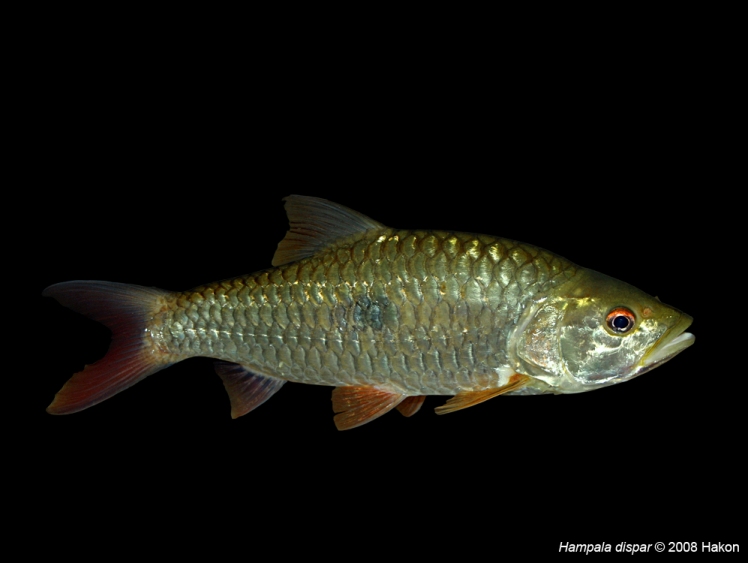
Hampala disparSpotted Hampala Barb
Smith, 1934
Max length350mm SL14in SLTank240 × 60cm96 × 24inTemp20–25°C68–77°FpH6.0–8.0The genus currently contains seven species of which H. macrolepidota and, to a lesser extent, H. dispar are the only ones seen with any regularity in the aquarium trade. As well as having the widest distribution H. macrolepidota is also the largest member of the group. All representatives can appear superficially similar at first glance, the exception being H. lopezi which is endemic to a single island in The Philippines and displays a unique lateral band-like marking on the flanks.
Melanotaenia fluviatilisAustralian Rainbowfish
authority not recorded
Max length100mm SL3.9in SLTank90 × 30cm36 × 12inTemp20–25°C68–77°FpH6.5–8.0Also known as the Murray River or crimson-spotted rainbowfish, this species is not as common in the hobby as some of its relatives, but can still be found from time to time. It is easily confused with the very similar M. duboulayi, indeed these two were once grouped together as a single species. However, there are clear differences in patterning, fin ray counts and the way in which their eggs and fry develop. The range of M. fluviatilis extends further south than any other rainbowfish, and a...
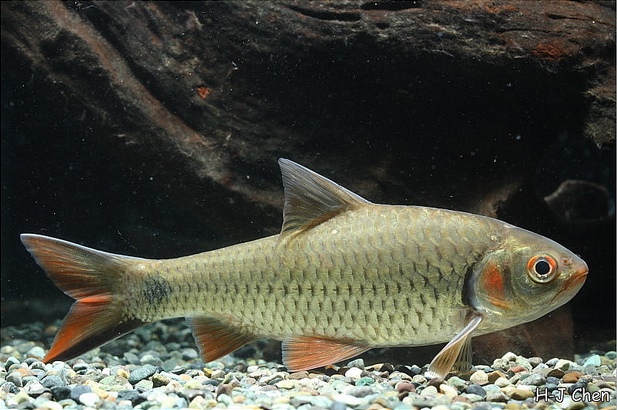
Systomus orphoides
Valenciennes, 1842
Max length250mm SL10in SLTank200 × 60cm79 × 24inTemp18–26°C64–79°FpH6.0–8.0The genus Puntius is currently viewed as something of a catch-all for well over 100 species of small to mid-sized cyprinid. Most experts agree that a full revision is required with the likely outcome that many species will be placed into new or different genera since it is clearly polyphyletic. When describing the grouping in 1822 Hamilton identified the defining characteristics as: presence or absence o...
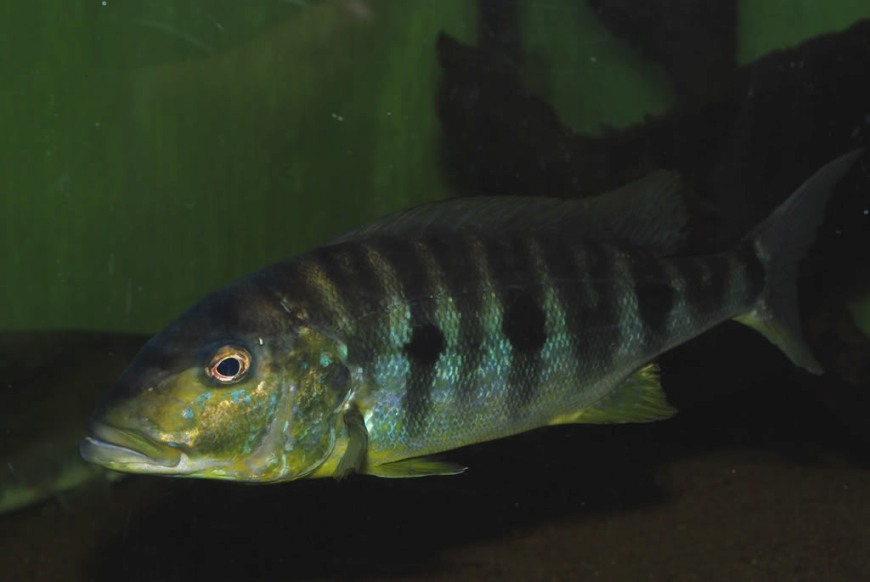
Boulengerochromis microlepisEmperor Cichlid
Boulenger, 1899
Max length550mm SL22in SLTanknot recordedTemp24–28°C75–82°FpH7.5–9.0Mostly inhabits littoral to sublittoral zones, habitats which normally comprise a mixture of rocky rubble and exposed sandy areas, but has been recorded to depths of around 100 m. When not breeding adults exhibit a more-or-less pelagic lifestyle and apparently tends to form small, foraging groups in open water, whereas juveniles inhabit shallower, sandy nursery zones with some rock cover. There exists some evidence to suggest that adults move inshore at night or during early morning in order to feed.
Serrasalmus maculatusMac
authority not recorded
Max length210mm SL8in SLTank120 × 45cm48 × 18inTemp21.1–30°C70–86°FpHnot recordedS. maculatus is one of the better choices for aquarists new to this group of fishes. It grows to a manageable size, is relatively hardy, attractive and usually quite inexpensive. It's sometimes referred to by the alternative vernacular names "gold piranha" or "golden mac" in the hobby. There are in excess of 30 described species of Serrasalmus many of which appear superficially similar and have confusing taxonomic histories. S. maculatus and S. spilopleura have often ...
Tilapia guinasana
authority not recorded
Max length140mm SL6in SLTank120 × 30cm48 × 12inTemp19–25°C66–77°FpH7.0–7.8Rare in the hobby, this species is unfortunately considered critically endangered in the wild. The lake in which it is found is receiving less groundwater than it once was, due to extraction of water for agriculture. Even if this were not the case, the species is found over such an enclosed range that it would still be at extreme risk. All attempts at captive breeding are therefore to be encouraged, with care being taken to keep the different lines pure. Interestingly, as there are no natural...
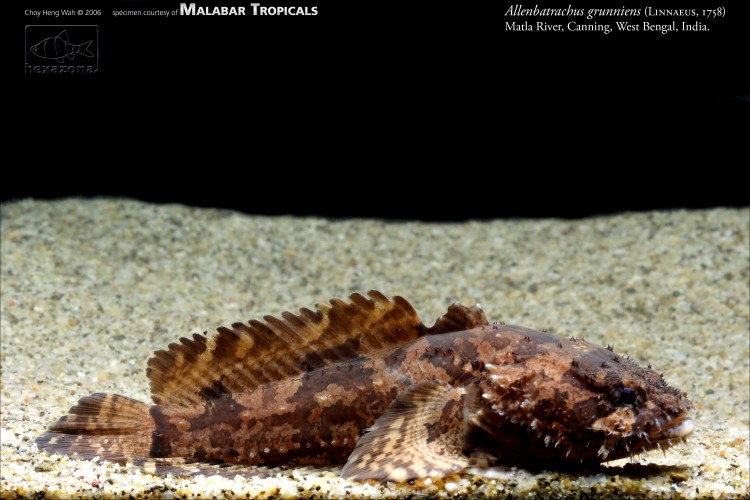
Allenbatrachus grunniensFreshwater Toadfish
Linnaeus, 1758
Max length300mm SL12in SLTanknot recordedTemp23–28°C73–82°FpH7.5–9.0This species is relatively common in the aquarium hobby but contrary to popular belief is not venomous in any way. Its dorsal and opercular spines can pierce the skin, however, meaning extreme caution is necessary when netting it or performing aquarium maintenance. The genus Allenbatrachus was erected in 1997 to accom...
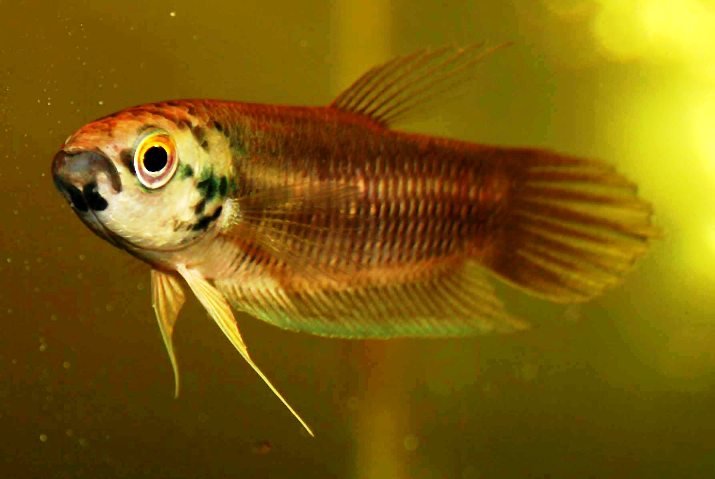
Betta pi
Tan, 1998
Max length90mm SL3.5in SLTank90 × 30cm36 × 12inTemp22–28°C72–82°FpH4.0–6.5B. pi is included in the Betta waseri group of closely-related species within the genus, an assemblage within which members share the following combination of characters: base body colouration clay yellow; opercle scales iridescent gold in mature males of all species except B. tomi; throat with black markings which join with black lower jaw in some species; no chin bar.
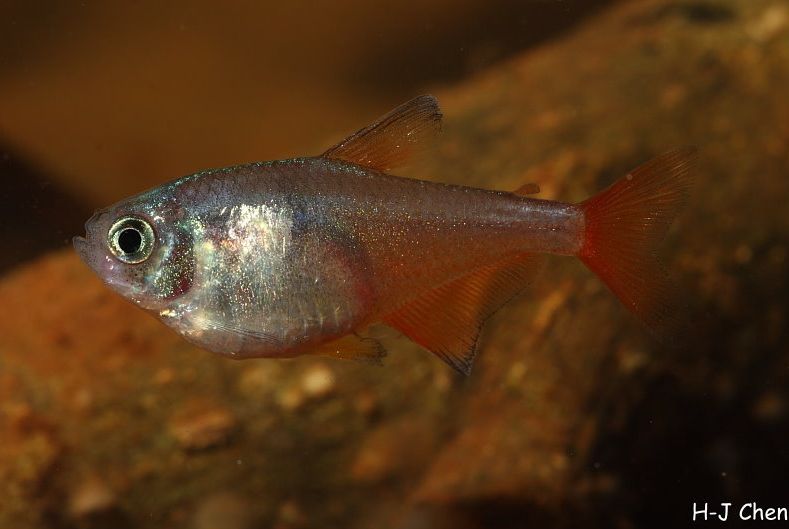
Hyphessobrycon flammeusFlame Tetra
Myers, 1924
Max length25mm SL1.0in SLTank60 × 30cm24 × 12inTemp20–26°C68–79°FpH5.5–7.5Its native rivers flow through one of the most densely-populated and industrialised parts of Brazil, and have suffered greatly from dam construction, water abstraction, pollution, introduced species (including over 40 exotic freshwater fishes in the rio Paraíba do Sul alone), and other forms of anthropogenic degradation. H. flammeus is now uncommon or even extinct across much of its putative natural range, and in Rio de Janeiro state only a handful of highly-fragmented populations remain at best, with the mo...
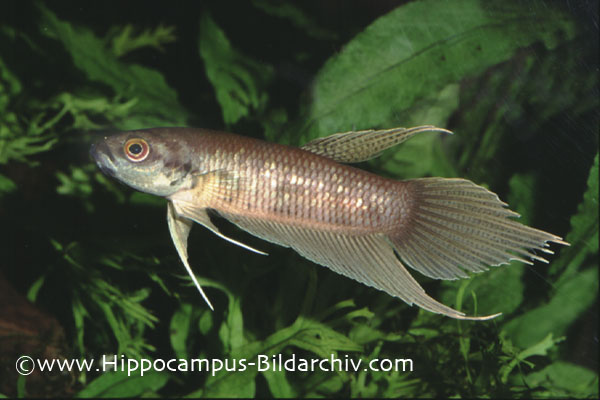
Betta chloropharynxGreen Throat Mouthbrooder
Kottelat & Ng, 1994
Max lengthnot recordedTank80 × 30cm31 × 12inTemp24–28°C75–82°FpH3.5–6.0B. chloropharynx is included in the Betta waseri group/complex of closely-related species within the genus, an assemblage which also includes a handful of potentially new species such as B. sp. 'Medas' on an unofficial basis. The easiest way to distinguish these is by examining the throat markings which vary according to species. In this case the lighter of these form a shape that roughly resembles a horizontal figure of ei...
Cyprichromis leptosomaSardine Cichlid
authority not recorded
Max length125mm SL5in SLTank120 × 45cm48 × 18inTemp24–27°C75–81°FpH7.8–9.0One of the favourite Tanganyikan cichlids among hobbyists, this species occurs in several geographical morphs. Each of these further exists in both blue and yellow-tailed forms. They congregate in large shoals of several thousand in nature, preying on zooplankton. In the hobby you may also see C. leptosoma sp. "Jumbo" for sale. These fish grow to the size quoted above, whilst the "true" leptosoma only reaches around 4" in length. Although it's likely we are deal...
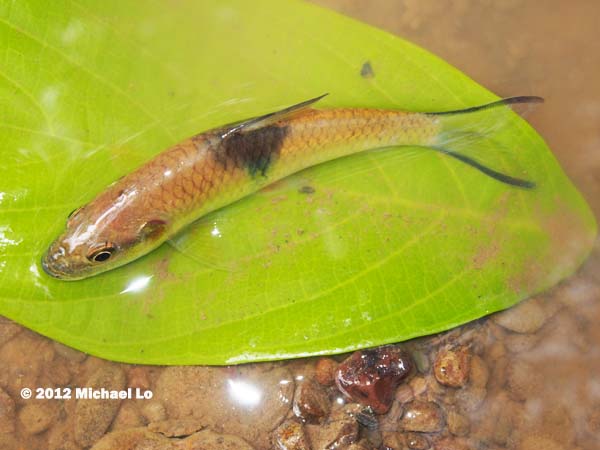
Hampala sabana
Inger & Chin, 1962
Max length410mm SL16in SLTanknot recordedTempnot recordedpHnot recordedPredominantly a riverine fish preferring clear, well-oxygenated, running waters with substrates of sand, gravel, rock or mud, and apparently displays a preference for deeper, slower-moving stretches. In Sabah such habitats typically flow through tropical forest, although in recent years freshwater habitats throughout much of the state have been extensively modified by human activity such as conversion to palm or rubber plantations.
Parachromis managuensisJaguar Cichlid
authority not recorded
Max length610mm SL24in SLTank120 × 38cm48 × 15inTemp23–25°C73–77°FpH6.0–8.0Parachromis Managuense are your typical north/central American large predatory cichlid. They are extremely attractive, but a large aquarium is required. They are not difficult to look after, as long as filtration is up to standard. Choose tankmates carefully - if you are hoping to breed Managuense, house a breeding pair or grow 6 juveniles up until a pair is formed. One of the biggest problems with breeding Managuense is the fact that a single spawn from 12" parents can produce 3000 f...
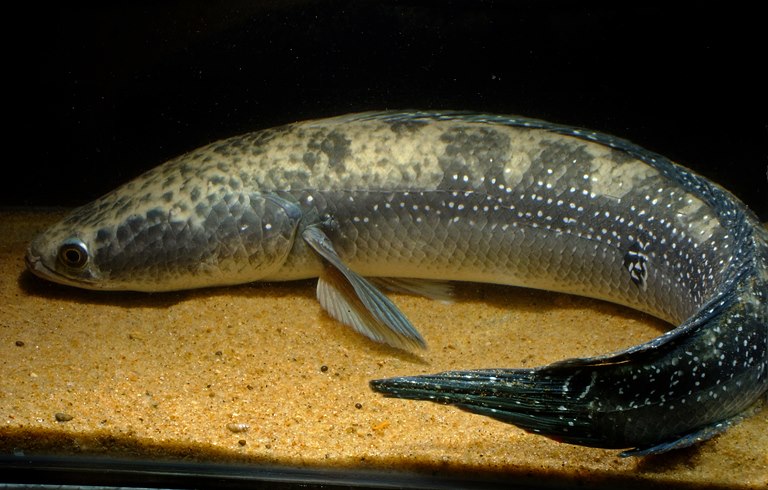
Channa maruliusBullseye Snakehead
Hamilton, 1822
Max length600mm SL24in SLTanknot recordedTemp15–28°C59–82°FpH6.0–8.0This species is also referred to as 'giant', 'great', 'cobra', or 'Indian' snakehead. Although currently-considered to be distributed throughout much of southern Asia it is widely-accepted to represent a complex of related species in need of additional research. A number of geographical variants exhibiting diffe...
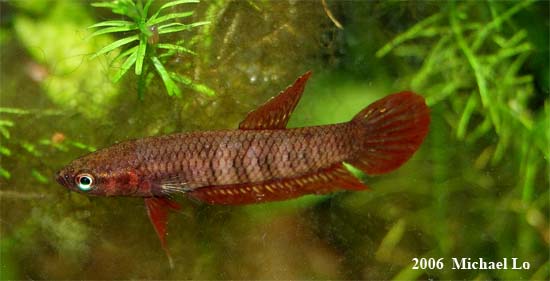
Betta tussyae
Schaller, 1985
Max length37mm SL1.5in SLTank45 × 30cm18 × 12inTemp22–27°C72–81°FpH3.0–6.0This poorly-known betta is included in the B. coccina group of closely-related species within the genus. This assemblage mostly comprises small, red-coloured fishes, with the exceptions of B. persephone and B. miniopinna which are darkish, and identifying some of them can be problematic as external patt...
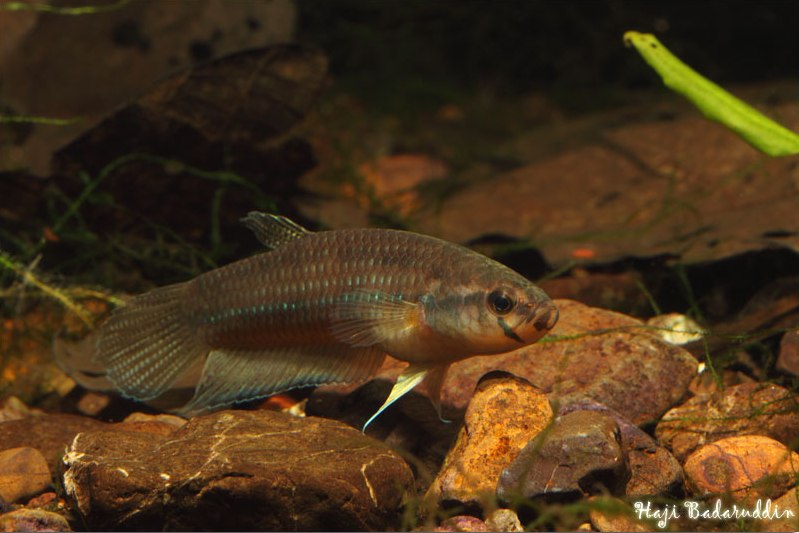
Betta antoni
Tan & Ng, 2006
Max length50mm SL2.0in SLTank60 × 30cm24 × 12inTemp22–27°C72–81°FpH5.5–7.0The genus Betta is the most speciose within the family Osphronemidae with almost 70 recognised members and looks set to grow further with new ones continuing to be described on a regular basis since the turn of the century. Member species have successfully adapted to inhabit a variety of ecological niches from stagnant ditches to flowing hill streams including some extreme environments such as highly acidic peat swamp forests.
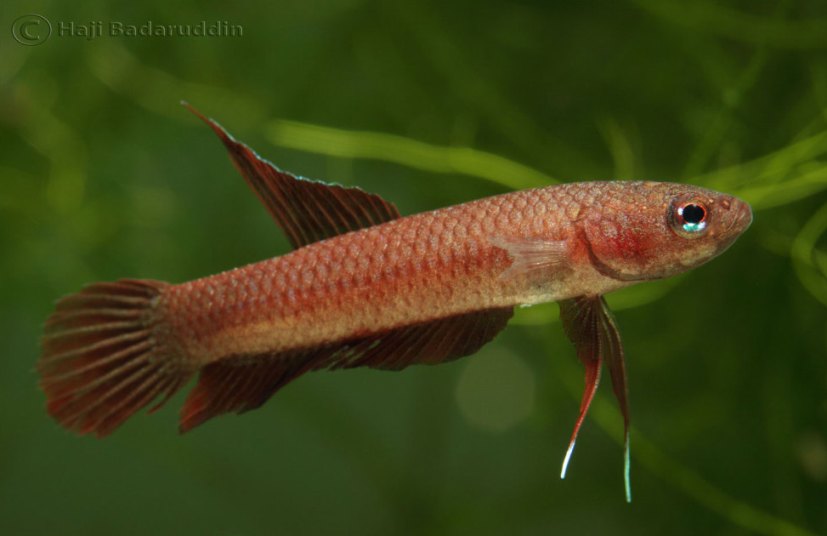
Betta rutilans
Witte & Kottelat, 1991
Max length35mm SL1.4in SLTank45 × 30cm18 × 12inTemp22–27°C72–81°FpH3.0–6.0This species is included in the B. coccina group/complex of closely-related Betta species within the genus. This assemblage mostly comprises small, red-coloured fishes, with the exceptions of B. persephone and B. miniopinna which are darkish, and identifying some of them can be problematic as external patterning can be both similar and confusingly variable.