Results for “population”
Type a name: scientific, common, or one a species used to go by. Or narrow the catalogue with the filters.
Filters
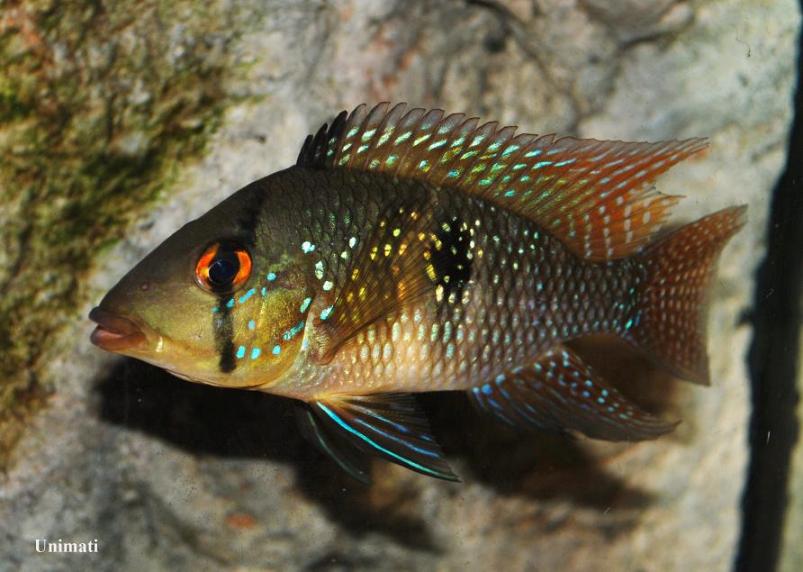
'Geophagus' brasiliensisPearl Cichlid
Quoy & Gaimard, 1824
Max length250mm SL10in SLTank150 × 45cm60 × 18inTemp18–28°C64–82°FpH6.0–8.0This species is also known as the 'pearlscale' or 'mother-of-pearl' cichlid in deference to the iridescent body scaling. It's also worth noting that fishes sold as Gymnogeophagus australis in Europe are 'G.' brasiliens is more often than not. Wild specimens exhibits significant dissimilarities in body colour and patterning depending on locality with basic colouration being dominated by varying shades of blue, green or yellow, for example. Some populations al...
Glossolepis incisusRed Rainbowfish
authority not recorded
Max length150mm SL6in SLTank120 × 30cm48 × 12inTemp22–25°C72–77°FpH7.0–8.0Also known as the salmon-red or New Guinea rainbowfish, this is one of the most popular rainbows in the hobby. Unfortunately, the colouration of today's mass-bred specimens is not even close to the spectacular wild fish. If you can find wild specimens they are well worth it.
Gnathonemus petersiiElephantnose Fish
authority not recorded
Max length225mm SL9in SLTank120 × 45cm48 × 18inTemp23–28°C73–82°FpH6.0–7.5Also known as Peter's elephantnose, this fascinating species is currently the most common Mormyrid in the hobby. Sadly, its popularity means it is often kept in unsuitable conditions. To deny the fish a soft substrate really is cruel, as it uses its "trunk" to locate food hidden in the substrate. It also needs dim lighting, and will commonly become withdrawn and pine away if kept under bright lights. If you cannot provide suitable lighting, add food to the tank at lights out to al...
Gobioides broussonnetiiViolet Goby
authority not recorded
Max length625mm SL25in SLTank120 × 60cm48 × 24inTemp22–26°C72–79°FpH7.5–9.0This fish is also commonly sold as the dragon or Peruvian goby, or dragon fish, and its bizarre appearance has made it popular in the trade. This is unfortunate, as not only does it grow very large, but it has specialised feeding requirements and does not survive for very long in freshwater. When provided with the correct conditions, however, it makes a unique and fascinating captive subject. There is a smaller species in the genus, G. peruanus, that does survive in freshwater, being a riverine ...
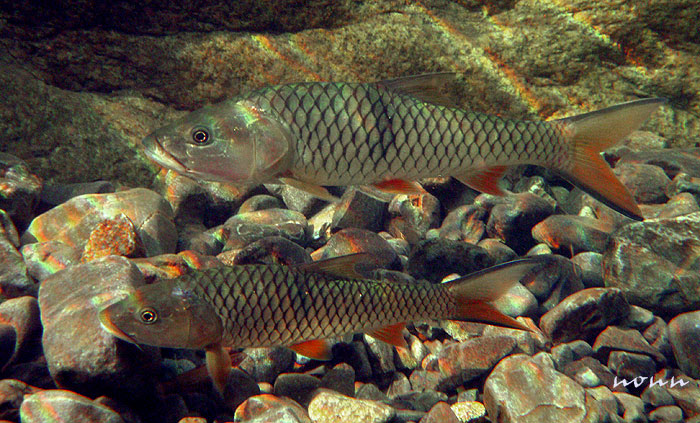
Hampala macrolepidotaHampala Barb
Kuhl & van Hasselt, 1823
Max length700mm SL28in SLTanknot recordedTemp20–26°C68–79°FpH5.5–8.0This species is also known by the vernacular 'jungle perch' or 'sidebar barb' and should not be considered an aquarium subject in all but the most extreme circumstances since it can grow to over 2 feet in length, weigh in excess of 5 kg and is a powerful, pelagic predator. It's also a popular sport fish with a reputation for striking hard.
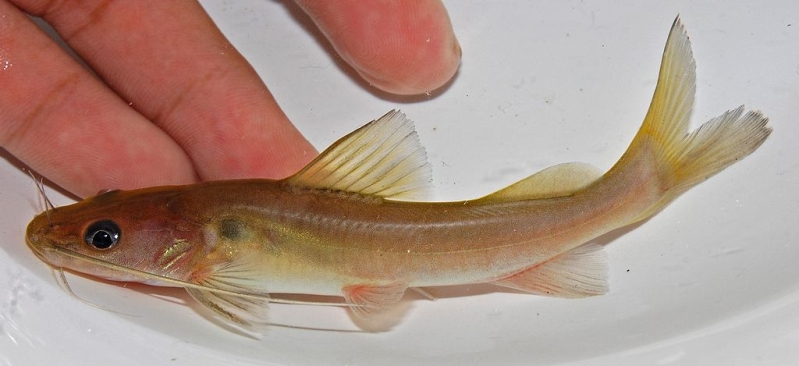
Hemibagrus planiceps
Valenciennes, 1840
Max length263mm SL10in SLTanknot recordedTempnot recordedpHnot recordedThis species is now considered endemic to Java but has been confused with the congeners H. gracilis (from eastern Peninsular Malaysia), H. velox (Sumatra) and H. bongan (Borneo) in the past, while the population formerly considered to inhabit northwestern Peninsular Malaysia has been described as H. divaricatus (Ng and Kottelat, 2013).
Hemichromis bimaculatusJewel Cichlid
authority not recorded
Max length150mm SL6in SLTank120 × 30cm48 × 12inTemp22–28°C72–82°FpH6.0–7.8Not recommended for the beginner or for the general community tank, despite often being sold as such. The Jewel Cichlid is regularly seen in the trade. Recently, Hemichromis lifalili has become the more popular fish. These species can be easily distinguished as H. lifalili have only 2 black spots on the flanks whereas H. bimaculatus has 3, having an extra spot on the caudal peduncle....
Hemichromis elongatusFive Star General
authority not recorded
Max length150mm SL6in SLTanknot recordedTemp22–25°C72–77°FpH6.5–7.5A real bruiser of a cichlid, H. elongatus is not seen for sale very often, and with good reason. Pound for pound it must rank as one of the most aggressive cichlids available in the hobby. It is such an efficient predator that, in some of its native countries, it is used to control populations of Tilapia. As a result it's definitely not recommended for the inexperienced aquarist. The common name is derived from the row of 5 dark markings that run laterally along the flanks of the fish. I...
Hemigrammus barrigonaeBarrigona Tetra
authority not recorded
Max length40mm SL1.6in SLTank60 × 38cm24 × 15inTemp22–26°C72–79°FpH5.5–7.0Not a common species in the hobby, although it does occasionally show up as a contaminant among imports of more popular species. Like all Hemigrammus, the taxonomic status of this species is currently Incertae Sedis, meaning uncertain. The genus is currently used as something of a catch-all for over 70 species of small characin. Most experts agree that a full revision is required, with the likely outcome that many species will be placed into new or different genera....
Hemigrammus belottiiDash-dot Tetra
authority not recorded
Max length40mm SL1.6in SLTank60 × 38cm24 × 15inTemp23–27°C73–81°FpH6.0–7.0Not a common fish in the trade, most of the specimens imported come in as contaminants among batches of more popular species. Like all Hemigrammus, the taxonomic status of this species is currently Incertae Sedis, meaning uncertain. The genus is currently used as something of a catch-all for over 70 species of small characin. Most experts agree that a full revision is required, with the likely outcome that many species will be placed into new or different genera....
Hemigrammus cupreusShiny Copper Tetra
authority not recorded
Max length35mm SL1.4in SLTank60 × 38cm24 × 15inTemp23–27°C73–81°FpH6.5–7.2Not a common species in the hobby, although it does occasionally show up as a contaminant among imports of more popular species. Like all Hemigrammus, the taxonomic status of this species is currently Incertae Sedis, meaning uncertain. The genus is currently used as something of a catch-all for over 70 species of small characin. Most experts agree that a full revision is required, with the likely outcome that many species will be placed into new or different genera....
Hemigrammus erythrozonusGlowlight Tetra
authority not recorded
Max length40mm SL1.6in SLTank60 × 38cm24 × 15inTemp24–28°C75–82°FpH5.5–7.5This species is ubiquitous in most dealers' tanks and is one of the best choices for the newcomer to fishkeeping, being both hardy and inexpensive. There is a selectively-bred albino form that has been produced for the trade and has become popular in recent years. Care for this is identical to the standard form. Like all Hemigrammus, the taxonomic status of this species is currently Incertae Sedis, meaning uncertain. The genus is currently used as something of a catch-all for over 70 spe...
Hemigrammus levis
authority not recorded
Max length50mm SL2.0in SLTank60 × 38cm24 × 15inTemp24–28°C75–82°FpH5.5–7.0A rather rare fish in the UK hobby. It occasionally shows up as a contaminant among imports of more popular species. Like all Hemigrammus, the taxonomic status of this species is currently Incertae Sedis, meaning uncertain. The genus is currently used as something of a catch-all for over 70 species of small characin. Most experts agree that a full revision is required, with the likely outcome that many species will be placed into new or different genera....
Hemigrammus pulcherPretty Tetra
authority not recorded
Max length45mm SL1.8in SLTank60 × 38cm24 × 15inTemp23–27°C73–81°FpH5.5–7.0Also known as the garnet or black wedge tetra, H. pulcher is deservedly popular in the hobby. It's both hardy and inexpensive, and is a good choice for the beginner. There was previously a subspecies, H. pulcher haraldi. This has now been reclassified as a distinct species, H. haraldi. Like all Hemigrammus, the taxonomic status of this species is currently Incertae Sedis, meaning uncertain. The genus is currently used as something of a catch-all for over 70 species of small characin. Mo...
Hemigrammus stictusRed-base Tetra
authority not recorded
Max length60mm SL2.4in SLTank60 × 38cm24 × 15inTemp23–27°C73–81°FpH5.5–7.0Not often seen for sale, but occasionally shows up as a contaminant among imports of more popular species. It's a subtly attractive species when in good condition. Like all Hemigrammus, the taxonomic status of this species is currently Incertae Sedis, meaning uncertain. The genus is currently used as something of a catch-all for over 70 species of small characin. Most experts agree that a full revision is required, with the likely outcome that many species will be placed into new or diff...
Hepsetus odoeAfrican Pike Characin
authority not recorded
Max length700mm SL28in SLTank180 × 60cm72 × 24inTemp25–28°C77–82°FpH6.0–7.5The only species in the genus, and a popular game fish in its native range, H. odoe superficially resembles our native European Pike. It is an ambush predator with a fearsome set of teeth, and should be handled very carefully, particularly when maintaining its tank. Although juvenile specimens have become relatively common in the trade in the last few years, this is strictly a species for the specialist who is able to provide it with a suitably large aquarium and the correct conditions. In sm...
Hydrocynus vittatusAfrican Tiger Fish
authority not recorded
Max length1050mm SL41in SLTank300 × 90cm118 × 36inTemp24–28°C75–82°FpH6.5–8.0A voracious piscivore that hunts in large shoals in the wild, this species is perfectly designed for its lifestyle. It is very streamlined and muscular and has one of the most amazing sets of teeth of any freshwater fish. These are dagger-shaped and interlock, meaning the fish can rip chunks out of its prey. The teeth are visible even when the animal's mouth is closed, which makes for a fearsome sight. It is a popular game fish in its native range, with the largest specimen caught weighi...
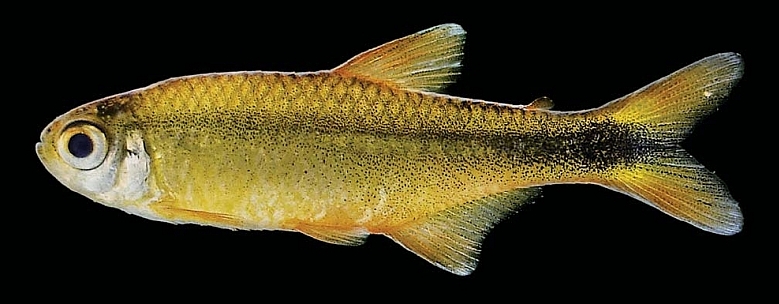
Hyphessobrycon brumado
Zanata & Camelier, 2010
Max length32mm SL1.3in SLTanknot recordedTempnot recordedpHnot recordedThis species superficially resembles the popular silver-tipped tetra, Hasemania nana, but can easily be told apart by presence (vs. absence) of an adipose-fin. It can be told apart from other Hyphessobrycon sp...
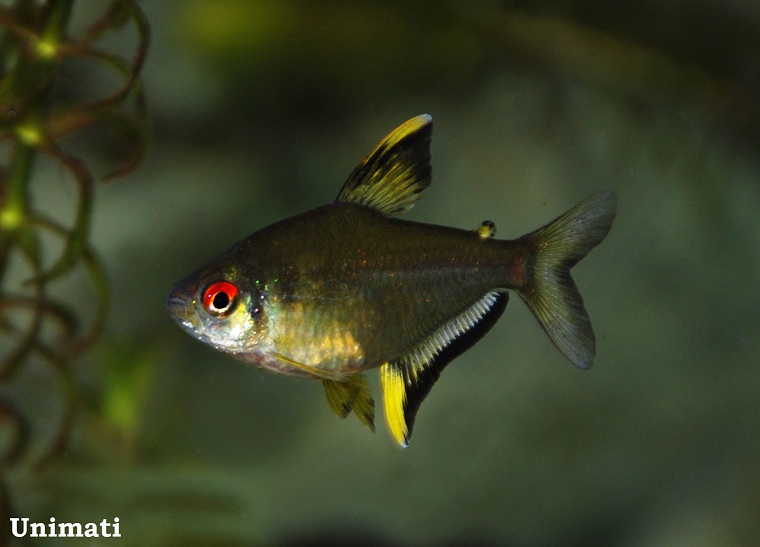
Hyphessobrycon pulchripinnisLemon Tetra
Ahl, 1937
Max length40mm SL1.6in SLTank80 × 30cm31 × 12inTemp20–28°C68–82°FpH5.0–7.5This species is a popular aquarium fish and is bred on a commercial basis in several countries, with a selectively-bred albino form also available. Wild specimens are rarely collected due to the low price of the farmed fish, but the origin of the commercial strain is questionable. The species was considered endemic to the rio Tapajós basin, but in the early 1990s fish appearing identical to the aquarium form were photographed in the...
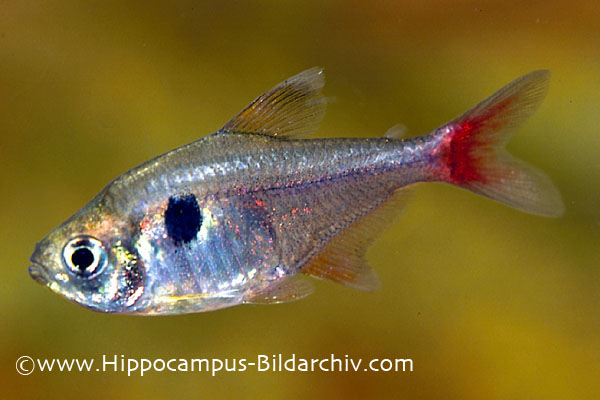
Hyphessobrycon roseusYellow Phantom Tetra
Géry, 1960
Max length20mm SL0.8in SLTank60 × 30cm24 × 12inTemp20–28°C68–82°FpH5.0–7.0This small species is a popular aquarium fish but there is some confusion surrounding its identity. Two colour forms have been traded, one of which also possesses tiny hooks on the fin rays. It can be distinguished from congeners by colour pattern; the body is rose-coloured, fins red with no black markings, and the ovoid humeral spot is prominent, measuring around half of the body depth.