Search the catalogue
Type a name: scientific, common, or one a species used to go by. Or narrow the catalogue with the filters.
Filters
Parambassis wolffiiDuskyfin Glass Fish
authority not recorded
Max length200mm SL8in SLTank120 × 30cm48 × 12inTemp18–25°C64–77°FpH6.5–8.0This species is an infrequent import. It is very common in it's native countries, where it is used as a food fish.
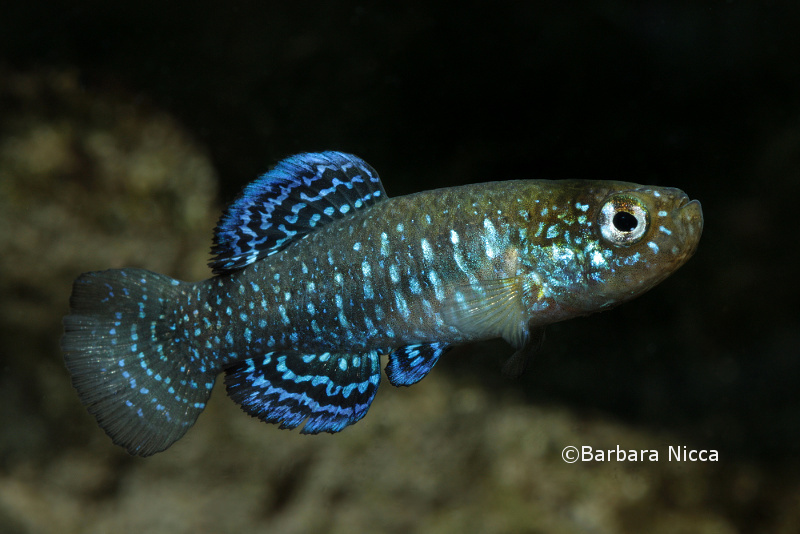
Paraphanius mentoIridescent Toothcarp
Heckel, 1843
Max length70mm SL2.8in SLTank120 × 30cm48 × 12inTemp2–30°C36–86°FpH7.5–9.0This species has something of a confused history having been previously been considered synonymous with both A. sophiae (a separate species native to Iraq and Iran) and A. cypris (currently considered a junior synonym of A. mento). Although some populations occur close to and even sympatric with other members of the genus in Turkey phylogenetic studies have shown it to be more closely-related to the Middle Eastern species A. dispar dispar, A. d. richardsoni, A. ginaonis and A. sirhani. It's...
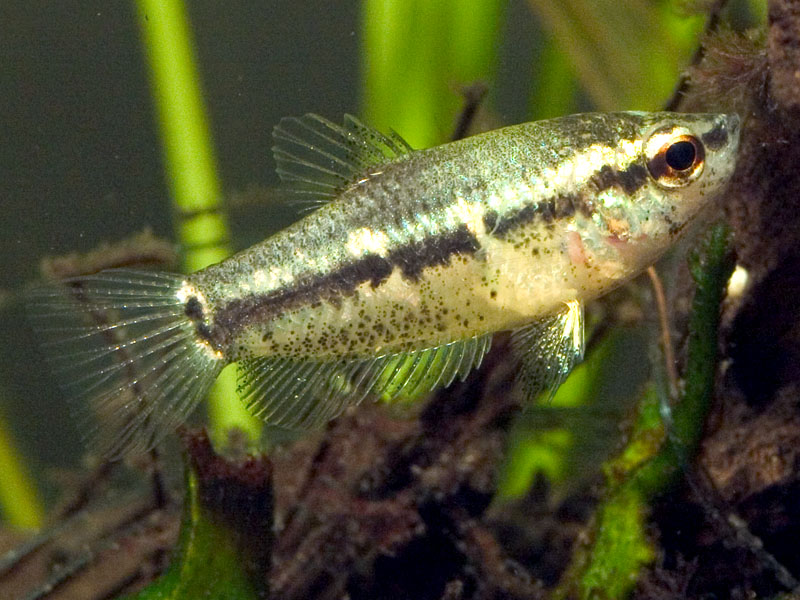
Parasphaerichthys lineatus
Britz & Kottelat, 2002
Max length19mm SL0.7in SLTank40 × 20cm16 × 8inTemp22–27°C72–81°FpH6.5–8.0This species is sometimes traded under the names 'mini chocolate gourami', 'Burmese chocolate gourami' or mislabelled as the congener P. ocellatus, these two currently comprising the only known members of the genus. P. lineatus can be told apart from P. ocellatus via the following combination of characters: smaller body size (maximum standard length 18.7 mm vs. 32.0 mm); absence of ocellus-type marking in middle of each flank (vs. presence); presence of dark, stripe (vs. abs...
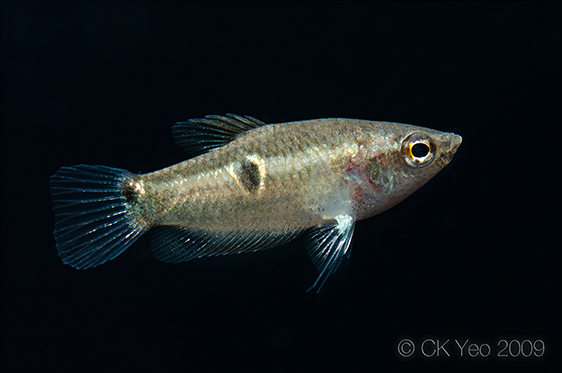
Parasphaerichthys ocellatusEyespot Gourami
Prashad & Mukerji, 1929
Max length32mm SL1.3in SLTank45 × 30cm18 × 12inTemp15–25°C59–77°FpH6.5–7.5To date the species is known mostly from the upper Ayeyarwady River basin in northern Myanmar where it's been collected close to the city of Myitkyina in Kachin State as well as around nearby Lake Indawgyi, the largest inland lake in Southeast Asia and home to ten globally threatened bird species. The lake and surrounding area were designated a protected zone by the Ministry of Ecotourism in 1999 and now form the Indawgyi Lake Wildlife Sanc...
Paratilapia polleni
authority not recorded
Max length280mm SL11in SLTank120 × 45cm48 × 18inTemp17–28°C63–82°FpH6.5–8.0Now the only species in the genus Paratilapia, P. polleni is known as the "marakely" to many natives in Madagascar, which means "black fish". As with most Madagascan cichlid species, it is highly endangered in the wild due to habitat destruction and competition from introduced species and all attempts at captive breeding are to be encouraged. There is still some confusion as to the identity of the "true" P. polleni as there are both large and small-spotted forms...
Paretrolplus damii
authority not recorded
Max length300mm SL12in SLTank180 × 60cm72 × 24inTemp26–30°C79–86°FpH7.0An attractive, if aggressive Madagascan cichlid. Not commonly available in the UK, it can occasionally be obtained through cichlid enthusiasts aor specialist dealers.
Pareutropius buffeiThree Striped African Glass Catfish
authority not recorded
Max length80mm SL3.1in SLTank75 × 30cm30 × 12inTemp24–28°C75–82°FpH6.0–7.5Formerly known as Eutropiellus buffei, this midwater swimming, diurnal catfish is very often sold as "Debauwi catfish". Pareutropius debauwi is a closely related species which is, in fact, seldom imported. Adults of the two species can be distinguished by several characteristics. In buffei there are three lateral stripes along the body, whilst debauwi possesses only one. Buffei also has black spots in the upper and lower parts of the caudal fin, and the fin itself has rounded lobes. Th...
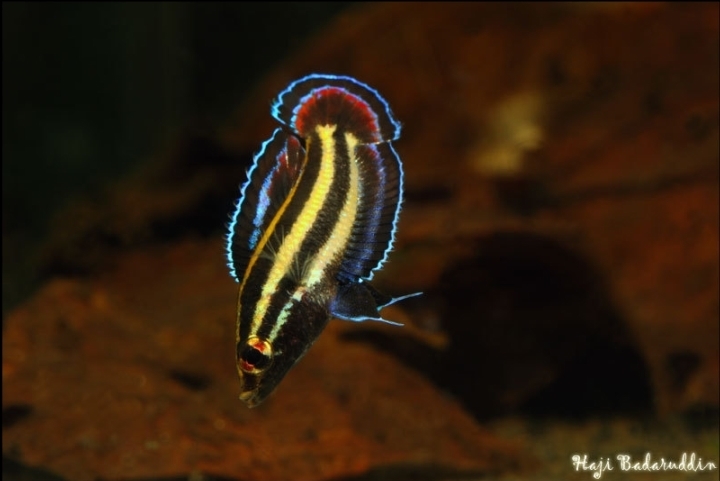
Parosphromenus alfredi
Kottelat & Ng, 2005
Max length26mm SL1.0in SLTank40 × 20cm16 × 8inTemp22–28°C72–82°FpH3.0–6.5Type locality is 'Kota Tinggi, Mawai-Desaru road, Johor, Peninsula Malaysia' and this species is endemic to a small portion of eastern Johor state, Peninsular Malaysia around the towns of Kota Tinggi, Mawai and Desaru. A great deal of its original habitat has been lost via deforestation and other human alterations and it's considered in grave danger of extinction.
Parosphromenus allani
Brown, 1987
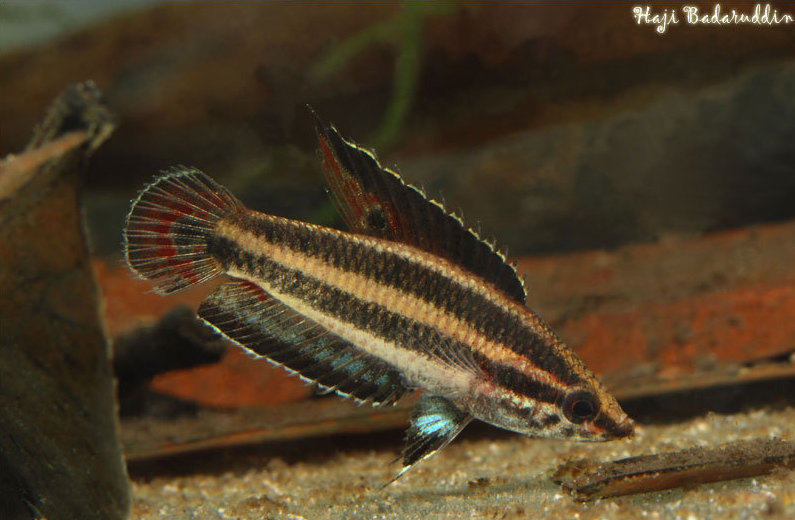
Max length35mm SL1.4in SLTank40 × 20cm16 × 8inTemp22–28°C72–82°FpH3.0–6.5Type locality is given only as 'Sarawak state, Borneo, East Malaysia', with the material deriving from Sibu Division in western Sarawak. It's since been recorded at other localities within Sarawak, to which it appears endemic, but it remains unclear whether all represent a single species or not with those from the area around Lundu in northwestern Kuching Division in par...
Parosphromenus anjunganensis
Kottelat, 1991
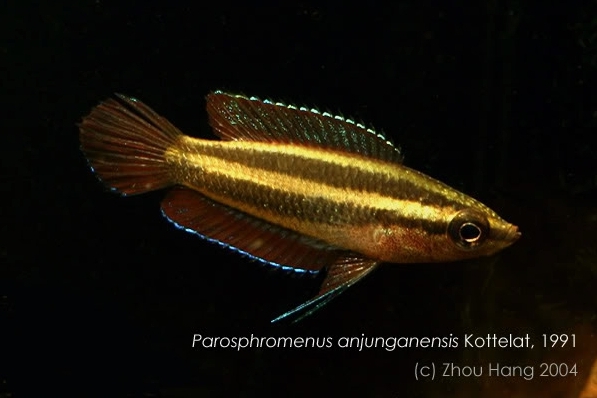
Max length35mm SL1.4in SLTank40 × 20cm16 × 8inTemp22–28°C72–82°FpH3.0–6.5It's care requirements, disposition, and especially conservation status dictate that it should be maintained alone or alongside a group of small, peaceful cyprinids such as Boraras or Sundadanio spp. Likewise, different Parosphromenus spp. should not be kept together since the females of many are very difficult to tell apart and some are undoubtedly capable of hybridising.
Parosphromenus bintan
Kottelat & Ng, 1998
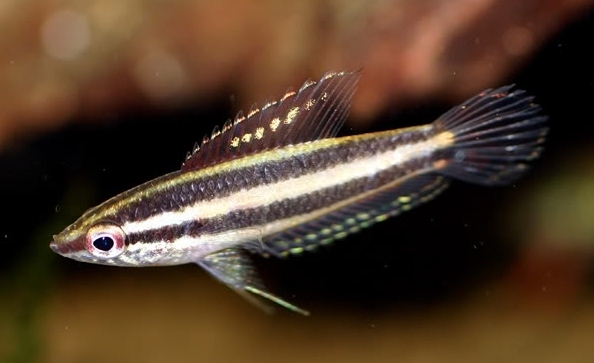
Max length26mm SL1.0in SLTank40 × 20cm16 × 8inTemp22–28°C72–82°FpH3.0–6.5This species is not generally available in the aquarium hobby on a commercial basis but is occasionally collected and distributed by private aquarists. It's name is sometimes misapplied to commercial shipments of other species, and there also exist a number of other fish with rounded caudal-fins that may or may not be conspecific, including P. sp. 'blue line' and P. sp. 'Selatan' from Sumatra.
Parosphromenus deissneriDeissner's Liquorice Gourami
Bleeker, 1859
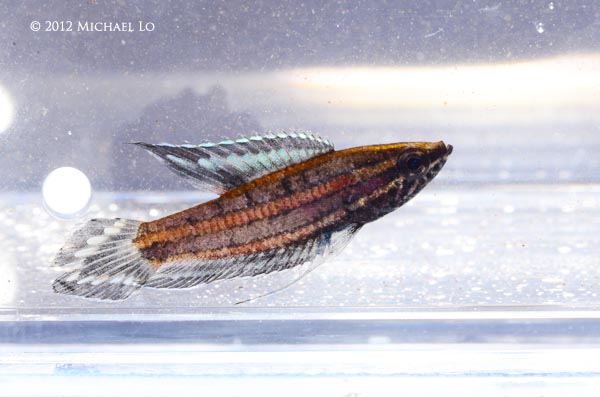
Max length40mm SL1.6in SLTank40 × 20cm16 × 8inTemp22–28°C72–82°FpH3.0–6.5P. deissneri was the only recognised member of the genus for almost a century following its description in 1859. As a result its name has and continues to be widely misapplied in both aquarium and ichthyological literature although it's probably always been very rare in the hobby, while a number of fishes previously identified under the name from other pa...
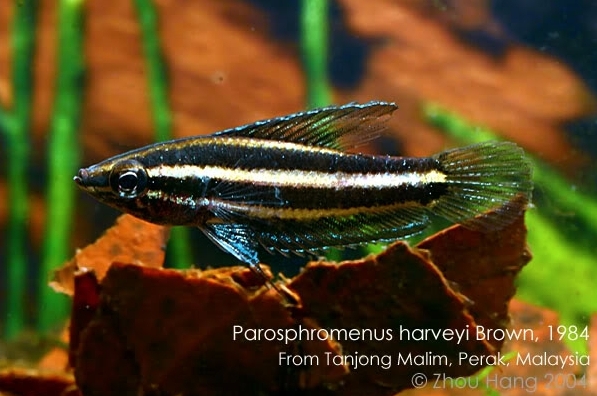
Parosphromenus harveyi
Brown, 1987
Max length35mm SL1.4in SLTank40 × 20cm16 × 8inTemp22–28°C72–82°FpH3.0–6.5Parosphromenus spp. have been grouped arbitrarily based on courtship behaviour in males which adopt a 'head-down', 'head-up', or 'horizontal' position depending on species. P. harveyi belongs to the former, most abundant, assemblage in which the male assumes a near-vertical position with the head lowermost and fins splayed during nuptial displays.
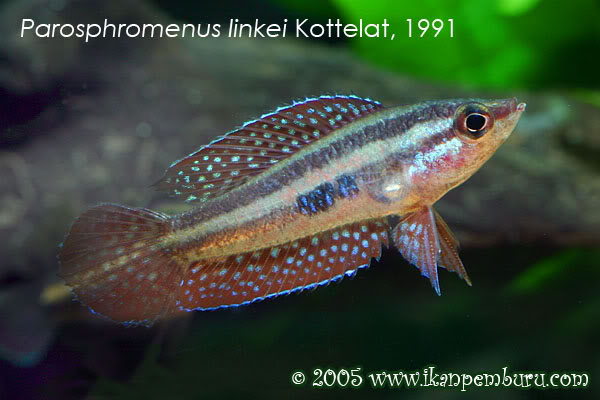
Parosphromenus linkei
Kottelat, 1991
Max length35mm SL1.4in SLTank40 × 20cm16 × 8inTemp22–28°C72–82°FpH3.0–6.5This species is said to be slightly easier to maintain than the majority of congeners and is therefore a recommended choice for those new to maintaining Parosphromenus spp. in the aquarium. It's occasionally available on a commercial basis and we've seen it traded as 'moonspot licorice gourami' in the past. There exist at least three colour forms on...
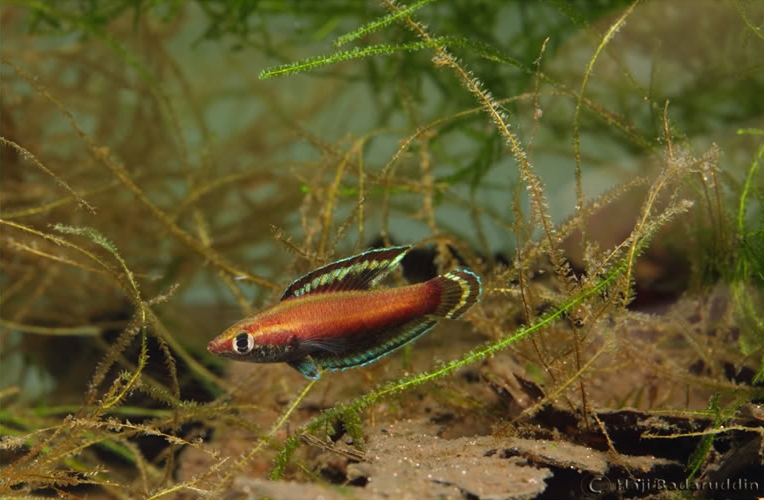
Parosphromenus nagyi
Schaller, 1985
Max length35mm SL1.4in SLTank40 × 20cm16 × 8inTemp22–28°C72–82°FpH3.0–6.5In males the dorsal, anal and caudal have a black subdistal band bordered on either side by bluish iridescent bands, with the inner one significantly thicker. The pelvic fins are iridescent emerald green with a dark blotch at the base and a subdistal dark spot, while the pectoral fins are hyaline.
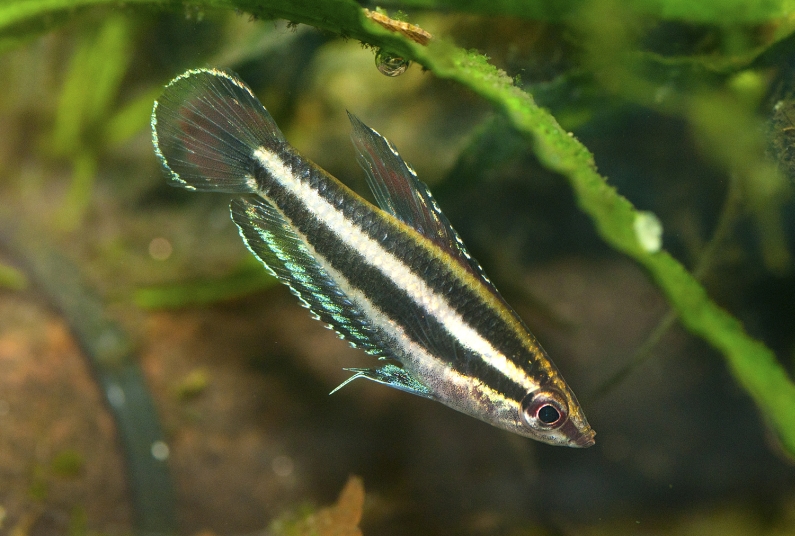
Parosphromenus opallios
Kottelat & Ng, 2005
Max length30mm SL1.2in SLTank40 × 20cm16 × 8inTemp22–28°C72–82°FpH3.0–6.5Endemic to Central Kalimantan (Kalimantan Tengah) province, Borneo, Indonesia although the full extent of its range remains somewhat unclear. Initial collections were from the southwestern tip of the province, in the Jelai Bila river basin near Sukamara and Lamand basin close to Pangkalan Bun, both of which are tributaries within the Arut drainage, while it's subsequently been recorded in the Benipah river system further east.
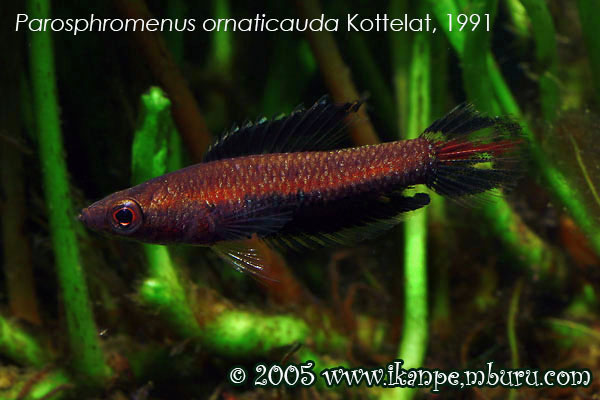
Parosphromenus ornaticauda
Kottelat, 1991
Max length30mm SL1.2in SLTank45 × 30cm18 × 12inTemp22–28°C72–82°FpH3.0–6.5This species has occasionally appears in the aquarium trade in substantial quantities but is not an easy species to maintain in captivity and often susceptible to disease post-import. It's sometimes sold as 'ornate licorice gourami'. It's among the smallest members of the gen...
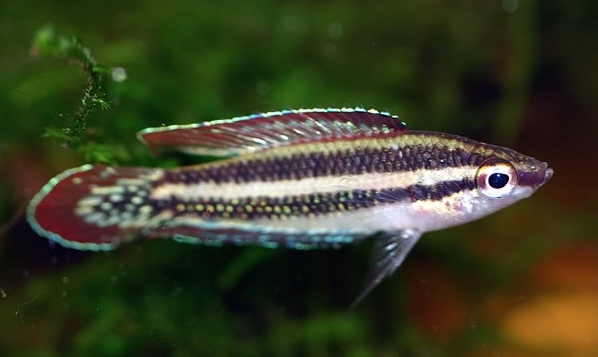
Parosphromenus quindecim
Kottelat & Ng, 2005
Max length40mm SL1.6in SLTank45 × 30cm18 × 12inTemp22–28°C72–82°FpH3.0–6.5This species has occasionally been traded on a commercial basis and was known as P. sp. 'Manis Mata' prior to description, with the latter apparently referring to a location some 100 km away from the type locality where the fish do not occur. It's said to be slightly easier to maintain than the majority of congeners and is therefore a recommended choice for those ne...
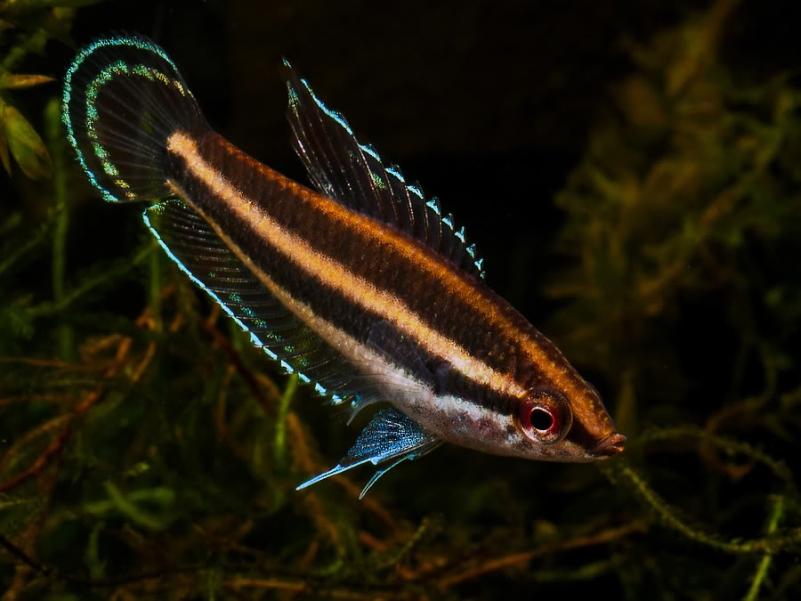
Parosphromenus sp. 'Sentang'
authority not recorded
Max length35mm SL1.4in SLTank40 × 20cm16 × 8inTemp22–28°C72–82°FpH3.0–6.5This fish has been widely available in the aquarium trade in recent years and is sometime referred to by the invented name P. 'sintangensis'. It displays a close resemblance to P. bintan and another unidentified fish known to aquarists as P. sp. 'blue line' although the inner bluish bands in the dorsal, anal and caudal fins are perhaps a little narrower in P. sp. 'Sentang' than the other two.
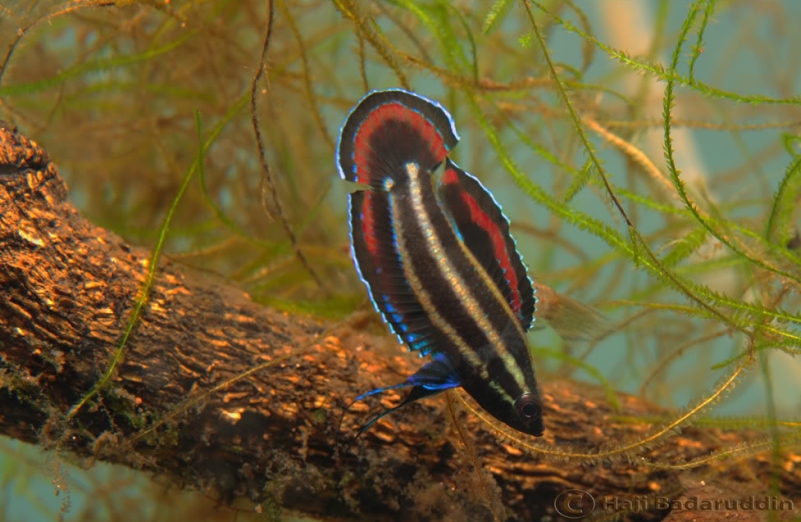
Parosphromenus tweediei
Kottelat & Ng, 2005
Max length35mm SL1.4in SLTank40 × 20cm16 × 8inTemp22–28°C72–82°FpH3.0–6.5This species has been known in the aquarium hobby since the mid-twentieth century but has almost always been identified as the congener P. deissneri and appears as such in the majority of aquarium literature. It can be told apart from congeners by the colour pattern in adult males (see 'Sexual Dimorphism') plus possession of 11-12 spinous dorsal-fin rays, 13-14 spinous anal-fin rays and 6-8 segmented anal-fin rays.