Results for “sp.”
Type a name: scientific, common, or one a species used to go by. Or narrow the catalogue with the filters.
Filters
Rineloricaria morrowi
authority not recorded
Max length130mm SL5in SLTank90 × 30cm36 × 12inTemp20–24°C68–75°FpH6.0–7.0This species is not seen as often as some others in the genus. In 2002 it was briefly placed in the resurrected genus Hemiloricaria, but this lasted less than twelve months, after which it was transferred back to Rineloricaria. Currently only Rineloricaria is valid, but you'll still see it being referred to as Hemiloricaria quite often....
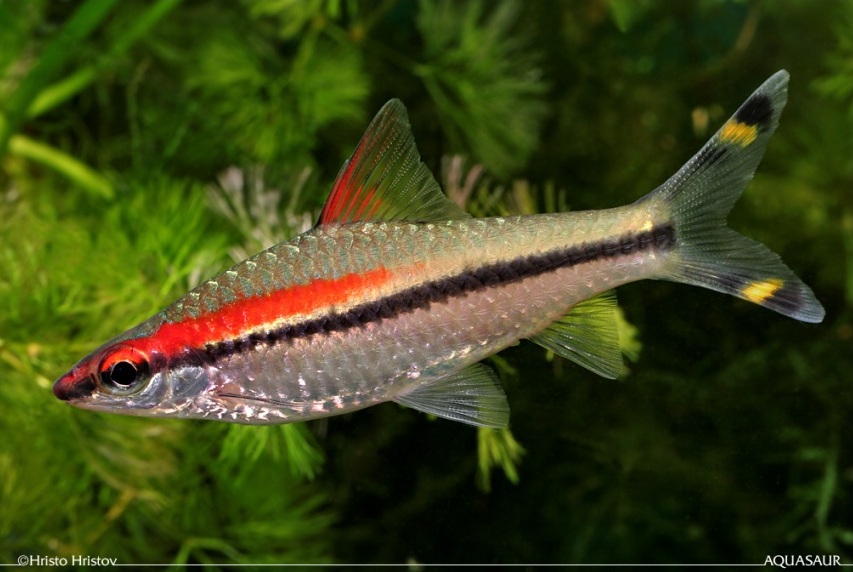
Sahyadria denisoniiRed-line Torpedo Barb
Day, 1865
Max length110mm SL4in SLTank120 × 45cm48 × 18inTemp15–25°C59–77°FpH6.5–7.8This species has become an extremely popular aquarium fish since it first appeared in the ornamental trade during the late 1990s, and it has been sold under various names including 'Denison's barb', 'denisoni barb', 'Denison's flying fox', 'rose line shark', 'bleeding-eye barb', 'red flash barb', and 'Indian flasher barb'. In India it is known locally as 'Miss Kerala' and 'Chorai Kanni' ( literally 'bleeding eyes').
Sarotherodon melanotheron melanotheronBlack Chin Tilapia
authority not recorded
Max length200mm SL8in SLTank120 × 38cm48 × 15inTemp23–28°C73–82°FpH7.0–8.0At present there are 5 sub-species, Sarotherodon melanotheron melanotheron, S. m. heudelotii, S. m. leonensis, S. m. nigripinnis and S. m. paludinosus. Confusingly, some of these are maternal mouthbrooders. It has been introduced into several countries for aquaculture purposes and thriving populations now exist in areas of Asia, Europe and the USA....
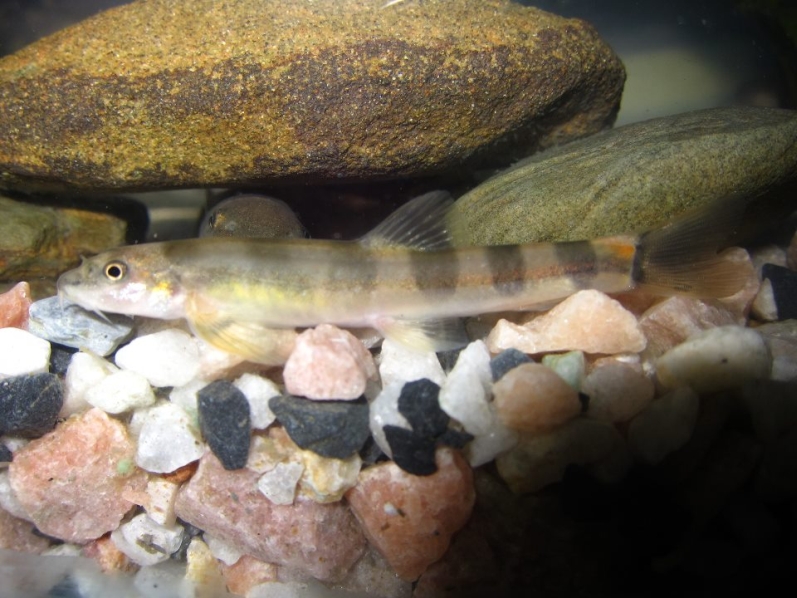
Schistura aizawlensis
Lalramliana, 2012
Max length49mm SL1.9in SLTank80 × 30cm31 × 12inTemp20–28°C68–82°FpH6.0–7.5Type locality is 'India: Mizoram: Muthi River, a tributary of Tuirial River in vicinity of Zemabawk, Aizawl, 23°44' 54" N 92°45'27" E', and to date this species is known only from the Muthi system. The Muthi is an affluent of the Tuirial River which is itself a tributary of the Barak watershed. The Barak is one of the great rivers of southern Assam and forms part of the Surma-Meghna River System.
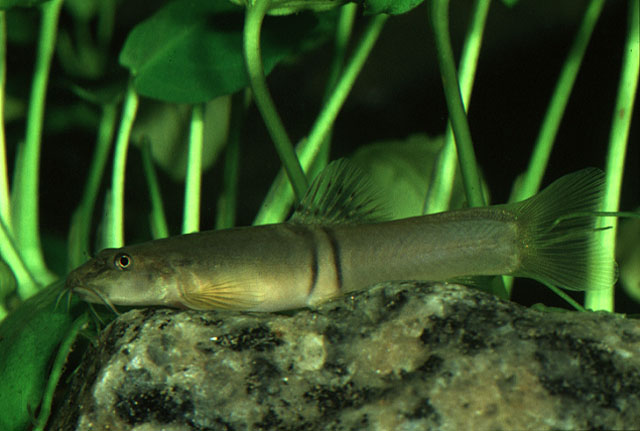
Schistura balteataSumo Loach
Rendahl, 1948
Max length80mm SL3.1in SLTank90 × 30cm36 × 12inTemp22–26°C72–79°FpH6.0–7.5This species is quite uncommon in the aquarium hobby although its name is sometimes used in reference to the similar-looking, apparently undescribed congener S. cf. balteata, and both are also traded as 'sumo loach', 'tri-banded sumo loach', and 'orange saddle-back loach'. Following Kottelat (1990) it's diagnosed by the following combination of characters: unique colour pattern consisting of two da...
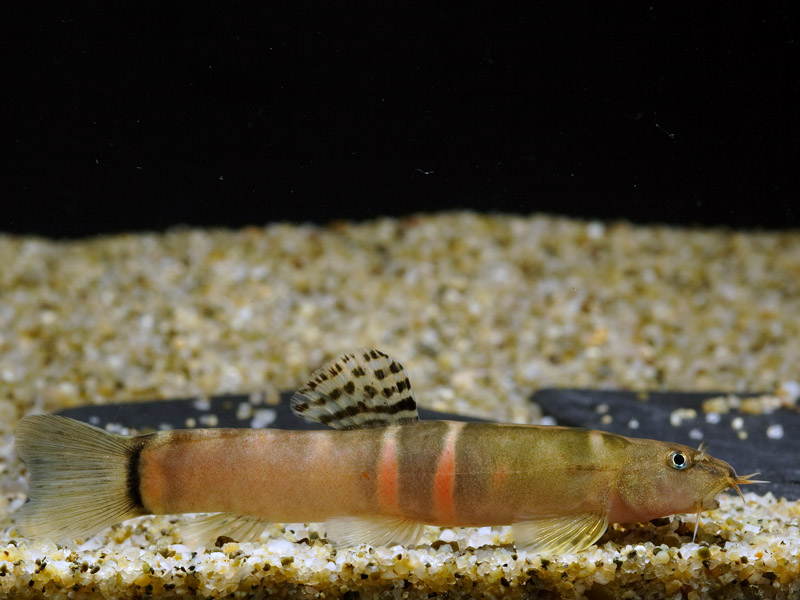
Schistura cf. balteataSumo Loach II
authority not recorded
Max length80mm SL3.1in SLTank90 × 30cm36 × 12inTemp22–26°C72–79°FpH6.5–7.5This apparently undescribed species has been available in the hobby since around 2006 and has been traded under several trade names of which others include 'tri-band sumo loach' and 'chubby loach'. The name 'Sumo II' is now in wide use to distinguish it from the real S. balteata since both have been traded as 'Sumo loach'...
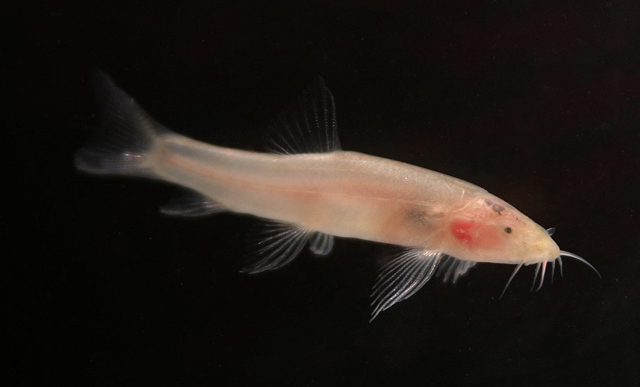
Schistura deansmarti
Vidthayanon & Kottelat, 2003
Max length105mm SL4in SLTanknot recordedTempnot recordedpHnot recordedType locality is 'Tham [=cave] Phra Sai Ngam, about 200 meters from entrance, Thung Salaeng Luang National Park, Phitsanulok Province, Thailand, 16°37'22"N, 100°39'47"E', and this species is endemic to the Tham Phra Sai Ngam cave system. Tham Phra Sai Ngam is a limestone cave system about 1.7 km long and containing a subterranean stre...
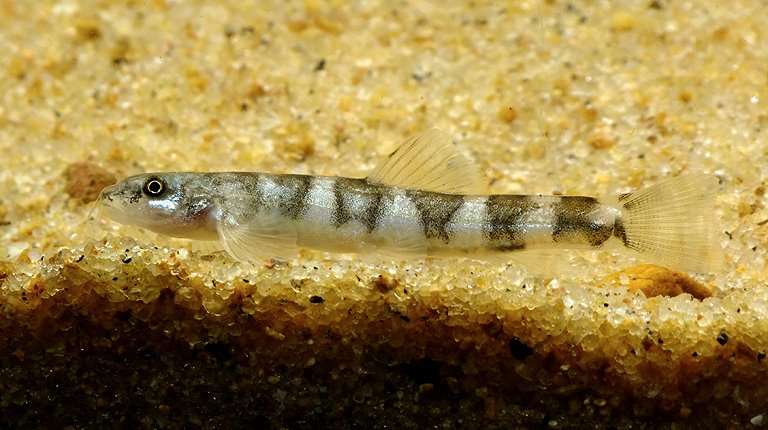
Schistura devdeviSaddleback Loach
Hora, 1935
Max lengthnot recordedTanknot recordedTemp15–22°C59–72°FpH6.5–8.0Type locality is 'Eastern Himalayas; small streams below Darjeeling and Sikkim, India', and this species is only known with certainty from upland parts of Assam, Sikkim, Arunachal Pradesh and West Bengal states in northern India. Records from Nepal apparently require confirmation while it may also occur in Bhutan.
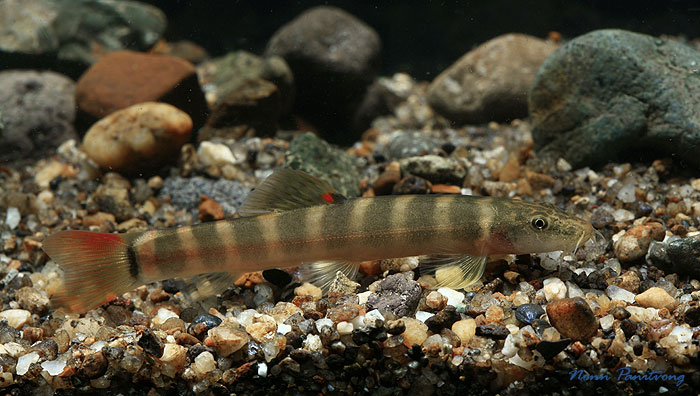
Schistura kengtungensis
Fowler, 1936
Max length65mm SL2.6in SLTank90 × 30cm36 × 12inTemp18–24°C64–75°FpH6.0–7.5This species is distributed in the middle Mekong River basin in north and northeastern Thailand, Myanmar and Xishuangbanna Dai Autonomous Prefecture, Yunnan province, southern China, and is also known from the Nam Beng, Nam Tha and Nam Yuoan drainages in Laos. Type locality is 'Laun We (Loi Mw...
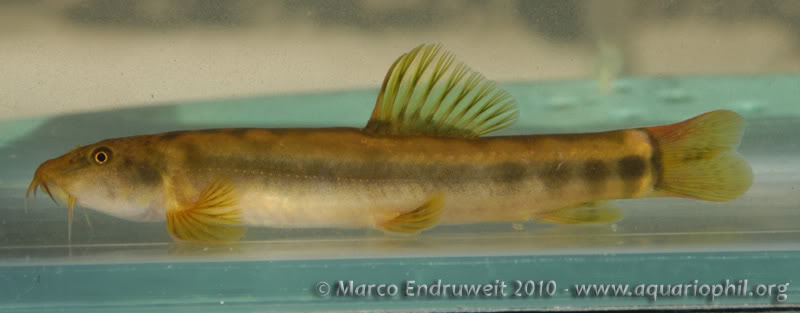
Schistura laterivittata
Zhu & Wang, 1985
Max length80mm SL3.1in SLTank120 × 30cm48 × 12inTemp10–22°C50–72°FpH7.0–9.0It's been considered a synonym of Schistura caudofurca (Mai, 1978) by the majority of recent authors following Kottelat (2001) but this appears to be a case of misidentification since the two species exhibit several notable differences based on their respective descriptions (Endruweit, 2010).
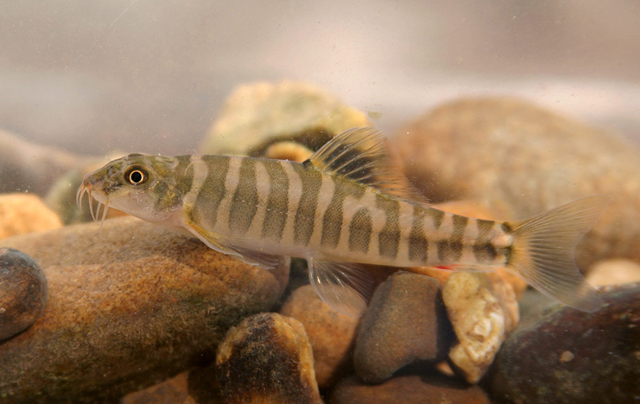
Schistura maepaiensis
Kottelat, 1990
Max length45mm SL1.8in SLTank80 × 30cm31 × 12inTemp20–26°C68–79°FpH6.0–7.5The type locality originally consisted of a shallow (0.5 - 1.5 m deep) stream with a substrate of rocks and boulders and flow varying from 'moderate to swift'. When the holotype was collected there in 1980 sympatric species included Acanthocobitis zonalternans, Puntius orphoides, Pethia ticto, Raiamas guttatus, Barilius barnoides, Mystacoleucus argenteus and Mastacembelus armatus plus unidentified members of Crossocheilus an...
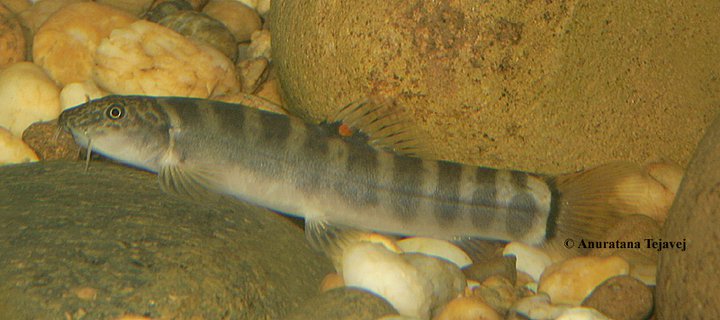
Schistura nicholsi
Smith, 1933
Max length74mm SL2.9in SLTank120 × 30cm48 × 12inTemp20–26°C68–79°FpH6.0–7.5This species is sometimes traded for aquaria but its name also appears to have been widely misapplied to other fishes. It can be identified via the following combination of characters: presence of 8-10 quite regular dark bars...
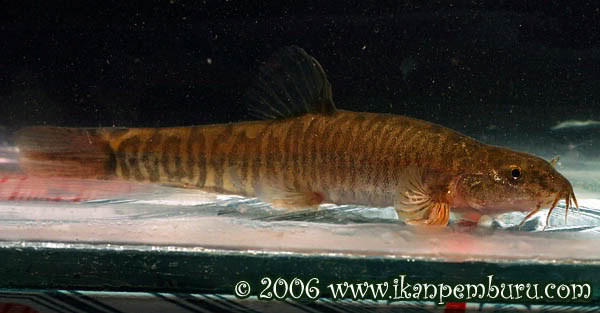
Schistura polytaenia
Zhu, 1982
Max length50mm SL2.0in SLTank60 × 30cm24 × 12inTemp20–24°C68–75°FpH6.0–7.5Schistura species are omnivorous although the bulk of their diet consists of small insects, worms, crustaceans and other zooplankton with only relatively small amounts of plant matter consumed, mostly via the stomach contents of prey items. In the aquarium they will acc...
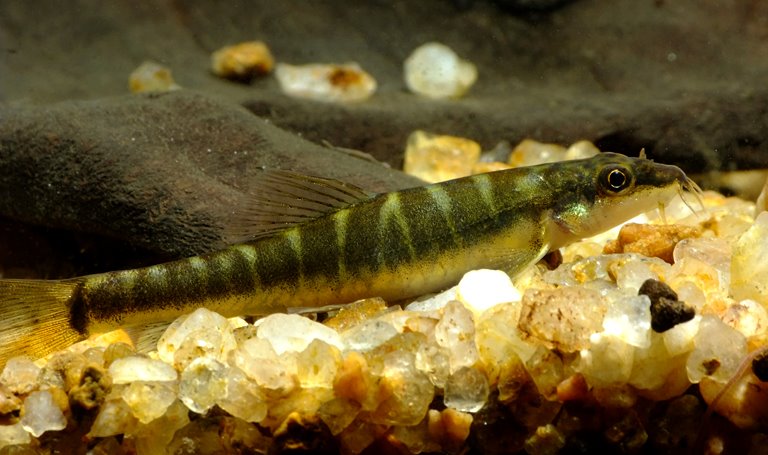
Schistura savonaHalf-banded Loach
Hamilton, 1822
Max length50mm SL2.0in SLTank60 × 30cm24 × 12inTemp15–24°C59–75°FpH6.5–8.5This species is seen in the aquarium trade on a relatively frequent basis and is sometimes sold as 'bicolor loach' in the United States. It can be distinguished from congeners by its unique colour pattern comprising 9-10 thin, yellowish bars on a dark background in the upper part of the body, and plain whitish colouration in the lower portion.
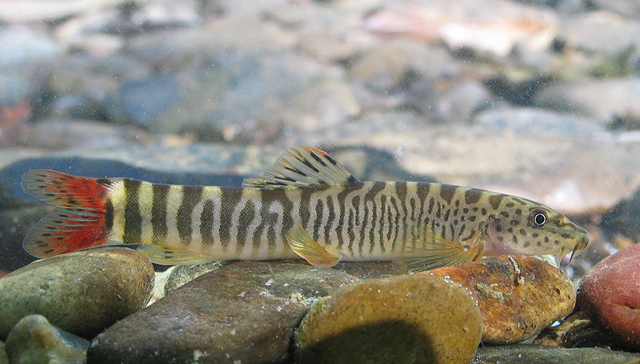
Schistura vinciguerrae
Hora, 1935
Max length75mm SL3.0in SLTank90 × 30cm36 × 12inTemp20–26°C68–79°FpH6.0–7.5This species is traded on a fairly regular basis and is similar in appearance to some congeners, most notably S. bella, S. mahnerti, S. multifasciata, S. poculi, S. reticulata, S. longa, S. conirostris and S. udomritthiruji. This assemblage has been referred to as the Schistura multifasciata 'group', and members share a...
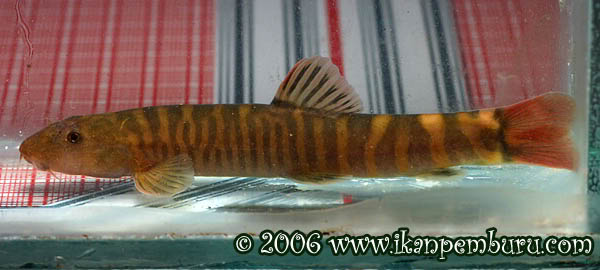
Schistura yingjiangensis
Zhu, 1982
Max lengthnot recordedTank80 × 30cm31 × 12inTemp20–24°C68–75°FpH6.0–7.5Following Kottelat (1990) the genus Nemacheilus is characterised by a combination of characters as follows: elongate body; complete lateral line; presence of enlarged scales above and below the lateral line in some species; caudal-fin forked to deeply forked with enlarged upp...
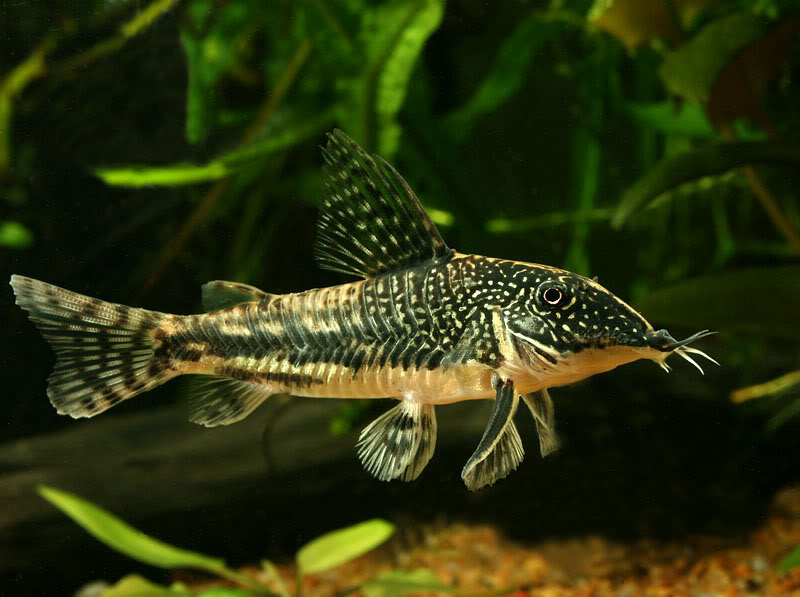
Scleromystax barbatusBanded 'Cory'
Quoy & Gaimard, 1824
Max length100mm SL3.9in SLTank120 × 45cm48 × 18inTemp16–24°C61–75°FpH5.5–7.5Scleromystax spp. are foraging omnivores, and most will accept sinking dried foods as well as small live and frozen varieties such as chironomid larvae (bloodworm), Tubifex, etc. Feeding a varied diet will ensure the fish are in optimum condition. Under no circumstances should they be expected to survive on 'left-overs' from other inhabitants of the aquarium or relied on to 'clean' the aquarium.
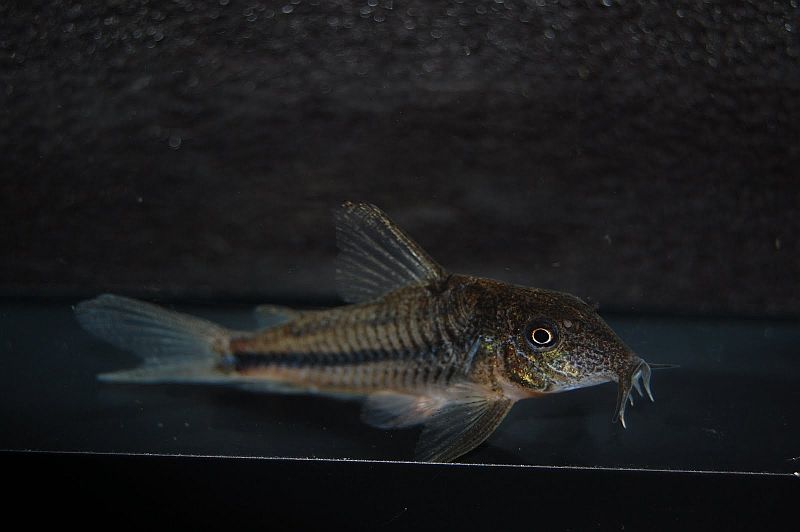
Scleromystax prionotos
Nijssen & Isbrücker, 1980
Max length65mm SL2.6in SLTank120 × 30cm48 × 12inTemp16–24°C61–75°FpHnot recordedScleromystax spp. are foraging omnivores, and most will accept sinking dried foods as well as small live and frozen varieties such as chironomid larvae (bloodworm), Tubifex, etc. Feeding a varied diet will ensure the fish are in optimum condition. Under no circumstances should they be expected to survive on 'left-overs' from other inhabitants of the aquarium or relied on to 'clean' the aquarium.
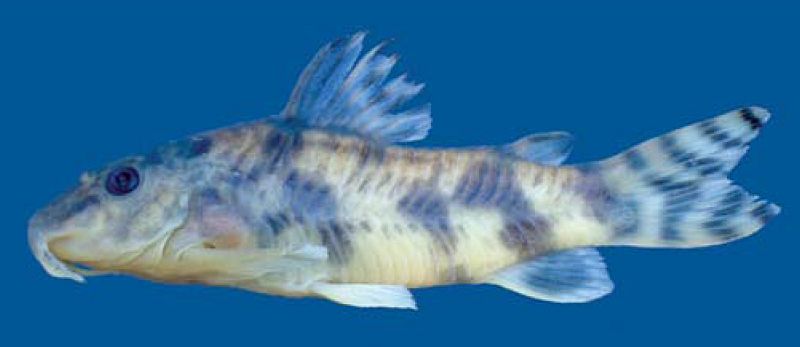
Scleromystax salmacis
Britto & Reis, 2005
Max length48mm SL1.9in SLTanknot recordedTempnot recordedpHnot recordedIt is most similar to S. macropterus, but differs in absence (vs. presence) of a black spot on the base of the median caudal-fin rays, a higher number of pectoral-fin rays (I,8,i vs. I,7,i), males with somewhat more slender bodies (25.7- 30.5% in SL [range 26.3-28.8% in type series] vs. 30.4-34.6% in SL), an...
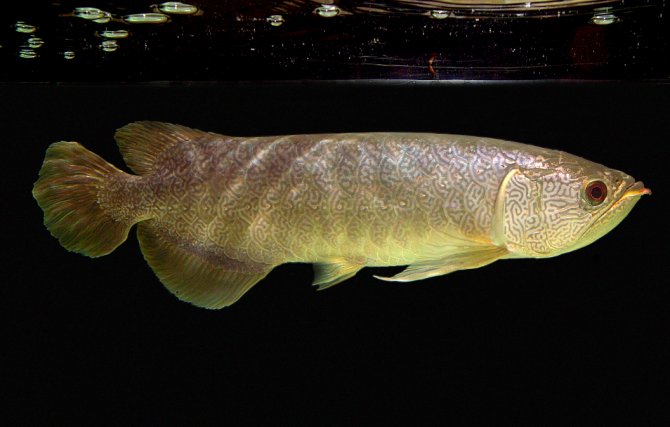
Scleropages inscriptus
Roberts, 2012
Max length600mm SL24in SLTanknot recordedTempnot recordedpHnot recordedThis species' distribution is unclear although individuals from the aquarium trade are said to have been collected in the Tenasserim river basin in Tananthayi Region, southern Myanmar. Type locality is 'supposedly from Tananthayi district, Tananthayi River basin, obtained dead from aquarium fish vendor at Meik'.