Results for “caudal-fin”
Type a name: scientific, common, or one a species used to go by. Or narrow the catalogue with the filters.
Filters
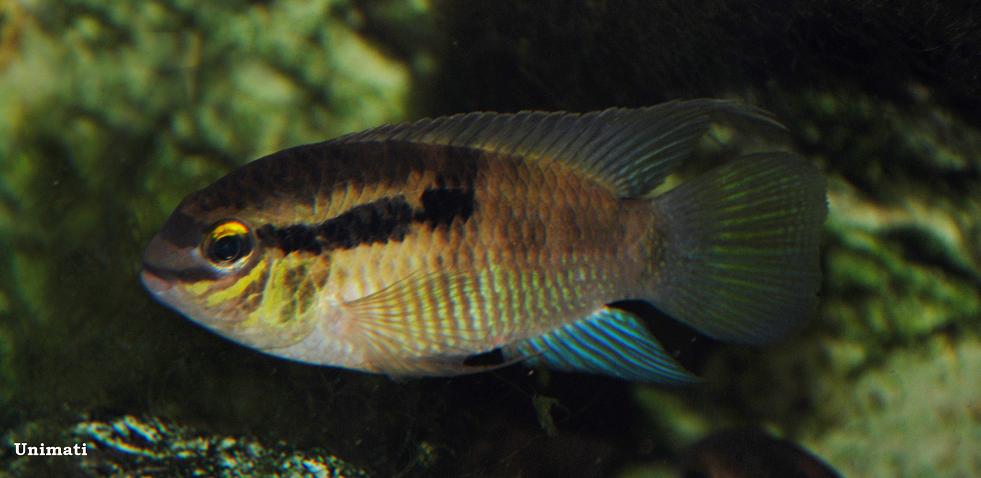
Laetacara thayeri
Steindachner, 1875
Max length65mm SL2.6in SLTanknot recordedTemp20–28°C68–82°FpH4.5–7.5This species is relatively rare in the aquarium trade. It can be differentiated from all congeners by a combination of possessing ctenoid (vs. cycloid) scales on the sides of the head plus lacking a dark spot at the caudal-fin base.
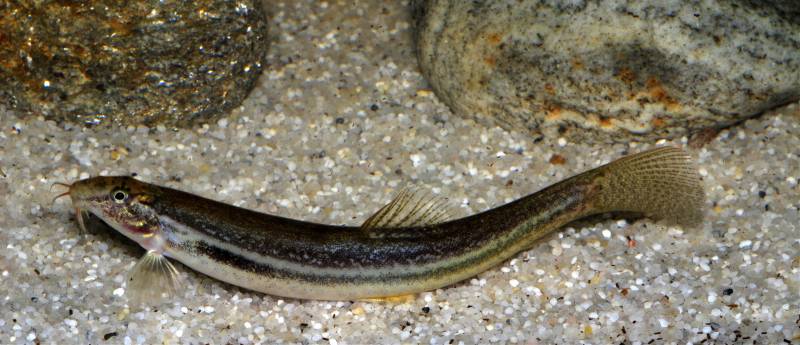
Lepidocephalichthys guntea
Hamilton, 1822
Max length150mm SL6in SLTank80 × 30cm31 × 12inTemp20–25°C68–77°FpH6.0–8.0This is one of the most frequently-traded members of the group and is an excellent choice for those new to keeping loaches. It's distinguishable from congeners by a combination of characters including: rounded/truncate caudal-fin; a scaleless patch on top of the head; relatively large adult size; flanks with spotted patterning in females and a solid...
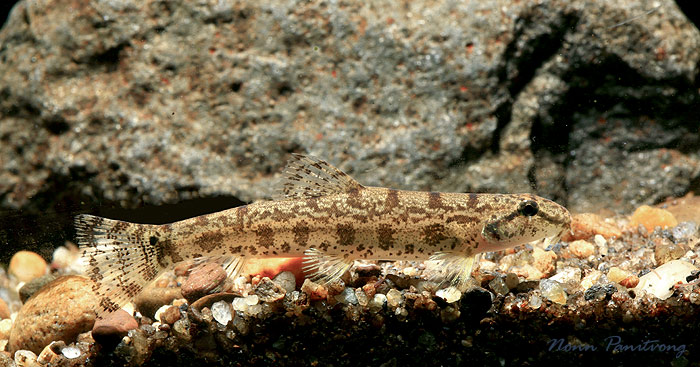
Lepidocephalichthys micropogon
Blyth, 1860
Max length55mm SL2.2in SLTank60 × 30cm24 × 12inTemp20–25°C68–77°FpH6.0–7.5According to Kottelat (2012) L. manipurensis Arunkumar, 2000, which was described from Moreh, Manipur state, northeastern India, close to the border with Myanmar, is a syonym of L. micropogon. Havird and Page (2010) differentiate the two based on caudal-fin patterning, predorsal length and ver...
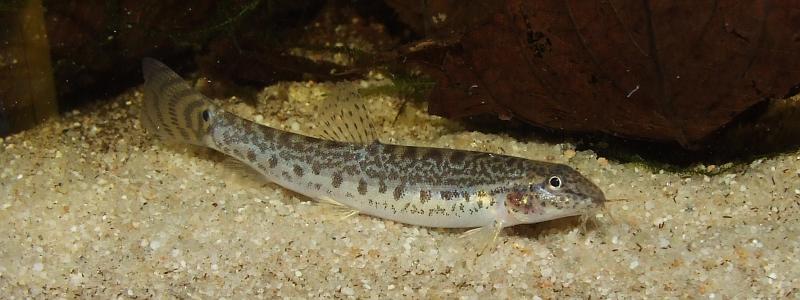
Lepidocephalichthys thermalis
Valenciennes, 1846
Max length50mm SL2.0in SLTank45 × 30cm18 × 12inTemp20–25°C68–77°FpH6.0–8.0This species is available sporadically and makes an excellent choice for those new to keeping loaches. It's distinguishable from congeners by a combination of characters including: truncate/rounded caudal-fin; no scales on top of head; dark, squarish spots o...
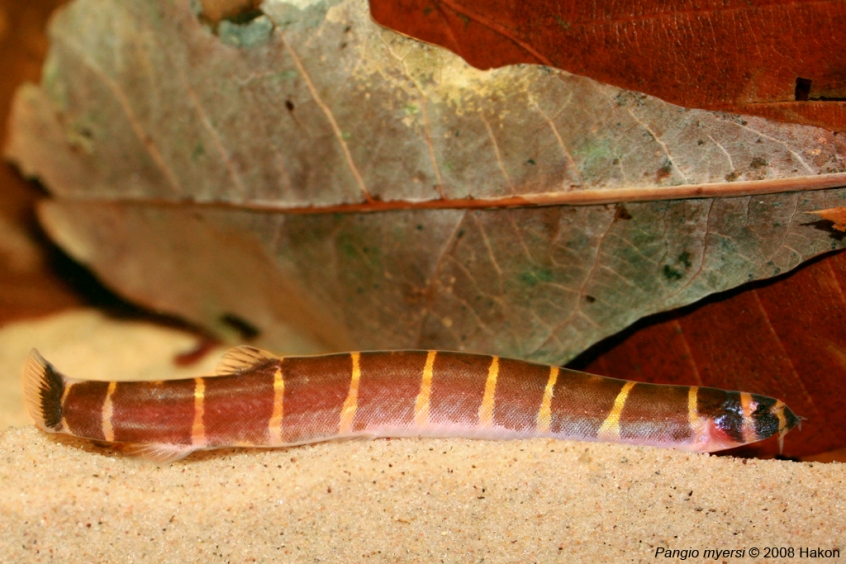
Pangio myersiGiant Kuhli Loach
Harry, 1949
Max length100mm SL3.9in SLTank60 × 30cm24 × 12inTemp21–26°C70–79°FpH3.5–7.0It's included in the P. kuhlii group of closely-related species and can be distinguished from other members by the following combination of characters: 8-11 very broad, quadrangular, regular dark body bars; orange base body colour; caudal-fin either entirely black or with a large black blotch at the base and a submarginal dark bar or row of spots. The latter feature can be useful in identifying young or newly-imported, undernourished specimens which can...
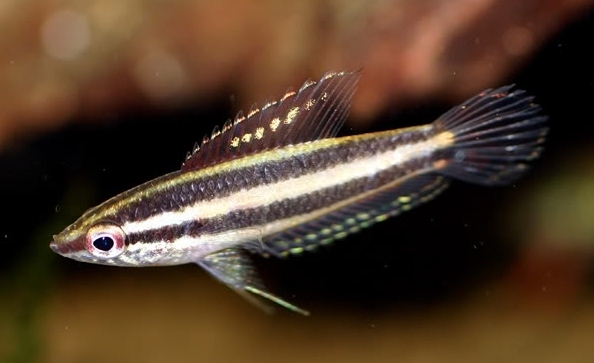
Parosphromenus bintan
Kottelat & Ng, 1998
Max length26mm SL1.0in SLTank40 × 20cm16 × 8inTemp22–28°C72–82°FpH3.0–6.5This species is not generally available in the aquarium hobby on a commercial basis but is occasionally collected and distributed by private aquarists. It's name is sometimes misapplied to commercial shipments of other species, and there also exist a number of other fish with rounded caudal-fins that may or may not be conspecific, including P. sp. 'blue line' and P. sp. 'Selatan' from Sumatra.
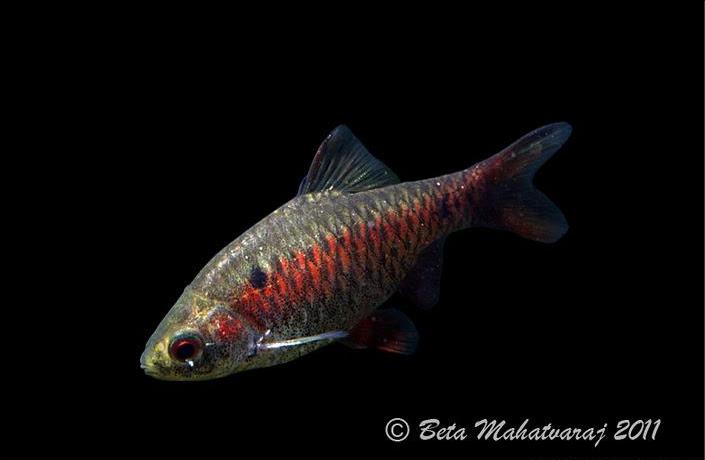
Pethia manipurensis
Menon, Rema Devi & Vishwanath, 2000
Max length62mm SL2.4in SLTank80 × 30cm31 × 12inTemp18–25°C64–77°FpH5.5–7.5Within this assemblage P. manipurensis is most similar to 'P.' meingangbii and P. padamya by virtue of the fact that males in all three possess orange-red pigmentation on the flanks and caudal-fin. It can be told apart most easily by the fact it possesses a relatively small, spot-like humeral marking, vs. a vertically-elongated, relatively large humeral marking in both the other species.
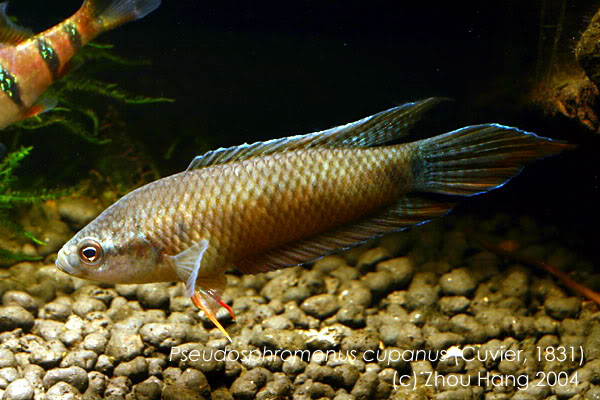
Pseudosphromenus cupanusSpiketail Paradisefish
Cuvier, 1831
Max length65mm SL2.6in SLTank60 × 30cm24 × 12inTemp20–28°C68–82°FpH6.0–7.5This species is most easily told apart from its only congener P. dayi by lacking (vs. possessing) two dark, irregular lateral stripes on the head and body, and a shorter caudal-fin in males. The results of phylogenetic analyses by Rüber et al. (2006) suggest that Pseudosphromenus is most closely-related to Malpulutta in an evolutionary sense.
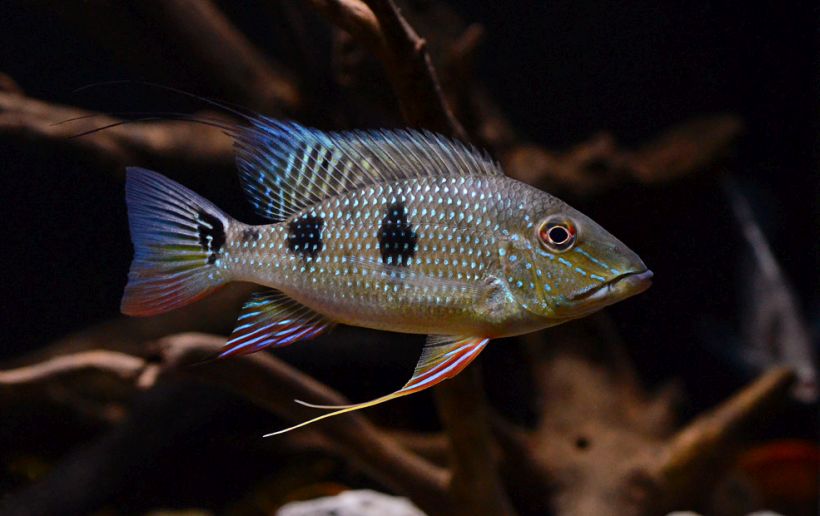
Satanoperca daemonThreespot Eartheater
Heckel, 1840
Max length250mm SL10in SLTank210 × 60cm84 × 24inTemp24–28°C75–82°FpH3.5–6.0S. daemon is relatively common in the aquarium trade but is by no means easy to maintain, with particular attention to space, diet, water quality, and chemistry required in order for it to thrive. It can be distinguished from other members of the genus by possessing two dark blotches on the flank and a prominent ocellus at the caudal-fin base. Among the named species it is most similar to...
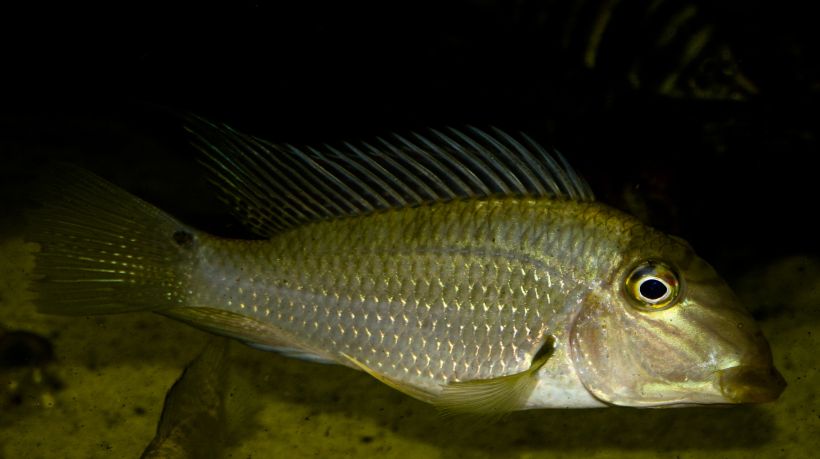
Satanoperca jurupariDemon Eartheater
Heckel, 1840
Max length185mm SL7in SLTank210 × 60cm84 × 24inTemp20–28°C68–82°FpH5.5–7.5S. jurupari is also known as 'demon fish', 'jurupari earth eater', 'green horse face', or simply 'jurupari' in the aquarium hobby. It can be distinguished from other members of the genus by the following combination of characters: presence of a relatively small dark ocellus on the upper caudal-fin base; absence of well-defined dark blot...
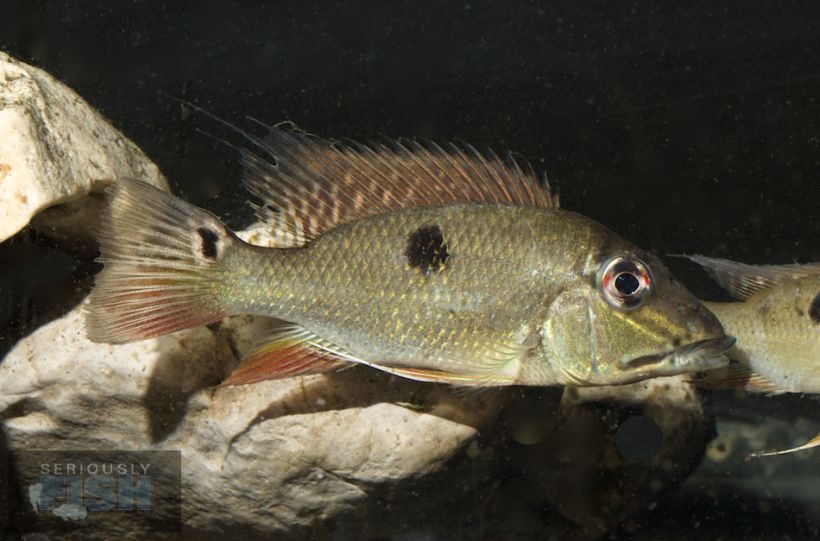
Satanoperca lilith
Kullander & Ferreira, 1988
Max length255mm SL10in SLTank210 × 60cm84 × 24inTemp20–28°C68–82°FpH5.0–7.5Despite its extensive natural distribution S. lilith is uncommon in the ornamental trade, where it is sometimes referred to as 'one-spotted demon fish' or 'one spot eartheater'. It can be distinguished from other members of the genus by possessing a single dark blotch on the flank and a prominent ocellus at the caudal-fin base. Among the named species it is most similar to S. daemon, but that species possesses two blotches on the flank.
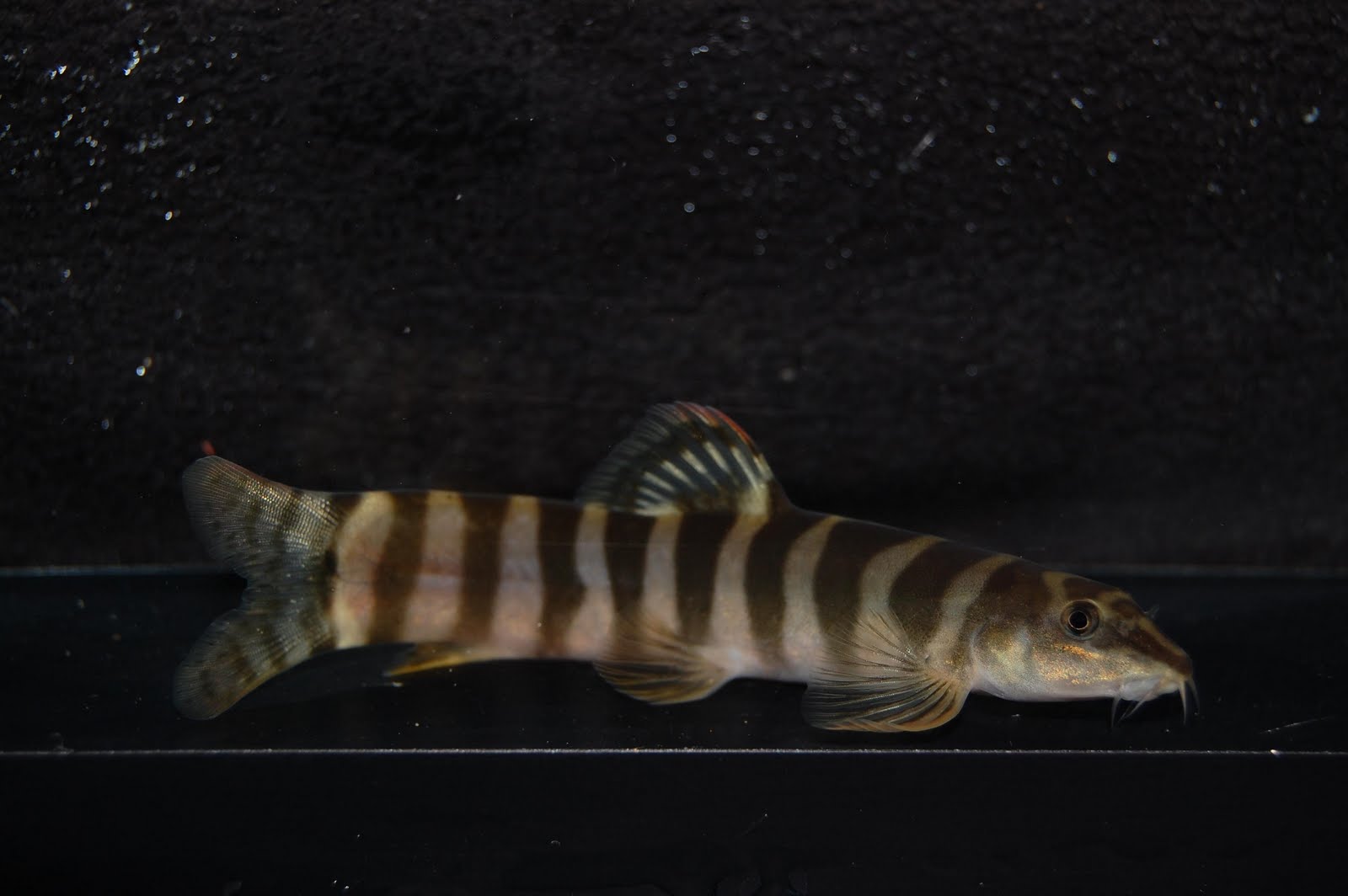
Schistura hypsiuraSuper Convict Loach
Bohlen, Ŝlechtová & Udomritthiruj, 2014
Max length73mm SL2.9in SLTank80 × 30cm31 × 12inTemp18–24°C64–75°FpH6.0–7.5It can be distinguished from congeners by the following combination of characters: caudal peduncle deep, ≥ the deepest part of the remainder of the body; no dorsal or ventral skin crests along the caudal peduncle; caudal-fin deeply forked, the outermost principal rays in the upper and lower lobes more than twice the length of the innermost: suborbital flap in males present; a well-developed suborbital groove in females; 6–8 very regular bars along the flank.
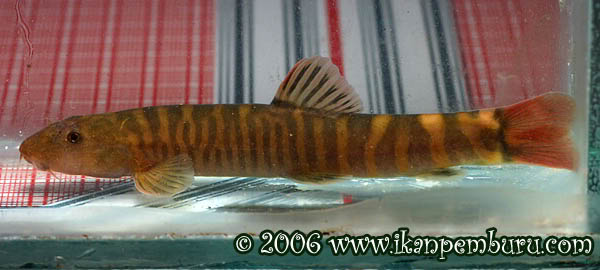
Schistura yingjiangensis
Zhu, 1982
Max lengthnot recordedTank80 × 30cm31 × 12inTemp20–24°C68–75°FpH6.0–7.5Following Kottelat (1990) the genus Nemacheilus is characterised by a combination of characters as follows: elongate body; complete lateral line; presence of enlarged scales above and below the lateral line in some species; caudal-fin forked to deeply forked with enlarged upp...
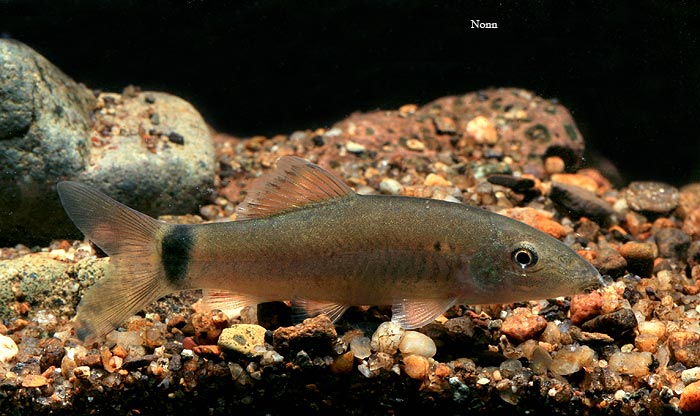
Yasuhikotakia eosSun Loach
Taki, 1972
Max length110mm SL4in SLTank120 × 30cm48 × 12inTemp23–28°C73–82°FpH6.0–7.5Y. eos isn't as commonly-traded as it once was but is still available occasionally. It's difficult to confuse with any other member of the genus due to its colour pattern consisting of yellow to reddish brown base body colour (can appear greyish in some specimens, especially post-import or when introduced to a new aquarium) with a metallic green/blue golden sheen and large darkish marking on either side of the caudal peduncle. The fins can be yellowish to reddish, and the dorsal and c...
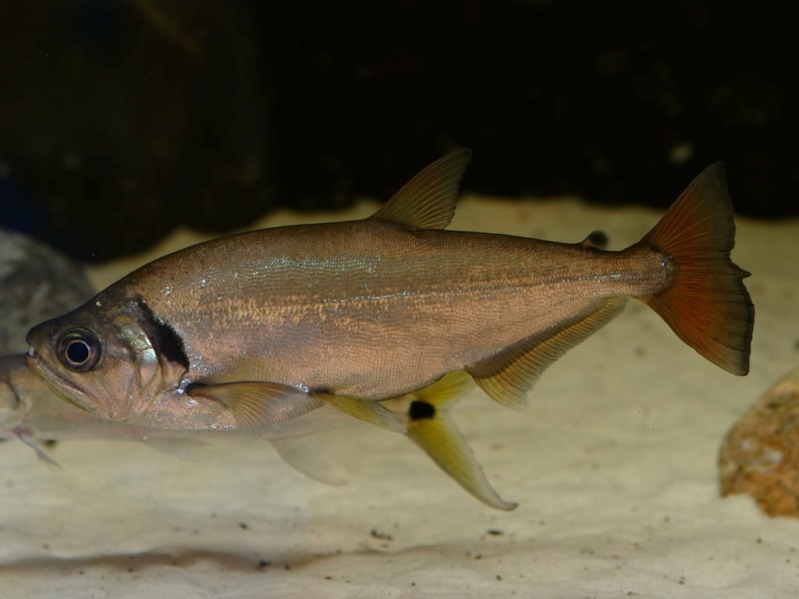
Hydrolycus tatauaia
Toledo-Piza, Menezes & Santos, 1999
Max length455mm SL18in SLTanknot recordedTemp24–28°C75–82°FpH6.0–8.0Vernacular names in Brazil include 'Cachorra' or 'Pirandirá', although these are also applied to congeners. It can be told apart from all congeners by the following combination of characters: head and body silvery with dark dorsal surface; an elongate dark blotch posterior to the opercle; dorsal, caudal and anal-fin rays reddish to orange proximally with some individual variation in intensity and tonality; adipose fin dark, with diffuse black pigmentation.
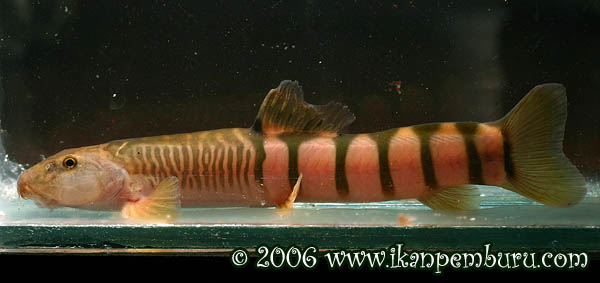
Schistura disparizona
Zhou & Kottelat, 2005
Max length96mm SL3.8in SLTank120 × 30cm48 × 12inTemp18–25°C64–77°FpH6.0–8.0Can be told apart from congeners by its colour pattern which consists of 8-11 closely-set, narrow dark bars in the anterior part of the body and 5 wider bars in the posterior part. It also possesses prominent dorsal and ventral adipose crests on the caudal peduncle and 9½ branched dorsal-fin rays.
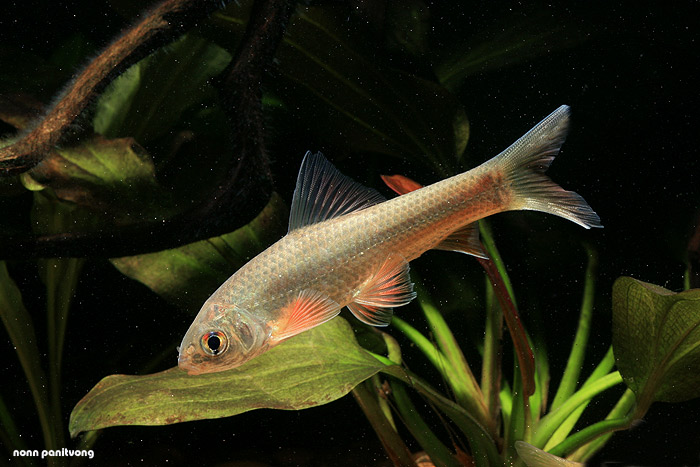
Gymnostomus ornatapinnis
Roberts, 1997
Max length100mm SL3.9in SLTanknot recordedTempnot recordedpHnot recordedG. ornatapinnis can be distinguished from congeners by the following combination of characters: head small; snout relatively short and blunt; caudal peduncle very deep; pectoral, pelvic, and anal fins usually reddish-orange or rose-tinted; pelvic and anal fins often with white tips; barbels completely absent.
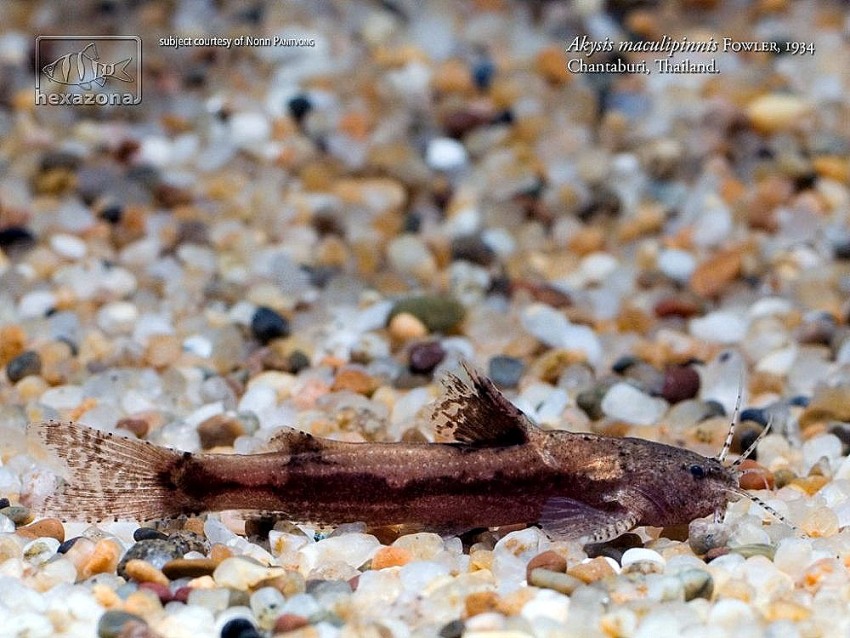
Akysis maculipinnisSpotfin Stream Catfish
Fowler, 1934
Max length35mm SL1.4in SLTank45 × 30cm18 × 12inTemp16.5–24°C62–75°FpH6.0–7.5This species has been exported for the aquarium hobby and ranks among the smaller members of the family. It can be differentiated from all other Akysis species by the following combination of characters: head length 22.0-28.6% of standard length (SL); caudal peduncle depth 8.8-10.7% of SL; anal-fin base length 15.2-19.1% of SL; eye diameter 12-16% of head length (HL); nasal barbel length 57 92% of HL; posession of 3-4 serrae on the posterior edge ofspine; body patterning mottled with indistinct ...
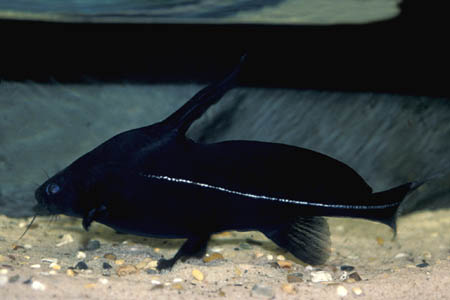
Bagrichthys macracanthusBlack Lancer
Bleeker, 1854
Max length230mm SL9in SLTank120 × 45cm48 × 18inTemp24–28°C75–82°FpH5.5–7.0The vernacular name 'lancer' is derived from the extended dorsal spine possessed by several members of the genus, which currently contains 7 species. Among them B. macracanthus is most similar to B. majusculus and B. vaillantii but can be told apart from the former by possession of shorter pectoral spines (13.3 - 16.2% SL vs. 15.8 - 20.7%), shorter adipose fin (46.0 - 58.0% SL vs. 38.8 - 45.8%), less deep caudal peduncle (7.1 - 7.5% SL vs. 5.6-7.0%) and larger adult size. From B. vaillantii it di...
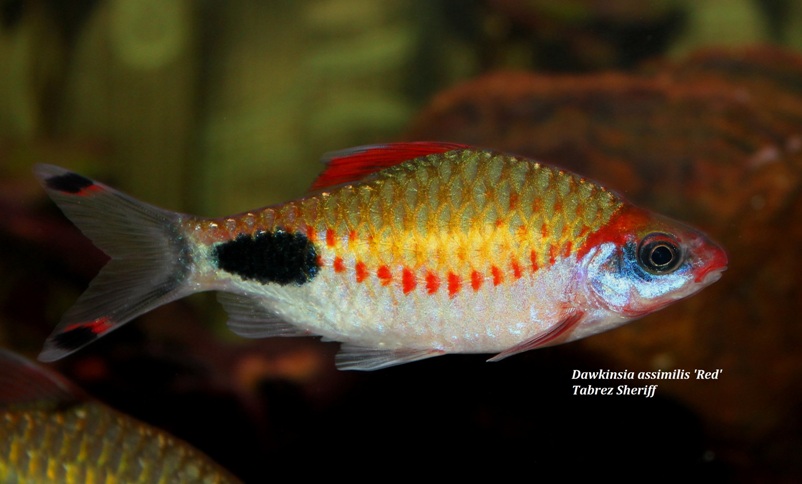
Dawkinsia assimilisMascara Barb
Jerdon, 1849
Max length120mm SL5in SLTank120 × 45cm48 × 18inTemp19–25°C66–77°FpH6.0–7.0D. assimilis has been misidentified as Puntius mahecola (Valenciennes 1844) in the past but the identity of both species was resolved by Pethioyagoda and Kottelat (2005 a, 2005b). They inspected the syntypes of P. mahecola and concluded that though valid it isn't closely related to any Dawkinsia (then the Puntius filamentosus group) but is rather a smaller, silvery fish with a single dark blotch on the caudal peduncle, located entirely posterior to the anal-fin. It's wi....