Search the catalogue
Type a name: scientific, common, or one a species used to go by. Or narrow the catalogue with the filters.
Filters
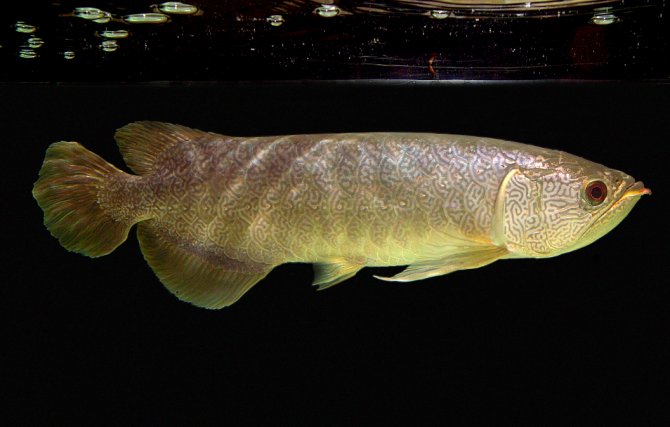
Scleropages inscriptus
Roberts, 2012
Max length600mm SL24in SLTanknot recordedTempnot recordedpHnot recordedThis species' distribution is unclear although individuals from the aquarium trade are said to have been collected in the Tenasserim river basin in Tananthayi Region, southern Myanmar. Type locality is 'supposedly from Tananthayi district, Tananthayi River basin, obtained dead from aquarium fish vendor at Meik'.
Scleropages jardiniiAustralian Arowana
authority not recorded
Max length900mm SL35in SLTank180 × 60cm72 × 24inTemp24–29°C75–84°FpH6.8–7.5Although S. jardinii superficially resembles its Asian cousins, it is not considered as desirable an aquarium inhabitant, nor is it classed as being at risk in nature. It can be easily distinguished from the asian species by its much smaller scale size, greater lateral scale count (32-35 as opposed to 21-25 in the asian aros) and duller patterning. It differs from its Australian relative S. leichardtii by its more sloping head, downward-pointing barbels and patterned gill covers. The base colour...
Scleropages leichardtiSpotted Australian Arowana
authority not recorded
Max length900mm SL35in SLTank180 × 60cm72 × 24inTempnot recordedpH6.8–7.5Although S. leichardtii superficially resembles its Asian cousins, it is not considered as desirable an aquarium inhabitant, nor is it classed as being at risk in nature. It can be easily distinguished from the asian species by its much smaller scale size, greater lateral scale count (32-35 as opposed to 21-25 in the asian aros) and duller patterning. It differs from its Australian relative S. jardinii by its spotted scales, forward-pointing barbels, lack of sloping head and unpatterned gill cov...
Semaprochilodus insignisFlagtail Prochilodus
authority not recorded
Max length350mm SL14in SLTank150 × 60cm60 × 24inTemp23–29°C73–84°FpH5.5–7.2Semaprochilodus are one of the most common and widespread shoaling fish found in South America. Over a dozen species have been described but most are never imported. They are used as food fish in their native countries. It makes a stunning addition to a community of larger fish. Along with some congeners, S. insignis is commonly known as the Jaraqui in Brazil. It is an interesting species both ecologically and biologically. In nature it migrates over large distances in huge shoals according ...
Semaprochilodus taeniurusFlagtail Characin
authority not recorded
Max length300mm SL12in SLTank150 × 60cm60 × 24inTemp23–29°C73–84°FpH5.5–7.5Semaprochilodus are one of the most common and widespread shoaling fish found in South America. Over a dozen species have been described but most are never imported. They are used as food fish in their native countries. It makes a stunning addition to a community of larger fish. S. taeniurus is also sold as the Silver Prochilodus or Fei Feng. Along with some congeners, it is commonly known as the Jaraqui in Brazil. It is an interesting species both ecologically and biologically. In nature it...
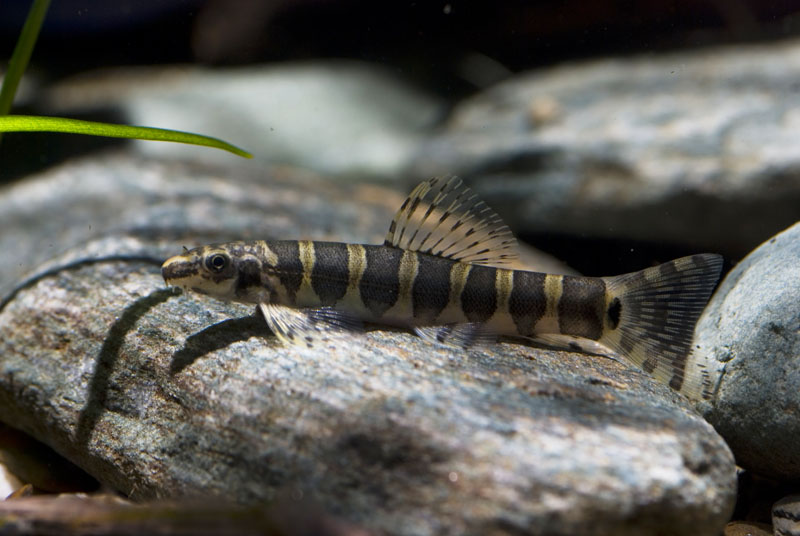
Serpenticobitis octozona
Roberts, 1997
Max length55mm SL2.2in SLTank75 × 30cm30 × 12inTemp23–26°C73–79°FpH6.0–7.0This species exhibits some interesting behaviour including a degree of social interaction plus the ability to cling to vertical or overhanging surfaces. It's sometimes sold under the name 'serpent loach'. The genus currently contains just three members all of which are known only from the Mekong basin. S. octozona is the type species and separated from the others mainly by body patterning which consists of 7-8 dark bars on each flank, these extending the full depth of the body and much wider than the pale interspaces between.
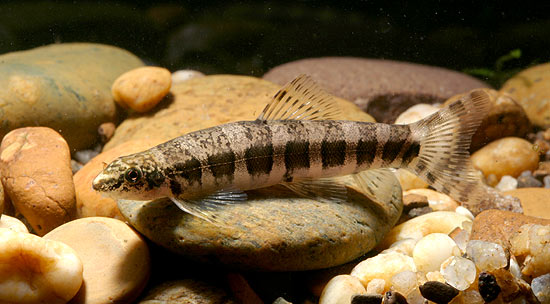
Serpenticobitis zonata
Kottelat, 1998
Max length50mm SL2.0in SLTank75 × 30cm30 × 12inTemp26°C79°FpH6.0–7.0Fish sold under the name S. zonata are sporadically available in the aquarium trade but the majority appear to be the congener S. octozona. The genus currently contains just three members all of which are known only from the Mekong basin. S. octozona is the type species and separ...
Serrasalmus altuveiAltuvei
authority not recorded
Max length173mm SL7in SLTank120 × 45cm48 × 18inTempnot recordedpHnot recordedS. altuvei is very scarce in the hobby, most commonly being found among imports of juvenile S. rhombeus (the type species of the genus). It's also known as the "Caribe azul" or "blue caribe" in the trade. There are currently 24 described species of Serrasalmus, many of which look superficially similar. This one is considered a member of the "compressed group". This grouping of morphologically similar species currently comprises S. altuvei, S. geryi, S. compress...
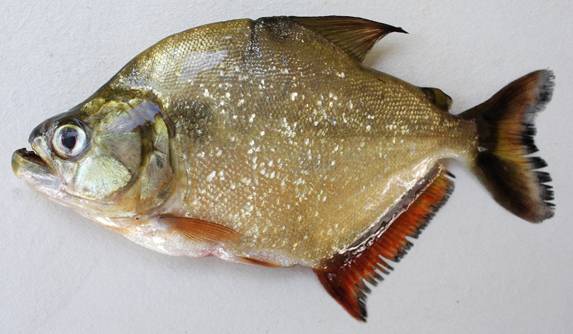
Serrasalmus brandtiiWhite Piranha
Lütken, 1875
Max length250mm SL10in SLTank150 × 60cm60 × 24inTemp20–26°C68–79°FpH5.0–8.0A number of sources state that S. brandtii can be identified by the relatively anterior position of the anal-fin origin beneath the first few dorsal-fin rays. However, images of specimens collected from the rio São Francisco, where it is the only member of the genus present, suggest that this is not always the case and this is also supported by the figure from Eigenmann (1915). No recent diagnosis of the species is available.
Serrasalmus elongatusPike Piranha
authority not recorded
Max length300mm SL12in SLTank120 × 60cm48 × 24inTemp24–28°C75–82°FpHnot recordedS. elongatus is known as "Caribe Pinche" in its native countries and is a rare find in the trade, tending to be quite expensive as a result. Individuals seem to vary in personality. While some are particularly fearless and will actively chase and attempt to bite hands or fingers placed in or up against the aquarium, others will always appear to be shy and nervous. The streamlined body form that gives rise to the species name is unique among serrasalmids, and has probably developed as a...
Serrasalmus geryiGéry's Pirambeba
authority not recorded
Max length181mm SL7in SLTank120 × 60cm48 × 24inTemp22–29°C72–84°FpHnot recordedS. geryi is sometimes sold as the "violet-line piranha" in reference to the unusal purple stripe that runs from the base of the lower jaw over the top of the body. It makes a stunning aquarium fish as it also possesses highly reflective scales, deep orange/red eyes and a compressed, high-bodied shape. Far from widespread in nature or the hobby, it tends to be pricey and highly sought-after when available. There are currently 24 described species of Serrasalmus, many of which look s...
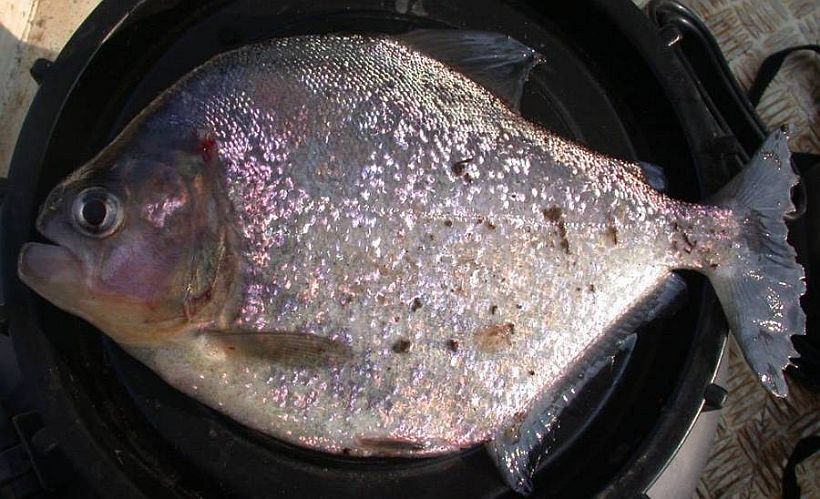
Serrasalmus gouldingiGoulding's Piranha
Fink & Machado-Allison, 1992
Max length280mm SL11in SLTank150 × 60cm60 × 24inTemp24–28°C75–82°FpH4.0–7.0This species occasionally appears in the ornamental trade where it is sometimes referred to as 'blue tiger piranha' Following Fink and Macaht can be distinguished from other members of the genus by the following combination of characters: body shape deep and rhomboid; head robust, snout blunt; eye large; mouth moderate, jaw projecting; 1-3 ontogeneticlly var...
Serrasalmus maculatusMac
authority not recorded
Max length210mm SL8in SLTank120 × 45cm48 × 18inTemp21.1–30°C70–86°FpHnot recordedS. maculatus is one of the better choices for aquarists new to this group of fishes. It grows to a manageable size, is relatively hardy, attractive and usually quite inexpensive. It's sometimes referred to by the alternative vernacular names "gold piranha" or "golden mac" in the hobby. There are in excess of 30 described species of Serrasalmus many of which appear superficially similar and have confusing taxonomic histories. S. maculatus and S. spilopleura have often ...
Serrasalmus manueliManny
authority not recorded
Max length435mm SL17in SLTank210 × 75cm84 × 30inTempnot recordedpHnot recordedThe native name for this species is Caribito Parguasero. It's sometimes sold as the "green tiger piranha" in the trade and is usually highly coveted and expensive when available. A notoriously sensitive traveller, mortality rates are sadly quite high among imported fish. The lack of fully-grown specimens known to the hobby is also a worry, and would suggest that the majority are not being maintained correctly. This really is a species for the specialist with the resources necessar...
Serrasalmus marginatus
authority not recorded
Max length221mm SL9in SLTank120 × 38cm48 × 15inTemp22–25°C72–77°FpHnot recordedThere are currently 24 described species of Serrasalmus, many of which look superficially similar. S. marginatus has at various times been considered a synonym of S. rhombeus and S. humeralis, but is currently considered to be distinct. It's main distinguishing feature is usually given as the thick, black, v-shaped marking in the anterior portion of the caudal fin. Juveniles are said to differ from similar-looking species such as S. compressus and S. altuvei because the dark body "spot...
Serrasalmus rhombeusBlack Piranha/Rhom
authority not recorded
Max length450mm SL18in SLTank210 × 45cm84 × 18inTemp22.2–27.8°C72–82°FpHnot recordedThere are in excess of 30 described species of Serrasalmus many of which appear superficially similar and have confusing taxonomic histories. S. rhombeus is among the most convoluted of all with numerous synonyms of which S. niger is the most well-known. There has also been a muddle surrounding the common names "white" and "black" piranha, both of which have been used to describe the species. Of greater interest to both scientists and hobbyists has been the discovery of n...
Serrasalmus sancheziSanchez's Piranha
authority not recorded
Max length114mm SL4in SLTank120 × 30cm48 × 12inTemp24–28°C75–82°FpHnot recordedThere are currently 24 described species of Serrasalmus, many of which look superficially similar. S. sanchezi has frequently been confused with S. spilopleura in the past, and is sometimes still sold as "Spilo cf" or "Ruby-red Spilo". It actually appears to be more closely related to S. rhombeus or S. irritans than S. spilopleura. The characteristic red throat has also led to it being confused with S. medinai and even the red-bellied piranha Pygocentrus nattereri on occasion...
Serrasalmus serrulatus
authority not recorded
Max length190mm SL7in SLTank120 × 45cm48 × 18inTemp24–28°C75–82°FpHnot recordedThere are currently 24 described species of Serrasalmus, many of which look superficially similar. S. serrulatus occupies a particularly confusing taxonomic position and is very tricky to identify positively. According to scientific literature it is very close in appearance to several congeners, most notably S. eigenmanni, S. hollandi, S. humeralis and S. nalseni. The separation of these is largely based on geographical range and it's possible that some of them may turn out to be synonymous...
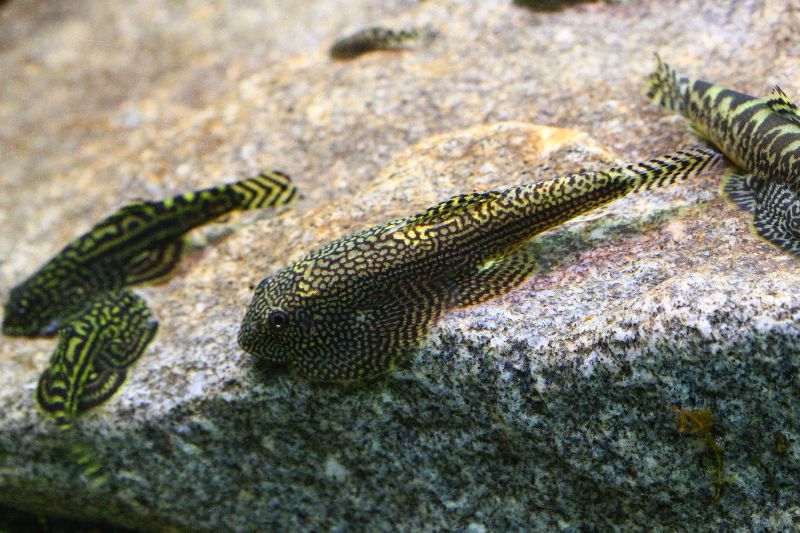
Sewellia albisuera
Freyhof, 2003
Max length70mm SL2.8in SLTank90 × 30cm36 × 12inTemp18–24°C64–75°FpH6.0–7.5It's been suggested that these two may represent the same species but this appears not to be the case. When describing S. albisuera Freyhof (2003) used a series of specimens collected in 2000 plus some larger, spotted fish which had been collected in 1999 and preserved in New York. Although he noticed differences in dorsal patterning between the two series these weren't considered sufficient to s...
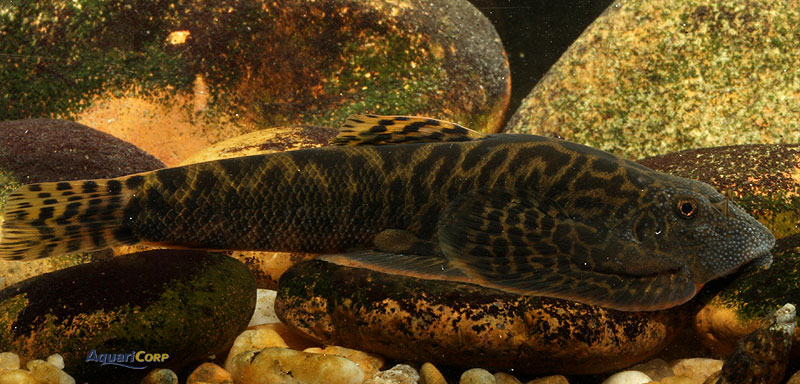
Sewellia elongata
Roberts, 1998
Max length75mm SL3.0in SLTank90 × 30cm36 × 12inTemp20–24°C68–75°FpH6.0–7.5This species appeared in the trade during 2010 and its identity has been confirmed to us by Thai exporter and aquarist Kamphol Udomritthiruj who collects it from the Se Kong system for the aquarium hobby. To date only subadult specimens have reached the western market.