Search the catalogue
Type a name: scientific, common, or one a species used to go by. Or narrow the catalogue with the filters.
Filters
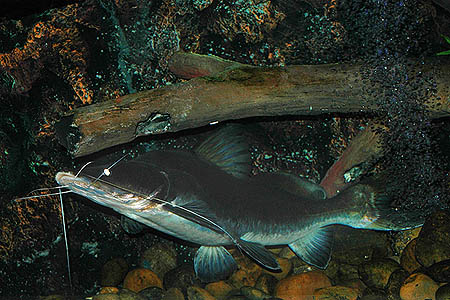
Sperata aorIndian Shovelnose Catfish
authority not recorded
Max length1800mm SL71in SLTank720 × 180cm283 × 72inTemp20–25°C68–77°FpH6.0–7.0This "shovelnose" is unique amongst bagrids, but superficially resembles several unrelated South American catfish species. It's common name is derived from it's flattened, extended head. We cannot stress strongly enough that this is a species totally unsuited to aquarium life. Alarmingly, it is can sometimes be spotted in dealer's tanks. When small, it makes an interesting and undeniably impressive addition to a large aquarium but bearing in mind its enormous adult size,...
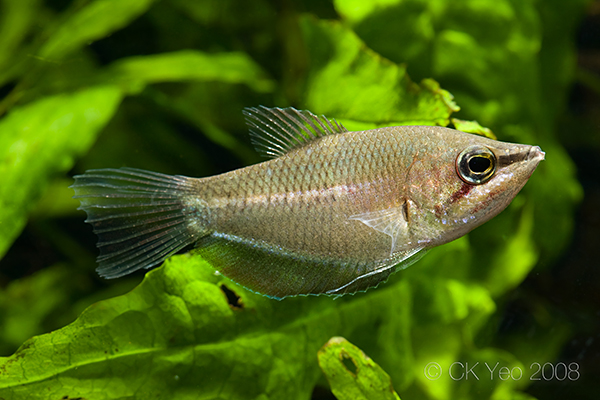
Sphaerichthys acrostomaGiant Chocolate Gourami
Vierke, 1979
Max length70mm SL2.8in SLTank80 × 30cm31 × 12inTemp21–25°C70–77°FpH3.5–6.5This species is traded under several names of which others include 'sharp-nosed gourami', 'moonlight chocolate gourami', 'black-lined chocolate gourami' and 'black-tailed chocolate gourami', though it's far from common in the hobby. Its unique colour pattern makes it difficult to confuse with any of the three other members of the genus even in the absence of meristic data.
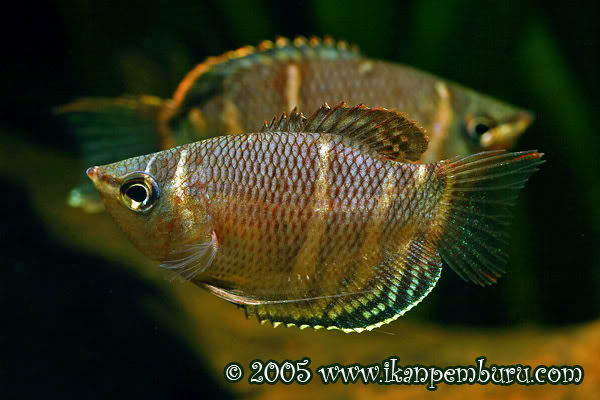
Sphaerichthys osphromenoidesChocolate Gourami
Canestrini, 1860
Max length50mm SL2.0in SLTank60 × 30cm24 × 12inTemp26–31°C79–88°FpH4.0–6.5The genus Sphaerichthys currently comprises four species with S. osphromenoides by far the best known in the hobby. It's easily distinguishable from the congeners S. vaillanti and S. acrostoma since both exhibit a notably more elongate head and body profile, reverse sexual dimorphism (i.e. females are the more colourful/strongly-patterened), and are paternal mouthbrooders.
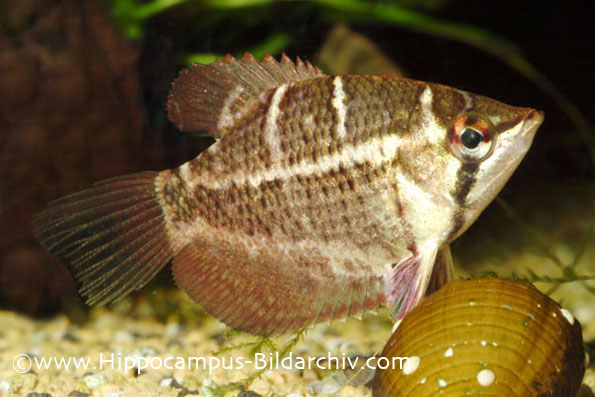
Sphaerichthys selatanensisCrossband Chocolate Gourami
Vierke, 1979
Max length45mm SL1.8in SLTank60 × 30cm24 × 12inTemp26–31°C79–88°FpH4.0–6.5This species is only occasionally seen in the hobby and sometimes sold as 'cherry chocolate gourami'. It was originally described as a subspecies of S. osphromenoides since the two are very similar-looking but has been considered a species in its own right since the late 1980s. The two differ in the number ofrays (7 in S. selatanensis vs. 9-10 in S. osphromenoides),rays (7 vs. 8),...
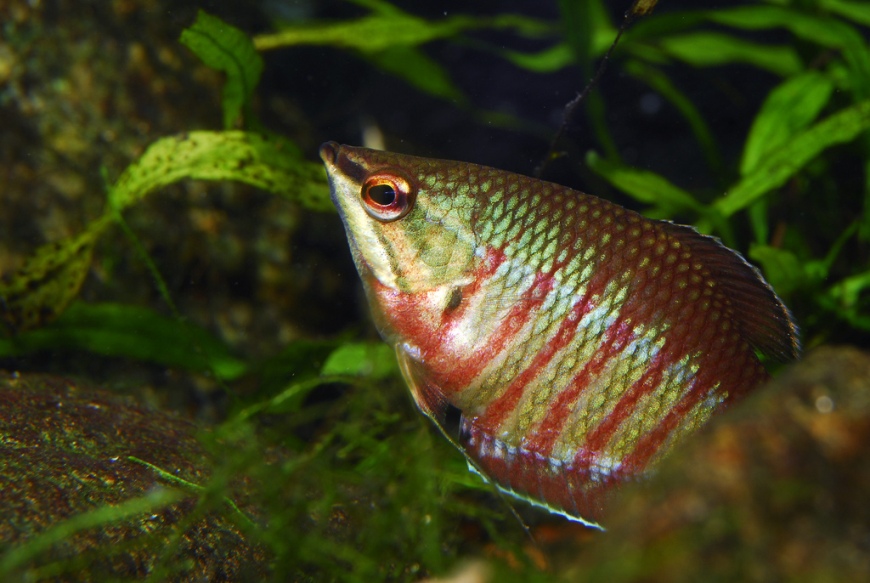
Sphaerichthys vaillantiVaillant's Chocolate Gourami
Pellegrin, 1930
Max length55mm SL2.2in SLTank60 × 30cm24 × 12inTemp21–25°C70–77°FpH3.5–6.5This species is traded under several names of which others include 'Samurai gourami' and 'Samurai Zebra Chocolate Gourami'. Though the former of these is arguably the most common, these names are potentially misleading since the fish is neither especially combative nor from Japan. Its unique colour pattern makes it difficult to confuse with any of the three other members of the genus even in the abse...
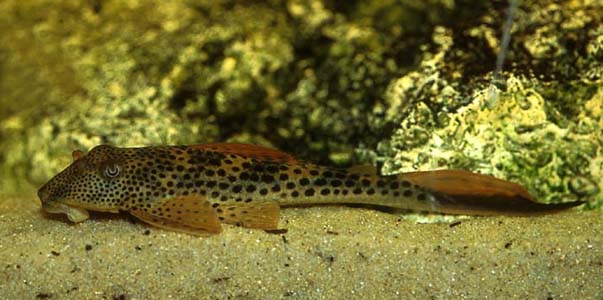
Squaliforma cf. emarginataRed Fin Thresher Plec
authority not recorded
Max length400mm SL16in SLTanknot recordedTemp25–28°C77–82°FpH6.4–7.2This attractive species is often seen for sale at around 3-4" in length (often as Hypostomus cf. emarginata or H. emarginatus), but given its adult size, its not a terribly good choice for the general community tank. Due to its very wide natural distribution, there are a number of known geographical variants, and this has resulted in four L numbers currently being assigned to it. In reality, there are many more variants than this, and all share the characteristic elongated which gives rise...
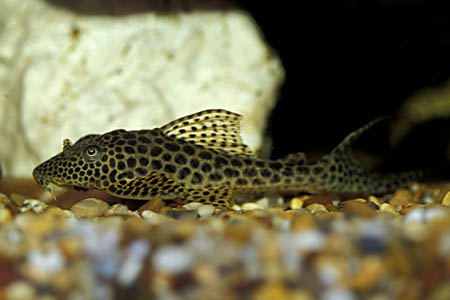
Squaliforma villarsiBlue Fin Thresher Pleco
authority not recorded
Max length175mm SL7in SLTank120 × 30cm48 × 12inTemp21–23°C70–73°FpH6.0–7.2This species is sometimes referred to as Hypostomus villarsi, and is a rare find in the hobby. If you're lucky enough to see some for sale, check the fish have rounded bellies and that their eyes aren't sunken before you part with any cash, as these are classic signs of emaciation in newly imported Loricariids....
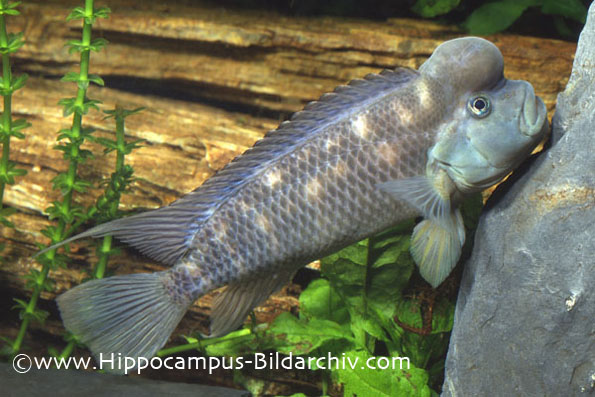
Steatocranus casuariusBlockhead Cichlid
authority not recorded
Max length120mm SL5in SLTank75 × 30cm30 × 12inTemp24–28°C75–82°FpH6.0–7.5An easily kept cichlid whose character more than compensates for its somewhat drab colouration, S. casuarius is sometimes seen for sale as "Humphead", "Lionhead" or "Buffalohead" cichlid. It is a reophilic fish meaning it inhabits fast waters. Its swimbladder is modified to reduce buoyancy and thus prevent it from being swept away by the strong currents in it's natural habitat. In the aquarium it spends most of it's time resting on the substrate or hiding ...
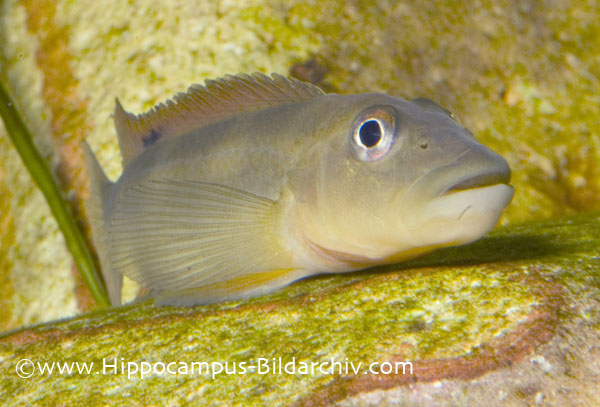
Steatocranus tinanti
authority not recorded
Max length130mm SL5in SLTanknot recordedTemp25–28°C77–82°FpH6.0–7.5S. tinanti has a confused taxonomic history, having been previously classified in the genera Gobiochromis and then Leptotilapia, before being assigned to Steatocranus. Further taxonomic revision is likely, as it exhibits both behavioural and morphological differences to other species in the genus. It is a reophilic fish, meaning it inhabits fast waters. Its swimbladder is relatively small to reduce buoyancy and thus prevent it from being swept away by the strong currents in its natural habita...
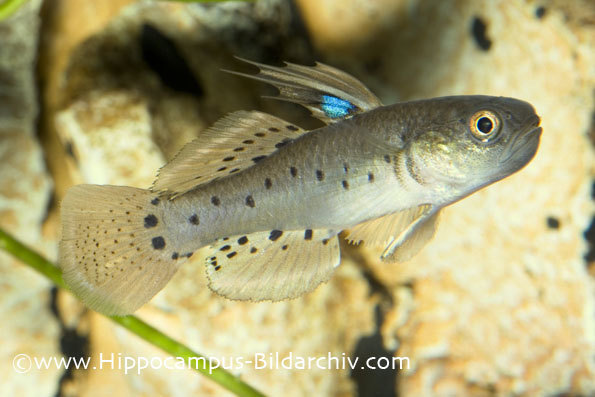
Stigmatogobius sadanundioKnight Goby
authority not recorded
Max length90mm SL3.5in SLTank75 × 30cm30 × 12inTemp20–26°C68–79°FpH7.0–8.5Until recently the genus Stigmatogobius contained 18 species, but most have now been reclassified, leaving just 7 species currently assigned to it. S. sadanundio is by far the most common of these in the hobby. It makes an attractive addition to the brackish or hardwater community with medium-sized tankmates....
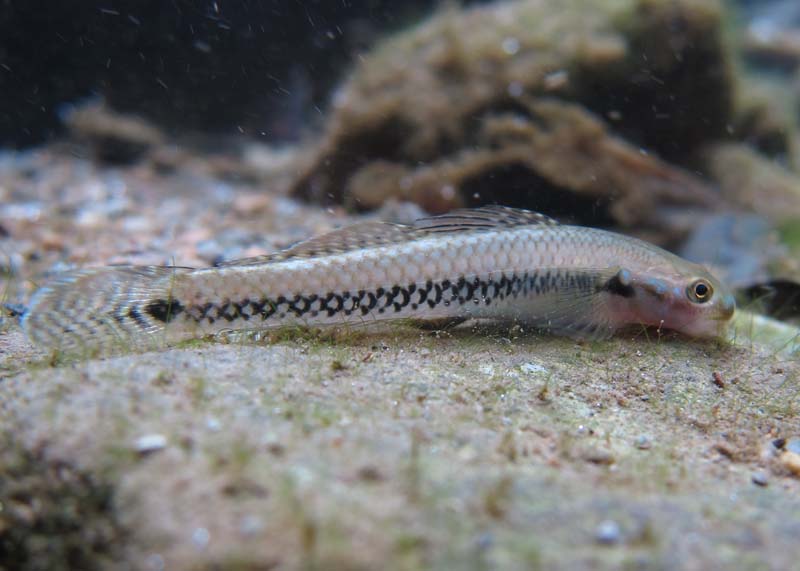
Stiphodon alcedo
Maeda, Mukai & Tachihara, 2011
Max length50mm SL2.0in SLTanknot recordedTemp22–28°C72–82°FpH6.5–7.5Known only from the Ryukyu Islands, Japan, and thus far recorded from just 4 streams on Okinawa island and two on Iriomote island. The type series derived from both islands with Okinawa given as type locality. It may be more widely-distributed than this however, and was possibly transported to the Ryukyu Islands via the Kuroshio Current, an ocean current similar to the Gulf Stream transporting warm, tropical water northward from an area east of Taiwan past Japan towards the polar region.
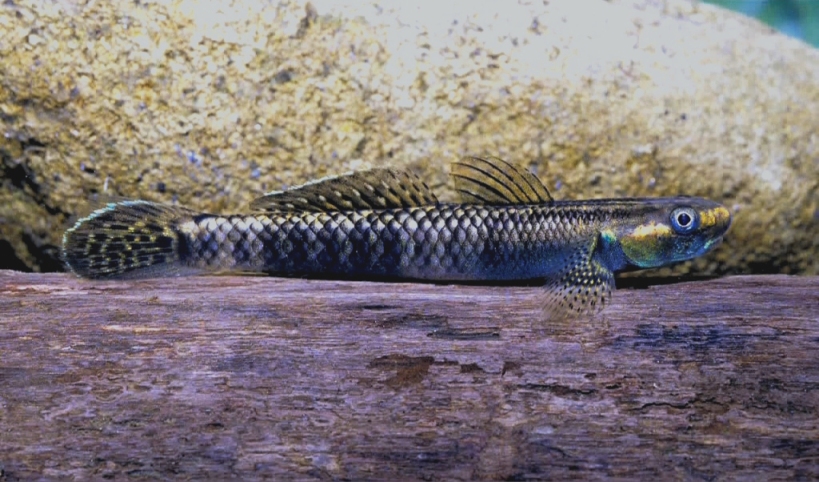
Stiphodon atratus
Watson, 1996
Max length60mm SL2.4in SLTank60 × 30cm24 × 12inTemp22–28°C72–82°FpH6.5–7.5Type locality is given as 'Stream at end of long narrow bay, Waigeo Island, Irian Jaya, Indonesia', with the species also known from rivers draining the northern slope of New Guinea as well as Halmahera Island (Indonesia), the Admiralty Islands (Papua New Guinea), the Bismarck Archipelago (Papua New Guinea), D'Entrecasteaux Islands (Papua New Guinea), Louisiade Archipelago (Papua New Guinea), Bougainville (Papua New Guinea), Vanuatu, and...
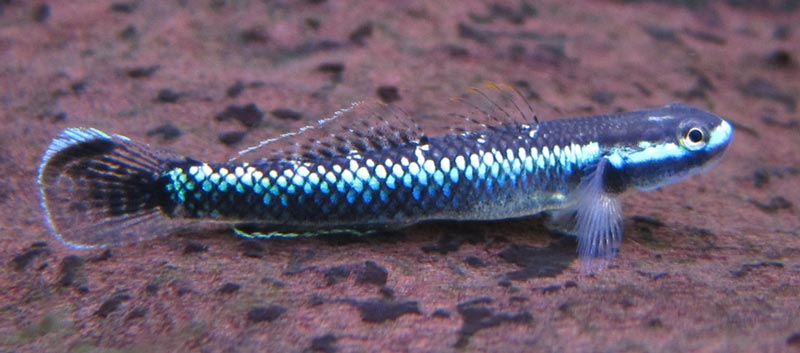
Stiphodon atropurpureusBlue Neon Goby
Herre, 1927
Max length50mm SL2.0in SLTank60 × 30cm24 × 12inTemp22–26°C72–79°FpH6.5–7.5This species is available occasionally, though not always under the correct name. We've seen it on sale as S. elegans on numerous occasions, for example, and other trade names include 'Sumatran blue neon goby' (it's not found on Sumatra), 'cobalt blue goby' and 'freshwater neon goby'. Further...
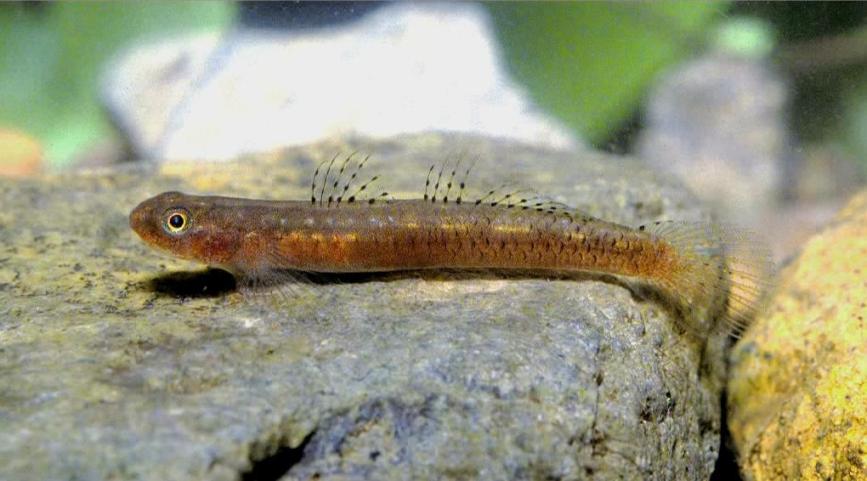
Stiphodon birdsong
Watson, 1996
Max length23mm SL0.9in SLTank60 × 30cm24 × 12inTemp22–28°C72–82°FpH6.5–7.5This species probably hasn't been seen in the trade yet but should make an interesting aquarium fish if it ever becomes available. Within the genus it's most similar to S. surrufus and S. mele from which it differs only in terms of meristics. In description it's distinguished from the former only by possession of more teeth in the upper jaw although images of live specimens depict S. surrufus as a more intensely-coloured, reddish fi...
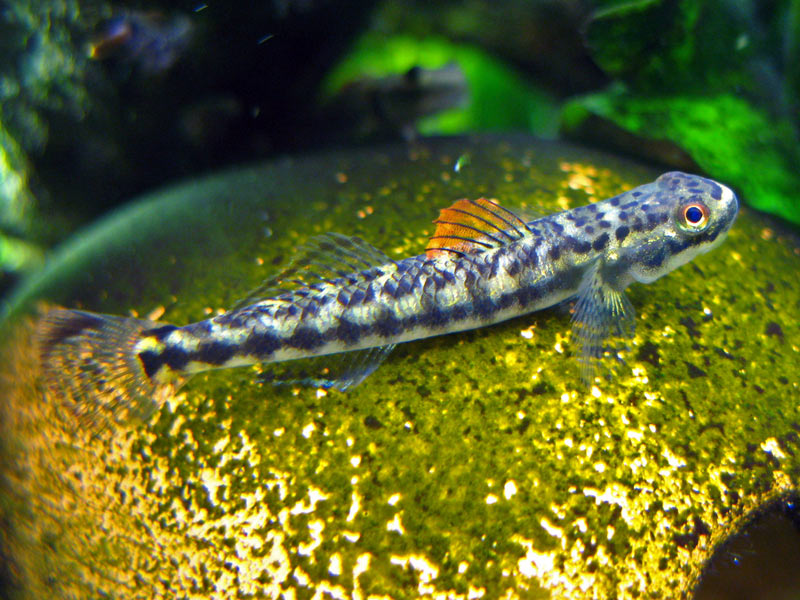
Stiphodon maculidorsalisOrange-fin Stiphodon
Maeda & Tan, 2013
Max length80mm SL3.1in SLTank80 × 30cm31 × 12inTemp20–28°C68–82°FpH6.5–7.5This species was referred to as S. sp. 'orange fin' or S. sp. 'ST01' prior to being offically named and is one of the more commonly-traded members of the genus, though often in batches containing only one gender, a mixture of species, or misidentified under an incorrect name such as S. zebrinus. It can be told apart from congeners by the following combination of characters: usually 9 soft second dorsal-fin rays; 15 soft pectoral-fin rays; first dorsal-fin in male poin...
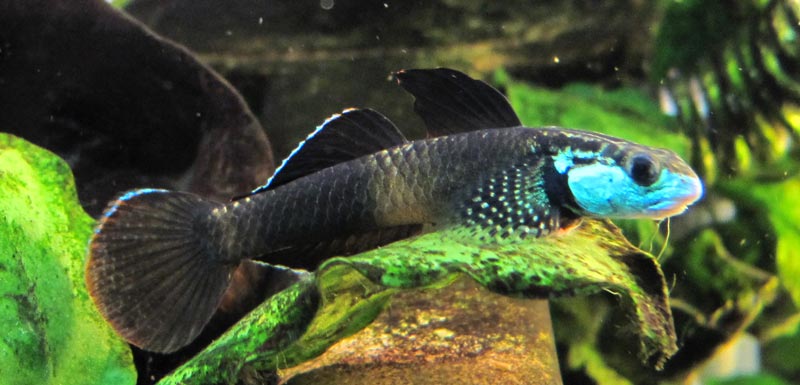
Stiphodon ornatusRainbow Stiphodon
Meinken, 1974
Max length70mm SL2.8in SLTank80 × 30cm31 × 12inTemp20–28°C68–82°FpH6.5–7.5This species is traded as S. sp. 'rainbow', S. sp. 'gold fin', or S. sp. 'gold cheek' and is among the more widely-available members of the genus although its identity was unclear prior to 2013. The most commonly-traded fish certainly appears to...
Stiphodon pelewensis
Herre, 1936
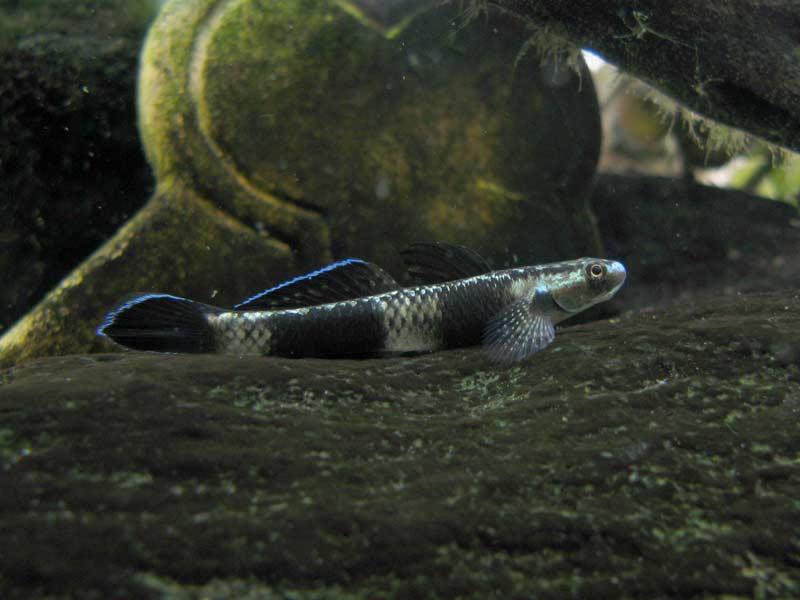
Max length45mm SL1.8in SLTank60 × 30cm24 × 12inTemp22–28°C72–82°FpH6.5–7.5This species seems not to have appeared in the trade and is similar to several congeners in appearance, most notably S. weberi which is native to the Maluku archipelago and other islands around the coast of Papua (formerly Irian Jaya). The two are said to be most easily-distinguished by examination of the belly which is fully-scaled in S. pelewensis but lacks scalation in S. weberi. The Gobiidae is the most speciose vertebrate family and notoriously problematic in terms of identifying fishes down to sp...
Stiphodon percnopterygionus
Watson & Chen, 1998
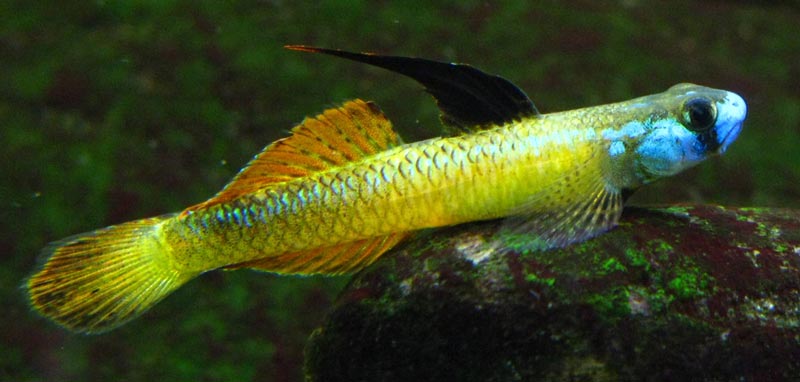
Max length35mm SL1.4in SLTank60 × 30cm24 × 12inTemp22–28°C72–82°FpH6.5–7.5This species is rare in the aquarium trade and normally expensive when available. It's one of the most easily-identifiable in the genus by the combination of usually 14 pectoral-fin rays, 10 segmented second dorsal-fin rays, relatively small adult size, unique colouration in males and the shape of the first dorsal-fin in males in which the fourth and fifth spines are...
Stiphodon rutilaureus
Watson, 1996
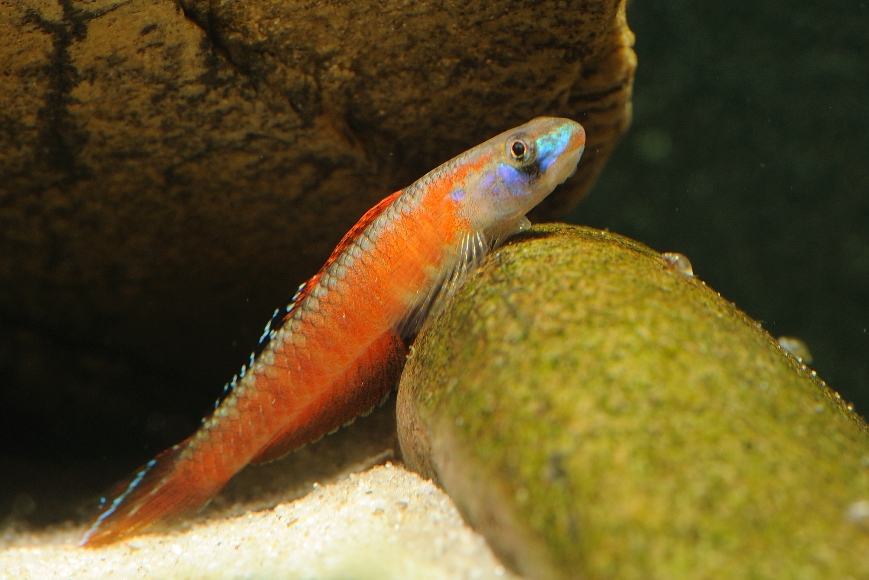
Max length35mm SL1.4in SLTank60 × 30cm24 × 12inTemp22–28°C72–82°FpH6.5–7.5This species is not traded commercially at present and the specimen pictured above was brought back from northern Papua New Guinea by private collectors in 2008. It's diagnosable from other members in the genus by possession of 10 segmented rays in the second dorsal fin, males with filamentous spines in the firstandusually with 14 rays. Colour patterning in males is also distinctive (see 'Sexual Dimorphism'). The Gobiidae is the most speciose vert...
Stiphodon semoniCobalt Blue Goby
Weber, 1895
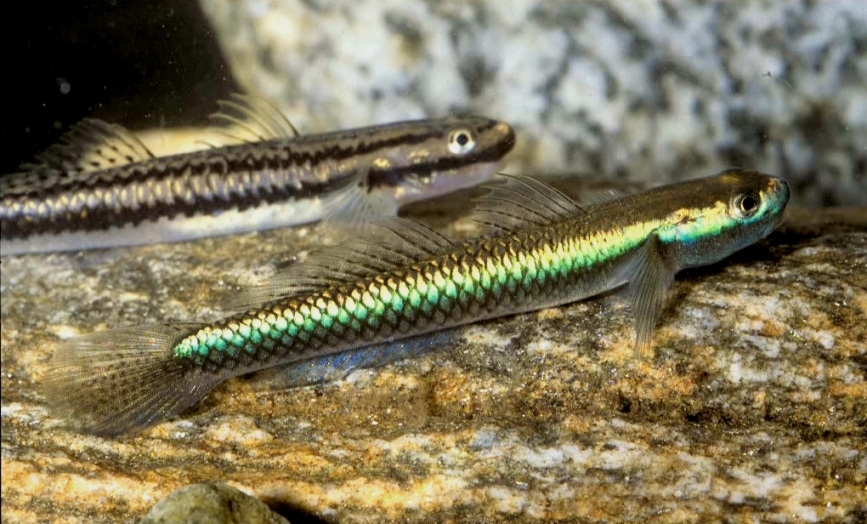
Max length50mm SL2.0in SLTank60 × 30cm24 × 12inTemp22–28°C72–82°FpH6.5–7.5This species has been traded for a number of years, though not always under the correct name. We've seen it on sale as S. elegans or S. atropurpureus on numerous occasions, for example, and other trade names include 'Sumatran blue neon goby', 'cobalt blue goby' and 'freshwater neon goby'. Further confusion has arisen because other species are sometimes sold as S. semoni meaning identification has not always been easy and there ...